Blog Archives
Q: You read books on Friedrich Nietzsche and other philosophers. How has philosophy and your personal experience shaped the latest series, Bolivianos? (Question from Vedica Art Studios and Gallery)

A: It’s difficult to pinpoint how philosophy specifically shaped my work because my curiosity spans so many subjects. Some critics have described me as a Renaissance woman, remarking on my wide-ranging and voracious reading. It’s true—I’m genuinely interested in practically everything!
In pursuit of making art, I have undertaken in-depth studies of numerous intriguing fields: drawing, color, composition, gross anatomy, art and art history, the art business, film history, photography, psychology, mythology, literature, philosophy, religion, music, jazz history, and archaeology—particularly ancient Mesoamerica (Olmec, Zapotec, Mixtec, Aztec, and Maya) and South America (the Inca and their ancestors).
Since the early 1990s, my inspiration and subject matter have come primarily from international travel to remote parts of the globe, especially Mexico, Central America, and South America. Travel is by far the best education! By visiting distant destinations, I have developed a deep reverence for people and cultures around the world. People everywhere are connected by our shared humanity.
These travels, supplemented by extensive research at home, are essential parts of my creative process. Research can be solitary and demanding, but I truly enjoy it. I want to know as much as possible, and this curiosity generates ideas for new work, propelling me into unexplored creative realms.
Foreign travel always expands our ways of thinking. This rich mixture of creative influences continually evolves and finds its way into my pastel paintings. Working, learning, evolving, and growing—I am perpetually curious and can hardly imagine a better way to spend my time on Earth!
Comments are welcome!
Pearls from artists* # 625

Downtown Manhattan
*an ongoing series of quotations – mostly from artists, to artists – that offers wisdom, inspiration, and advice for the sometimes lonely road we are on.
Think of one of those rare, truly exceptional outings to the cinema. In the lobby afterward the experience elicits from us a language of paralysis and disappearance: “I forgot myself. It could have gone on forever.” Stepping out onto the street, we feel that somehow nothing is as it was before. The passing cars, the night sky above the glass towers, the streetlights reflected on the wet pavement: everything glows with a strange immediacy and newness. It is as if the film had done something to the world. A similar thing might happen when we put down a great novel or take in a powerful piece of music.
The Book of Revelation contains a memorable line: “Behold, I make all things new.” Reflecting on this ancient text, the critic Northrop Frye defined the Apocalypse as “the way the world looks once the ego has disappeared.” Every great artistic work is a quiet apocalypse. It tears off the veil of ego, replacing old impressions with new ones at once inexorably alien and profoundly meaningful. Great works of art have a unique capacity to arrest the discursive mind, raising it to a level of reality that is more expansive than the egoic dimension we normally inhabit. In this sense, art is the transfiguration of the world.
J.F. Martel in Reclaiming Art in the Age of Artifice: A Treatise,Critique, and Call to Action
Comments are welcome!
Pearls from artists* # 583

In the Studio Photo: Susan Erlichman
*an ongoing series of quotations – mostly from artists, to artists – that offers wisdom, inspiration, and advice for the sometimes lonely road we are on.
Let’s return to Michelangelo’s idea of removing apparent surfaces to reveal or liberate the statue that has been buried in the stone since the beginning of time. Michelangelo claimed that he was guided by a faculty he called intelleto. Intelleto is intelligence, not of the merely rational kind, but visionary intelligence, a deep seeing of the underlying pattern beneath appearances. Here the artist is, as it were, an archaeologist, uncovering deeper and deeper strata as he works, recovering not an ancient civilization but something as yet unborn, unseen, unheard except by the inner eye, the inner ear. He is not just removing apparent surfaces from some external object, he is removing apparent surfaces from the Self, revealing his original nature.
Stephen Nachmanovitch in Free Play: Improvisation in Life and Art
Comments are welcome!
Pearls from artists* # 576
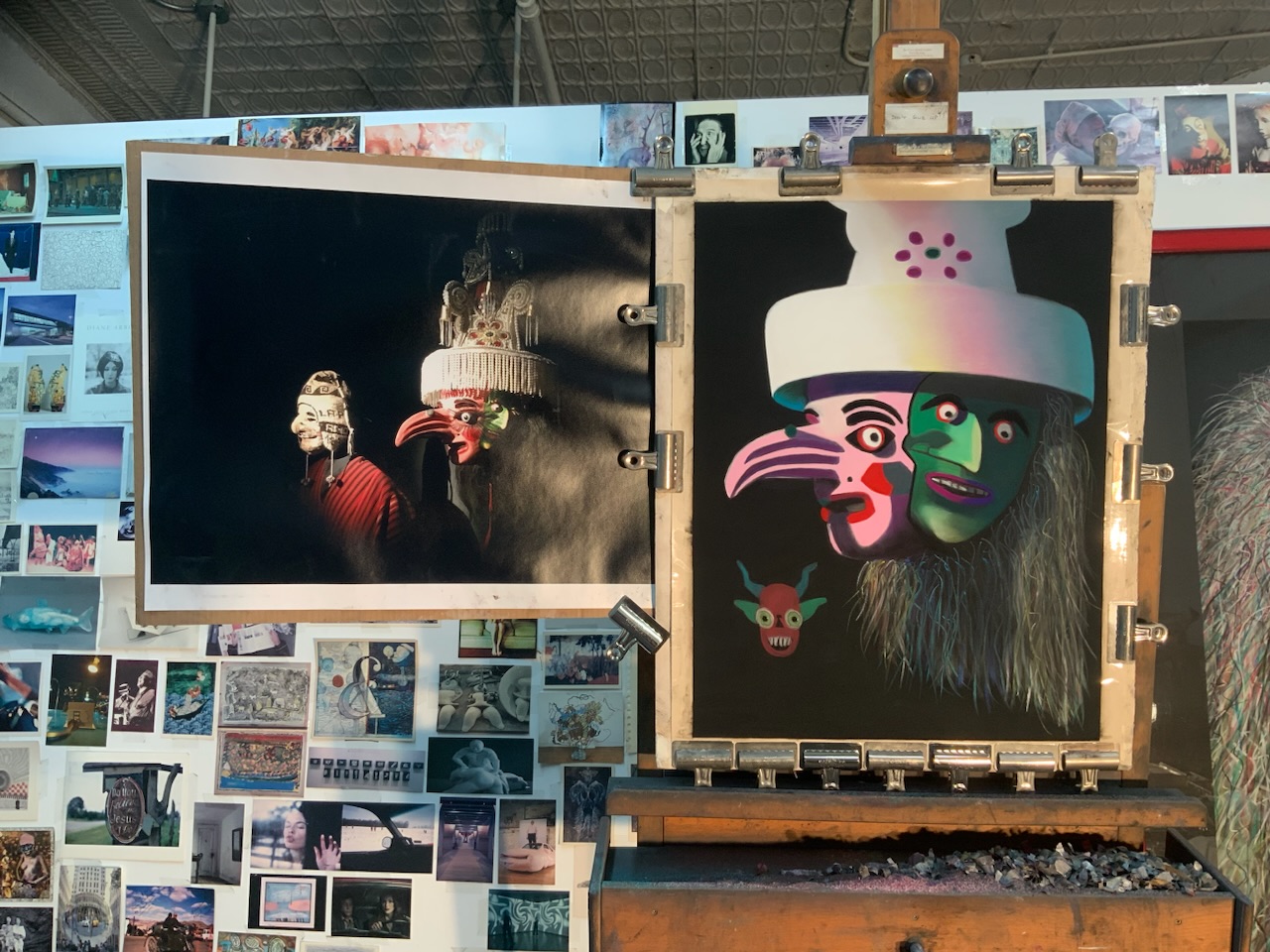
In progress: “Shadow,” soft pastel on sandpaper, 26” x 20”
*an ongoing series of quotations – mostly from artists, to artists – that offers wisdom, inspiration, and advice for the sometimes lonely road we are on.
A word derived from Latin, persona, originally referred to the masks worn by actors in ancient classical theatre. In Jungian psychology, this term refers to the inner character that we use to face the world. Drawn from societal expectations, cultural norms, and natural attributes, it is the person we want others to think we really are. Our persona is our brave face, our false front. It is the ongoing project of building our ideal self.
… the persona is our somewhat embellished view of ourselves, the shiny face that we want the world to see. It’s opposite, everything we reject about ourselves, is called the shadow.
… our shadow is the pain we’ve forgotten about. It is a complex within us, a split-off part our consciousness loaded with emotional weight. Our persona is what we want to be seen to be; shadow is what we least want to be.
Gary Bobroff in Carl Jung: Knowledge in a Nutshell
Comments are welcome!
Pearls from artists* # 515

*an ongoing series of quotations – mostly from artists, to artists – that offers wisdom, inspiration, and advice for the sometimes lonely road we are on.
“Under [General Francisco] Franco,” he said, “attendance at Catholic holidays was obligatory and much Catalan folklore was banned. People avoided the religious processions and, once they were no longer mandatory, ignored them… Marvesa’s [Spain] festive license of demons and dragons is no longer of darkness. If Franco claimed the mantle of Catholic light, then to party as Catalan devils is a happy celebration of freedom.
Demons and dragons are a customary feature of saints’ days and Corpus-Christi festivals throughout Spain and its former empire. They are also common in Carnivals. Indeed, it is partly because of the presence of demons, dragons, and other masked transgressive figures that Carnival has been so often designated – by defenders and detractors alike – as a pagan or devilish season, a time of unrestrained indulgence before the ascetic penances of Lent.
Julio Caro Baroja, the father of Spanish Carnival studies, scorned the antiquarian notion that the masked figures and seasonal inversions of Carnival were “a mere survival” of ancient pagan rituals. Carnival, he argued, was first nurtured by the dualistic oppositions of Christianity. Where it survives – for when he wrote it had been banned by Franco – it still enacts these old antagonisms. “Carnival,” he concluded, “is the representation of paganism itself face-to-face with Christianity.”
... Peter Burke, one of the more lucid historians of popular culture, has proposed that “there is a sense in which every festival [in early modern Europe] was a miniature Carnival because it was an excuse for disorder and because it drew from the same repertoire of traditional forms.
Max Harris in Carnival and Other Christian Festivals: Folk Theology and Folk Performance
Comments are welcome!
Pearls from artists* # 491
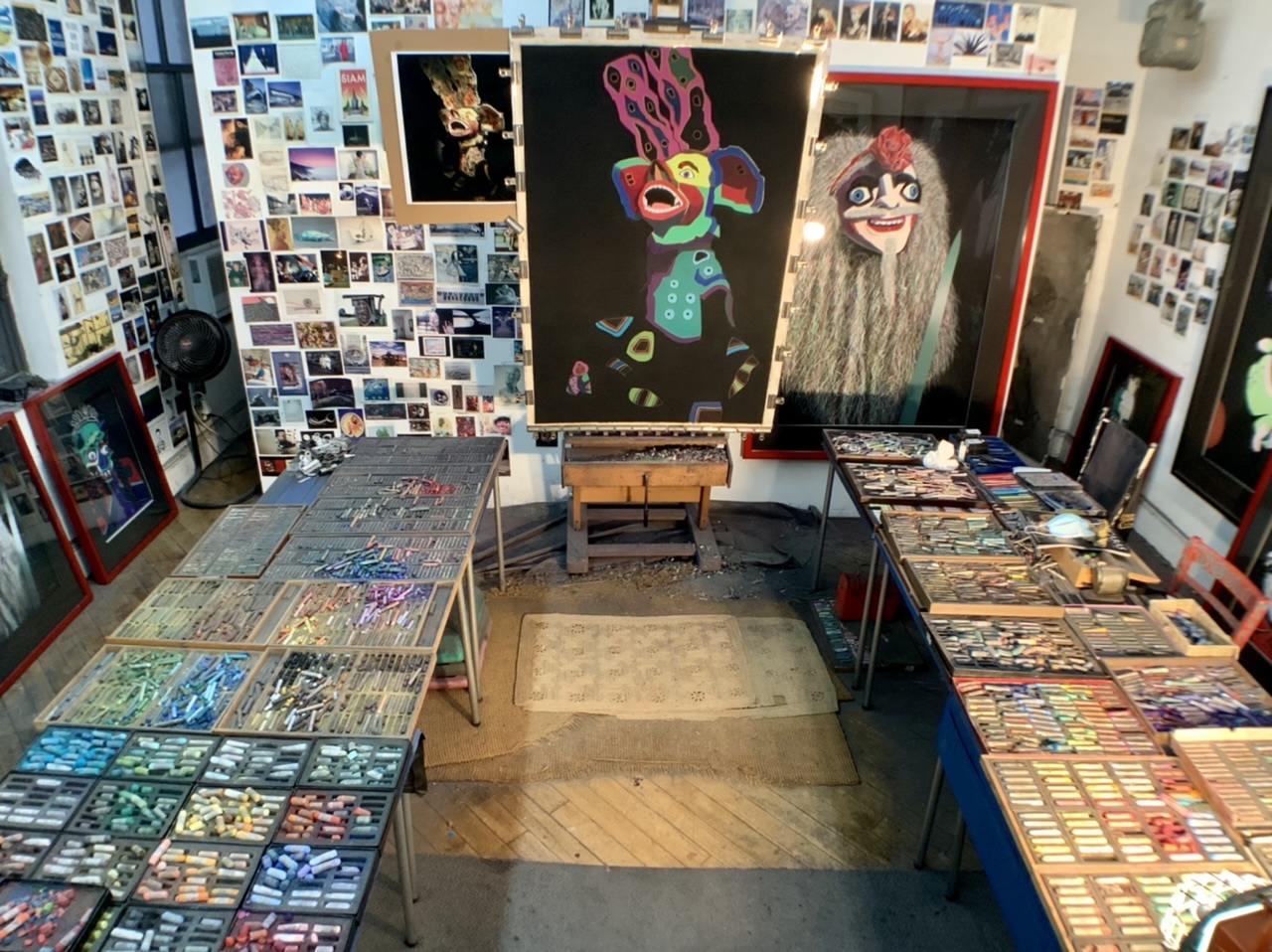
*an ongoing series of quotations – mostly from artists, to artists – that offers wisdom, inspiration, and advice for the sometimes lonely road we are on.
We look at ancient Egyptian painting today and may find it slightly comic, but what the Egyptians were trying to do with the figure was reveal the various aspects of the person’s body in the most characteristic aspect. The face is in profile because that reveals the most about the person’s face, but the shoulders are not in profile, they’re facing the viewer, because that’s the most revealing angle for the shoulders. The hips are not in profile, but the feet are. It gives a strange, twisted effect, but it was natural to the Egyptians. They were painting essences, and in order to paint an essence you have to paint it from its most characteristic angle. So they would simply combine the various characteristic essences of the human body. This was a piece of spiritual art. It wasn’t trying to reproduce photographic reality, it was trying to reproduce and combine all the essential features of a person within one figure.
Walter Murch in The Conversations: Walter Murch and the Art of Editing Film by Michael Ondaatje
Comments are welcome!
Q: How does art help you explore and understand other cultures? (Question from Arte Realizzata)
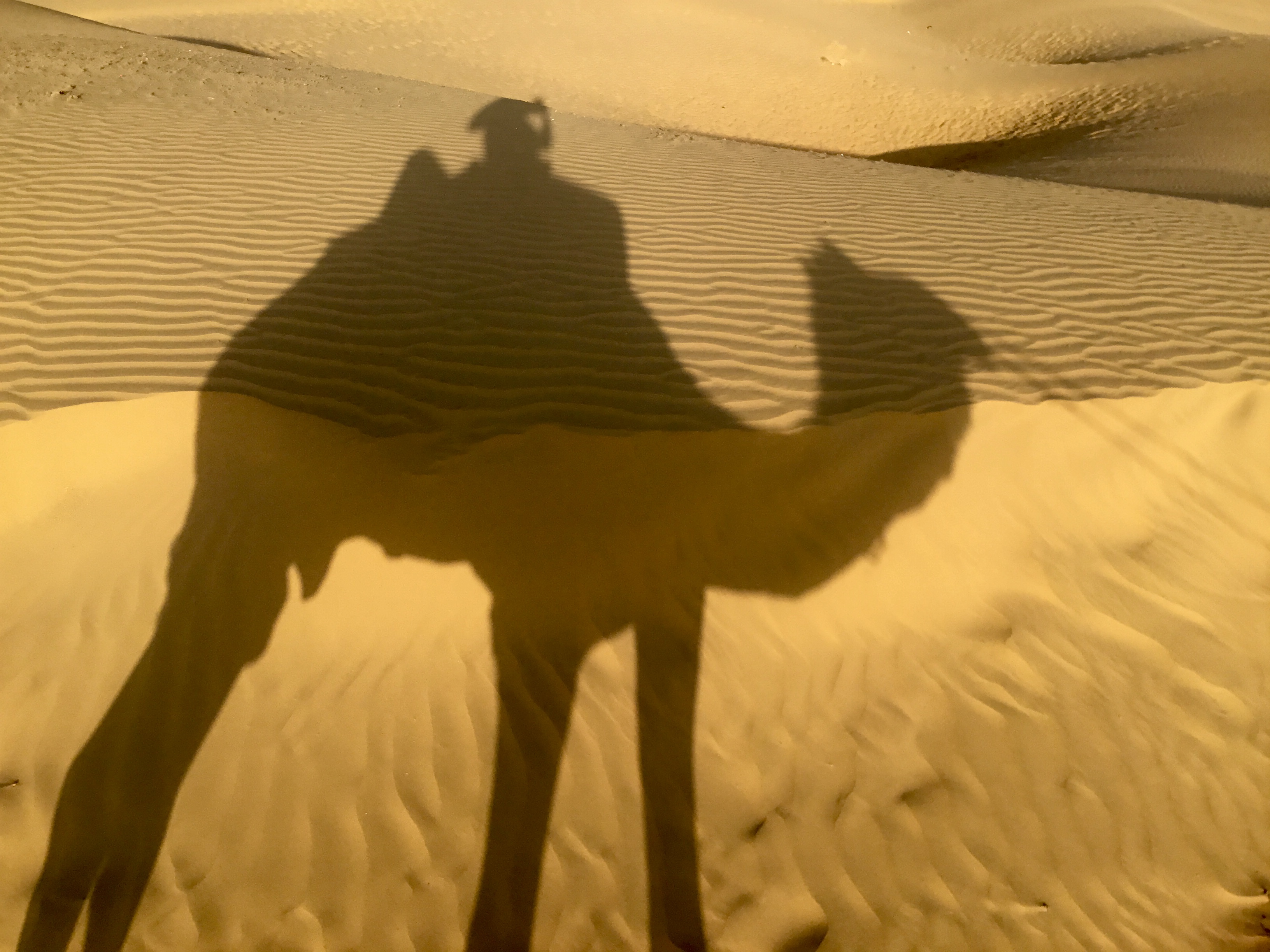
A: Art helps me explore and understand other cultures by revealing our shared humanity across space and time. For me art and travel are intertwined; there is no better education! My art-making has led me to visit fascinating places in search of source material, ideas, and inspiration: to Mexico, Guatemala, Brazil, Argentina, Uruguay, France, England, Italy, Bali, Java, Sri Lanka, and India. I have seen firsthand that people all over the world are the same.
Art has led me to undertake in-depth studies of intriguing subjects: drawing, color, composition, art, art history, the art business, film, film history, photography, mythology, literature, music, jazz, jazz history, and archaeology, particularly that of ancient Mesoamerica (Olmec, Zapotec, Mixtec, Aztec, and Maya), and South America (the Inca and their ancestors).
This rich mixture of creative influences continually grows. For anyone wanting to spend their time on earth studying, learning, and meeting new challenges, there is hardly anything more fascinating than to be a well-travelled, perpetually curious artist!
Comments are welcome!
Pearls from artists* # 384
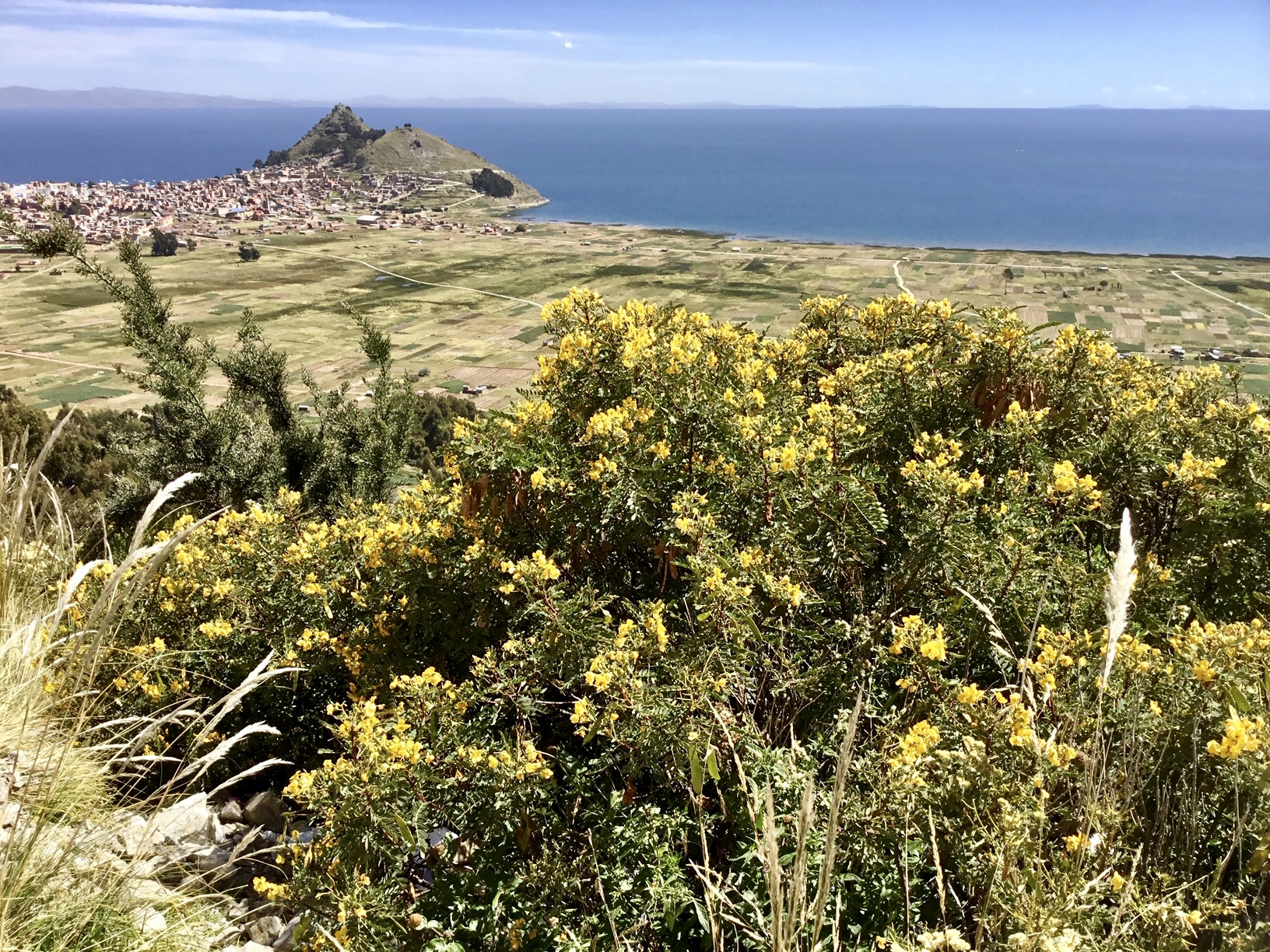
Overlooking Copacabana, Bolivia and Lake Titicaca
* an ongoing series of quotations – mostly from artists, to artists – that offers wisdom, inspiration, and advice for the sometimes lonely road we are on.
Carnival in Oruro [Bolivia] is a glorious spectacle. It’s flash, pomp and brilliance can be enjoyed without understanding its long history and intricate mythologies. Still, the onlooker is left with a thousand questions that are not so easily answered. Behind the glitter of Carnival lie the history, the timeless myths and the distinct traditions of this mining community.
According to the Spanish writer Jean Laude, “The function of the mask is to reaffirm, at regular intervals, the truth and presence of myths in everyday life.” This suggests that masks should be studied in context, noting their association with the individual dancer and the history, myths and traditions of the community that produces them. The mask has to be animated within its ritual, comic or social role.
A first step in appreciating the masks is to understand something of the land and people that crafted them. Oruro is a mining city on the open Altiplano at 3,700 meters (12,144 ft.) above sea level. The sky appears a rarified blue, it is intensely cold and a constant wind lifts dust to the eyes. During the year no more than 125,000 people live in the city. Suddenly in the weeks of Carnival, the population doubles or triples.
Three languages, Quechua, Aymara, and Spanish are spoken in Oruro. Their use reflects an ancient pattern of conquest in the history of this land. It is said that the Urus, whose language is now almost lost, were the first inhabitants. In time they were dominated by the Aymara tribes. Later, Quechua was introduced as the Inca advanced their empire from Cuzco. Ultimately the Spanish arrived and founded the present city in 1601 to exploit rich mineral deposits found in the seven hills.
Today, descendants of the Urus live near Oruro around the shore of Lake Poopo. Elements of their distinctive culture remain but they have no wealth in comparison with the more dominant Aymara and Quechua who surround them. A further change came in the recent past because Oruro has acted as a magnet, attracting many people from the countryside to work in the mines.
On one side were the Urus, ancient owners of all the land which now only carries their name (Uro Uro = Oruro). On the other side were the miners, many of whom were Quechua and Aymara migrants. In the middle is “Carnival.”
El Carnaval de Oruro by Manuel Vargas in Mascaras de los Andes Bolivianos, Editorial Quipus and Banco Mercantil
Comments are welcome!
Q: When did your love of indigenous artifacts begin? Where have you traveled to collect these focal points of your works and what have those experiences taught you?
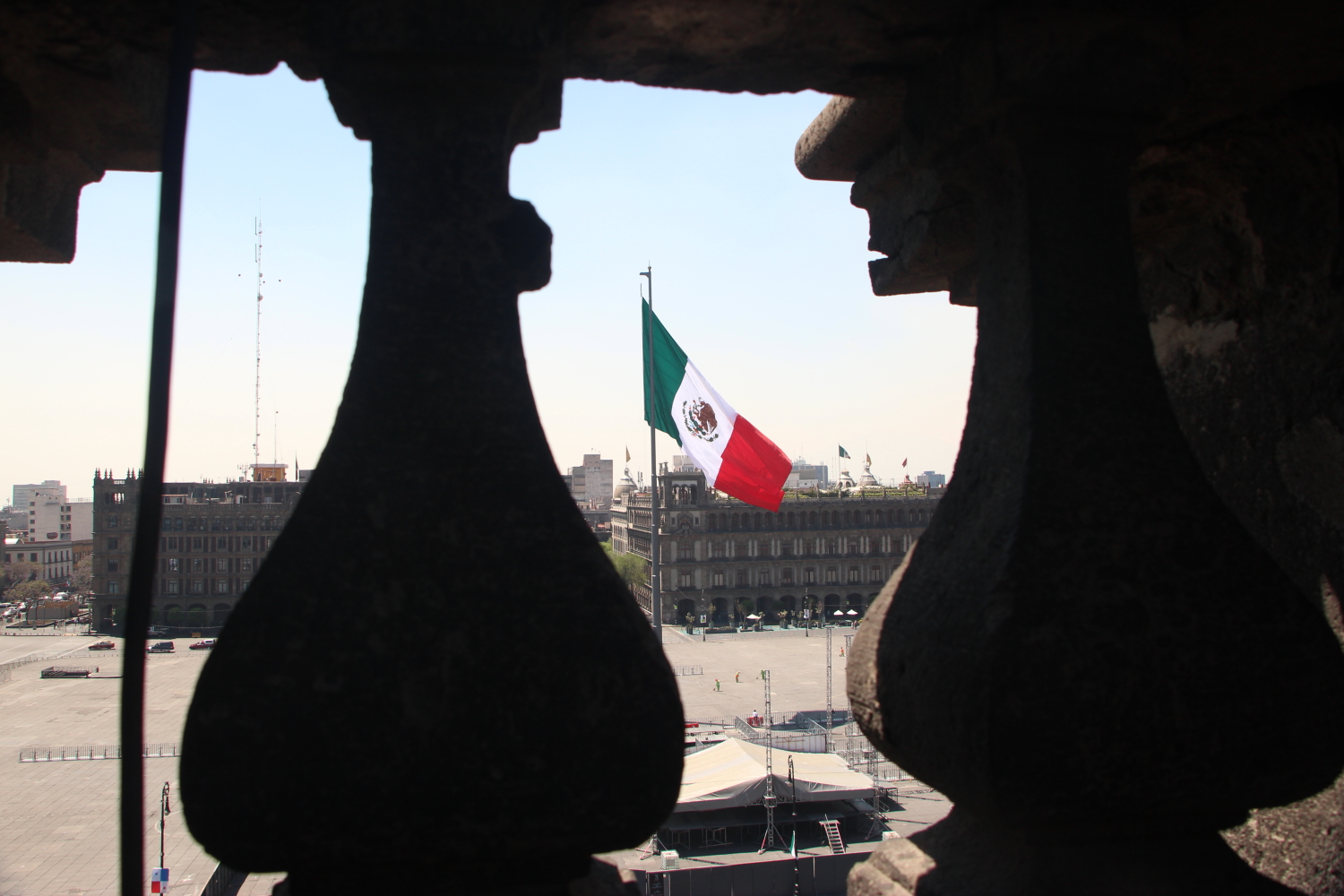
Mexico City
A: As a Christmas present in 1991 my future sister-in-law sent me two brightly painted wooden animal figures from Oaxaca, Mexico. One was a blue polka-dotted winged horse. The other was a red, white, and black bear-like figure.
I was enthralled with this gift and the timing was fortuitous because I had been searching for new subject matter to paint. I started asking artist-friends about Oaxaca and learned that it was an important art hub. Two well-known Mexican painters, Rufino Tamayo and Francisco Toledo, had gotten their start there, as had master photographer Manuel Alvarez Bravo. There was a “Oaxacan School of Painting” (‘school’ meaning a style) and Alvarez Bravo had established a photography school there (the building/institution kind). I began reading everything I could find. At the time I had only been to Mexico very briefly, in 1975.
The following autumn, Bryan and I planned a two-week trip to visit Mexico. We timed it to see Day of the Dead celebrations in Oaxaca. (During my research I had become fascinated with this festival). We spent one week in Oaxaca followed by one week in Mexico City. My interest in collecting Mexican folk art was off and running!
Along with busloads of other tourists, we visited several cemeteries in small Oaxacan towns for the “Day of the Dead.” The indigenous people tending their ancestors’ graves were so dignified and so gracious, even with so many mostly-American tourists tromping around on a sacred night, that I couldn’t help being taken with these beautiful people and their beliefs.
From Oaxaca we traveled to Mexico City, where again I was entranced, but this time by the rich and ancient history. We visited the National Museum of Anthropology, where I was introduced to the fascinating story of ancient Mesoamerican civilizations; the ancient city of Teotihuacan, which the Aztecs discovered as an abandoned city and then occupied as their own; and the Templo Mayor, the historic center of the Aztec empire, infamous as a place of human sacrifice. I was astounded! Why had I never learned in school about Mexico, this highly developed cradle of Western civilization in our own hemisphere, when so much time had been devoted to the cultures of Egypt, Greece, and elsewhere? When I returned home to Virginia I began reading everything I could find about ancient Mexican civilizations, including the Olmec, Zapotec, Mixtec, Aztec, and Maya. The first trip to Mexico opened up a whole new world and was to profoundly influence my future work. I would return there many more times, most recently to study Olmec art and archeology. In subsequent years I have traveled to Guatemala, Peru, Bolivia and other countries in search of inspiration and subject matter to depict in my work.
Comments are welcome!
Pearls from artists* # 211
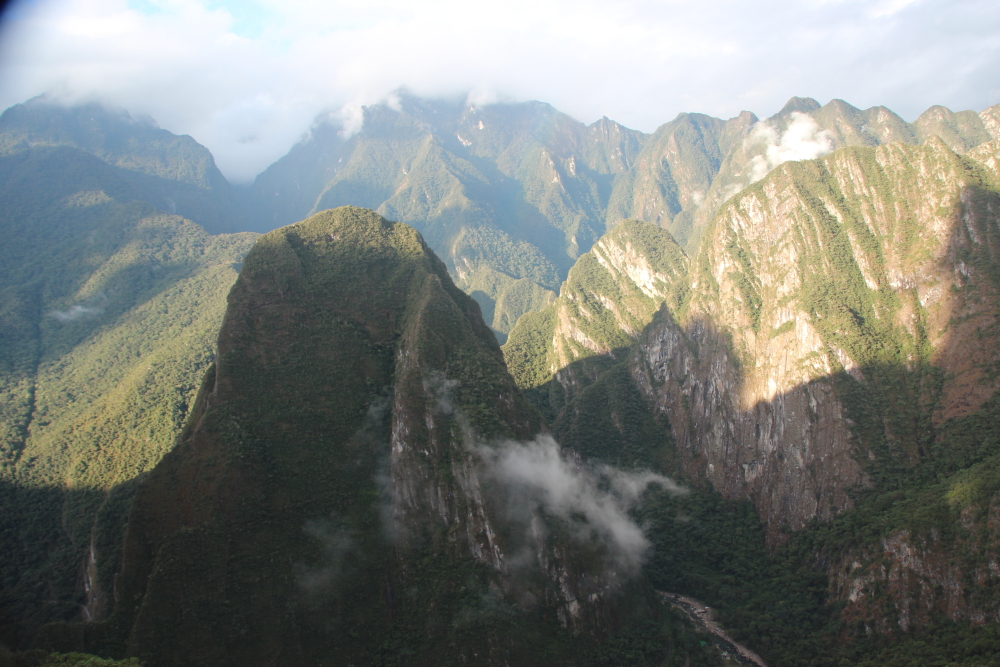
Machu Picchu
* an ongoing series of quotations – mostly from artists, to artists – that offers wisdom, inspiration, and advice for the sometimes lonely road we are on.
There is an ancient view that beauty is the object of a sensory rather than an intellectual delight, and that the senses must always be involved in appreciating it. Hence, when the philosophy of art became conscious of itself at the beginning of the eighteenth century, it called itself ‘aesthetics,’ after the Greek aesthesis, sensation. When Kant wrote that the beautiful is that which pleases immediately, and without concepts, he was providing a rich philosophical embellishment to this tradition of thinking. Aquinas too seems to have endorsed the idea, defining the beautiful in the first part of the Summa as that which is pleasing to sight (pulchra sunt quae visa placent). However, he modifies this statement in the second part, writing that ‘the beautiful relates only to sight and hearing of all the senses, since these are the most cognitive (maxime cognoscitive) among them.’ And this suggests, not only that he did not confine the study of beauty to the sense of sight, but that he was less concerned with the sensory impact of the beautiful than with its intellectual significance – even if it is a significance that can be appreciated only through seeing or hearing.
Beauty: A Very Short Introduction, by Roger Scruton
Comments are welcome!


 barbararachkoscoloreddust.com