Blog Archives
Q: What’s on the easel today?
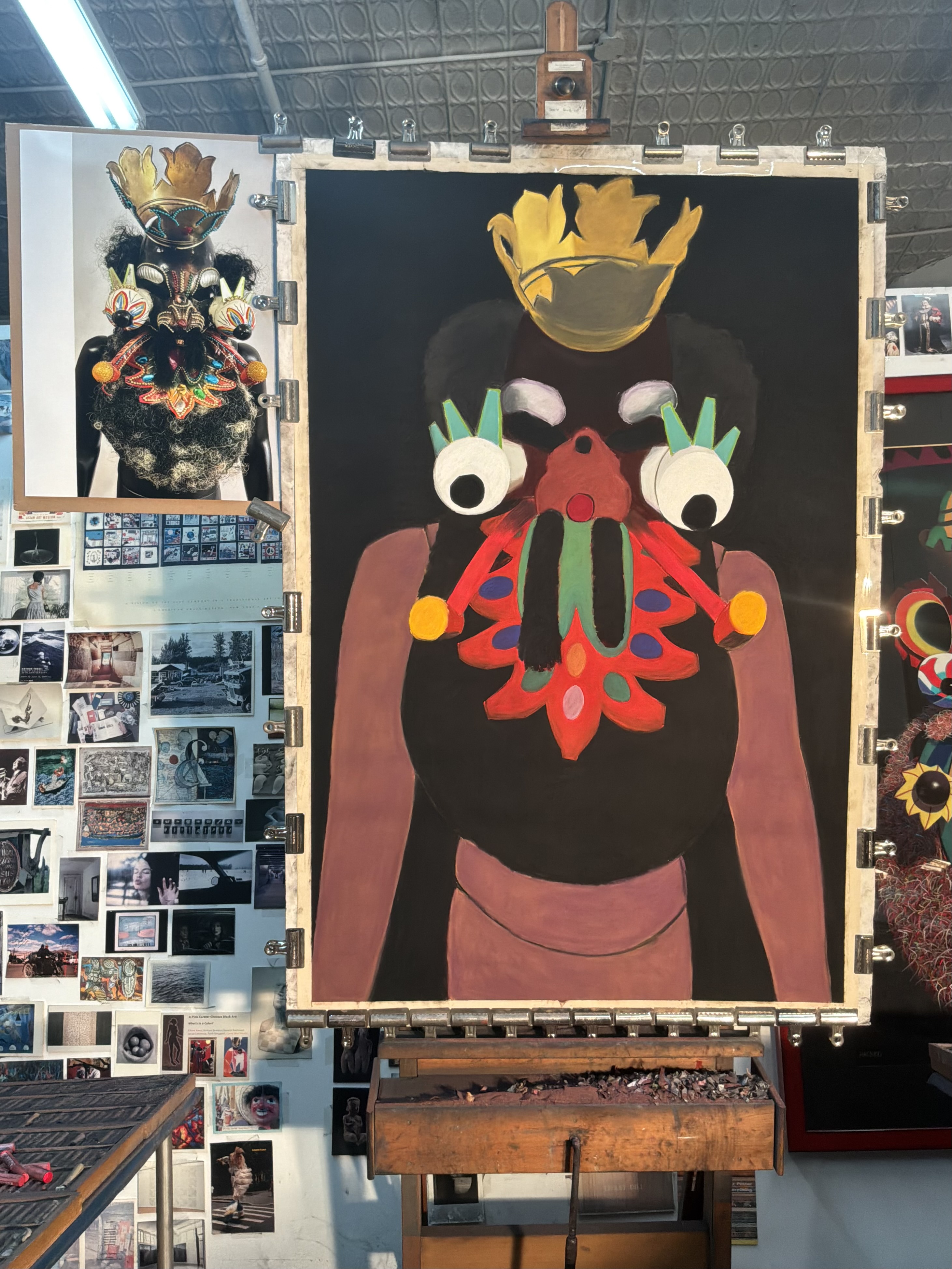
Pastel painting in progress
A: I’m slowly working on an untitled, large, 58” x 38,” “Bolivianos” pastel painting based on a reference photo taken in La Paz in February. This one is number thirty-six in the series.
Comments are welcome!
Q: You once faced a major creative block. How did you break through it? (Question from “Pastel, Passion, and Perseverance: An Interview with Barbara Rachko” in .ART Odyssey: Healing)

A: That was in 2007, after I finished my Domestic Threats series. The last painting in that series hardly interested me. I was wringing my hands, thinking, “I’m a full-time artist not making art —what do I do NOW?” It was frightening. At the time, I was also taking a jazz history class at Lincoln Center. One day the instructor spoke about Miles Davis.
He explained how Davis moved away from bebop —where musicians packed in as many notes as possible to show off—to cool jazz, where every note carried weight.
And something clicked. I realized I’d been working like bebop: showing off meticulous detail, every stitch of fabric, every grain in a wooden floor.
That revelation was my way forward. I stripped everything back. No more domestic backdrops. Just the figures, placed against solid black. Only what mattered. That was the beginning of my Black Paintings.
The block that had haunted me for months lifted in an instant, because I’d found a new way to speak. I realized the black background represented the dark place I had emerged from; the vibrant figures symbolized resilience and life.
It was like a lightbulb going off.
Comments are welcome!
Q: What’s on the easel today?

Work in progress
A: I continue slowly working on “Metamorph.” 26” x 20,” soft pastel on sandpaper.
Comments are welcome!
(In celebration of the 14th anniversary of my blog today, I am republishing the very first post from July 15, 2012). Q: What does it take to be an artist, especially one living and working in New York?
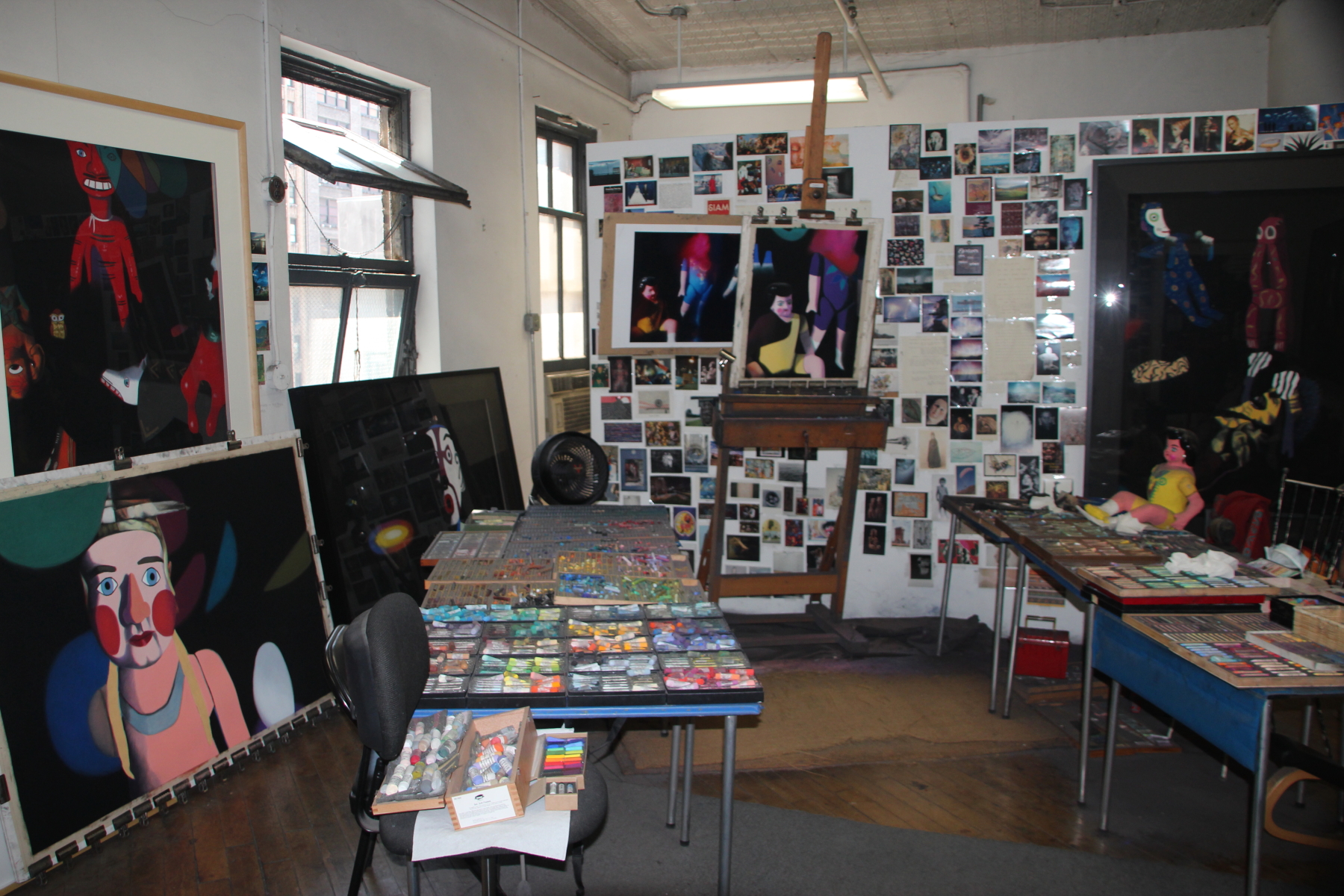
A: The three Big P’s – Patience, Persistence, and Passion. Without all three you will not have the stamina to work tirelessly for very little external reward. You can expect help from no one.
There are so many obstacles to art-making and countless reasons to just give up. When you really think about it, it’s amazing that great art gets made at all. So why do we do it? Above all, it’s about making our time on earth matter, about devotion to our innate gifts and love of our hard-fought creative process.
And, my God, it even gets harder as we get older! So what do we do? We dig in that much deeper. It’s a most noble and sacred calling – you know when you have it – and that’s what separates those of us who are in it for the long haul from the wimps, fakers, and hangers-on. I say to my fellow artists who continue to work despite the endless challenges, we are all true heroes!
These words still ring true – even though they sound naive now – and it’s good, even for me, to occasionally be reminded.
Most importantly, THANK YOU to my 229,000+ subscribers for taking this journey with me. When I began this blog in 2012, I had no idea it would prove to be so popular… WOW!
Comments are welcome!
Q: You’ve been working with the same medium and subject matter for decades. How did that begin, and how has it sustained you for so long? (Question from “Pastel, Passion, and Perseverance: An Interview with Barbara Rachko” in .ART Odyssey: Healing)
A: Back in the early 1990s I began using folk art as my subject matter, and I was incredibly lucky. More than thirty years later, I’m still working with it. As artists, we don’t know at the start whether a subject will sustain us, whether it will keep our curiosity alive. For me it has. I’ve always been fascinated by different cultures around the world, and that continues to feed the work. There’s freedom in that kind of framework.
I chose pastel on sandpaper as my medium. I don’t have to question it anymore. That choice itself has opened space to keep growing.
Comments are welcome!
Pearls from artists* # 708

*an ongoing series of quotations – mostly from artists, to artists – that offers wisdom, inspiration, and advice for the sometimes lonely road we are on
Free play must be tempered with judgment, and judgment tempered with freedom to play. We perform innumerable balancing acts, dances between opposite poles, each of which is necessary for life and art to exist. We have to live right on the balance point of an equi-valence between free flow of impulse and constant testing and questing for quality. With too little judgment, we get trash. We too much judgment, we get blockage. In order to play freely, we must have a command of technique. Back and forth flows the dialogue of imagination and discipline, passion and precision. We harmonize groundedness in daily practice with spiritedness in daily stepping out into the unknown.
Stephen Nachmanovitch in Free Play: Improvisation in Life and Art
Comments are welcome!
Q: What’s on the easel today?
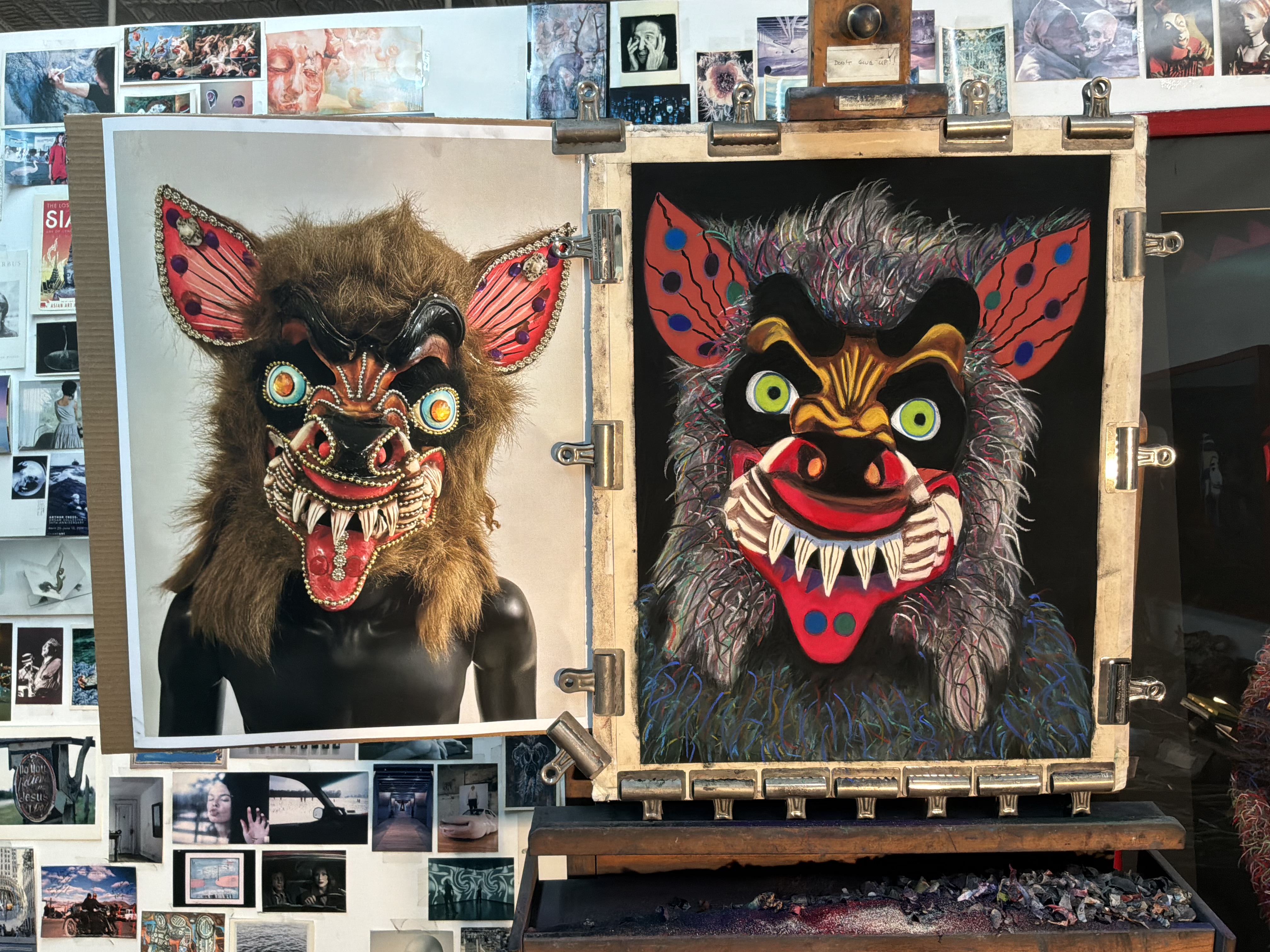
Work in progress
A: I continue slowly working on “Metamorph,” 26” x 20,” soft pastel on sandpaper.
Comments are welcome!
Q: What makes you lose track of time — and find yourself again? (Question from Bold Journey)
A: When I’m having a productive day in the studio, I’m fully present and absorbed. Working in soft pastel on sandpaper, I become immersed in solving technical problems and improving the painting on my easel. Hours pass unnoticed, and I often need to remind myself to stop for lunch. Nothing exists except the work and my relationship with it. Most artists know this feeling of flow—a state of being that’s both natural and essential to creative work.
Comments are welcome!
Pearls from artists* # 696

*an ongoing series of quotations – mostly from artists, to artists – that offers wisdom, inspiration, and advice for the sometimes lonely road we are on.
Although it’s important to make communities with like-minded people — people who are your age, your generation, who are working on projects that have resonance with yours — I am a firm believer in crossing generations to find mentorship and inspiration, and a sense of furthering the craft. So I’d say that as you begin to seek mentorship, be creative about where you look. Look in unlikely places, and make it more likely that you will cross boundaries and reach a wider, more culturally and intellectually diverse audience.
Anna Deavere Smith in Letters to a Young Artist: Straight-Up Advice on Making a Life in the Arts — for Actors, Performers, Writers, and Artists of Every Kind”
Comments are welcome!
Q: What’s on the easel today?
Work in progress
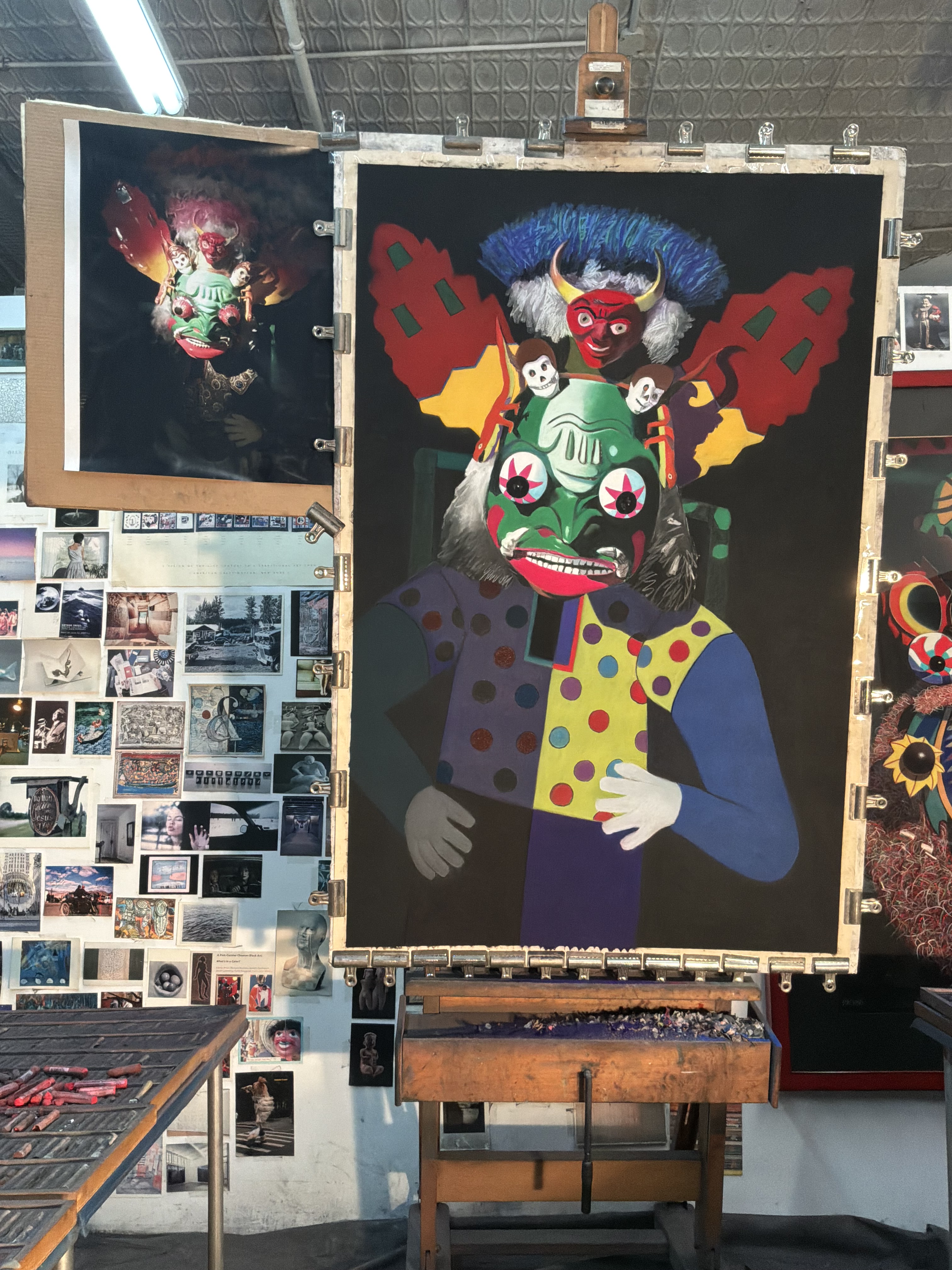
A: I continue working on “Gatecrasher,” soft pastel on sandpaper, 58” x 38.” In February I was privileged to visit this mask on exhibit at MUSEF La Paz in Bolivia. It was my second visit to the museum; the first was in 2017. Even more so this time, I was bowled over with how spectacular this particular mask is in person. Plus, I had forgotten its huge size. So I am absolutely determined to bump up my game and even more inspired to make this painting as strong and powerful as I possibly can!
Comments are welcome!



