Blog Archives
Pearls from artists* # 722
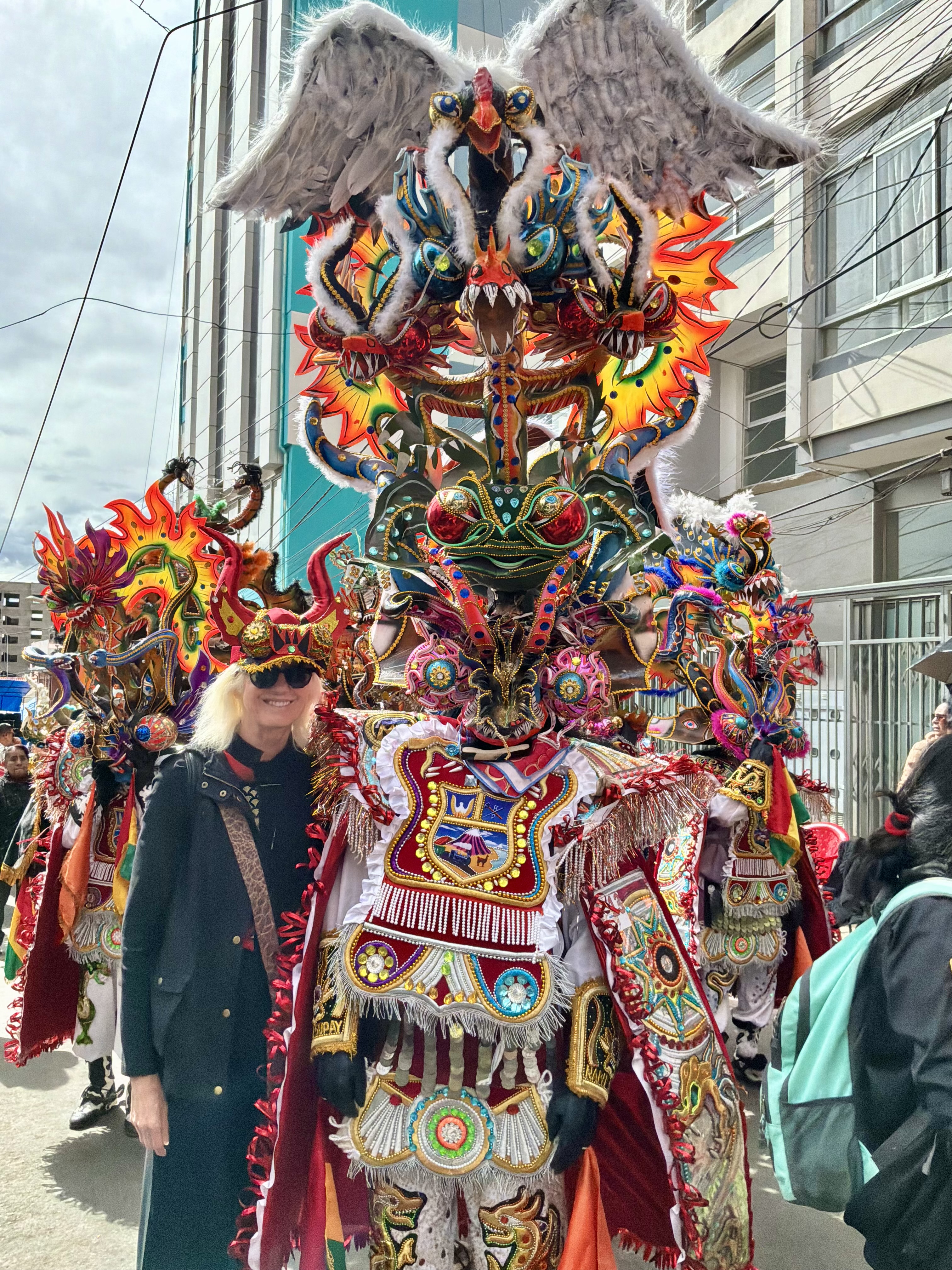
Barbara attending Carnival in Oruro, Bolivia!
*an ongoing series of quotations – mostly from artists, to artists – that offers wisdom, inspiration, and advice for the sometimes lonely road we are on
One of the most insidious kinds of pressure to which an artist can succumb is the pressure to be accessible. Well-meaning advisors may tell you that x is acceptable, marketable, popular and wealthy. But if you alter your work to be more x-ish, people will spot it as inauthentic; it will not be heartfelt because it does not originate in your own being. By all means develop and revise your work to communicate more and more clearly; but if you alter one word in order to please some imagined market “out there,” the integrity and originality of everything you do is at risk. You get off the sure base of what you really know and are. Whereas if you create your own material in your own way, developing art work that is more and more authentically yours, people will spot it as genuine. In resisting the temptation to accessibility, you are creating a genuine space and living in it.
Stephen Nachmanovitch in Free Play: Improvisation in Life and Art
Comments are welcome!
Pearls from artists* # 714
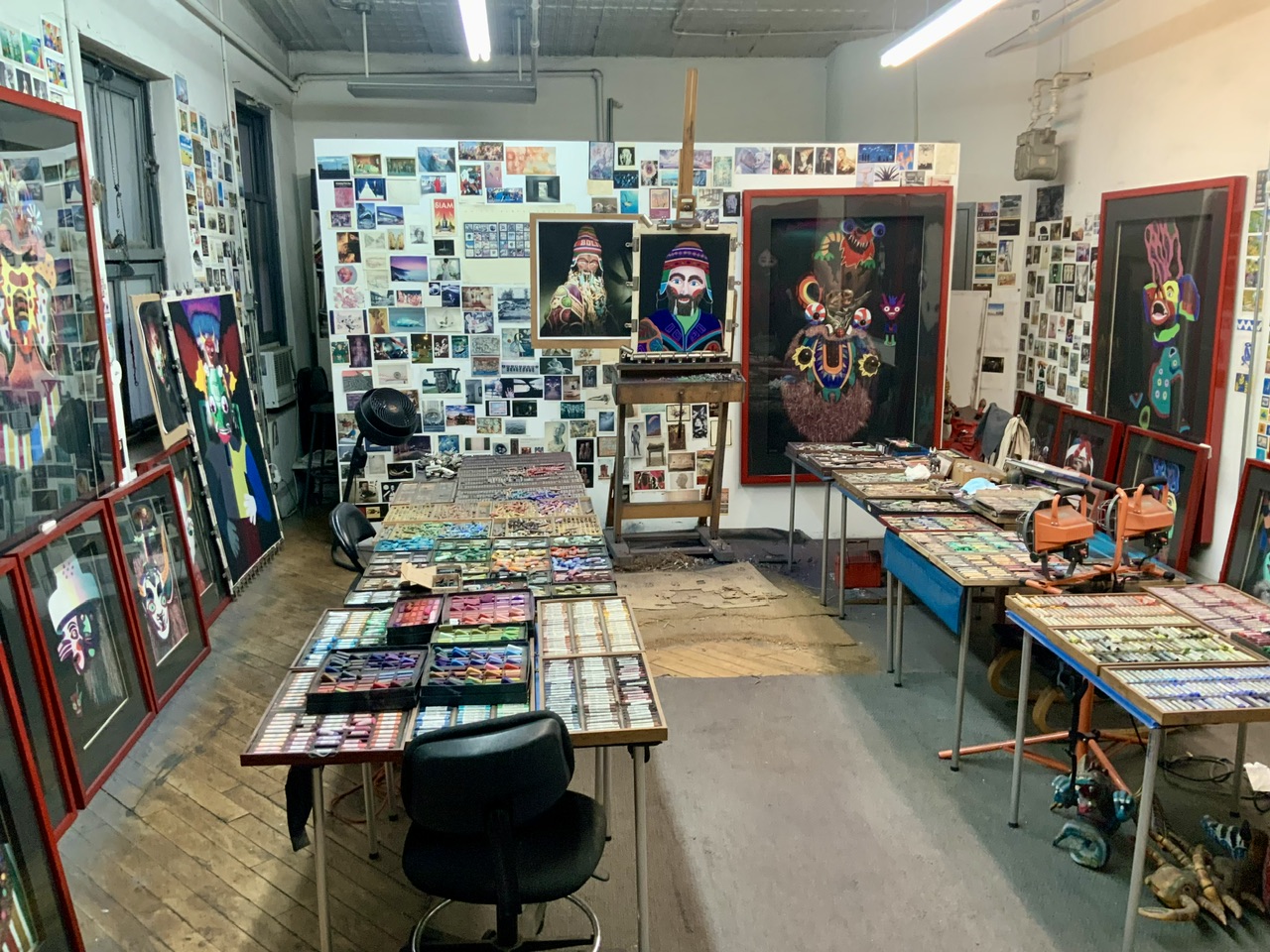
*an ongoing series of quotations – mostly from artists, to artists – that offers wisdom, inspiration, and advice for the sometimes lonely road we are on
A moment comes when we realize that we have fallen in love with our instrument, our sculptor’s tools, our dance floor, our computer. We are in love with music, art, literature, cooking, physics. We feel love of beauty, love of the craft well done, love of the material, of the instruments. We feel the sensuality of playing, and of listening, reading, seeing, learning. The desire to learn and to play, if we have it at all, the motive power of creation, is part of our innate makeup, that craving to reach beyond ourselves.
Stephen Nachmanovitch in Free Play: Improvisation in Life and Art
Comments are welcome!
Pearls from artists* # 713

Dropping off “Magisterial” at the framer
*an ongoing series of quotations – mostly from artists, to artists – that offers wisdom, inspiration, and advice for the sometimes lonely road we are on
One of the great traps at times of blockage is that we may accuse ourselves of a deficit of concentration and focus, a deficit of discipline. We then take a paternal or militaristic attitude toward ourselves. We will force ourselves to work, we will go on a schedule, we will take vows. The most dangerous trap is to get into a contest of strength between “will power” and “won’t power.” Discipline is crucial, but we do not attain it by stiffening up. We attain it by sitting still and penetrating the emptiness within, making of that emptiness a friend rather than an adversary or bogeyman.
When you are stuck, meditate, free associate, do automatic writing, talk to yourself and answer yourself. Play with the blocks. Stay in the temenos of the workplace. Relax, surrender to the bafflement; don’t leave the temenos, and the solution will come. Persevere gently. Use intelleto, the visionary faculty. Stay close to the zero mark; indulge neither in great highs or great lows.
The depths are obscured in us when we try to force feelings; we clarify them by giving them adequate time and space and letting them come. What we experienced yesterday as the pride of creativity or the self-deprecating feeling of incapacity we see today as the signal to surrender.
Like the rules of the universe, the whole matter of personal creativity is baffling and paradoxical. To try to control yourself, to try to create, to try to break free of the knots you yourself have tied is to set yourself up at a distance from that which you already are. It is like looking around this way and that for your own head.
Stephen Nachmanovitch in Free Play: Improvisation in Life and Art
Comments are welcome!
Pearls from artists* # 709
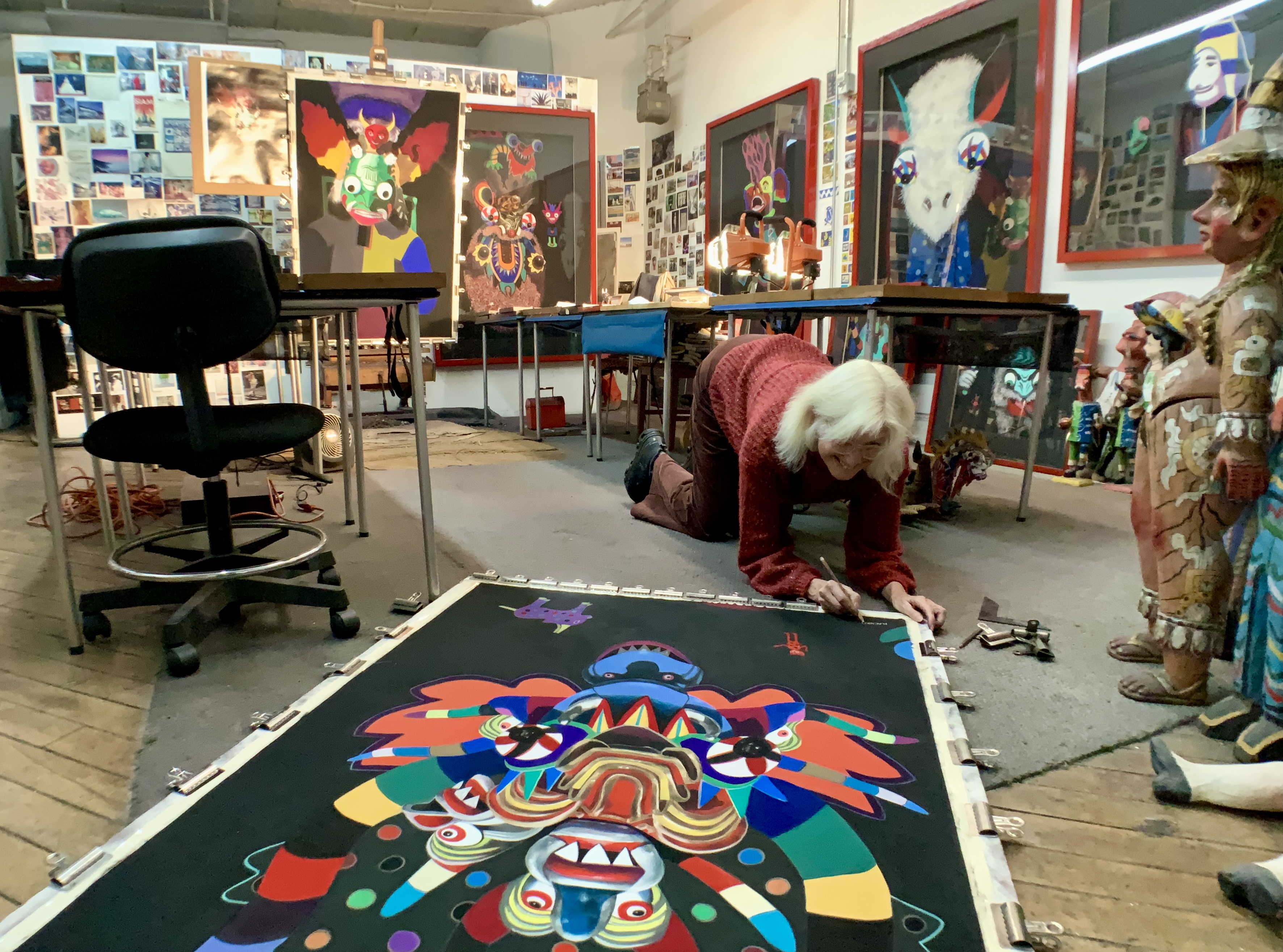
Signing “Magisterial,” soft pastel on sandpaper, 58” x 38”
*an ongoing series of quotations – mostly from artists, to artists – that offers wisdom, inspiration, and advice for the sometimes lonely road we are on
The artist’s life cannot be otherwise than full of conflicts, for two forces are at war within him—on the one hand the common human longing for happiness, satisfaction and security in life, and on the other a ruthless passion for creation which may go so far as to override every personal desire… There are hardly any exceptions to the rule that a person must pay dearly for the divine gift of creative fire.
Carl Jung quoted in Free Play: Improvisation in Life and Art by Steven Nachmanovitch
Comments are welcome!
Pearls from artists* # 708

*an ongoing series of quotations – mostly from artists, to artists – that offers wisdom, inspiration, and advice for the sometimes lonely road we are on
Free play must be tempered with judgment, and judgment tempered with freedom to play. We perform innumerable balancing acts, dances between opposite poles, each of which is necessary for life and art to exist. We have to live right on the balance point of an equi-valence between free flow of impulse and constant testing and questing for quality. With too little judgment, we get trash. We too much judgment, we get blockage. In order to play freely, we must have a command of technique. Back and forth flows the dialogue of imagination and discipline, passion and precision. We harmonize groundedness in daily practice with spiritedness in daily stepping out into the unknown.
Stephen Nachmanovitch in Free Play: Improvisation in Life and Art
Comments are welcome!
Pearls from artists* # 705
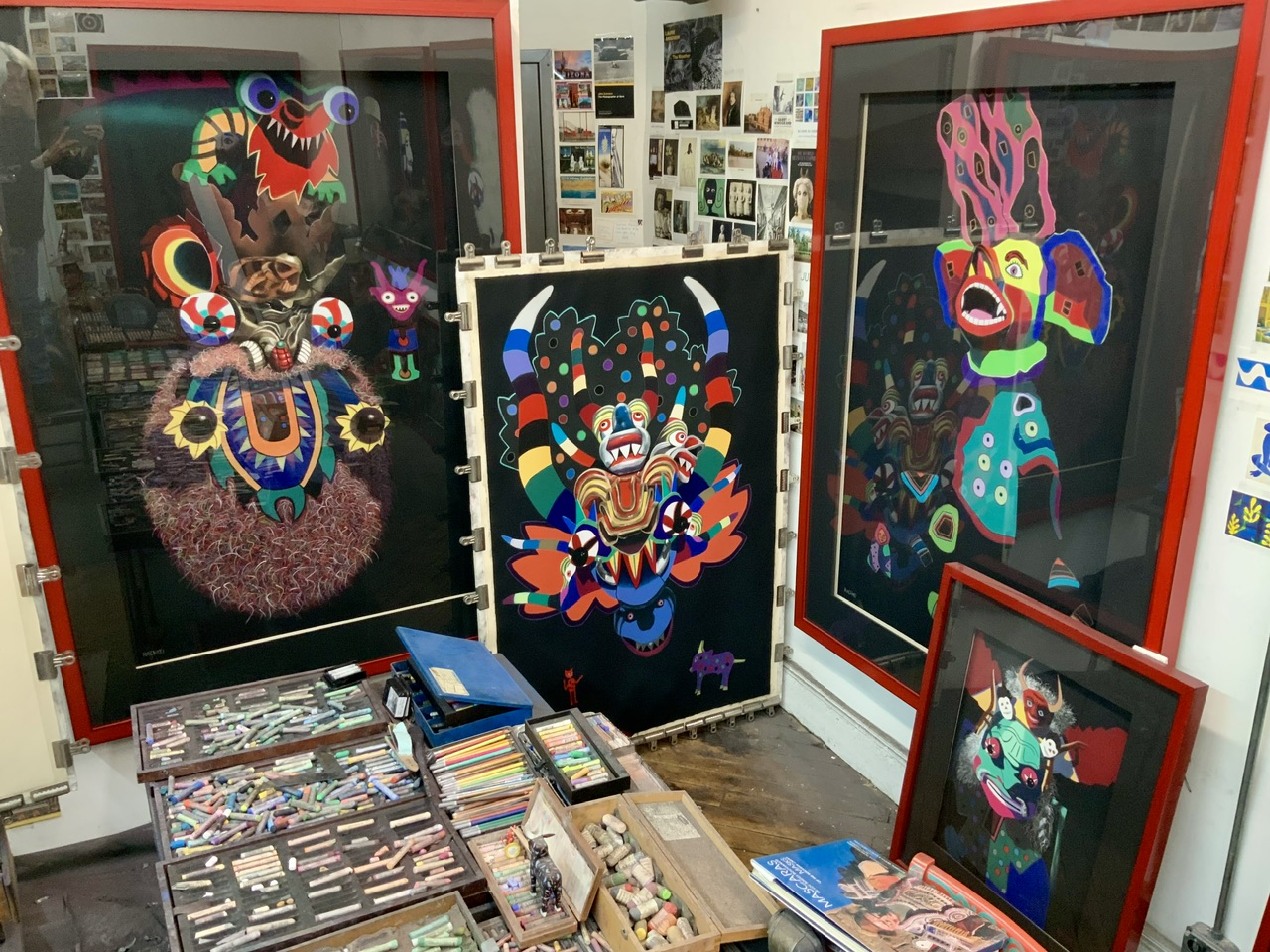
*an ongoing series of quotations – mostly from artists, to artists – that offers wisdom, inspiration, and advice for the sometimes lonely road we are on.
There are infinitely many ways to structure art and as many ways to construe it once it exists. One mark of a great poem, novel, symphony, or painting is that innumerable interpretations are generated—different people see it differently from one time to another. The hundredth time I taste an artwork I love, I still find something new in it, because I am different, and because there is some largeness or manyness in the art that can resonate with the changing versions of myself.
Stephen Nachmanovitch in Free Play: Improvisation in Life and Art
Comments are welcome!
Pearls from artists* # 704
*an ongoing series of quotations – mostly from artists, to artists – that offers wisdom, inspiration, and advice for the sometimes lonely road we are on.
Why do we do art? There may be multiple and serious motivations, such as opening people’s eyes to injustice or saving the world; but if the activity to save the world doesn’t give us joy, what’s the point of having a world, and how will we have the wholeness and energy to carry on? This whole adventure of creativity is about joy and love. We live for the pure joy of being, and out of that joy unfold the ten thousand art forms and all the branches of learning and compassionate activity.
Stephen Nachmanovitch in Free Play: Improvisation in Art and Life
Comments are welcome!
Pearls from artists* # 640

*an ongoing series of quotations – mostly from artists, to artists – that offers wisdom, inspiration, and advice for the sometimes lonely road we are on.
When an artist changes and develops over the years, as is natural to any creative person, such change is met by howls of protest from the marketers. Sometimes an artist (or teacher, scientist, or spiritual guru) starts with something extraordinary, becomes a star, and then their gift is either frozen or perverted.
The growing and risky edge of creative work is devalued, treated as a frill or extracurricular activity decorating the routine of ordinary life. There are few mechanisms available for the artist to construct a self-sustaining way of living and working. “One gathers,” says Virginia Woolf,
“from the enormous modern literature of confession and self-analysis that to write a book of genius is almost always a feat of prodigious difficulty. Everything is against the likelihood that it will come from the writer’s mind whole and entire. Generally, material circumstances are against it. Dogs will bark; people will interrupt; money must be made; health will break down. Further, accentuating all these difficulties and making them harder to bear is the world’s notorious indifference. It does not ask people to write poems and novels and histories; it does not need them. It does not care whether Flaubert finds the right word or whether Carlyle scrupulously verifies this or that fact. Naturally, it will not pay for what it does not want. And so the writer, Keats, Flaubert, Carlyle, suffers, especially in the creative years of youth, every form of distraction and discouragement. A curse, a cry of agony, rises from those books of analysis and confession. “Mighty poems in their misery dead” – that is the burden of their song. If anything comes through in spite of all this, it is a miracle, and probably no book is born entire and uncrippled as it was conceived.”
Stephen Nachmanovitch in Free Play: Improvisation in Art and Life
Comments are welcome!
Pearls from artists* # 637

St. Malo, Brittany, France
*an ongoing series of quotations – mostly from artists, to artists – that offers wisdom, inspiration, and advice for the sometimes lonely road we are on.
After periods during which one has actively tried to solve a problem, but has not succeeded, the sudden right orientation of the situation, and with it the solution, tend to occur at moments of extreme mental passivity… A well-known physicist in Scotland once told me that this kind of thing is generally recognized by physicists in Britain. “We often talk about the Three B’s,” he said, “the Bus, the Bath, and the Bed. That’s where the great discoveries are made in our science.”
In my experience travel helps, too!
Wolfgang Koehler quoted in Free Play: Improvisation in Life and Art by Stephen Nachmanovitch
Comments are welcome!
Pearls from artists* # 636

*an ongoing series of quotations – mostly from artists, to artists – that offers wisdom, inspiration, and advice for the sometimes lonely road we are on.
Some artists will rework a piece for half a lifetime before they know it is finished. An improviser may have to practice for years before being able to play a totally spontaneous minute of music in which every detail is right for its own fleeting moment. The great scientists and scholars are not those who publish or perish at any cost, but rather those who are willing to wait until the pieces of the puzzle come together in nature’s own design. The fruits of improvising, composing, writing, inventing, and discovering may flower spontaneously, but they arise from soil that we have prepared, fertilized, and tended in the faith that they will ripen in nature’s own time.
Stephen Nachmanovitch in Free Play: Improvisation in Life and Art
Comments are welcome!



