Blog Archives
Pearls from artists* # 708

*an ongoing series of quotations – mostly from artists, to artists – that offers wisdom, inspiration, and advice for the sometimes lonely road we are on
Free play must be tempered with judgment, and judgment tempered with freedom to play. We perform innumerable balancing acts, dances between opposite poles, each of which is necessary for life and art to exist. We have to live right on the balance point of an equi-valence between free flow of impulse and constant testing and questing for quality. With too little judgment, we get trash. We too much judgment, we get blockage. In order to play freely, we must have a command of technique. Back and forth flows the dialogue of imagination and discipline, passion and precision. We harmonize groundedness in daily practice with spiritedness in daily stepping out into the unknown.
Stephen Nachmanovitch in Free Play: Improvisation in Life and Art
Comments are welcome!
Pearls from artists* # 705
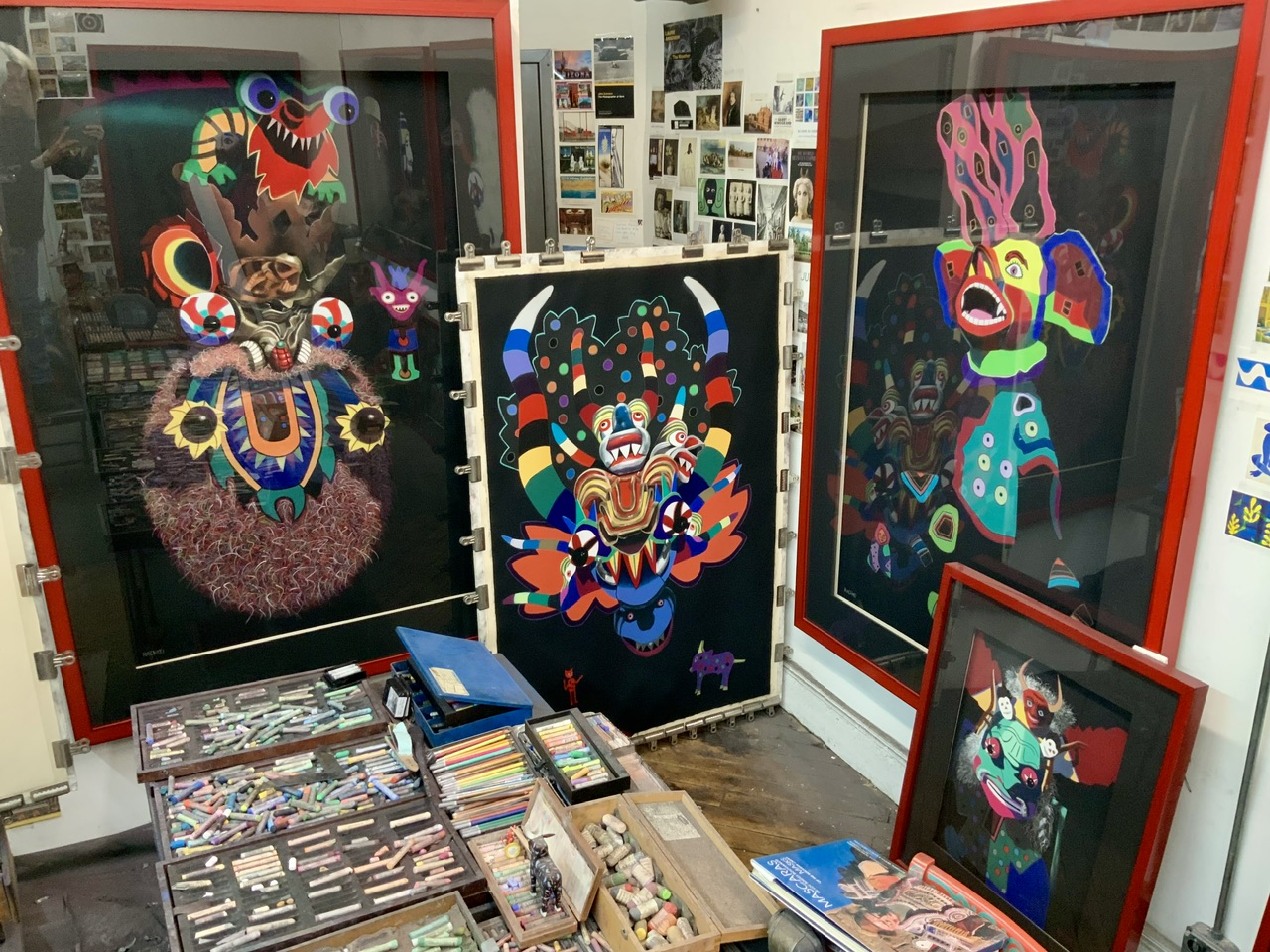
*an ongoing series of quotations – mostly from artists, to artists – that offers wisdom, inspiration, and advice for the sometimes lonely road we are on.
There are infinitely many ways to structure art and as many ways to construe it once it exists. One mark of a great poem, novel, symphony, or painting is that innumerable interpretations are generated—different people see it differently from one time to another. The hundredth time I taste an artwork I love, I still find something new in it, because I am different, and because there is some largeness or manyness in the art that can resonate with the changing versions of myself.
Stephen Nachmanovitch in Free Play: Improvisation in Life and Art
Comments are welcome!
Pearls from artists* # 396
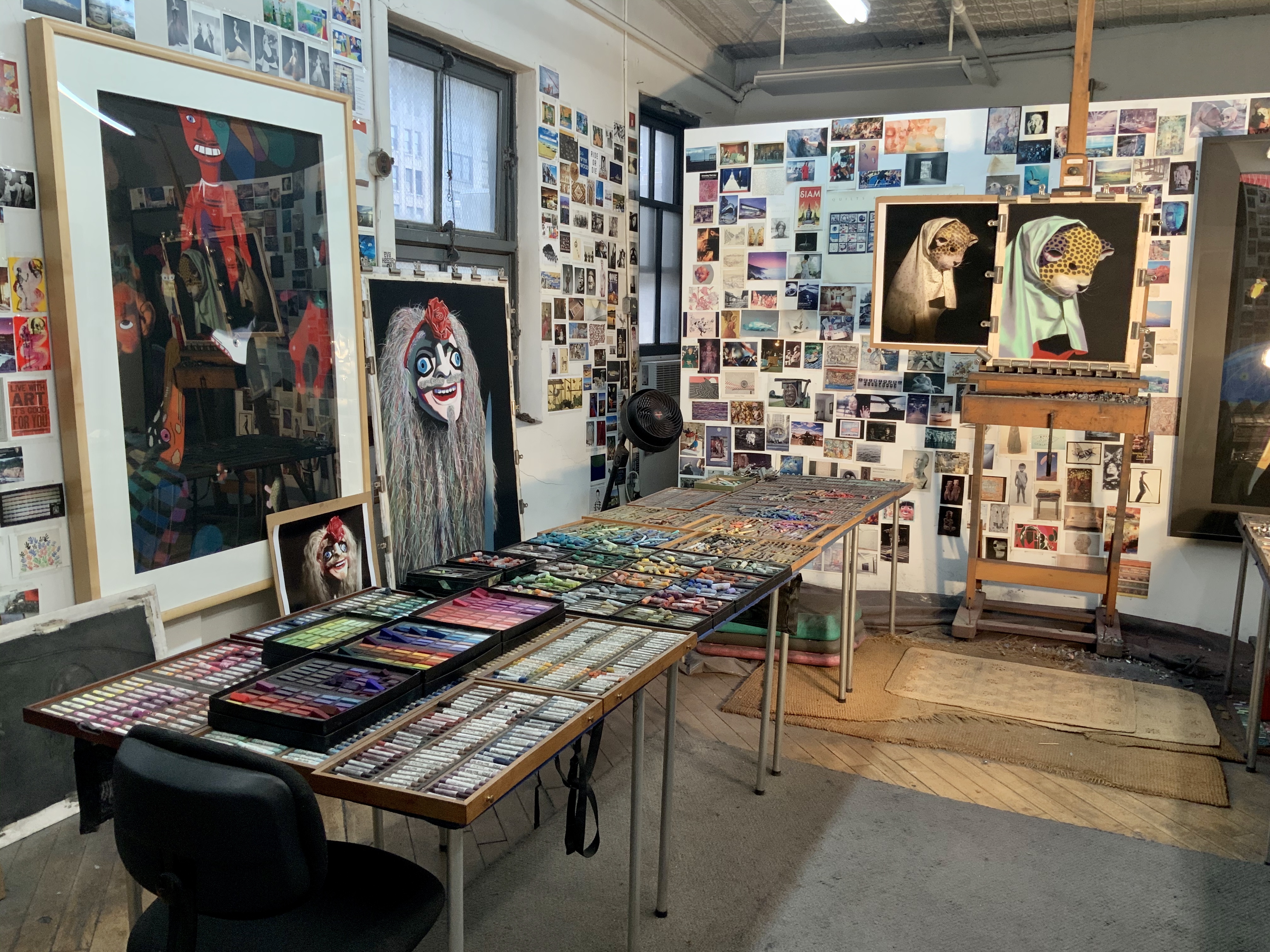
Barbara’s Studio
* an ongoing series of quotations – mostly from artists, to artists – that offers wisdom, inspiration, and advice for the sometimes lonely road we are on.
To summarize, art is expression. Expression is nonutilitarian and has no purpose beyond itself. Early on this led me to define works of art as things whose only function is to be perceived. Since the appearance of such things in everyday life breaks the drift of habit for which we have been hard-wired by evolution, art always occurs as an interruption. In the course of time, humans have produced innumerable works of art, subordinating them to innumerable ends according to the needs of the hour, yet all art exhibits a primal quality that exceeds those appropriations. Because the inherent multivalence of art threatens the desire to reduce things to clear significations, human societies have a tendency to overlook it, with the result that a great many aesthetic objects are called art when they are perhaps something else. To clarify this distinction I called art designed to serve instrumental reason “artifice.” In its worst forms, artifice amounts to aesthetic manipulation of a kind that is indisputably hostile to the ideals of openness, plurality, freedom of thought, and rational disclosure that we were told were the cornerstones of modernity. Art, on the other hand, is innately emancipatory, being itself the affirmation or sign of freedom.
J.F. Martel in Reclaiming Art in the Age of Artifice: A Treatise, Critique, and Call to Action
Comments are welcome!



