Blog Archives
Pearls from artists* # 722
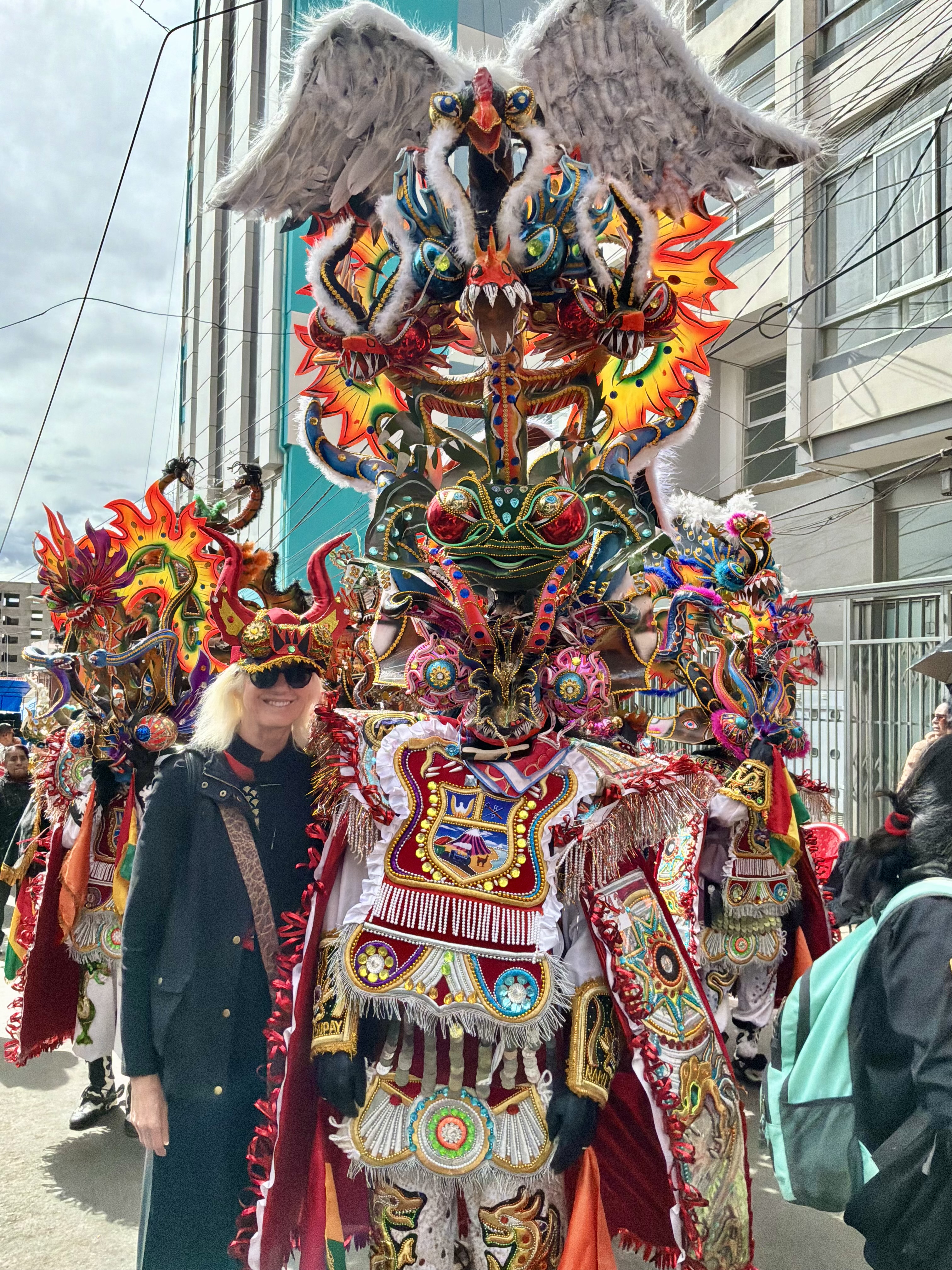
Barbara attending Carnival in Oruro, Bolivia!
*an ongoing series of quotations – mostly from artists, to artists – that offers wisdom, inspiration, and advice for the sometimes lonely road we are on
One of the most insidious kinds of pressure to which an artist can succumb is the pressure to be accessible. Well-meaning advisors may tell you that x is acceptable, marketable, popular and wealthy. But if you alter your work to be more x-ish, people will spot it as inauthentic; it will not be heartfelt because it does not originate in your own being. By all means develop and revise your work to communicate more and more clearly; but if you alter one word in order to please some imagined market “out there,” the integrity and originality of everything you do is at risk. You get off the sure base of what you really know and are. Whereas if you create your own material in your own way, developing art work that is more and more authentically yours, people will spot it as genuine. In resisting the temptation to accessibility, you are creating a genuine space and living in it.
Stephen Nachmanovitch in Free Play: Improvisation in Life and Art
Comments are welcome!
Pearls from artists* # 617
*an ongoing series of quotations – mostly from artists, to artists – that offers wisdom, inspiration, and advice for the sometimes lonely road we are on.
Artists’ pigments, like printers’ inks, have many uses apart from the creation of art. The advertising artist, the illustrator, the portraitist, the stylist, and the decorator all employ the plastic and pictorial devices of the artist. Yet their chief preoccupation, the purpose and function of their effort, is other than the creation of art. It is the commercial artist’s job to enhance the desirability of marketable goods. The illustrator vies with the written word in the description of places or facts and the reporting of events. The portraitist must flatter his patron, while the stylist and decorator adorn his figure, streamline his gadgets, and embellish his property. There may be a resemblance to the outward appearance of art. But the intrinsic relationship is no closer here than that which exists between the composition of birthday greetings, recipes, or advertising copy and the creations of the poet, though the identical phrase and syntax may be used in both.
Mark Rothko in The Artist’s Reality: Philosophies of Art
Comments are welcome!