Blog Archives
Pearls from artists* # 722
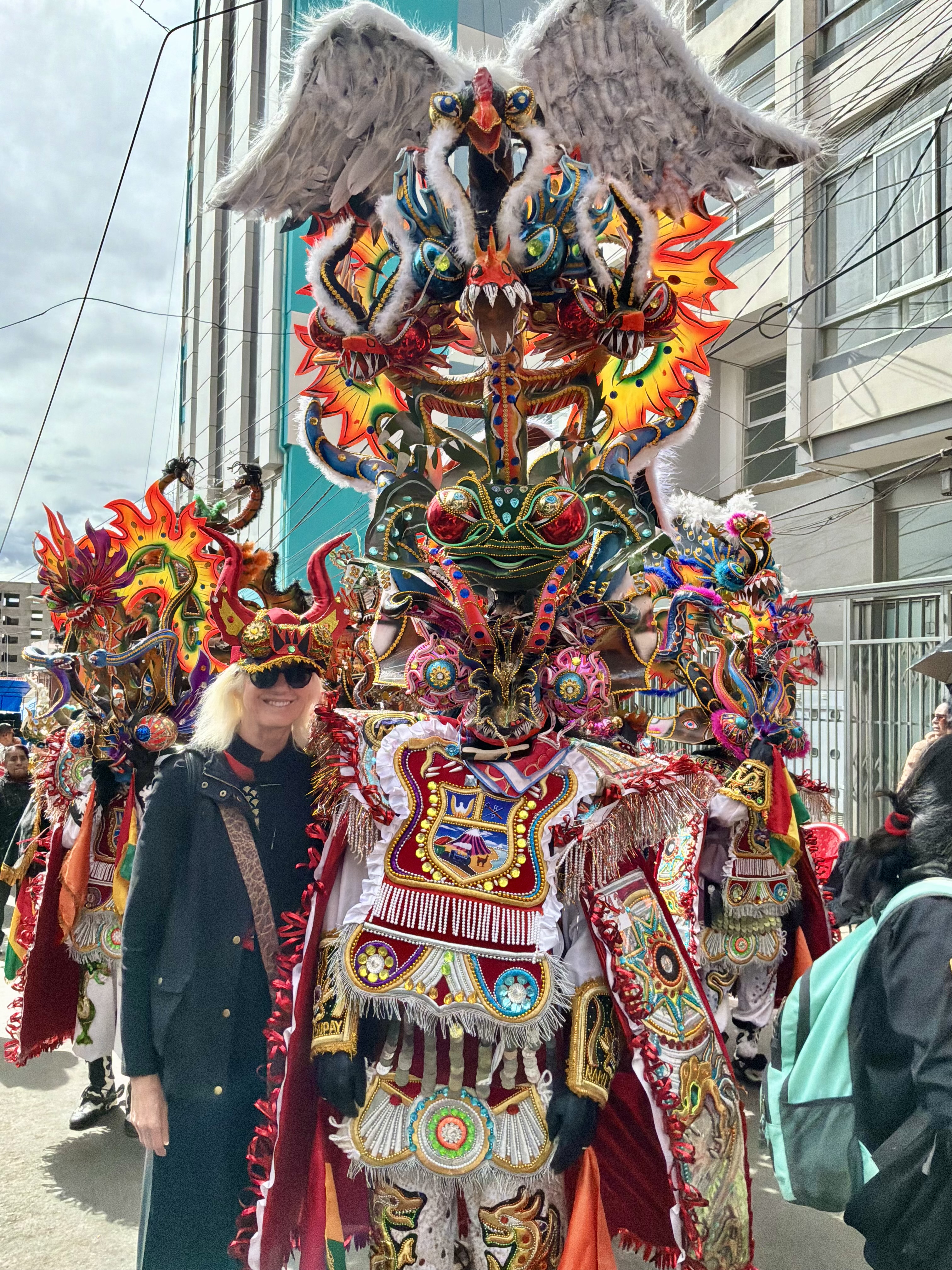
Barbara attending Carnival in Oruro, Bolivia!
*an ongoing series of quotations – mostly from artists, to artists – that offers wisdom, inspiration, and advice for the sometimes lonely road we are on
One of the most insidious kinds of pressure to which an artist can succumb is the pressure to be accessible. Well-meaning advisors may tell you that x is acceptable, marketable, popular and wealthy. But if you alter your work to be more x-ish, people will spot it as inauthentic; it will not be heartfelt because it does not originate in your own being. By all means develop and revise your work to communicate more and more clearly; but if you alter one word in order to please some imagined market “out there,” the integrity and originality of everything you do is at risk. You get off the sure base of what you really know and are. Whereas if you create your own material in your own way, developing art work that is more and more authentically yours, people will spot it as genuine. In resisting the temptation to accessibility, you are creating a genuine space and living in it.
Stephen Nachmanovitch in Free Play: Improvisation in Life and Art
Comments are welcome!
Pearls from artists* # 575

Barbara’s Studio
*an ongoing series of quotations – mostly from artists, to artists – that offers wisdom, inspiration, and advice for the sometimes lonely road we are on.
Creativity is a harmony of opposite tensions… As we ride through the flux of our own creative processes, we hold onto both poles. If we let go of play, our work becomes ponderous and stiff. If we let go of the sacred, our work loses its connection to the ground on which we live.
Knowledge of the creative process cannot substitute for creativity, but it can save us from giving up on creativity when the challenges seem too intimidating and free play seems blocked. If we know that our inevitable setbacks and frustrations are phases of the natural cycle of creative processes, if we know that our obstacles can become our ornaments, we can persevere and bring our desires to fruition. Such perseverance can be a real test, but there are ways through, there are guideposts. And the struggle, which is guaranteed to take a lifetime, is worth it. It is a struggle that generates incredible pleasure and joy. Every attempt we make is imperfect; yet each one of these imperfect attempts is an occasion for a delight unlike anything else on earth.
The creative path is a spiritual path. The adventure is about us, about the deep self, the composer in all of us, about originality, meaning not that which is all new, but that which is fully and originally ourselves.
Stephen Nachmanovitch in Free Play: Improvisation in Life and Art
Comments are welcome!
Pearls from artists* # 255
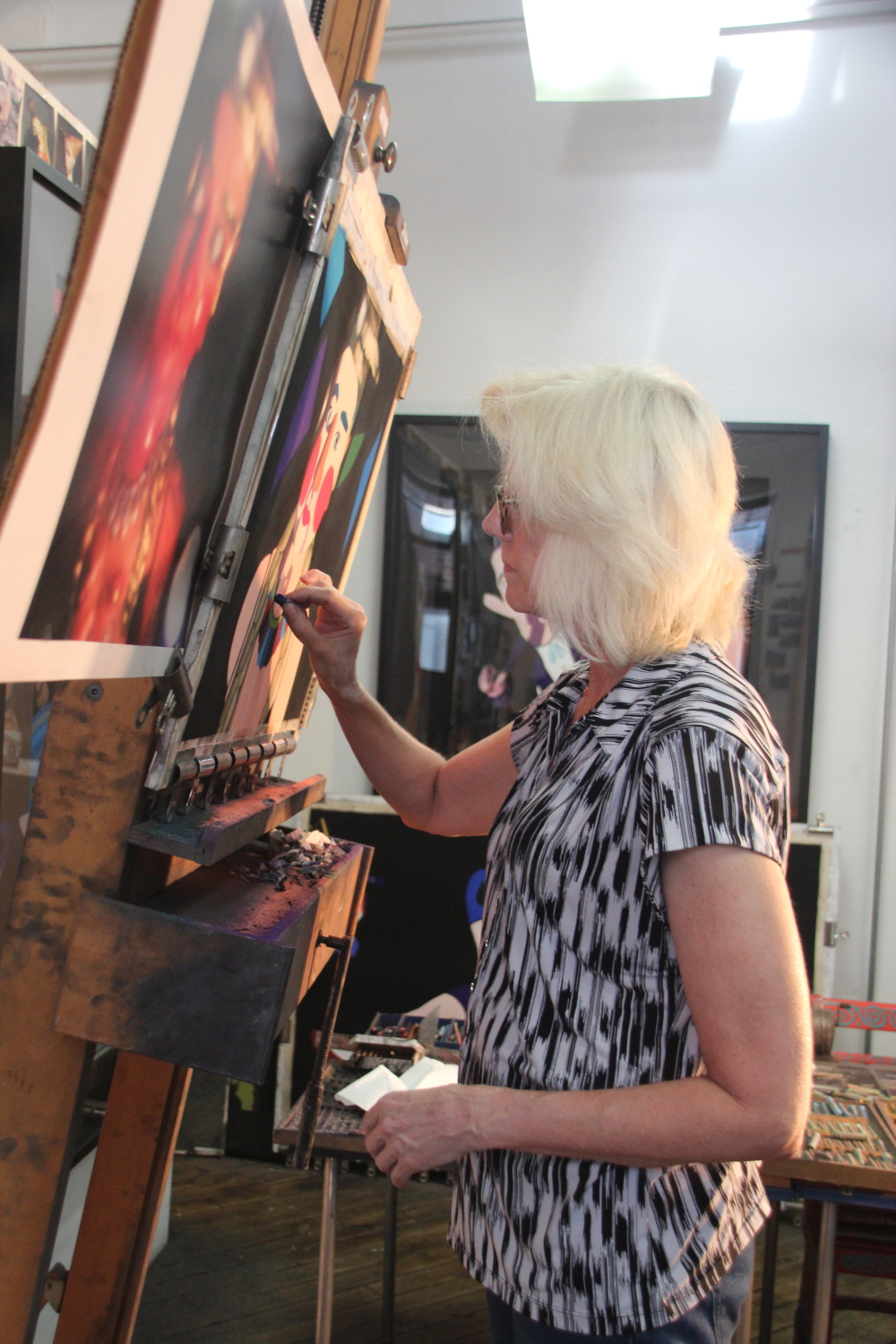
Barbara at work on “The Storyteller”
* an ongoing series of quotations – mostly from artists, to artists – that offers wisdom, inspiration, and advice for the sometimes lonely road we are on.
… several basic assumptions I have about the need for authenticity:
- Because in the end there is no other kind of art.
- I could have used the word ‘originality,” rather than authenticity, if the word’s root in “origin,” as in, “from the depth or source,” is recognized. However, the word implies a certain newness, “never done before,” that authenticity does not, and art in general does not need, in order to be deeply personal.
- Something that is authentic “rings true” for us. It comes from an inner truth. We draw from a source that is inner-directed rather than outer-directed, to use Maslow’s expression about self-actualization.
- Creating work that is authentic has a sacredness about it. It may be a way out – a small way perhaps, but at least a personal way – of a social dynamic that is all economics, consumerism, greed, and disregard for inner life. The word “science” comes from a root meaning “to separate.” Our cultural world view has been deeply influenced by that. Anything that we come to authentically in our artistic expression demands a personal inner synthesis. It is experience and insight won firsthand. The more we assimilate our “experience” from the advertising/media/consumer/government perspective the less authentic it will be.
- Most of what we express creatively is prelinguistic. The deeper insights are obviously coming from somewhere. They are not logically structured in the mind, but it may take logic to get them expressed.
- Ultimately, it doesn’t matter to the world if you paint or dance or write. The world can probably get by without your efforts. But that is not the point. The point is what the inner process of following your creative process will do, to you. It is clearly abut process. Love the work, love the process. Our fascination will pull our attention forward. That, also, will fascinate the viewer.
Ian Roberts in Creative Authenticity: 16 Principles to Clarify and Deepen Your Artistic Vision
Comments are welcome!
Pearls from artists* # 129
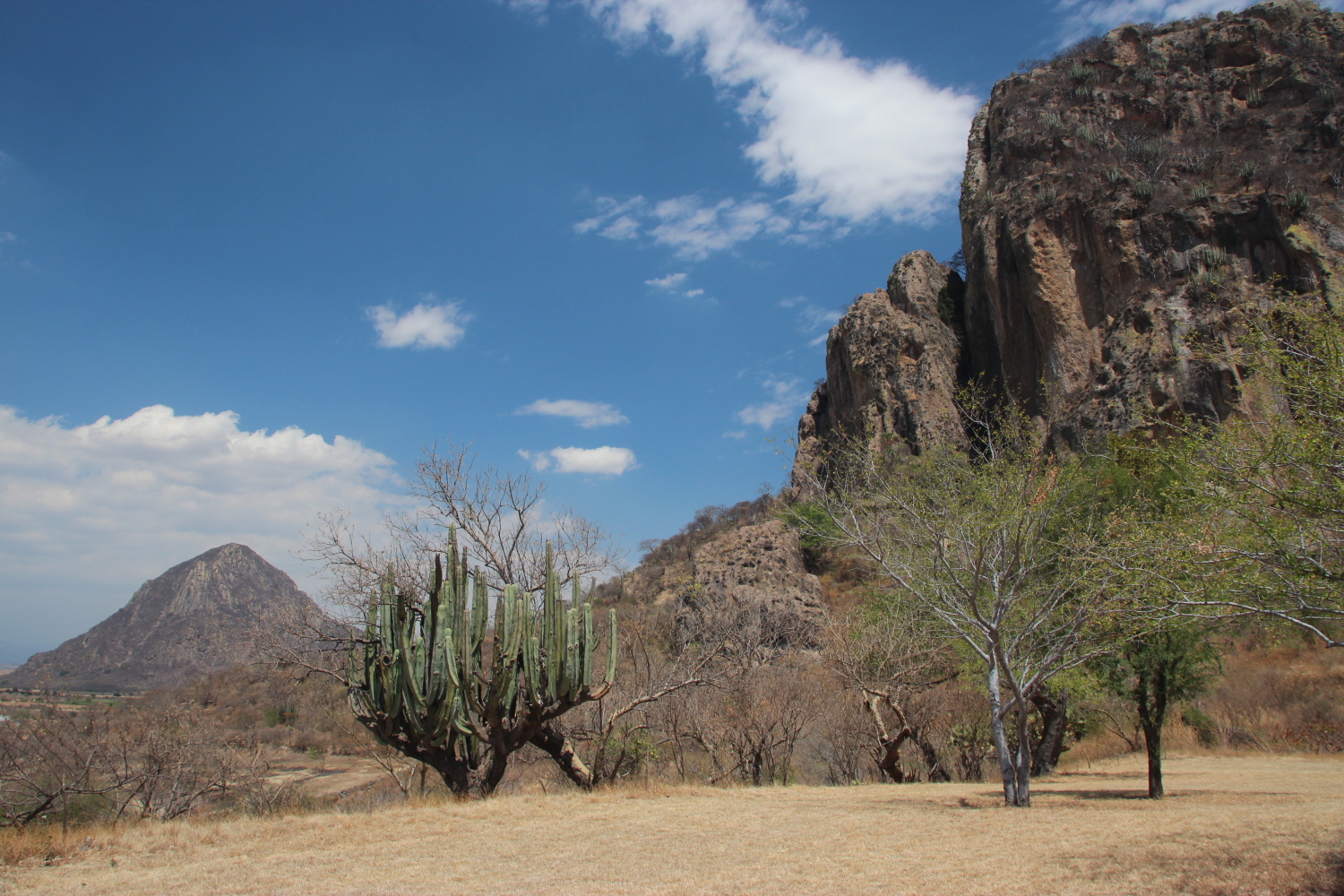
Chalcatzingo, Mexico
* an ongoing series of quotations – mostly from artists, to artists – that offers wisdom, inspiration, and advice for the sometimes lonely road we are on.
A painter friend of mine once told me that he thought of sound as an usher for the here and now. When he was a small child, Adam suffered an illness that left him profoundly deaf for several months. His memories of that time are vivid and not, he insists, at all negative. Indeed, they opened a world in which the images he saw could be woven together with much greater freedom and originality than he’d ever known. The experience was powerful enough that it helped steer him toward his lifelong immersion in the visual arts. “Sound imposes a narrative on you,” he said, “and it’s always someone else’s narrative. My experience of silence was like being awake inside a dream I could direct.”
George Prochnik in In Pursuit of Silence: Listening for Meaning in a World of Noise
Comments are welcome!



