Blog Archives
Pearls from artists* # 697

*an ongoing series of quotations – mostly from artists, to artists – that offers wisdom, inspiration, and advice for the sometimes lonely road we are on.
Serendipity (or synchronicity) is an occurrence of events that appear significantly related but have no discernible causal connection. The concept of synchronicity was developed by psychiatrist Carl Jung in the early 1900s. He defined it as ‘meaningful coincidences.’ They seem like ‘signs’ or ‘clues’ from the universe that provide missing pieces to your puzzle. Your brain is busy trying to solve your Art problem. You are open, tuned into what your unconscious already knows, and is trying to help you access. Thousands of thoughts a day pass through your brain as you navigate the world, but you suddenly see, hear, or think a flash of something that triggers your unconscious to put on the brake, and call out, ‘Wait! Stop! That’s it! That’s what we need!”
Kate Kretz in Art From Your Core: A Holistic Guide to Visual Voice
Comments are welcome!
Pearls from artists* # 636

*an ongoing series of quotations – mostly from artists, to artists – that offers wisdom, inspiration, and advice for the sometimes lonely road we are on.
Some artists will rework a piece for half a lifetime before they know it is finished. An improviser may have to practice for years before being able to play a totally spontaneous minute of music in which every detail is right for its own fleeting moment. The great scientists and scholars are not those who publish or perish at any cost, but rather those who are willing to wait until the pieces of the puzzle come together in nature’s own design. The fruits of improvising, composing, writing, inventing, and discovering may flower spontaneously, but they arise from soil that we have prepared, fertilized, and tended in the faith that they will ripen in nature’s own time.
Stephen Nachmanovitch in Free Play: Improvisation in Life and Art
Comments are welcome!
Q: All artists go through periods when they wonder what it’s all for. What do you do during times like that?
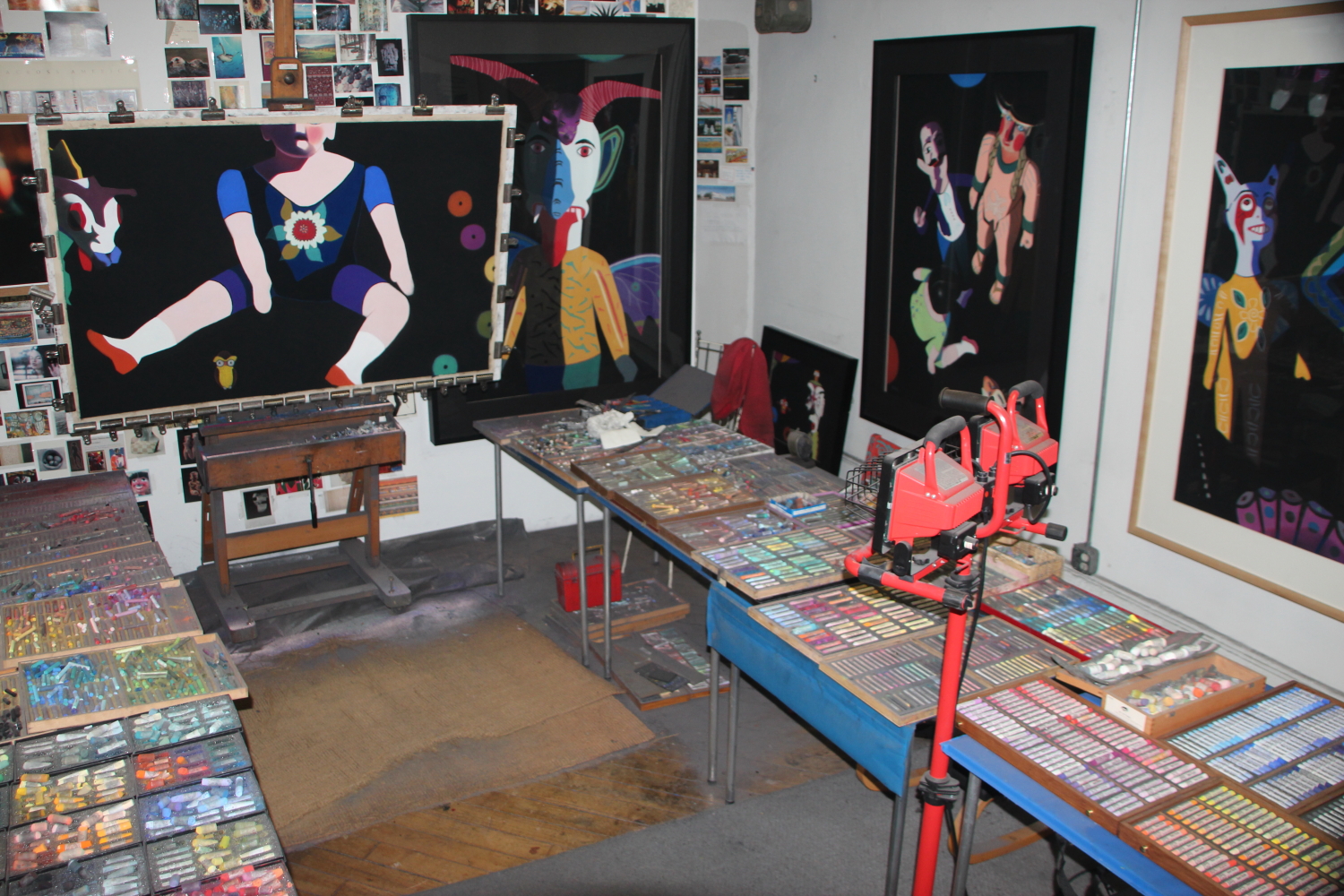
Barbara’s studio
A: Fortunately, that doesn’t happen very often. I love and enjoy all the varied facets involved in being an artist, even (usually) the business aspects, which are just another puzzle to be solved. I have vivid memories of being stuck in a job that I hated, one I couldn’t immediately leave because I was an officer in the US Navy. Life is so much better as a visual artist!
I appreciate the freedom that comes with being a self-employed artist. The words of Louise Bourgeois often come to mind: “It is a PRIVILEGE to be an artist.”
Still, with very valid reasons, no one ever said that an artist’s life is easy. It is difficult at every phase.
Books offer sustenance, especially ones written by artists who have endured all sorts of terrible hardships beyond anything artists today are likely to experience. I just pick up a favorite book. My Wednesday blog posts, “Pearls from artists,” give some idea of the sorts of inspiration I find. I read the wise words of a fellow artist, then I get back to work. As I quickly become intrigued with the problems at hand in a painting, all doubt usually dissolves.
I try to remember: Artists are extremely fortunate to be doing what we love and what we are meant to do with our short time on earth. What more could a person ask?
Comments are welcome!



