Blog Archives
Pearls from artists* # 713

Dropping off “Magisterial” at the framer
*an ongoing series of quotations – mostly from artists, to artists – that offers wisdom, inspiration, and advice for the sometimes lonely road we are on
One of the great traps at times of blockage is that we may accuse ourselves of a deficit of concentration and focus, a deficit of discipline. We then take a paternal or militaristic attitude toward ourselves. We will force ourselves to work, we will go on a schedule, we will take vows. The most dangerous trap is to get into a contest of strength between “will power” and “won’t power.” Discipline is crucial, but we do not attain it by stiffening up. We attain it by sitting still and penetrating the emptiness within, making of that emptiness a friend rather than an adversary or bogeyman.
When you are stuck, meditate, free associate, do automatic writing, talk to yourself and answer yourself. Play with the blocks. Stay in the temenos of the workplace. Relax, surrender to the bafflement; don’t leave the temenos, and the solution will come. Persevere gently. Use intelleto, the visionary faculty. Stay close to the zero mark; indulge neither in great highs or great lows.
The depths are obscured in us when we try to force feelings; we clarify them by giving them adequate time and space and letting them come. What we experienced yesterday as the pride of creativity or the self-deprecating feeling of incapacity we see today as the signal to surrender.
Like the rules of the universe, the whole matter of personal creativity is baffling and paradoxical. To try to control yourself, to try to create, to try to break free of the knots you yourself have tied is to set yourself up at a distance from that which you already are. It is like looking around this way and that for your own head.
Stephen Nachmanovitch in Free Play: Improvisation in Life and Art
Comments are welcome!
Pearls from artists* # 154
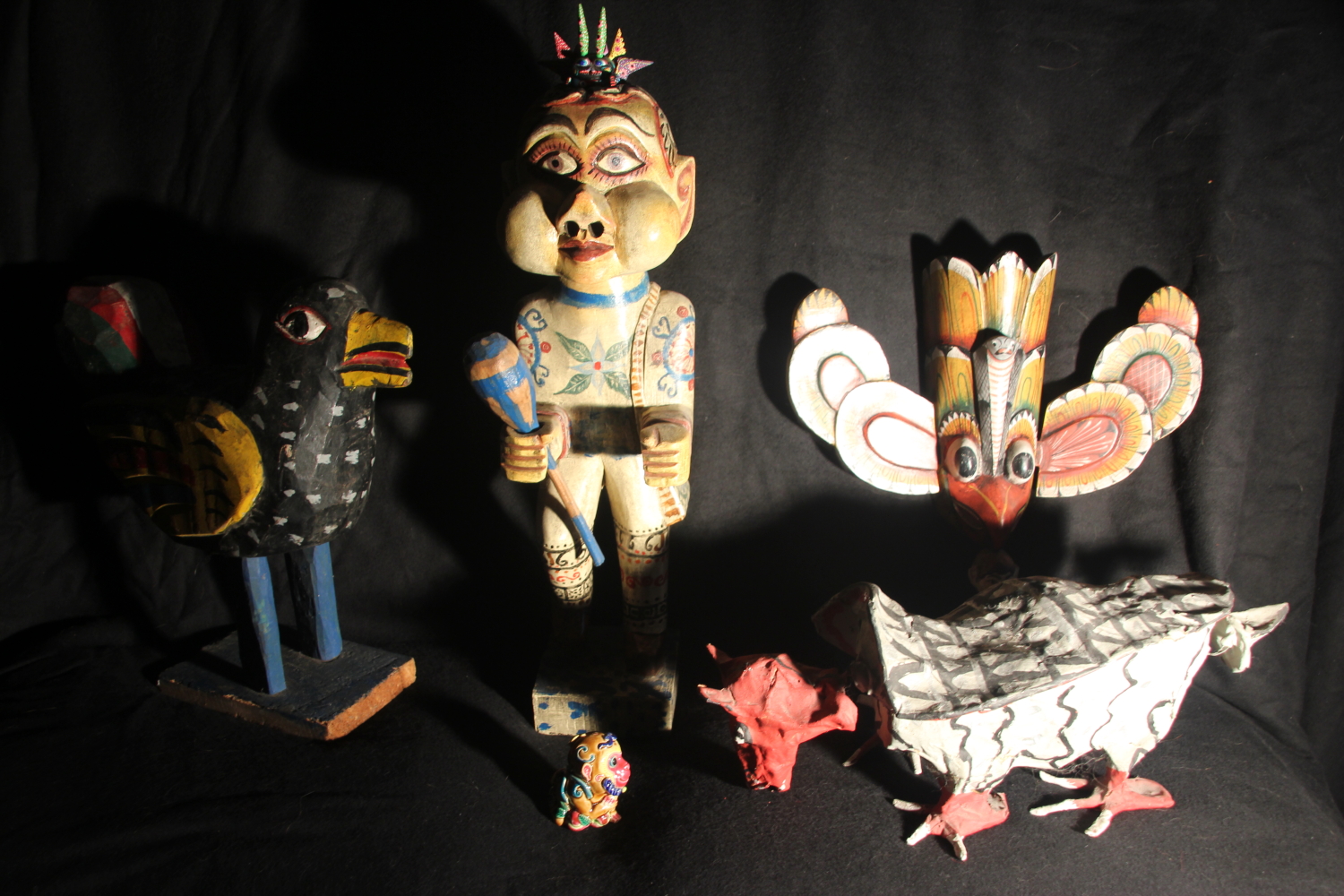
Idea for a painting
* an ongoing series of quotations – mostly from artists, to artists – that offers wisdom, inspiration, and advice for the sometimes lonely road we are on.
Often the public forms an idea of inspiration that is quite false, almost a religious notion. Alas! I do not believe that inspiration falls from heaven. I think it rather the result of a profound indolence and of our incapacity to put to work certain forces in ourselves. These unknown forces work deep within us, with the aid of the elements of daily life, its scenes and passions, and, they burden us and oblige us to conquer the kind of somnolence in which we indulge ourselves like invalids who try to prolong dream and dread resuming contact with reality, in short when the work that makes itself in us and in spite of us demands to be born, we can believe that this work comes to us from beyond and is offered by the gods. The artist is more slumberous in order that he shall not work. By a thousand ruses, he prevents his nocturnal work from seeing the light of day.
For it is at the moment that consciousness must take a precedence and that it becomes necessary to find the means which permit the unformed work to take form, to render it visible to all. To write, to conquer ink and paper, accumulate letters and paragraphs, divide them with periods and commas, is a different matter than carrying the dream of a play or of a book.
Jean Cocteau: The Process of Inspiration in The Creative Process, edited by Brewster Ghiselin
Comments are welcome!
Pearls from artists* # 124
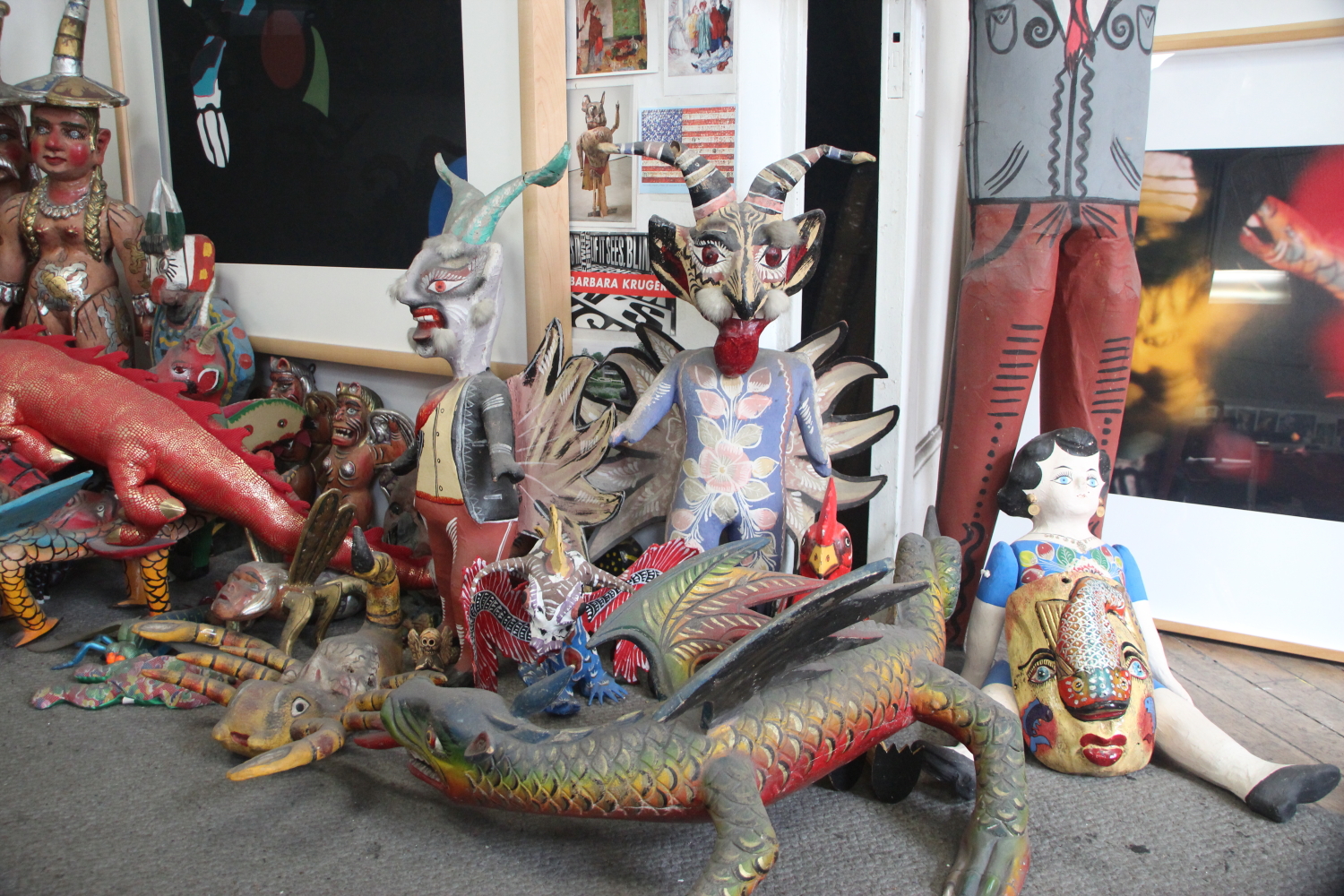
Barbara’s studio
* an ongoing series of quotations – mostly from artists, to artists – that offers wisdom, inspiration, and advice for the sometimes lonely road we are on.
You give yourself a creative life – pursuing those questions and aesthetic conditions that mean the most to you. What are you interested in? Landscape and gender and nuclear power are each worthy subjects and there are plenty more. Do you aspire to exhibit in museums or public spaces or virtual realms? Your job is to figure out how to best engage these distinct contexts. Your studio may be a large industrial space or a second bedroom or the kitchen table, where you can work days or nights while wearing your favorite sweatpants and drinking tea as music blasts or silence is maintained. You might produce five or fifty objects a year, using bronze or oil paint or folded paper, and these can be large or tiny, made to last for centuries or a few weeks. Maybe you’ve been a printmaker for several years and all of a sudden you decide to make videos. OK. You might be influenced by Pop Art or Minimalism or Feminism or Fluxus. How are you using these various histories to your advantage? Does Edward Hopper or Gordon Matta-Clark or Agnes Martin or David Hammons inspire you? If not, who does? Try to understand the reasons for your choices, and if you feel the need to shift gears, indulge that impulse. Grant yourself the permission to acquire new skills, travel to biennials, buy a new computer, start a reading group. Risk not knowing what will happen when you do.
Stephen Horodner in THE ART LIFE: On Creativity and Career
Comments are welcome!



