Blog Archives
Pearls from artists* # 717
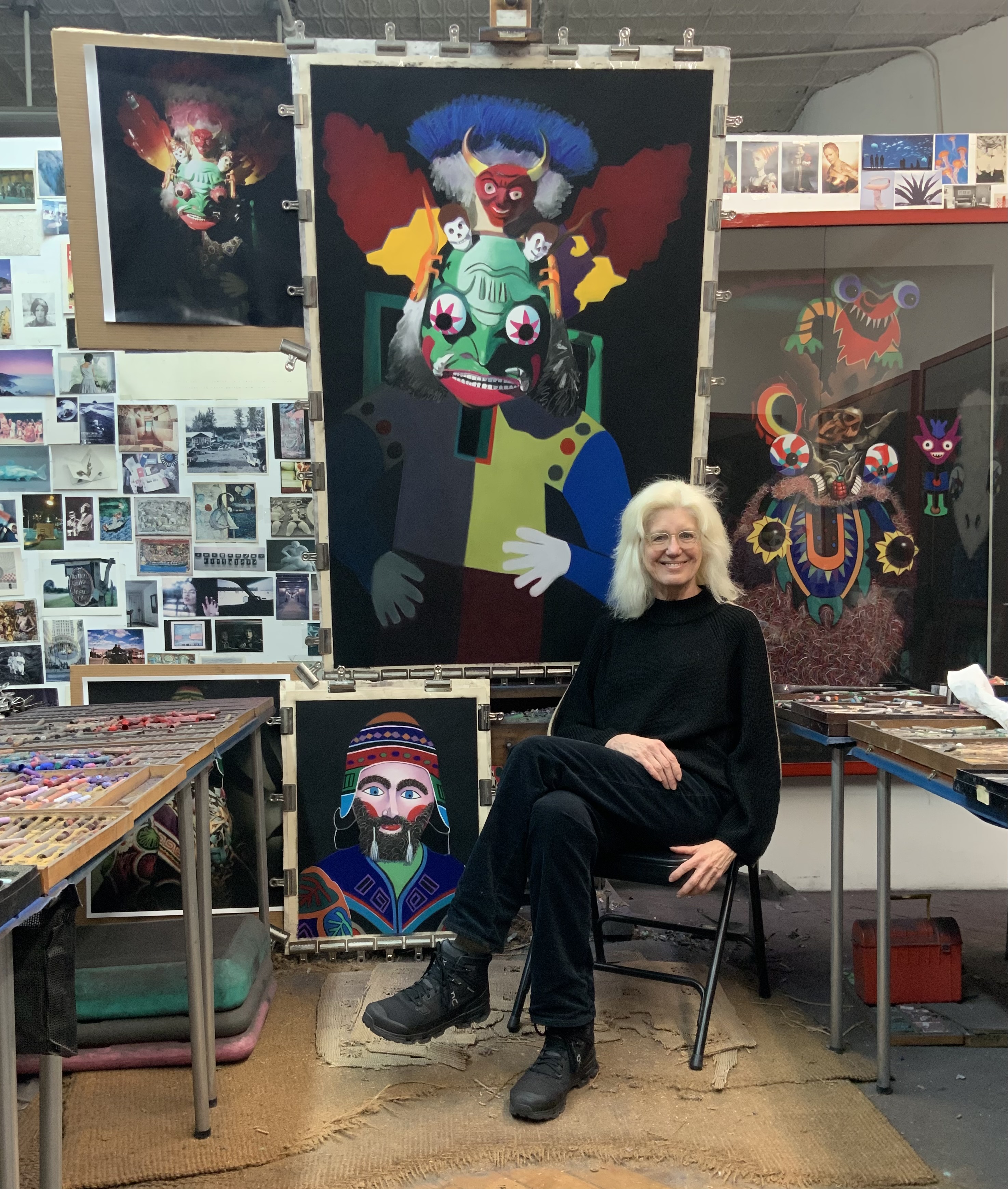
In the studio
*an ongoing series of quotations – mostly from artists, to artists – that offers wisdom, inspiration, and advice for the sometimes lonely road we are on
Go slowly. Success is a kind of energy field. You vibrate in it like a charged particle. There are new demands on your tine and talents, new interview requests and business questions, new possibilities and opportunities. In this context, when you have a free half-hour you may continue spinning like a top. Walk, breathe, stretch, meditate. Do the mundane: scrape a carrot, sweep the patio. Calm down.
Manage your money. You may or may not have paydays like this again. Study a book on money management. Learn your options. Think before you have a full-time personal trainer or buy Adar that corners too tightly at 100 miles an hour. Think before you find yourself in the position of needing to earn half a million a year in order to cover expenses and feed your vast retinue.
Protect your privacy. Begin to calculate how public and accessible you want to be. Learn how not to give yourself away. Be able to say “Thank you” and “I don’t have an answer for that question.” Have an interview persona and a public persona. At the same time be able to access your humanity.
Manage your anxiety. New stresses exist in your life. More is expected of you. The ante on each project rises. Success is not a magic pill that allays anxieties.
Expect setbacks. The next book you write after your bestseller may disappoint you, your publisher, or your readers. The movie you directed after your blockbuster May bomb. But even if your stock is lowered in the eyes of the world, it need not sink in your own eyes. Virtually no artist experiences one success after another. Determine to come back. If doors have closed to you, consult your business adviser. Plan and analyze ways to reopen them. Demonstrate your courage all over again.
Remain human. Guard your privacy and your person; decline to become a stereotype or a frozen icon. Be more than the bad-boy rock singer, the sex goddess, the reclusive dancer, the brilliant violin virtuoso. Remember that you have a heart and mind as well as a reputation.
Eric Maisel in A Life in the Arts: An Expanded Workbook Edition of Staying Sane in the Arts
Comments are welcome!
Pearls from artists* # 640

*an ongoing series of quotations – mostly from artists, to artists – that offers wisdom, inspiration, and advice for the sometimes lonely road we are on.
When an artist changes and develops over the years, as is natural to any creative person, such change is met by howls of protest from the marketers. Sometimes an artist (or teacher, scientist, or spiritual guru) starts with something extraordinary, becomes a star, and then their gift is either frozen or perverted.
The growing and risky edge of creative work is devalued, treated as a frill or extracurricular activity decorating the routine of ordinary life. There are few mechanisms available for the artist to construct a self-sustaining way of living and working. “One gathers,” says Virginia Woolf,
“from the enormous modern literature of confession and self-analysis that to write a book of genius is almost always a feat of prodigious difficulty. Everything is against the likelihood that it will come from the writer’s mind whole and entire. Generally, material circumstances are against it. Dogs will bark; people will interrupt; money must be made; health will break down. Further, accentuating all these difficulties and making them harder to bear is the world’s notorious indifference. It does not ask people to write poems and novels and histories; it does not need them. It does not care whether Flaubert finds the right word or whether Carlyle scrupulously verifies this or that fact. Naturally, it will not pay for what it does not want. And so the writer, Keats, Flaubert, Carlyle, suffers, especially in the creative years of youth, every form of distraction and discouragement. A curse, a cry of agony, rises from those books of analysis and confession. “Mighty poems in their misery dead” – that is the burden of their song. If anything comes through in spite of all this, it is a miracle, and probably no book is born entire and uncrippled as it was conceived.”
Stephen Nachmanovitch in Free Play: Improvisation in Art and Life
Comments are welcome!



