Blog Archives
Pearls from artists* # 717
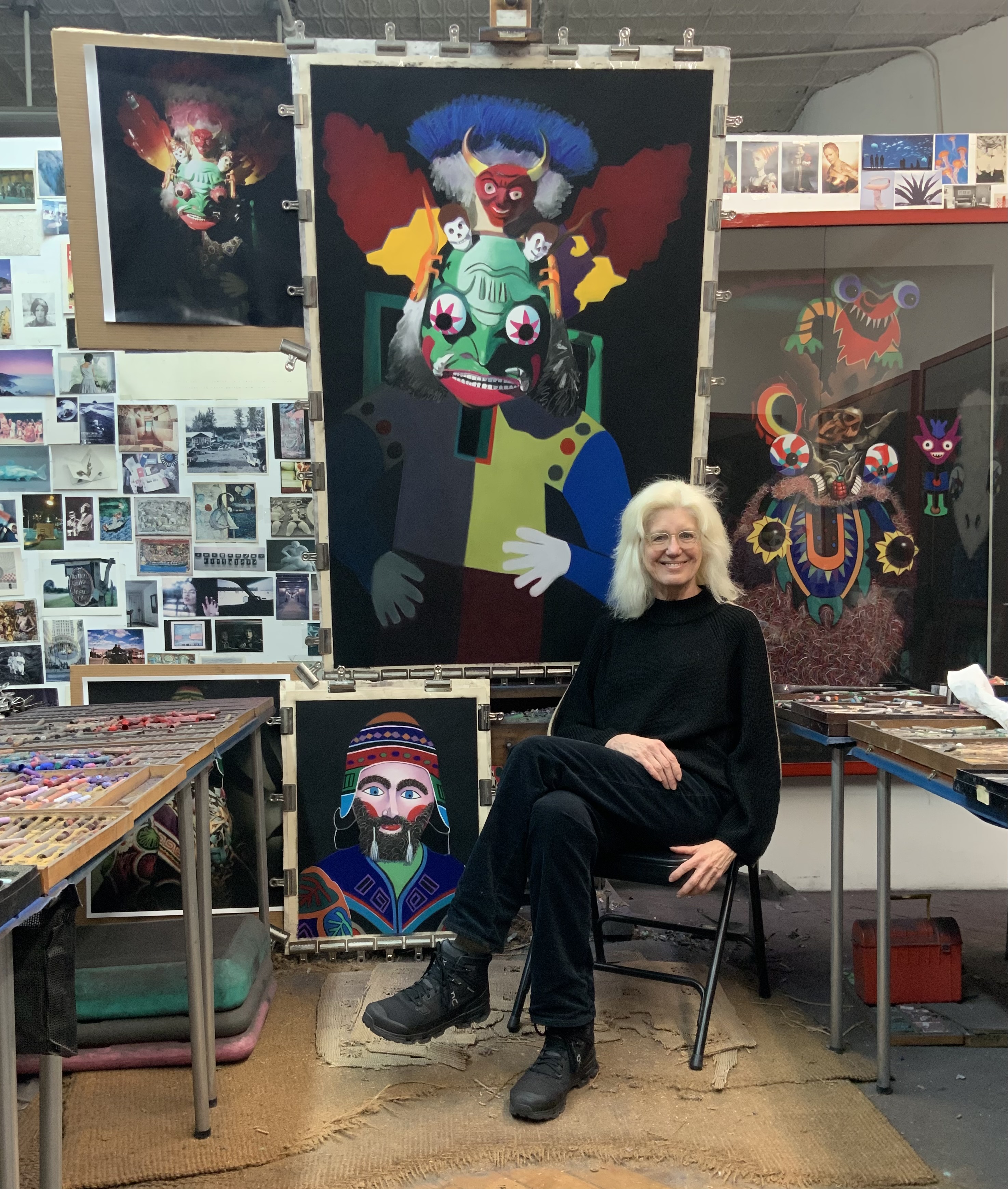
In the studio
*an ongoing series of quotations – mostly from artists, to artists – that offers wisdom, inspiration, and advice for the sometimes lonely road we are on
Go slowly. Success is a kind of energy field. You vibrate in it like a charged particle. There are new demands on your tine and talents, new interview requests and business questions, new possibilities and opportunities. In this context, when you have a free half-hour you may continue spinning like a top. Walk, breathe, stretch, meditate. Do the mundane: scrape a carrot, sweep the patio. Calm down.
Manage your money. You may or may not have paydays like this again. Study a book on money management. Learn your options. Think before you have a full-time personal trainer or buy Adar that corners too tightly at 100 miles an hour. Think before you find yourself in the position of needing to earn half a million a year in order to cover expenses and feed your vast retinue.
Protect your privacy. Begin to calculate how public and accessible you want to be. Learn how not to give yourself away. Be able to say “Thank you” and “I don’t have an answer for that question.” Have an interview persona and a public persona. At the same time be able to access your humanity.
Manage your anxiety. New stresses exist in your life. More is expected of you. The ante on each project rises. Success is not a magic pill that allays anxieties.
Expect setbacks. The next book you write after your bestseller may disappoint you, your publisher, or your readers. The movie you directed after your blockbuster May bomb. But even if your stock is lowered in the eyes of the world, it need not sink in your own eyes. Virtually no artist experiences one success after another. Determine to come back. If doors have closed to you, consult your business adviser. Plan and analyze ways to reopen them. Demonstrate your courage all over again.
Remain human. Guard your privacy and your person; decline to become a stereotype or a frozen icon. Be more than the bad-boy rock singer, the sex goddess, the reclusive dancer, the brilliant violin virtuoso. Remember that you have a heart and mind as well as a reputation.
Eric Maisel in A Life in the Arts: An Expanded Workbook Edition of Staying Sane in the Arts
Comments are welcome!
Pearls from artists* # 428

View from Isla del Sol in Bolivia
* an ongoing series of quotations – mostly from artists, to artists – that offers wisdom, inspiration, and advice for the sometimes lonely road we are on.
In its spectacle and ritual the Carnival procession in Oururo bears an intriguing resemblance to the description given by Inca Garcilaso de la Vega of the great Inca festival of Inti Raymi, dedicated to the Sun. Even if Oururo’s festival did not develop directly from that of the Inca, the 16th-century text offers a perspective from the Andean tradition:
“The curacas (high dignitaries) came to their ceremony in their finest array, with garments and head-dresses richly ornamented with gold and silver.
Others, who claimed to descend from a lion, appeared, like Hercules himself, wearing the skin of this animal, including its head.
Others, still, came dressed as one imagines angels with the great wings of the bird called condor, which they considered to be their original ancestor. This bird is black and white in color, so large that the span of its wing can attain 14 or 15 feet, and so strong that many a Spaniard met death in contest with it.
Others wore masks that gave them the most horrible faces imaginable, and these were he Yuncas (people from the tropics), who came to the feast with the heads and gestures of madmen or idiots. To complete the picture, they carried appropriate instruments such as out-of-tune flutes and drums, with which they accompanied the antics.
Other curacas in the region came as well decorated or made up to symbolize their armorial bearings. Each nation presented its weapons: bows and arrows, lances, darts, slings, maces and hatchets, both short and long, depending upon whether they used them with one hand or two.
They also carried paintings, representing feats they had accomplished in the service of the Sun and of the Inca, and a whole retinue of musicians played on the timpani and trumpets they had brought with them. In other words, it may be said that each nation came to the feast with everything that could serve to enhance its renown and distinction, and if possible, its precedence over the others.”
El Carnaval de Oruro by Manuel Vargas in Mascaras de los Andes Bolivianos, Editorial Quipus and Banco Mercantil
Comments are welcome!



