Blog Archives
Pearls from artists* # 717
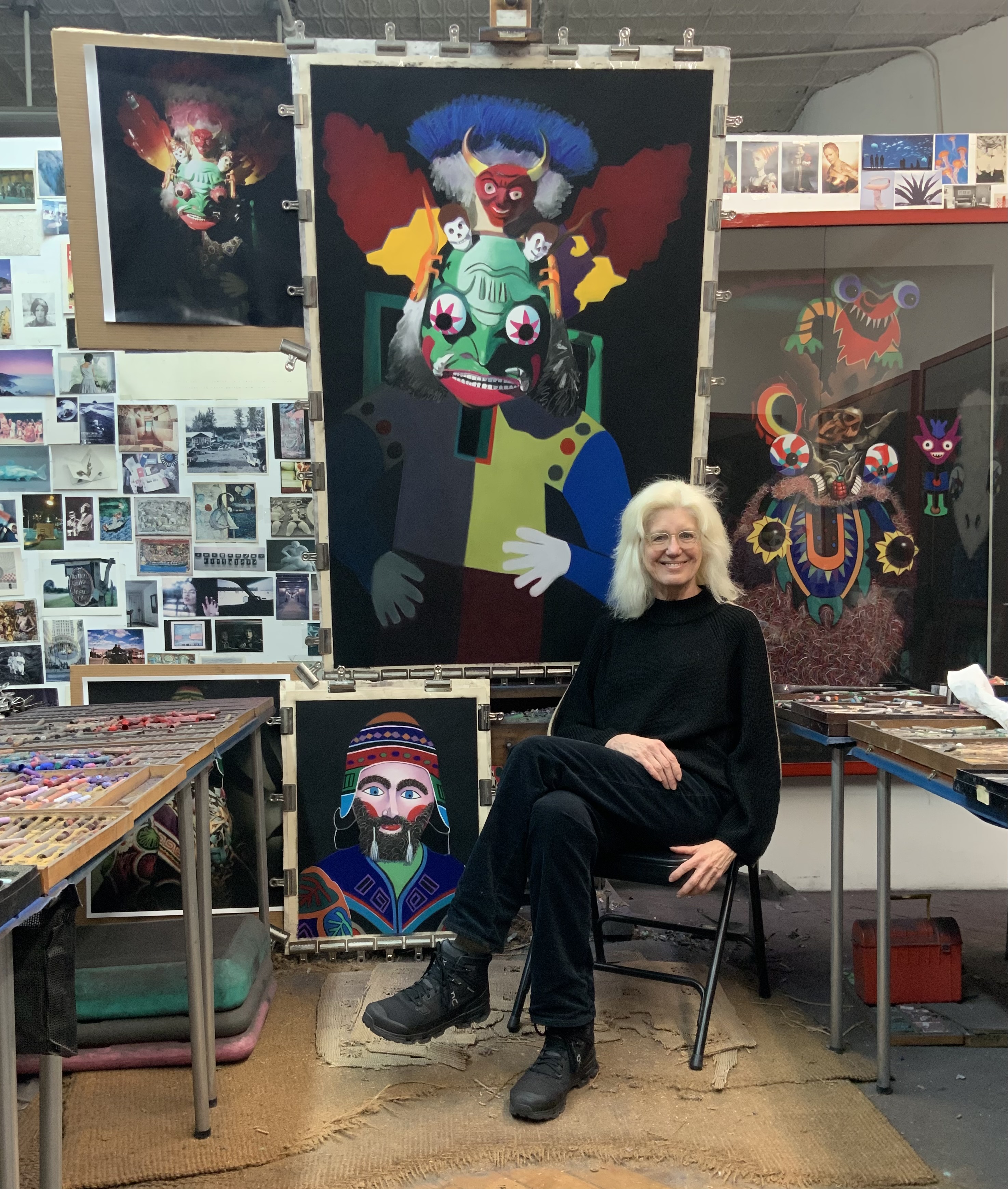
In the studio
*an ongoing series of quotations – mostly from artists, to artists – that offers wisdom, inspiration, and advice for the sometimes lonely road we are on
Go slowly. Success is a kind of energy field. You vibrate in it like a charged particle. There are new demands on your tine and talents, new interview requests and business questions, new possibilities and opportunities. In this context, when you have a free half-hour you may continue spinning like a top. Walk, breathe, stretch, meditate. Do the mundane: scrape a carrot, sweep the patio. Calm down.
Manage your money. You may or may not have paydays like this again. Study a book on money management. Learn your options. Think before you have a full-time personal trainer or buy Adar that corners too tightly at 100 miles an hour. Think before you find yourself in the position of needing to earn half a million a year in order to cover expenses and feed your vast retinue.
Protect your privacy. Begin to calculate how public and accessible you want to be. Learn how not to give yourself away. Be able to say “Thank you” and “I don’t have an answer for that question.” Have an interview persona and a public persona. At the same time be able to access your humanity.
Manage your anxiety. New stresses exist in your life. More is expected of you. The ante on each project rises. Success is not a magic pill that allays anxieties.
Expect setbacks. The next book you write after your bestseller may disappoint you, your publisher, or your readers. The movie you directed after your blockbuster May bomb. But even if your stock is lowered in the eyes of the world, it need not sink in your own eyes. Virtually no artist experiences one success after another. Determine to come back. If doors have closed to you, consult your business adviser. Plan and analyze ways to reopen them. Demonstrate your courage all over again.
Remain human. Guard your privacy and your person; decline to become a stereotype or a frozen icon. Be more than the bad-boy rock singer, the sex goddess, the reclusive dancer, the brilliant violin virtuoso. Remember that you have a heart and mind as well as a reputation.
Eric Maisel in A Life in the Arts: An Expanded Workbook Edition of Staying Sane in the Arts
Comments are welcome!
Pearls from artists* # 711
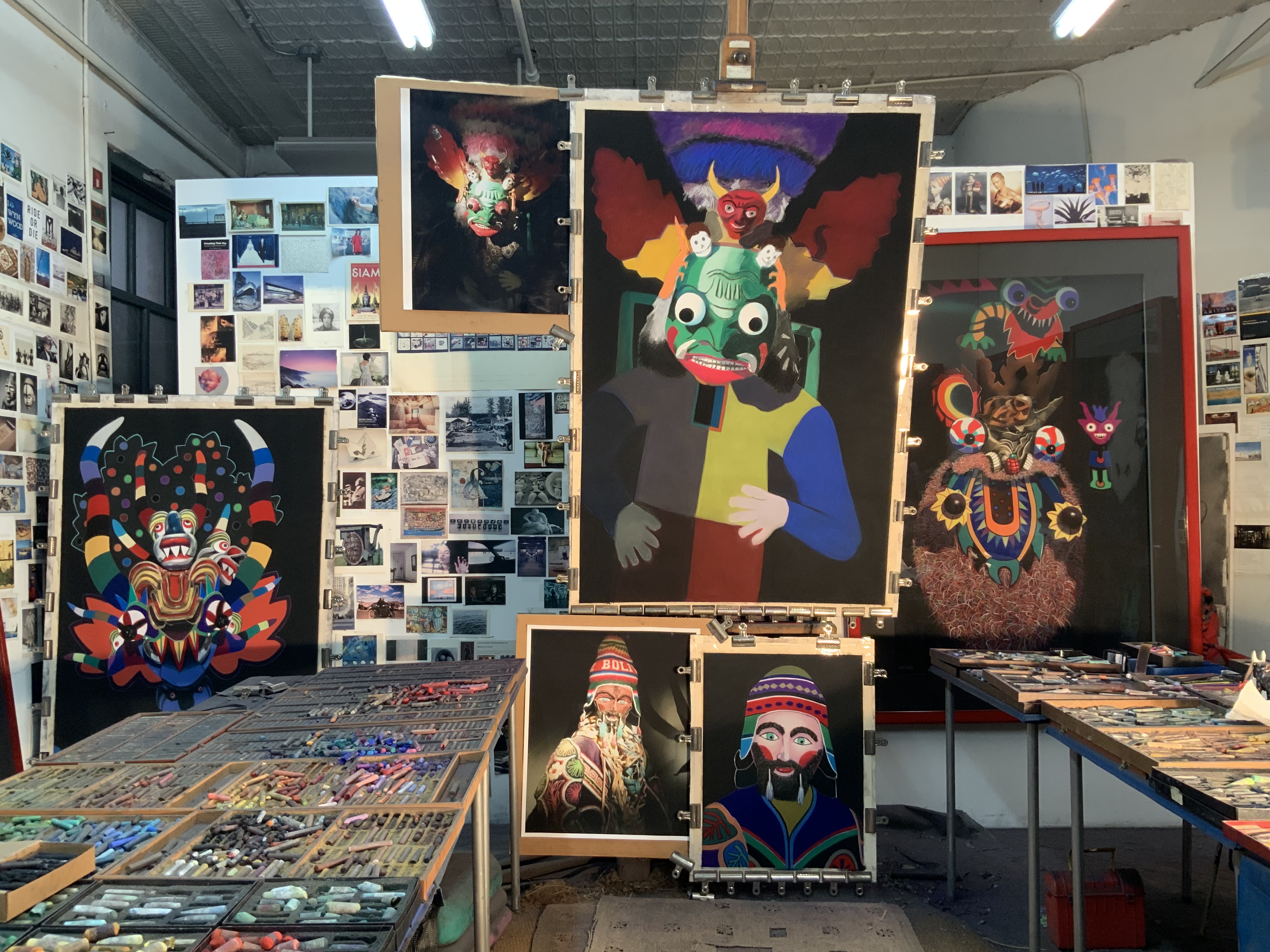
Barbara’s Studio
*an ongoing series of quotations – mostly from artists, to artists – that offers wisdom, inspiration, and advice for the sometimes lonely road we are on
The people considered ‘most accomplished’ in our culture pass through a standardized education conveyor belt to be indoctrinated into a cutthroat hamster wheel success ladder. Yet the production and consumption of those goods are destroying the planet that sustains our very lives. Those who question the absurdity of these choices are considered deviant. Try to carve a different path for yourself that makes sense to you, and every societal force conspires to push you back into that absurd groove that virtually everyone else swerved into long ago.
Artists also deal with vocation specific stress. We confront repeated rejection in a way that most other professionals do not. Our relationships may suffer from family members who fail to understand how art careers ‘work.’ They may resent that we bring in little money. There is often a maddening lack of congruity between artists’ abilities, sustained hard work, and reward. Engineers who excel at their job can make a good living, while highly skilled creatives may never reap financial benefits, even after a lifetime of effort. Frequently, artists must reckon with the success of others who have far less talent, depth, and dedication, while endlessly struggling to keep their own practice afloat. Finally, although many people suffer from early trauma and manage to survive and move on, it is in the nature of sone artists’ work to repeatedly re-expose themselves to pain through their practice.
Kate Kretz in Art From Your Core: A Holistic Guide to Visual Voice
Comments are welcome!
Pearls from artists* # 579

New York, NY
*an ongoing series of quotations – mostly from artists, to artists – that offers wisdom, inspiration, and advice for the sometimes lonely road we are on.
An empirical fact about our lives is that we do not and cannot know what will happen a day or a moment in advance. The unexpected awaits us at every turn and every breath. The future is a vast perpetually regenerated mystery and the more we live and know, the greater the mystery. When we drop the blinders of our preconceptions, we are virtually propelled by every circumstance into the present time and the present mind: the moment, the whole moment, and nothing but the moment. This is a state of mind taught and strengthened by improvisation, a state of mind in which the here and now is not some trendy idea but a matter of life and death, upon which we can learn to reliably depend. We can depend on the world being a perpetual surprise in general motion and a perpetual invitation to create.
Stephen Nachmanovitch in Free Play: Improvisation in Life and Art
Comments are welcome!
Pearls from artists* # 18

West Village
* an ongoing series of quotations – mostly from artists, to artists – that offers wisdom, inspiration, and advice for the sometimes lonely road we are on.
Those who would make art might well begin by reflecting on the fate of those who preceded them: most who began, quit. It’s a genuine tragedy. Worse yet, it’s an unnecessary tragedy. After all, artists who continue and artists who quit share an immense field of common emotional ground. (Viewed from the outside, in fact, they’re indistinguishable). We’re all subject to a familiar and universal progression of human troubles – troubles we routinely survive, but which are (oddly enough) routinely fatal to the art-making process. To survive as an artist requires confronting these troubles. Basically, those who continue to make art are those who have learned how to continue – or more precisely, have learned how to not quit.
But curiously, while artists always have a myriad of reasons to quit, they consistently wait for a handful of specific moments to quit. Artists quit when they convince themselves that their next effort is already doomed to fail. And artists quit when they lose the destination for their work – for the place their work belongs.
Virtually all artists encounter such moments. Fear that your next work will fail is a normal, recurring, and generally healthy part of the art-making cycle. It happens all the time: you focus on some new idea in your work, you try it out, run with it for awhile, reach a point of diminishing returns, and eventually decide it’s not worth pursuing further. Writers even have a phrase for it – “the pen has run dry” – but all media have their equivalents. In the normal artistic cycle this just tells you that you’ve come full circle, back to that point where you need to begin cultivating the next new idea. But in artistic death it marks the last thing that happens: you play out an idea, it stops working, you put the brush down… and thirty years later you confide to someone over coffee that, well, yes, you had wanted to paint when you were much younger. Quitting is fundamentally different from stopping. The latter happens all the time. Quitting happens once. Quitting means not starting again – and art is all about starting again.
David Bayles and Ted Orland, Art & Fear
Comments are welcome!



