Blog Archives
Pearls from artists* # 670

*an ongoing series of quotations – mostly from artists, to artists – that offers wisdom, inspiration, and advice for the sometimes lonely road we are on.
I’ve had to keep defining and defending myself as a writer every single day of my adult life – constantly reminding and re-reminding my soul and the cosmos that I’m very serious about the business of creative living, and that I will never stop creating, no matter what the outcome, and no matter how deep my anxieties and insecurities may be.
Over time I’ve found the right tone of voice for these assertions, too. It’s best to be insistent, but affable. Repeat yourself, but don’t get shrill. Speak to your darkest and most negative interior voices the way a hostage negotiator speaks to a violent psychopath: calmly, but firmly. Most of all, never back down. You cannot afford to back down. The life you are negotiating to save, after all, is your own.
Elizabeth Gilbert in Big Magic: Creative Living Beyond Fear
Comments are welcome!
Pearls from artists* # 640

*an ongoing series of quotations – mostly from artists, to artists – that offers wisdom, inspiration, and advice for the sometimes lonely road we are on.
When an artist changes and develops over the years, as is natural to any creative person, such change is met by howls of protest from the marketers. Sometimes an artist (or teacher, scientist, or spiritual guru) starts with something extraordinary, becomes a star, and then their gift is either frozen or perverted.
The growing and risky edge of creative work is devalued, treated as a frill or extracurricular activity decorating the routine of ordinary life. There are few mechanisms available for the artist to construct a self-sustaining way of living and working. “One gathers,” says Virginia Woolf,
“from the enormous modern literature of confession and self-analysis that to write a book of genius is almost always a feat of prodigious difficulty. Everything is against the likelihood that it will come from the writer’s mind whole and entire. Generally, material circumstances are against it. Dogs will bark; people will interrupt; money must be made; health will break down. Further, accentuating all these difficulties and making them harder to bear is the world’s notorious indifference. It does not ask people to write poems and novels and histories; it does not need them. It does not care whether Flaubert finds the right word or whether Carlyle scrupulously verifies this or that fact. Naturally, it will not pay for what it does not want. And so the writer, Keats, Flaubert, Carlyle, suffers, especially in the creative years of youth, every form of distraction and discouragement. A curse, a cry of agony, rises from those books of analysis and confession. “Mighty poems in their misery dead” – that is the burden of their song. If anything comes through in spite of all this, it is a miracle, and probably no book is born entire and uncrippled as it was conceived.”
Stephen Nachmanovitch in Free Play: Improvisation in Art and Life
Comments are welcome!
Pearls from artists* # 626

*an ongoing series of quotations – mostly from artists, to artists – that offers wisdom, inspiration, and advice for the sometimes lonely road we are on.
This is why, when writers who are just starting out ask me when it gets easier, my answer is never. It never gets easier. I don’t want to scare them, so I rarely say more than at, but the truth is that, if anything, it gets harder. The writing life is filled with predictable uncertainties, but with the awareness that we are always starting over. That everything we will ever write will be flawed. We may have written one book, or many, but all we know – if we know anything at all – is how to write the book we’re writing. All novels are failures. Perfection itself would be a failure. All we can hope is that we will fail better. That we will not fall prey to the easy enchantments of repeating what may have worked in the past. I try to remember that the job – as well as the plight, and the unexpected joy – of the artist is to embrace uncertainty, to be sharpened and honed by it. Each time we come to the end of a piece of work, we have failed as we have leapt – spectacularly, brazenly – into the unknown.
Dani Shapiro in Still Writing: The Perils and Pleasures of a Creative Life
Comments are welcome!
Q: Foreign travel has long been a significant aspect of your work. What are your views on cultural appropriation?
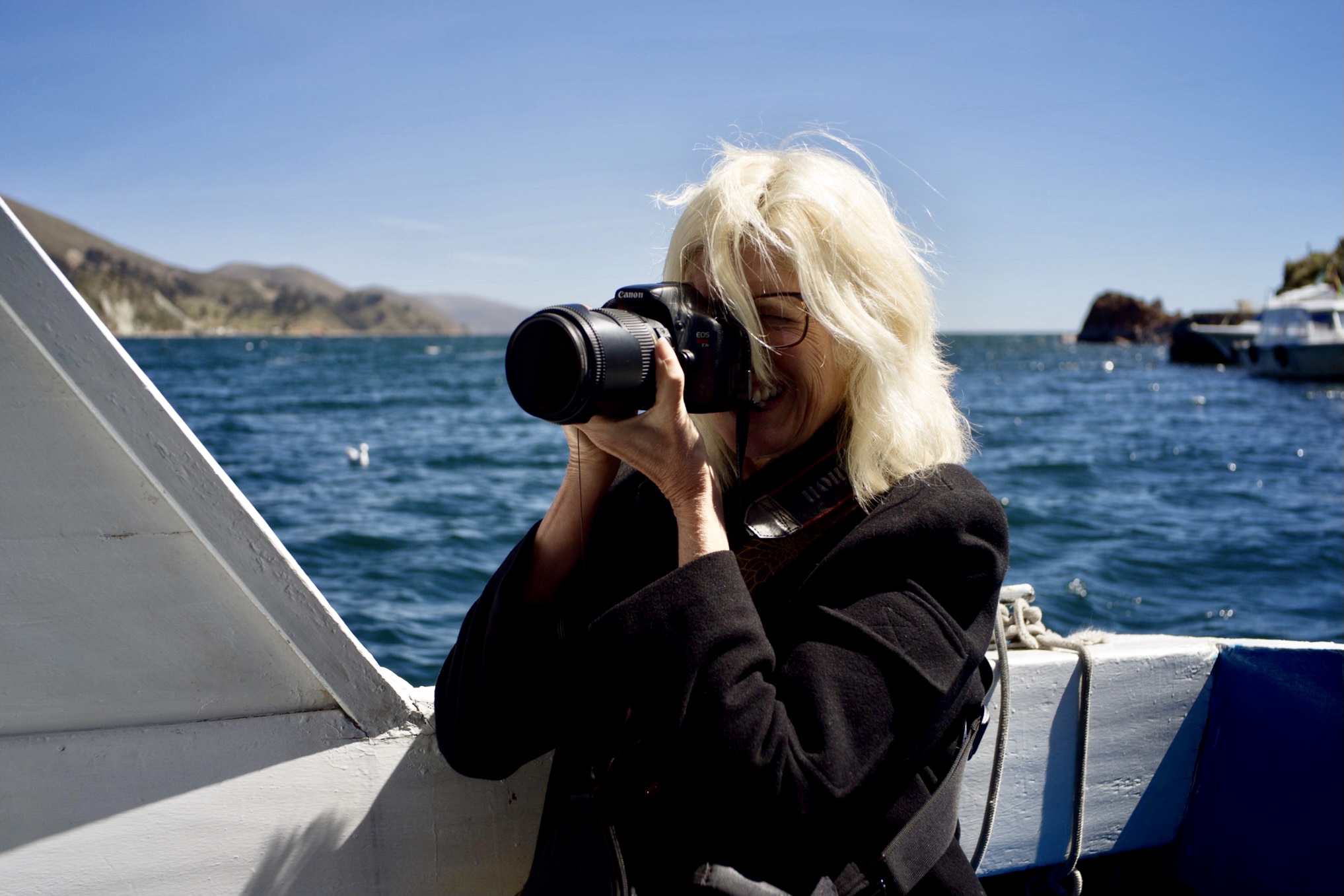
A: For more than three decades my inspiration and subject matter have come mainly from international travel to remote parts of the globe. I daresay there is no better education than travel. The result is that I possess a deep love and reverence for people and cultures all over the world. We are all connected by our shared humanity.
I wholeheartedly agree with what Henry Louis Gates eloquently expressed in the NY Times Book Review of October 12, 2021. Additions are mine.
Any teacher, any student, any writer, [any artist] sufficiently attentive and motivated, must be able to engage freely with subjects of their choice. That is not only the essence of learning; it’s the essence of being human.
And
What I owe to my teachers – and to my students – is a shared sense of wonder and awe as we contemplate works of the human imagination across space and time, works created by people who don’t look like us and who, in so many cases, would be astonished that we know their work and their names. Social identities can connect us in multiple and overlapping ways; they are not protected but betrayed when we turn them into silos with sentries. The freedom to write [and make art] can thrive only if we protect the freedom to read – and to learn. And perhaps the first thing to learn, in these storm-battered days, is that we could all do with more humility, and more humanity.
Comments are welcome!


Pearls from artists* # 465
*an ongoing series of quotations – mostly from artists, to artists – that offers wisdom, inspiration, and advice for the sometimes lonely road we are on.
In his 1970 Nobel Prize lecture, Aleksander Solzhenitsyn proposed that if art has never been revealed its intrinsic “function” to us, it is because such a thing is beyond our ken. For the Russian writer, we are mistaken when we call art a human innovation; we ought instead to see it as a gift, something that came to us from beyond the bounds of our world. Solzhenitsyn illustrates his point by comparing the work of art to the technological marvel that a man from the proverbial Stone Age comes across in the wilderness. Unable to penetrate its secrets, the man can only turn the object this way and that, looking for “some arbitrary use to which he can put it, without suspecting an extraordinary one.” Solzhenitsyn goes on:
“So also we, holding art in our hands, confidently consider ourselves to be its masters, boldly we direct it, reform and manifest it; we sell it for money, use it to please those in power; turn to it at one moment for amusement… and at another… for the passing needs of politics and for narrow-minded social ends. But art is not defiled by our efforts, neither does it thereby depart from its true nature, but on each occasion and in each application it gives us a part of its secret inner light.”
JF Martel in Reclaiming Art in the Age of Artifice: A Treatise, Critique, and Call to Action
Comments are welcome!
Q: How do you work and approach your subject? (Question from “Arts Illustrated”)
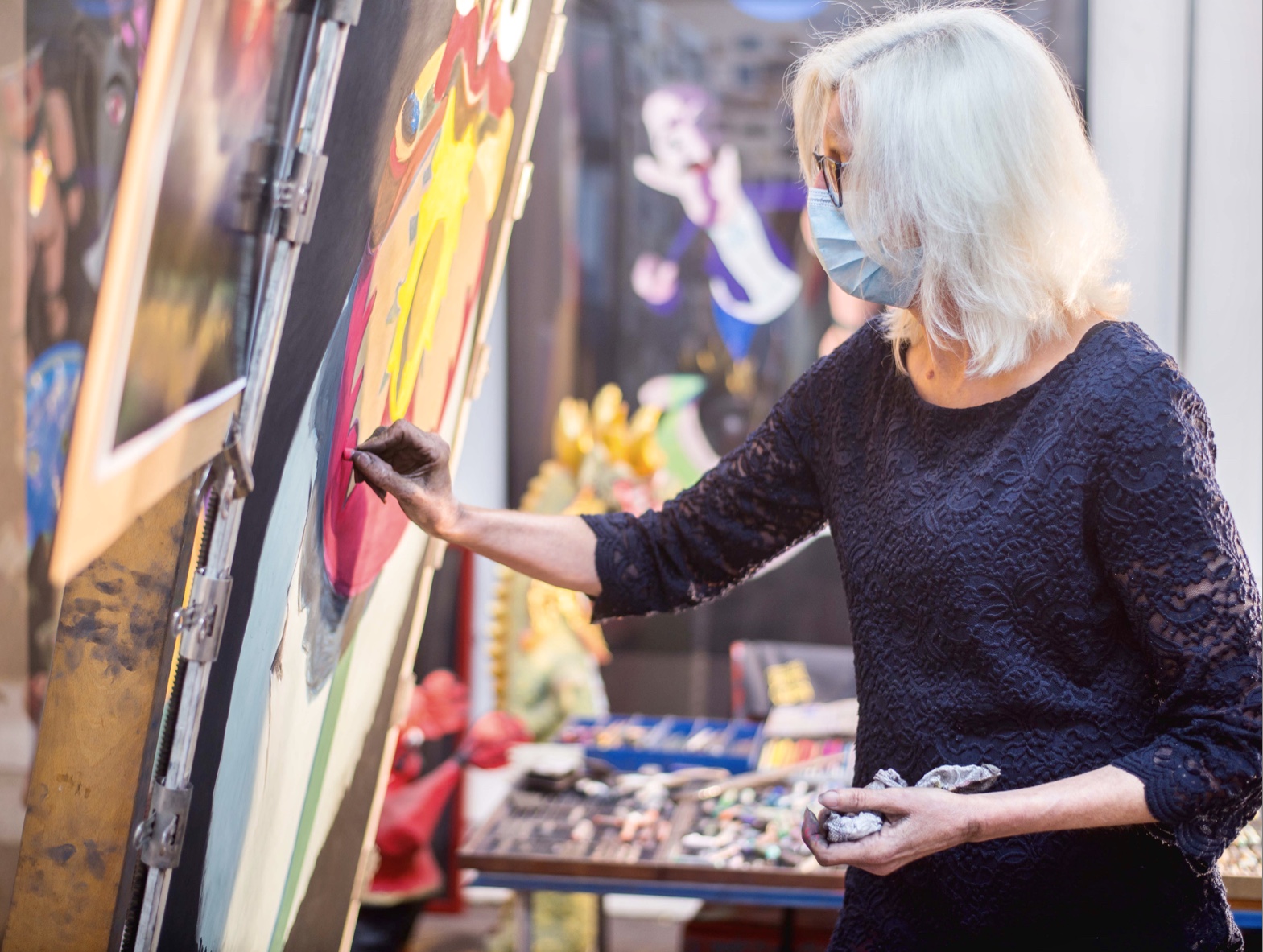
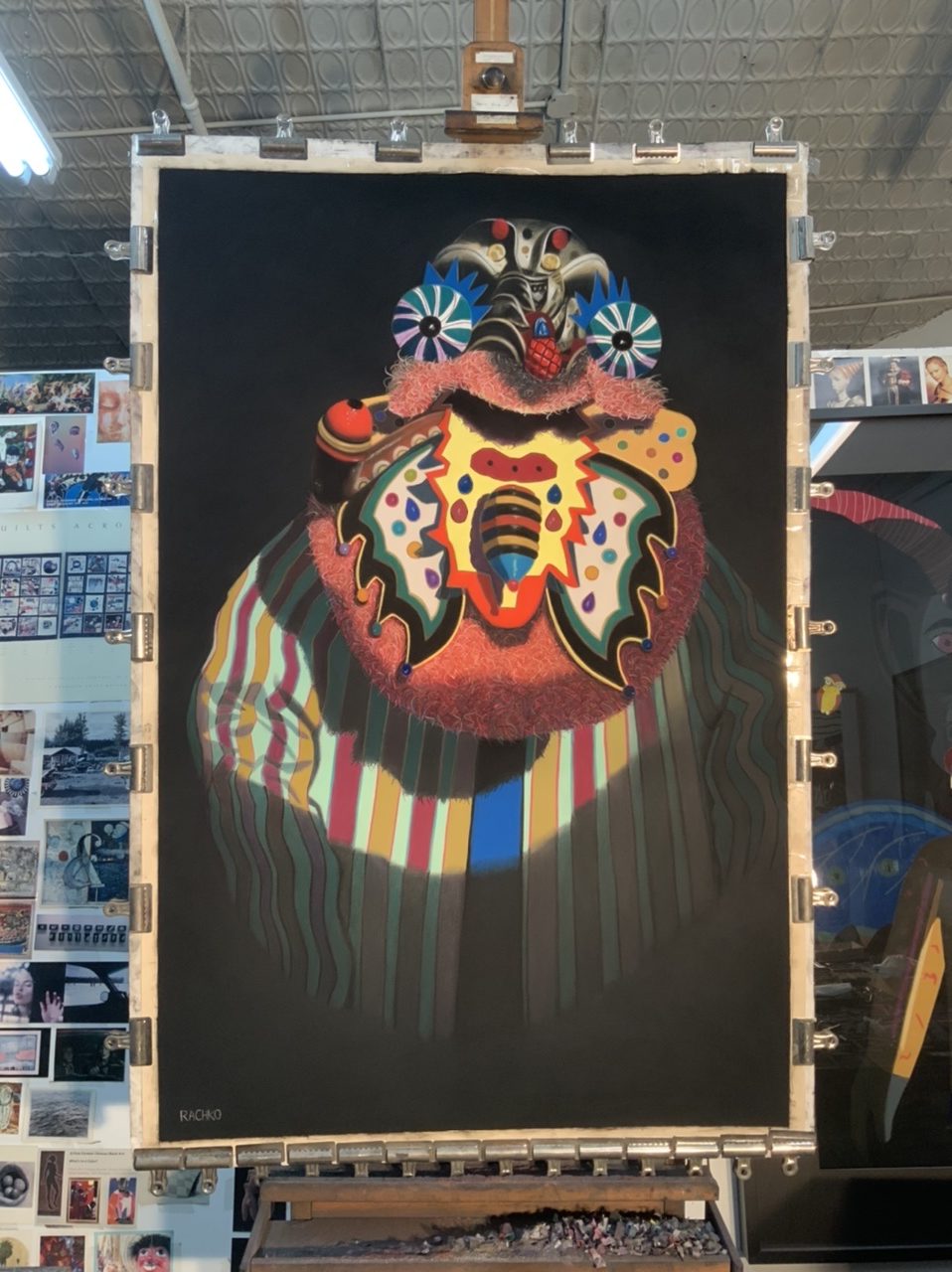
A: Undoubtedly, I could not make my work without UART sandpaper since my entire pastel technique evolved around it. I use 400 0r 500 grit. My favorite thing about it is its ‘tooth’ (i.e. texture or roughness).
Over the many months I spend creating a pastel painting, I build layer upon layer of soft pastel. Because the paper I use is relatively “toothy,” it accepts all of the pastel the painting needs. And as many people know, I own and use thousands of soft pastels!
Many layers of soft pastel and several months of studio time go into creating each painting. My self-invented technique is analogous to the glazing techniques used by the Old Masters, who slowly built up layers of thin oil paint to achieve a high degree of finish. Colors were not only mixed physically, but optically.
Similarly, I gradually build up layers of soft pastel, as many as thirty, to create a pastel painting. After applying a color, I blend it with my fingers and push it into the sandpaper’s tooth. It mixes with the color beneath to create a new color, continually adding richness, saturation, and intensity to the piece. By the time a pastel painting is finished, the colors are bold, vibrant, and exciting.
From the beginning in the 1980s I used photographs as reference material and my late husband, Bryan, would shoot 4” x 5” negatives of my elaborate setups with his Toyo-Omega view camera. In those days I rarely picked up a camera except when we were traveling. After Bryan was killed on 9/11, I inherited his extensive camera collection – old Nikons, Leicas, Graphlex cameras, etc. – and I wanted to learn how to use them. In 2002 I enrolled in a series of photography courses (about 10 over 4 years) at the International Center of Photography in New York. I learned how to use all of Bryan’s cameras and how to make my own big color prints in the darkroom.
Along the way I discovered that the sense of composition, form, and color I developed over many years as a painter translated well into photography. The camera was just another medium with which to express my ideas. Astonishingly, in 2009 I had my first solo photography exhibition in New York.
It’s wonderful to be both a painter and a photographer. Pastel painting will always be my first love, but photography lets me explore ideas much faster than I ever could as a painter. Paintings take months of work. To me, photographs – from the initial impulse to hanging a framed print on the wall – are instant gratification.
For several years I have been using my iPad Pro to capture thousands of travel photographs. Most recently, I visited Gujarat and Rajasthan in India. I have never been inclined to use a sketchbook so composing photos on my iPad keeps my eye sharp while I’m halfway around the world, far from my studio practice.
My blog, “Barbara Rachko’s Colored Dust,” continues to be a crucial part of my overall art practice. Blogging twice a week forces me to think deeply about my work and to explain it clearly to others. The process has helped me develop a better understanding about why I make art and, I like to think, has helped me to become a better writer.
Comments are welcome!
Pearls from artists* # 458

*an ongoing series of quotations – mostly from artists, to artists – that offers wisdom, inspiration, and advice for the sometimes lonely road we are on.
When I have painted a fine picture I have not given expression to a thought! That is what they say. What fools people are! They would strip painting of all its advantages. A writer has to say almost everything in order to make himself understood, but in painting it is as if some mysterious bridge were set up between the spirit of the persons in the picture and the beholder. The beholder sees figures, the external appearance of nature, but inwardly he meditates; the true thinking that is common to all men. Some give substance to it in writing, but in so doing they lose the subtle essence. Hence, grosser minds are more easily moved by writers than by painters or musicians. The art of the painter is all the nearer to man’s heart because it seems to be more material. In painting, as in external nature, proper justice is done to what is finite and to what is infinite, in other words, to what the soul finds inwardly moving in objects that are known through the senses alone.
The Journal of Eugene Delacroix edited by Hubert Wellington
Comments are welcome!
Pearls from artists* # 445
*an ongoing series of quotations – mostly from artists, to artists – that offers wisdom, inspiration, and advice for the sometimes lonely road we are on.
My good friend the writer Charles L. Mee, Jr helped me to recognize the relationship between art and the way societies are structured. He suggested that, as societies develop, it is the artists who articulate the necessary myths that embody our experience of life and provide parameters for ethics and values. Every so often the inherited myths lose their value because they become too small and confined to contain the complexities of the ever-transforming and expanding societies. In that moment new myths are needed to encompass who we are becoming. These new constructs do not eliminate anything already in the mix; rather, they include fresh influences and engender new formations. The new mythologies always include ideas, cultures and people formerly excluded from the previous mythologies. So, deduces Mee, the history of art is the history of inclusion.
I believe that the new mythologies will be created and articulated in art, in literature, painting and poetry. It is the artists who will create a livable future through their ability to articulate in the face of flux and change.
Anne Bogart in A Director Prepares: Seven Essays on Art and Theater
Comments are welcome!


 barbararachkoscoloreddust.com
Q: What kind of internal conversations do you tend to have when you are in the process of making art? (Question from Vedica Art Studios and Gallery)
Jan 10
Posted by barbararachkoscoloreddust
A: When standing at my easel creating a pastel painting, I focus on formal properties: composition, shape, color, and line. I always strive to produce a painting I’ve never seen before. Even as (perhaps especially as) the creator, I want to be surprised by the final result. My studio days are spent thinking, looking, reacting, and adjusting colors and composition as I refine increasingly tiny details, ensuring all elements work harmoniously. I determine which areas need to recede or advance, which require intricate details to appear three-dimensional, and which are better left as flat areas of color.
These countless adjustments ensure viewers’ eyes are guided around the finished painting in intriguing ways. I often recall something collectors of my pastel paintings shared: they mentioned a New York Times review of a Nan Goldin exhibition, in which the writer stated, “All of the pleasure circuits are fired in looking.” The collectors agreed this is exactly how they feel when viewing my work. Artists live for appreciative comments like these!
Comments are welcome!
Share this:
Posted in 2026, An Artist's Life, Creative Process, Studio, Working methods
Comments Off on Q: What kind of internal conversations do you tend to have when you are in the process of making art? (Question from Vedica Art Studios and Gallery)
Tags: adjusting, adjustments, advance, agreed, always, appear, appreciative, areas, around, artists, “Magisterial”, “New York Times”, better, circuits, collectors, colors, comments, composition, countless, creating, creator, details, determine, elements, ensure, ensuring, especially, exactly, exhibition, finished, fired, formal, guided, harmoniously, increasingly, intricate, intriguing, looking, mentioned, Nan Goldin, painting, pastel painting, perhaps, pleasure, produce, properties, question, reacting, recall, recede, refine, require, result, review, shared, something, stated, strive, Studio, surprised, thinking, three-dimensional, Vedica Art Studios and Gallery, viewers, viewing, working, writer