Category Archives: Source Material
Q: How do you think your recent trip to Bolivia will affect your work?
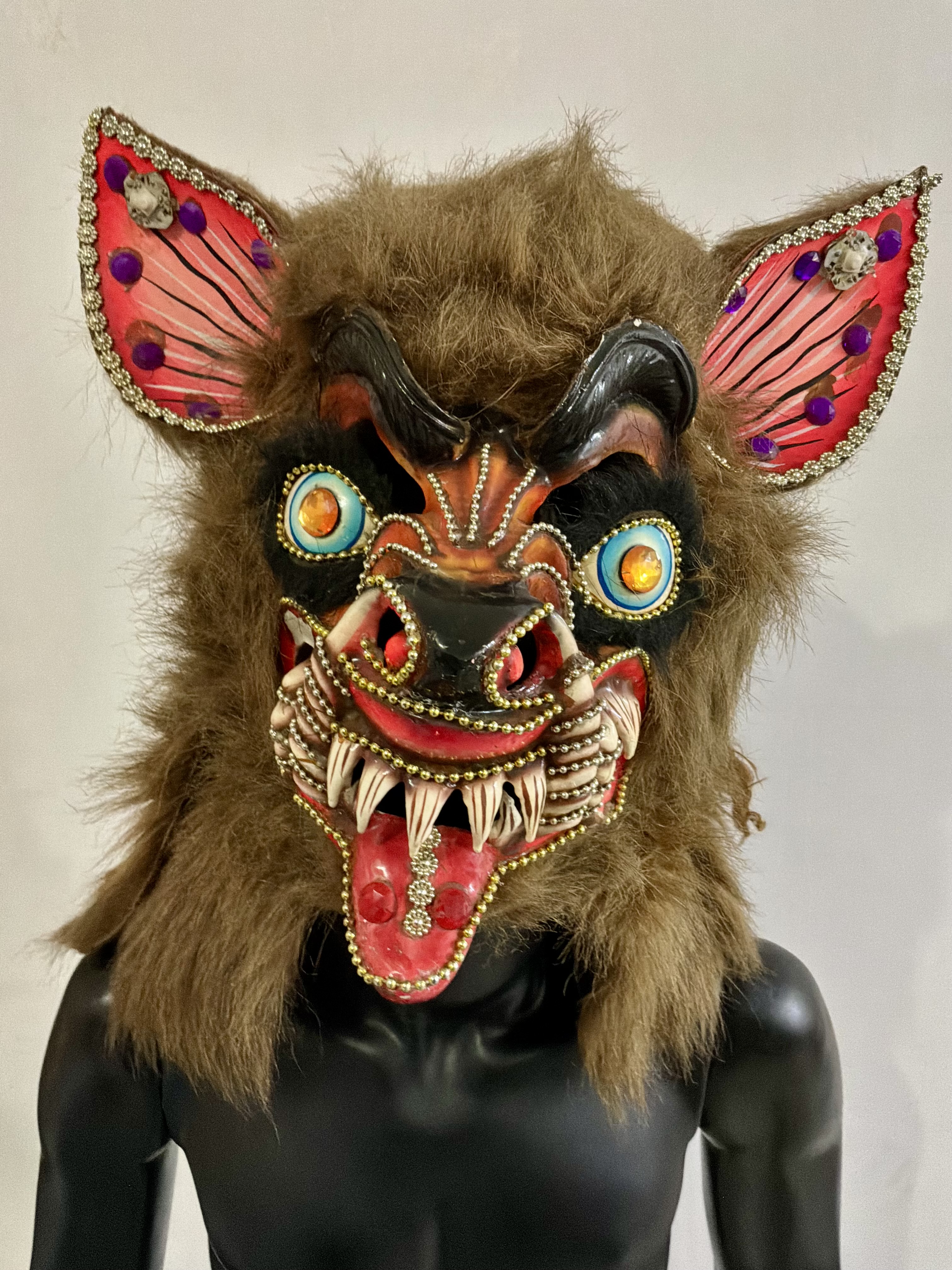
Reference photo from my trip to Bolivia
A: I have been back in the United States for one month and I know from past trips that there is always a long gestation period as I reflect on colorful new experiences, new sights, sounds, etc. My three and a half-weeks in Bolivia were non-stop, intense, and just full of so many high points. Bolivia is a fascinating country with profound cultural riches, and exceptionally warm and welcoming people. I experienced new friendships and events that were way beyond anything I could have imagined. In short, there’s a lot to process!
In the immediate aftermath, back in the studio I am deliberately selecting more vibrant colors and bumping up the contrast and drama in the painting on my easel (“Gatecrasher”) as I attempt to reflect some of what I saw and experienced in Oruro during Carnaval. I have begun to plan a pastel painting based on the mask pictured above, which I photographed in La Paz. We shall see what new work is created over the coming months and years. For now, it’s exciting to be reenergized and to have new subject matter with which to work. And, at this early date, I can barely conceive what our new Bolivia documentary will be like!
Comments are welcome!
Q: Do you have any big projects coming up?

A: I certainly do! I have been a painter for forty years, and for most of that time, my work has been shaped by foreign travel. At seventy-two, I find myself thinking about legacy — what I want to leave behind. Documenting my creative process on film has become an essential part of this objective.
In the “Bolivianos” series, I have been creating pastel-on-sandpaper paintings that transform the vivid masks of the Bolivian Carnival into universal archetypes. I first encountered these masks at a museum in La Paz in 2017.
Circumstances have aligned perfectly for an exciting next step: another trip to Bolivia and a new documentary. Our upcoming film will be a follow-up to the award-winning “Barbara Rachko: True Grit” (released in 2023), marking a deeper exploration of my thirty-five-year engagement with folk art from Mexico, Central America, and South America.
(See https://youtu.be/JJWLy84kXI0?si=v7JHIq9ViYGgs76U)
In February 2026, I will return to Bolivia with a two-person film crew to experience Carnival firsthand — to immerse myself in its rhythm, history, and meaning. Recognized by UNESCO as a Masterpiece of the Oral and Intangible Heritage of Humanity, this festival offers an extraordinary window into Bolivia’s cultural soul.
Our film will chronicle my journey as essential research — a vital continuation of my creative inquiry over these past decades. With this trip and film, I hope to create my next body of pastel-on-sandpaper paintings, rich with color, spirit, and the enduring vitality of Oruro’s Carnival.
Comments are welcome!
Q: What lies in the future for you? (Question from “Cultured Focus Magazine”)

A: I still have so much to say and share through my work! First, I want to continue creating and adding to the “Boliviano” series of pastel paintings that I began in 2017.
Second, Jennifer Cox, my director, and I are considering making part II of our film, “Barbara Rachko: True Grit,” which will require a return trip to Bolivia – to the Museum of Ethnography and Folklore in La Paz, where I first encountered the masks that are my current subject matter, and to Oruro to see similar masks in action during Carnival celebrations. This will be a complex undertaking and the issue of financing will first need to be resolved. Stay tuned!
Comments are welcome!
Q: The first pastel painting you see every morning when you arrive at your studio is “Myth Meets Dream.” It must have special meaning. Would you elaborate? (Question suggested by Marlissa Gardner via Facebook)

A: “Myth Meets Dream,” an early pastel painting from the “Domestic Threats” series, is one I have never wanted to sell. It marks the first time I included Mexican folk art figures in my work. In 1992 as a Christmas present, my future sister-in-law sent the two Oaxacan painted wooden figures you see depicted above – the blue winged creature and the red, white, and black figure behind it. The other three figures in this painting are hand-puppets.
Previously, I had been creating elaborate staged photographs in my Alexandria house using stuffed animals and hand-puppets. (The latter were made by a company called “Folk Tails”). I used the photos as reference material for pastel paintings. In other words, rather than work exclusively from life, I mostly looked at these photos while I made the painting. Although I have simplified my process since those early days, I still create pastel paintings using reference photographs.
In “Myth Meets Dream” you can see both puppets and my then new Oaxacan folk art figures. This pastel painting marks an important transition in subject matter and was the start of decades-worth of foreign travel, study, adventure, hard work, and yes, fun. It’s true that “Myth Meets Dream” hangs in my studio and is the first thing I see every morning. It brings back so many precious memories.
Every painting has a story!
If you’re interested to learn more, please see https://barbararachko.art/en/art-market
Comments are welcome!
Q: Many of the world’s cultures have a mask tradition. Is there something special about Bolivian masks that first attracted you to them?

Bolivian Carnival Mask
A: My subject matter emerges directly from my travels. I visited Bolivia in 2017. What I especially liked then – and now – about Bolivian Carnival masks, is that they include additional textures – feathers, fur, costume jewelry, sequins, fabric, etc. that add to their physical presence. Masks from most of the other countries I’ve visited tend to be made of wood and/or paper mache and nothing else. In my view such masks are not as dramatic nor do they offer much expressive potential. They feel dead. They lack a certain “soulfulness.”
Furthermore, textures are challenging to render in soft pastel. For more than three decades I have been striving to improve my pastel techniques. By now I have a vast repertoire from which to select. As was true in my earlier series, with “Bolivianos” an important personal goal is to keep adding to the repertoire.
It takes months to create a pastel painting, which means I need masks that will hold my attention every day over the course of three or four months. I never want to be bored in the studio. If I am bored while making the work, those feelings will be directly transferred and I will make a boring pastel painting, something I hope never to do! The masks need to have a really strong ‘presence.’ Then as I slowly make a pastel painting, one that is exciting to work on from start to finish, I can transform my subject into something surprising and powerful that has never existed before!
Comments are welcome!
Q: Would you describe your current work in a few sentences?
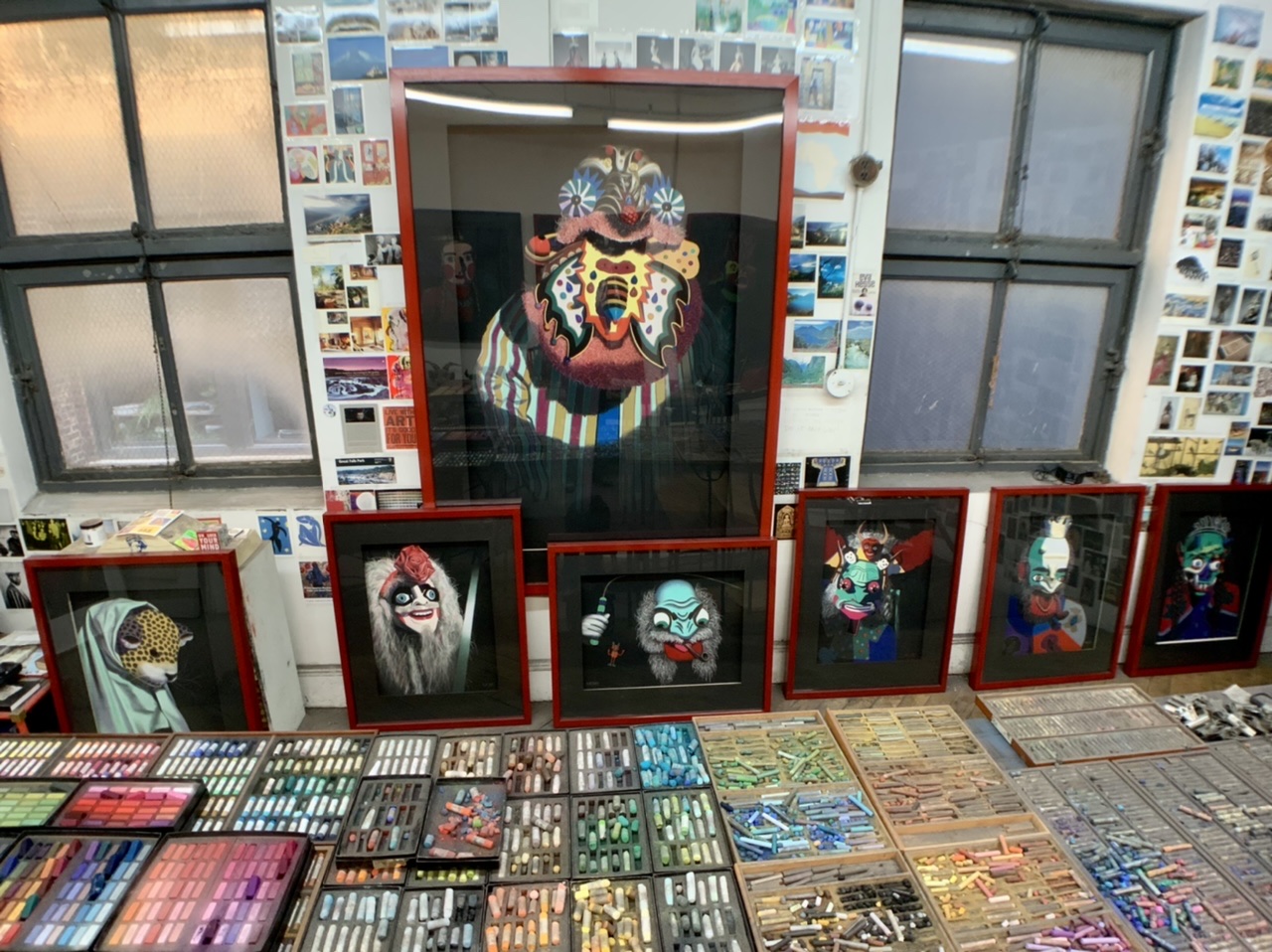
A: Of course, my art practice continually evolves and so does my thinking about its meaning. Using my own iPad photographs of Bolivian Carnival masks from Oruro as source material, for the past five years I have been slowly building a rogue’s gallery of beautiful, if somewhat misunderstood, characters probably best described as oddballs and misfits. For me, the paintings have a deeper meaning as archetypes of the collective unconscious. Creating this series is an act of genuine love. It is my hope that the ”Bolivianos” pastel paintings convey my deep respect and compassion for people around the world.
Comments are welcome!
Pearls from artists* # 516
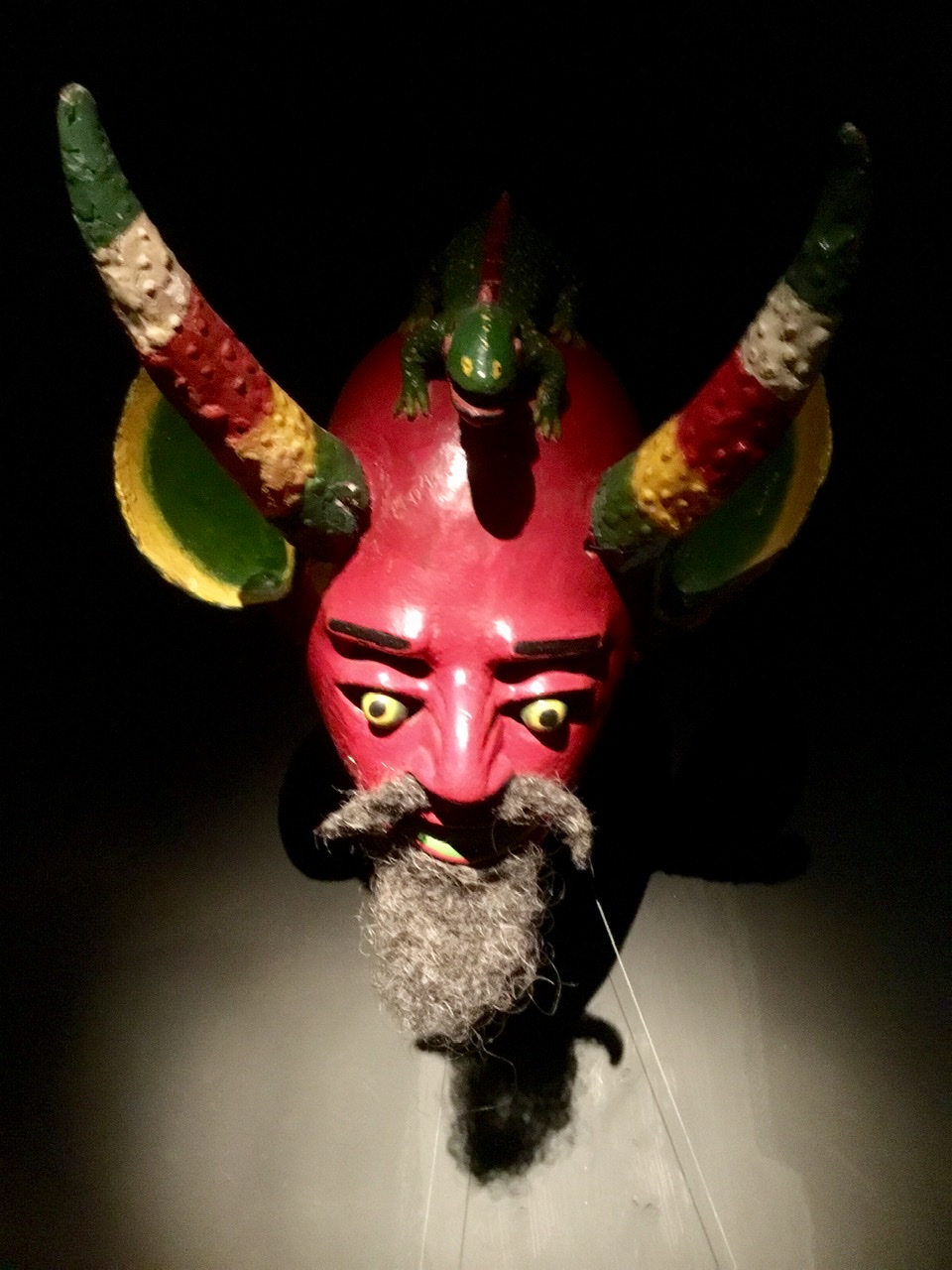
*an ongoing series of quotations – mostly from artists, to artists – that offers wisdom, inspiration, and advice for the sometimes lonely road we are on
In Oruro, Bolivia, devotion to the Virgin del Socavon (Virgin of the Mineshaft) migrated from the fixed festival of Candlemas (2 February) to the movable feast of Carnival. By delaying their public devotion to the Virgin until the four-day holiday before Ash Wednesday, Oruro’s miners were able to enjoy a longer fiesta than if they had confined it to a single saint’s day. During Oruro’s Carnival, thousands of devils dance through the streets before unmasking in the Sanctuary of the Mineshaft to express devotion to the Virgin.
Evidently, the festive connotation of devils is not always demonic. In Manresa [Spain], the demons and dragons celebrate the restoration of liberty after a brutal civil war and subsequent dictatorship [General Francisco Franco]. In Oruro… the masked devils protest exploitation of indigenous miners by external forces and devote themselves to a Virgin who blesses the poor and marginalized. Festive disorder generally dreams not of anarchy but of a more egalitarian order.
Max Harris in Carnival and other Christian Festivals: Folk Theology and Folk Performance
Comments are welcome!
Pearls from artists* # 515

*an ongoing series of quotations – mostly from artists, to artists – that offers wisdom, inspiration, and advice for the sometimes lonely road we are on.
“Under [General Francisco] Franco,” he said, “attendance at Catholic holidays was obligatory and much Catalan folklore was banned. People avoided the religious processions and, once they were no longer mandatory, ignored them… Marvesa’s [Spain] festive license of demons and dragons is no longer of darkness. If Franco claimed the mantle of Catholic light, then to party as Catalan devils is a happy celebration of freedom.
Demons and dragons are a customary feature of saints’ days and Corpus-Christi festivals throughout Spain and its former empire. They are also common in Carnivals. Indeed, it is partly because of the presence of demons, dragons, and other masked transgressive figures that Carnival has been so often designated – by defenders and detractors alike – as a pagan or devilish season, a time of unrestrained indulgence before the ascetic penances of Lent.
Julio Caro Baroja, the father of Spanish Carnival studies, scorned the antiquarian notion that the masked figures and seasonal inversions of Carnival were “a mere survival” of ancient pagan rituals. Carnival, he argued, was first nurtured by the dualistic oppositions of Christianity. Where it survives – for when he wrote it had been banned by Franco – it still enacts these old antagonisms. “Carnival,” he concluded, “is the representation of paganism itself face-to-face with Christianity.”
... Peter Burke, one of the more lucid historians of popular culture, has proposed that “there is a sense in which every festival [in early modern Europe] was a miniature Carnival because it was an excuse for disorder and because it drew from the same repertoire of traditional forms.
Max Harris in Carnival and Other Christian Festivals: Folk Theology and Folk Performance
Comments are welcome!
Q: What art project(s) are you working on currently? What is your inspiration or motivation for this? (Question from artamour)

A: While traveling in Bolivia in 2017, I visited a mask exhibition at the National Museum of Ethnography and Folklore in La Paz. The masks were presented against black walls, spot-lit, and looked eerily like 3D versions of my Black Paintings, the series I was working on at the time. I immediately knew I had stumbled upon a gift. To date I have completed seventeen pastel paintings in the Bolivianos series. One awaits finishing touches, another is in progress, and I am planning the next two, one large and one small pastel painting.
The following text is from my “Bolivianos” artist’s statement.
“My long-standing fascination with traditional masks took a leap forward in the spring of 2017 when I visited the National Museum of Ethnography and Folklore in La Paz, Bolivia. One particular exhibition on view, with more than fifty festival masks, was completely spell-binding.
The masks were old and had been crafted in Oruro, a former tin-mining center about 140 miles south of La Paz on the cold Altiplano (elevation 12,000’). Depicting important figures from Bolivian folklore traditions, the masks were created for use in Carnival celebrations that happen each year in late February or early March.
Carnival in Oruro revolves around three great dances. The dance of “The Incas” records the conquest and death of Atahualpa, the Inca emperor when the Spanish arrived in 1532. “The Morenada” dance was once assumed to represent black slaves who worked in the mines, but the truth is more complicated (and uncertain) since only mitayo Indians were permitted to do this work. The dance of “The Diablada” depicts Saint Michael fighting against Lucifer and the seven deadly sins. The latter were originally disguised in seven different masks derived from medieval Christian symbols and mostly devoid of pre-Columbian elements (except for totemic animals that became attached to Christianity after the Conquest). Typically, in these dances the cock represents Pride, the dog Envy, the pig Greed, the female devil Lust, etc.
The exhibition in La Paz was stunning and dramatic. Each mask was meticulously installed against a dark black wall and strategically spotlighted so that it became alive. The whole effect was uncanny. The masks looked like 3D versions of my “Black Paintings,” a pastel paintings series I have been creating for ten years. This experience was a gift… I could hardly believe my good fortune!
Knowing I was looking at the birth of a new series – I said as much to my companions as I remained behind while they explored other parts of the museum – I spent considerable time composing photographs. Consequently, I have enough reference material to create new pastel paintings in the studio for several years. The series, entitled “Bolivianos,” is arguably my strongest and most striking work to date.”
Comments are welcome!
Q: What country’s artistic style influenced you the most over the years? (Question from Arte Realizzata)

A: Undoubtedly, I would have to say Mexico. As a Christmas present in 1991 my future sister-in-law sent two brightly painted wooden animal figures from Oaxaca, Mexico. One was a blue polka-dotted winged horse. The other was a red, white, and black bear-like figure.
I was enthralled with this gift and the timing was fortuitous because I had been searching for new subject matter to paint. Soon I started asking artist-friends about Oaxaca and learned that it was an important art hub. At least two well-known Mexican painters, Rufino Tamayo and Francisco Toledo, had gotten their start there , as had master photographer Manual Alvarez Bravo. There was a “Oaxacan School of Painting” (‘school’ meaning a style, not an actual building) and Alvarez Bravo had established a photography school there (the building/institution kind). I began reading everything I could find. At the time I had only been to Mexico very briefly, in 1975, having made a road trip to Ensenada with my cousin and best friend from college. The following autumn my then-boyfriend, Bryan, and I planned a two-week trip to visit Mexico. We timed it to see Day of the Dead celebrations in Oaxaca. (In my reading I had become fascinated with this festival). We spent one week in Oaxaca followed by one week in Mexico City. My interest in collecting Mexican folk art was off and running!
Comments are welcome!


 barbararachkoscoloreddust.com