Blog Archives
Pearls from artists* # 623

The Studio
*an ongoing series of quotations – mostly from artists, to artists – that offers wisdom, inspiration, and advice for the sometimes lonely road we are on.
Jealousy? Hmmm. Jealousy links up with competition. It’s hard to compete, really compete, in the art world. That’s why award ceremonies are a little suspect. Athletes can compete. I don’t know how much you can really compete as an artist. You can compete with yourself.
You are an explorer. You understand that every time you go into the studio you are after something that does not yet exist. Maybe it’s the same for a runner. I don’t know. But with running, or swimming, or gymnastics, or tennis, the achievement is measurable. Forget about competition. Rather, commit yourself to find out the true nature of your art. How does it really work; what’s the essence of it? Go for that thing that no one can teach you. Go for that communion, that real communion with your soul, and the discipline of expressing that communion with others. That doesn’t come from competition. That comes from being one with what you are doing. It comes from concentration, and from your own ability to be fascinated endlessly with the story, the song, the jump, the color you are working with.
I know this sounds a little monkish or even sort of “holier than thou,” but I really do believe it. And that said, jealousy is a human sentiment. Few of us are above it. John Lahr, a writer, told me that the major emotion in Los Angeles is envy. I have to say he’s probably right. And a lot of it has to do with how close or far from an Academy Award one is. And LA, the capital of smoke and mirrors, would have sone believe that the award is just a step away. When you drive down Hollywood Boulevard, some of the dreamers look as though the dream ate them alive.
Anna Deavere Smith in Letters to a Young Artist: Straight-Up Advice on Making a Life in the Arts
Comments are welcome!
Pearls from artists* # 622

In the studio
*an ongoing series of quotations – mostly from artists, to artists – that offers wisdom, inspiration, and advice for the sometimes lonely road we are on.
Divining meaning from a painting is not so simple that it can be codified in a book, and [Mark] Rothko certainly would not have wanted such a guide to his work. So much of understanding his work is personal, and so much of it is made up of the process of getting inside the work. It is like the “plastic journey” he describes in his “Plasticity” chapter – you must undertake a sensuous adventure within the world of the painting in order to know it at all. He cannot tell you what his paintings, or anyone else’s, is about. You have to experience them. Ultimately, if he could have expressed the truth – the essence of these works – he probably would not have bothered to paint them. As his works exemplify, writing and painting involve different kinds of knowing.
Christopher Rothko in The Artist’s Reality: Philosophies of Art by Mark Rothko
Comments are welcome!
Pearls from artists* # 608

*an ongoing series of quotations – mostly from artists, to artists – that offers wisdom, inspiration, and advice for the sometimes lonely road we are on.
There is in all of these forms of expression a unitive experience that is the essence of the creative mystery. The heart of improvisation is the free play of consciousness as it draws, writes, paints, and plays with the raw material emerging from the unconscious. Such play entails a certain degree of risk.
Stephen Nachmanovitch in Free Play: Improvisation in Life and Art
Comments are welcome!
Pearls from artists* # 581

With recent “Bolivianos”
*an ongoing series of quotations – mostly from artists, to artists – that offers wisdom, inspiration, and advice for the sometimes lonely road we are on.
The essence of style is this: We have something in us, about us; it can be called many things, but for now let’s call it our original nature. We are born with our original nature, but on top of that, as we grow up, we accommodate to the patterns and habits of our culture, family, physical environment, and the daily business of the life we have taken on. What we are taught solidifies as “reality.” Our persona, the mask we show the world, develops out of our experience and training, step by step from infancy to adulthood. We construct our world through the actions of perception, learning, and expectation. We construct our “self” through the same actions of perception, learning, and expectation. World and self interlock and match each other, step by step and shape by shape. If the two constructions, self and world, mesh, we grow from child to adult becoming “normally adjusted individuals.” If they do not mesh so well, we may experience feelings of inner division, loneliness, or alienation.
If we should happen to become artists, our work takes on, to a certain extent, the style of the time: the clothing in which we are dressed by our generation, our country and language, our surroundings, the people who have influenced us.
But somehow, even when we are grown up and “adjusted,” everything we do and are – our handwriting, the vibrato of our voice, the way we handle the bow or breathe into the instrument, our way of using language, the look in our eyes, the pattern of whirling fingerprints on our hand – all these things are symptomatic of our original nature. They all show the imprint of our own deeper style or character.
Stephen Nachmanovitch in Free Play: Improvisation in Life and Art
Comments are welcome!
Q: Foreign travel has long been a significant aspect of your work. What are your views on cultural appropriation?
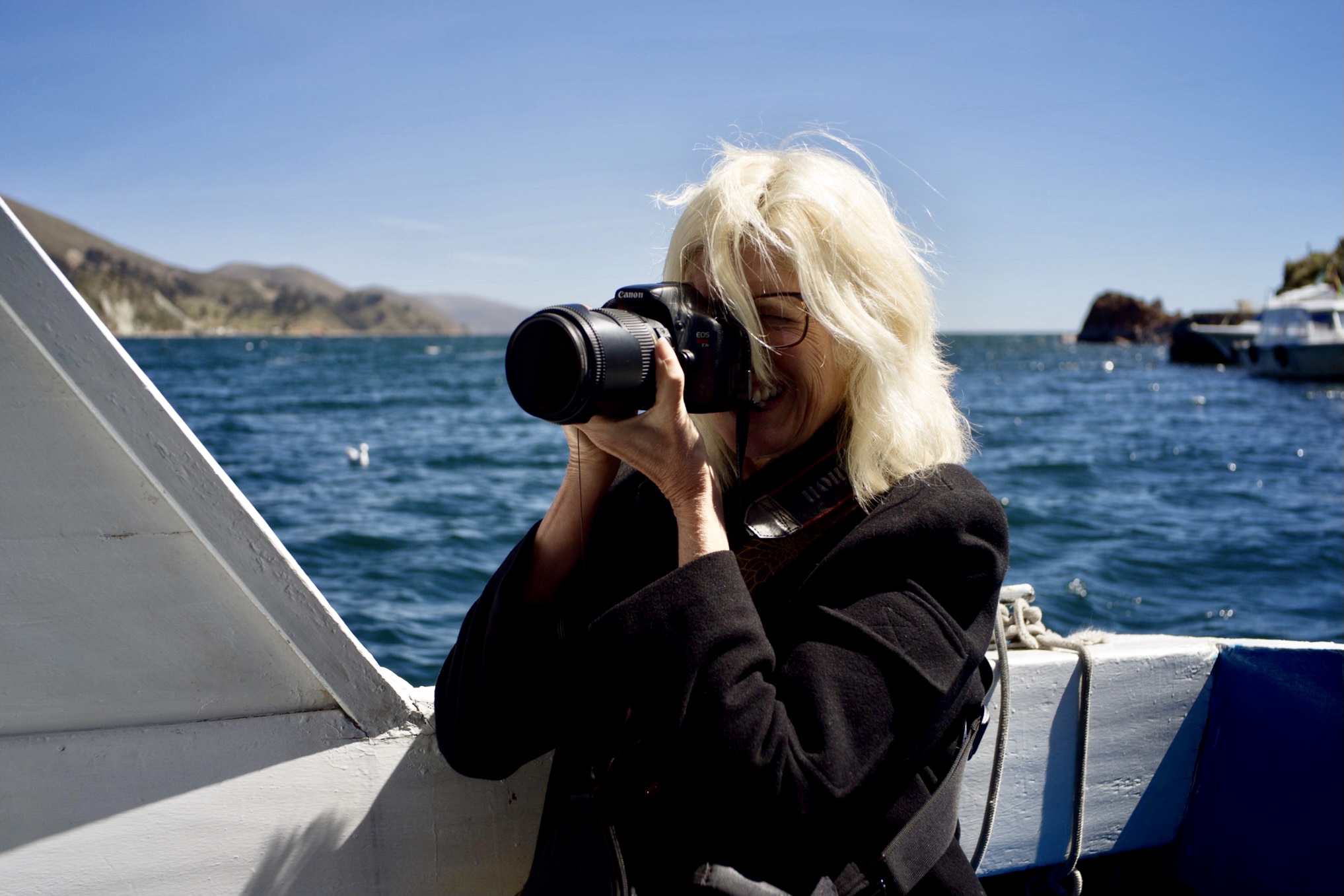
A: For more than three decades my inspiration and subject matter have come mainly from international travel to remote parts of the globe. I daresay there is no better education than travel. The result is that I possess a deep love and reverence for people and cultures all over the world. We are all connected by our shared humanity.
I wholeheartedly agree with what Henry Louis Gates eloquently expressed in the NY Times Book Review of October 12, 2021. Additions are mine.
Any teacher, any student, any writer, [any artist] sufficiently attentive and motivated, must be able to engage freely with subjects of their choice. That is not only the essence of learning; it’s the essence of being human.
And
What I owe to my teachers – and to my students – is a shared sense of wonder and awe as we contemplate works of the human imagination across space and time, works created by people who don’t look like us and who, in so many cases, would be astonished that we know their work and their names. Social identities can connect us in multiple and overlapping ways; they are not protected but betrayed when we turn them into silos with sentries. The freedom to write [and make art] can thrive only if we protect the freedom to read – and to learn. And perhaps the first thing to learn, in these storm-battered days, is that we could all do with more humility, and more humanity.
Comments are welcome!
Pearls from artists* # 458

*an ongoing series of quotations – mostly from artists, to artists – that offers wisdom, inspiration, and advice for the sometimes lonely road we are on.
When I have painted a fine picture I have not given expression to a thought! That is what they say. What fools people are! They would strip painting of all its advantages. A writer has to say almost everything in order to make himself understood, but in painting it is as if some mysterious bridge were set up between the spirit of the persons in the picture and the beholder. The beholder sees figures, the external appearance of nature, but inwardly he meditates; the true thinking that is common to all men. Some give substance to it in writing, but in so doing they lose the subtle essence. Hence, grosser minds are more easily moved by writers than by painters or musicians. The art of the painter is all the nearer to man’s heart because it seems to be more material. In painting, as in external nature, proper justice is done to what is finite and to what is infinite, in other words, to what the soul finds inwardly moving in objects that are known through the senses alone.
The Journal of Eugene Delacroix edited by Hubert Wellington
Comments are welcome!
Pearls from artists* # 384
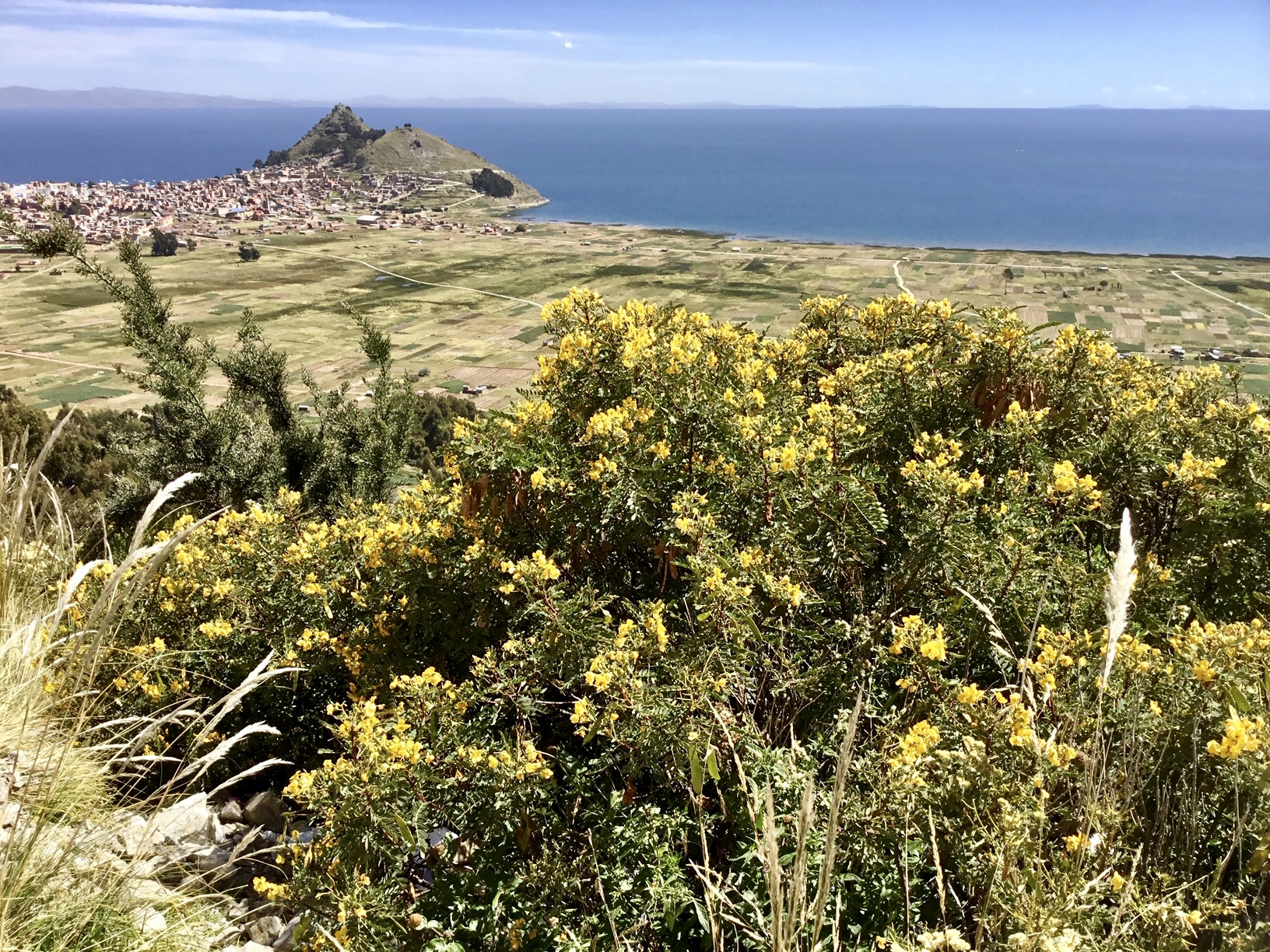
Overlooking Copacabana, Bolivia and Lake Titicaca
* an ongoing series of quotations – mostly from artists, to artists – that offers wisdom, inspiration, and advice for the sometimes lonely road we are on.
Carnival in Oruro [Bolivia] is a glorious spectacle. It’s flash, pomp and brilliance can be enjoyed without understanding its long history and intricate mythologies. Still, the onlooker is left with a thousand questions that are not so easily answered. Behind the glitter of Carnival lie the history, the timeless myths and the distinct traditions of this mining community.
According to the Spanish writer Jean Laude, “The function of the mask is to reaffirm, at regular intervals, the truth and presence of myths in everyday life.” This suggests that masks should be studied in context, noting their association with the individual dancer and the history, myths and traditions of the community that produces them. The mask has to be animated within its ritual, comic or social role.
A first step in appreciating the masks is to understand something of the land and people that crafted them. Oruro is a mining city on the open Altiplano at 3,700 meters (12,144 ft.) above sea level. The sky appears a rarified blue, it is intensely cold and a constant wind lifts dust to the eyes. During the year no more than 125,000 people live in the city. Suddenly in the weeks of Carnival, the population doubles or triples.
Three languages, Quechua, Aymara, and Spanish are spoken in Oruro. Their use reflects an ancient pattern of conquest in the history of this land. It is said that the Urus, whose language is now almost lost, were the first inhabitants. In time they were dominated by the Aymara tribes. Later, Quechua was introduced as the Inca advanced their empire from Cuzco. Ultimately the Spanish arrived and founded the present city in 1601 to exploit rich mineral deposits found in the seven hills.
Today, descendants of the Urus live near Oruro around the shore of Lake Poopo. Elements of their distinctive culture remain but they have no wealth in comparison with the more dominant Aymara and Quechua who surround them. A further change came in the recent past because Oruro has acted as a magnet, attracting many people from the countryside to work in the mines.
On one side were the Urus, ancient owners of all the land which now only carries their name (Uro Uro = Oruro). On the other side were the miners, many of whom were Quechua and Aymara migrants. In the middle is “Carnival.”
El Carnaval de Oruro by Manuel Vargas in Mascaras de los Andes Bolivianos, Editorial Quipus and Banco Mercantil
Comments are welcome!
Pearls from artists* # 368

Leonora Carrington at Di Donna Galleries, NYC
* an ongoing series of quotations – mostly from artists, to artists – that offers wisdom, inspiration, and advice for the sometimes lonely road we are on.
Whether we look to the contradictory functions that people are asked to fulfill today – devoted parent and loyal employee, faithful spouse and emancipated libertine, mature adult and eternal child – or to the ways in which identities are disbursed across divergent political forums, information systems, and communication networks, the same observation holds: we are infinitely divided. What is called an individual today is an abstract assemblage of fragments. Phone calls, emails, voice mails, blogs, videos and photos, surveillance tapes, banking records: the body is dwarfed by the virtual tendrils that shoot out if it through time and space, any of which is likely to claim to be the real “you” as you are. Only the imaginal mind can lead us out of the maze, with art providing the symbols that mark the way to the elusive essence that truly defines us.
J.F. Martel in Reclaiming Art in the Age of Artifice:A Treatise, Critique, and Call to Action
Comments are welcome!
Pearls from artists* # 349
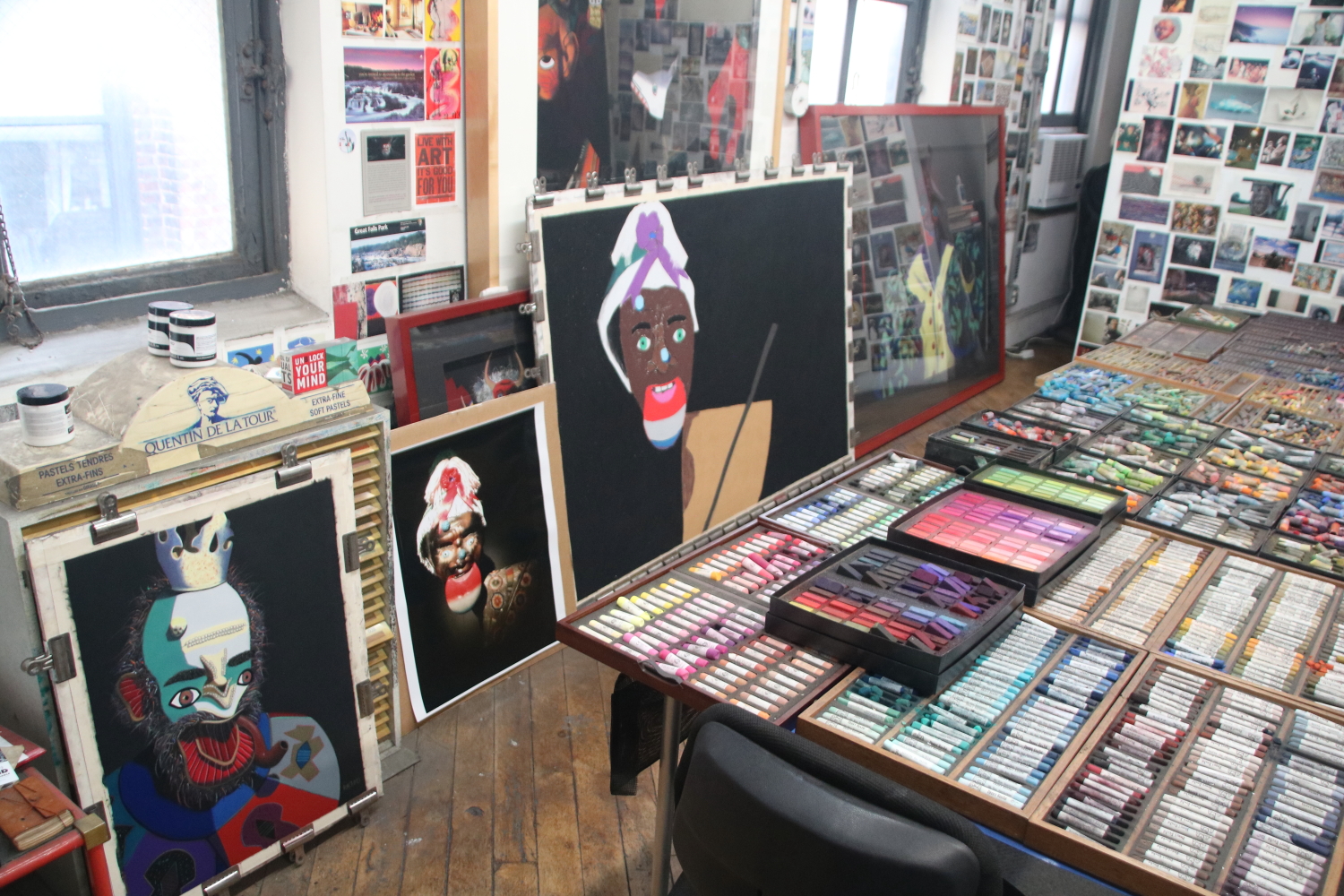
Barbara’s studio
*an ongoing series of quotations – mostly from artists, to artists – that offers wisdom, inspiration, and advice for the sometimes lonely road we are on.
If Dostoyevsky, Flaubert, and so many others were able to create great artistic works, it was because they were able to pull off something few adults can find it in themselves to do: they were able to suspend all final judgments about life and the universe in order to play…
The spirit of work is concerned with self-preservation. It evaluates concepts and ideas in terms of their practical value. Building roads, raising walls, running elections, debating policies, educating the young – all of these are purposive actions ultimately aimed at upholding social structures, changing those structures, or promoting one’s place within society. The spirit of work is the home of the ego, the part of us that has evolved to survive and thrive. One of the conditions of the artistic creation seems to be the ability to move frame this frame of mind into the spirit of play. As many artist have said in varying ways, the trick is to forget everything and create for the sake of creating. No worthwhile play, of course, is without effort. As the painstaking care Flaubert put into every line of his books makes clear, the spirit of play is sometimes the most exciting. Nevertheless, art remains in essence a game, an activity undertaken for its own sake, no matter how difficult. Like all games, it requires the establishment of a perimeter within which things that one might take very seriously in ordinary life are given only relative value. The perimeter suspends all the conventional rules, allowing the artist to turn the world on its head and let the imagination roam freely.
No sooner have we entered the spirit of play than we see things differently.
J.F. Martel in Reclaiming Art in the Age of Artifice: A Treatise, Critique, and Call to Action
Comments are welcome!
Pearls from artists* # 323
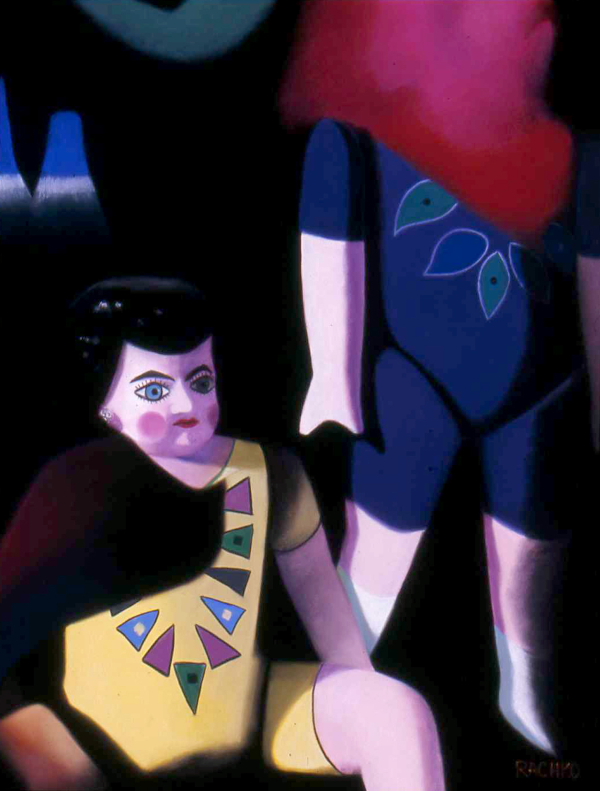
“The Absence,” soft pastel on sandpaper, 26″ x 20″
*an ongoing series of quotations – mostly from artists, to artists – that offers wisdom, inspiration, and advice for the sometimes lonely road we are on.
Art cannot play to the demand because it inheres precisely in bringing forth the unexpected, the New. It unearths what normality buries away. No wonder so many people are afraid of it.
All authentic art, then, is “challenging,” not just the avant-garde. We cannot omit the fact that some great art has an outer layer that makes it more agreeable to popular taste at a particular moment. For example, the work of Vincent van Gogh, one of modernisms prime instigators in the visual arts, seems to be everywhere today even though no one saw much to like in it while he was alive. But while it may be true that on the surface van Gogh’s work is all pretty colors and neat swirls, its immediate appeal is a siren’s song luring us to the depths. There is a chaos lurking in every print of Starry Night (1889) that livens up a suburban bathroom. This chaos isn’t something that van Gogh injected into his painting of an otherwise benign night sky. It is the essence of the starry sky when seen for what it is, that is, when captured outside all comforting clichés that might shield us from its compelling monstrosity.
J.F. Martel in Reclaiming Art in the Age of Artifice: A Treatise, Critique, and Call to Action
Comments are welcome!


 barbararachkoscoloreddust.com