Blog Archives
Pearls from artists* # 476
*an ongoing series of quotations – mostly from artists, to artists – that offers wisdom, inspiration, and advice for the sometimes lonely road we are on.
For a great many artists solitude is the time when they feel most real and alive. It is when they have their most intense experiences, when they can vicariously live out any adventure, any dream. Tennessee Williams said, “I’m only really alive when I’m writing.” The painter Robert Motherwell wrote, “I feel most real to myself in the studio.” The young, exuberant Russian painter Marie Bashkirtseff exclaimed at the end of the last century:
In the studio all distinctions disappear. One has neither name nor family; one is no longer the daughter of one’s mother, one is oneself and individual, and one has before one art, and nothing else. One feels so happy, so free, so proud!
We may think of his aliveness as the accumulation of al the above-listed benefits, as the artist working out her life, manifesting her creativity, suiting her personality, playing, avoiding unwanted social interactions, working authentically and integrity, living intensely – as the artist being her grandest self.
Eric Maisel in A Life in the Arts: Practical Guidance and Inspiration for Creative and Performing Artists
Comments are welcome!
Pearls from artists* # 472
*an ongoing series of quotations – mostly from artists, to artists – that offers wisdom, inspiration, and advice for the sometimes lonely road we are on.
A remark by Kurt Anderson suggests how the Internet discourages patient gazing: “Waiting a while to get everything you want… was a definition of maturity. Demanding satisfaction right this instant, on the other hand, is a defining behavior of seven-year-olds. The powerful appeal of the Web is not just the ‘community’ it enables but its instantane-ity… as a result… delayed gratification itself came to seem quaint and unnecessary.” A survey commissioned by the Visitor Studies Association reveals the impact of impatience. On average, the survey found, Americans spend between six and ten seconds looking at individual works in museums. (Is it just a coincidence that six to ten seconds is also the average time browsers perch on any given Web page?) Yet how many hours a day do we spend absorbed by one or another electronic screen? For the Los Angeles artist Ed Ruscha (born 1937) brief encounters won’t suffice. When somebody asked, “How can you tell good art from bad?” Ruscha replied, “With a bad work you immediately say, ‘Wow!’ But afterwards, you think, ‘Hum? Maybe not.’ With a good work, the opposite happens.” Time is lodged at the heart of Ruscha’s formula, as the artwork becomes part of our temporal experience. In order to know what is good, we need to take a breather. Even to know what is bad, we need to pause.
Arden Reed in Slow Art: The Experience of Looking, Sacred Images to James Turrell
Comments are welcome!
Pearls from artists* # 468

*an ongoing series of quotations – mostly from artists, to artists – that offers wisdom, inspiration, and advice for the sometimes lonely road we are on.
Why does art elicit such different reactions from us? How can a work that bowls one person over leave another cold? Doesn’t the variability of the aesthetic feeling support the view that art is culturally determined and relative? Maybe not, if we consider the possibility that the artistic experience depends not on some subjective mood but on an individually acquired (hence variable) power to be affected by art, a capacity developed through one’s culture in tandem with one’s unique character. For evidence of this we can point to works that seem to ignore cultural boundaries altogether, affecting people of different backgrounds in comparable ways even though a specific articulation of their personal responses continues to vary. Consider the plays of William Shakespeare or Greek theater, or the fairy tales that have sprung up in similar forms on every continent. We could not be further removed from the people who painted in the Chauvet Cave, nor could we be more oblivious as to the significance they ascribed to their pictures. Yet their work affects us across the millennia. Everyone responds to them differently, of course, and the spirit in which people are likely to receive them now probably differs significantly from how it was at the beginning. But these permutations revolve around a solid core, something present in the images themselves.
J.F. Martel in Reclaiming Art in the Age of Artifice: A Treatise, Critique, and Call to Action
Comments are welcome!
Pearls from artists* # 464
*an ongoing series of quotations – mostly from artists, to artists – that offers wisdom, inspiration, and advice for the sometimes lonely road we are on.
Only through art can human beings express and share the archetypal powers that shape the universe.
To abandon art would mean forfeiting the gift of vision, which, by all appearances, was given to humans alone.
To reclaim it might enable us to recover our faith in this world, and act in accordance with that faith for the benefit of life on earth.
JF Martel in Reclaiming Art in the Age of Artifice: A Treatise, Critique, and Call to Action
Comments are welcome!
Pearls from artists* # 459
*an ongoing series of quotations – mostly from artists, to artists – that offers wisdom, inspiration, and advice for the sometimes lonely road we are on.
Naturally we want freedom, flow and harmony in our work. These are qualities that give it eloquence. But we cannot find this flow by avoiding the obstacles that arise upon starting out. We welcome the resistances and then apply our God given ammunition – our imagination, energy and will – and finally watch the obstacles dissolve. Only then can we enjoy the new-found freedom and flow until the next obstacle appears. And the struggle begins anew. And hence, the paradox: we cultivate resistance in order to free our path of resistance. Real power is the removal of resistance from your path.
Anne Bogart in A Director Prepares: Seven Essays on Art and Theatre
Comments are welcome!
Pearls from artists* # 456
*an ongoing series of quotations – mostly from artists, to artists – that offers wisdom, inspiration, and advice for the sometimes lonely road we are on.
[Philip] Guston’s biography provides ample proof of his political convictions – his loathing of the Klan, of Richard Nixon, of violence against the powerless. It also leaves no doubt as to his Ozymandian artistic ambitions, which had a drive and a logic of their own. Yoking the ambitions to the convictions was, he found, insipid: “What bores me,” he said in 1974. “is to see an illustration of my thought… I want to make something I never saw before and be changed by it. So that I go into the studio and I see these things up and I think, Jesus, did I do that? What a strange thing.”
Susan Tallman in Phillip Guston’s Discomfort Zone in The New York Review of Books, Jan. 14, 2021
Comments are welcome!
Pearls from artists* # 451
*an ongoing series of quotations – mostly from artists, to artists – that offers wisdom, inspiration, and advice for the sometimes lonely road we are on.
Your attitude towards resistance determines the success of your work and your future. Resistance should be cultivated. How you meet these obstacles that present themselves in the light of any endeavor determine the direction of your life and career.
Allow me to propose a few suggestions about how to handle the natural resistances that your circumstances might offer. Do not wait for enough time or money to accomplish what you think you have in mind. Work with what you have right now. Work with the architecture you see around you right now. Do not what for what you assume is the appropriate, stress-free environment in which to generate expression. Do not wait for maturity or insight or wisdom. Do not wait till you are sure you know what you are doing. Do not wait until you have enough technique. What you do now, what you make of your present circumstances will determine the quality of your future endeavors.
And, at the same time, be patient.
Anne Bogart in A Director Prepares: Seven Essays on Art and Theatre
Comments are welcome!
Q: What is the most important factor behind your success?

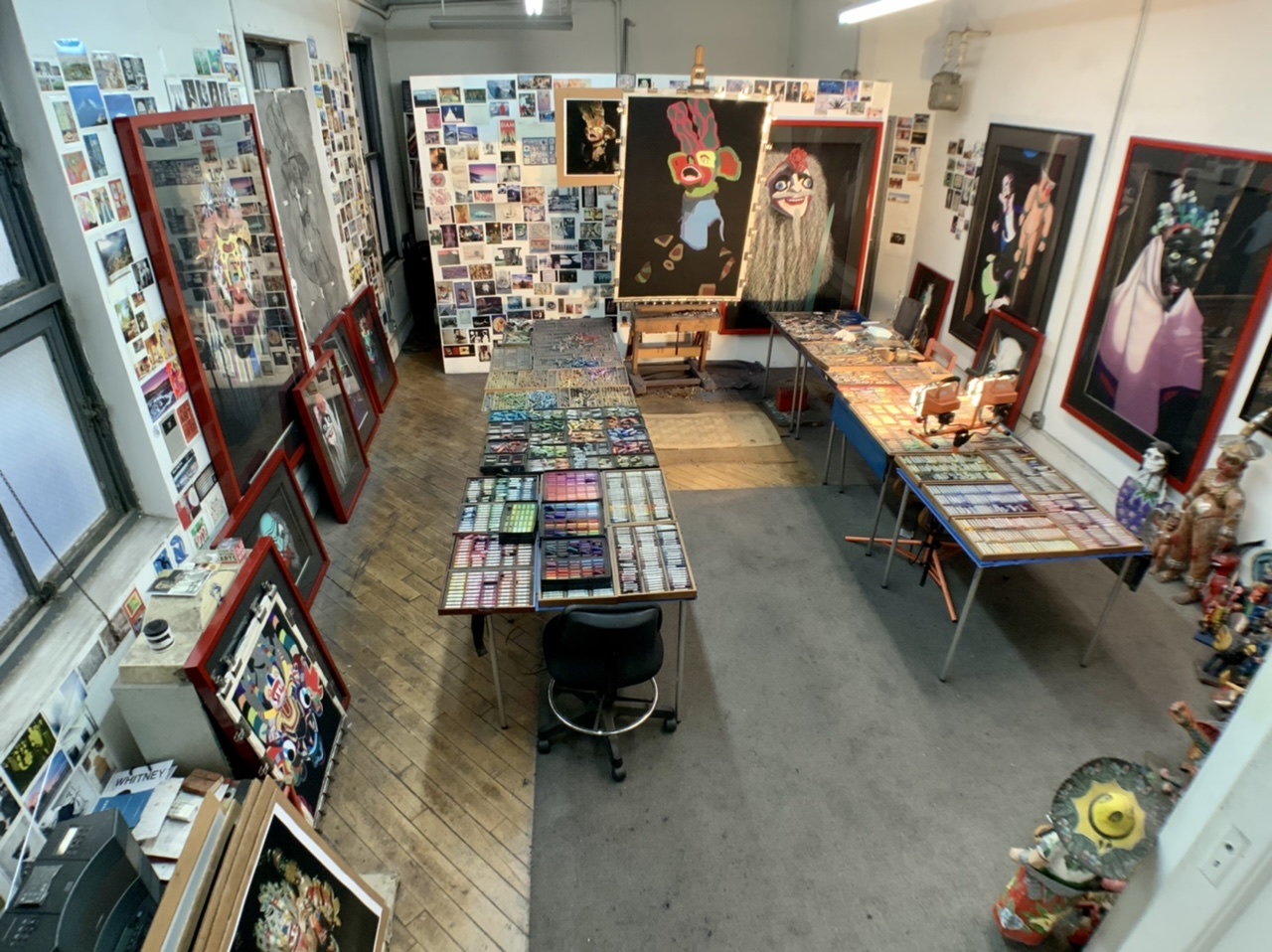
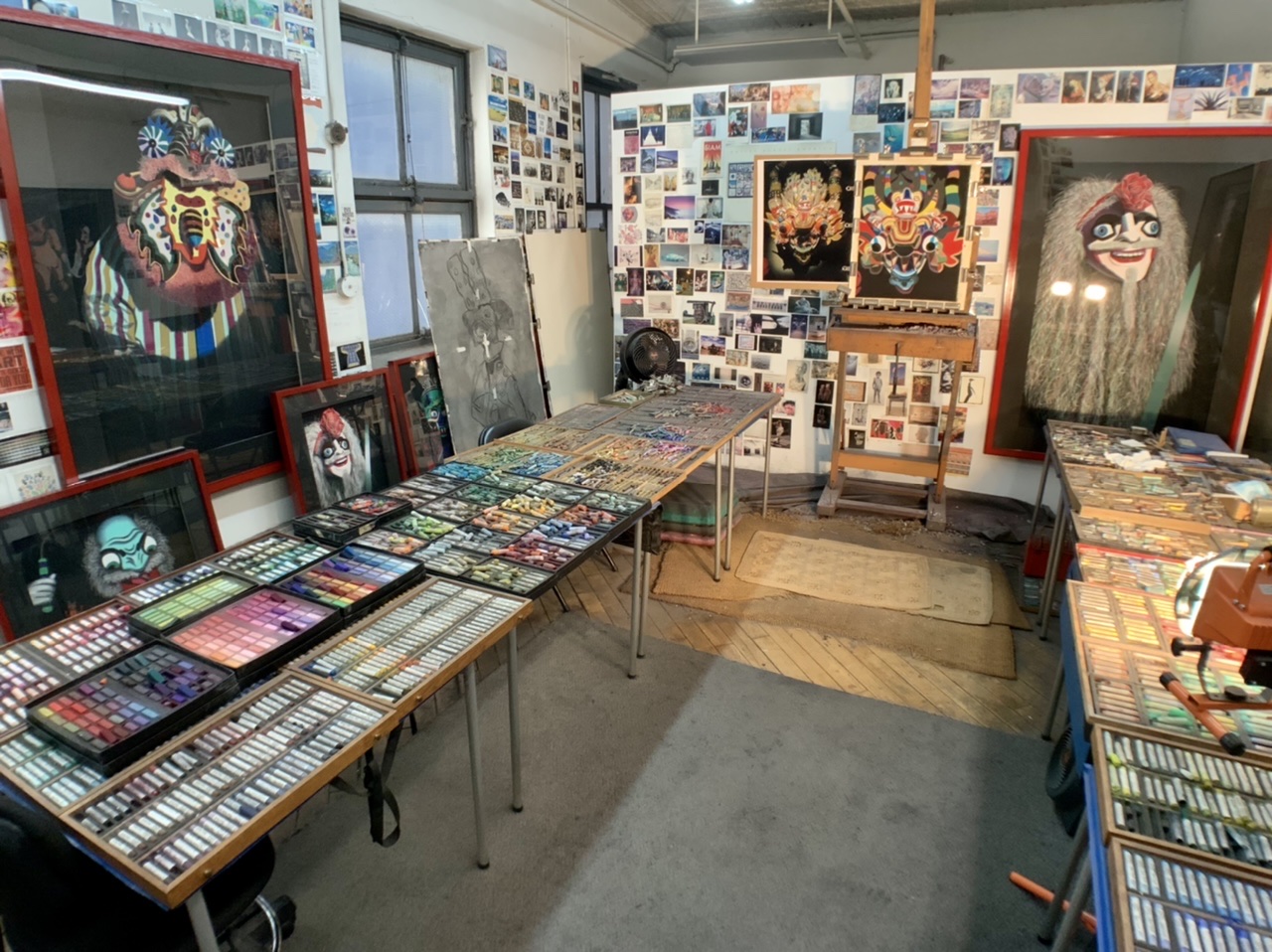
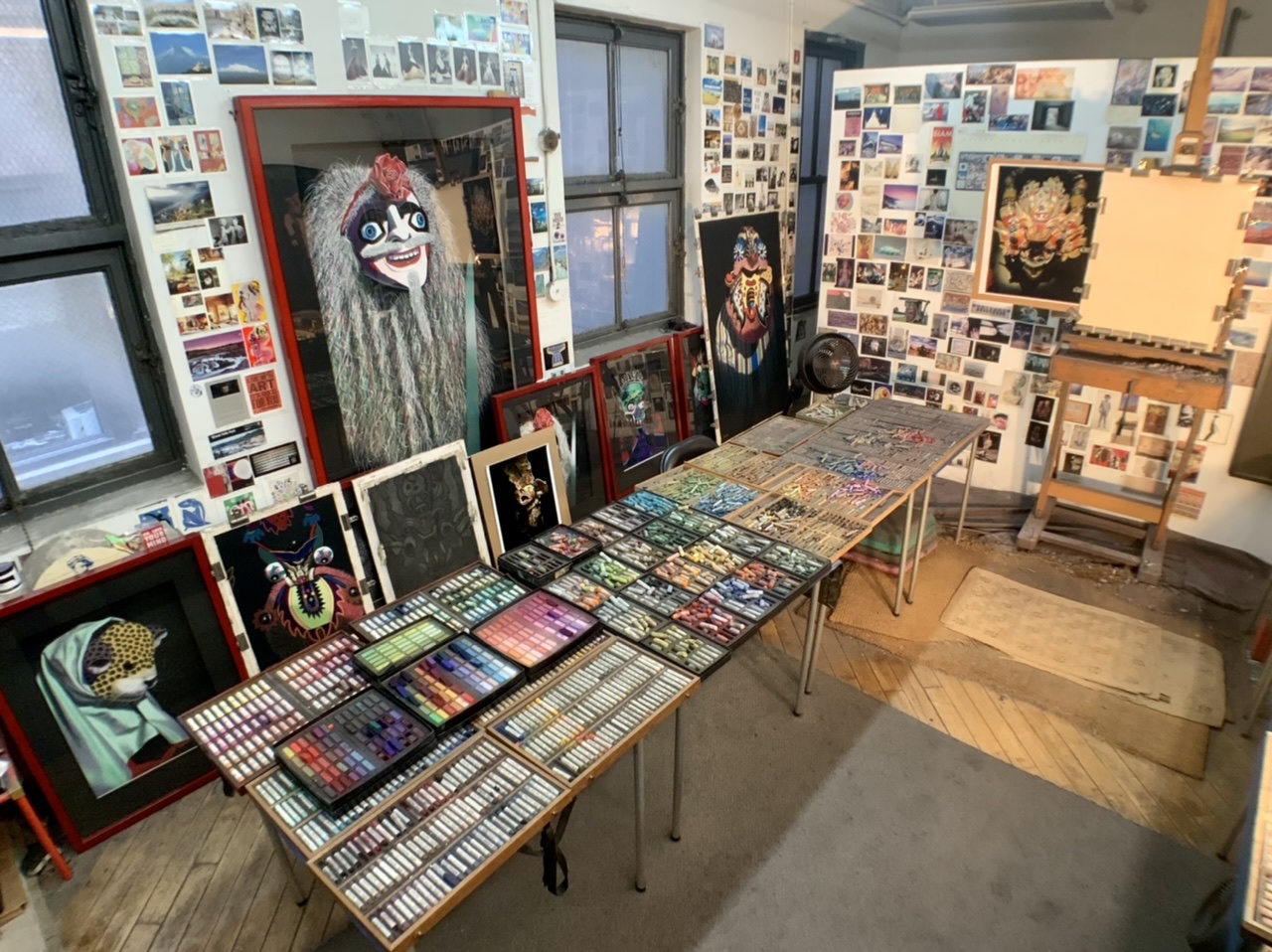
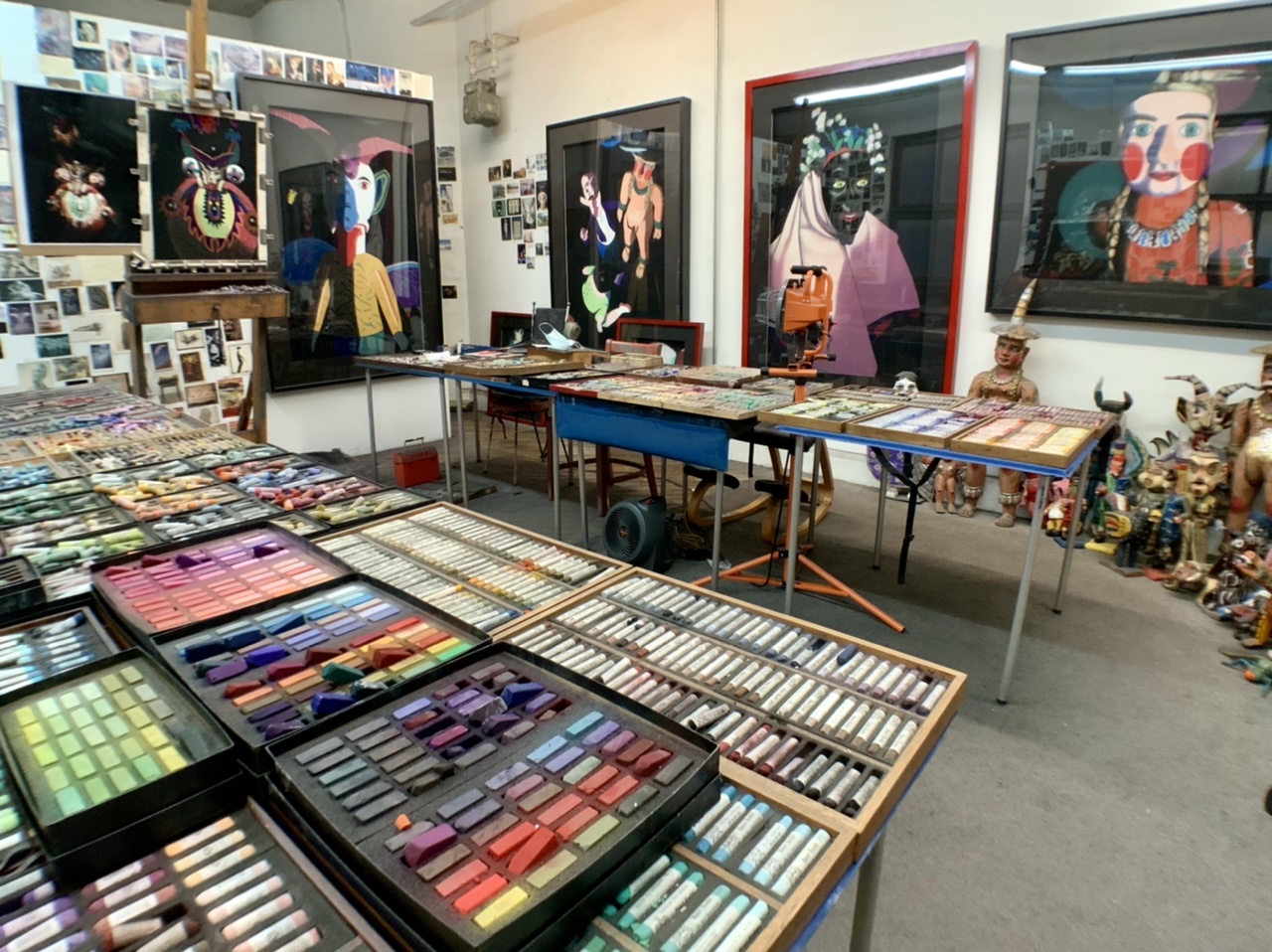
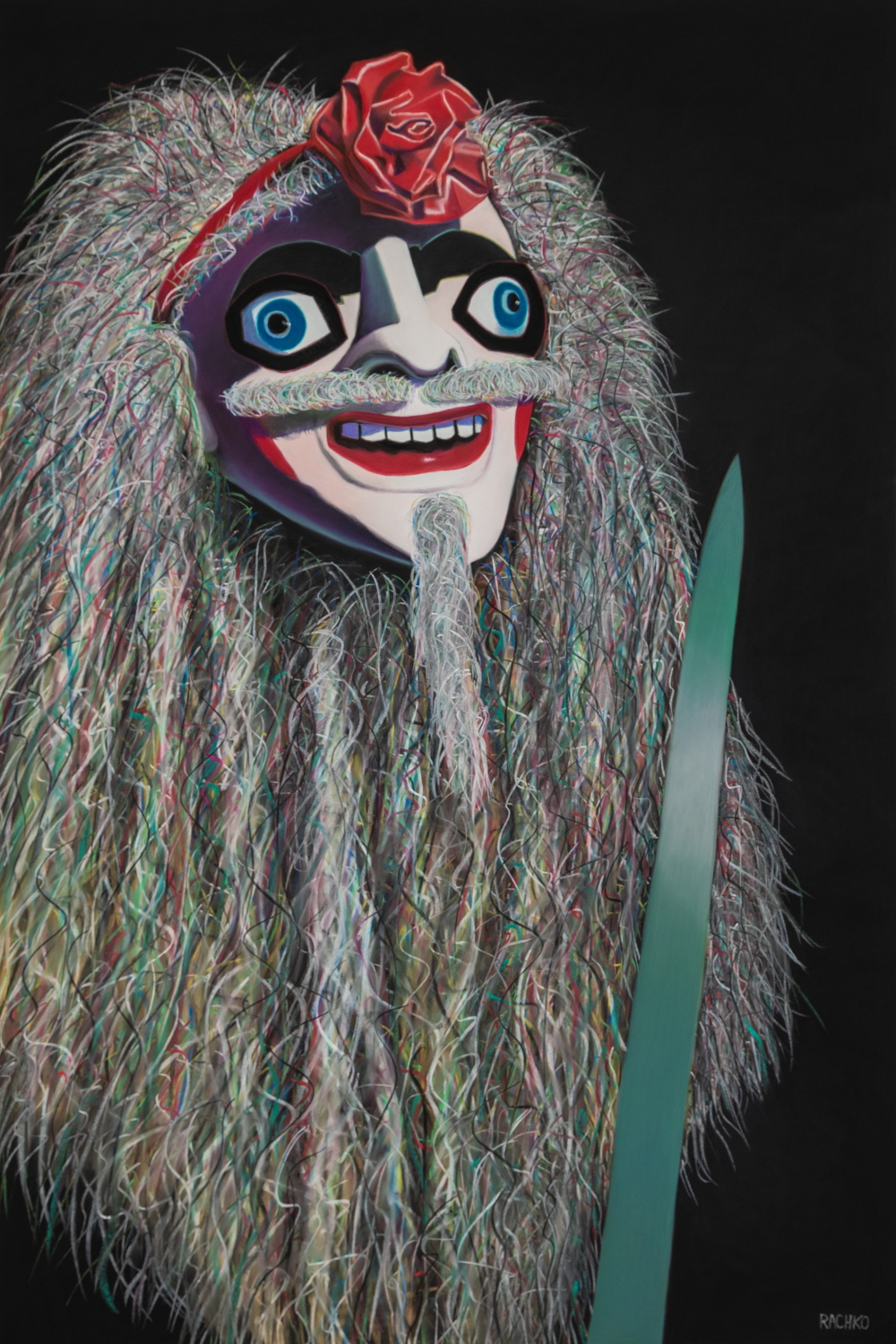
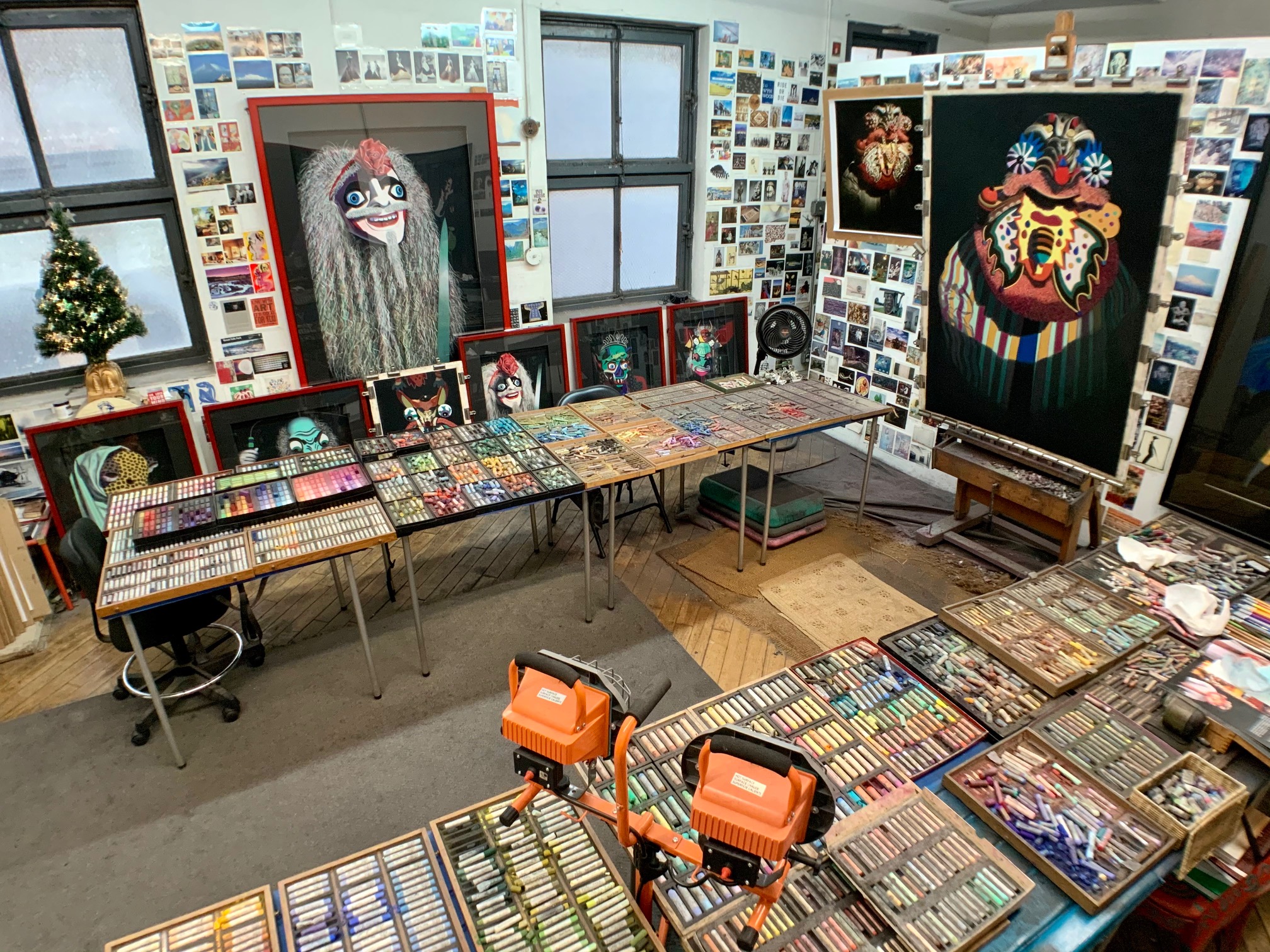
A: In a word, I’d say it’s love. I love soft pastel! I love being an artist! I love looking at the thousands of pastels in my studio while I think about the possibilities for mixing new colors and making exciting new pastel paintings. Soft pastels are rich and intense.
Even after more than thirty years as an artist, I still adore what I am able to accomplish. I continually refine my craft as I push pastel to new heights. My business card says it all: “Revolutionizing Pastel as Fine Art!”
The surfaces of my finished pastel paintings are velvety and demanding of close study and attention. Soft pastel on sandpaper – no other medium is as sensuous or as satisfying. Who could argue with that!
Comments are welcome!
Q: How do you think about risk? What role has taking risks played in your life/career? (Question from Emma Jacobs, VoyageMIA.com)

A: My journey to becoming a visual artist was circuitous, to say the least. Risk-taking gave me the life and career I enjoy now.
The biggest – and scariest – risk I’ve ever taken was deciding to leave my active duty Naval career to pursue art full-time. The second most significant risk was moving to New York City in 1997. I have never regretted doing either one.
When I was 25, and a civilian, I earned my private pilot’s license and spent the next two years amassing other flying licenses and ratings, culminating in a Boeing-727 flight engineer’s certificate. Two years later I joined the Navy.
As an accomplished civilian pilot with thousands of flight hours, I had expected to fly jets in the Navy. However, women were barred from combat in those days (the 1980s) so there were very few women Navy pilots. There were no female pilots on aircraft carriers and no female Blue Angels. Women were restricted to training male pilots for combat jobs and priority was given to Naval Academy graduates. My BA was from a different university.
In the mid-1980s I was in my early 30s and a Lieutenant on active duty in the Navy. I worked a soul-crushing job as a computer analyst on the midnight shift in a Pentagon sub-basement. It was literally and figuratively the lowest point of my life. I hated my job! Not only was it boring, I was not using my hard-won flying skills. In short I was miserable – miserable and trapped because a Naval officer cannot just resign with two weeks notice.
Remembering the joyful Saturdays of my youth when I had taken art classes with a local New Jersey painter, I enrolled in a drawing class at the Art League School in Alexandria, Virginia. Initially I wasn’t very good, but it was wonderful to be around other women and a world away from the “warrior mentality” of my mostly male Pentagon co-workers. Plus, I was having fun!
Soon I enrolled in more classes and became a very motivated full-time art student who worked nights at the Pentagon. As I studied and improved my skills, I discovered my preferred medium – soft pastel on sandpaper.
Although I was certain I had found my life’s calling as a fine artist, I had grown used to a regular paycheck and the many benefits of being a Navy Lieutenant. For more than a year I agonized over whether or not to leave the Navy and lose my financial security. I’d be taking a huge risk: could I ever support myself as an artist? Was I making the dumbest mistake of my life?
Eventually, I decided I HAD TO take a leap. I simply adored making art – it challenged me to use all of my skills and talents – while I was unhappy, bored, and unfulfilled working at the Pentagon.
But once my mind was finally made up, I still could not leave. Due to geopolitical circumstances, there was a significant delay. The Navy was experiencing a manpower shortage and Congress had enacted a stop-loss order, which prevented officers from resigning for one year. I submitted my resignation effective exactly one year later: on September 30, 1989. Being stuck in a job I no longer wanted nor had the slightest interest in, was truly the longest year of my life!
Unlike most people, I can pinpoint exactly when I became an artist. I designate October 1, 1989 as the day I became a professional artist! I have never regretted my decision and I never again needed, nor had, a day job.
However, I must mention that I remained as a part-time Naval Reservist for the next 14 years, working primarily at the Pentagon for two days every month and two weeks each year. The rest of the time was my own to pursue my art career. After I moved to Manhattan in 1997, I commuted by train to Washington, DC to work for the Navy.
Finally on November 1, 2003, I officially retired as a Navy Commander. Now, I daresay, I am the rare fine artist who can point to a Navy pension as a source of income.
I love my life as an accomplished New York fine artist! With the help of two social media assistants, I work hard to make and promote the art I create. My pastel paintings and my pastel skills continue to evolve and grow, gaining wider recognition and a larger audience along the way.
In addition to making art, I have been a blogger since 2012. The audience for my blog, https://barbararachkoscoloreddust.com/ increases by 1,000 – 2,000 new subscribers each month. Today I have more than 72,000 readers!
Comments are welcome!




