Blog Archives
Pearls from artists* # 560

*an ongoing series of quotations – mostly from artists, to artists – that offers wisdom, inspiration, and advice for the sometimes lonely road we are on.
In describing her technique, Joan [Mitchell] once said, “I don’t go off and slop and drip. I ‘stop, look, and listen!’ at railroad tracks. I really want to be accurate.” One can imagine every stroke applied, every drizzle of pigment – both those visible in the finished work and those buried beneath its many layers – being the result of just such consideration. The majesty of Joan’s painting, which she would call City Landscape, was a quality it shared with all great art – the sense that it had always existed, and that during one inspired moment it had been dredged from the subconscious depths by a hand and mind graced with the talent and vision to retrieve it for the rest of us. That revealing work, so exuberant, so deep, so masterful, and so unlike the shards and violent explosions that had been her signature, was the result of Joan’s having survived a personal hell and her own imperfections. It was her prize for having persevered, and all who saw it were the beneficiaries.
Mary Gabriel in Ninth Street Women
Comments are welcome!
Pearls from artists* # 476
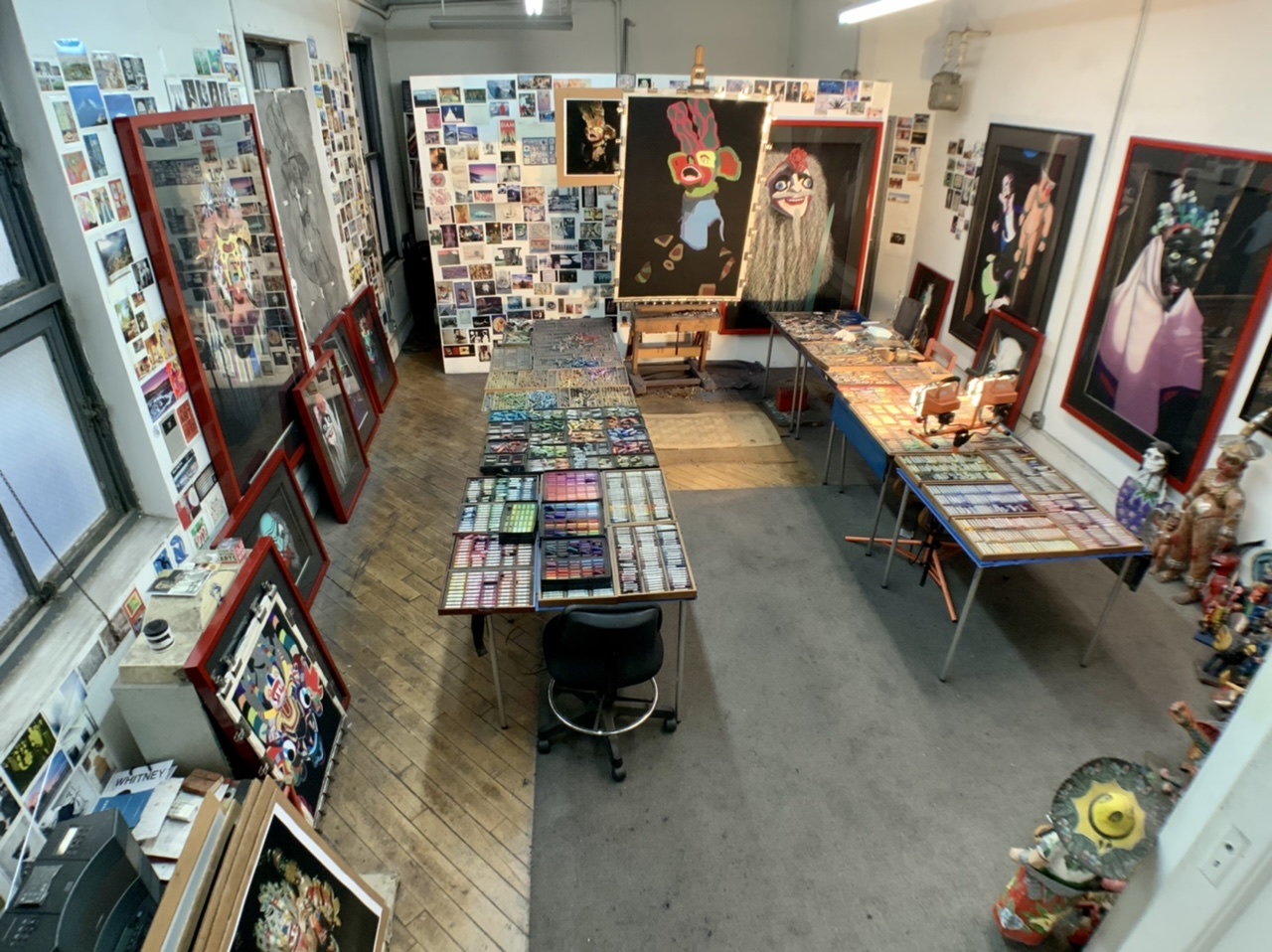
*an ongoing series of quotations – mostly from artists, to artists – that offers wisdom, inspiration, and advice for the sometimes lonely road we are on.
For a great many artists solitude is the time when they feel most real and alive. It is when they have their most intense experiences, when they can vicariously live out any adventure, any dream. Tennessee Williams said, “I’m only really alive when I’m writing.” The painter Robert Motherwell wrote, “I feel most real to myself in the studio.” The young, exuberant Russian painter Marie Bashkirtseff exclaimed at the end of the last century:
In the studio all distinctions disappear. One has neither name nor family; one is no longer the daughter of one’s mother, one is oneself and individual, and one has before one art, and nothing else. One feels so happy, so free, so proud!
We may think of his aliveness as the accumulation of al the above-listed benefits, as the artist working out her life, manifesting her creativity, suiting her personality, playing, avoiding unwanted social interactions, working authentically and integrity, living intensely – as the artist being her grandest self.
Eric Maisel in A Life in the Arts: Practical Guidance and Inspiration for Creative and Performing Artists
Comments are welcome!



Pearls from artists* # 706
Jun 10
Posted by barbararachkoscoloreddust
Carnival mask, MUSEF La Paz, Bolivia
*an ongoing series of quotations – mostly from artists, to artists – that offers wisdom, inspiration, and advice for the sometimes lonely road we are on.
Several observers have commented that Saint Michael seems “pallid and emasculated” compared to the fearsome devils that oppose him. During the dancing that filled the parade ground immediately before and after the play’s performance, Michael was visually outshone and vastly outnumbered. While a few archangels danced up and down in pink and white, hundreds of devils cavorted in a wild array of colors splashed liberally across their high boots, skintight trousers, beaded capes and tunics, long wigs, and monstrous masks. Their masks are among the most complex headpieces in the festive world: “bulging, billiard-ball eyes studded with bright artificial stones and huge grinning silver teeth, hideously pointed, leer grotesquely out of an exuberant triangle of horns and ears and tusks, painted in a wild cacophony of colors, and crowned by a three-headed viper or other misshapen reptile.” Some masks are crowned with whole stuffed condors. No two masks are alike. Dancing alongside the devils, a number of China Supays provocatively swing their hips and twirled their skirts. The odds were stacked against the virtuous archangel. The audience’s eyes were on the devil’s masks and the China Supay’s thighs. Winning the aesthetic war in performance is a common folk means of challenging an officially scripted defeat.
Max Harris in Carnival and Other Christian Festivals: Folk Theology and Folk Performance
Comments are welcome!
Share this:
Posted in 2026, Bolivia, Inspiration, Pearls from Artists, Quotes
Comments Off on Pearls from artists* # 706
Tags: aesthetic, against, alongside, archangel, artificial, audience, “Carnival and Other Christian Festivals: Folk Theology and Folk Performance”, beaded, billiard-ball, Bolivia, bulging, cacophony, Carnival mask, cavorted, challenging, China Supay, colors, commented, common, compared, complex, condors, crowned, danced, dancing, defeat, devils, emasculated, exuberant, fearsome, festive, filled, grinning, grotesquely, headpieces, hideously, hundreds, immediately, liberally, Max Harris, misshapen, monstrous, MUSEF La Paz, number, observers, officially, oppose, other, outnumbered, outshone, painted, pallid, parade ground, performance, pointed, provocatively, reptile, Saint Michael, scripted, several, silver, skintight, skirts, splashed, stacked, stones, studded, stuffed, thighs, three-headed, triangle, trousers, tunics, twirled, vastly, virtuous, visually, winning