Blog Archives
Pearls from artists* # 468

*an ongoing series of quotations – mostly from artists, to artists – that offers wisdom, inspiration, and advice for the sometimes lonely road we are on.
Why does art elicit such different reactions from us? How can a work that bowls one person over leave another cold? Doesn’t the variability of the aesthetic feeling support the view that art is culturally determined and relative? Maybe not, if we consider the possibility that the artistic experience depends not on some subjective mood but on an individually acquired (hence variable) power to be affected by art, a capacity developed through one’s culture in tandem with one’s unique character. For evidence of this we can point to works that seem to ignore cultural boundaries altogether, affecting people of different backgrounds in comparable ways even though a specific articulation of their personal responses continues to vary. Consider the plays of William Shakespeare or Greek theater, or the fairy tales that have sprung up in similar forms on every continent. We could not be further removed from the people who painted in the Chauvet Cave, nor could we be more oblivious as to the significance they ascribed to their pictures. Yet their work affects us across the millennia. Everyone responds to them differently, of course, and the spirit in which people are likely to receive them now probably differs significantly from how it was at the beginning. But these permutations revolve around a solid core, something present in the images themselves.
J.F. Martel in Reclaiming Art in the Age of Artifice: A Treatise, Critique, and Call to Action
Comments are welcome!
Q: Who are you and what do you do? (Question from “Arts Illustrated”)

A: Here is my professional bio.
I am an American contemporary artist and author who divides my time between residences in New York City and Alexandria, VA. I am best known for my pastel-on-sandpaper paintings, my eBook, “From Pilot to Painter,” and this blog, which now has over 70,000 subscribers!
Friends say that I have led an extraordinary, inspiring life. I learned to fly at the age of 25 and became a commercial pilot and Boeing-727 flight engineer before joining the Navy. As a Naval officer I spent many years working at the Pentagon and retired as a Commander.
On 9/11 my husband, Dr. Bryan C. Jack, was tragically killed on the plane that hit the Pentagon.
I use my large collection of Mexican and Guatemalan folk art – masks, carved wooden animals, papier mâché figures, and toys – to create one-of-a-kind pastel-on-sandpaper paintings that combine reality and fantasy and depict personal narratives. In 2017 I traveled to Bolivia where I became inspired to paint Bolivian Carnival masks.
My pastel paintings are bold, vibrant, and extremely unusual. Perhaps my business card says it all: “Revolutionizing Pastel as Fine Art!”
I exhibit nationally and internationally and have won many accolades during my 30+ years as a professional artist. For additional info, please see the links in the sidebar.
Comments are welcome!
Pearls from artists* # 446
*an ongoing series of quotations – mostly from artists, to artists – that offers wisdom, inspiration, and advice for the sometimes lonely road we are on.
What stops us in our tracks? I am rarely stopped by something or someone I can instantly know. In fact, I have always been attracted to the challenge of getting to know what I cannot instantly categorize or dismiss, whether an actor’s presence, a painting, a piece of music, or a personal relationship. It is the journey towards the object of attraction that interests me. We stand in relation to one another. We long for the relationship that will change our vistas. Attraction is an invitation to an evanescent journey, to a new way of experiencing life or perceiving reality.
An authentic work of art embodies intense energy. It demands response. You can either avoid it, shut it out, or meet it and tussle. It contains attractive and complicated energy fields and a logic all its own. It does not create desire or movement in the receiver, rather it engenders what James Joyce labelled ‘aesthetic interest.’ You are stopped in your tracks. You cannot easily walk by it and go on with your life. You find yourself in relation to something that you cannot readily dismiss.
Anne Bogart in A Director Prepares: Seven Essays on Art and Theater
Comments are welcome!
Pearls from artists* # 435
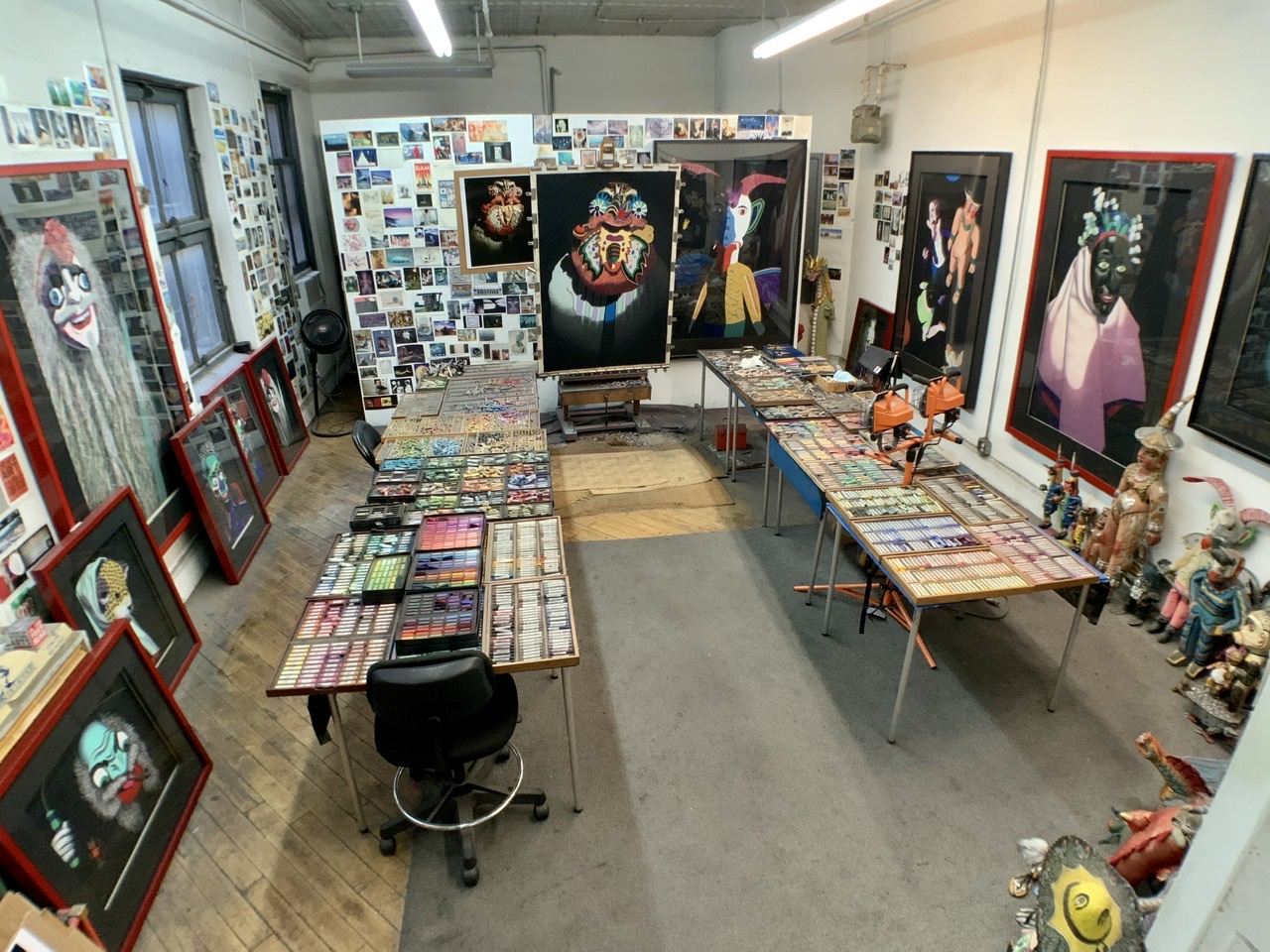
Barbara’s Studio
*an ongoing series of quotations – mostly from artists, to artists – that offers wisdom, inspiration, and advice for the sometimes lonely road we are on.
Most artists are not as estranged from their fellow human beings, as bereft of reasons for existing, or as alienated from the common values and enthusiasms of the world as are the outsider characters created by existential writers like Kafka, Camus, and Sartre. But insofar as artists do regularly feel different from other people, a differentness experienced both as a sense of oddness and a sense of specialness, they identify with the outsider’s concerns and come to the interpersonal moment in guarded or distant fashion.
In part, artists are outsiders because of the personal mythology they possess. This mythology is a blend of beliefs about the importance of the individual, the responsibility of the artist as a maker of culture and a witness to the truth, and the ordained separateness of the artist. Artists often stand apart on principle, like Napoleonic figures perched on a hill overlooking the battle.
The artist may also find himself [sic] speechless in public. Around him people chat, but he has little to offer. Too much of what he knows and feels has gone directly into his art and too much has been revealed to him in solitude – infinitely more than he can share in casual conversation.
Eric Maisel, A Life in the Arts: Practical Guidance and Inspiration for Creative and Performing Artists
Comments are welcome!
Q: What’s on the easel today?
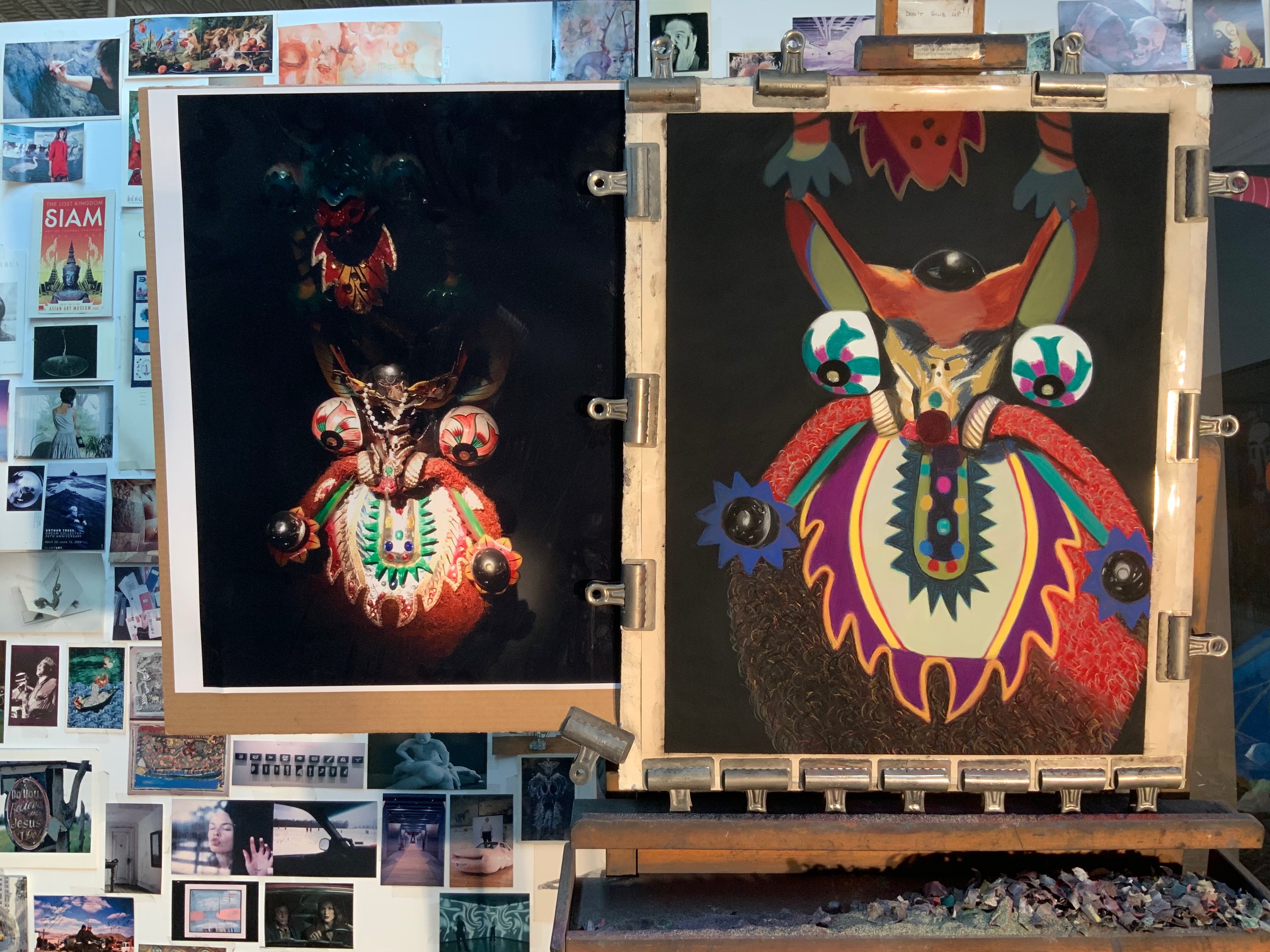
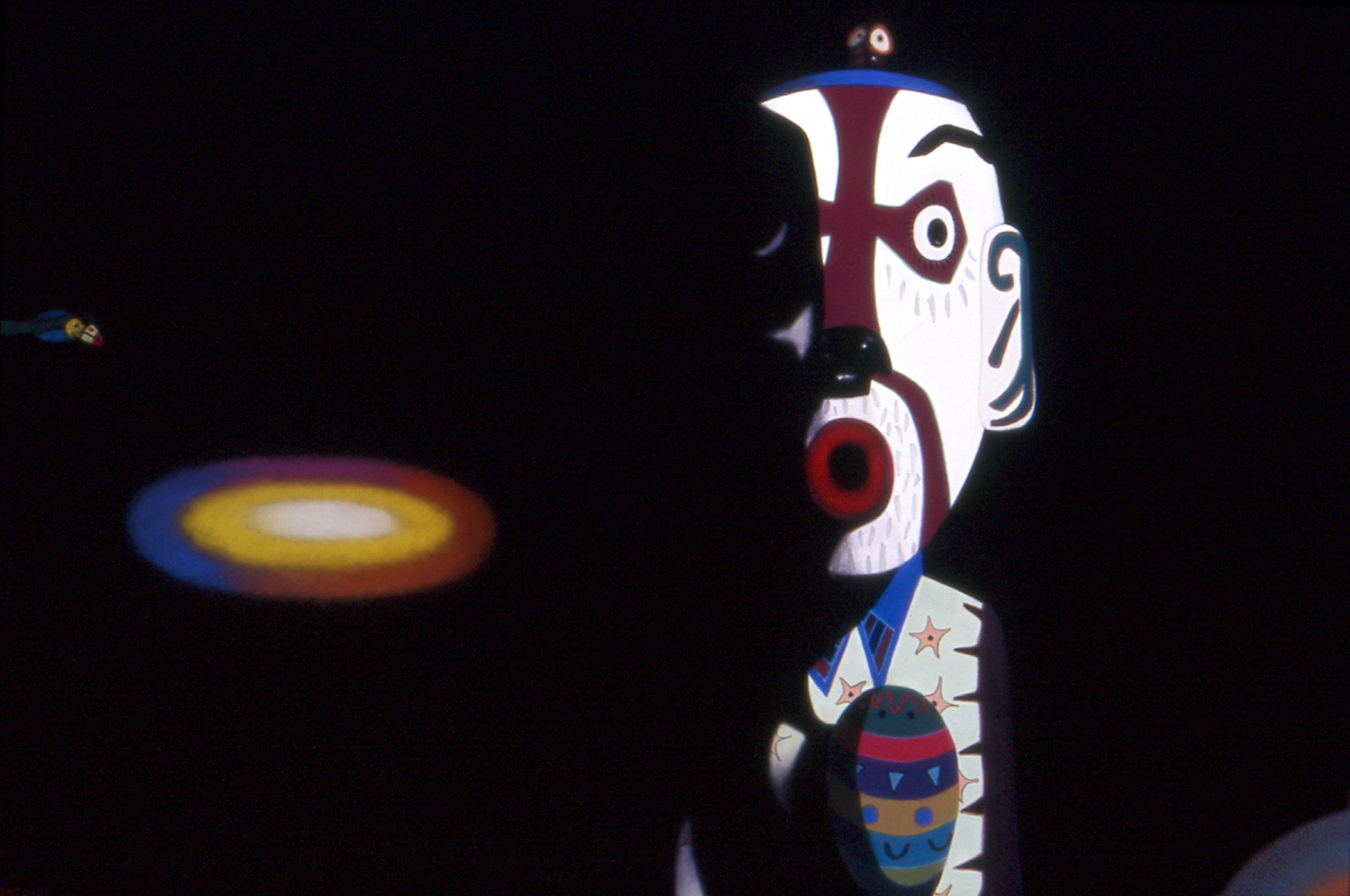
A: I continue working on “Enigma,” soft pastel on sandpaper, 20” x 26.” The title for this piece suggested itself as I was driving to my house in Alexandria, VA. I was listening to Lady Gaga’s current album, “Chromatica.” Her song “Enigma” came on and I thought, “That’s a great title for my painting because some areas of the ‘face’ are my own personal enigma!” They’re rather dark in my reference photo so I don’t yet understand what is happening there visually. But I will figure it out. I always do!
This is the second time I have titled a pastel painting based on a Lady Gaga song. It was “Poker Face,” from her debut album “The Fame.” My painting, “Poker Face,” was completed in 2012 and is number 24/45 in the “Black Paintings” series.
Comments are welcome!
Pearls from artists* # 426
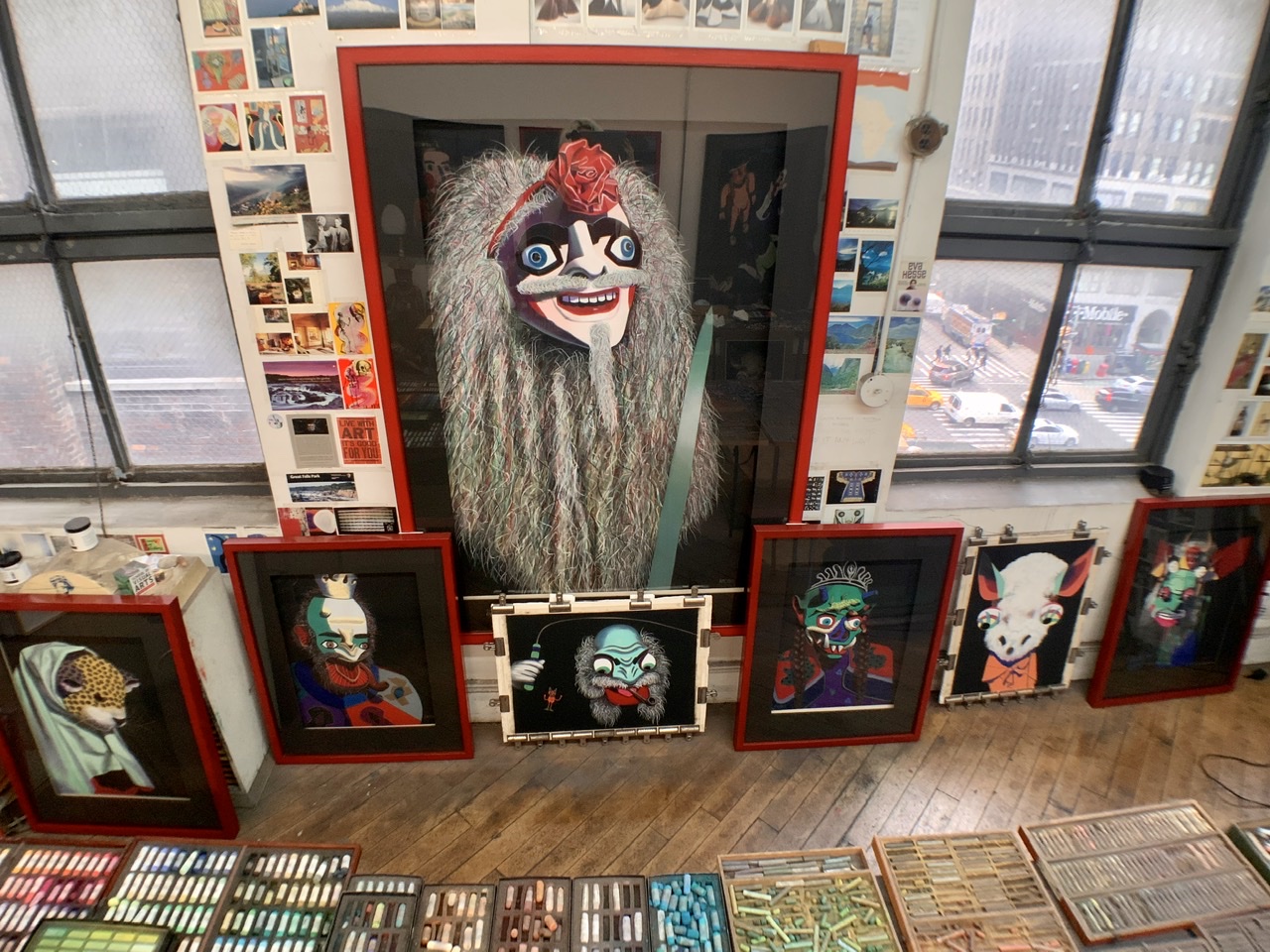
Barbara’s studio
*an ongoing series of quotations – mostly from artists, to artists – that offers wisdom, inspiration, and advice for the sometimes lonely road we are on.
You are talented and creative. You rarely block and when you do block you know how to move yourself along. Your moods are not incapacitating and you haven’t stepped over into madness. Your personality is sufficiently integrated that your necessary arrogance doesn’t prevent you from having successful relationships. Your nonconformity hasn’t made you a pariah, and your skepticism hasn’t bred in you a nihilistic darkness. You work happily in isolation but can also move into the world and have a life. You have, in short, met the challenges posed so far.
Are you home free? Unfortunately not. The next challenges you face are as great as any posed so far. They are the multiple challenges of doing the business of art: making money, developing a career, acknowledging and making the most of your limited opportunities, living with compromise, dealing with mass taste and commercialism, negotiating the marketplace, and making personal sense of the mechanics and metaphysics of the business environment of art.
Many an artist grows bitter in this difficult arena. Many an artist flounders. Only the rare artist sits himself down to examine these matters, for they are painful to consider. But you have no choice but to examine them. If you are an artist, you want an audience. And if you want an audience, you must do business.
Eric Maisel in A Life in the Arts: Practical Guidance and Inspiration for Creative and Performing Artists
Comments are welcome!
Q: Why do you make art?

“Why Do I Make Art” by Ursula von Rydingsvard
A: Last spring I viewed Ursula von Rydingsvard’s exhibition at the National Museum of Women in the Arts. One thing that stayed with me is her wall text, “Why Do I Make Art by Ursula von Rydingsvard” in which she listed a few dozen benefits that art-making has brought to her life.
I want to share some of my own personal reasons here, in no particular order. My list keeps changing, but these are true at least for today.
1. Because I love the entire years-long creative process – from foreign travel whereby I discover new source material, to deciding what I will make, to the months spent in the studio realizing my ideas, to packing up my newest pastel painting and bringing it to my Virginia framer’s shop, to seeing the framed piece hanging on a collector’s wall, to staying in touch with collectors over the years and learning how their relationship to the work changes.
2. Because I love walking into my studio in the morning and seeing all of that color! No matter what mood I am in, my spirit is immediately uplifted.
3. Because my studio is my favorite place to be… in the entire world. I’d say that it is my most precious creation. It’s taken more than twenty-two years to get it this way. I hope I never have to move!
4. Because I get to listen to my favorite music all day or to Public Radio stations.
5. Because when I am working in the studio, if I want, I can tune out the world and all of it’s urgent problems. The same goes for whatever personal problems I am experiencing.
6. Because I am devoted to my medium. How I use pastel continually evolves. It’s exciting to keep learning about its properties and to see what new techniques will develop.
7. Because I have been given certain gifts and abilities and that entails a sacred obligation to USE them. I could not live with myself were I to do otherwise.
8. Because art-making gives meaning and purpose to my life. I never wake up in the morning wondering, how should I spend the day? I have important work to do and a place to do it. I know this is how I am supposed to be spending my time on earth.
9. Because I have an enviable commute. To get to my studio it’s a thirty-minute walk, often on the High Line early in the morning before throngs of tourists have arrived.
10. Because life as an artist is never easy. It’s a continual challenge to keep forging ahead, but the effort is also never boring.
11. Because each day in the studio is different from all the rest.
12. Because I love the physicality of it. I stand all day. I’m always moving and staying fit.
13. Because I have always been a thinker more than a talker. I enjoy and crave solitude. I am often reminded of the expression, “She who travels the farthest, travels alone.” In my work I travel anywhere.
14. Because spending so much solitary time helps me understand what I think and feel and to reflect on the twists and turns of my unexpected and fascinating life.
15. Because I learn about the world. I read and do research that gets incorporated into the work.
16. Because I get to make all the rules. I set the challenges and the goals, then decide what is succeeding and what isn’t. It is working life at its most free.
17. Because I enjoy figuring things out for myself instead of being told what to do or how to think.
18. Because despite enormous obstacles, I am still able to do it. Art-making has been the focus of my life for thirty-three years – I was a late bloomer – and I intend to continue as long as possible.
19. Because I have been through tremendous tragedy and deserve to spend the rest of my life doing exactly what I love. The art world has not caught up yet, but so be it. This is my passion and my life’s work and nothing will change that.
20. Because thanks to the internet and via social media, my work can be seen in places I have never been to and probably will never go.
21. Because I would like to be remembered. The idea of leaving art behind for future generations to appreciate and enjoy is appealing.
Comments are welcome!
Q: Your work is unlike anyone else’s. There is such power and boldness in your pastels. What processes are you using to create such poignant and robustly colored work?

Barbara working on an interview. Photo: Maria Cox
A: For thirty-three years I have worked exclusively in soft pastel on sandpaper. Pastel, which is pigment and a binder to hold it together, is as close to unadulterated color as an artist can get. It allows for very saturated color, especially using the self-invented techniques I have developed and mastered. I believe my “science of color” is unique, completely unlike how any other artist works. I spend three to four months on each painting, applying pastel and blending the layers together to mix new colors on the paper.
The acid-free sandpaper support allows the buildup of 25 to 30 layers of pastel as I slowly and meticulously work for hundreds of hours to complete a painting. The paper is extremely forgiving. I can change my mind, correct, refine, etc. as much as I want until a painting is the best I can create at that moment in time.
My techniques for using soft pastel achieve rich velvety textures and exceptionally vibrant color. Blending with my fingers, I painstakingly apply dozens of layers of pastel onto the sandpaper. In addition to the thousands of pastels that I have to choose from, I make new colors directly on the paper. Regardless of size, each pastel painting takes about four months and hundreds of hours to complete.
I have been devoted to soft pastel from the beginning. In my blog and in numerous interviews online and elsewhere, I continue to expound on its merits. For me no other fine art medium comes close.
My subject matter is singular. I am drawn to Mexican, Guatemalan, and Bolivian cultural objects—masks, carved wooden animals, papier mâché figures, and toys. On trips to these countries and elsewhere I frequent local mask shops, markets, and bazaars searching for the figures that will populate my pastel paintings. How, why, when, and where these objects come into my life is an important part of the creative process. Each pastel painting is a highly personal blend of reality, fantasy, and autobiography.
Comments are welcome!
Pearls from artists* # 351

Barbara at work on “The Orator”
*an ongoing series of quotations – mostly from artists, to artists – that offers wisdom, inspiration, and advice for the sometimes lonely road we are on.
That art is apolitical does not mean that artists themselves can be excused from the political responsibilities that fall on others. It means rather that as a manifestation of eternal psychic force, each work of art goes farther and deeper than the limited perspective of any individual mind, including that of its author.
No artist can predict how his work will affect the world… The artist invests his entire personality into the work, but he does so as a means of expressing a vision that is transpersonal. Everything that makes him what he is informs the work, but the final result transcends all personal contingencies.
J.F. Martel in Reclaiming Art in the Age of Artifice: A Treatise, Critique, and Call to Action
Comments are welcome!
Q: What do you see when you look back at your early efforts?
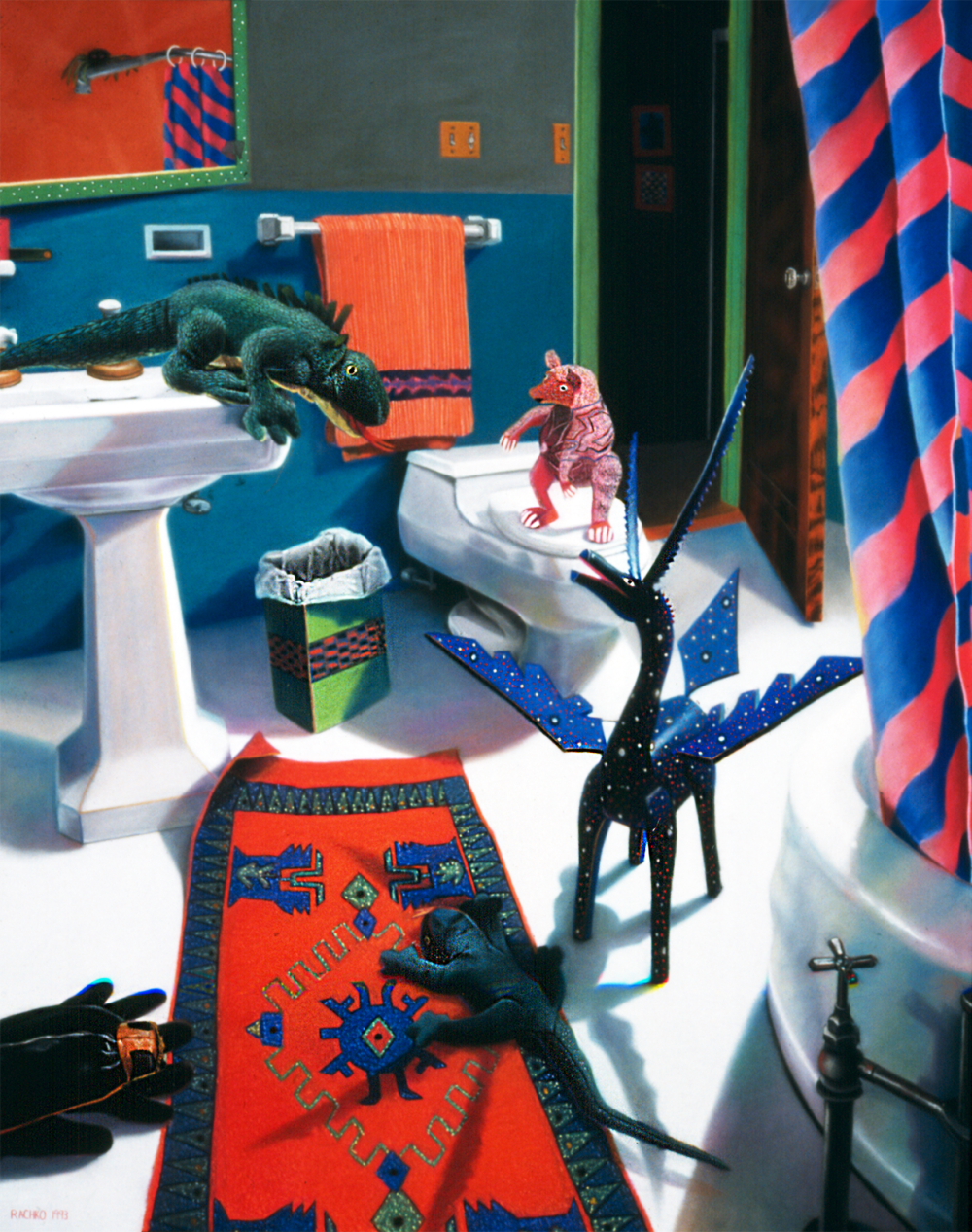
“Myth Meets Dream,” soft pastel on sandpaper, 47″ x 38,” 1993
A: I see continuity in subject matter and in medium, surely. For thirty-three years I have been inspired by foreign travel and research. In addition, I remain devoted to pushing the limits of what soft pastel can do and to promoting its merits as a fine art medium.
Here and there I see details I would render differently now; not exactly mistakes, but things that maybe could be done better. Fortunately, I think, all of my work is framed behind glass or plexiglas, making it extremely difficult to attempt revisions.
Perhaps most important of all, I see the long personal road that has advanced my work to its present state. Each gain has been hard-fought.
Comments are welcome!


 barbararachkoscoloreddust.com