Blog Archives
Q: Your work is unlike anyone else’s. There is such power and boldness in your pastels. What processes are you using to create such poignant and robustly colored work?

Barbara working on an interview. Photo: Maria Cox
A: For thirty-three years I have worked exclusively in soft pastel on sandpaper. Pastel, which is pigment and a binder to hold it together, is as close to unadulterated color as an artist can get. It allows for very saturated color, especially using the self-invented techniques I have developed and mastered. I believe my “science of color” is unique, completely unlike how any other artist works. I spend three to four months on each painting, applying pastel and blending the layers together to mix new colors on the paper.
The acid-free sandpaper support allows the buildup of 25 to 30 layers of pastel as I slowly and meticulously work for hundreds of hours to complete a painting. The paper is extremely forgiving. I can change my mind, correct, refine, etc. as much as I want until a painting is the best I can create at that moment in time.
My techniques for using soft pastel achieve rich velvety textures and exceptionally vibrant color. Blending with my fingers, I painstakingly apply dozens of layers of pastel onto the sandpaper. In addition to the thousands of pastels that I have to choose from, I make new colors directly on the paper. Regardless of size, each pastel painting takes about four months and hundreds of hours to complete.
I have been devoted to soft pastel from the beginning. In my blog and in numerous interviews online and elsewhere, I continue to expound on its merits. For me no other fine art medium comes close.
My subject matter is singular. I am drawn to Mexican, Guatemalan, and Bolivian cultural objects—masks, carved wooden animals, papier mâché figures, and toys. On trips to these countries and elsewhere I frequent local mask shops, markets, and bazaars searching for the figures that will populate my pastel paintings. How, why, when, and where these objects come into my life is an important part of the creative process. Each pastel painting is a highly personal blend of reality, fantasy, and autobiography.
Comments are welcome!
Pearls from artists* # 351

Barbara at work on “The Orator”
*an ongoing series of quotations – mostly from artists, to artists – that offers wisdom, inspiration, and advice for the sometimes lonely road we are on.
That art is apolitical does not mean that artists themselves can be excused from the political responsibilities that fall on others. It means rather that as a manifestation of eternal psychic force, each work of art goes farther and deeper than the limited perspective of any individual mind, including that of its author.
No artist can predict how his work will affect the world… The artist invests his entire personality into the work, but he does so as a means of expressing a vision that is transpersonal. Everything that makes him what he is informs the work, but the final result transcends all personal contingencies.
J.F. Martel in Reclaiming Art in the Age of Artifice: A Treatise, Critique, and Call to Action
Comments are welcome!
Q: What do you see when you look back at your early efforts?
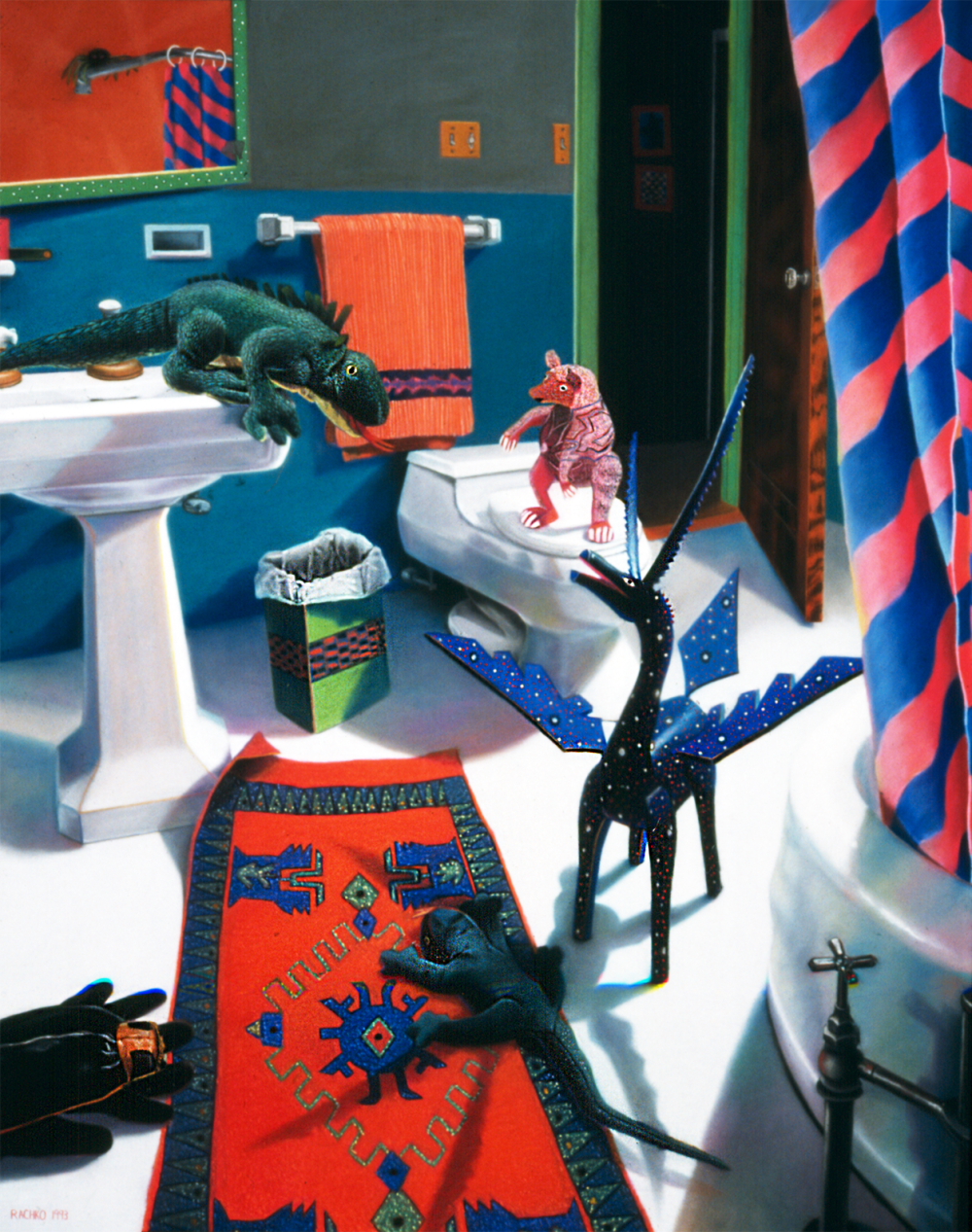
“Myth Meets Dream,” soft pastel on sandpaper, 47″ x 38,” 1993
A: I see continuity in subject matter and in medium, surely. For thirty-three years I have been inspired by foreign travel and research. In addition, I remain devoted to pushing the limits of what soft pastel can do and to promoting its merits as a fine art medium.
Here and there I see details I would render differently now; not exactly mistakes, but things that maybe could be done better. Fortunately, I think, all of my work is framed behind glass or plexiglas, making it extremely difficult to attempt revisions.
Perhaps most important of all, I see the long personal road that has advanced my work to its present state. Each gain has been hard-fought.
Comments are welcome!
Pearls from artists* # 306

New York, NY
* an ongoing series of quotations – mostly from artists, to artists – that offers wisdom, inspiration, and advice for the sometimes lonely road we are on.
It is the responsibility of artists to pay attention to the world, pleasant or otherwise, and to help us live respectfully in it.
Artists do this by keeping their curiosity and moral sense alive, and by sharing with us their gift for metaphor. Often this means finding similarities between observable fact and inner experience – between birds in a vacant lot, say, and an intuition worthy of Genesis.
More than anything else, beauty is what distinguishes art. Beauty is never less than mystery, but it has within it a promise.
In this way, art encourages us to gratitude and engagement, and is of both personal and civic consequence.
Robert Adams in Art Can Help
Comments are welcome!
Pearls from artists* # 271
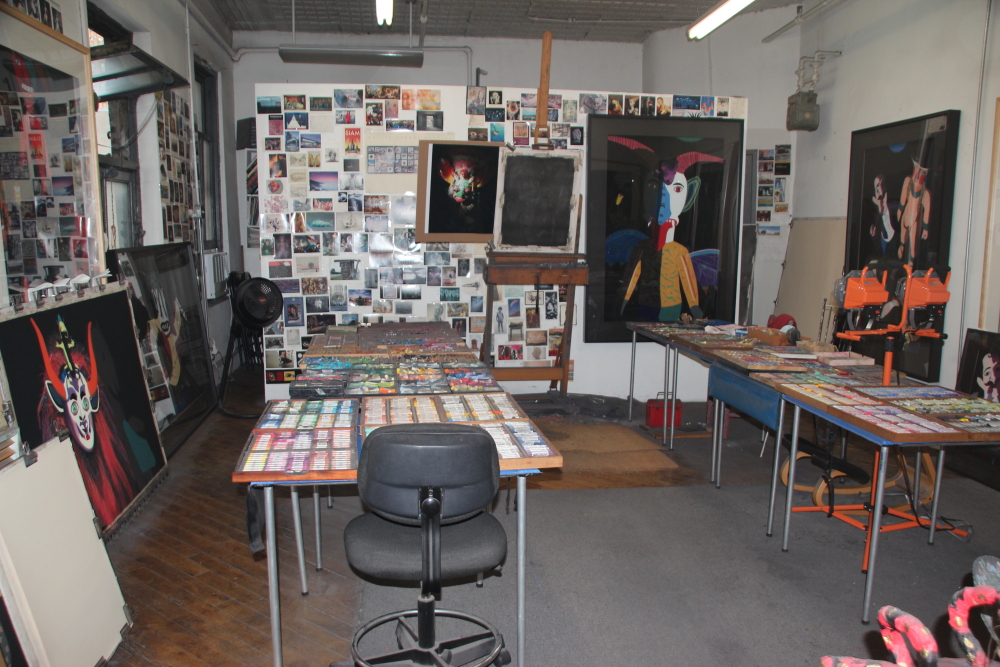
Barbara’s studio
* an ongoing series of quotations – mostly from artists, to artists – that offers wisdom, inspiration, and advice for the sometimes lonely road we are on.
The following quote is so true for artists also!
Without a powerful emotional commitment, scientists could not summon up the enormous energy needed for pursuing an idea for years, working day and night in the lab or at their desks doing calculations, often sacrificing the rest of their lives. It is little wonder that such a personal commitment sometimes causes the scientist to defend his or her beliefs regardless of facts.
Alan Lightman in A Sense of the Mysterious: Science and the Human Spirit
Comments are welcome!
Pearls from artists* # 255
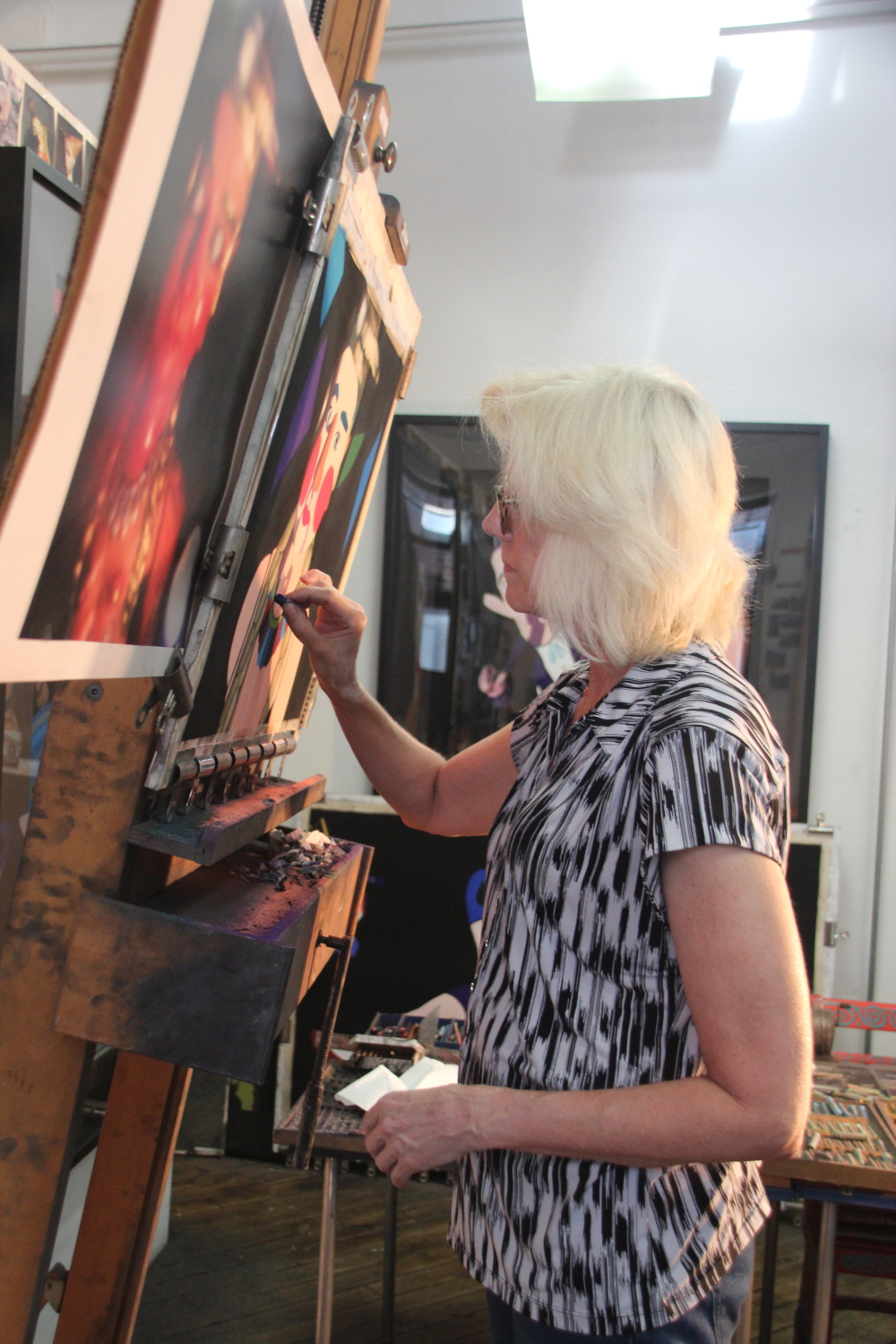
Barbara at work on “The Storyteller”
* an ongoing series of quotations – mostly from artists, to artists – that offers wisdom, inspiration, and advice for the sometimes lonely road we are on.
… several basic assumptions I have about the need for authenticity:
- Because in the end there is no other kind of art.
- I could have used the word ‘originality,” rather than authenticity, if the word’s root in “origin,” as in, “from the depth or source,” is recognized. However, the word implies a certain newness, “never done before,” that authenticity does not, and art in general does not need, in order to be deeply personal.
- Something that is authentic “rings true” for us. It comes from an inner truth. We draw from a source that is inner-directed rather than outer-directed, to use Maslow’s expression about self-actualization.
- Creating work that is authentic has a sacredness about it. It may be a way out – a small way perhaps, but at least a personal way – of a social dynamic that is all economics, consumerism, greed, and disregard for inner life. The word “science” comes from a root meaning “to separate.” Our cultural world view has been deeply influenced by that. Anything that we come to authentically in our artistic expression demands a personal inner synthesis. It is experience and insight won firsthand. The more we assimilate our “experience” from the advertising/media/consumer/government perspective the less authentic it will be.
- Most of what we express creatively is prelinguistic. The deeper insights are obviously coming from somewhere. They are not logically structured in the mind, but it may take logic to get them expressed.
- Ultimately, it doesn’t matter to the world if you paint or dance or write. The world can probably get by without your efforts. But that is not the point. The point is what the inner process of following your creative process will do, to you. It is clearly abut process. Love the work, love the process. Our fascination will pull our attention forward. That, also, will fascinate the viewer.
Ian Roberts in Creative Authenticity: 16 Principles to Clarify and Deepen Your Artistic Vision
Comments are welcome!
Q: What personality traits do you possess that have been most helpful in your art career?
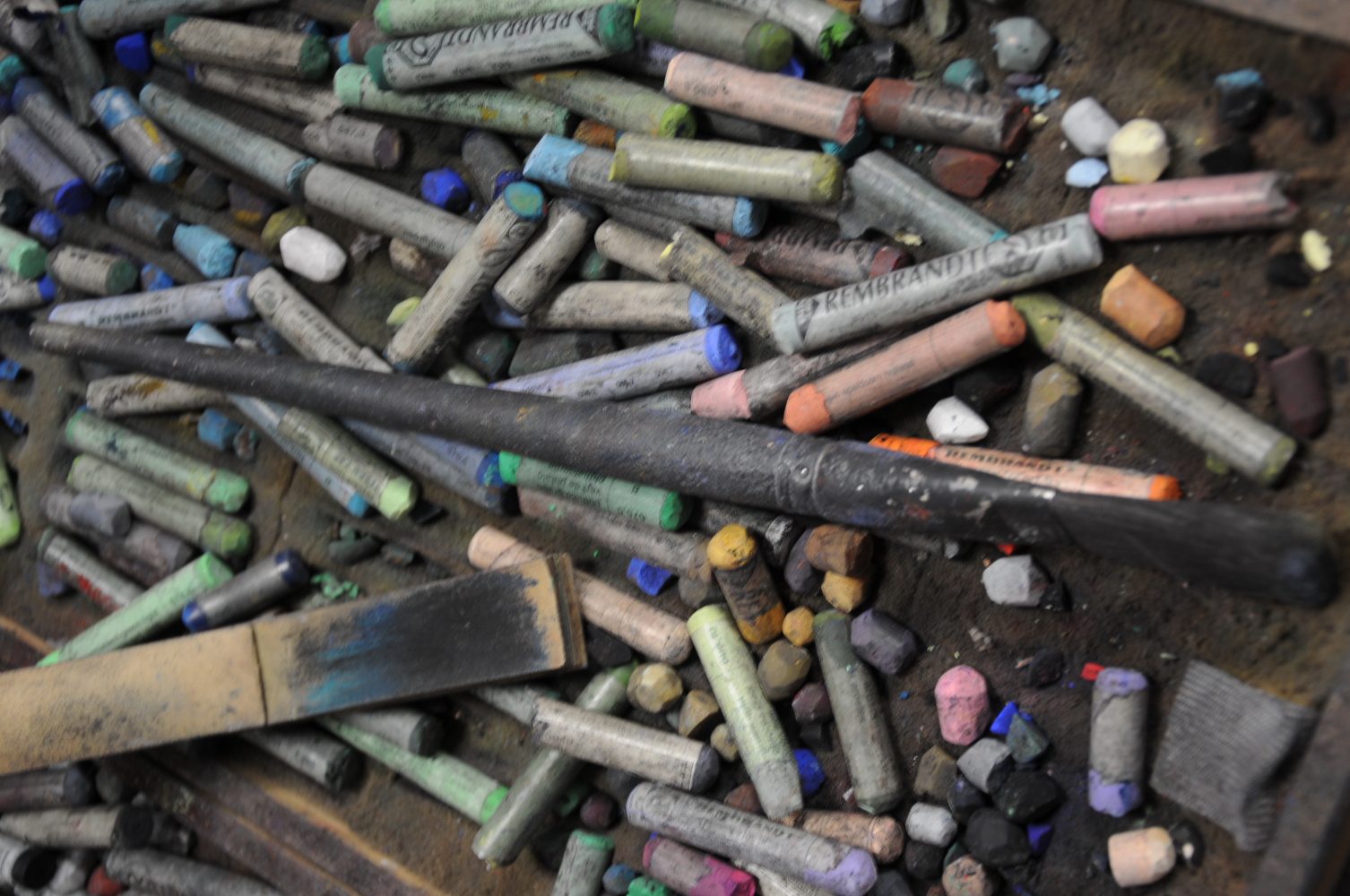
A few of Barbara’s pastels
A: I suppose it’s curiosity about all sorts of things, but particularly about the creative process. I am forever curious about how my personal creative process might evolve and develop and where it might possibly lead. Making art is an ongoing source of discovery. The longer I am an artist, the richer the whole experience becomes.
Also, I possess an unwavering love of craft. Even after thirty years, I still enjoy experimenting with new pastels, pushing myself to use them in new ways, and endeavoring to create the best work I can.
Comments are welcome!
Q: What qualities do you think mark the highest artistic achievement?
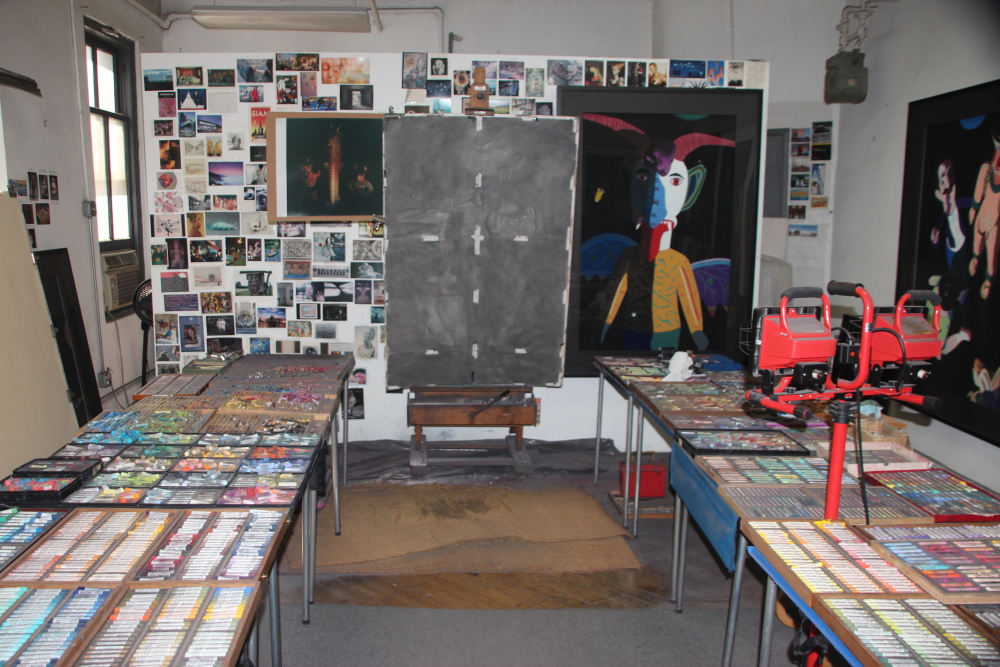
Barbara’s studio
A: If I may speak in the most general terms, several qualities come to mind that, for me, mark real artistic achievement:
- firm artistic control that allows the artist to create works that simultaneously demonstrate formal coherence while responding to inner necessity
- the creation of new forms and techniques that are adapted to expressing the artist’s highly personal vision
- an authentic and balanced fusion of form, method, and idea
- using material from one’s own idiosyncratic experiences and subtly transforming it in a personal inimitable way during the creative process
- the meaning of the thing created is rigorously subordinated to its design, which once established, generates its own internal principles of harmony and coherence
Comments are welcome!
Q: What significance do the folk art figures that you collect during your travels have for you?

Barbara’s studio
A: I am drawn to each figure because it possesses a powerful presence that resonates with me. I am not sure exactly how or why, but I know each piece I collect has lessons to teach.
Who made this thing? How? Why? Where? When? I feel connected to each object’s creator and curiosity leads me to become a detective and an archaeologist to find out more about them and to figure out how to best use them in my work.
The best way I can describe it: after nearly three decades of seeking out, collecting, and using these folk art figures as symbols in my work, the entire process has become a rich personal journey towards gaining greater knowledge and wisdom.
Comments are welcome!
Q: Your pastel paintings are immediately recognizable as yours alone. Did you consciously try to develop a signature style in your work?
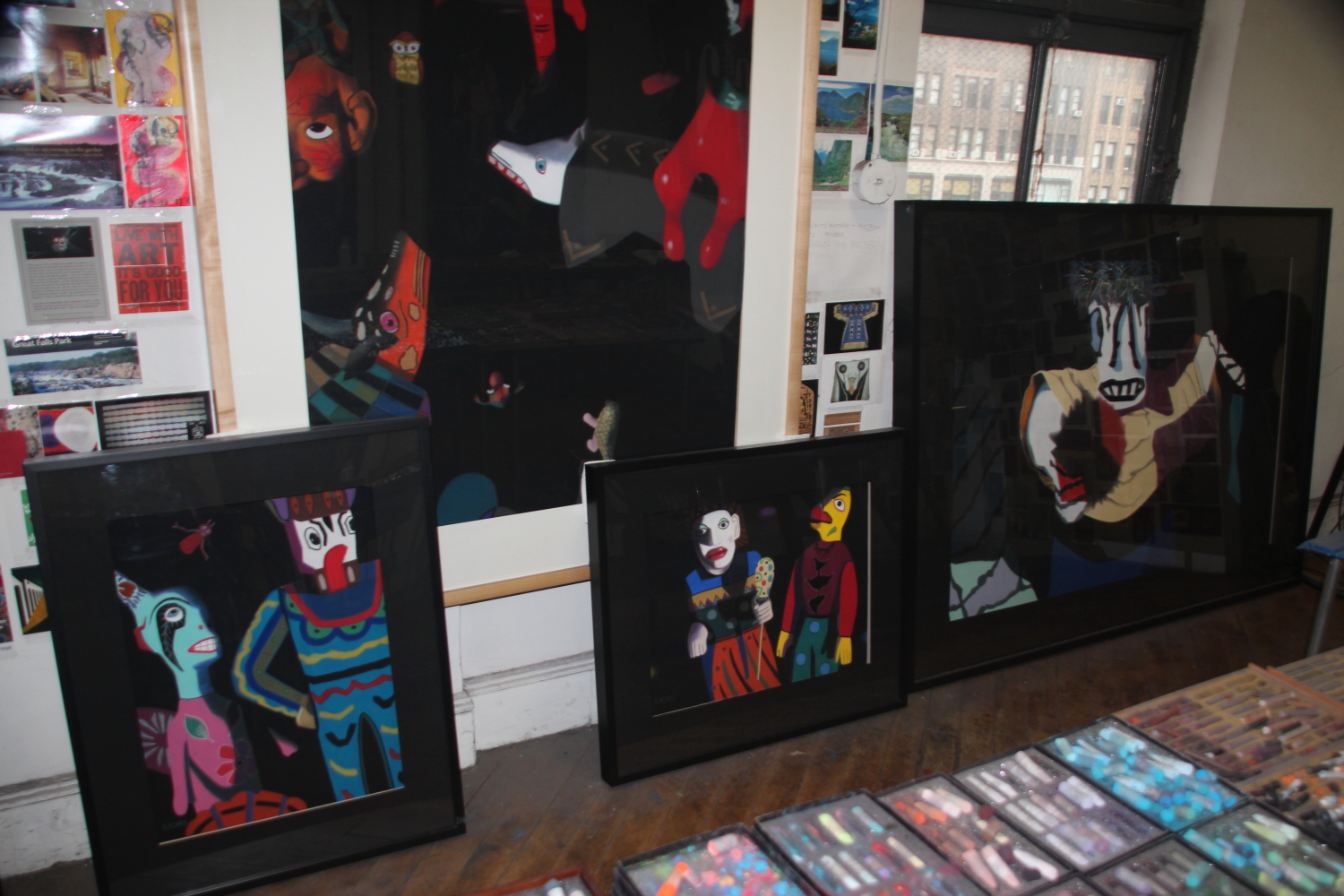
Barbara’s studio
A: I don’t believe that is even possible. An artist’s style is something that evolves with plain hard work and experience, over many years of trial and error, as one finds what techniques work best and discards those that don’t. It is a process of continually experimenting, refining, and clarifying. In other words, style is something that emerges naturally as you gradually strive to improve your art-making.
Style develops in close connection to what an artist is saying as she undergoes a very personal and idiosyncratic journey. Again, it would seem improbable for an artist to strive for any particular style, since style is not something over which an artist can exert much conscious control.
I would even say that each artist’s unique style is inevitable. It would be nearly impossible now to make a pastel painting or photograph that does NOT look like a Rachko.
Comments are welcome!



