Blog Archives
Pearls from artists* # 107

“The Ancestors,” soft pastel on sandpaper, 38″ x 58″
* an ongoing series of quotations – mostly from artists, to artists – that offers wisdom, inspiration, and advice for the sometimes lonely road we are on.
If the proper goal of art is, as I now believe, Beauty, the Beauty that concerns me is that of Form. Beauty is, in my view, a synonym of the coherence and structure underlying life (not for nothing does Aristotle list plot first in his enumeration of the components of tragedy, a genre of literature that, at least in its classical form, affirms order in life). Beauty is the overriding demonstration of pattern that one observes, for example, in the plays of Sophocles and Shakespeare, the fiction of Joyce, the films of Ozu, the paintings of Cezanne and Matisse and Hopper, and the photographs of Timothy O’Sullivan, Alfred Stieglitz, Edward Weston, and Dorothea Lange.
Why is Form beautiful? Because, I think, it helps us meet our worst fear, the suspicion that life may be chaos and that therefore our suffering is without meaning. James Dickey was right when he asked rhetorically, “What is heaven anyway, but the power of dwelling among objects and actions of consequence.” “Objects of consequence” cannot be created by man alone, nor can “actions of consequence’ happen in a void; they can only be found within a framework that is larger than we are, an encompassing totality invulnerable to our worst behavior and most corrosive anxieties.
… How, more specifically, does art reveal Beauty, or Form? Like philosophy it abstracts. Art simplifies. It is never exactly equal to life. In the visual arts, this careful sorting out in favor of order is called composition, and most artists know its primacy.
Beauty in Photography by Robert Adams
Comments are welcome!
Q: Can you describe your entire body of work in six words or less?
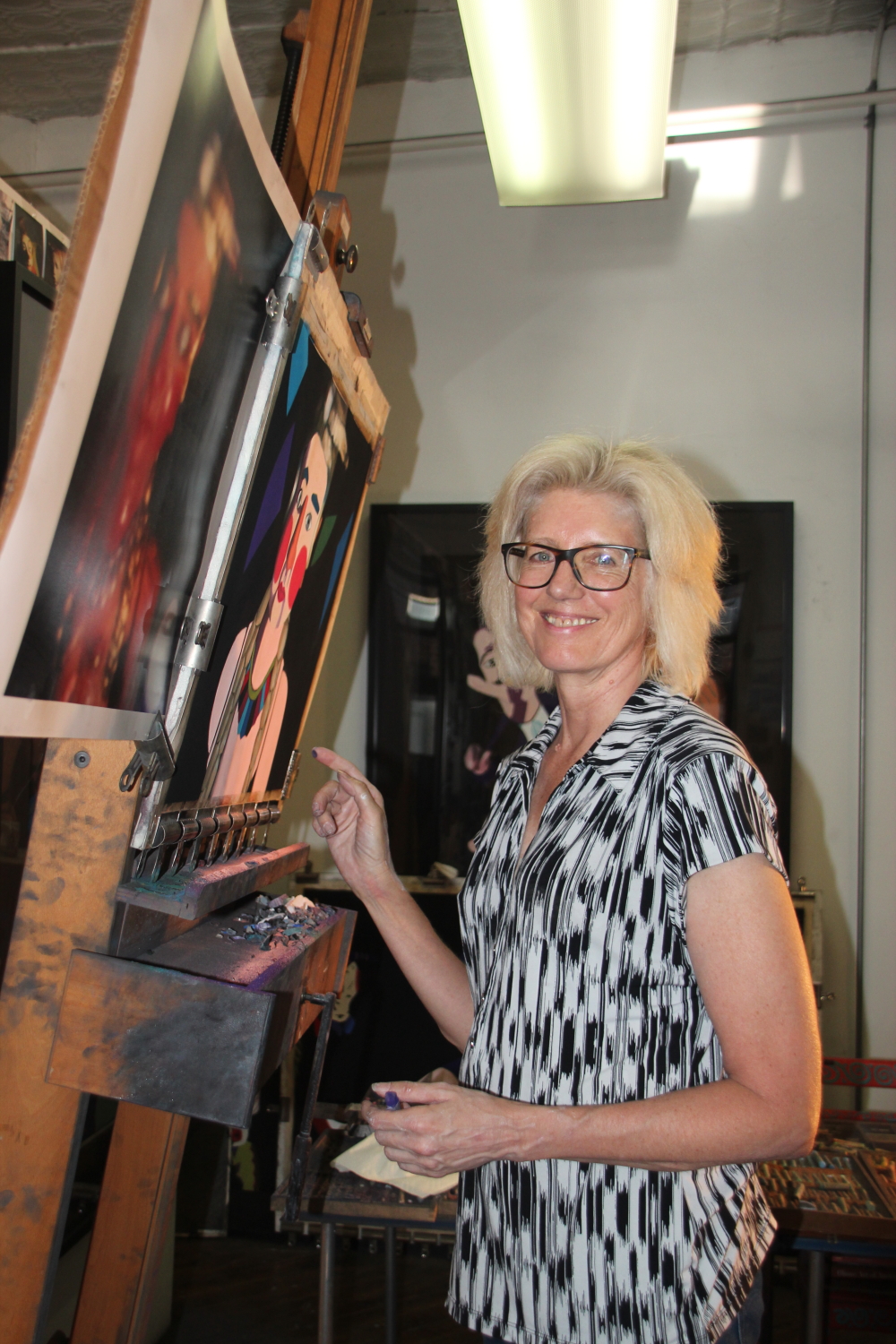
In the studio, Photo: Britta Konau
A: Only if I forget what it took to get me to this point! I remember all too well the long periods of study, hard work, self-doubt, self-nurturing, disappointments, setbacks, risks, focus, drive, discipline, joy, detours, fallow periods, rejections, perseverance, etc. that have gone into sustaining an art career for nearly thirty years. There are no blueprints and few role models for a successful artist’s life. (Even the meaning of “success” as an artist is difficult to define). I invite others, who surely can be more objective, to attempt a summation of my entire body of work in a few words.
Comments are welcome!
Pearls from artists* # 78
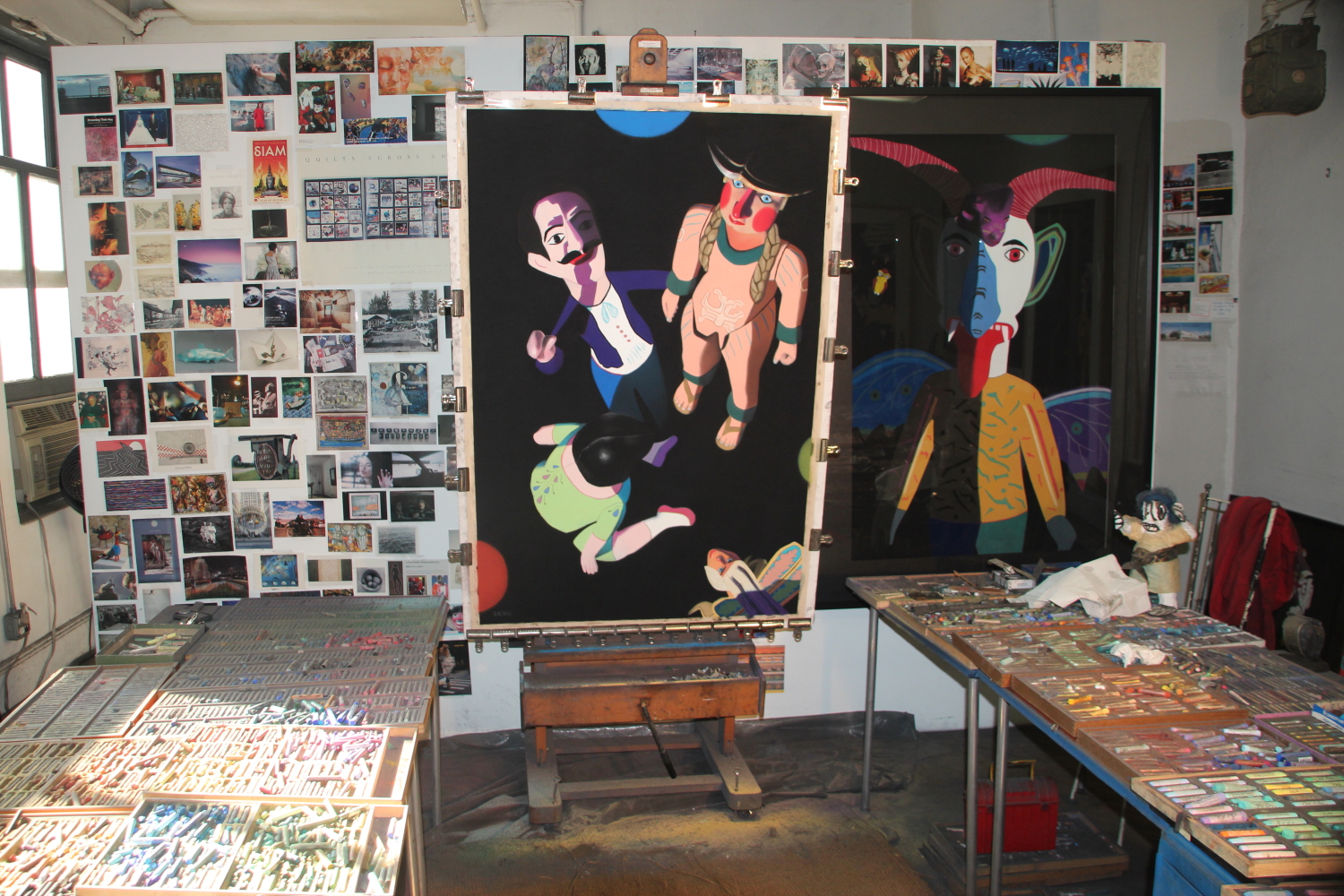
Barbara’s studio
* an ongoing series of quotations – mostly from artists, to artists – that offers wisdom, inspiration, and advice for the sometimes lonely road we are on.
To me, openings are never what you want them to be. The excitement, relief, anxiety, and anticipation are too much to process. There’s no apotheosis, no pinnacle, no turning point. It’s not like theater, where at the end of a performance people get up and applaud.
Nothing gets created at an opening. Nothing of artistic merit takes place. All of that important stuff happens in the studio, long before the exhibition, when you’re alone. For me, anyway, openings are something to get through, an ordeal to be endured. The bigger the event, the less I remember it. I pretty much walk in, and wherever I stop is where I stay. I paint a grin on my face so fixed that by the end of the evening my jaw is sore. I remember none of the conversations. I stand there shaking hands, blindly mouthing, “Thank you. Thank you very much.” Then eventually April [Gornick, Fischl’s wife] collects me and we leave.
If, on the other hand, you were to ask me what I remember about making the paintings in a show, that’s a different story. Imagine touching something, stroking it, jostling it, caressing it, and as you’re doing this, you are creating it. How you touched it is how it came into existence. Unlike other pleasures, where the feelings fade quickly as details become blurred, with paintings you remember everything. Within the details are all the bumps and the friction, the memory of when the creative instinct flowed, when you were distracted or lazy or working too hard. It’s all there on the canvas. When I look at my paintings again, years later, even, I remember it all – the victory laps and the scars.
Eric Fischl and Michael Stone in Bad Boy: My Life On and Off the Canvas
Comments are welcome!
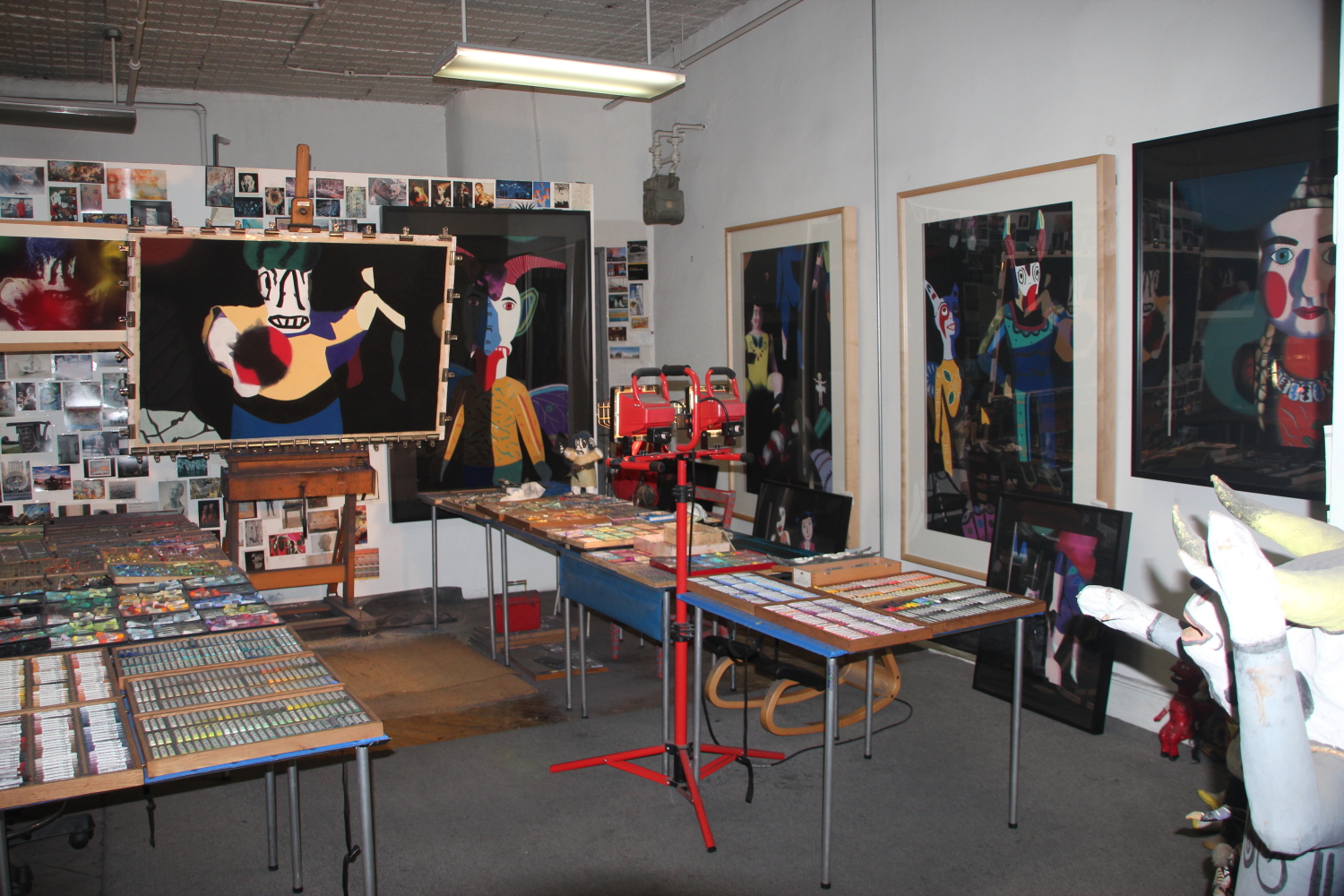
Q: How would you describe your personal artistic style?
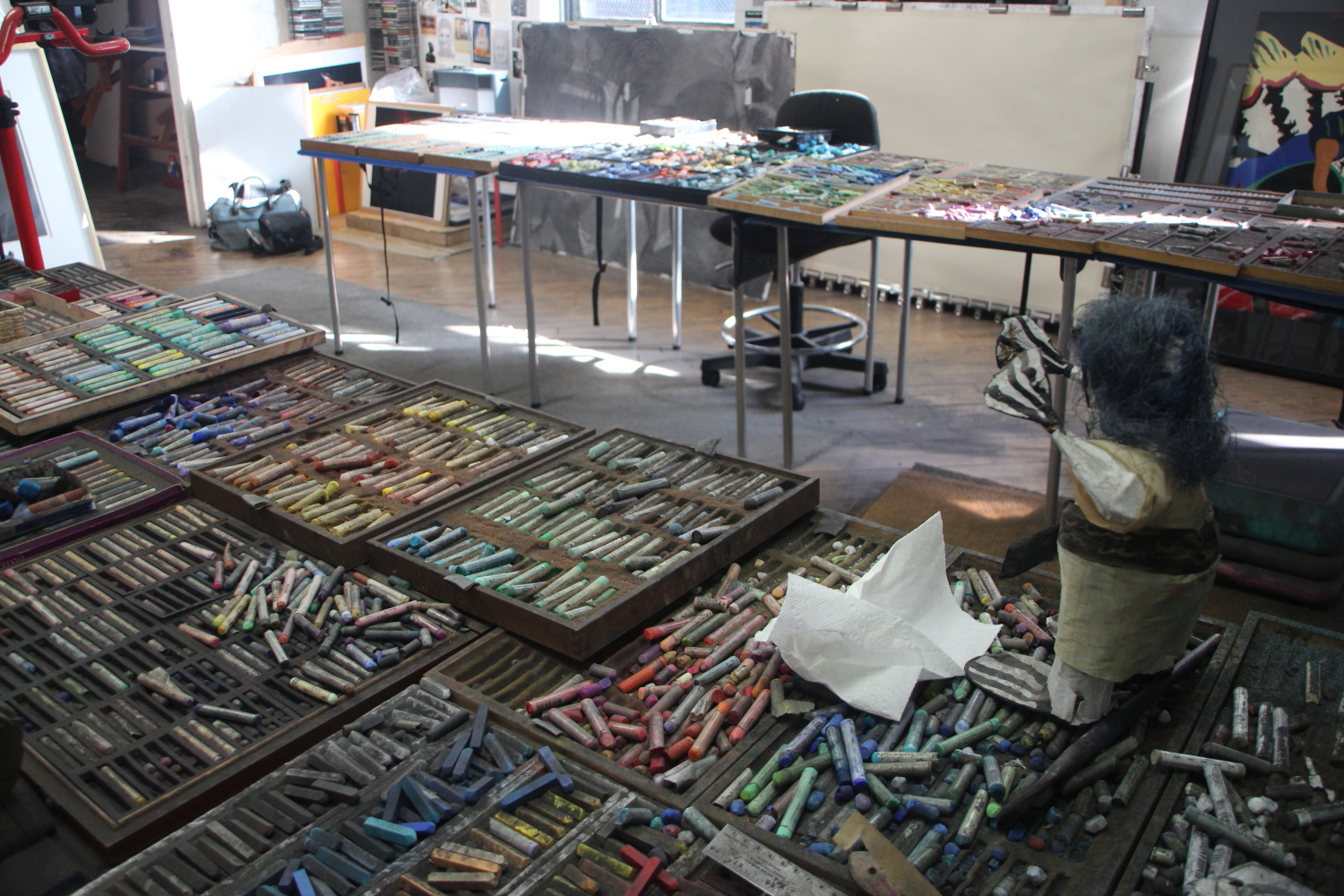
Barbara’a pastels
A: Regardless of what medium I am using, I am first and foremost a colorist. Everything I create is vibrant with color.
The Navy taught me to be organized, goal-oriented and focused, to love challenges, and in everything I do, to pay attention to the details. Trying to make it as an artist in New York is nothing BUT challenges, so these qualities serve me well, whether I am creating paintings, shooting and making photographs, or trying to understand the art business, keep up with social media, and manage all the tasks required of a busy artist with a New York studio, a business, and two residences to maintain. It’s a lot, but it forces me to continually learn and grow. As Helen Keller famously said, “Life is an adventure or it is nothing.”
These days I am rarely bored. I thoroughly enjoy spending long, solitary hours working to become a better artist. I am meticulous about craft and will not let work out of my studio until it is as good as I can make it. My creative process is more exciting than ever. It’s thrilling and energizing to continually push soft pastel to its limits and use it in ways that no other artist has done before!
Comments are welcome!
Pearls from artists* # 64

High Line, New York, NY
* an ongoing series of quotations – mostly from artists, to artists – that offers wisdom, inspiration, and advice for the sometimes lonely road we are on.
As soon as an artist has located the vital center of his activities, nothing will be more important than for him to remain within this center and never move further away from it (which is, of course, also the center of his nature, of his world) than the interior walls of his quietly and steadily expanding achievement. His place is not, never, not even for a moment, next to the beholder and critic (at least no longer in an environment where all that is visible becomes ambiguous and preliminary, an auxiliary construction and temporary scaffolding for something else). And one basically needs to be an acrobat to leap back safely and unharmed from this point of view into one’s inner center (the distances are too great and all the spots too destabilized to risk such an entirely inquisitive feat). Most artists today use up their strength in this back-and-forth, and in addition to wasting their energy they get terribly confused and lose a part of their essential innocence to the sin of having taken their work from the outside by surprise, to have tasted it, to have joined others in enjoying it!
Ulrich Baer, editor, The Wisdom of Rilke
Comments are welcome!
Pearls from artists* # 58
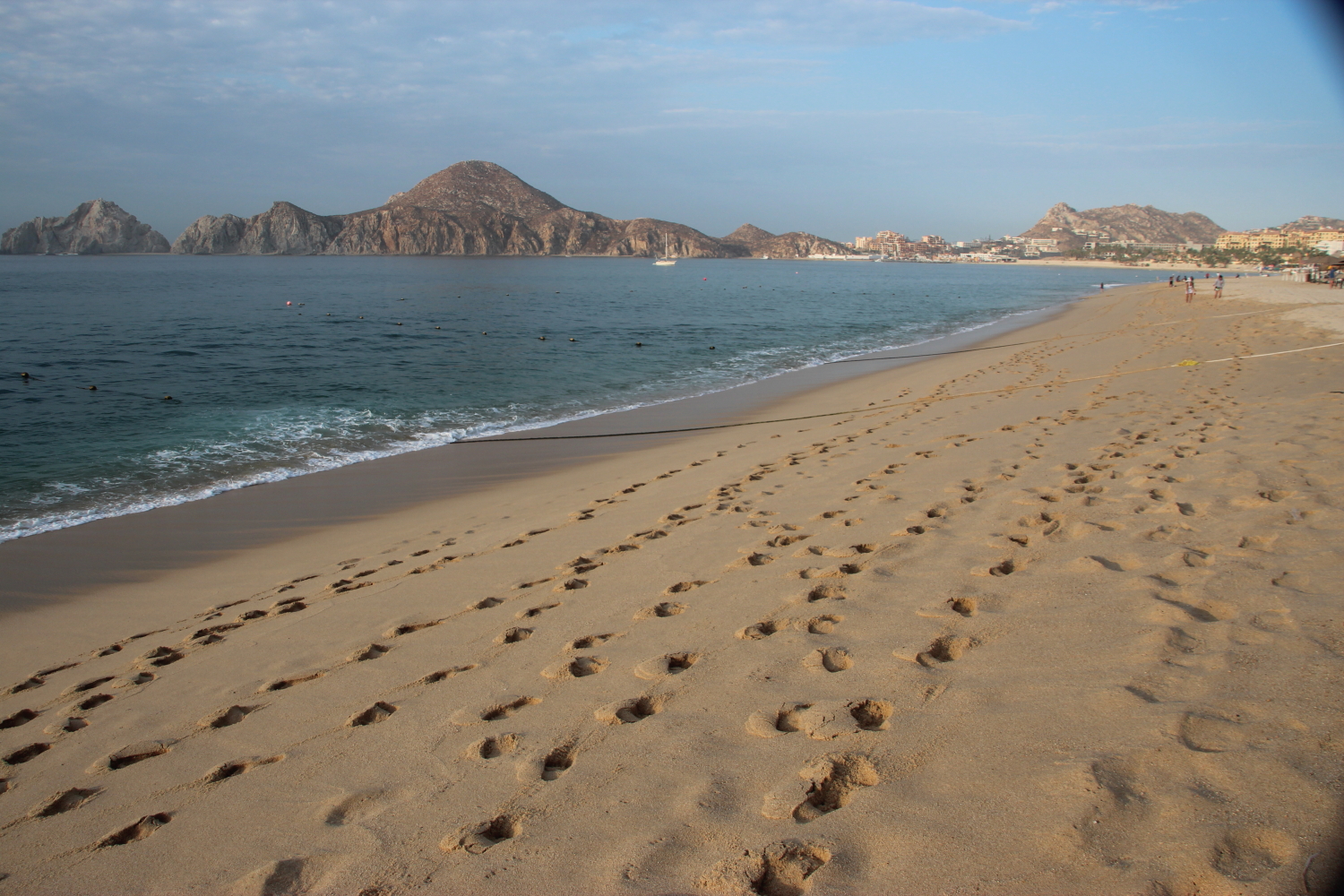
Cabo San Lucas, Mexico
* an ongoing series of quotations – mostly from artists, to artists – that offers wisdom, inspiration, and advice for the sometimes lonely road we are on.
I remember as a teenager having a group of friends at school and another group whom I spent the weekends with. I functioned fine until on occasions when I was with friends from both groups at the same time. Then it became really difficult, because I was used to acting very differently with the two groups. With one I was the leader, very vocal and outspoken about my opinions. With the other group I wanted desperately to belong and so I adapted to fit in, which meant not really being myself.
The lack of authenticity is painful. It applies to all levels of life. If our voice as a painter is inauthentic, we’re in trouble. In the end there is nothing so compelling as to be yourself. This is why being an artist can be so exhilarating. If you want to uncover your truth, you have a daily technique to come to terms with your limitations and to overcome them. You have an opportunity to look at the limiting stories you have written in your head and heart and rewrite them with boldness and vision. The quality of your attention influences how you see things.
What you put your attention on grows stronger in your life. Life, if you look around you, whether inside or in nature, is one bubbling mass of creativity. Recognize we have no shortage of it. If you focus your attention on what you now decide is fundamental , that quality will grow in your life. Not what our parents or teachers or friends or media or anybody says or said. What we now put our attention on will grow in our life. If you want to paint and put your focus there you will unleash a torrent of energy and enthusiasm.
Ian Roberts in Creative Authenticity: 16 Principles to Clarify and Deepen Your Artistic Vision
Comments are welcome!
Q: Have you ever worked outside?

Reproductions of “Cardinal Rule” (top) and “Blue Ego,” originals are soft pastel on sandpaper, 30″ x 38″
A: As a pastel artist I’ve never worked outside – with so many pastels, it’s just not practical – but early on in the “Domestic Threats” series, I created two outdoor setups. Works in the series derived from elaborate scenes that I arranged and then photographed.
I used to take long walks along the Potomac River in Alexandria, VA, and there was a tree stump that was fascinating. It was mostly twisted roots, knotty branches, dark hidden spaces, etc. (top painting in photo). One morning I took several hand puppets and stuffed animals (my subject matter at the time) and carefully arranged them on the tree. Around me people were busy exercising their dogs. Soon I attracted quite a bit of attention – a tall blonde woman playing with puppets on a tree stump! Dogs came over to sniff. Their owners came over, too, and I was pressed into explaining, again and again, that I was an artist, that I was photographing this scene so I could paint it, etc. The interruptions were very annoying.
The second time I tried an outdoor setup was again along the Potomac River, but this time I selected a secluded strip of beach where I was undisturbed. I had forgotten to consider the light and inadvertently chose a cloudy day. I remember being disappointed that the light was flat and lacking shadows. The painting (bottom in photo) turned out to be one of my least favorites.
I resolved from then on to focus on interiors. Alfred Hitchcock famously used rear projection so that he could work in a studio rather than on location. One reason, he said, was that in a studio he had total control. I know what he meant. When I set up an interior scene and position the lights to make interesting shadows, indeed, I have control over the whole look. No aspect is left to chance. The accidents – improvements! – happen later when I work on the painting.
Comments are welcome!
Pearls from artists* # 39

Great Salt Lake
* an ongoing series of quotations – mostly from artists, to artists – that offers wisdom, inspiration, and advice for the sometimes lonely road we are on.
When you think of paying an author for his work you ought to think generously. It is the author who makes your magazine. If you cannot pay in cold cash, why don’t you write the author and ask what you could do for him? Offer to do something in the nature of a personal sacrifice, I would say. He may need to have some typing done, or some printing; he may need a table to write on, or books to reference; he may need some research work done for him. There are a thousand and one things he may need and appreciate much more than cold cash, especially when it constitutes a sum which, by American standards of living, means absolutely nothing. It costs me, for example, almost five dollars a week for postage. It costs me much more than that for the gifts of books and water colors I am obliged to make to enthusiastic admirers who are too poor to buy my work.
… But this, it seems to me, is the way one good artist should treat another. And you who are editors of small magazines are mostly artists yourselves, I take it. You all expect to become celebrated writers some day; you identify yourselves with the men whose work you admire and hope to publish. Well, carry out the identification to the nth degree, I say. Think how you would feel if, after years of labor and struggle, you are asked to accept a trivial sum. It is far, far better to say: “We have no money at all. We believe in you and your work… will you help us? We are willing to make any sacrifice in order to make your name known.” Most authors would be touched by such an appeal; they would offer their work gladly; they would probably offer to help in other ways. I am thinking naturally of the kind of writers whom you wish to interest in your project. There can be a magnificent collaboration between author and editor, author an publisher. But you, as editor, must first begin by giving, not demanding. Give the shirt off your back, or offer to give it, and then see what sort of response you will get form the author. I have often noticed with beggars that when they ask for something and you offer them twice or ten times as much, they are so overwhelmed that they often refuse to accept anything, or else they offer to become your slave. Writers, in a way, are like beggars. They are continually begging to be heard, to be recognized. Really they are simply begging for a chance to give of their great gifts – which is the most heart-rending begging of all and a disgrace to any civilized community in which it happens. Which is to say, almost the entire civilized world.
Henry Miller in Stand Still Like the Hummingbird
Comments are welcome!
Pearls from artists* # 22

Alexandria living room
* an ongoing series of quotations – mostly from artists, to artists – that offers wisdom, inspiration, and advice for the sometimes lonely road we are on.
So inclination you see is not lacking, and yet in all probability I shall have to try right here to clamber in the dark and all alone over the crest of the year, so to speak, for disciplinary reasons. I shall not deserve it otherwise, that is: I have long wanted to be here all alone, strictly alone, to go into my cocoon, to pull myself together, in short, to live by my heart and nothing else. Now since day before yesterday I have really been here all alone inside the old walls – outside, the sea, outside, the Karst, outside, the rain, perhaps tomorrow the storm – now must appear what is within by way of counterweight to such great and fundamental things. So, if something quite unexpected does not come, it may be the right thing to say, to hold out, to hold still with a kind of curiosity toward oneself, don’t you think? That is how things stand, and if I stir now everything will shift again; and then hearts are labeled, like certain medicines: shake before taking; I have been continually shaken in these last years, but never taken, that is why it is better that I should quietly arrive at clarity and precipitation…
Jane Bannard Greene and M.D. Herter Norton, translators, Letters of Rainer Maria Rilke 1910 – 1926
Comments are welcome!


 barbararachkoscoloreddust.com