Category Archives: Painting in General
Pearls from artists* # 460
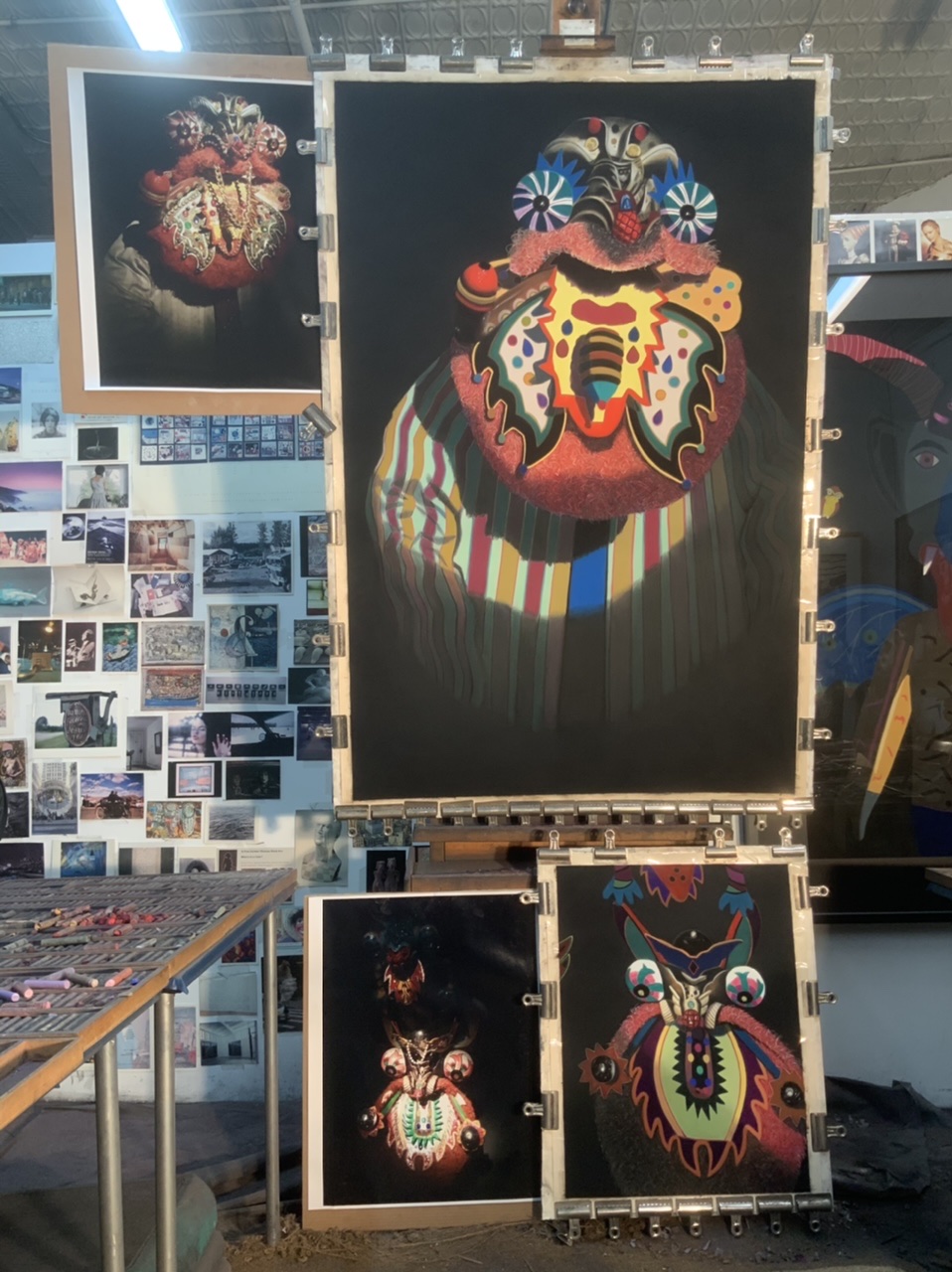
*an ongoing series of quotations – mostly from artists, to artists – that offers wisdom, inspiration, and advice for the sometimes lonely road we are on.
Precious realm of painting! That silent power that speaks at first only to the eyes and then seizes and captivates every faculty of the soul! Here is your real spirit; here is your own true beauty, beautiful painting, so much insulted, so much misunderstood and delivered up to fools who exploit you. But there are still hearts ready to welcome you devoutly, souls who will no more be satisfied with mere phrases than with inventions and clever artifices. You have only to be seen in your masculine and simple vigor to give pleasure that is pure and absolute. I confess that I have worked logically, I, who have no love for logical painting. I see now that my turbulent mind needs activity, that it must break out and try a hundred different ways before reaching the goal towards which I am always straining. There is an old leaven working in me, some black depth that must be appeased. Unless I am writhing like a serpent in the coils of a pythoness I am cold. I must recognize this and accept it, and to do so is the greatest happiness. Everything good that I have ever done has come about in this way. No more ‘Don Quixotes’ and such unworthy things!
The Journal of Eugene Delacroix edited by Hubert Wellington
Comments are welcome!
Pearls from artists* # 458

*an ongoing series of quotations – mostly from artists, to artists – that offers wisdom, inspiration, and advice for the sometimes lonely road we are on.
When I have painted a fine picture I have not given expression to a thought! That is what they say. What fools people are! They would strip painting of all its advantages. A writer has to say almost everything in order to make himself understood, but in painting it is as if some mysterious bridge were set up between the spirit of the persons in the picture and the beholder. The beholder sees figures, the external appearance of nature, but inwardly he meditates; the true thinking that is common to all men. Some give substance to it in writing, but in so doing they lose the subtle essence. Hence, grosser minds are more easily moved by writers than by painters or musicians. The art of the painter is all the nearer to man’s heart because it seems to be more material. In painting, as in external nature, proper justice is done to what is finite and to what is infinite, in other words, to what the soul finds inwardly moving in objects that are known through the senses alone.
The Journal of Eugene Delacroix edited by Hubert Wellington
Comments are welcome!
Pearls from artists* 457
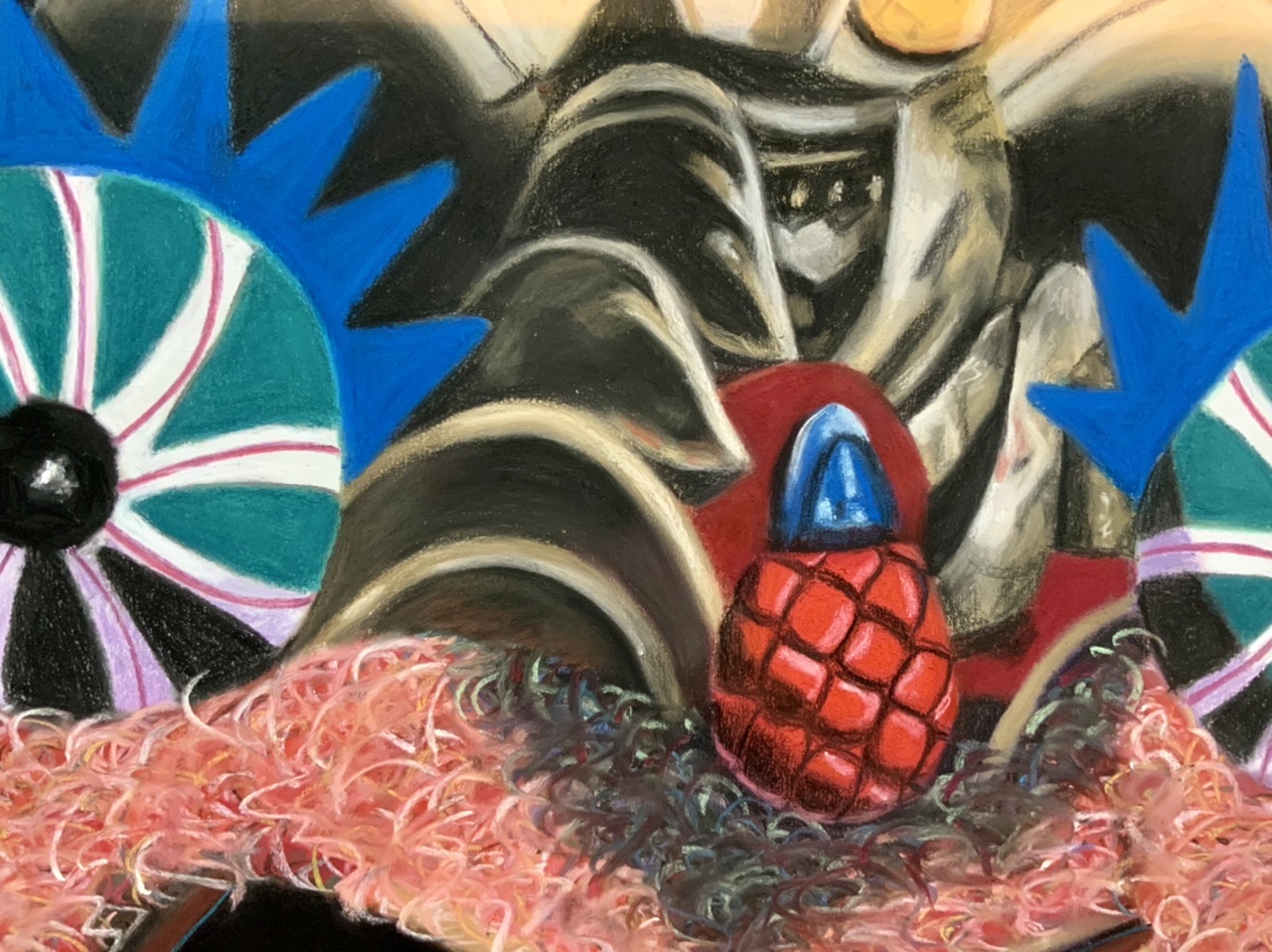
*an ongoing series of quotations – mostly from artists, to artists – that offers wisdom, inspiration, and advice for the sometimes lonely road we are on.
In Italy on the Prixe de Rome, he [Phillip Guston] traveled, studied Piero and Tiepolo and drew everywhere. His marks bunched up in quavering confederations and eventually left their subject matter behind. The trouble with figurative art, he concluded, was that it “vanishes into recognition.” Remove the recognizable and you can begin to see the push and pull of impulse, recanting, and reconfiguration that constitute painting and, by extension, life itself.
Susan Tallman in Philip Guston’s Discomfort Zone, The New York Review of Books, January 14, 2021
Comments are welcome!
Pearls from artists* # 423

“Epiphany,” soft pastel on sandpaper, 38″ x 58″
* an ongoing series of quotations – mostly from artists, to artists – that offers wisdom, inspiration, and advice for the sometimes lonely road we are on.
I’ve mentioned that Kenneth Clark, the British art historian, said you could take the four best paintings of any artist in history and destroy the rest and the artist’s reputation would still be intact. This is because in any artist’s life there are moments when everything goes right. The artist is so in tune with his or her inner vision that there is no restriction. The divine is being expressed. Each mark becomes like a note of music in a divine order.
That experience, that prayer of expression, transcends its material and becomes spiritual. The experience is overwhelming, the joys it communicates explosive.
When on another occasion we can’t find that spiritual level of experience, and so can’t repeat it, the frustration can be cruel and the separation painful. Here lies the myth of the suffering artist. It isn’t the art making when it goes well that has any suffering in it. That is the union with the beloved. It’s the loss that causes the suffering. And the problem isn’t something we can necessarily control. We are instruments, conduits for that expression. It comes through us by grace.
The idea that we “make” art is perhaps a bit misleading. The final product is at its best the result of a collaboration with spirit. We may be separated from a flow within our spirit for weeks. We continue to paint because there is no knowing at what precise moment it will return. And when it does we need our faculties alert and our skills honed. Then the poetry is everywhere.
Ian Roberts in Creative Authenticity: 16 Principles to Clarify and Deepen Your Artistic Vision
Comments are welcome!
Pearls from artists* # 421
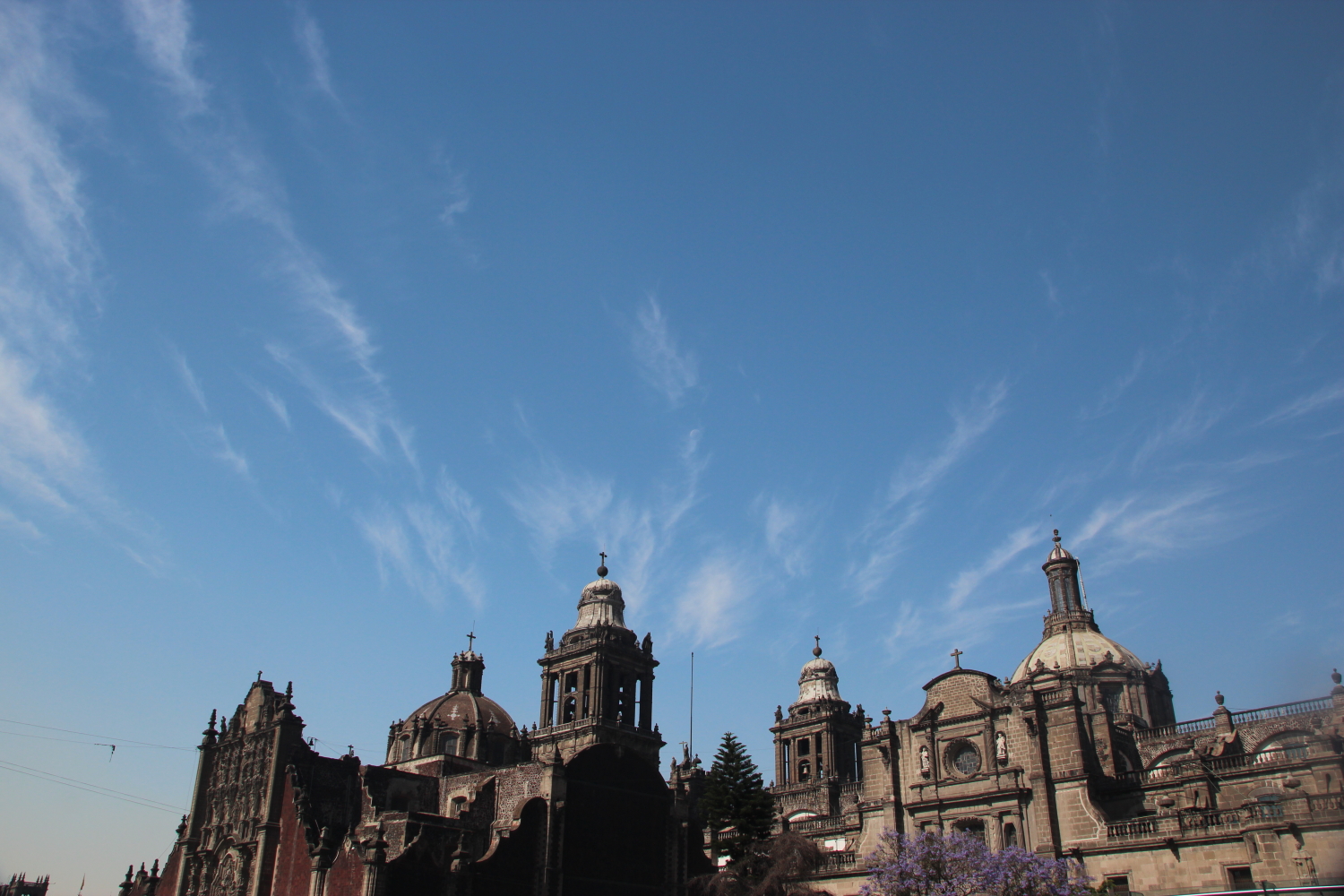
Mexico City
*an ongoing series of quotations – mostly from artists, to artists – that offers wisdom, inspiration, and advice for the sometimes lonely road we are on.
The economic meltdown that followed the crash of the U.S. stock market in 1929 shattered the country’s faith in itself. With one third of the country unemployed and droughts devastating the Midwest, many Americans doubted their ability to endure and triumph. More than ever, as the American novelist John Dos Passos asserted, the country needed to know “what kind of firm ground other men, belonging to generations before us, have found to stand on.” Guided by the Mexican muralists, whose art they had ample opportunities to study in reproduction and exhibition, American artists responded by seeking elements from the country’s past, which they mythologized into epics of strength and endurance in an effort to help the nation revitalize itself.
Thomas Hart Benton led the charge. Long a vociferous critic of European abstraction as elitist and out of touch with ordinary people, Benton hailed the Mexican muralists for the resolute public engagement of their art and for portraying the pageant of Mexican national life, exhorting his fellow American artists to follow their example in forging a similar public art for the U.S., even as he firmly rejected the communist ideology that often inflected the Mexican artists’ work. African American artists were likewise inspired by the Mexican muralists’ celebration of the people’s fight for emancipation. In creating redemptive narratives of social justice and liberation, artists such as Charles White and Jacob Lawrence transformed that struggle for freedom and equality into a new collective identity, one that foregrounded the contribution of African Americans to national life.
Vida Americana: Mexican Muralists Remake American Art, 1925 – 1945, edited by Barbara Haskell
Comments are welcome!
Pearls from artists* # 407

“Survivors,” soft pastel on sandpaper, 20″ x 26″ image, 28 1/2″ x 35″ framed
* an ongoing series of quotations – mostly from artists, to artists – that offers wisdom, inspiration, and advice for the sometimes lonely road we are on.
In the images [the paintings of the Chauvet cave in southern France] this prehistoric people have bequeathed to us, we get a glimpse of something like a shared humanity, but we also gaze into a stranger part of ourselves, something reaching to the depths. Since we do not know the context in which the paintings were made, we cannot in good faith chalk them up to some clear pragmatic end. We are seeing art in its naked state, deprived of any discernible appropriation. This can trouble our secular sensibilities since it confronts us not just with the mysteries of nature, but more strikingly still with the riddle of the presence of such things as us in the otherwise coherent physical world. Given the fact that the molecular chemistry that makes life possible is the same throughout the cosmos, would finding works of art on Mars or a remote planet be any more uncanny than finding them here on Earth?
J.F. Martel in Reclaiming Art in the Age of Artifice: A Treatise, Critique, and Call to Action
Comments are welcome!
Pearls from artists* # 382

Barbara’s studio
* an ongoing series of quotations – mostly from artists, to artists – that offers wisdom, inspiration, and advice for the sometimes lonely road we are on.
I think a man [sic] spends his whole lifetime painting one picture or working on one piece of sculpture. The question of stopping is really a decision of moral considerations. To what extent are you intimidated by the actual act, so that you are beguiled by it? To what extent are you charmed by its inner life? And to what extent do you then really approach the intention or desire that is really outside it? The decision is always made when the purée has something in it that you wanted.
Barnett Newman quoted in The Unknown Masterpiece by Honore Balzac
Comments are welcome!
Pearls from artists* # 377
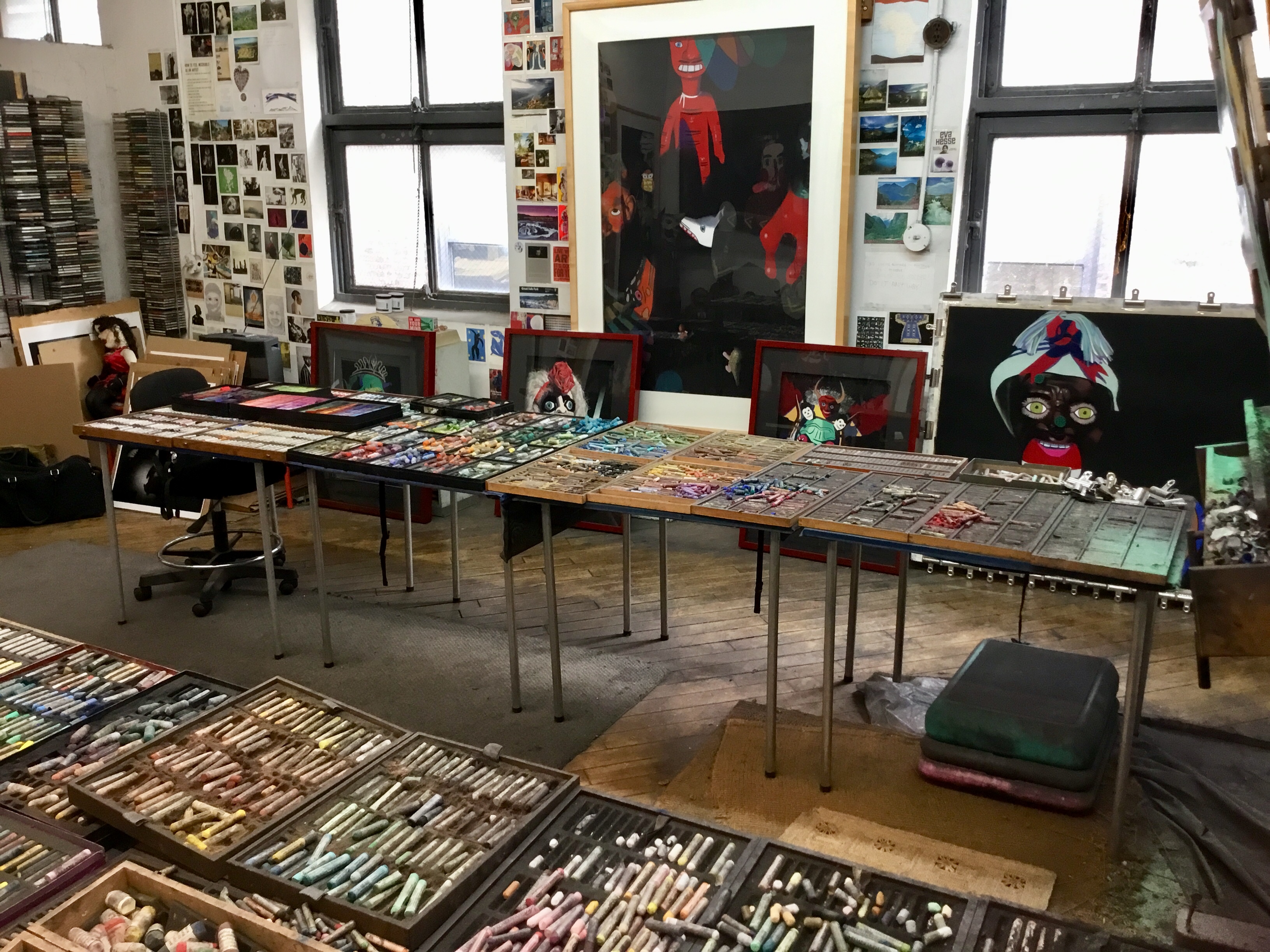
Barbara’s studio
* an ongoing series of quotations – mostly from artists, to artists – that offers wisdom, inspiration, and advice for the sometimes lonely road we are on.
Life for an artist, any artist, was difficult. There were few rewards other than the most important, which was satisfying one’s need to create. But in the art world of galleries, collections, and museums that the avant-garde artists in New York would inherit in the late 1940s, the difficulties experienced by the men who painted and sculpted would be nothing compared to those of the women. Society might mock the men’s work and disparage them for being “bums,” but at least they were awarded the dignity of ridicule. Women had to fight with every fiber of their being not to be completely ignored. In a treatise on men and women in America published at the start of the war, author Pearl S. Buck wrote,
The talented woman… must have, besides their talent, an unusual energy which drives them… to exercise their own powers. Like talented men, they are single-minded creatures, and they can’t sink into idleness nor fritter away life and time, nor endure discontent. They possess that rarest gift, integrity of purpose… Such women sacrifice, without knowing they do, what many other women hold dear – amusement, society, play of one kind or another – to choose solitude and profound thinking and feeling, and at last final expression.
“To what end?” another woman might ask. To the end, perhaps… of art – art which has lifted us out of mental and spiritual savagery.”
Mary Gabriel in Ninth Street Women
Comments are welcome!
Pearls from artists* # 374
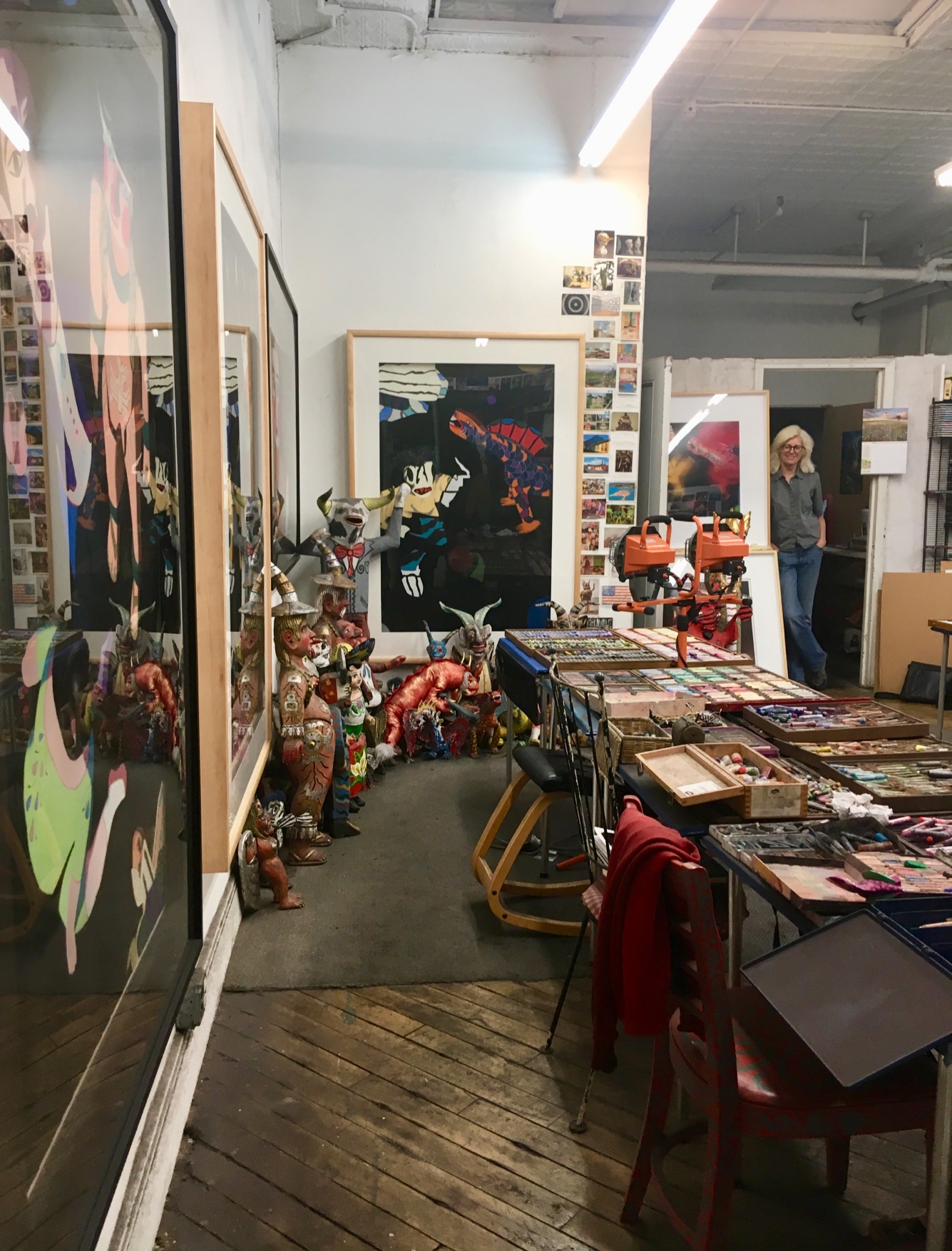
Barbara’a studio
* an ongoing series of quotations – mostly from artists, to artists – that offers wisdom, inspiration, and advice for the sometimes lonely road we are on.
Finally, [John] Graham said, of all the arts, painting was the most difficult because one false move on a canvas could mean the difference between a great painting and a failure. A writer could always resurrect a word, but a line or a shape was so ephemeral that, once changed, it was almost always lost for good. “To create life one has to love. To create a great work of art one has to love truth with the passion of a maniac. If society does not perceive this love, perhaps humanity will.” …The artists… came away… feeling as though they were not aberrations but part of a long tradition of individuals who had ignored fashion to create culture.
Mary Gabriel in Ninth Street Women
Comments are welcome!
Q: Where did you grow up and what were some early milestones or experiences that contributed to you becoming an artist later in life?
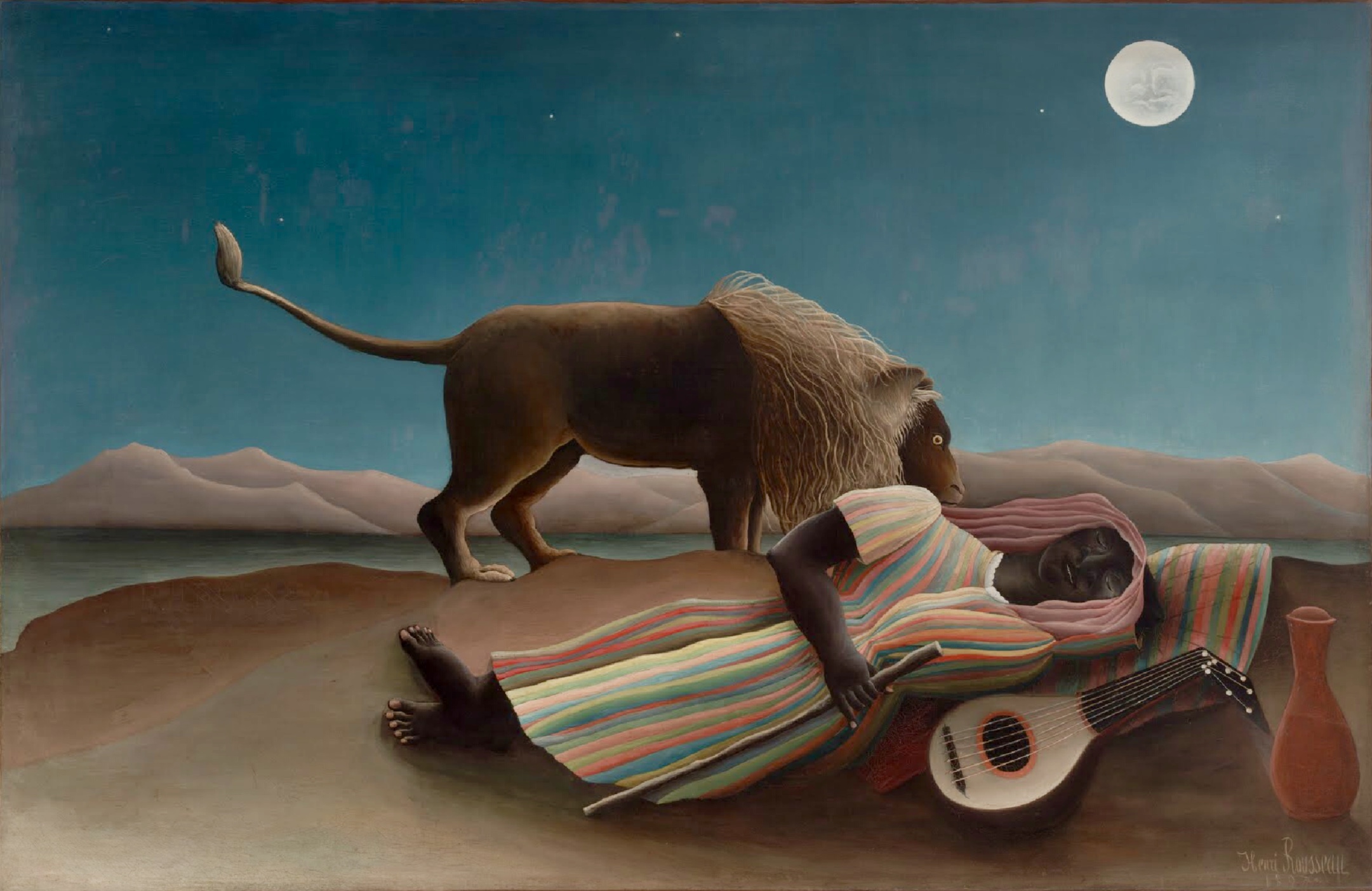
“The Sleeping Gypsy,” Henri Rousseau, oil on canvas, 1897
A: I grew up in a blue collar family in Clifton, New Jersey, a suburb about fifteen miles west of Manhattan. My father was a television repairman for RCA. My mother stayed home to raise my sister and me (at the time I had only one sister, Denise; my sister Michele was born much later). My parents were both first-generation Americans and no one in my extended family had gone to college yet. I was a smart kid who showed some artistic talent in kindergarten and earlier. I remember copying the Sunday comics, which in those days appeared in all the newspapers, and drawing small still lifes I arranged for myself. I have always been able to draw anything, as long as I can see it.
Denise, a cousin, and I enrolled in Saturday morning “art classes” at the studio of a painter named Frances Hulmes in Rutherford, NJ. I was about 6 years old. I continued the classes for 8 years and became a fairly adept oil painter. Since we lived so close to New York City, my mother often took us to museums, particularly to the Museum of Modern Art, the Metropolitan Museum of Art, and the Museum of Natural History. Like so many young girls, I fell in love with Rousseau’s “The Sleeping Gypsy” and was astonished by Picasso’s “Guernica” when it was on long-term loan to MoMA. I have fond memories of studying the dioramas at the Museum of Natural History (they are still my favorite part of the museum). As far as I know, there were no artists in my family so, unfortunately, I had no role models. At the age of 14 my father decided that art was not a serious pursuit – declaring, it is “a hobby, not a profession” – and abruptly stopped paying for my Saturday morning lessons. With no financial or moral support to pursue art, I turned my attention to other interests, letting my artistic abilities go dormant.
Comments are welcome!


 barbararachkoscoloreddust.com