Blog Archives
Pearls from artists* # 467
*an ongoing series of quotations – mostly from artists, to artists – that offers wisdom, inspiration, and advice for the sometimes lonely road we are on.
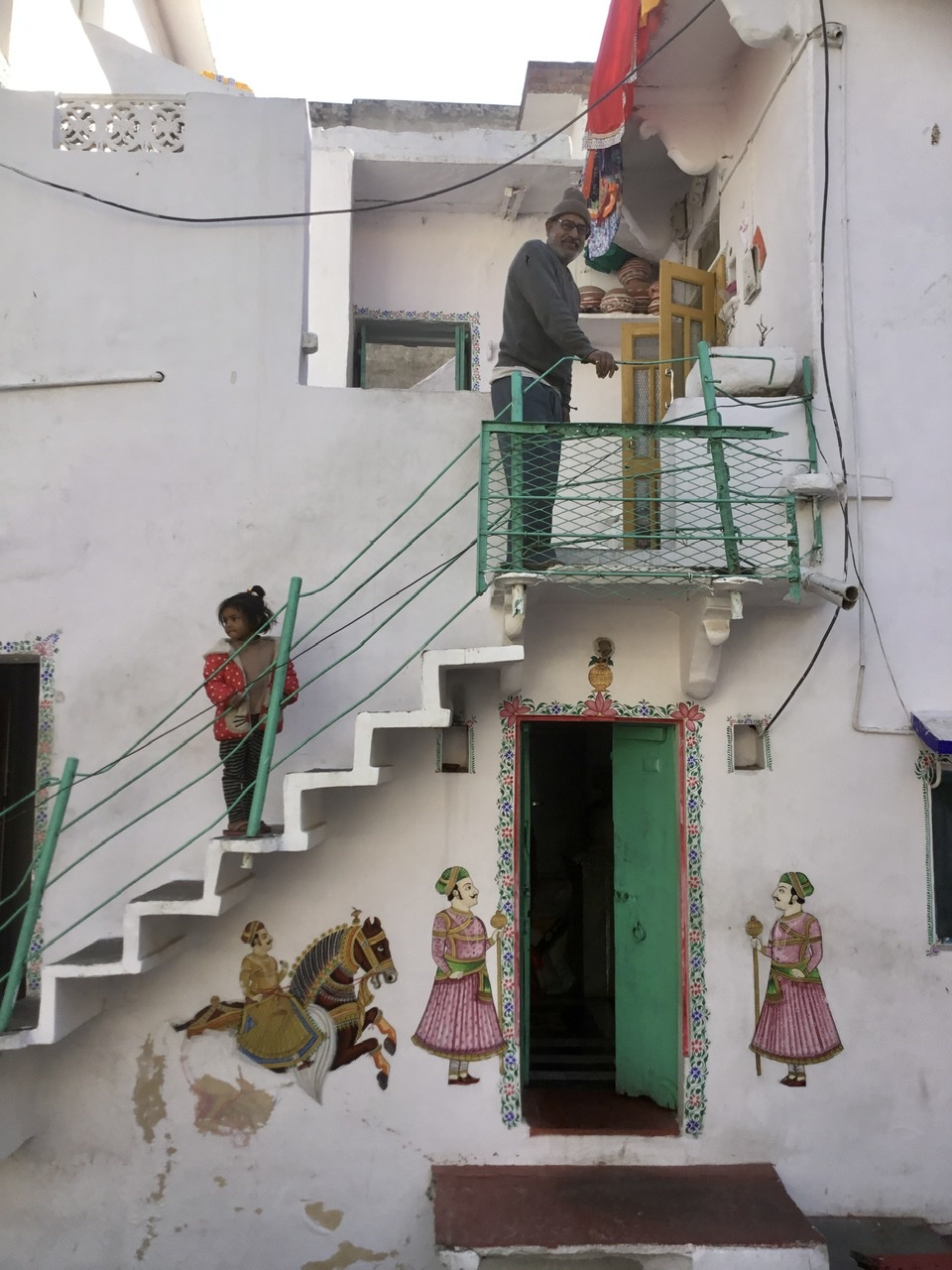
As students confronted with images of India through film and photography, we are challenged to begin to be self-conscious of who we are as “seers.” Part of the difficulty of entering the world of another culture, especially one with as intricate and elaborate a visual articulation as India’s, is that, for many of us, there are no “manageable models.” There are no self-evident ways of recognizing the shapes and forms of art, iconography, ritual life and daily life that we see. Who is Śiva, dancing wildly in a ring of fire? What is happening when the priest pours honey and yogurt over the image of Viṣṇu? Why does the woman touch the feet of the ascetic beggar? For those who enter the visible world of India through the medium of film, the onslaught of strange images raises a multitude of questions. These very questions should be the starting point for our learning. Without such self-conscious questions, we cannot begin to “think” with what we see and simply dismiss it as strange. Or worse, we are bound to misinterpret what we see by placing it solely within the context of what we already know from our own world of experience.
Diana L. Eck in Darsan: Seeing the Divine Image in India
Comments are welcome!

Pearls from artists* # 465
*an ongoing series of quotations – mostly from artists, to artists – that offers wisdom, inspiration, and advice for the sometimes lonely road we are on.
In his 1970 Nobel Prize lecture, Aleksander Solzhenitsyn proposed that if art has never been revealed its intrinsic “function” to us, it is because such a thing is beyond our ken. For the Russian writer, we are mistaken when we call art a human innovation; we ought instead to see it as a gift, something that came to us from beyond the bounds of our world. Solzhenitsyn illustrates his point by comparing the work of art to the technological marvel that a man from the proverbial Stone Age comes across in the wilderness. Unable to penetrate its secrets, the man can only turn the object this way and that, looking for “some arbitrary use to which he can put it, without suspecting an extraordinary one.” Solzhenitsyn goes on:
“So also we, holding art in our hands, confidently consider ourselves to be its masters, boldly we direct it, reform and manifest it; we sell it for money, use it to please those in power; turn to it at one moment for amusement… and at another… for the passing needs of politics and for narrow-minded social ends. But art is not defiled by our efforts, neither does it thereby depart from its true nature, but on each occasion and in each application it gives us a part of its secret inner light.”
JF Martel in Reclaiming Art in the Age of Artifice: A Treatise, Critique, and Call to Action
Comments are welcome!
Pearls from artists* # 449
*an ongoing series of quotations – mostly from artists, to artists – that offers wisdom, inspiration, and advice for the sometimes lonely road we are on.
I learned about the Japanese word irimi while studying Aikido, a Japanese martial art. Simply translated, irimi means ,’to enter’ but it can also be translated ‘choose death.’ When attacked you always have two options: to enter, irimi, or to go around, ura. Both when accomplished in the right manner, are creative. To enter or to ‘choose death’ means to enter fully with the acceptance, if necessary, of death. The only way to win is to risk everything and be fully willing to die. If this is an extreme notion to Occidental sensibilities, it does make sense in creative practice. To achieve the violence of decisiveness, one has to ‘choose death’ in the moment by acting fully and intuitively without pausing for reflection about whether it is the right decision or if it is going to provide the winning solution.
It is also valuable to know when to use ura, or going around. There is a time for ura, going around, and there is a time for irimi, entering. And these times can never be known in advance. You must sense the situation and act immediately. In the heat of creation, there is no time for reflection; there is only connection to what is happening. The analysis, the reflection and the criticism belong before and after, never during, the creative act.
Anne Bogart in “A Director Prepares: Seven Essays on Art and Theater”
Comments are welcome!
Pearls from artists* # 412
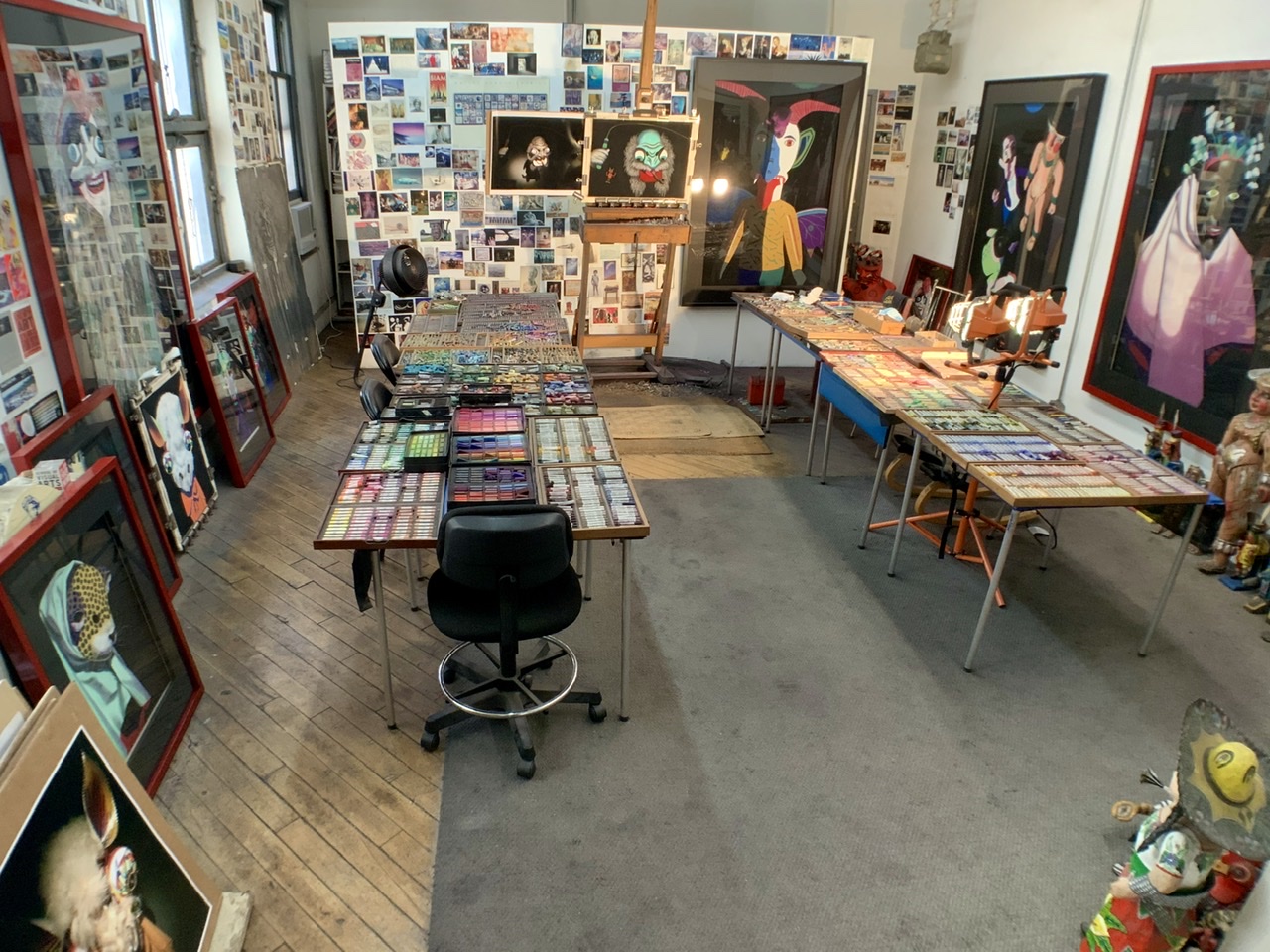
Barbara’s studio
*an ongoing series of quotations – mostly from artists, to artists – that offers wisdom, inspiration, and advice for the sometimes lonely road we are on.
The obstacles faced by women who hoped to leave a mark on humankind have, through the millennium, varied in height but not in stubborn persistence. And yet, a great many women have stubbornly ignored them. The desire to put words on a page or marks on a canvas was greater than the accrued social forces that told them they had no right to do so, that they were excluded by their gender from that priestly class called artist. The reason, according to Western tradition, was as old as creation itself: For many, God was the original artist and society had assigned its creator a gender – He. The woman who dared to declare herself an artist in defiance of centuries of such unwavering belief required monstrous strength, to fight not for equal recognition and reward but for something at once more basic and vital: her very life. Her art was her life. Without it, she was nothing. Having no faith that society would broaden its views on artists by dethroning men and accommodating women, in 1928 [Virginia] Woolf offered her fellow writers and painters a formula for survival that allowed them to create, if not with acceptance, then at least unimpeded. A woman artist, she said, needed but two possessions: “money and a room of her own.”
Mary Gabriel in Ninth Street Women
Comments are welcome!
Pearls from artists* # 408

“No Cure for Insomnia,” pastel on sandpaper, 58″ x 38″ image, 70” x 50” framed
* an ongoing series of quotations – mostly from artists, to artists – that offers wisdom, inspiration, and advice for the sometimes lonely road we are on.
Classics have nothing to do with aesthetic sophistication. They use the aesthetic as a springboard to something else. The creation of a classic will often require the artist to deviate from prevailing standards in order to push the ordinary vision through. If there is one prerequisite for producing a classic, it is the willingness to follow the vision wherever it leads, even if it demands a breach of convention, technique, or popular taste. (It may not even be a question of if or when, for how can one produce a truly singular work without reinventing the medium to some extent?) We often hear that the master artist is “in love” with her material: that the sculptor loves the marble, the dancer loves the body, the musician loves his instrument. For the maker of classics, however, the medium always seems to be an obstacle; love is never without a tinge of spite. William S. Burroughs was so contemptuous of language that he took to describing it as a disease. He conceived his work as an attempt to confront language in hopes to cure the mind of the “word virus.” Indeed, if the goal of art is to take us beyond the ordinary preoccupations to reach the heart of the Real, it would seem essential that there be a fight, a struggle to wrest from the medium something to which Consensus dictates it is not naturally inclined.
J.F. Martel in Reclaiming Art in the Age of Artifice: A Treatise, Critique, and Call to Action
Comments are welcome!
Pearls from artists* # 393
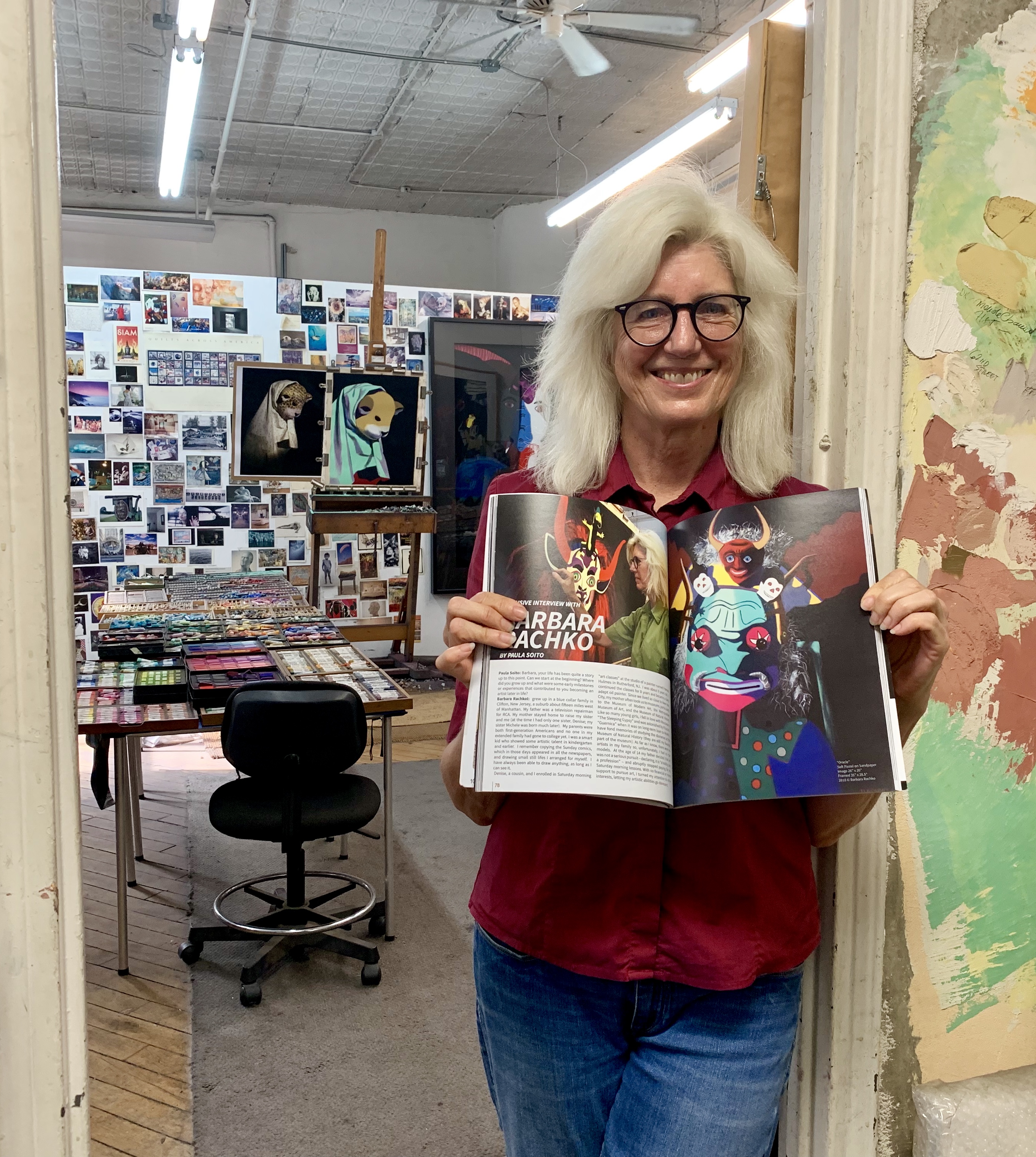
With my favorite interview
* an ongoing series of quotations – mostly from artists, to artists – that offers wisdom, inspiration, and advice for the sometimes lonely road we are on.
… Fernhoffer’s a man in love with our art, a man who sees higher and farther than other painters. He’s meditated on the nature of color, on the absolute truth of line, but by dint of so much research, he has come to doubt the very object of his investigations. In moments of despair, he claims that drawing doesn’t exist and that lines are only good for rendering geometrical figures, which is far from the truth, since with line and with black, which is not a color, we can create a human figure. There’s your proof that our art is like nature itself, composed of an infinity of elements: drawing accounts for the skeleton, color supplies life, but life without a skeleton is even more deficient than a skeleton without life. Lastly, there’s something even truer than all this, which is that practice and observation are everything to a painter; so that if reasoning and poetry argue with our brushes, we wind up in doubt, like our old man here, who’s as much a lunatic as he is a painter — a sublime painter who had the misfortune to be born into wealth, which has allowed him to wander far and wide. Don’t do that to yourself! A painter should philosophize only with a brush in his hand!
Honore Balzac in The Unknown Masterpiece
Comments are welcome!
Pearls from artists* # 208
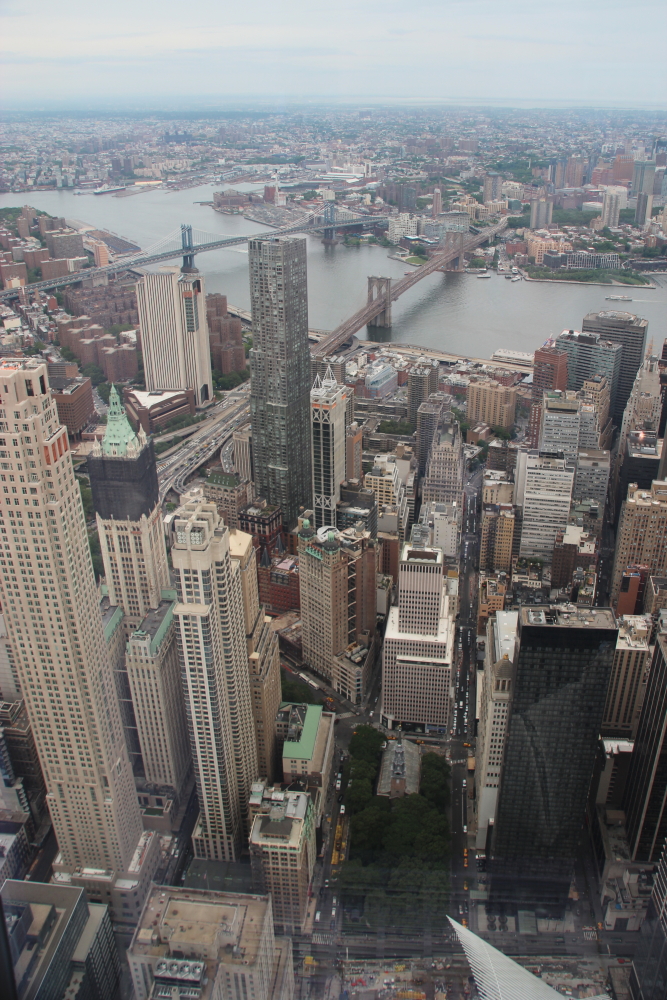
View from One World Trade Center
* an ongoing series of quotations – mostly from artists, to artists – that offers wisdom, inspiration, and advice for the sometimes lonely road we are on.
PC: In your painting, you’ve always kept this speed of movement. One senses that you work something out slowly, deep down, that it’s hard work, but there’s always something fresh about its expression.
HM: That’s because I revise my notion several times over. People often add or superpose – completing things without changing their plan, whereas I rework my plan every time. I never get tired. I always start again, working from the previous state. I try to work in a contemplative state, which is very difficult: contemplation is inaction, and I act in contemplation.
In all the studies I’ve made from my own ideas, there’s never been a faux pas because I’ve always unconsciously had a feeling for the goal; I’ve made my way toward it the way one heads north, following the compass. What I’ve done, I’ve done by instinct, always with my sights on a goal I still hope to reach today. I’ve completed my apprenticeship now. All I ask is four or five years to realize that goal.
PC: Delacroix said that too. Great artists never look back.
HM: Delacroix also said – ten years after he’d left the place – “I’m just beginning to see Morocco.” Rodin said to an artist, “You need to stand back a long way for sculpture.” To which the student replied, “Master, my studio is only ten meters wide.”
Chatting with Henri Matisse: The Lost 1941 Interview, Henri Matisse with Pierre Courthion, edited by Serge Guilbaut, translated by Chris Miller
Comments are welcome!
Q: Can you describe a single habit that you believe contributes to your professional success?
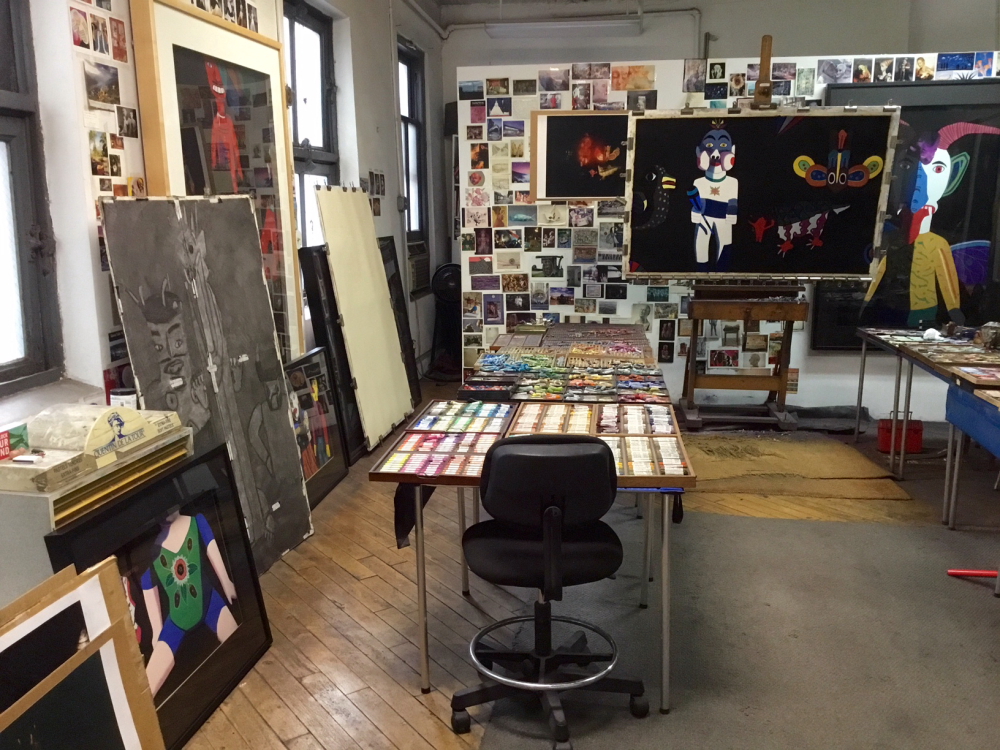
Barbara’s studio with work in progress
A: It’s probably the fact that I keep regular studio hours. Contrary to the cliche of artists working in spurts, I continually work in the studio at least seven hours a day, five days a week, with Wednesdays and Sundays as my days off. I devote another two hours or so in the mornings and evenings for art business tasks: email, sending out jpegs, social media, etc. I always remember something Katharine Hepburn said: “Without discipline there is no life.”
Comments are welcome!
Q: How many studios have you had since you’ve been a professional artist?

Barbara’s studio
A: I am on my third, and probably last, studio. I say ‘probably’ because I love my space and have no desire to move. Plus, it would be a tremendous amount of work to relocate, considering that I have been in my West 29th Street studio since 1997.
My very first studio, in the late 1980s, was the spare bedroom of my house in Alexandria, Virginia. I set up a studio there while I was on active duty in the Navy. When I resigned my commission, I was required to give the President an entire year’s advance notice. Towards the end of that year I remember calling in sick so I could stay home and make art.
In the early 1990s I rented a studio on the third floor of the Torpedo Factory in Alexandria. For a while I enjoyed working there, but the constant interruptions – in an art center that is open to the public – became tiresome.
In 1997 I had the opportunity to move to New York. I desperately craved solitary hours to work in peace, without interruption, so at first I didn’t have a telephone. I still don’t have WiFi there because my studio is reserved strictly for creative work.
Moving from Virginia to New York in 1997 was relatively easy. My aunt, who planned to be in California to continue her Buddhist studies, offered me her rent-controlled sixth-floor walkup on West 13th Street. I looked at just one other studio before signing a sublease for my space at 208 West 29th Street. I had heard about the vacancy through a college friend of my husband, Bryan. Karen, the lease-holder, was relocating to northern California to work on “Star Wars” with George Lucas. After several years, she decided not to return to New York and I have been the lease-holder ever since.
Comments are welcome!
Pearls from artists* # 188
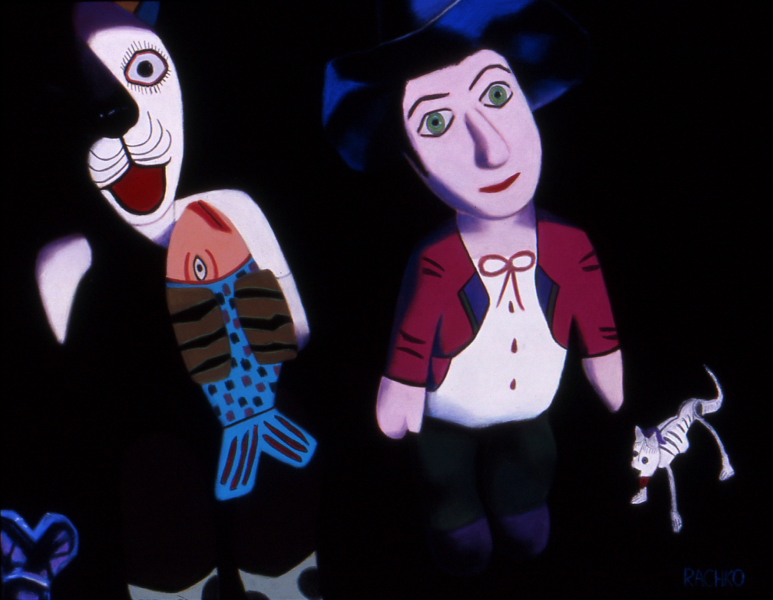
“Offering,” soft pastel on sandpaper, 20″ x 26″
* an ongoing series of quotations – mostly from artists, to artists – that offers wisdom, inspiration, and advice for the sometimes lonely road we are on.
HM: In order to create a work of art, you need an artist, an object, the work, and the audience. Indeed, where there’s no audience, there’s no artist. Renoir used to say, “No painters in Hamlet.” meaning that on a desert island you wouldn’t paint.
( I confess I am a little surprised. For my part, I find it difficult to believe that the true artist cannot work without hope. It seems to me that art is first and foremost an internal necessity, a need to escape from life. It is true that this is closer to the mystics’ point of view and that the artist, if he does not work directly for his contemporaries, at least looks forward to some future resonance. Nonetheless, I ask the same question again.)
PC: Even a true painter wouldn’t paint on a desert island?
HM: No… Painting is a means of communication, a language. An artist is an exhibitionist. Take away his spectators and the exhibitionist slinks off with his hands in his pockets.
The audience is the material in which you work. You don’t see the face of the audience. It’s huge, an immense mass. The public is – listen, it’s the man you encounter one fine day, who says, “Monsieur Matisse, I can’t tell you how much I love your picture, the one you exhibited at the salon,” and this man is a clerk who could never spend a red cent on painting. The public is not the buyer; the public is the sensitive material on which you hope to leave an imprint.
PC: Through the picture, the audience returns to the source of emotion.
HM: Yes, and the artist is the actor, the fellow with the wheedling voice who won’t rest until he’s told you his life story.
Chatting with Henri Matisse: The Lost 1941 Interview, Henri Matisse with Pierre Courthion, edited by Serge Guilbaut, translated by Chris Miller
Comments are welcome!


 barbararachkoscoloreddust.com