Blog Archives
Q: Your pastel paintings are immediately recognizable as yours alone. Did you consciously try to develop a signature style in your work?
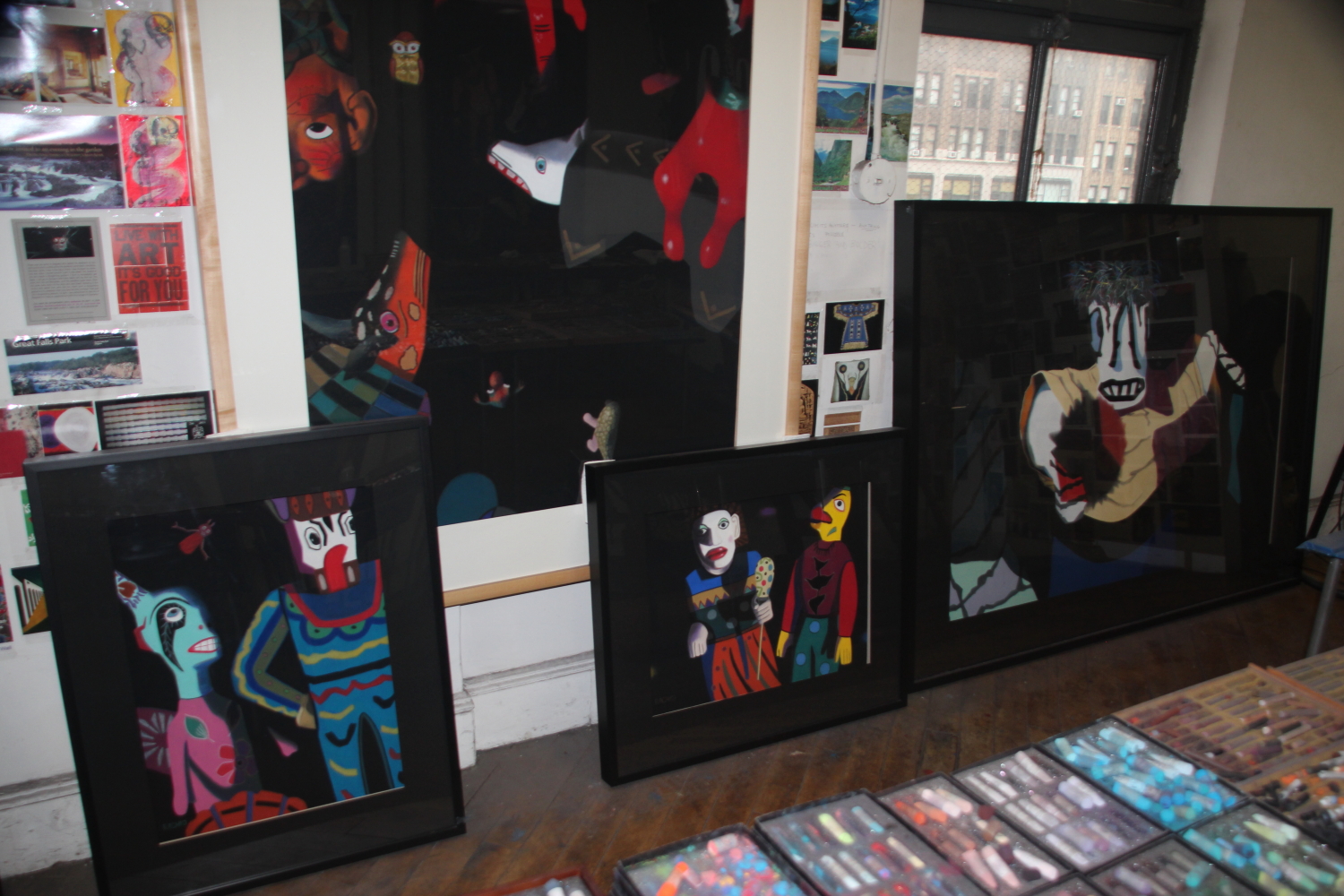
Barbara’s studio
A: I don’t believe that is even possible. An artist’s style is something that evolves with plain hard work and experience, over many years of trial and error, as one finds what techniques work best and discards those that don’t. It is a process of continually experimenting, refining, and clarifying. In other words, style is something that emerges naturally as you gradually strive to improve your art-making.
Style develops in close connection to what an artist is saying as she undergoes a very personal and idiosyncratic journey. Again, it would seem improbable for an artist to strive for any particular style, since style is not something over which an artist can exert much conscious control.
I would even say that each artist’s unique style is inevitable. It would be nearly impossible now to make a pastel painting or photograph that does NOT look like a Rachko.
Comments are welcome!
Q: Do you have any favorites among the Mexican and Guatemalan folk art figures that you depict in your work?

Idea for an upcoming pastel painting
A: I suppose it seems that way, since I certainly paint some figures more than others. My favorite characters change, depending on what is happening in my work. My current favorites are a figure I have never painted before (the Balinese dragon above) and several Mexican and Guatemalan figures last painted years ago. All will make an appearance in a pastel painting for which I am still developing preliminary ideas (above).
Comments are welcome!
Q: Would you say there is a unifying quality to all of the work you have produced in the last thirty years?
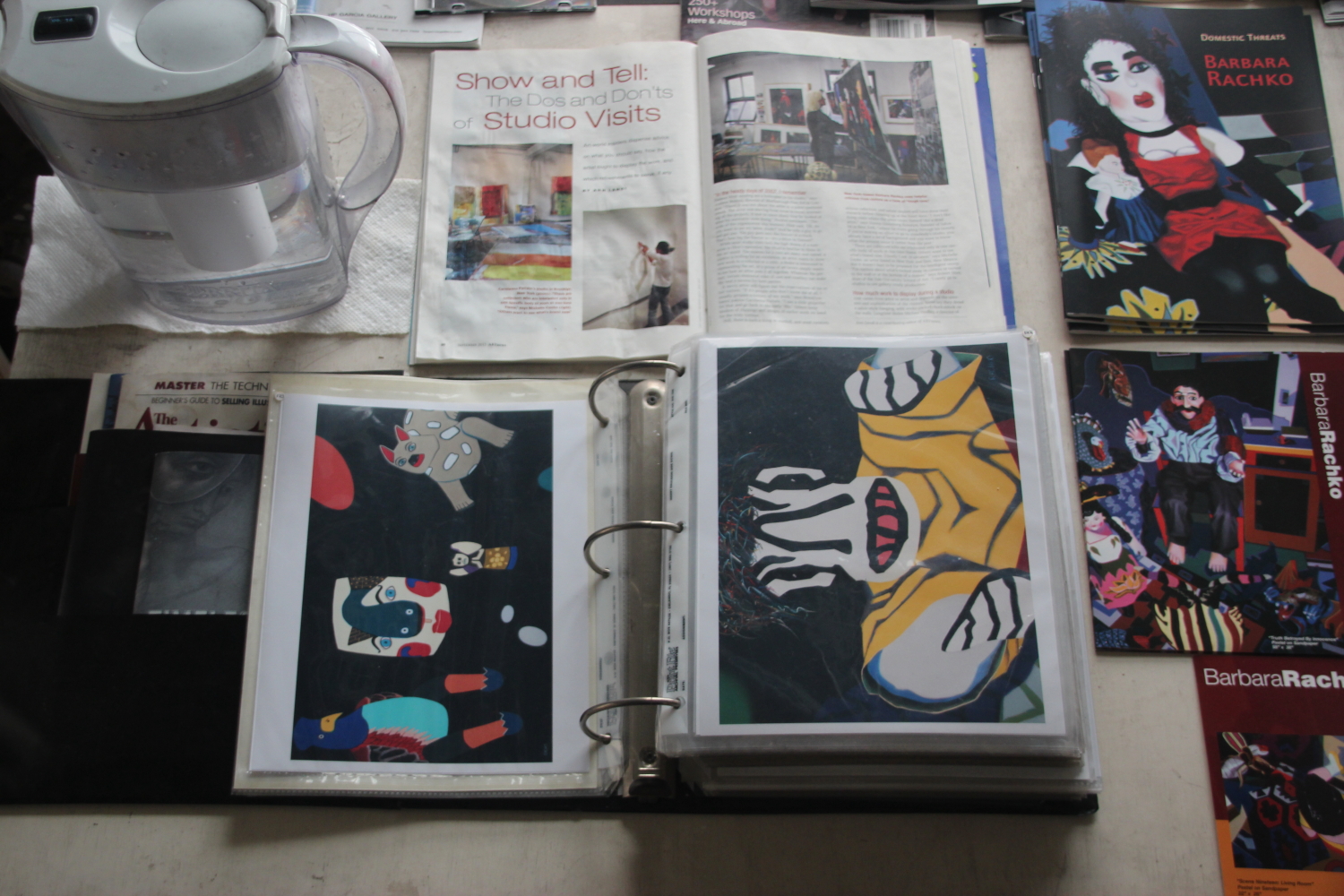
Barbara’s portfolio book
A: Yes, I can think of several. Whether making pastel paintings or printing photographs in the darkroom, I have always been concerned with quality and craftsmanship and never pronounce a work finished until it is the best thing I can make.
Although I started out as a maker of photorealist portraits in pastel, for twenty-odd years I have worked with Mexican folk art as my primary subject matter, treating these objects very differently in three separate series: “Black Paintings,” “Domestic Threats,” and “Gods and Monsters.” The first two are pastel-on-sandpaper paintings while the last is comprised of chromogenic photographs (c-prints). A few years ago I also started making “Teleidoscopes” using an iPad app to photograph my Mexican and Guatemalan folk art collection. This last one is just for fun; I do not offer them for sale.
Soft pastel is my first love and the two series of pastel paintings are my best-known work. My technique for using pastel continues to evolve in intriguing ways. I doubt I can ever learn all there is to know not only about color, but also about this medium. Pastel is endlessly fascinating, which is why I have never wanted to switch to anything else.
Comments are welcome!
Q: How do you store your pastel paintings?
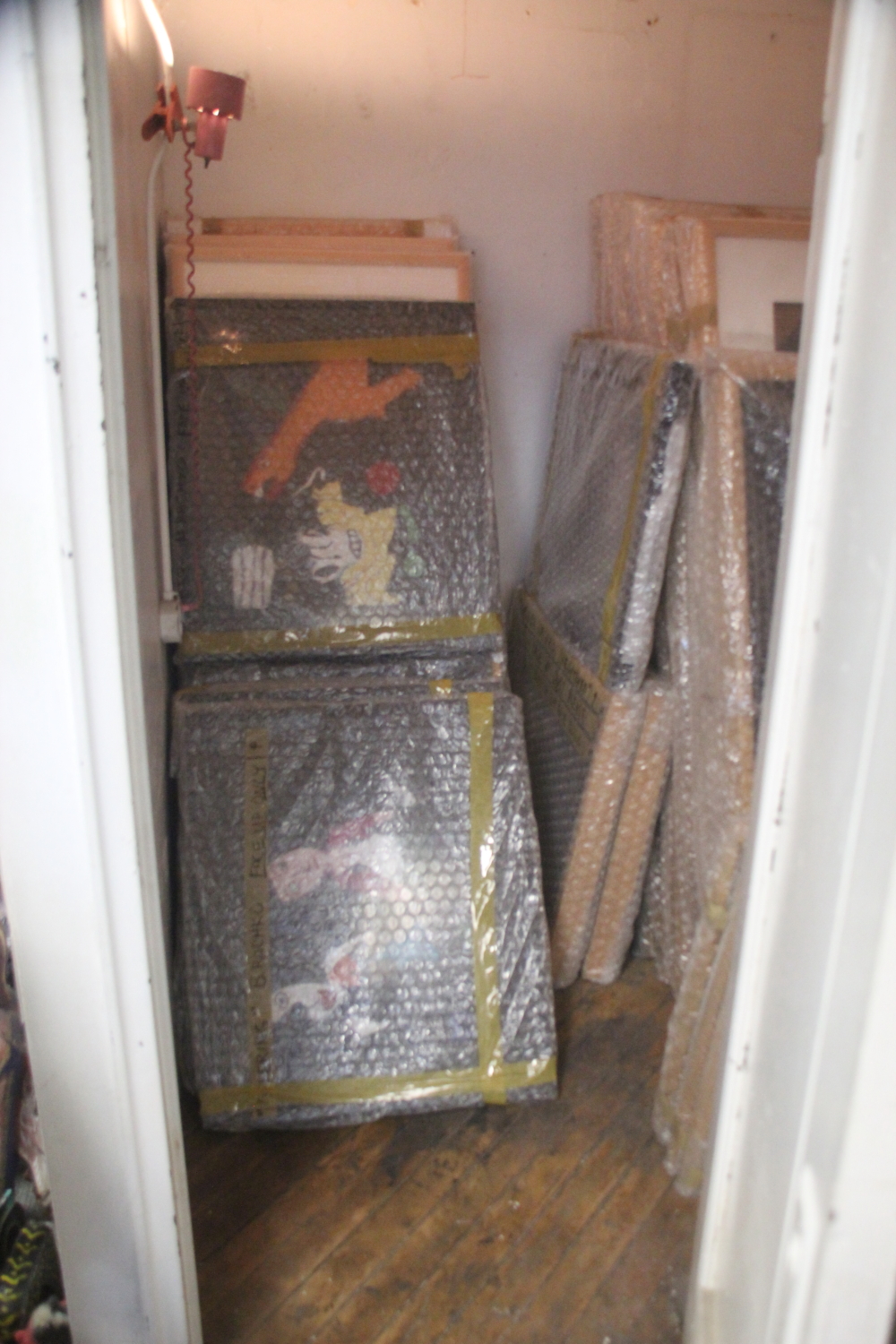
Storage closet
A: Well, I wish I could say that every pastel painting has sold as soon as it was completed, but that is a rarity that has only happened twice. As soon as possible after I finish a painting, I bring it to the framer. Pastel paintings are susceptible to smudging and other odd dangers (even a sneeze!) until they are under Plexiglas.
Framed work can easily and safely be stored by hanging it on a wall in my studio or standing it upright and face up, and leaning against a wall. When I put paintings in my storage closet for the longer term, I wrap them in bubble wrap.
The downside of having to frame everything is that it is a considerable expense. However, the upside is that I am always ready for a solo exhibition. Gallerists have called at the last minute when one of their exhibitions ran into unexpected problems. Usually, I am able to step right in.
Comments are welcome!
Q: In terms of change where will you take your work next?

Barbara’s studio
A: That’s difficult to say because creating new pastel paintings is a somewhat mysterious process. Change happens on its own timetable and in its own way rather than from my efforts to exert conscious control over it. In essence it is my job to keep working in the studio, to be sensitive and true to my own creative process, and to go where the work leads. I doubt that I could work otherwise and still claim to be authentic.
Comments are welcome!
Q: Why don’t you teach or conduct pastel workshops?
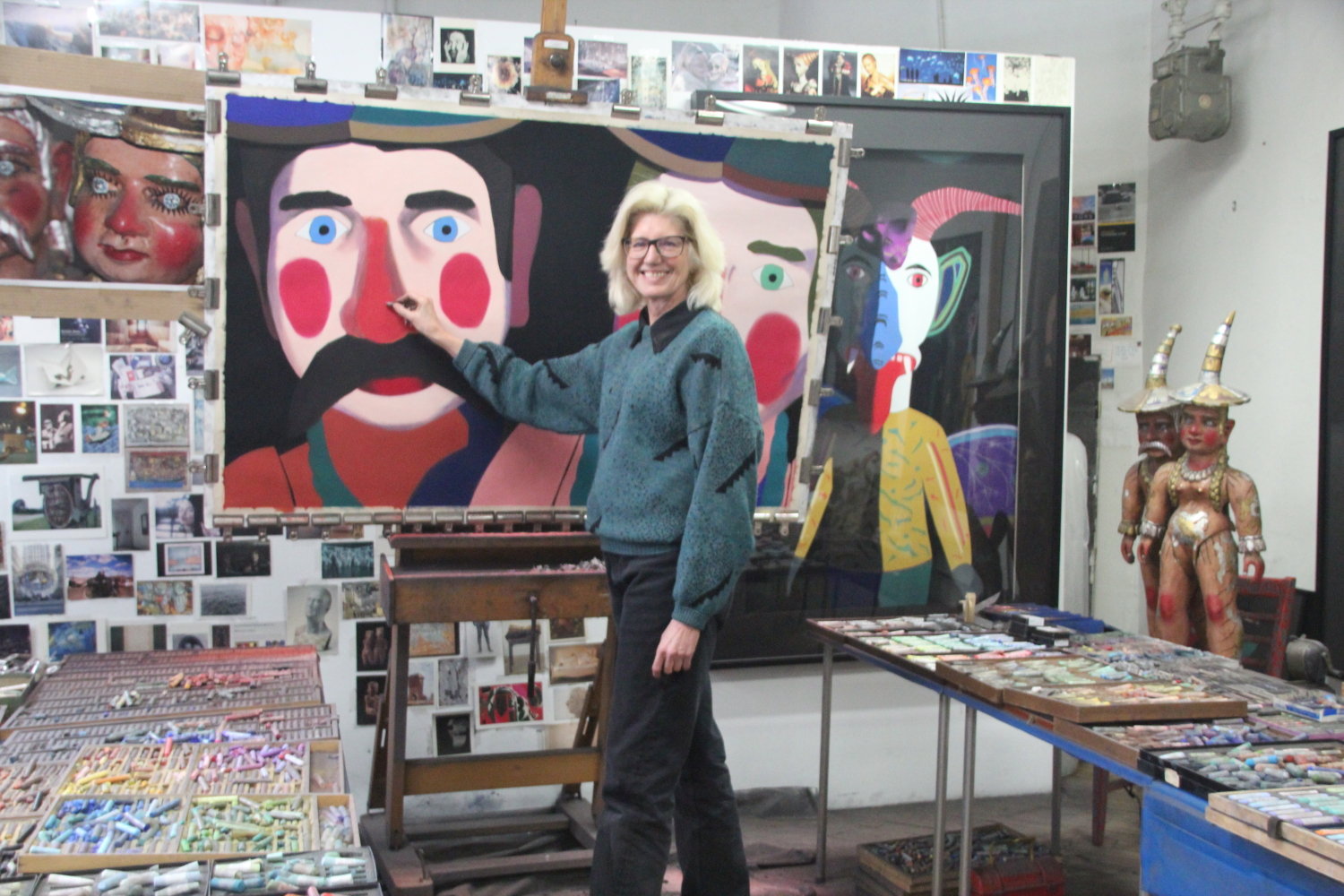
Barbara in her studio
A: I am often asked to teach, but I never have had the desire to do so. Because my work is extremely labor intensive, I am reluctant to give up precious studio time, either for teaching or for any activities that could be deemed a distraction. Consistent in my creative practice, I typically work in my studio five days a week, seven or more hours a day and am able to complete four or five pastel-on-sandpaper paintings in a year.
Teaching would divert time, attention, and energy away from my practice. Certainly it can be rewarding in many ways but since my process is slow and meticulous, I prefer to focus on making new work.
Comments are welcome!
Q: How do you decide how much to charge for your paintings?

Barbara’s studio
A: What to charge for my work is a complex question. The prices of my pastel paintings take into account many tangible and intangible factors. Here are a few:
Sales history.
My thirty-year-long exhibition history.
The costs of maintaining a studio in New York. My overhead goes up annually, but I do not raise prices every year to offset these expenses.
The countless hours of labor, cost of art materials, framing, photography, transportation, foreign travel, etc. that go into creating a painting.
Costs for marketing, social media, advertising, website design and upkeep, ongoing education, etc.
Somewhat less quantifiable factors such as my reputation as an artist, the real demand for my work, goodwill, the fact that I work full-time as a professional artist, etc.
Comments are welcome!
Q: Why do you prefer not to explain your titles and imagery?
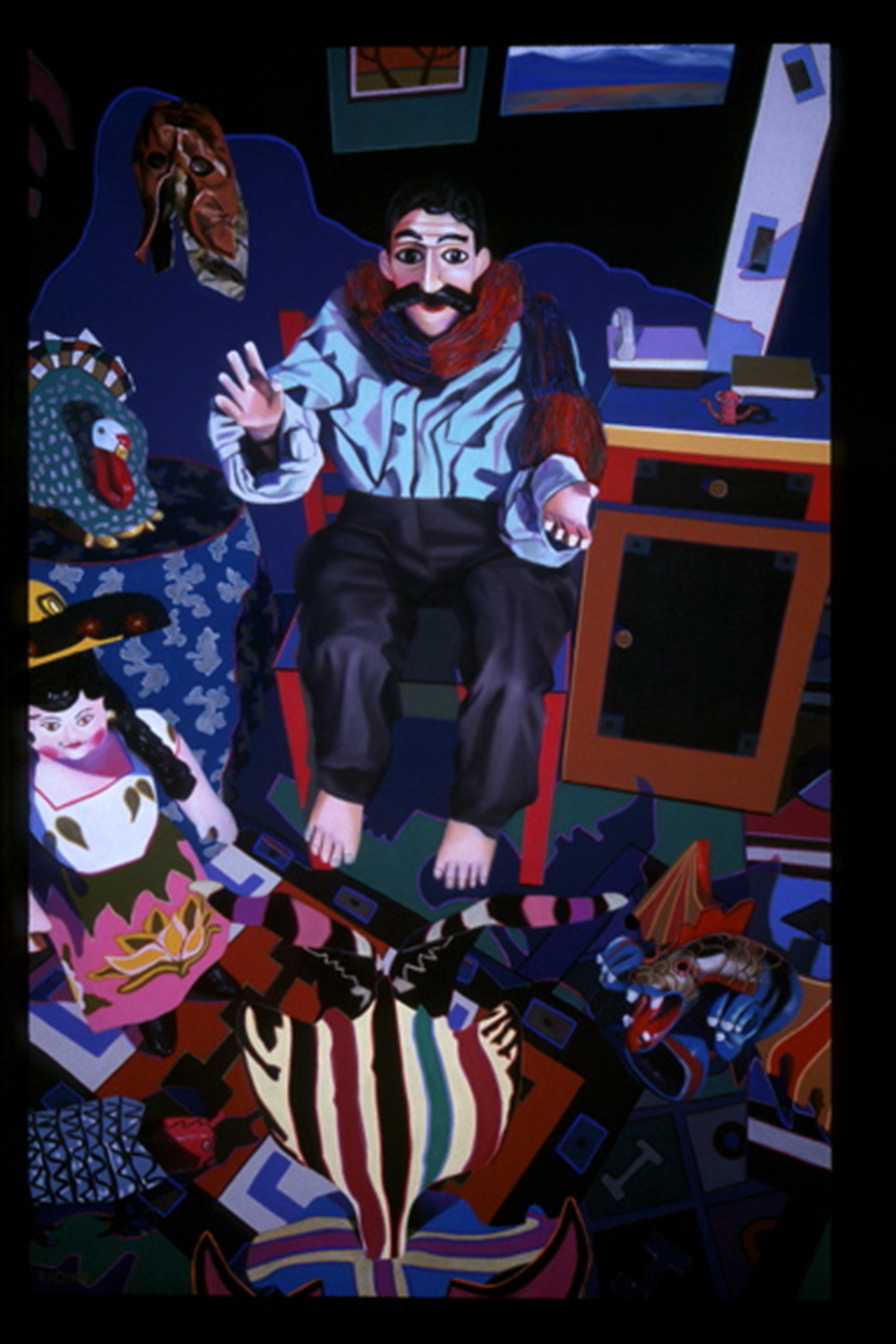
“Truth Betrayed by Innocence,” soft pastel on sandpaper, 58″ x 38″
A: It’s mainly because answers close down imagination and creativity. I enjoy hearing alternative interpretations of my pastel paintings. People are wildly imaginative and each person brings unique insights to their art viewing. By leaving meanings open, conversation is generated. Most artists want viewers to talk about their work.
Once at a public artist’s talk that I attended, I was told by an artist that my interpretation of her title was completely wrong. First of all, how can an interpretation honestly expressed by your audience be “wrong?” Art is as open to interpretation as a Rorschach test (art IS a kind of Rorshach test). Then she explained the thinking behind her title and succeeded in cutting off all further conversation. I felt belittled. Later several people told me that my interpretation was much more compelling. Still, the experience was mortifying and I hope to never do that to anyone.
Comments are welcome!
Q: Why do you call the small paintings in your “Domestic Threats” series, “Scenes?”
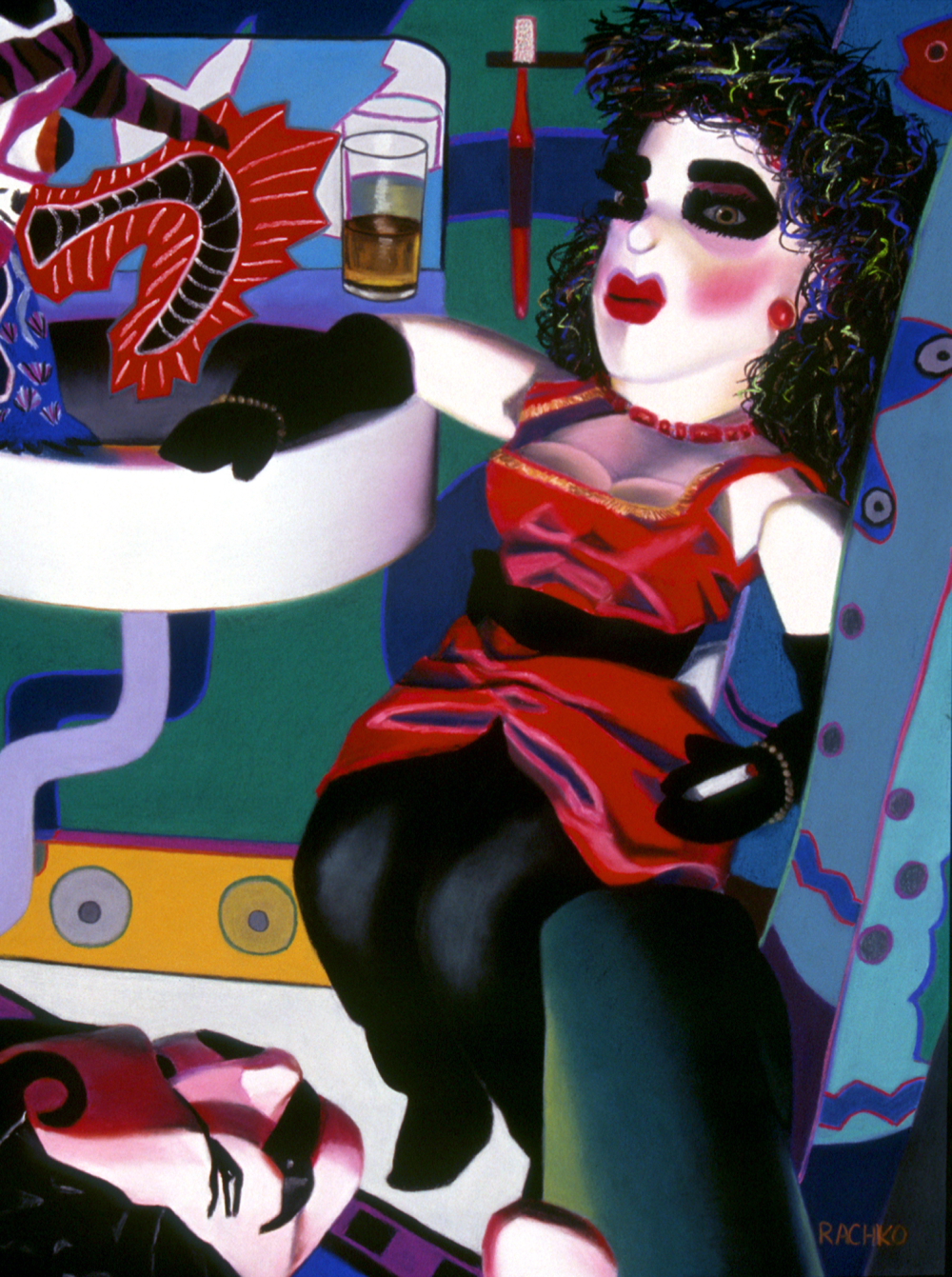
“Scene Thirteen: Bathroom,” 26″ x 20″, soft pastel on sandpaper
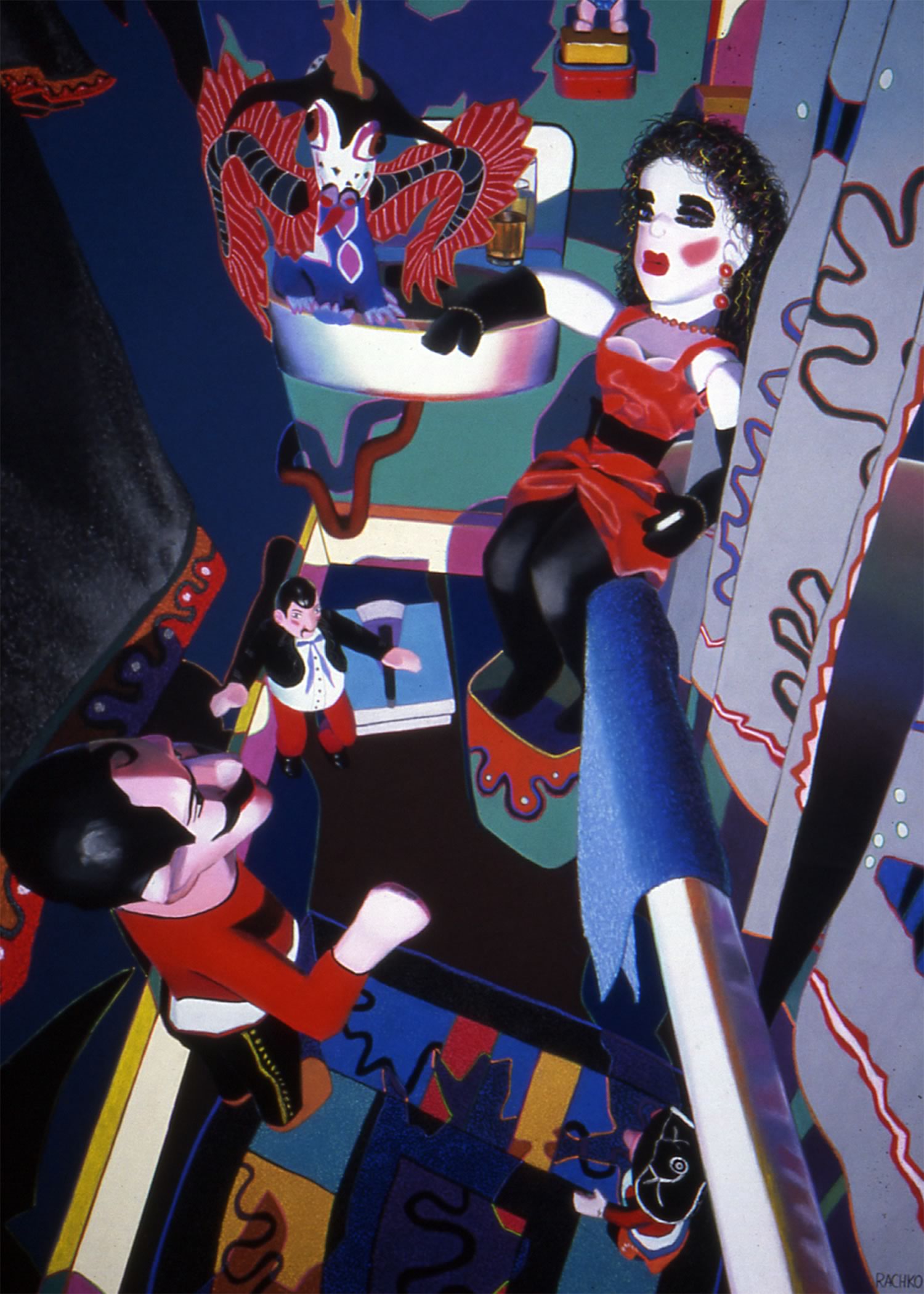
“He Urged Her to Abdicate,” 58″ x 38,” soft pastel on sandpaper
A: At first I didn’t know what to call them. I was looking for a word that meant “a piece of some larger whole.” Initially the word “shard” – a fragment of pottery – came to mind. However, that didn’t capture the meaning I was seeking, since my paintings have little to do with pottery.
My large “Domestic Threats” paintings are theatrical. There is substantial labor and much thought involved in their creation, so I often think of myself as a director and each image as a play.
Small “Domestic Threats” paintings are made from a portion of a photograph that I use as reference for a larger painting. For example, “Scene Thirteen: Bathroom” (above, top) is a small version of “He Urged Her to Abdicate” (above, bottom).
A “portion” of a play is a “Scene” so that’s what I finally named them. Additionally, I numbered the paintings in order of their creation and added the room where each takes place.
Comments are welcome!
Q: You often speak about the Mexican and Guatemalan figures in your paintings as serving a function analogous to actors in a repertory company. In other words, a particular figure plays a different role each time it appears in one of your pastel paintings. Would you choose a figure and show how you have painted it through the years?
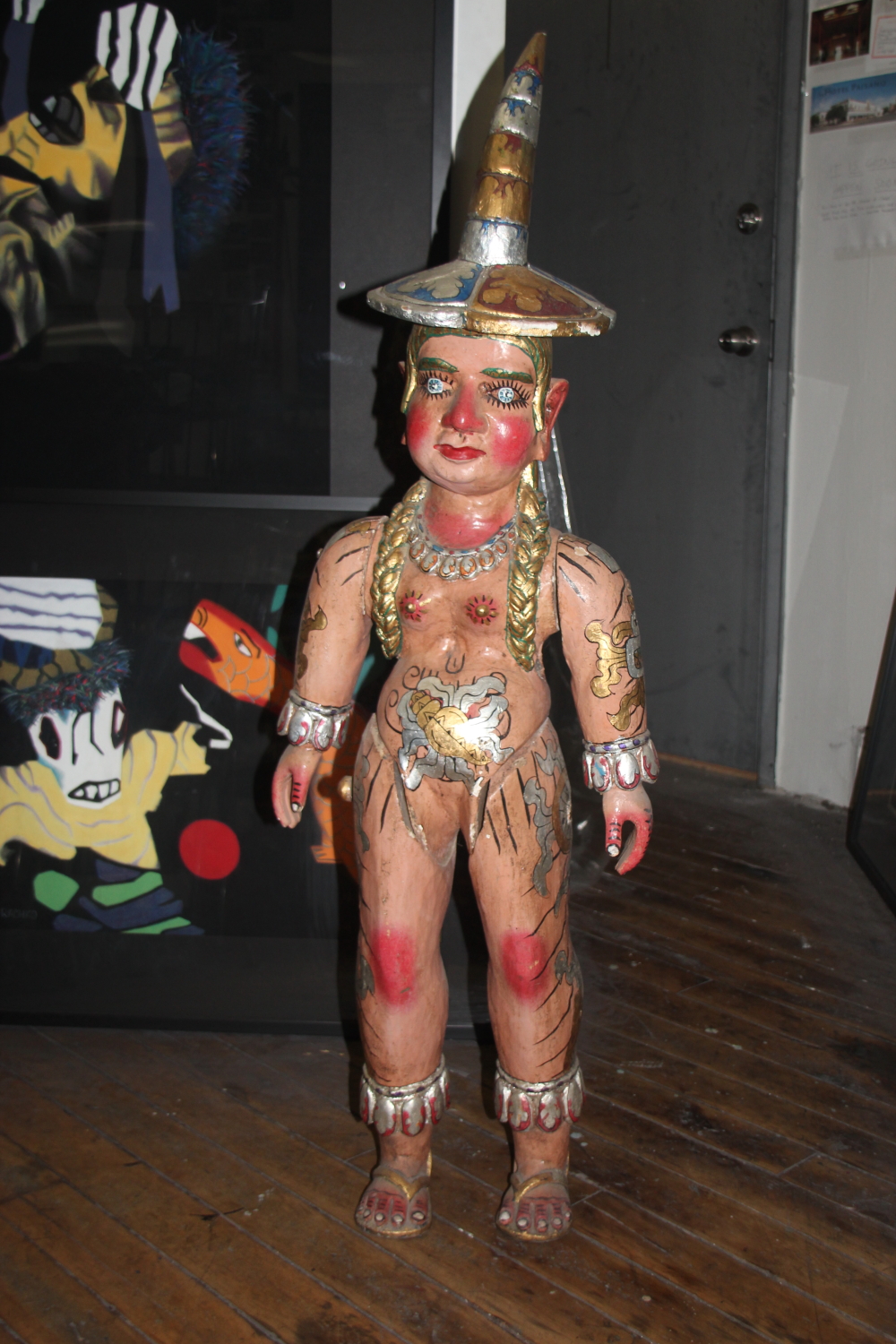
A Chinese-influenced figure Barbara brought home from Mexico City in 1999.
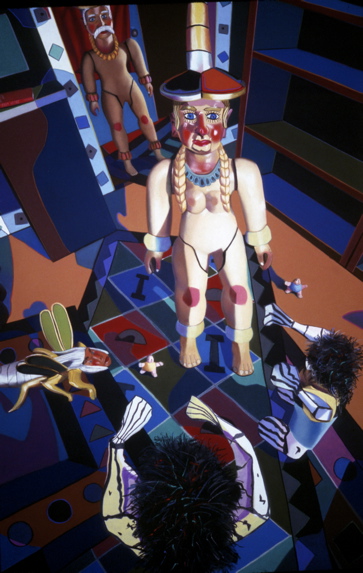
“Answering the Call,” 58″ x 38,” soft pastel on sandpaper, 2000
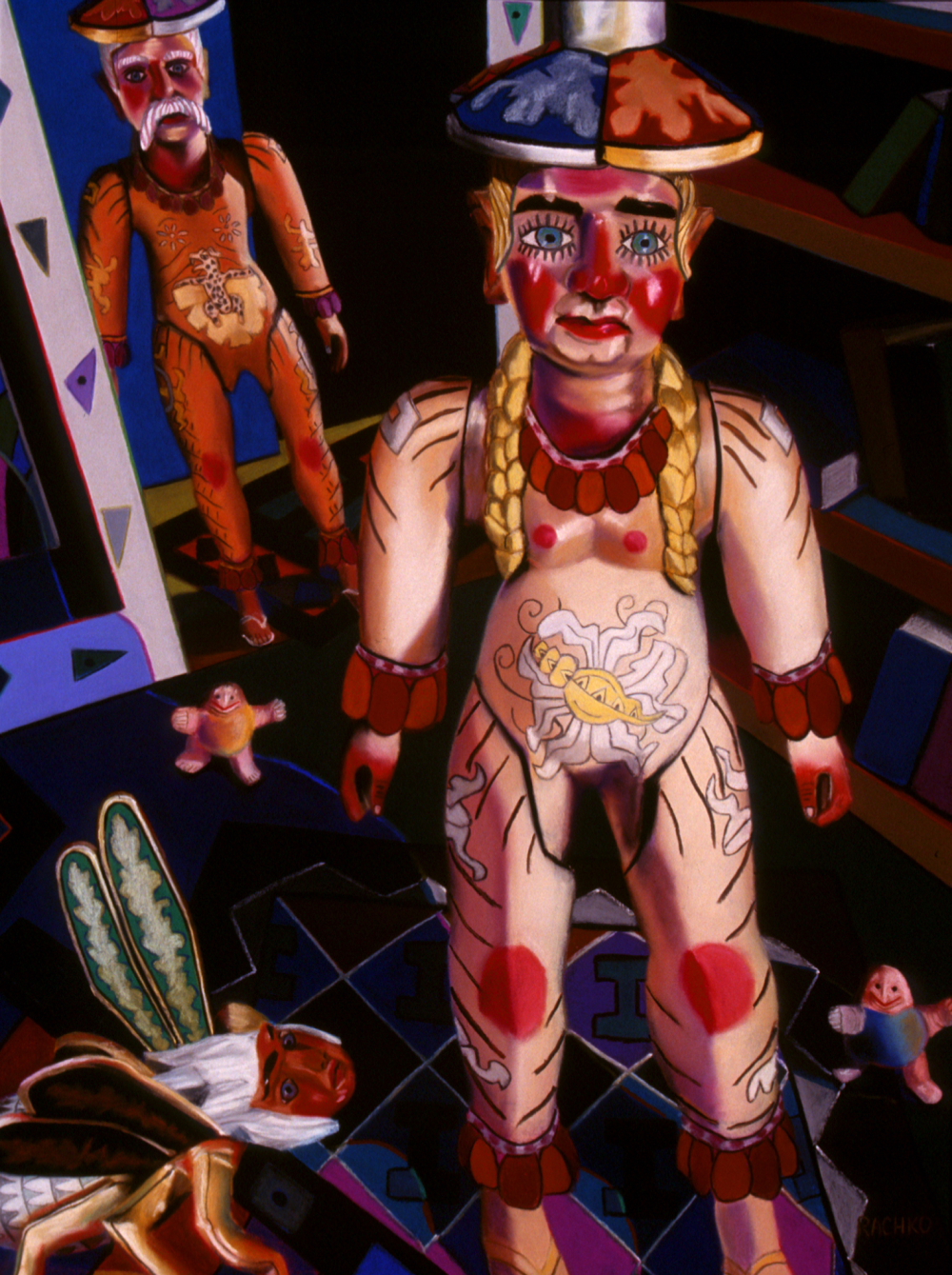
“Scene Fifteen: Living Room,” 26″ x 20″ soft pastel on sandpaper, 2002
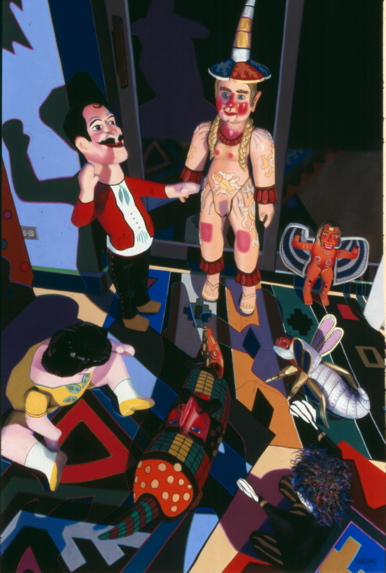
“Sometimes He Still Tried to Restrain Her,” 58″ x 38,” soft pastel on sandpaper, 2005
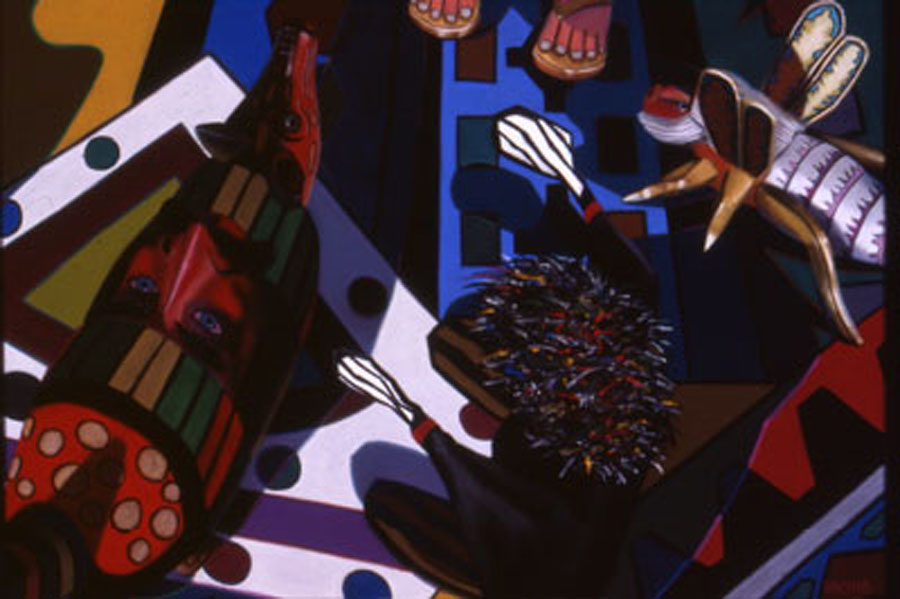
“Scene Twenty-One: Living Room,” 20″ x 26,” soft pastel on sandpaper, 2006 (see feet at top)
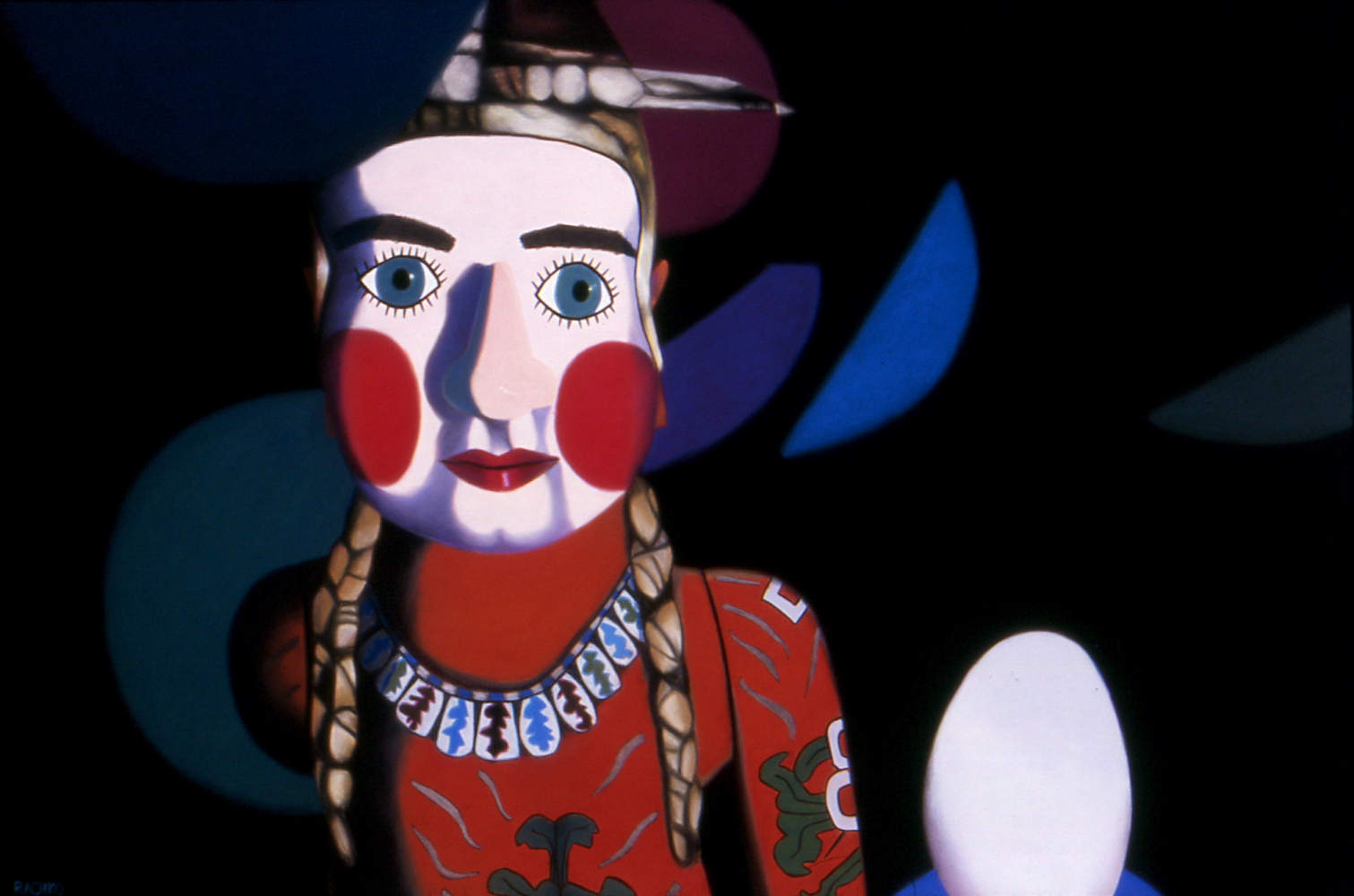
“Epiphany,” 38″ x 58,” soft pastel on sandpaper, 2012

“The Ancestors,” soft pastel on sandpaper, 58″ x 38,” 2013
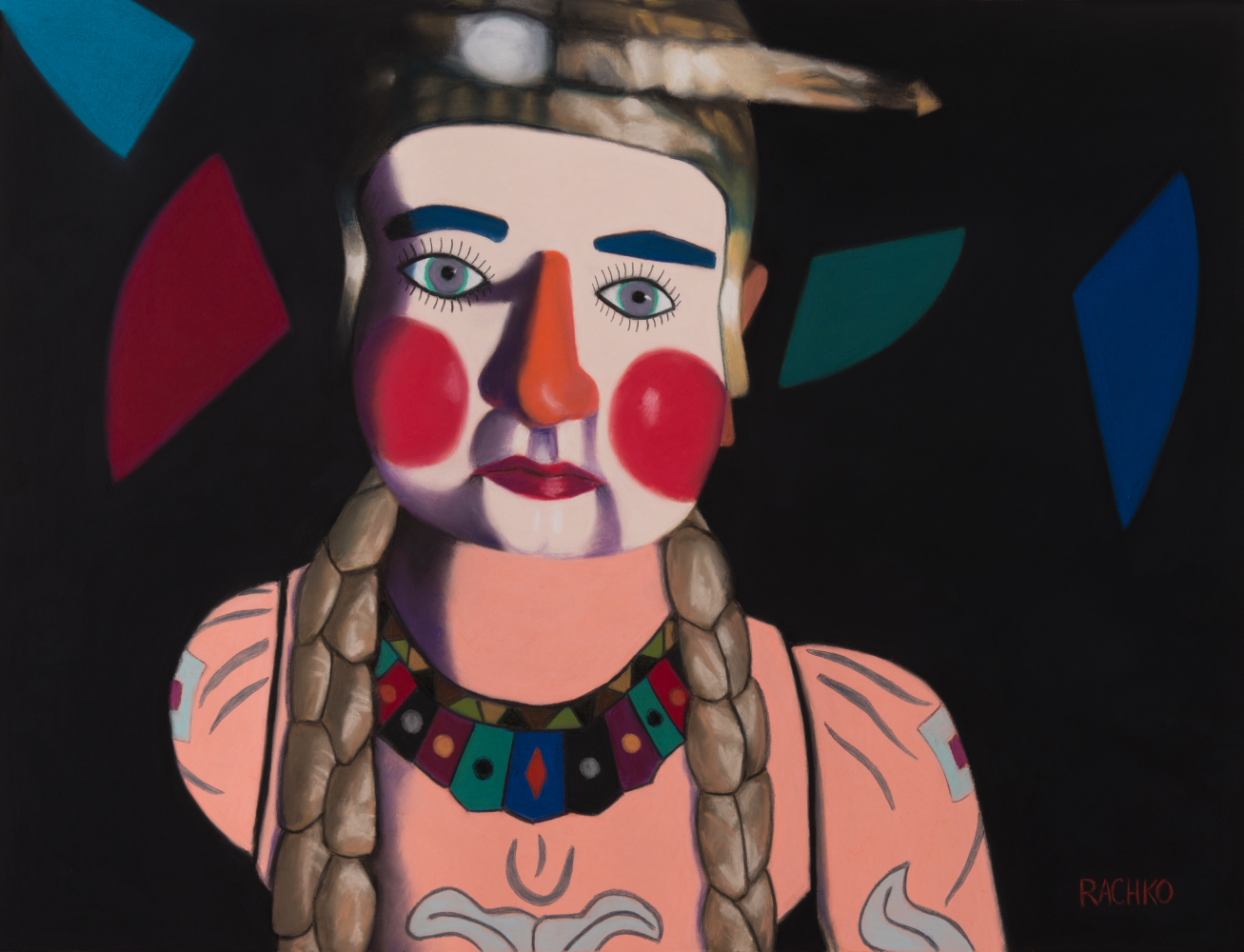
“The Storyteller,” soft pastel on sandpaper, 20″ x 26,” 2014
And she is in the painting that is on my easel now. See my February 14 blog post.
Comments are welcome!


 barbararachkoscoloreddust.com