Blog Archives
Pearls from artists* # 120
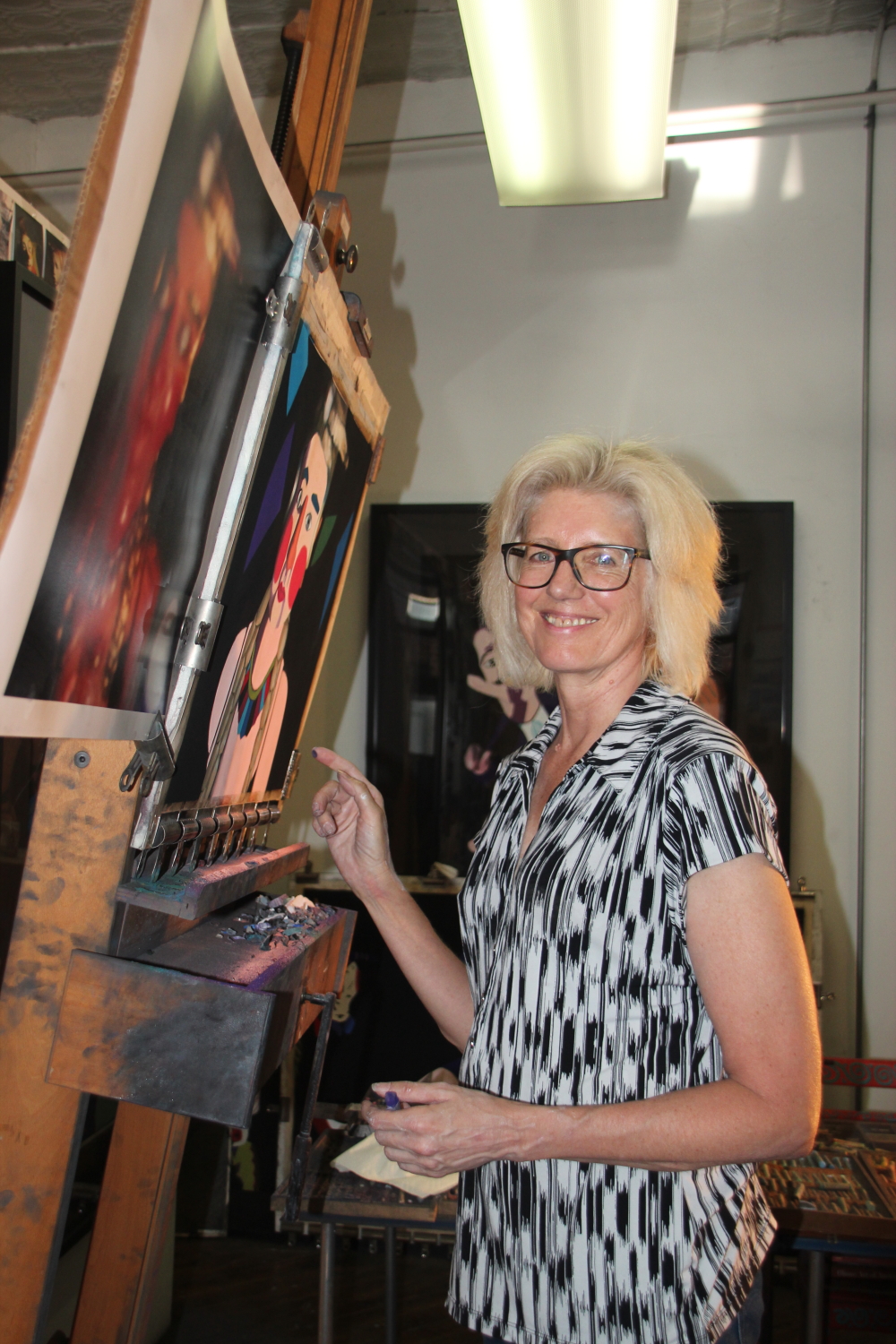
In the studio, Photo: Britta Konau
* an ongoing series of quotations – mostly from artists, to artists – that offers wisdom, inspiration, and advice for the sometimes lonely road we are on.
In solitude artists can experiment, make a mess, sustain notes for the joy of it, imagine themselves on any stage in any play. In the studio or practice room, they are not on display and need not wear their public face. They can be their silent selves, their worst selves. If there is unfreedom on the stage or in the gallery, there is freedom in the studio. As the visual artist Allen Kaprow put it, “Artists’ studios do not look like galleries, and when an artist’s studio does, everyone is suspicious.” Galleries are for show; studios are where messes are made and where the real work happens.
Eric Maisel in A Life in the Arts
Comments are welcome!
Q: I have been always fascinated with the re-contexualizing power of Art and with the way some objects or even some concepts often gain a second life when they are “transduced” on a canvas or in a block of marble. So I would like to ask you if in your opinion, personal experience is an absolutely indespensable part of a creative process. Do you think that a creative process could be disconnected from direct experience?
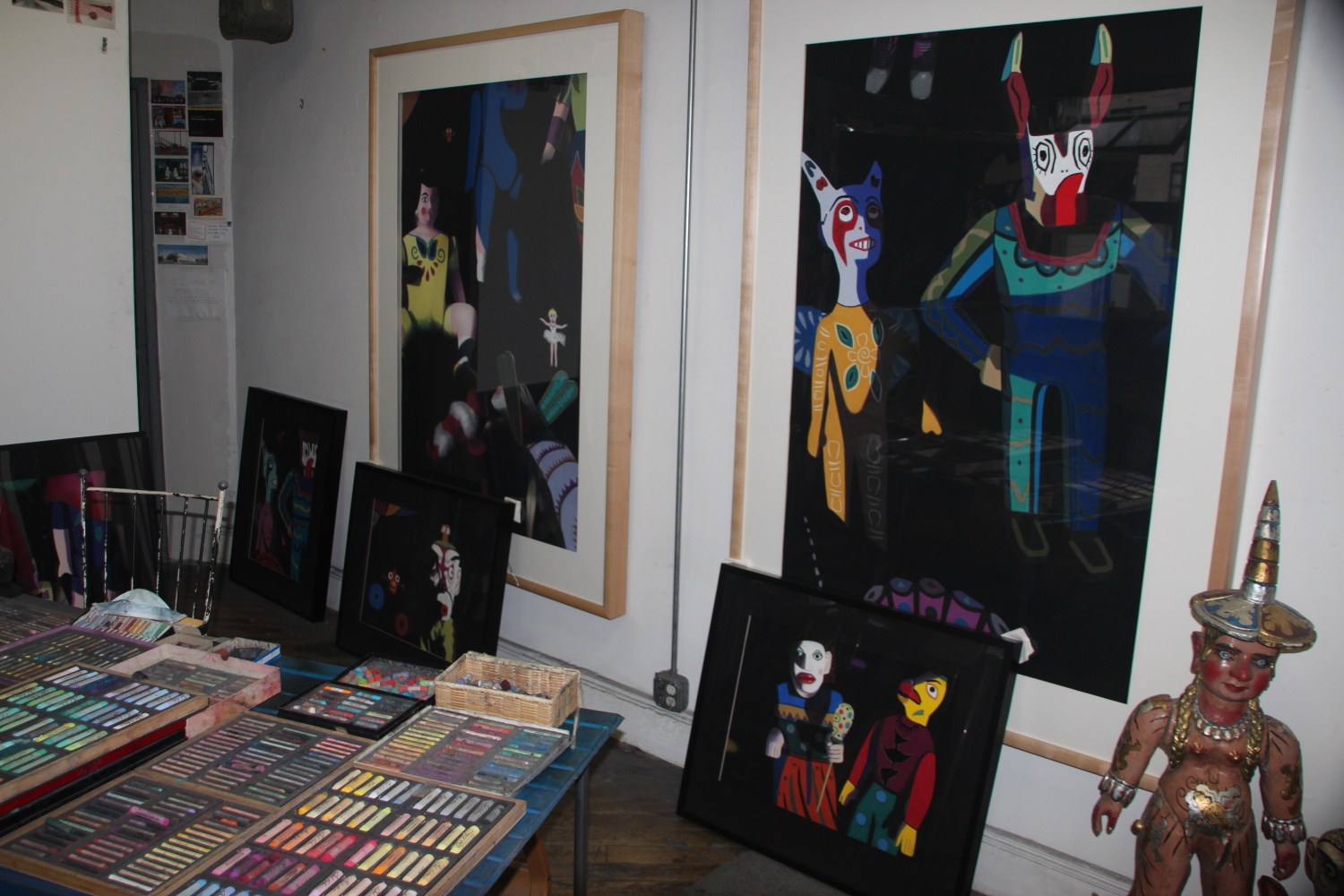
Barbara’s studio
A: Certainly personal experience is an indispensable and inseparable part of the creative process. For me art and life are one and I suspect that is true for most artists. When I look at each of my pastel paintings I can remember what was going on in my life at the time I made it. Each is a sort of veiled autobiography waiting to be decoded and in a way, each is also a time-capsule of the larger zeitgeist. It’s still a mystery how exactly this happens but all lived experience – what’s going on in the world, books I’m reading and thinking about, movies I’ve seen that have stayed with me, places I’ve visited, etc. – overtly and/or not so obviously, finds its way into the work.
Life experience also explains why the work I do now is different from my work even five years ago. In many ways I am not the same person.
The inseparableness of art and life is one reason that travel is so important to my creative process. Artists always seek new influences that will enrich and change our work. To be an artist, indeed to be alive, is to never stop learning and growing.
Comments are welcome!
Pearls from artists* # 116
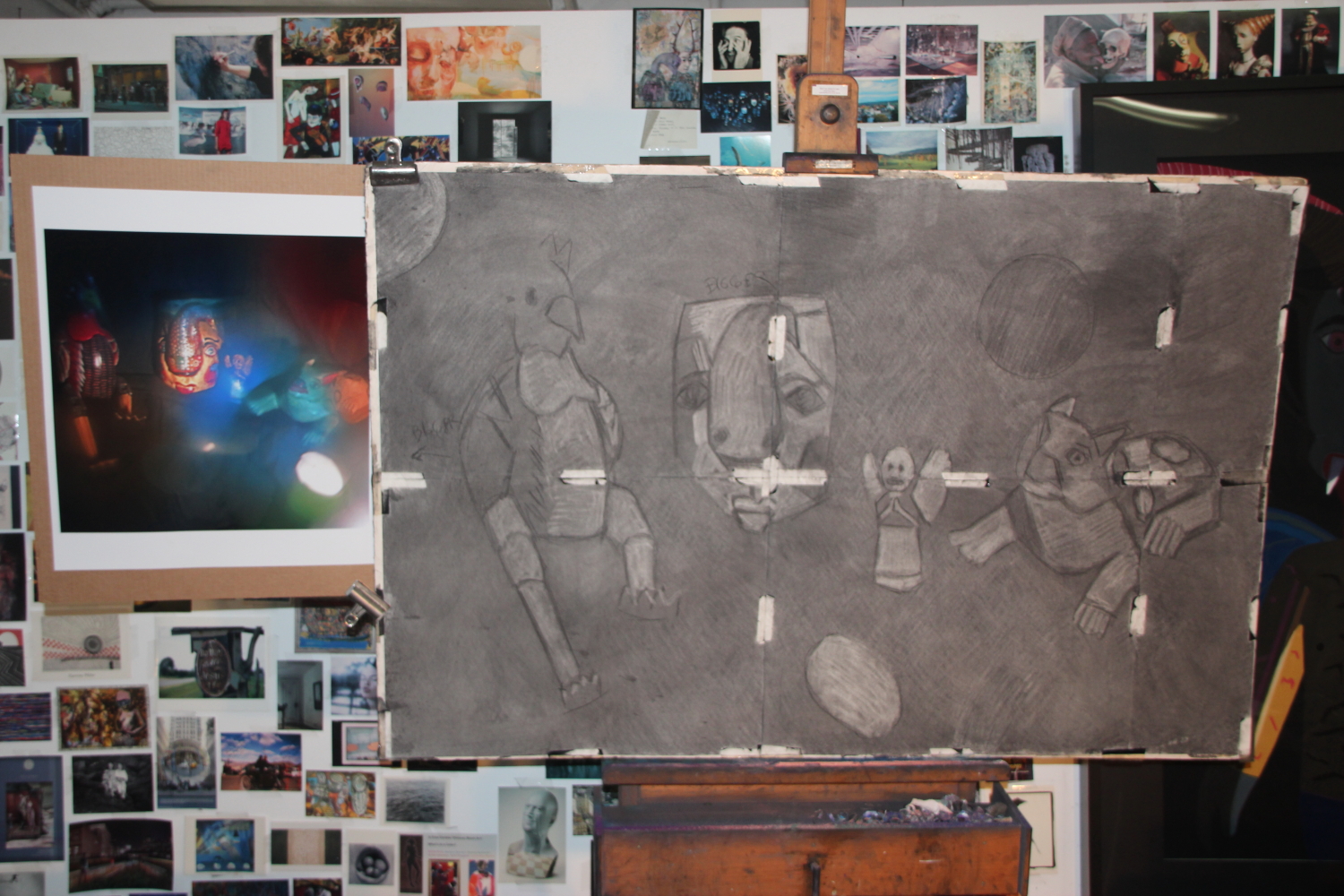
Preliminary sketch
* an ongoing series of quotations – mostly from artists, to artists – that offers wisdom, inspiration, and advice for the sometimes lonely road we are on.
What is the point of all the discipline, hard work, and training? What does the training and preparation have to do with rehearsing a play and with performance? The training and the discipline and the sweating and the study and the memorizing are not the end point, but rather the entry. The preparation is what gives one the permission to take up space and make wild, surprising, and untamed choices. In the quest for artistic freedom and agency it is impossible to walk into a rehearsal room uninhibited, unburdened. We are generally chained down by habits and assumptions and by fear of the new. Permission is what we earn by the sweat, training, preparatory work and dedication.
Anne Bogart in What’s the Story: Essays in art, theater, and storytelling
Comments are welcome!
Q: Can you talk a little bit about your process? What happens before you even begin a pastel painting?

Barbara in Bali (far right)
A: My process is extremely slow and labor-intensive.
First, there is foreign travel – often to Mexico, Guatemala or someplace in Asia – to find the cultural objects – masks, carved wooden animals, paper mâché figures, and toys – that are my subject matter. I search the local markets, bazaars, and mask shops for these folk art objects. I look for things that are old, that look like they have a history, and were probably used in religious festivals of some kind. Typically, they are colorful, one-of-a- kind objects that have lots of inherent personality. How they enter my life and how I get them back to my New York studio is an important part of my art-making practice.
My working methods have changed dramatically over the nearly thirty years that I have been an artist. My current process is a much simplified version of how I used to work. As I pared down my imagery in the current series, “Black Paintings,” my creative process quite naturally pared down, too.
One constant is that I have always worked in series with each pastel painting leading quite naturally to the next. Another is that I always set up a scene, plan exactly how to light and photograph it, and work with a 20″ x 24″ photograph as the primary reference material.
In the setups I look for eye-catching compositions and interesting colors, patterns, and shadows. Sometimes I make up a story about the interaction that is occurring between the “actors,” as I call them.
In the “Domestic Threats” series I photographed the scene with a 4″ x 5″ Toyo Omega view camera. In my “Gods and Monsters” series I shot rolls of 220 film using a Mamiya 6. I still like to use an old analog camera for fine art work, although I have been rethinking this practice.
Nowadays the first step is to decide which photo I want to make into a painting (currently I have a backlog of photographs to choose from) and to order a 19 1/2″ x 19 1/2″ image (my Mamiya 6 shoots square images) printed on 20″ x 24″ paper. They recently closed, but I used to have the prints made at Manhattan Photo on West 20th Street in New York. Now I go to Duggal. Typically I have in mind the next two or three paintings that I want to create.
Once I have the reference photograph in hand, I make a preliminary tonal charcoal sketch on a piece of white drawing paper. The sketch helps me think about how to proceed and points out potential problem areas ahead.
Only then am I ready to start actually making the painting.
Comments are welcome!
Q: You took classes at The Art League School in Alexandria, VA in the late eighties studying intensely with Lisa Semerad and Diane Tesler. How have these experiences impacted on the way you currently produce your artworks? By the way, I sometimes wonder if a certain kind of formal training in artistic disciplines could even stifle a young artist’s creativity. What do you think?
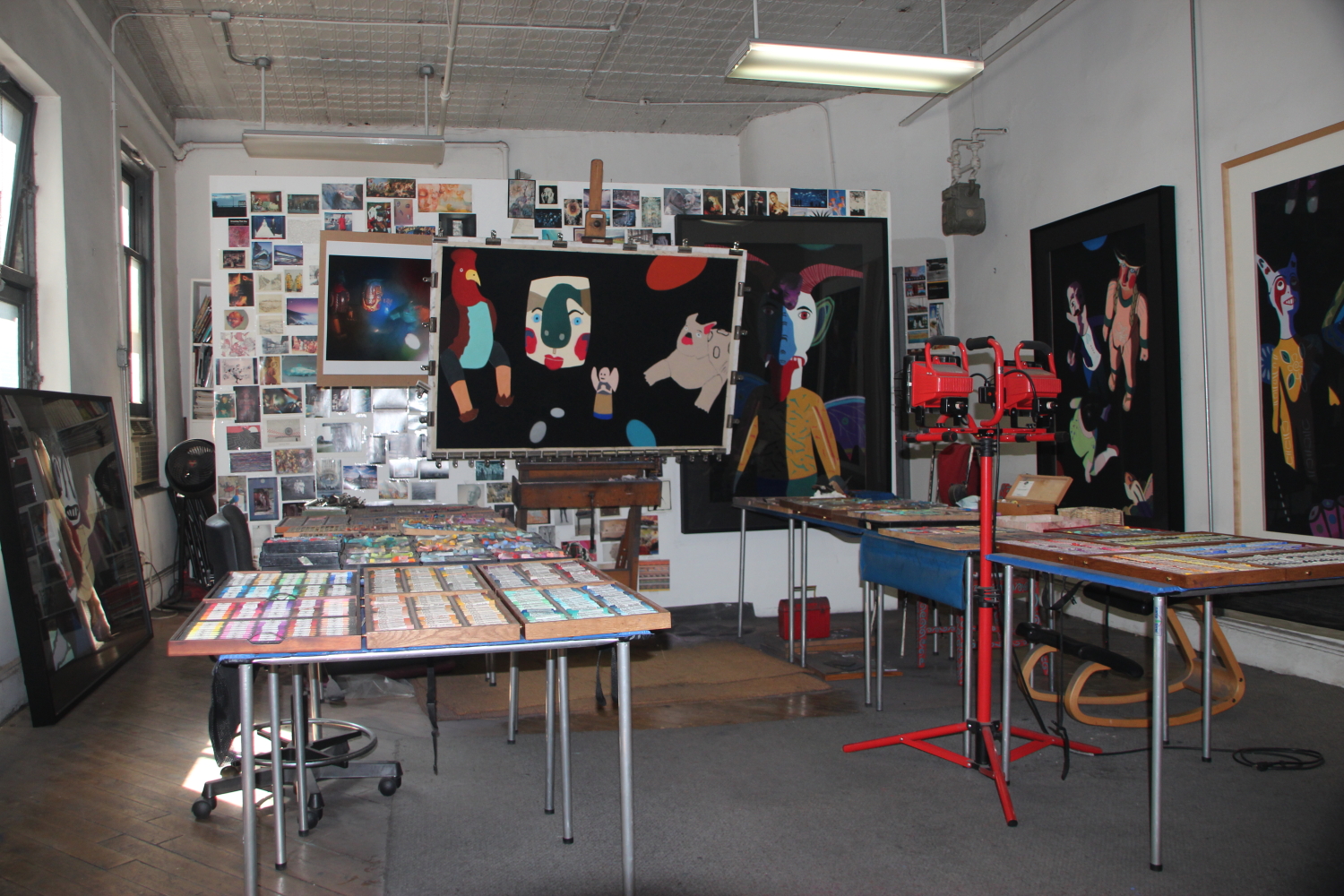
Barbara’s studio
A: From studying with Lisa and Diane I gained an excellent technical foundation and developed my ability to draw and depict just about anything in soft pastel. They were both extremely effective teachers and I worked hard in their classes. I probably got my work ethic from them. Without Diane and Lisa I doubt I would have gained the necessary skills nor the confidence to move to New York to pursue my art career.
Needless to say, I believe developing excellent technical skills is paramount. Artists can, and should, go ahead and break the rules later, but they won’t be able to make strong work, expressing what they want, without a firm foundation. Once you have the skills, you can focus on the things that really make your work come alive and speak to an appreciative audience.
Comments are welcome!
Pearls from artists* # 114

Catalogue of Matisse’s late work
* an ongoing series of quotations – mostly from artists, to artists – that offers wisdom, inspiration, and advice for the sometimes lonely road we are on.
These paper cut-outs have their very pure existence, although they escape from your hands, from your scissors. Their paper matter with the fine play of light on their flexibility, the physical aspect of this flexibility, all combine to make something miraculous which loses its essence when it is placed flat. But it retains its essence when it is fastened to the wall with pins by Lydia. The paper then keeps the life I am talking about and undergoes incessant changes.
Matisse: A Second Life, 2005 Editions Hazan, James Mayor translator of the English version
Comments are welcome!
Q: What’s on the easel today?
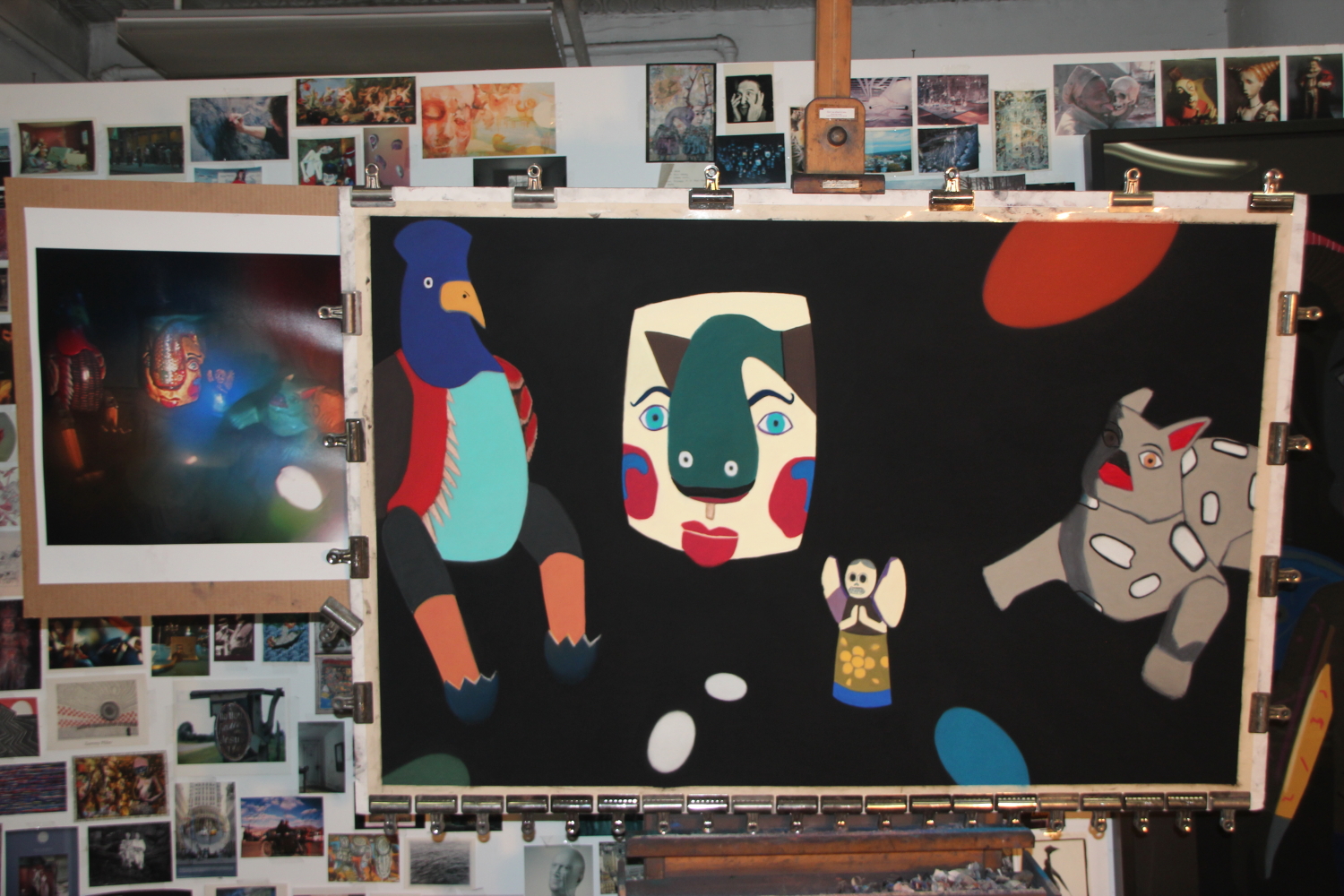
Work in progress
A: I continue to work on “Motley,” a large pastel-on-sandpaper painting that features two folk art pieces I found in Mexico City in March.
Comments are welcome!
Q: When you left the Navy you worked on commission as a portrait artist. Why don’t you accept commissions now?

Barbara’s studio
A: As I have often said, I left the active duty Navy in 1989, but stayed in the Reserves. The Reserves provided a small part-time income and the only requirement was that I work one weekend a month and two weeks each year. Plus, I could retire after 13 more years and receive a pension. (In 2003 I retired from the Navy Reserve as a Commander). The rest of the time I was free to pursue my studio practice.
For a short time I made a living making commissioned photo-realist portraits in soft pastel on sandpaper. However, after a year I became very restless. I remember thinking, “I did not leave a boring job just to make boring art!” I lost interest in doing commissions because what I wanted to accomplish personally as an artist did not coincide with what portrait clients wanted. I finished my final portrait commission in 1990 and never looked back.
To this day I remain reluctant to accept a commission of any kind. So I am completely free to paint whatever I want, which is the only way to evolve as a serious, deeply committed artist.
Comments are welcome!
Q: How did you prepare yourself to change careers and work as a professional artist?
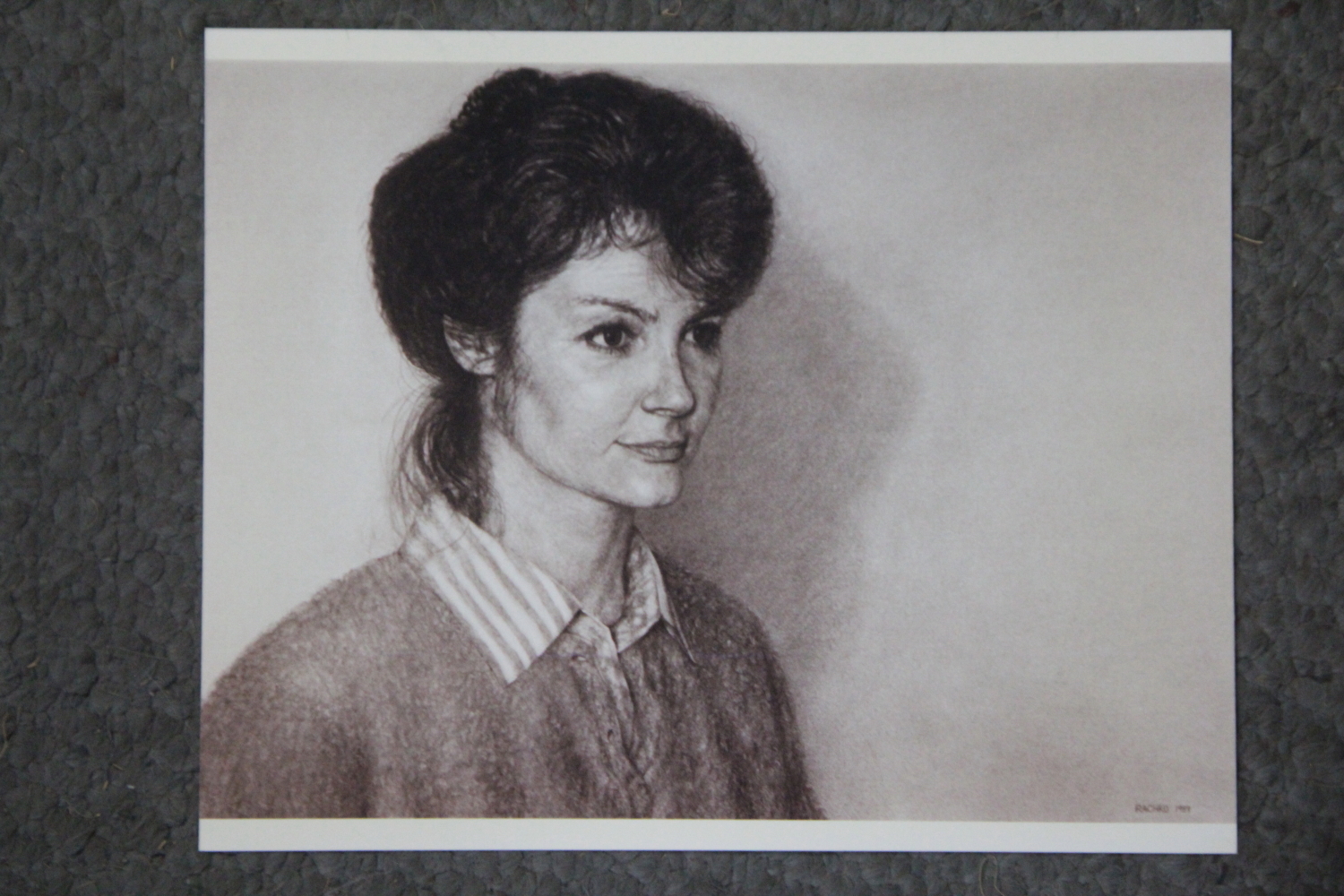
“Krystyn,” charcoal, 22″ x 30″, 1989
A: At the age of 33 I was a Lieutenant in the Navy, working as computer analyst at the Pentagon. I was very unhappy with my job. I began looking for something else to do and discovered The Art League School in Alexandria, VA. I enrolled in classes with Lisa Semerad, then spent the next two years developing my drawing skills using black and white media (charcoal, pencils, conte crayon, etc.).
After that I moved on to color media and began studying soft pastel with Diane Tesler. During this time I was still in the Navy, working the midnight shift at the Pentagon and taking art classes during the day. I was a very motivated student.
After three years or so I was getting quite proficient as an artist, entering local juried shows, winning prizes, garnering press coverage, etc. Prior to my career change, I worked hard to develop my portrait skills. I really didn’t know how I could make a living other than by making commissioned portraits. I volunteered to run a weekly life drawing class at The Art League School in Alexandria, VA, where I made hundreds of figure drawings using charcoal.
I spent a semester commuting between Washington, DC and New York to study artistic anatomy at the New York Academy of Art. I spent another semester studying gross anatomy with medical students at Georgetown University Medical School. Over time I became skilled at making photo-realistic portraits. In 1989 I resigned from the Navy and have worked full-time as a visual artist ever since.
Comments are welcome!


 barbararachkoscoloreddust.com
Q: Another interesting series of yours that has impressed me is your recent “Black Paintings.” The pieces in this series are darker than the ones in “Domestic Threats.” You create an effective mix between the dark background and the few bright tones, which establish such a synergy rather than a contrast, and all the dark creates a prelude to light. It seems to reveal such a struggle, a deep tension, and intense emotions. Any comments on your choice of palette and how it has changed over time?
Dec 6
Posted by barbararachkoscoloreddust
West 29th Street studio
A: That is a great question!
You are correct that my palette has darkened. It’s partly from having lived in New York for so long. This is a generally dark city. We famously dress in black and the city in winter is mainly greys and browns.
Also, the “Black Paintings” are definitely post-9/11 work. My husband, Bryan, was tragically killed onboard the plane that crashed into the Pentagon. Losing Bryan was the biggest shock I ever have had to endure, made even harder because it came just 87 days after we had married. We had been together for 14 ½ years and in September 2001 were happier than we had ever been. He was killed so horribly and so senselessly. Post 9/11 was an extremely difficult, dark, and lonely time.
In the summer of 2002 I resumed making art, continuing to make “Domestic Threats” paintings. That series ran its course and ended in 2007. Around then I was feeling happier and had come to better terms with losing Bryan (it’s something I will never get over but dealing with loss does get easier with time). When I created the first “Black Paintings” I consciously viewed the background as literally, the very dark place that I was emerging from, exactly like the figures emerging in these paintings. The figures themselves are wildly colorful and full of life, so to speak, but that black background is always there.
Comments are welcome!
Share this:
Posted in 2014, An Artist's Life, Art in general, Art Works in Progress, Black Paintings, Creative Process, Domestic Threats, Inspiration, Painting in General, Pastel Painting, Photography, Studio, Working methods
Comments Off on Q: Another interesting series of yours that has impressed me is your recent “Black Paintings.” The pieces in this series are darker than the ones in “Domestic Threats.” You create an effective mix between the dark background and the few bright tones, which establish such a synergy rather than a contrast, and all the dark creates a prelude to light. It seems to reveal such a struggle, a deep tension, and intense emotions. Any comments on your choice of palette and how it has changed over time?
Tags: after, always, another, around, art, background, better, between, biggest, black, Black Paintings, bright, browns, Bryan, changed, choice, city, colorful, comments, consciously, continuing, contrast, correct, course, crashed, create, dark, dealing, deep, difficult, Domestic Threats, dress, easier, effective, emerging, emotions, ended, endure, establish, exactly, extremely, famously, feeling, figures, first, full, generally, great, greys, happier, harder, horribly, however, husband, impressed, intense, interesting, killed, life, light, literally, lived, lonely, losing, loss, mainly, making, married, mix, New York, onboard, paintings, palette, partly, Pentagon, pieces, plane, post-9/11, prelude, question, rather, recent, resumed, reveal, senselessly, September, series, shock, something, speak, struggle, summer, synergy, tension, terms, themselves, time, together, tones, tragically, viewed, wildly, winter, work