Blog Archives
Q: You’re also known for being remarkably consistent with your blog and writing. How do you keep that rhythm? (Question from “Pastel, Passion, and Perseverance: An Interview with Barbara Rachko” in .ART Odyssey: Healing)
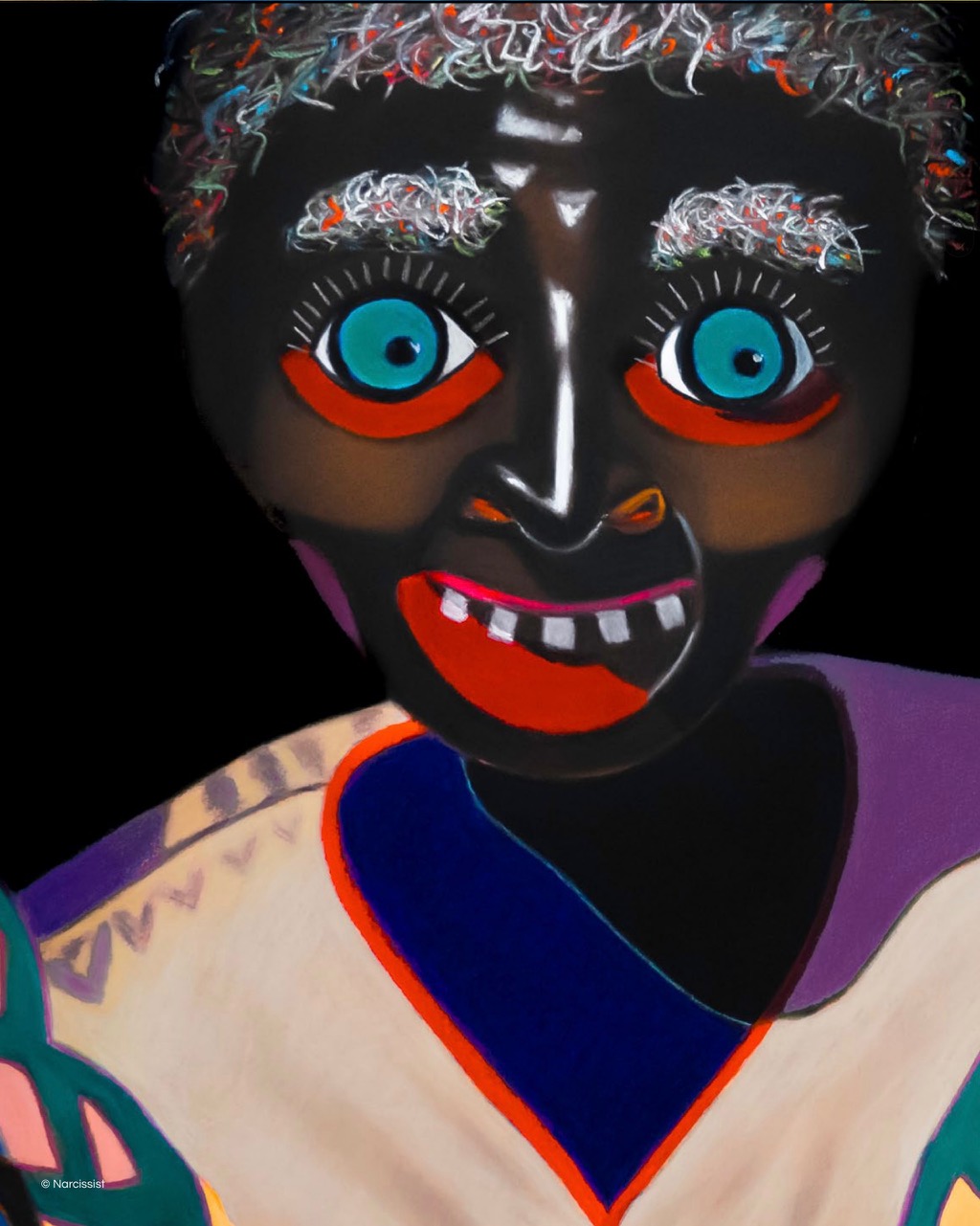
A page from the interview
A: It’s become habit. I started in 2012 and now I post twice a week.
On Wednesdays, I quote from a book I’m reading, paired with a photo. On Saturdays, I rotate: one week “What’s on the Easel,” another a travel photo, and twice a month a short reflection. Only two posts a month require real writing, so it’s sustainable. Consistency has been everything.
Comments are welcome!
Q: You read books on Friedrich Nietzsche and other philosophers. How has philosophy and your personal experience shaped the latest series, Bolivianos? (Question from Vedica Art Studios and Gallery)

A: It’s difficult to pinpoint how philosophy specifically shaped my work because my curiosity spans so many subjects. Some critics have described me as a Renaissance woman, remarking on my wide-ranging and voracious reading. It’s true—I’m genuinely interested in practically everything!
In pursuit of making art, I have undertaken in-depth studies of numerous intriguing fields: drawing, color, composition, gross anatomy, art and art history, the art business, film history, photography, psychology, mythology, literature, philosophy, religion, music, jazz history, and archaeology—particularly ancient Mesoamerica (Olmec, Zapotec, Mixtec, Aztec, and Maya) and South America (the Inca and their ancestors).
Since the early 1990s, my inspiration and subject matter have come primarily from international travel to remote parts of the globe, especially Mexico, Central America, and South America. Travel is by far the best education! By visiting distant destinations, I have developed a deep reverence for people and cultures around the world. People everywhere are connected by our shared humanity.
These travels, supplemented by extensive research at home, are essential parts of my creative process. Research can be solitary and demanding, but I truly enjoy it. I want to know as much as possible, and this curiosity generates ideas for new work, propelling me into unexplored creative realms.
Foreign travel always expands our ways of thinking. This rich mixture of creative influences continually evolves and finds its way into my pastel paintings. Working, learning, evolving, and growing—I am perpetually curious and can hardly imagine a better way to spend my time on Earth!
Comments are welcome!
Q: Does your work look different to you on days when you are sad, happy, etc.?

Barbara’s Studio
A: I am much more critical on days when I am sad so that the faults, imperfections, and things I wish I had done better stand out. Fortunately, all of my work is framed behind plexiglas so I can’t easily go back in to touch up perceived faults. I am reminded of the expression, “Always strive to improve, whenever possible. It is ALWAYS possible!” However, I’ve learned that re-working a painting is a bad idea. You are no longer deeply involved in making it and the zeitgeist has changed. The things you were concerned with are gone: some are forgotten, others are less urgent.
For most artists our work is autobiography. Art is personal. When I look at a completed pastel painting, I usually remember exactly what was happening in my life as I created it. Each piece is a snapshot – maybe a time capsule, if anyone could decode it – that reflects and records a particular moment. When I finally pronounce a piece finished and sign it, that’s it, THE END. It’s as good as I can make it at that point in time. I’ve incorporated everything I was thinking about, what I was reading, how I was feeling, what I valued, art exhibitions I visited, programs that I heard on the radio or watched on television, music that I listened to, what was going on in New York, in the country, and in the world.
It is still a mystery how this heady mix finds its way into the work. During the time that I spend on it, each particular painting teaches me everything it has to teach. A painting requires months of looking, reacting, correcting, searching, thinking, re-thinking, revising. Each choice is made for a reason and together these decisions dictate what the final piece looks like. On days when I’m sad I tend to forget that. On happier days I remember that the framed pastel paintings that you see have an inevitability to them. If all art is the result of one’s having gone through an experience to the end, as I believe it is, then the paintings could not, and should not, look any differently.
Comments are welcome.
Pearls from artists* # 612
New York, NY
*an ongoing series of quotations – mostly from artists, to artists – that offers wisdom, inspiration, and advice for the sometimes lonely road we are on.
It is the poet and philosopher who provide the community of objectives in which the artist participates. Their chief preoccupation, like the artist, is the expression in concrete form of their notions of reality. Like him, they deal with verities of time and space, life and death, and the heights of exaltation as well as the depths of despair. The preoccupation with these external problems creates a common ground which transcends the disparity of the means used to achieve them. And it is in the language of the philosopher and poet or, for that matter, of other arts which share the same objective that we must speak if we are to establish some verbal equivalent of the significance of art.
Let us not for a moment conceive that the language of one is interchangeable with that of the other: that one can duplicate the sense of a picture by the sense of words or sounds, or that one can translate the truth of words by means of pictorial delineations. Not all odes of Pindar, framed and embroidered, could duplicate the portrayal by Apelles’ brush of the Hero of the Palaestra. The Pandemonium of Milton or Dante’s Inferno can never replace the vision of the Last Judgment by either Michelangelo or Signorelli. No more so than the Pastoral Symphony of Beethoven can be apprehended through the reading of idyllic poems, augmented by descriptions of woodland and fields, of torrents and streams, the study of ornithological sounds, and the laws of harmonics. Neither books on jurisprudence, nor costume plates, can possibly reconstruct Raphael’s School of Athens. And the man who knows a book or a picture through its critics, whatever his experience, has no experience of the art itself. The truth, the reality of each, is confined within its own boundaries and must be perceived in terms of the means generic to itself.
In speaking of art here, there is no thought of recreating the experience of the picture. If we compare one art to another, it is not with the intention of contrasting their actuality, but to speak rather of the motivations and properties such as are admissible to the world of verbal ideas. And if… we are partial to the philosopher – at the expense of those others who share with the artist his common objectives, it is not because we divine in his effort a greater sympathy to the artist, but because philosophy shares with art it’s preoccupation with ideas in the terms of logic.
Mark Rothko in The Artist’s Reality: Philosophies of Art
Comments are welcome!
Q: How do you persist despite the haters, nay-sayers, etc.? (Question from Bold Journey Publishing)

Barbara’s Studio
A: There are so many obstacles to art-making and countless reasons to just give up. When you really think about it, it’s amazing that great art gets made at all. So why do we do it? For artists I believe it’s all about making our time on earth matter, about devotion to our innate gifts, and a deep love of our hard-fought creative process.
I have been a full-time professional artist for 37 years. How and why do successful artists persist? It helps a lot to be stubborn! We just keep digging in that much deeper. Making art is a most noble and sacred calling – you know this if you are one of the called – and that’s what separates those of us who are in it for the long haul from the wimps, fakers, and hangers-on. I say to my fellow artists who continue to work despite the endless challenges, we artists who continue to struggle every day for recognition of our gifts are true heroes!
These words below by Mary Gabriel in Ninth Street Women, published in 2017, ring true for artists. It’s good, even for me, to occasionally reread them and be reminded.
The obstacles faced by women who hoped to leave a mark on humankind have, through the millennium, varied in height but not in stubborn persistence. And yet, a great many women have stubbornly ignored them. The desire to put words on a page or marks on a canvas was greater than the accrued social forces that told them they had no right to do so, that they were excluded by their gender from that priestly class called artist. The reason, according to Western tradition, was as old as creation itself: For many, God was the original artist and society had assigned its creator a gender – He. The woman who dared to declare herself an artist in defiance of centuries of such unwavering belief required monstrous strength, to fight not for equal recognition and reward but for something at once more basic and vital: her very life. Her art was her life. Without it, she was nothing. Having no faith that society would broaden its views on artists by dethroning men and accommodating women, in 1928 [Virginia] Woolf offered her fellow writers and painters a formula for survival that allowed them to create, if not with acceptance, then at least unimpeded. A woman artist, she said, needed but two possessions: “money and a room of her own.”
Furthermore, I think I persist because I do not believe in “big breaks.” Big breaks may sometimes happen, but in my experience an artist’s life is made up of single-minded dedication, persistence, hard work, and lots of small breaks. I recently finished reading “Failing Up: How to Take Risks, Aim Higher, and Never stop Learning” by Leslie Odom, Jr. I like what he has to say to artists here:
The biggest break is the one you give yourself by choosing to believe in your wisdom, in what you love, and in the gifts you have to offer the waiting world.
Comments are welcome!
Pearls from artists* # 517
*an ongoing series of quotations – mostly from artists, to artists – that offers wisdom, inspiration, and advice for the sometimes lonely road we are on
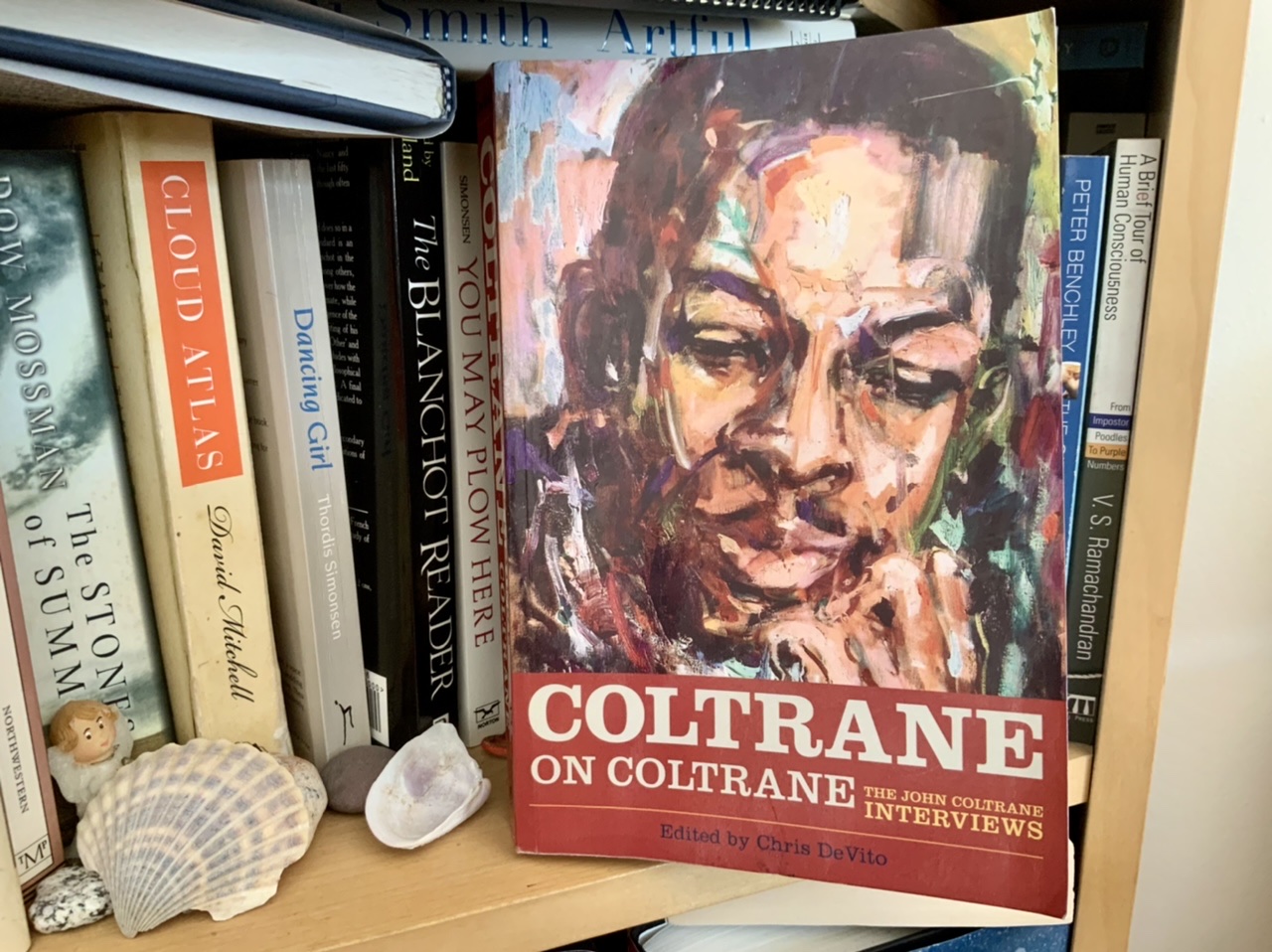
You know. Don, I was reading a book on the life of Van Gogh today. and I had to pause and think of that wonderful and persistent force – the creative urge. The creative urge was in this man who found himself so at odds with the world he lived in, and in spite of all the adversity, frustrations, rejections, and so forth – beautiful and living art came forth abundantly… If only he could be here today. Truth is indestructible. It seems history shows (and it’s the same way today) that the innovator is more often than not met with some degree of condemnation; usually according to the degree of his departure from the prevailing modes of expression or what have you. Change is always so hard to accept. We also see that these innovators always seek to revitalize, extend and reconstruct the status quo in their given fields, wherever it is needed. Quite often they are the rejects, outcasts, sub-citizens, etc. of the very societies to which they bring so much sustenance. Often they are people who endure great personal tragedy in their lives. Whatever the case, whether accepted or rejected, rich or poor, they are forever guided by that great and eternal constant – the creative urge. Let us cherish it and give all praise to God.
John Coltrane in Coltrane on Coltrane: The John Coltrane Interviews
Comments are welcome!
Pearls from artists* # 496

*an ongoing series of quotations – mostly from artists, to artists – that offers wisdom, inspiration, and advice for the sometimes lonely road we are on.
In reading a novel, any novel, we have to know that the whole thing is nonsense, and then, while reading, believe every word of it. Finally, when we’re done with it, we may find – if it’s a good novel – that we’re a bit different from what we were before we read it, that we have been changed a little bit, as if by having met a new face, crossed a street we never crossed before. But it’s very hard to say just what we’ve learned, how we were changed.
The artist deals with what cannot be said in words.
The artist whose medium is fiction does this in words.
Author’s Note, Ursula K. LeGuin in The Left Hand of Darkness
Comments are welcome!
Q: What country’s artistic style influenced you the most over the years? (Question from Arte Realizzata)

A: Undoubtedly, I would have to say Mexico. As a Christmas present in 1991 my future sister-in-law sent two brightly painted wooden animal figures from Oaxaca, Mexico. One was a blue polka-dotted winged horse. The other was a red, white, and black bear-like figure.
I was enthralled with this gift and the timing was fortuitous because I had been searching for new subject matter to paint. Soon I started asking artist-friends about Oaxaca and learned that it was an important art hub. At least two well-known Mexican painters, Rufino Tamayo and Francisco Toledo, had gotten their start there , as had master photographer Manual Alvarez Bravo. There was a “Oaxacan School of Painting” (‘school’ meaning a style, not an actual building) and Alvarez Bravo had established a photography school there (the building/institution kind). I began reading everything I could find. At the time I had only been to Mexico very briefly, in 1975, having made a road trip to Ensenada with my cousin and best friend from college. The following autumn my then-boyfriend, Bryan, and I planned a two-week trip to visit Mexico. We timed it to see Day of the Dead celebrations in Oaxaca. (In my reading I had become fascinated with this festival). We spent one week in Oaxaca followed by one week in Mexico City. My interest in collecting Mexican folk art was off and running!
Comments are welcome!

Pearls from artists* # 443

*an ongoing series of quotations – mostly from artists, to artists – that offers wisdom, inspiration, and advice for the sometimes lonely road we are on.
The theater has been good to me. It has produced great friendships, love, travel, hard work, fun, terror and pleasure. It has also offered an entire life of study. Study is a full-time engagement which includes reading books, reading people, reading situations, reading about the past and reading about the present. To study, you enter into a situation with your whole being, you listen and then begin to move around inside it with your imagination. You can study every situation you are in. You can learn to read life while life is happening.
Anne Bogart in A Director Prepares: Seven Essays on Art and Theatre
Comments are welcome!
Pearls from artists* # 433

Chatting with Jenny Holzer. It looks like she did not want her picture taken, but she was actually waiving.
*an ongoing series of quotations – mostly from artists, to artists – that offers wisdom, inspiration, and advice for the sometimes lonely road we are on.
…Two positions exist, the artistic and the commercial. Between these two an abiding tension persists. The eighteenth-century American painter Gilbert Stuart complained, “What a business is that of portrait painter. He is brought a potato and is expected to paint a peach.” The artist learns that the public wants peaches, not potatoes. You can paint potatoes if you like, write potatoes, dance potatoes, and compose potatoes, you can with great and valiant effort communicate with some other potato-eaters and peach-eaters. In so doing you contribute to the world’s reservoir of truth and beauty. But if you won’t give the public peaches, you won’t be paid much.
Repeatedly artists take the heroic potato position. They want their work to be good, honest, powerful – and only then successful. They want their work to be alive, not contrived and formulaic. As the Norwegian painter Edvard Munch put it: “No longer shall I paint interiors, and people reading, and women knitting. I shall paint living people, who breathe and feel and suffer and love.”
The artist is interested in the present and has little desire to repeat old, albeit successful formulas. As the painter Jenny Holzer put it, “I could do a pretty good third generation-stripe painting, but so what?
The unexpected result of the artist’s determination to do his [sic] own best art is that he is put in an adversarial relationship with the public. In that adversarial position he comes to feel rather irrational for what rational person would do work that’s not wanted?
…Serious work not only doesn’t sell well, it’s also judged by different standards. If the artist writes an imperfect but commercial novel it is likely to be published and sold. If his screenplay is imperfect but commercial enough it may be produced. If it is imperfect and also uncommercial it will not be produced. If his painting is imperfect but friendly and familiar it may sell well. If it is imperfect and also new and difficult, it may not sell for decades, if ever.
Ironically enough, the artist attempting serious work must also attain the very highest level of distinction possible. He must produce Crime and Punishment and The Brothers Karamazov but not also The Insulted and Injured or A Raw Youth, two of Dostoevsky’s nearly unknown novels. He is given precious little space in this regard.
I daresay, this last is why I devote my life to creating the most unique, technically advanced pastel paintings anyone will see!
Eric Maisel, A Life in the Arts: Practical Guidance and Inspiration for Creative and Performing Artists
Comments are welcome!


 barbararachkoscoloreddust.com