Blog Archives
Q: Do you have a favorite art book, one you return to again and again? (Question from “Pastel, Passion, and Perseverance: An Interview with Barbara Rachko” in .ART Odyssey: Healing)

A: When she’s not in the studio, Barbara often begins her mornings with reading. Right now, she can’t get enough of Art From Your Core: A Holistic Guide to Visual Voice. “This is a fabulous book for visual artists. It’s become my current art bible. It reminds me why I decided to make art in the first place and what I need to do to continue to improve. It helps me reconnect with forgotten parts of myself and is a much-needed reminder of what l love most about being an artist.”
Comments are welcome!
Q: Last year you were in Paris and saw the David Hockney retrospective. What struck you the most? (Question from “Pastel, Passion, and Perseverance: An Interview with Barbara Rachko” in .ART Odyssey: Healing)
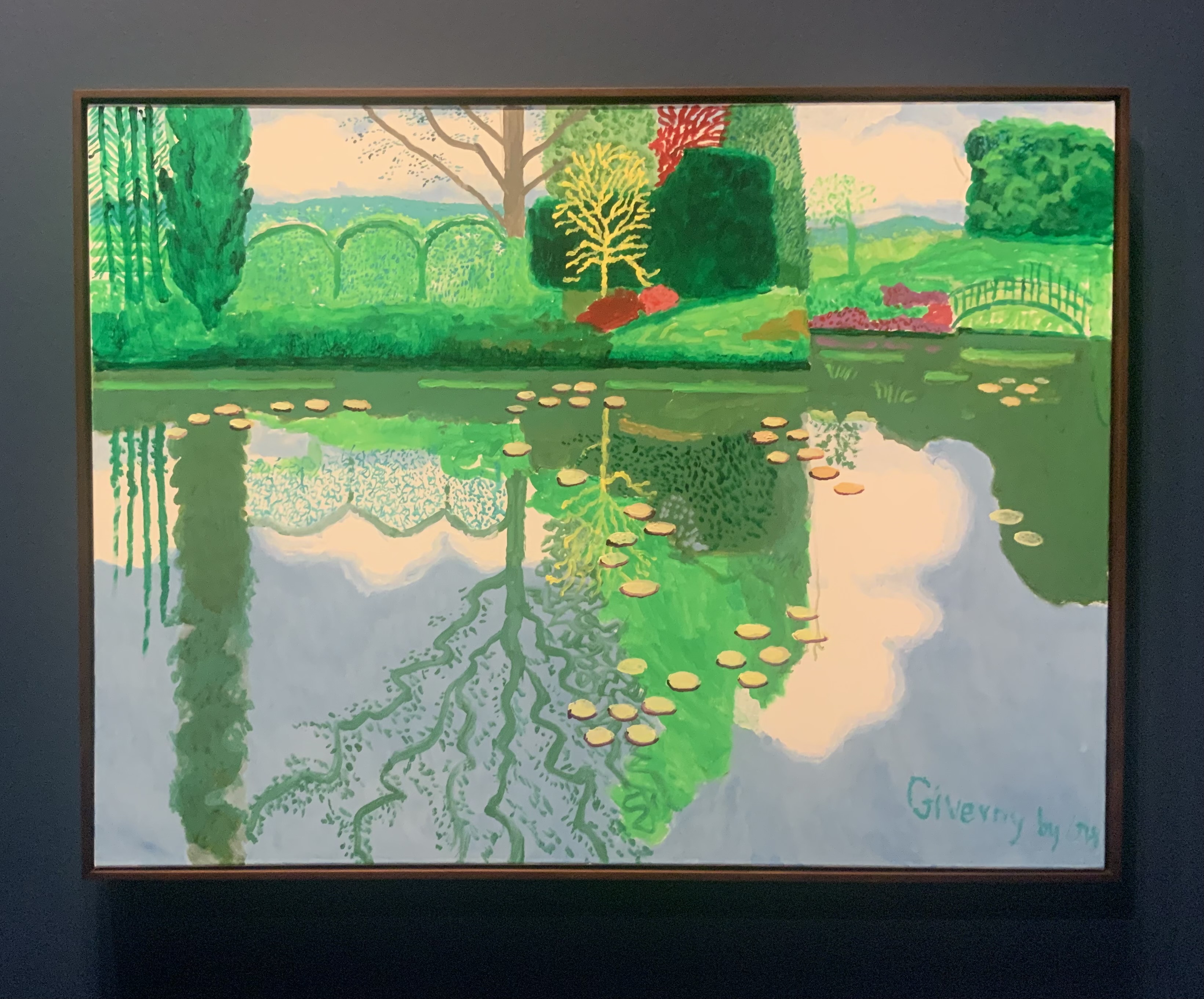
Giverny by DH, 2023, in David Hockney 25, Fondation Louis Vuitton, Paris
A: It was spectacular! I spent three and a half hours there, which I never do—usually two is my limit. I had known his LA work, but I wasn’t aware of so much else, including the Normandy pieces. And yes, the iPad drawings impressed me. I like that he keeps evolving, trying new tools, staying current. At his age that’s remarkable. As someone who has focused on one medium my whole life, I admire artists who reinvent themselves again and again.
Comments are welcome!
Q: You once faced a major creative block. How did you break through it? (Question from “Pastel, Passion, and Perseverance: An Interview with Barbara Rachko” in .ART Odyssey: Healing)

A: That was in 2007, after I finished my Domestic Threats series. The last painting in that series hardly interested me. I was wringing my hands, thinking, “I’m a full-time artist not making art —what do I do NOW?” It was frightening. At the time, I was also taking a jazz history class at Lincoln Center. One day the instructor spoke about Miles Davis.
He explained how Davis moved away from bebop —where musicians packed in as many notes as possible to show off—to cool jazz, where every note carried weight.
And something clicked. I realized I’d been working like bebop: showing off meticulous detail, every stitch of fabric, every grain in a wooden floor.
That revelation was my way forward. I stripped everything back. No more domestic backdrops. Just the figures, placed against solid black. Only what mattered. That was the beginning of my Black Paintings.
The block that had haunted me for months lifted in an instant, because I’d found a new way to speak. I realized the black background represented the dark place I had emerged from; the vibrant figures symbolized resilience and life.
It was like a lightbulb going off.
Comments are welcome!
Q: Your work has been described as “beautiful but unsettling.” How do you respond to that? (Question from “Pastel, Passion, and Perseverance: An Interview with Barbara Rachko” in .ART Odyssey: Healing)
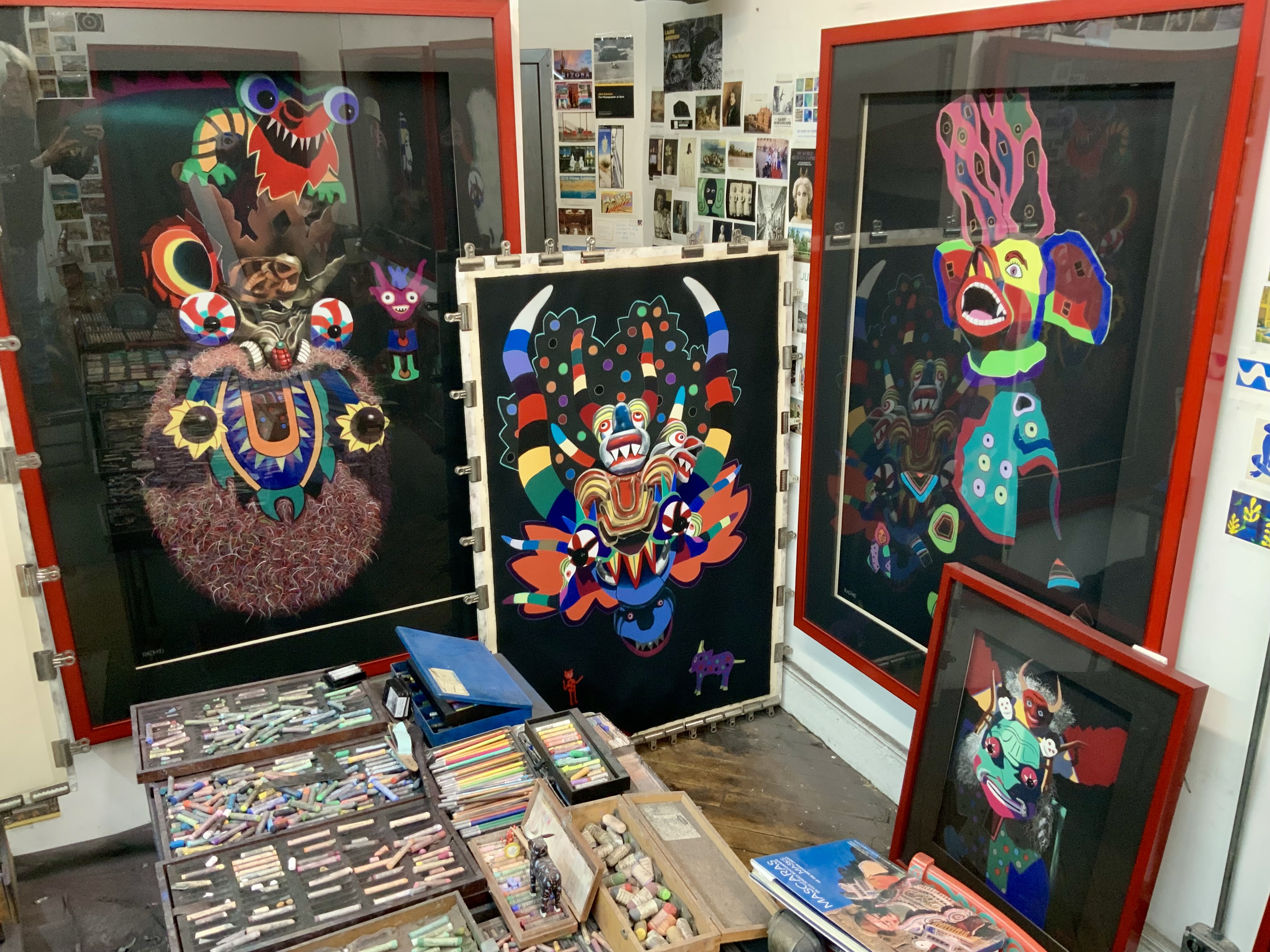
Barbara’s Studio
A: For me, every painting I make is beautiful. Beauty is vital. I see the figures in my pastel paintings as misunderstood, colorful misfits—archetypes—certainly not terrifying or unsettling. In the studio, what I’m often doing is solving technical challenges: figuring out how to depict feathers in pastel, how to lead the viewer’s eye around the painting in complex ways using detail, contrast, and color. Meanings emerge later, when others look and bring their own perspectives. I never want to dictate interpretation. People should be free to see what speaks to them.
Comments are welcome!
Q: Another exhibition was described as “a journey from identity to authenticity.” Does that resonate? (Question from “Pastel, Passion, and Perseverance: An Interview with Barbara Rachko” in .ART Odyssey: Healing)
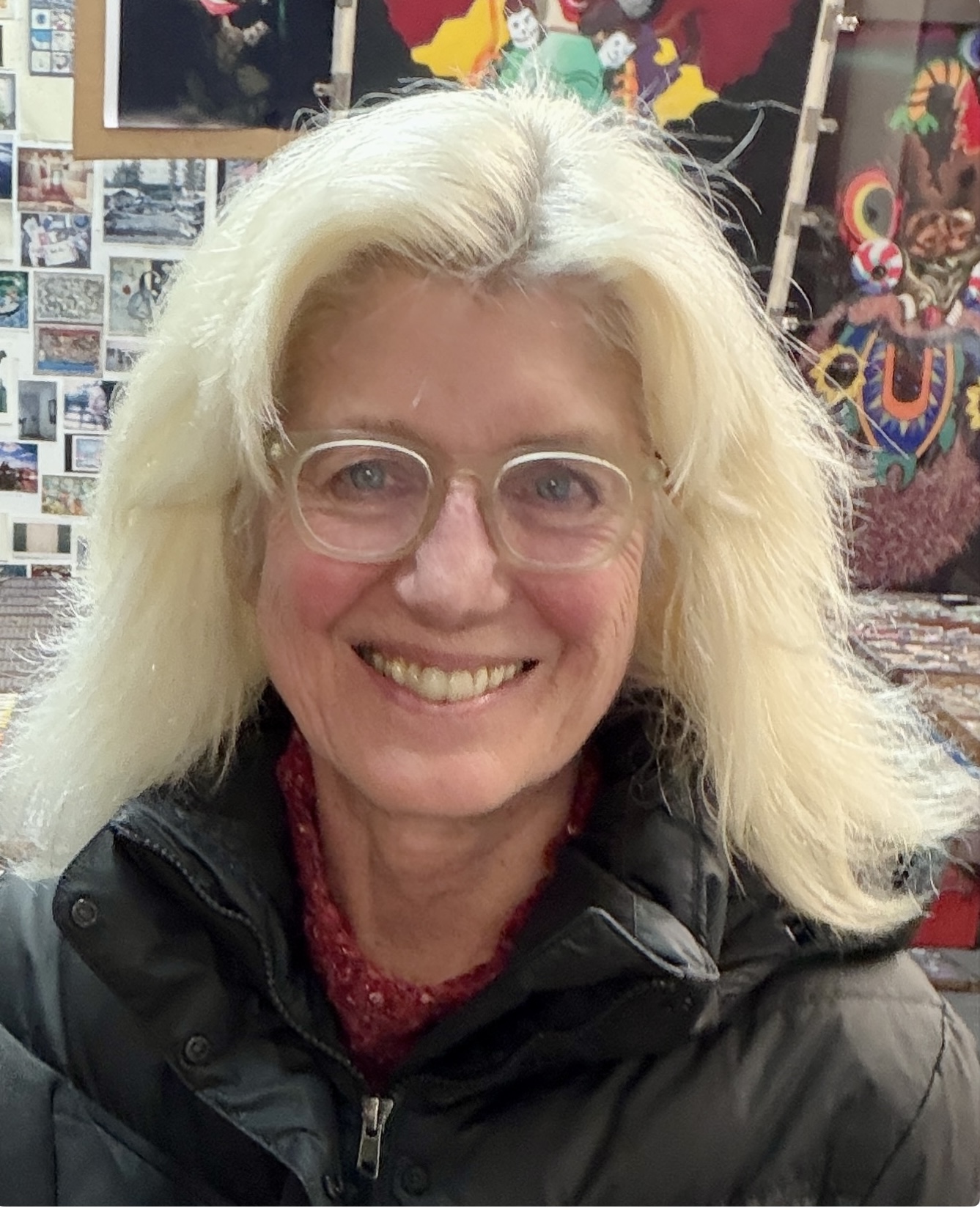
A: Yes, especially the authenticity part.
My work has always come from a deep place. Each painting is the inevitable result of three or four months of daily engagement—the constant adjustments, decisions, and struggles. By the time it’s finished, it couldn’t be any other way.
That, to me, is authenticity. Identity may be what we inherit — culture, upbringing, circumstance. Authenticity is what we strip back to, the choices we make that reflect our core. As I get older, l’ve been shedding what doesn’t serve me. I want to use my time and energy on what makes me a better artist and a better person.
Comments are welcome!
Q: You’re also known for being remarkably consistent with your blog and writing. How do you keep that rhythm? (Question from “Pastel, Passion, and Perseverance: An Interview with Barbara Rachko” in .ART Odyssey: Healing)
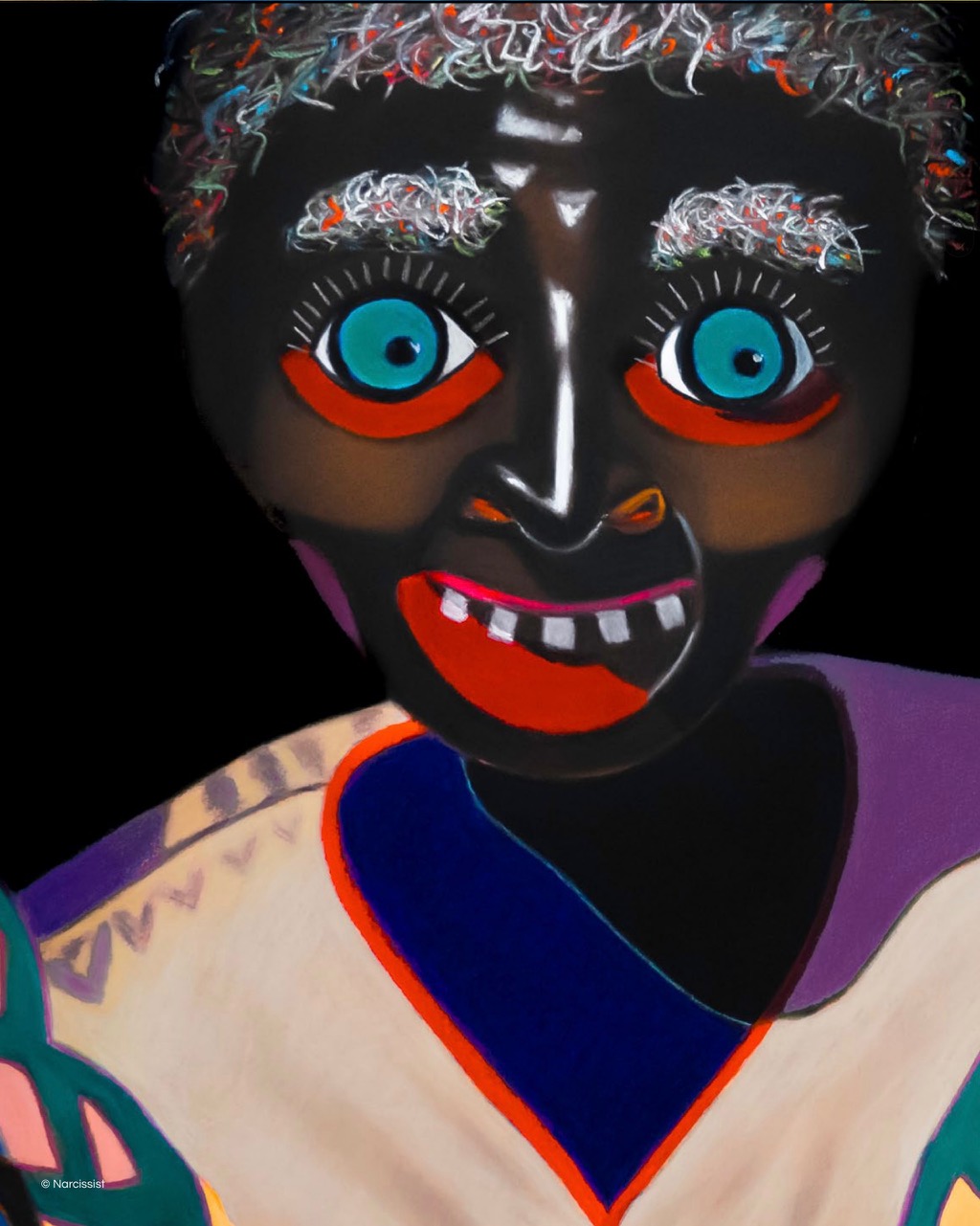
A page from the interview
A: It’s become habit. I started in 2012 and now I post twice a week.
On Wednesdays, I quote from a book I’m reading, paired with a photo. On Saturdays, I rotate: one week “What’s on the Easel,” another a travel photo, and twice a month a short reflection. Only two posts a month require real writing, so it’s sustainable. Consistency has been everything.
Comments are welcome!



