Blog Archives
Pearls from artists* # 158

“Dichotomy,” soft pastel on sandpaper, 38″ x 58″
* an ongoing series of quotations – mostly from artists, to artists – that offers wisdom, inspiration, and advice for the sometimes lonely road we are on.
It is the artist’s innate sensitivity that makes him special and different from other professionals. Society expects the artist to be more compassionate and understanding in order to bring out that which will enlighten, inspire and encourage life in his work. His vocation should not just be art for art’s sake.
Where the average person sees an old beat-up shark, the artist sees a symbol of beauty in aging and imagines bringing out those qualities that the shark has sheltered over the ages by means of artistic creation. To the intelligent and sensitive artist, the homeless man lying on the street corner is a symbol that reminds us of what we, as a society, should do to better our living.
Sensitivity comes into play when leaves that appear to the general viewer to be uniformly green are seen by the sensitive artist to be different shades, tones and nuances of green. Without sensitivity, special and important characteristics of nature will be out of sight and out of reach to the viewing layman. Only the obvious, the average and the common will reveal themselves to the insensitive artist. The endurance of certain works will depend on what the artist has captured with the help of his sensitivity and because of the ideas behind the work.
Samuel Adoquei in Origin of Inspiration: Seven Short Essays for Creative People
Comments are welcome!
Q: How do you think living in New York affects your work?
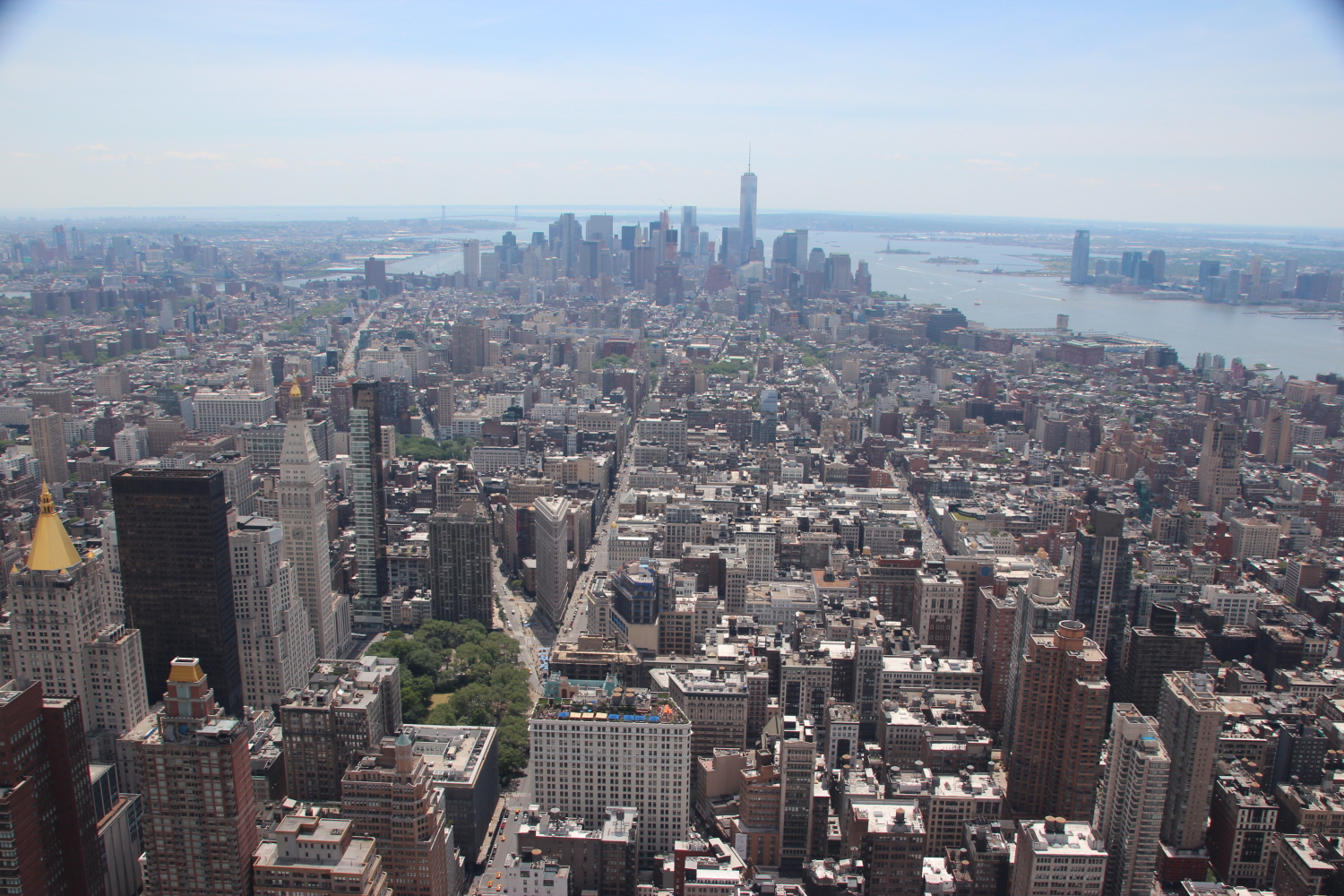
Lower Manhattan
A: Arguably, life in New York provides an artist with direct access to some of the best international art of the past, the present, and probably the future. It is possible to see more art here – both good and bad – than in any other American city.
Just pick up any local magazine and scan the art listings! Our problem is never that there isn’t anything interesting to see or do. It’s “how do we zero in on the most significant local cultural activities, ones that might contribute to making us better artists?”
Certainly a visual artist’s work is consciously and unconsciously influenced not only by what she sees in museums and galleries, but by walking around the city. That’s partly why I am an inveterate walker. I never know what amazing things I am going to see when I leave my apartment.
Although living in New York City is a rich and heady mix for anyone, it is more so for sensitive artists. Artists are virtual sponges, soaking up experiences, processing them, and mysteriously expressing them in our work.
New York lets an artist ponder excellence as we see and experience firsthand what is possible. The best of the best manages to make its way here.
Undoubtedly, my own work is richer for having spent the last eighteen years in this fascinating, wild, and crazy city. For a visual artist New York is an infinitely fascinating place to live.
Comments are welcome!
Q: Why do you make art?

Barbara’s studio
A: This is an excellent question and one I like to revisit because with all the day-to-day frustrations and disappointments that are a normal part of an artist’s life, it is easy to forget what is important.
First, I make art because I have a gift and a desire to share it with others. To not develop, express, and share all that I have to say through my work is unthinkable.
Second, I make art because it is what gives my life direction and purpose. I believe that each human being has his or her own quest, driven by passion, to fulfill a certain duty. Recall Joseph Campbell’s, “The Hero’s Journey.” I need to make art in order to feel that I am living up to my highest potential.
Third, for inexplicable reasons (to me, anyway) soft pastel is an undervalued medium. I fell in love with pastel above all other media and hope to demonstrate that great art can be created with it. This is one of the drives that keeps me steadily working.
Comments are welcome!
Pearls from artists* # 147

Alexandria, Virginia living room
* an ongoing series of quotations – mostly from artists, to artists – that offers wisdom, inspiration, and advice for the sometimes lonely road we are on.
I am working, every day… on new photographs. This body of work, family pictures, is beginning to take on a life of its own. Seldom, but memorably, there are times when my vision, even my hand, seems guided by, well, let’s say a muse. There is at that time an almost mystical rightness about the image: about the way the light is enfolding, the way the [kids’] eyes have taken on an almost frightening intensity, the way there is a sudden, almost outer-space-like, quiet.
These moments nurture me through the reemergence into the quotidian… through the bill paying and the laundry and the shopping for soccer shoes, although I am finding that I am becoming increasingly distant, like I am somehow living full time in those moments.
Sally Mann in Hold Still: A Memoir with Photographs
Comments are welcome!
Q: Why don’t you teach or conduct pastel workshops?
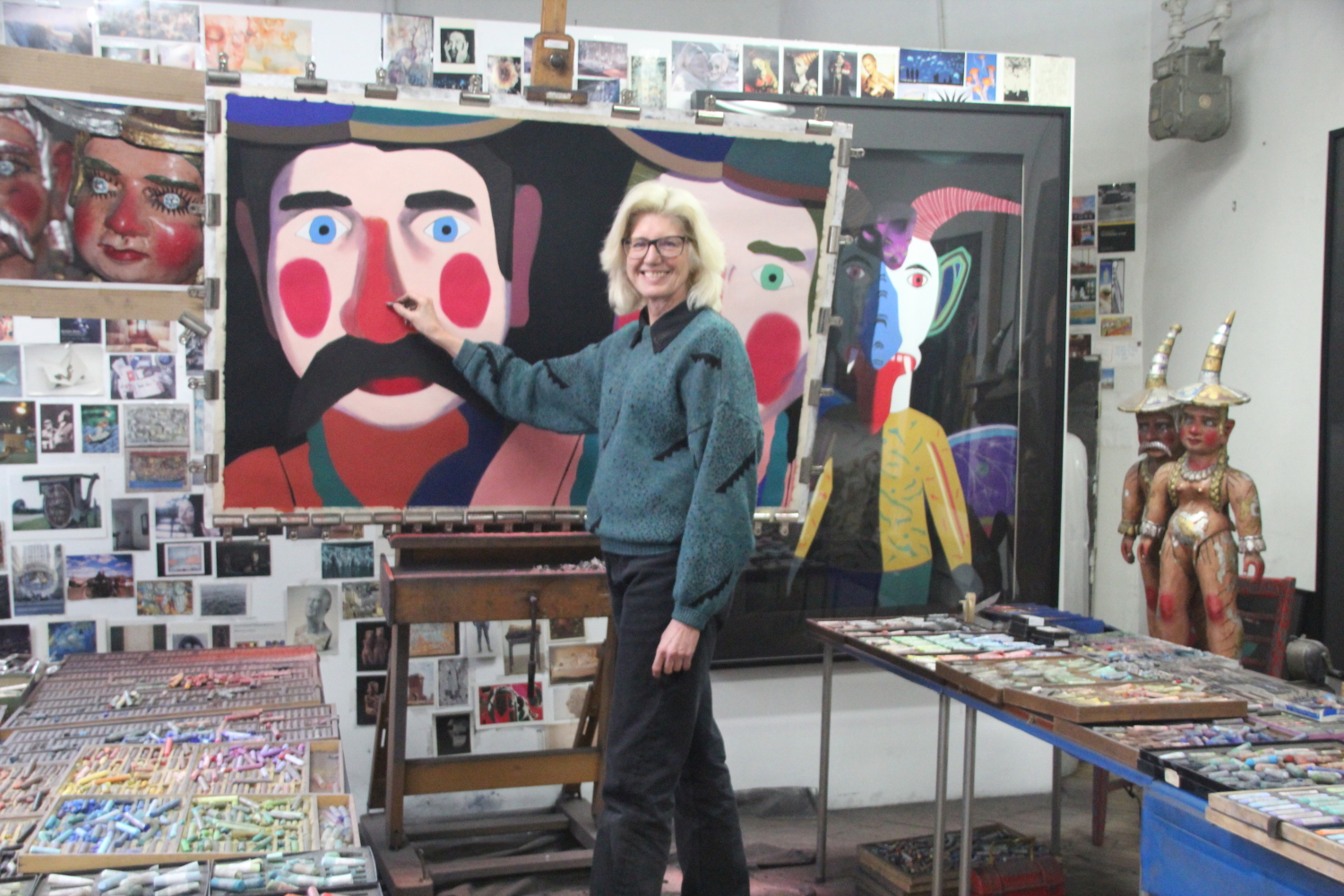
Barbara in her studio
A: I am often asked to teach, but I never have had the desire to do so. Because my work is extremely labor intensive, I am reluctant to give up precious studio time, either for teaching or for any activities that could be deemed a distraction. Consistent in my creative practice, I typically work in my studio five days a week, seven or more hours a day and am able to complete four or five pastel-on-sandpaper paintings in a year.
Teaching would divert time, attention, and energy away from my practice. Certainly it can be rewarding in many ways but since my process is slow and meticulous, I prefer to focus on making new work.
Comments are welcome!
Pearls from artists* # 141

Painting, subject, reference photo
* an ongoing series of quotations – mostly from artists, to artists – that offers wisdom, inspiration, and advice for the sometimes lonely road we are on.
It would be very interesting to record photographically not the stages of a painting, but its metamorphoses. One would see perhaps by what course a mind finds its way towards the crystallization of its dream. But what is really very curious is to see that the picture does not change basically, that the initial vision remains almost intact in spite of appearances. I see often a light and dark, when I have put them in my picture, I do everything I can to ‘break them up,’ in adding a color that creates a counter effect. I perceive, when this work is photographed, that which I have introduced to correct my first vision has disappeared, and that after all the photographic image corresponds to my first vision, before the occurrence of the transformation brought about by my will.
The picture is not thought out and determined beforehand, rather while it is being made it follows the mobility of thought. Finished, it changes further, according to the condition of him who looks at it. A picture lives its life like a living creature, undergoing the changes that daily life imposes on us. That is natural, since a picture lives only through him who looks at it.
Christian Zervos: Conversation with Picasso in The Creative Process, edited by Brewster Ghiselin
Comments are welcome!
Pearls from artists* # 127
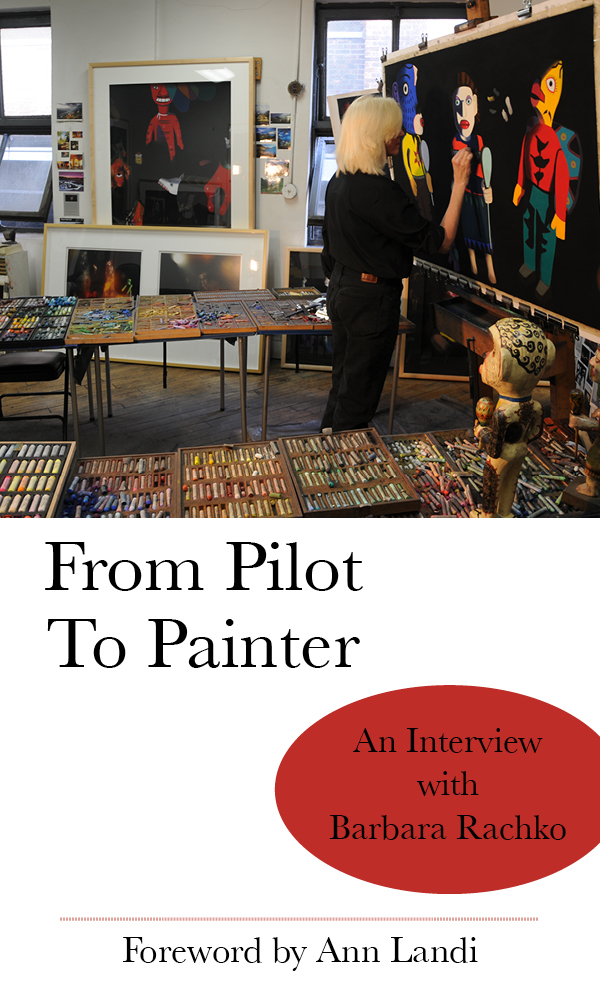
eBook cover
* an ongoing series of quotations – mostly from artists, to artists – that offers wisdom, inspiration, and advice for the sometimes lonely road we are on.
Two facts differentiate Daybook from my work in visual art.
The first is the simple safety of numbers. There are 6500 Daybooks in the world. My contribution to them was entirely mental, emotional. I never put my hand on a single copy of these objects until I picked up a printed book. I made no physical effort; no blood, no bone marrow moved from me to them. I do not mean that I made no effort. On the contrary, the effort was excruciating because it was so without physical involvement, so entirely hard-wrought out of nothing physical at all; no matter how little of the material world goes into visual art, something of it always does, and that something keeps you company as you work. There seems to me no essential difference in psychic cost between visual and literary effort, The difference is in what emerges as result. A work of visual art is painfully liable to accident; months of concentration and can be destroyed by a careless shove. Not so 6500 objects. This fact gives me a feeling of security like that of living in a large, flourishing, and prosperous family.
Ancillary to this aspect is the commonplaceness of a book. People do not have to go much out of their way to get hold of it, and they can carry it around with them and mark it up, and even drop it in a tub while reading in a bath. It is a relief to have my work an ordinary part of life, released from the sacrosanct precincts of galleries and museums. A book is also cheap. Its cost is roughly equivalent to its material value as an object, per se. This seems to me more healthy than the price of art, which bears no relation to its quality and fluctuates in the marketplace in ways that leave it open to exploitation. An artist who sells widely has only to mark a piece of paper for it to become worth an amount way out of proportion to its original cost. This aspect of art has always bothered me, and is one reason why I like teaching; an artist can exchange knowledge and experience for money in an economy as honest as that of a bricklayer.
Anne Truitt in Turn: The Journal of an Artist
Comments are welcome!
Pearls from artists* # 119
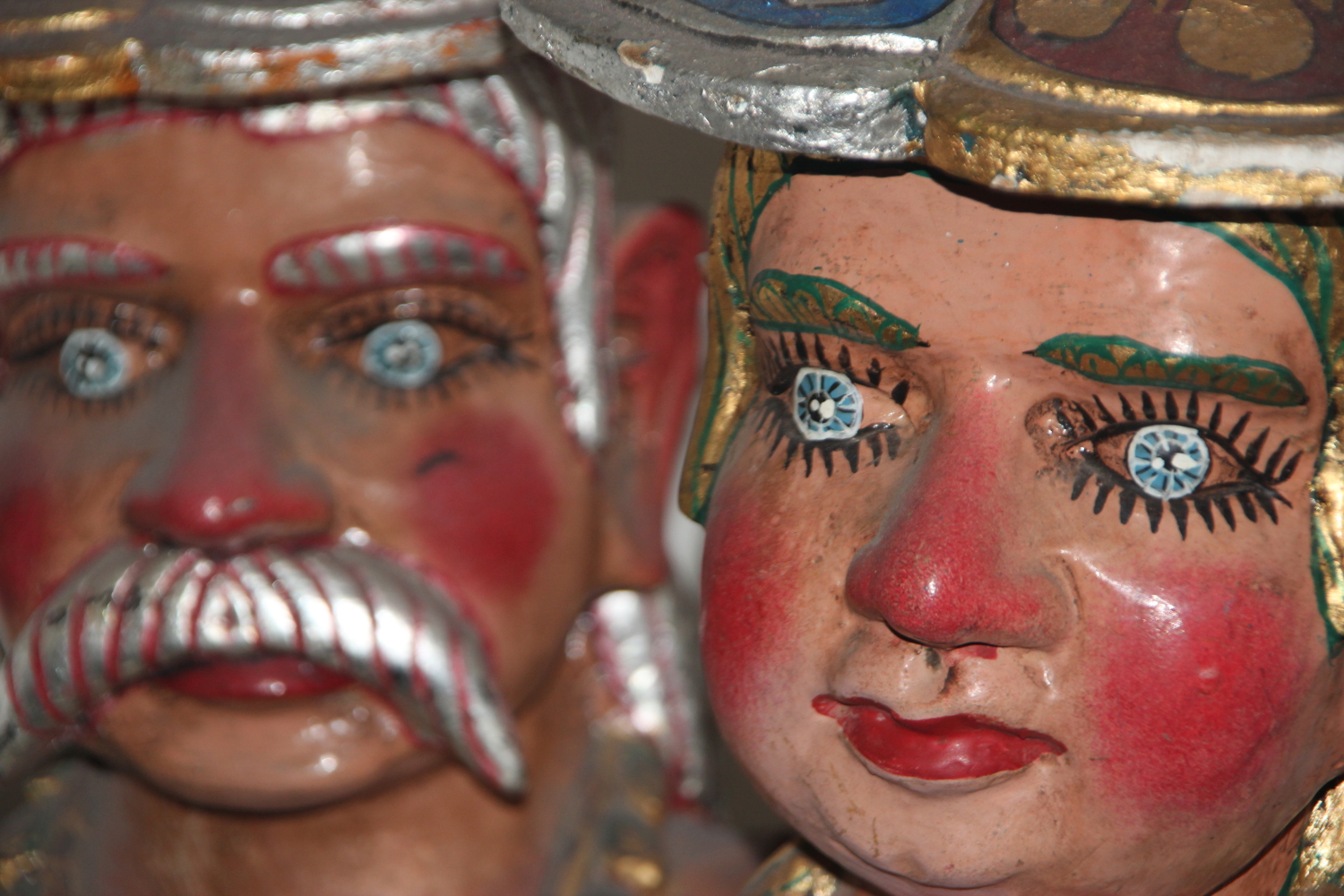
“He and She”
* an ongoing series of quotations – mostly from artists, to artists – that offers wisdom, inspiration, and advice for the sometimes lonely road we are on.
During the course of the past several years we have experienced a seismic shift in the way the world functions. Any notion of a certain or stable or inevitable future has vanished. We are living in what the Polish philosopher Zygmunt Bauman calls “liquid modernity.” No one’s life is predictable or secure. We are confronted with challenges never previously encountered, and these challenges weigh heavily on the role and responsibilities of the individual in society. It is the onus of each one of us to adjust, shift and adjust again to the constant liquid environment of fluid and unending change. In the midst of all this reeling and realignment, the moment is ripe to activate new models and proposals for how arts organizations [and artists] can flourish in the present climate and into an uncertain future.
What’s the Story: Essays about art, theater, and storytelling by Anne Bogart
Comments are welcome!
Q: When you left the Navy you worked on commission as a portrait artist. Why don’t you accept commissions now?

Barbara’s studio
A: As I have often said, I left the active duty Navy in 1989, but stayed in the Reserves. The Reserves provided a small part-time income and the only requirement was that I work one weekend a month and two weeks each year. Plus, I could retire after 13 more years and receive a pension. (In 2003 I retired from the Navy Reserve as a Commander). The rest of the time I was free to pursue my studio practice.
For a short time I made a living making commissioned photo-realist portraits in soft pastel on sandpaper. However, after a year I became very restless. I remember thinking, “I did not leave a boring job just to make boring art!” I lost interest in doing commissions because what I wanted to accomplish personally as an artist did not coincide with what portrait clients wanted. I finished my final portrait commission in 1990 and never looked back.
To this day I remain reluctant to accept a commission of any kind. So I am completely free to paint whatever I want, which is the only way to evolve as a serious, deeply committed artist.
Comments are welcome!
Q: How did you prepare yourself to change careers and work as a professional artist?
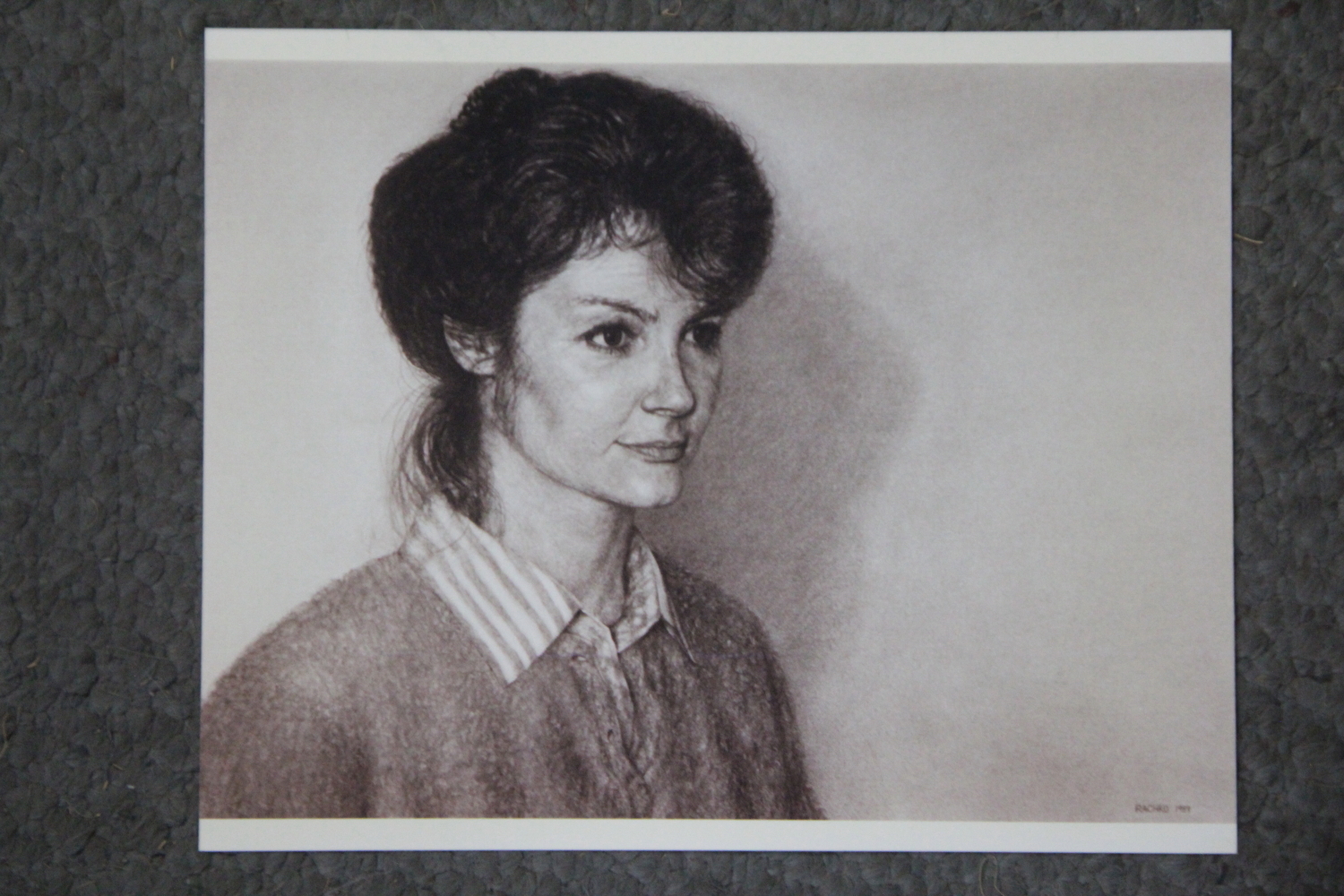
“Krystyn,” charcoal, 22″ x 30″, 1989
A: At the age of 33 I was a Lieutenant in the Navy, working as computer analyst at the Pentagon. I was very unhappy with my job. I began looking for something else to do and discovered The Art League School in Alexandria, VA. I enrolled in classes with Lisa Semerad, then spent the next two years developing my drawing skills using black and white media (charcoal, pencils, conte crayon, etc.).
After that I moved on to color media and began studying soft pastel with Diane Tesler. During this time I was still in the Navy, working the midnight shift at the Pentagon and taking art classes during the day. I was a very motivated student.
After three years or so I was getting quite proficient as an artist, entering local juried shows, winning prizes, garnering press coverage, etc. Prior to my career change, I worked hard to develop my portrait skills. I really didn’t know how I could make a living other than by making commissioned portraits. I volunteered to run a weekly life drawing class at The Art League School in Alexandria, VA, where I made hundreds of figure drawings using charcoal.
I spent a semester commuting between Washington, DC and New York to study artistic anatomy at the New York Academy of Art. I spent another semester studying gross anatomy with medical students at Georgetown University Medical School. Over time I became skilled at making photo-realistic portraits. In 1989 I resigned from the Navy and have worked full-time as a visual artist ever since.
Comments are welcome!



