Blog Archives
Q: You read books on Friedrich Nietzsche and other philosophers. How has philosophy and your personal experience shaped the latest series, Bolivianos? (Question from Vedica Art Studios and Gallery)

A: It’s difficult to pinpoint how philosophy specifically shaped my work because my curiosity spans so many subjects. Some critics have described me as a Renaissance woman, remarking on my wide-ranging and voracious reading. It’s true—I’m genuinely interested in practically everything!
In pursuit of making art, I have undertaken in-depth studies of numerous intriguing fields: drawing, color, composition, gross anatomy, art and art history, the art business, film history, photography, psychology, mythology, literature, philosophy, religion, music, jazz history, and archaeology—particularly ancient Mesoamerica (Olmec, Zapotec, Mixtec, Aztec, and Maya) and South America (the Inca and their ancestors).
Since the early 1990s, my inspiration and subject matter have come primarily from international travel to remote parts of the globe, especially Mexico, Central America, and South America. Travel is by far the best education! By visiting distant destinations, I have developed a deep reverence for people and cultures around the world. People everywhere are connected by our shared humanity.
These travels, supplemented by extensive research at home, are essential parts of my creative process. Research can be solitary and demanding, but I truly enjoy it. I want to know as much as possible, and this curiosity generates ideas for new work, propelling me into unexplored creative realms.
Foreign travel always expands our ways of thinking. This rich mixture of creative influences continually evolves and finds its way into my pastel paintings. Working, learning, evolving, and growing—I am perpetually curious and can hardly imagine a better way to spend my time on Earth!
Comments are welcome!
Pearls from artists* # 590

Barbara’s Studio: when you fall in love with pastel!
*an ongoing series of quotations – mostly from artists, to artists – that offers wisdom, inspiration, and advice for the sometimes lonely road we are on.
We see again and again in the lives of special artists a profound youthful infatuation with their medium, with everything and anything connected with it – the good, the bad, the indifferent. If books have mesmerized them, they will read everything; if painting, they will frequent every gallery, running to every visiting show. They may have no idea that they are about to devote their life to that medium; they simply fell in love. The actor Len Cariou said:
“I didn’t have any thoughts about being an actor. I always was an actor. I’d go to films every Saturday. I had an insatiable appetite for films. You could see four films and a serial for half a buck. In 1959 when I read an ad in the local paper, ‘Young actors wanted for summer stock,’ all of a sudden I knew; there was a crunch in my head.”
… The artist is transported by his medium, is delighted and astonished. That his medium is able to speak to him in this way is almost a proof of the existence of god, or at least a special affirmation in the realm of the spirit.
Eric Maisel in A Life in the Arts: Practical Guidance and Inspiration for Creative and Performing Artists
Comments are welcome!
Pearls from artists* #571
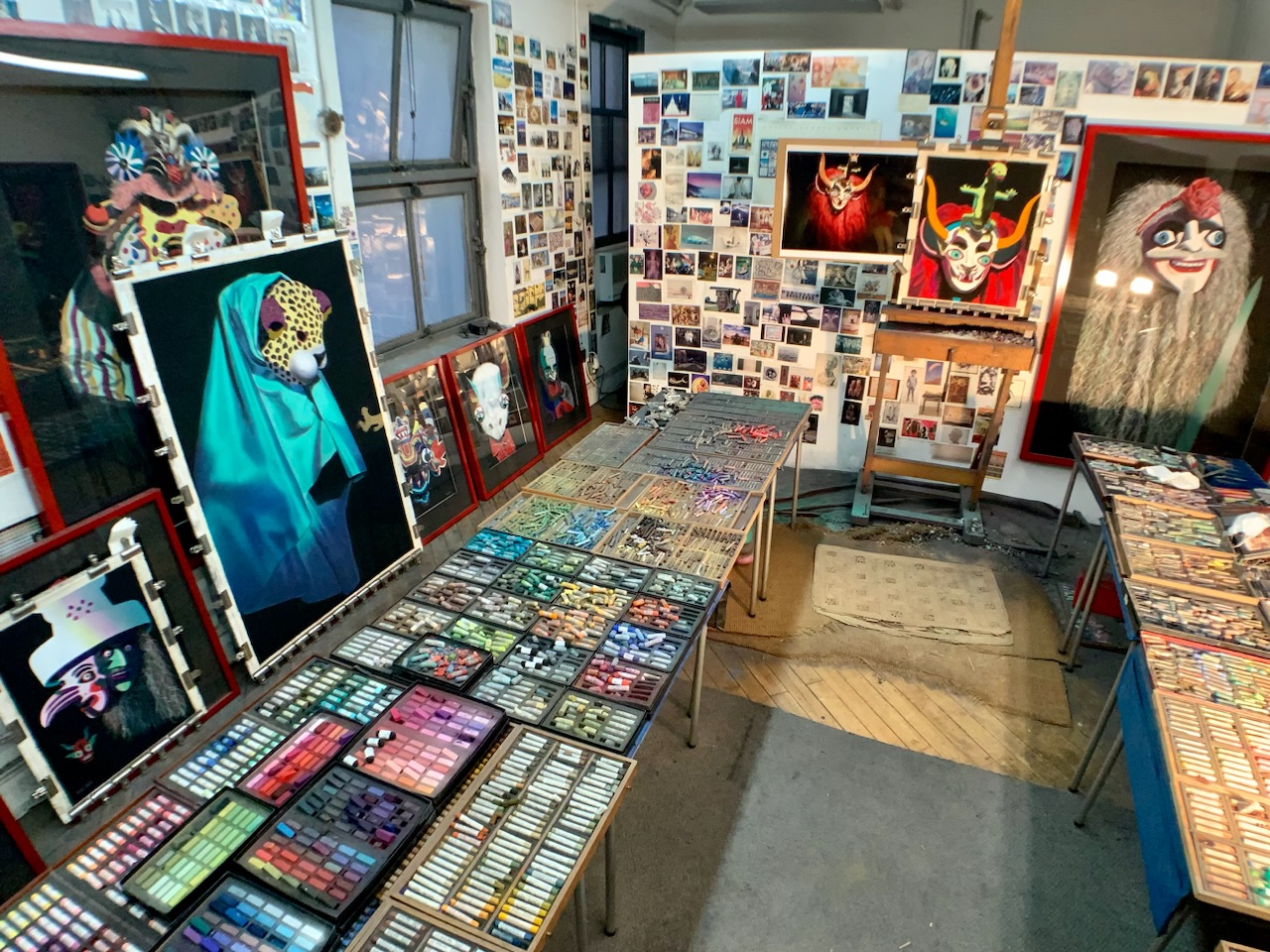
The Studio
*an ongoing series of quotations – mostly from artists, to artists – that offers wisdom, inspiration, and advice for the sometimes lonely road we are on.
To put it simply, but accurately, artists are often lost to the world because of their obsessions with their art. They may be just as lost as they prepare to work or incubate a new idea as in those feverish days when they make their final cuts on a film or race toward a publishing deadline. They may obsess about artistic questions and feel bursts of creative energy day or night, alone or in the company of others, in the middle of the work week or on vacation in the Bahamas.
Lost in time and space, the artist may feel more connected to Picasso, Emily Dickinson, Ingmar Bergman, Gertrude Stein, Handel, or Tennessee Williams than to the people in his immediate world. The living past holds extraordinary meaning for him. He travels elsewhere, removing his spirit and attention from the present. He may reside, as he works on his novel, in the childhood of a character, walking the garden paths and living the household dramas there. He may come upon a Rembrandt drawing and find himself wrenched, not to any particular place or time, but just elsewhere, as he experiences the greatness of his traditions, measures himself anew, and dreams again of his future.
Eric Maisel in A Life in the Arts: Practical Guidance and Inspiration for Creative and Performing Artists
Comments are welcome!
Pearls from artists* # 438
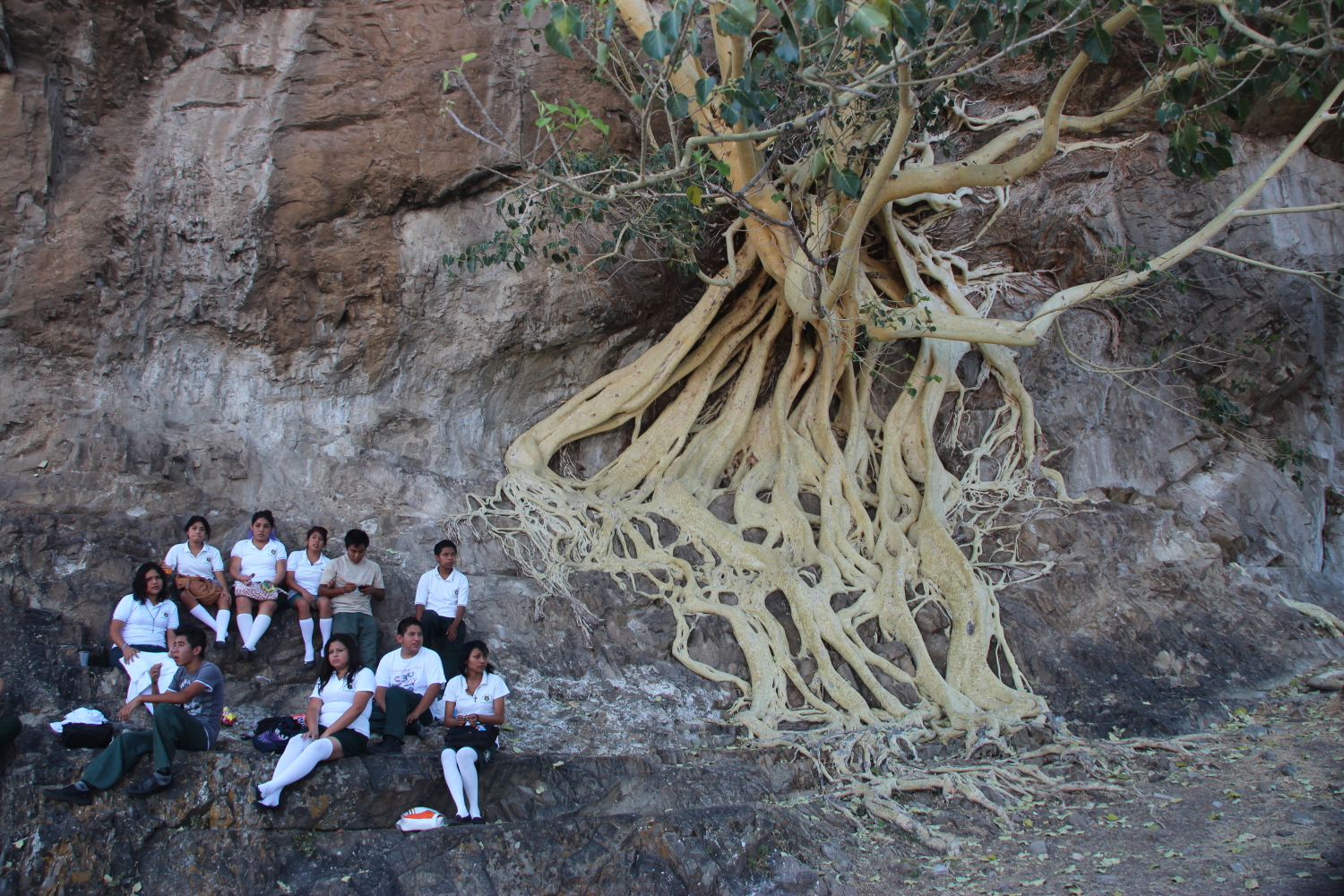
Chalcatzingo, Mexico
* an ongoing series of quotations – mostly from artists, to artists – that offers wisdom, inspiration, and advice for the sometimes lonely road we are on.
Although {Manuel} Alvarez Bravo and Cartier-Bresson were both important mentors for Iturbide, her photographs, as she confirms, are not connected to Surrealism in any way. Henri Cartier-Bresson’s publication Carnets du Mexique (Mexican Notebooks) was an important influence, as it presented a visual representation of Mexico that resonated with her. (Cartier-Bresson also worked mainly in Juchitan, where Iturbide has spent a great deal of time). However, Iturbide developed a way of working quite different from Cartier-Bresson’s. What distinguishes the two artists’ photographs lies in the notion of the fleeting instant, or, as Cartier-Bresson called it, “the decisive moment.” Iturbide refers to Cartier-Bresson’s interest in the “sharp eye” and capturing an instant in time, and describes her own intentions when photographing: “More than in time, I’m interested in the artistic form of the symbol.” Further, Iturbide’s photographs are taken with an understanding of the people, rituals, and symbols of the communities she captures, which makes them stand apart from Cartier-Bresson’s fleeting moments of Mexico. Her work is informed by her deep connection and empathy for her subjects.
Kristen Gresh in Graciela Iturbide’s Mexico
Comments are welcome!
Q: You had a terrific interview published in the July Issue # 44 of “Art Market.” How did that happen?
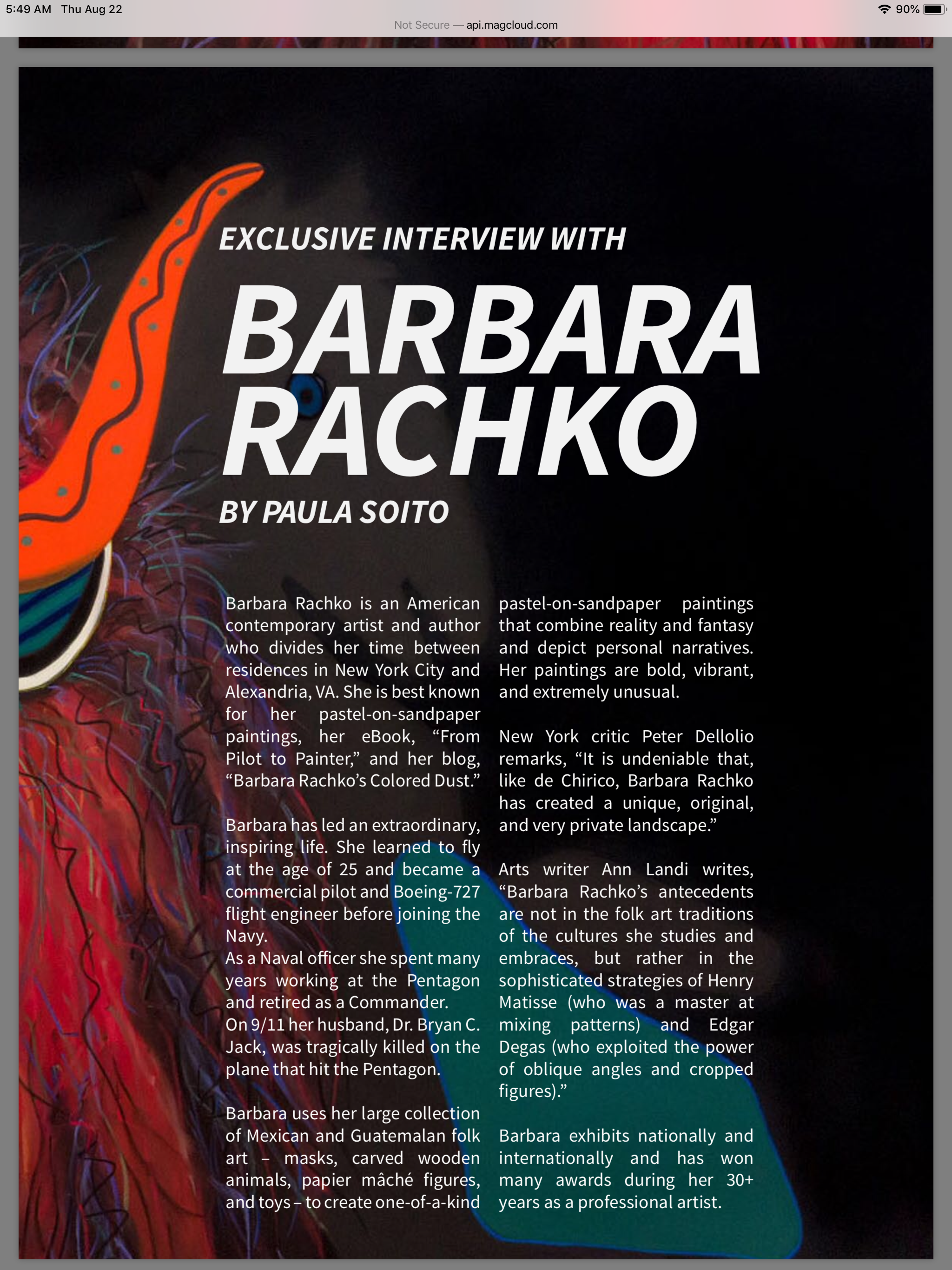
First page of Barbara’s interview in “Art Market”
A: You know, my business strategy is to get my work onto as many websites as possible in hopes of eventually reaching the right collectors. ArtsRow has not gotten me a sale yet, but wow, what press! The print copy of “Art Market is gorgeous.” I was stunned by the quality of the reproductions, the layout, and the fact that the publisher did not cut any of my 18-page interview!
This is how it happened. I cannot remember if Paula Soito found me or vice versa. Somehow we connected, I sent my work for her ArtsRow website, and shortly after, she asked to interview me for her blog. Paula deeply connected to something in my work or my bio. I may be mistaken, but I do not believe she asks many artists for an interview.
As I do with every interview request, I enthusiastically said, “Yes!” Paula proceeded to ask great questions. I prepared my written answers to her questions as though I were writing an article for “The New York Times,” because once an interview is published, you never know who will read it. And we had no word limits since the interview was being published on her blog, not in print.
So last spring my in-depth interview was published on Paula’s blog. Sometime later she let me know that she had met Dafna Navarro, CEO and Founder of “Art Market,” and was arranging for our interview to be published there. I thought, “Gee, that’s nice,” thinking there’s no way they will publish the whole article. When I received my print copy in the mail I was thrilled! Not only did my interview look great, but it was sandwiched between a piece about an exhibition at The Metropolitan Museum and one at The Whitney Museum of American Art! So, of course, I am sharing it with everyone and encouraging people to purchase a print copy.
Pearls from artists* # 376
Chalcatzingo, Mexico
* an ongoing series of quotations – mostly from artists, to artists – that offers wisdom, inspiration, and advice for the sometimes lonely road we are on.
In the cemetery all the vultures began to circle, and the sky filled with birds. It was then that I began my series on birds – many of my bird photos came from this moment. All this to say that in life everything is connected: your pain and your imagination, which perhaps can help you forget reality. It’s a way of showing how you connect what you live with what you dream, and what you dream with what you do, and this is what remains on paper.
Graciela Iturbide in Eyes to Fly With: Portraits, Self-Portraits, and Other Photographs
Comments are welcome!
Pearls from artists* # 362
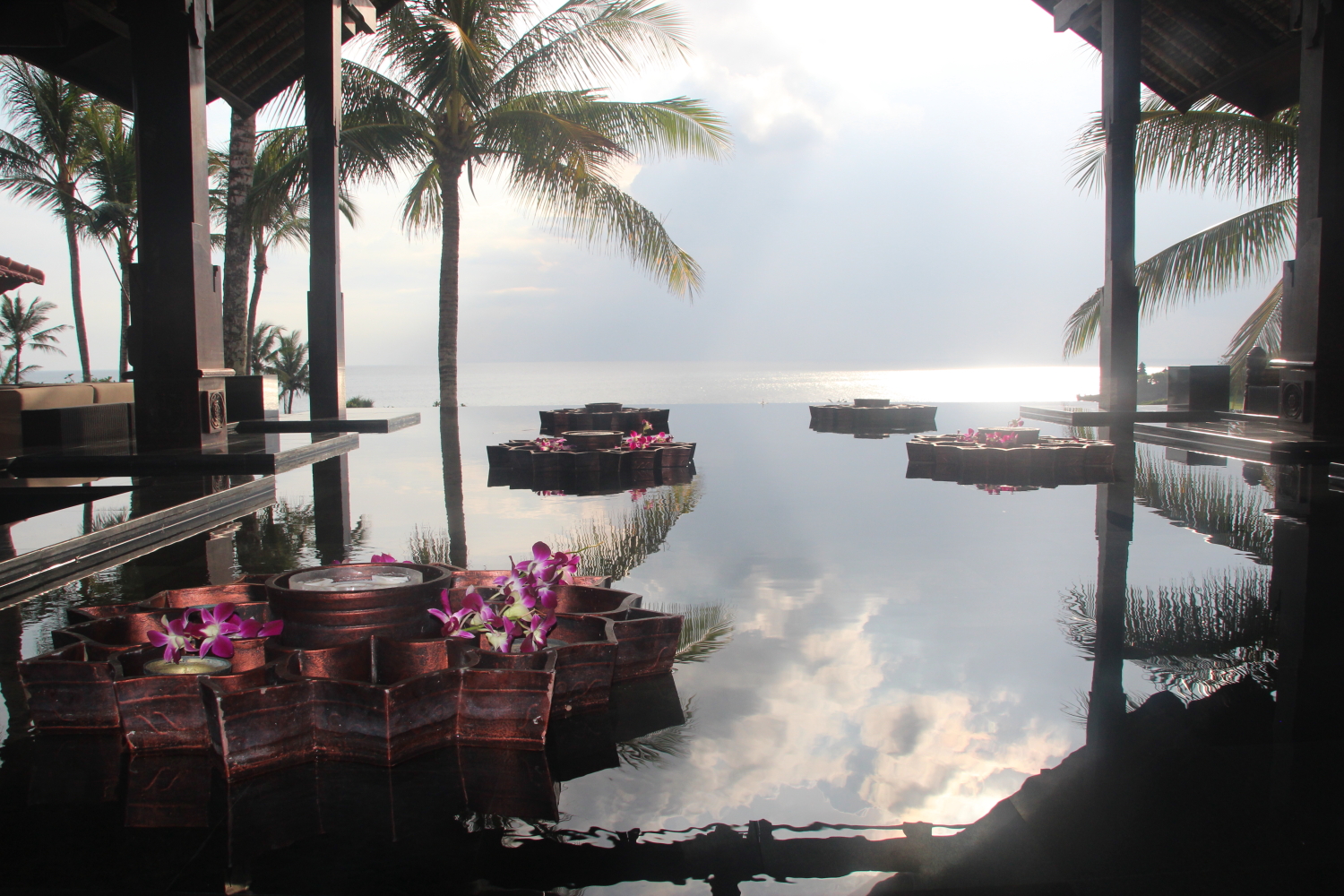
On the Indian Ocean in Tanah Lot, Bali
* an ongoing series of quotations – mostly from artists, to artists – that offers wisdom, inspiration, and advice for the sometimes lonely road we are on.
… if we look at the artifacts of all cultures, beauty always has attracted man’s attention. We know when we are in its presence. We’re held. Different pieces of art will arrest different people, and… some pieces will arrest larger numbers of people for longer periods of time. These are the works that are perhaps worthy of being called great art. We have to recognize that some people today, observing the greatest works of art, or the most awesome works of nature – the Grand Canyon, for instance – give it a minute and then are ready for something else. Insatiable for change, they are immune to deep resonance.
Art and beauty are about those resonances. It isn’t the subject matter that holds us. Some inexplicable reaction stops us, and we find ourselves connected with something other than ourself. Perhaps our ‘Self’ might be a better term, to distinguish it from the self that is caught up in thoughts, worries, and distractions. I like Ken Weber’s definition, that beauty “suspends the desire to be elsewhere.” In the face of great art, we experience transcendence.
Ian Roberts in Creative Authenticity: 16 Principles to Clarify and Deepen Your Artistic Vision
Comments are welcome!
Q: What significance do the folk art figures that you collect during your travels have for you?

Barbara’s studio
A: I am drawn to each figure because it possesses a powerful presence that resonates with me. I am not sure exactly how or why, but I know each piece I collect has lessons to teach.
Who made this thing? How? Why? Where? When? I feel connected to each object’s creator and curiosity leads me to become a detective and an archaeologist to find out more about them and to figure out how to best use them in my work.
The best way I can describe it: after nearly three decades of seeking out, collecting, and using these folk art figures as symbols in my work, the entire process has become a rich personal journey towards gaining greater knowledge and wisdom.
Comments are welcome!
Pearls from artists* # 121
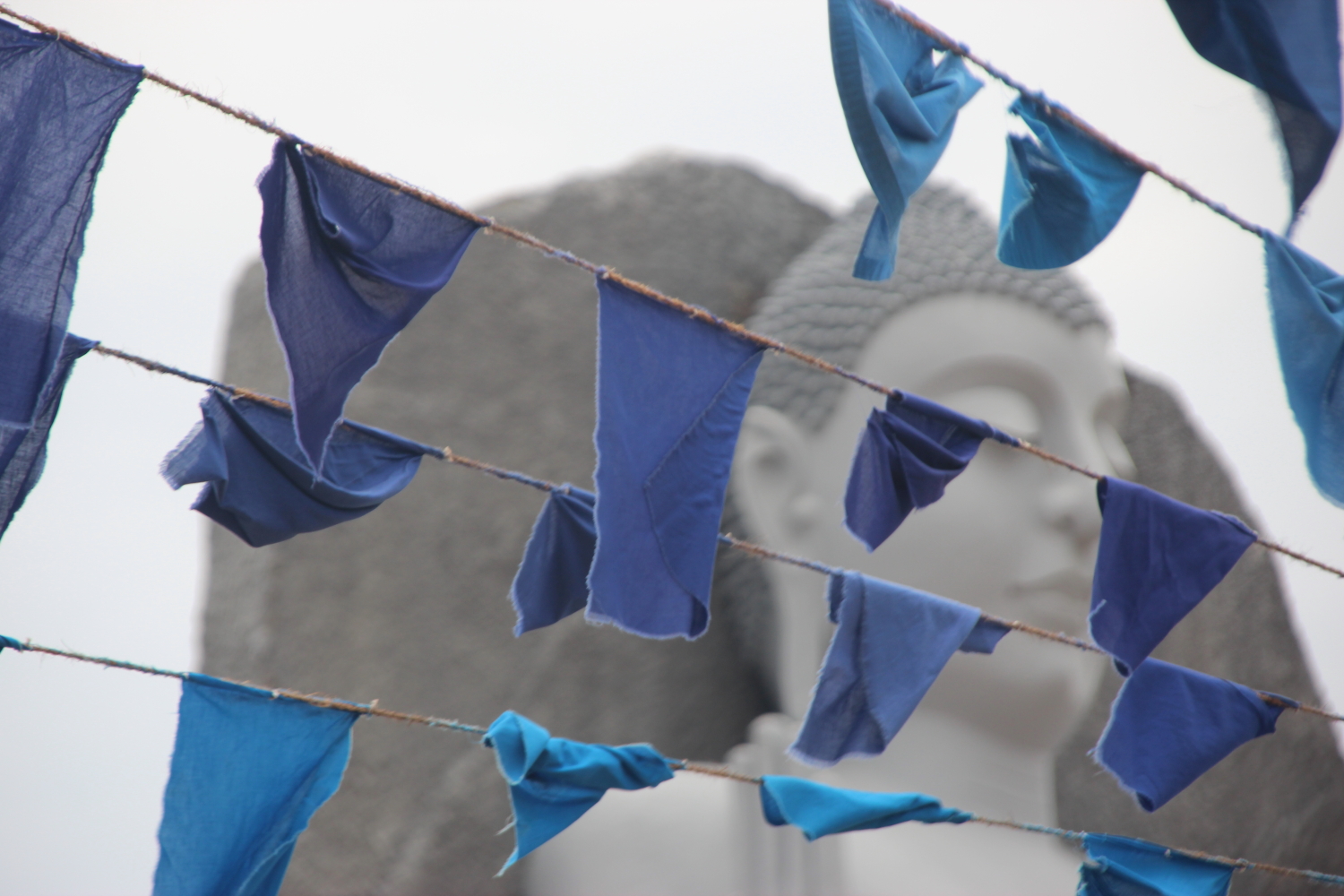
Sri Lanka
* an ongoing series of quotations – mostly from artists, to artists – that offers wisdom, inspiration, and advice for the sometimes lonely road we are on.
Artists, when they are absorbed in their work, are also deeply connected to other human beings. The theologian Matthew Fox said, “The journey the artist makes in turning inward to listen and to trust his or her images is a communal journey.” The psychologist Otto Rank argued that, “The collective unconscious, not rugged individuality, gives birth to creativity.”
To be sure, artists are not making real contact with real human beings as they work in the studio, but they are making contact in the realm of the spirit. The absence of the pressures real people bring to bear on them allows them, in solitude, to love humankind. Whereas in their day job they may hate their boss and at Thanksgiving they must deal with their alcoholic parents, in the studio their best impulses and most noble sentiments are free to emerge.
Eric Maisel in A Life in the Arts
Comments are welcome!
Pearls from artists* # 54
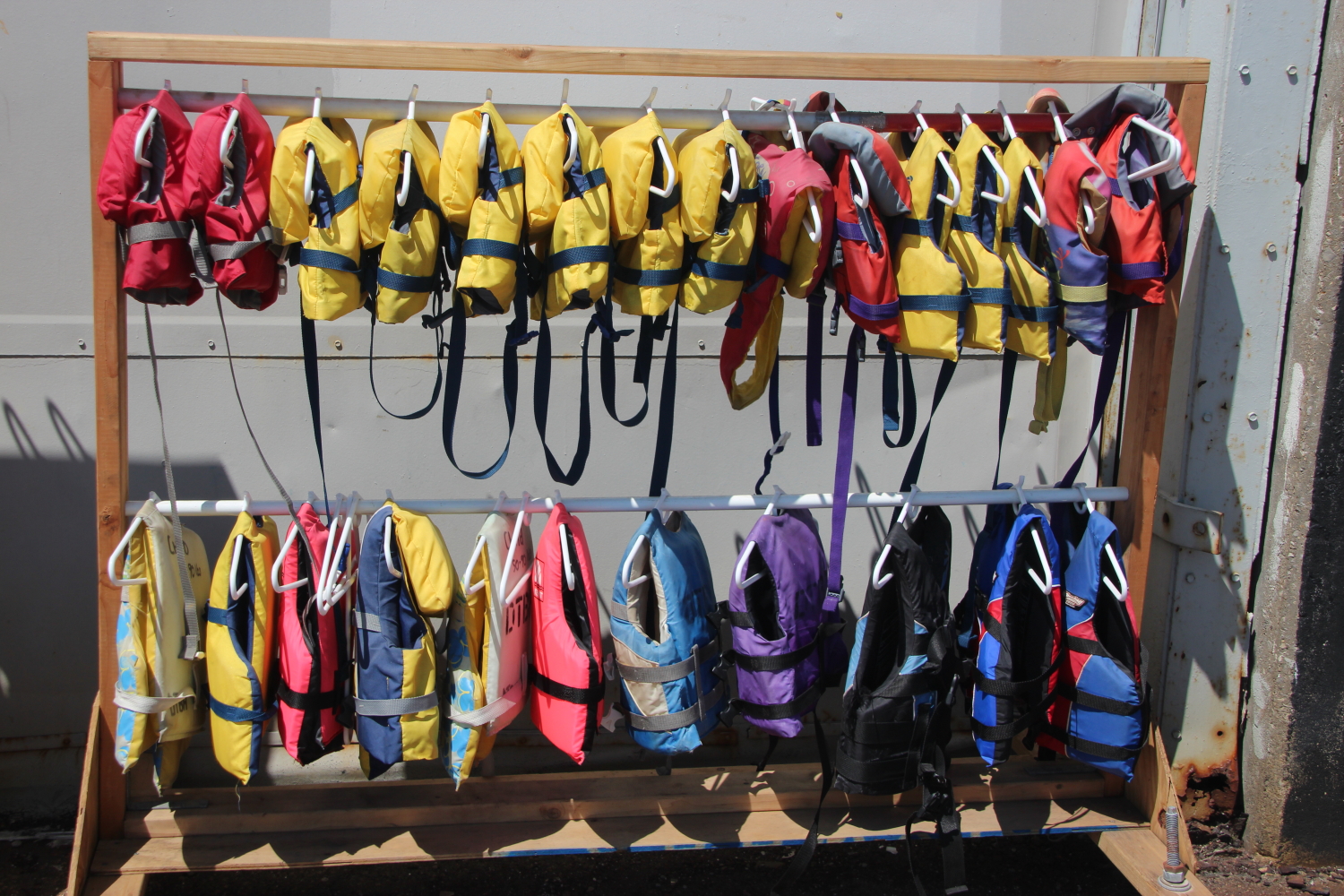
Pier 40, NYC
* an ongoing series of quotations – mostly from artists, to artists – that offers wisdom, inspiration, and advice for the sometimes lonely road we are on.
In the cemetery all the vultures began to circle, and the sky filled with birds. It was then that I began my series of birds – many of my bird photos came from that moment. All this is to say that in life everything is connected: your pain and your imagination, which perhaps can help you forget reality. It’s a way of showing how you connect what you live with what you dream, and what you dream with what you do, and this is what remains on paper…
Graciela Iturbide in Eyes to Fly With
Comments are welcome!


 barbararachkoscoloreddust.com