Blog Archives
Pearls from artists* # 715

*an ongoing series of quotations – mostly from artists, to artists – that offers wisdom, inspiration, and advice for the sometimes lonely road we are on
Whenever we must solve a big problem, such as the art/money challenge, it is worthwhile to look inward, to see where we may be complicit in perpetuating the problem. While artists are not always valued in our society, we also get what we settle for. Although we must eat and pay rent or mortgages like everyone else, non-artists often try to persuade us that we do not deserve to earn a living wage, because we enjoy our job. In the United States, we are often asked to work for free in a way that other professionals are not.
Consider trying to get an accountant to work ‘for the exposure.’ In many cases, artists go to college, even graduate school, to learn our profession. Many of us are still paying off student loans. We put in thousands of hours to develop our skills. We may win awards or grants that distinguish us from other artists. It is up to us to put a stop to the devaluation of our profession. Artists who agree to work for free, or for a pittance, are essentially strikebreakers on a picket line. As a group, we should be fighting in solidarity to raise standards of living and respect for our collective profession by refusing to work for less. When we agree to bad conditions, we devalue ourselves, and enable a dysfunctional system that perpetuates the exploitation of artists.
Kate Kretz in Art From Your Core: A Holistic Guide to Visual Voice
Comments are welcome!
Q: You use so many pastels in your work. Do you have a favorite?

Barbara’s Studio
A: When people ask if I have a favorite pastel among the thousands in my studio, I am quick to answer, “Rembrandt black pastel!” This is the single color that I use the most. I buy them by the dozens because it takes many layers of pigment – applied and hand-blended together, one on top of the other, on sandpaper – to achieve the intense black backgrounds that distinguish my “Bolivianos” series of pastel paintings. Typically, I use up a minimum of two or three Rembrandt pastels to create these backgrounds. A few years ago one New York art critic cleverly dubbed them, “Barbara’s black-grounds.” How cool is that!
Comments are welcome!
Pearls from artists* # 362
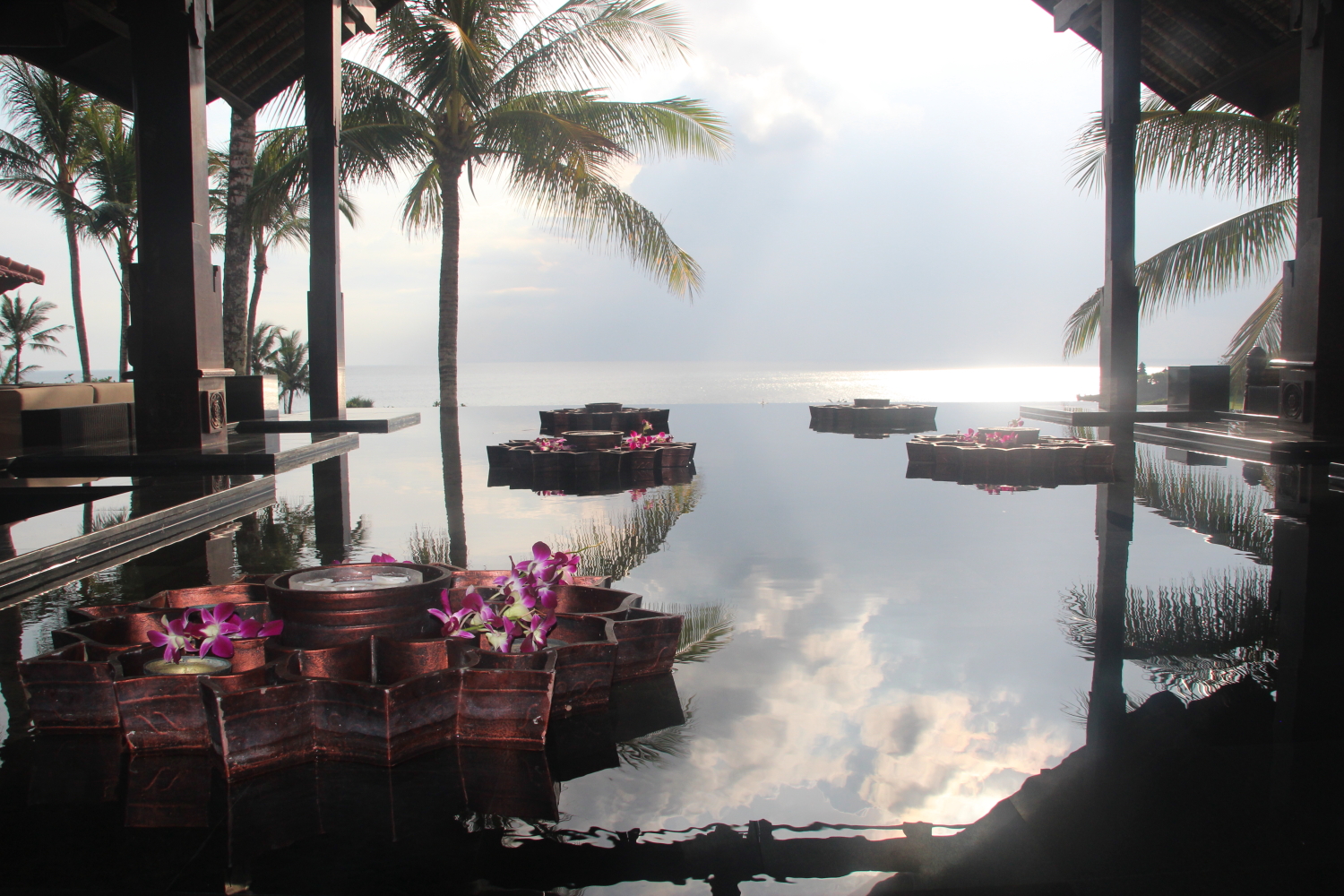
On the Indian Ocean in Tanah Lot, Bali
* an ongoing series of quotations – mostly from artists, to artists – that offers wisdom, inspiration, and advice for the sometimes lonely road we are on.
… if we look at the artifacts of all cultures, beauty always has attracted man’s attention. We know when we are in its presence. We’re held. Different pieces of art will arrest different people, and… some pieces will arrest larger numbers of people for longer periods of time. These are the works that are perhaps worthy of being called great art. We have to recognize that some people today, observing the greatest works of art, or the most awesome works of nature – the Grand Canyon, for instance – give it a minute and then are ready for something else. Insatiable for change, they are immune to deep resonance.
Art and beauty are about those resonances. It isn’t the subject matter that holds us. Some inexplicable reaction stops us, and we find ourselves connected with something other than ourself. Perhaps our ‘Self’ might be a better term, to distinguish it from the self that is caught up in thoughts, worries, and distractions. I like Ken Weber’s definition, that beauty “suspends the desire to be elsewhere.” In the face of great art, we experience transcendence.
Ian Roberts in Creative Authenticity: 16 Principles to Clarify and Deepen Your Artistic Vision
Comments are welcome!



