Blog Archives
Pearls from artists* # 715

*an ongoing series of quotations – mostly from artists, to artists – that offers wisdom, inspiration, and advice for the sometimes lonely road we are on
Whenever we must solve a big problem, such as the art/money challenge, it is worthwhile to look inward, to see where we may be complicit in perpetuating the problem. While artists are not always valued in our society, we also get what we settle for. Although we must eat and pay rent or mortgages like everyone else, non-artists often try to persuade us that we do not deserve to earn a living wage, because we enjoy our job. In the United States, we are often asked to work for free in a way that other professionals are not.
Consider trying to get an accountant to work ‘for the exposure.’ In many cases, artists go to college, even graduate school, to learn our profession. Many of us are still paying off student loans. We put in thousands of hours to develop our skills. We may win awards or grants that distinguish us from other artists. It is up to us to put a stop to the devaluation of our profession. Artists who agree to work for free, or for a pittance, are essentially strikebreakers on a picket line. As a group, we should be fighting in solidarity to raise standards of living and respect for our collective profession by refusing to work for less. When we agree to bad conditions, we devalue ourselves, and enable a dysfunctional system that perpetuates the exploitation of artists.
Kate Kretz in Art From Your Core: A Holistic Guide to Visual Voice
Comments are welcome!
Pearls from artists* # 108
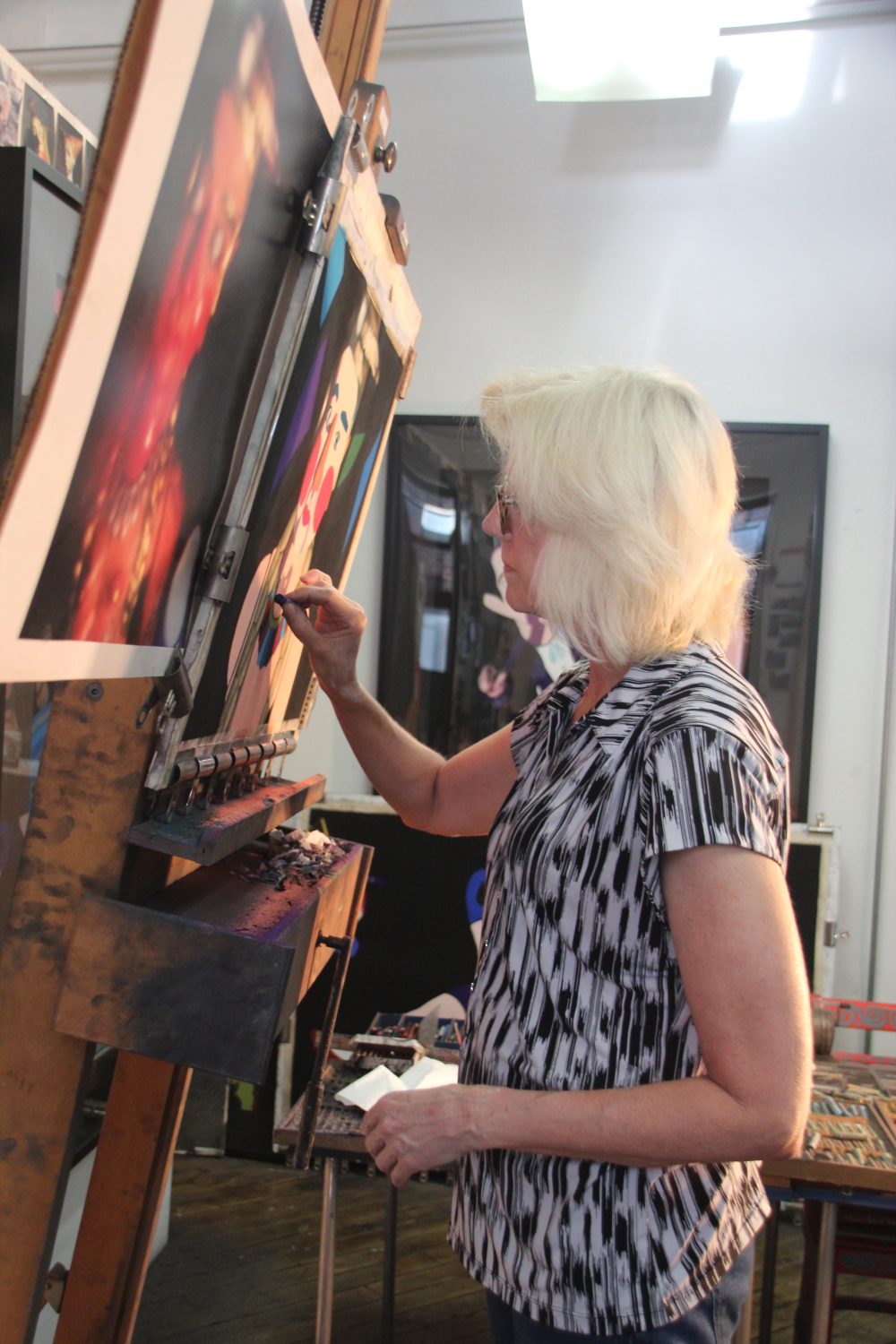
At work on a pastel painting
* an ongoing series of quotations – mostly from artists, to artists – that offers wisdom, inspiration, and advice for the sometimes lonely road we are on.
Artists generally need privacy in order to create, and as I’ve noted, what constitutes adequate privacy varies by person and time. Solitude quickly becomes isolation when it oversteps one’s desires. But most artists need to feel that they and their work won’t be examined prematurely and, certainly, won’t be ambushed unfinished by ridiculing eyes. You might go out and invite various people to critique a piece in progress, even knowing they’re unlikely to view it with sympathy, exactly because you feel there’s necessary information in their opinion. But, if you’ve invited them, however unpleasant the response, your experience is likely preferable to what you would feel if they impulsively offered up the same critiques unsolicited.
Someone making art needs privacy in part because the process of creation makes many people feel vulnerable, sometimes exquisitely so, particularly since the work frequently emerges in a jumble of mixed-up small parts that you can only assemble gradually, or in a wet lumpy mound that requires patient sculpting. When people feel prematurely revealed or exposed, they often experience great discomfort and find themselves babbling apologetically, seeking to reassure by laying out the distance they have yet to travel. It is in part this babble-as-smoke-screen to cover exposure resulting, distracting, unhappy self-consciousness that privacy seeks to shelter.
But even more significantly, privacy grants us permission to turn our attention inward without interruption. As I described earlier, in order to concentrate, think, and fantasize, we need to feel we’re in a safe enough space that we can lower our vigilance, stop monitoring our environment, and allow ourselves to refocus on the happenings within our own minds. There are times interruptions feel merciful, but many more when they disrupt our effort to flesh out an inchoate notion.
Janna Malamud Smith in an absorbing errand: How Artists and Craftsmen Make Their Way to Mastery
Comments are welcome!



