Blog Archives
Pearls from artists* # 503
* an ongoing series of quotations – mostly from artists, to artists – that offers wisdom, inspiration, and advice for the sometimes lonely road we are on.
… your life is short and rare and amazing and miraculous, and you want to do really interesting things and make really interesting things while you’re still here. I know that’s what you want for yourself, because that’s what I want for myself, too.
And you have treasures hidden within you – extraordinary treasures – and so do I and so does everyone around us. And bringing these treasures to light takes work and faith and focus and courage and hours of devotion, and the clock is ticking, and the world is spinning, and we simply do not have time anymore to think small.
Elizabeth Gilbert in Big Magic: Creative Living Beyond Fear
Comments are welcome!
Pearls from artists* # 484

*an ongoing series of quotations – mostly from artists, to artists – that offers wisdom, inspiration, and advice for the sometimes lonely road we are on.
[Walter] Murch: We hope we become better editors with experience! Yet you have to have an intuition about the craft to begin with: for me, it begins with, Where is the audience looking? What are they thinking? As much as possible, you try to be the audience. At the point of transition from one shot to another, you have to be pretty sure where the audience’s eye is looking, where the focus of attention is. That will either make the cut work or not.
[Michael] Ondaatje: So before you make the cut, if you feel the audience is looking towards point X, then you cut to another angle where the focus of attention is somewhere around that point X.
The Conversation: Walter Murch and the Art of Editing Film by Michael Ondaatje
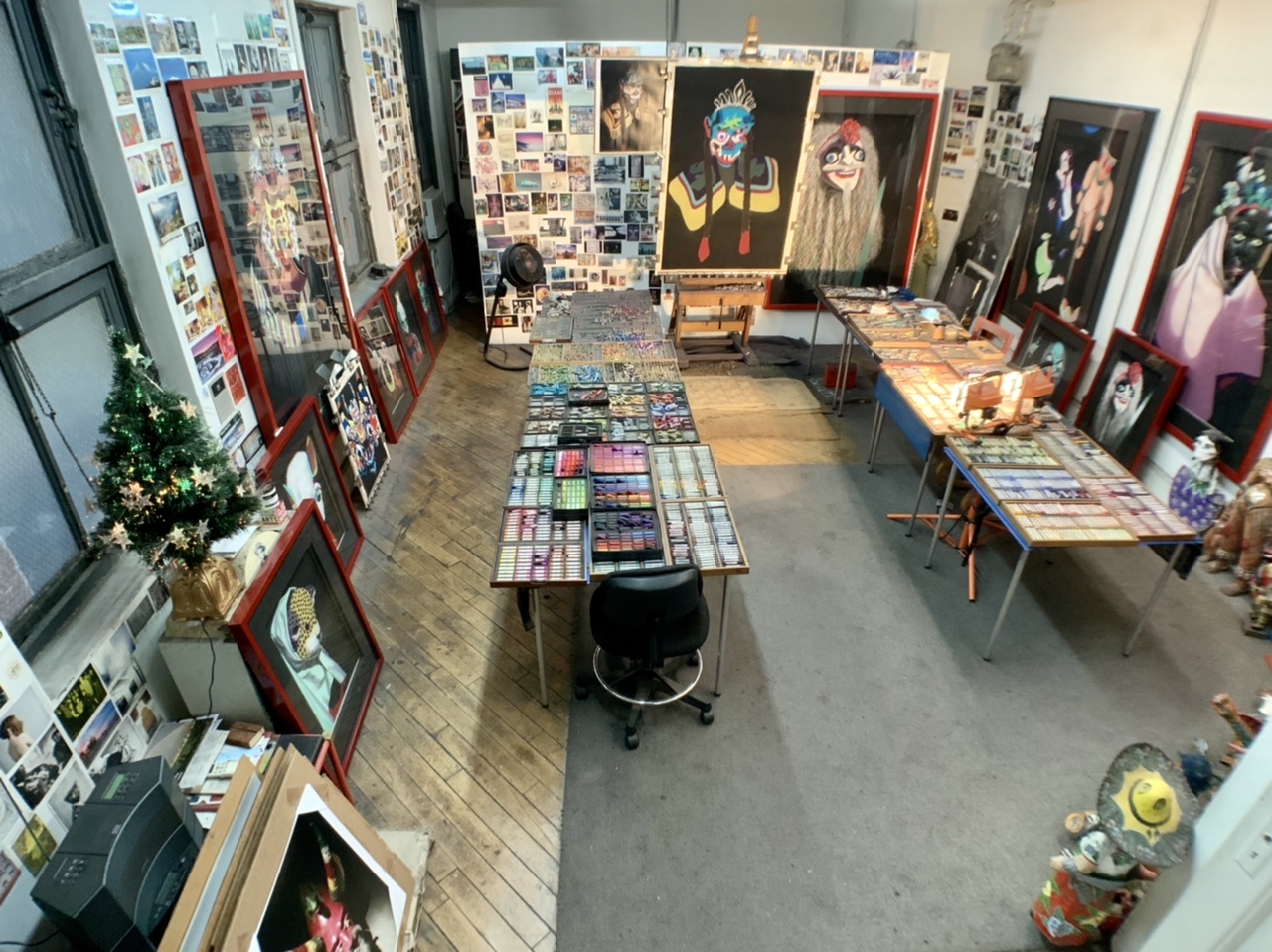
This passage in Ondaatje’s book resonates because I work similarly to refine and construct each pastel painting. My goal is to move the viewer’s eye around in an engaging and interesting way. This part of my process is subtle so I suspect that most of my audience neither appreciates nor even suspects that I have done it.
Comments are welcome!

Pearls from artists* # 483

*an ongoing series of quotations – mostly from artists, to artists – that offers wisdom, inspiration, and advice for the sometimes lonely road we are on.
The editor has a unique relationship with the actors. I never try to go on to the set to see the actors out of costume or out of character – and also just not to see the set. I only want to see what there is on screen. Ultimately, that’s all the audience is ever going to see. Everyone else working on the film at that stage is party to everything going on around the filmed scene: how cold it was when that scene was shot; who was mad at whom; who is in love with whom; how quickly something was done; what was standing just to the left of the frame. An editor particularly has to be careful that those things don’t exert a hidden influence on the way the film is constructed, can (and should in my view) remain ignorant of all that stuff – in order to find value where others might not see value, and on the other hand, to diminish the value of certain things that other people see as too important. It’s one o the crucial functions of the editor. To take, as far as it is possible, the view of the audience, who is seeing the film without any knowledge of all the things that went into its construction.
On Editing Actors, by Walter Murch in The Conversations: Walter Murch and the Art of Editing Film, by Michael Ondaatje
Comments are welcome!
Pearls from artists* # 481
*an ongoing series of quotations – mostly from artists, to artists – that offers wisdom, inspiration, and advice for the sometimes lonely road we are on.
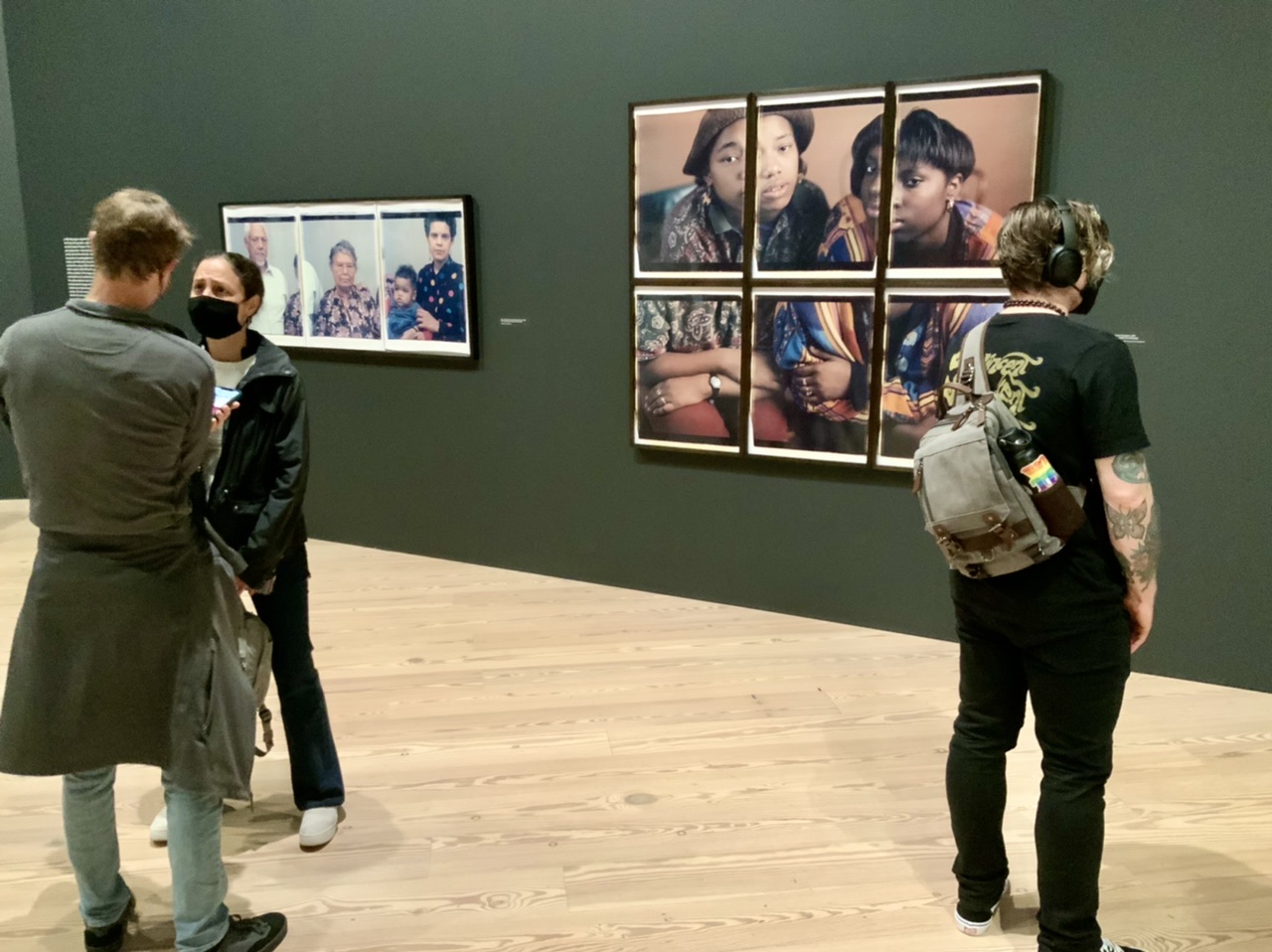
Artists, because they spend such prolonged periods in isolation, frequently fall behind the times. They may gain great self-knowledge, spiritual insight, and understanding of their media as they work in private, but at the price of a lack of vital knowledge of the world around them.
Because solitude provides artists with a safe haven, fits their personality, and offers them a kind of communal contact with other human beings through their work, it can also serve as a breeding ground for stagnation. Without ever realizing it, artists can grow flacid in isolation and begin to experience their solitude as deadening. The studio can become too easy and unchallenging a place.
The world outside the studio offers unmatched opportunities for growth and for the expression of authentic and courageous behavior. Artists often miss these opportunities and, remaining relatively untested, handle themselves poorly when they do venture out.
Eric Maisel in A Life in the Arts: Practical Guidance and Inspiration for Creative and Performing Artists
Comments are welcome!
Pearls from artists* # 468

*an ongoing series of quotations – mostly from artists, to artists – that offers wisdom, inspiration, and advice for the sometimes lonely road we are on.
Why does art elicit such different reactions from us? How can a work that bowls one person over leave another cold? Doesn’t the variability of the aesthetic feeling support the view that art is culturally determined and relative? Maybe not, if we consider the possibility that the artistic experience depends not on some subjective mood but on an individually acquired (hence variable) power to be affected by art, a capacity developed through one’s culture in tandem with one’s unique character. For evidence of this we can point to works that seem to ignore cultural boundaries altogether, affecting people of different backgrounds in comparable ways even though a specific articulation of their personal responses continues to vary. Consider the plays of William Shakespeare or Greek theater, or the fairy tales that have sprung up in similar forms on every continent. We could not be further removed from the people who painted in the Chauvet Cave, nor could we be more oblivious as to the significance they ascribed to their pictures. Yet their work affects us across the millennia. Everyone responds to them differently, of course, and the spirit in which people are likely to receive them now probably differs significantly from how it was at the beginning. But these permutations revolve around a solid core, something present in the images themselves.
J.F. Martel in Reclaiming Art in the Age of Artifice: A Treatise, Critique, and Call to Action
Comments are welcome!
Q: How do you work and approach your subject? (Question from “Arts Illustrated”)
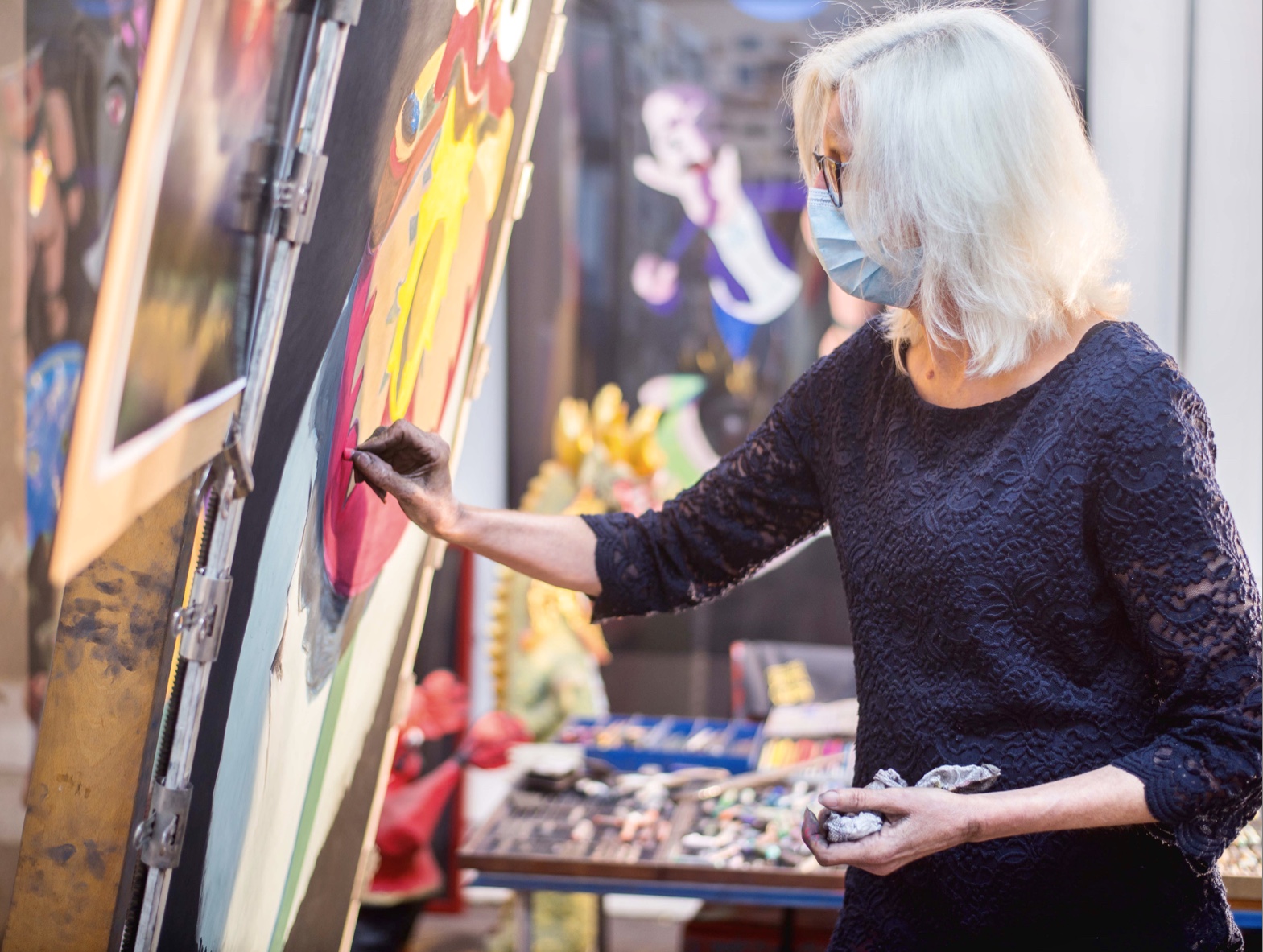
A: Undoubtedly, I could not make my work without UART sandpaper since my entire pastel technique evolved around it. I use 400 0r 500 grit. My favorite thing about it is its ‘tooth’ (i.e. texture or roughness).
Over the many months I spend creating a pastel painting, I build layer upon layer of soft pastel. Because the paper I use is relatively “toothy,” it accepts all of the pastel the painting needs. And as many people know, I own and use thousands of soft pastels!
Many layers of soft pastel and several months of studio time go into creating each painting. My self-invented technique is analogous to the glazing techniques used by the Old Masters, who slowly built up layers of thin oil paint to achieve a high degree of finish. Colors were not only mixed physically, but optically.
Similarly, I gradually build up layers of soft pastel, as many as thirty, to create a pastel painting. After applying a color, I blend it with my fingers and push it into the sandpaper’s tooth. It mixes with the color beneath to create a new color, continually adding richness, saturation, and intensity to the piece. By the time a pastel painting is finished, the colors are bold, vibrant, and exciting.
From the beginning in the 1980s I used photographs as reference material and my late husband, Bryan, would shoot 4” x 5” negatives of my elaborate setups with his Toyo-Omega view camera. In those days I rarely picked up a camera except when we were traveling. After Bryan was killed on 9/11, I inherited his extensive camera collection – old Nikons, Leicas, Graphlex cameras, etc. – and I wanted to learn how to use them. In 2002 I enrolled in a series of photography courses (about 10 over 4 years) at the International Center of Photography in New York. I learned how to use all of Bryan’s cameras and how to make my own big color prints in the darkroom.
Along the way I discovered that the sense of composition, form, and color I developed over many years as a painter translated well into photography. The camera was just another medium with which to express my ideas. Astonishingly, in 2009 I had my first solo photography exhibition in New York.
It’s wonderful to be both a painter and a photographer. Pastel painting will always be my first love, but photography lets me explore ideas much faster than I ever could as a painter. Paintings take months of work. To me, photographs – from the initial impulse to hanging a framed print on the wall – are instant gratification.
For several years I have been using my iPad Pro to capture thousands of travel photographs. Most recently, I visited Gujarat and Rajasthan in India. I have never been inclined to use a sketchbook so composing photos on my iPad keeps my eye sharp while I’m halfway around the world, far from my studio practice.
My blog, “Barbara Rachko’s Colored Dust,” continues to be a crucial part of my overall art practice. Blogging twice a week forces me to think deeply about my work and to explain it clearly to others. The process has helped me develop a better understanding about why I make art and, I like to think, has helped me to become a better writer.
Comments are welcome!
Q: How do you think about risk? What role has taking risks played in your life/career? (Question from Emma Jacobs, VoyageMIA.com)

A: My journey to becoming a visual artist was circuitous, to say the least. Risk-taking gave me the life and career I enjoy now.
The biggest – and scariest – risk I’ve ever taken was deciding to leave my active duty Naval career to pursue art full-time. The second most significant risk was moving to New York City in 1997. I have never regretted doing either one.
When I was 25, and a civilian, I earned my private pilot’s license and spent the next two years amassing other flying licenses and ratings, culminating in a Boeing-727 flight engineer’s certificate. Two years later I joined the Navy.
As an accomplished civilian pilot with thousands of flight hours, I had expected to fly jets in the Navy. However, women were barred from combat in those days (the 1980s) so there were very few women Navy pilots. There were no female pilots on aircraft carriers and no female Blue Angels. Women were restricted to training male pilots for combat jobs and priority was given to Naval Academy graduates. My BA was from a different university.
In the mid-1980s I was in my early 30s and a Lieutenant on active duty in the Navy. I worked a soul-crushing job as a computer analyst on the midnight shift in a Pentagon sub-basement. It was literally and figuratively the lowest point of my life. I hated my job! Not only was it boring, I was not using my hard-won flying skills. In short I was miserable – miserable and trapped because a Naval officer cannot just resign with two weeks notice.
Remembering the joyful Saturdays of my youth when I had taken art classes with a local New Jersey painter, I enrolled in a drawing class at the Art League School in Alexandria, Virginia. Initially I wasn’t very good, but it was wonderful to be around other women and a world away from the “warrior mentality” of my mostly male Pentagon co-workers. Plus, I was having fun!
Soon I enrolled in more classes and became a very motivated full-time art student who worked nights at the Pentagon. As I studied and improved my skills, I discovered my preferred medium – soft pastel on sandpaper.
Although I was certain I had found my life’s calling as a fine artist, I had grown used to a regular paycheck and the many benefits of being a Navy Lieutenant. For more than a year I agonized over whether or not to leave the Navy and lose my financial security. I’d be taking a huge risk: could I ever support myself as an artist? Was I making the dumbest mistake of my life?
Eventually, I decided I HAD TO take a leap. I simply adored making art – it challenged me to use all of my skills and talents – while I was unhappy, bored, and unfulfilled working at the Pentagon.
But once my mind was finally made up, I still could not leave. Due to geopolitical circumstances, there was a significant delay. The Navy was experiencing a manpower shortage and Congress had enacted a stop-loss order, which prevented officers from resigning for one year. I submitted my resignation effective exactly one year later: on September 30, 1989. Being stuck in a job I no longer wanted nor had the slightest interest in, was truly the longest year of my life!
Unlike most people, I can pinpoint exactly when I became an artist. I designate October 1, 1989 as the day I became a professional artist! I have never regretted my decision and I never again needed, nor had, a day job.
However, I must mention that I remained as a part-time Naval Reservist for the next 14 years, working primarily at the Pentagon for two days every month and two weeks each year. The rest of the time was my own to pursue my art career. After I moved to Manhattan in 1997, I commuted by train to Washington, DC to work for the Navy.
Finally on November 1, 2003, I officially retired as a Navy Commander. Now, I daresay, I am the rare fine artist who can point to a Navy pension as a source of income.
I love my life as an accomplished New York fine artist! With the help of two social media assistants, I work hard to make and promote the art I create. My pastel paintings and my pastel skills continue to evolve and grow, gaining wider recognition and a larger audience along the way.
In addition to making art, I have been a blogger since 2012. The audience for my blog, https://barbararachkoscoloreddust.com/ increases by 1,000 – 2,000 new subscribers each month. Today I have more than 72,000 readers!
Comments are welcome!

Pearls from artists* # 443

*an ongoing series of quotations – mostly from artists, to artists – that offers wisdom, inspiration, and advice for the sometimes lonely road we are on.
The theater has been good to me. It has produced great friendships, love, travel, hard work, fun, terror and pleasure. It has also offered an entire life of study. Study is a full-time engagement which includes reading books, reading people, reading situations, reading about the past and reading about the present. To study, you enter into a situation with your whole being, you listen and then begin to move around inside it with your imagination. You can study every situation you are in. You can learn to read life while life is happening.
Anne Bogart in A Director Prepares: Seven Essays on Art and Theatre
Comments are welcome!
Q; What was the spark that got you started? (Question from Barbara Smith via Facebook)

A: If I had to select one factor, I would say, profound unhappiness with my professional life. In 1986 I was a 33-year-old Navy Lieutenant working as a computer analyst at the Pentagon. I hated my job, was utterly miserable, and moreover, I was trapped because unlike many jobs, it’s not possible to resign a Naval commission with two weeks notice.
My bachelor’s degree had been in psychology. When I was in my 20s and before I joined the Navy, I had spent two years and my own money training to become a licensed commercial pilot and Boeing-727 Flight Engineer. I had planned to become an airline pilot, but due to bad timing (airlines were not hiring pilots when I was looking for a job), that did not come to pass.
So there I was with absolutely no interest, nor any training in computers, working for the Joint Chiefs of Staff, and completely bored. I knew I must have taken a wrong turn somewhere and resolved to make a significant change. Searching around, I discovered a local art school, the Art League School in Alexandria, VA, and began taking drawing classes.
One drawing class lead to more. Within a couple of years, due to being highly motivated to change my life, my technical skills rapidly improved. Even then, I believe, it was obvious to anyone who knew me that I had found my calling. I resigned my active duty Naval commission and have been a fulltime professional artist since October 1989. (Note: For fourteen more years I remained in the Naval Reserve working, mostly at the Pentagon, one weekend a month and two weeks each year, and retired as a Navy Commander in 2003).
Life as a self-employed professional artist is endlessly varied, fulfilling, and interesting. I have never once regretted my decision to pursue art fulltime!
Comments are welcome!


 barbararachkoscoloreddust.com