Blog Archives
Pearls from artists* # 108
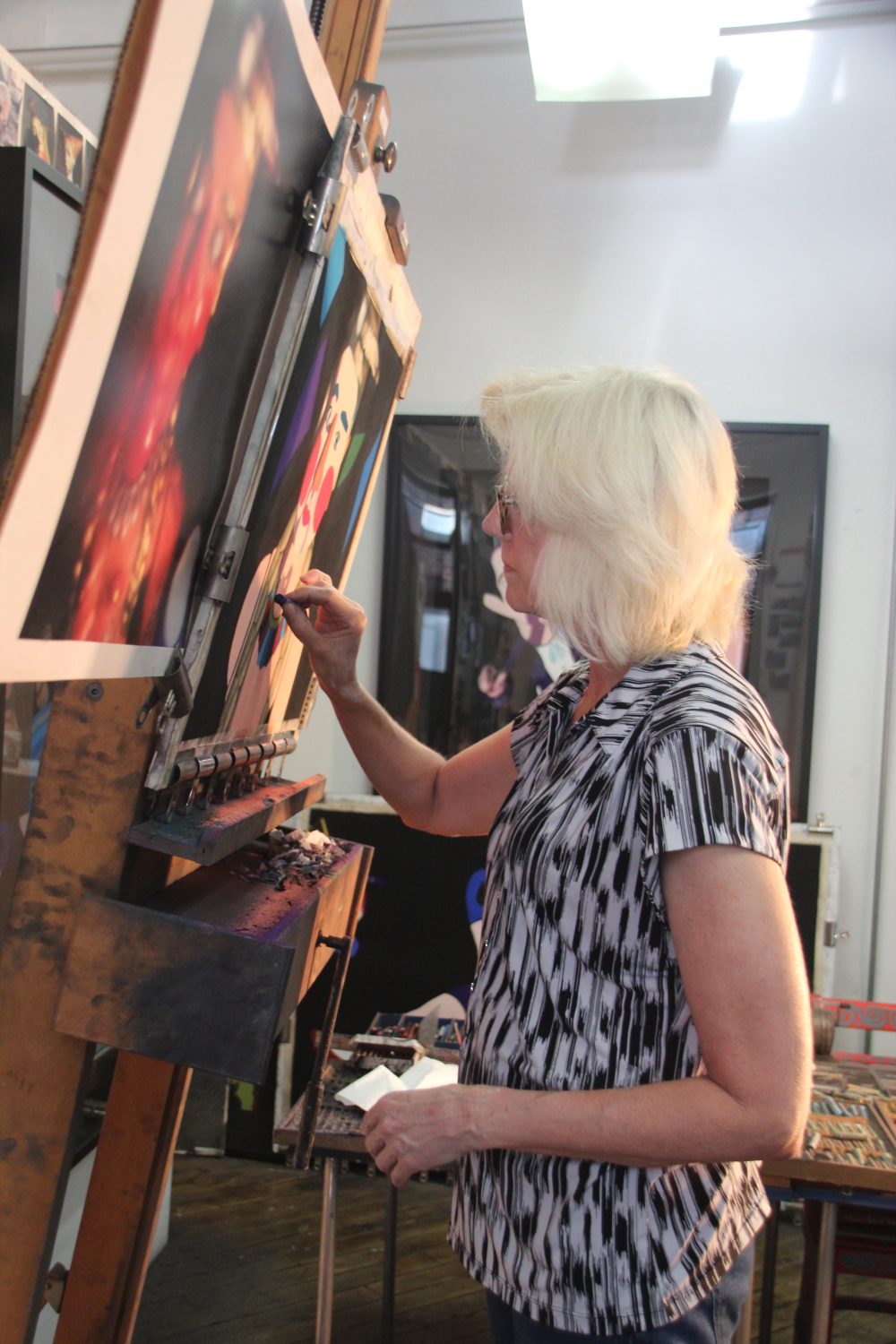
At work on a pastel painting
* an ongoing series of quotations – mostly from artists, to artists – that offers wisdom, inspiration, and advice for the sometimes lonely road we are on.
Artists generally need privacy in order to create, and as I’ve noted, what constitutes adequate privacy varies by person and time. Solitude quickly becomes isolation when it oversteps one’s desires. But most artists need to feel that they and their work won’t be examined prematurely and, certainly, won’t be ambushed unfinished by ridiculing eyes. You might go out and invite various people to critique a piece in progress, even knowing they’re unlikely to view it with sympathy, exactly because you feel there’s necessary information in their opinion. But, if you’ve invited them, however unpleasant the response, your experience is likely preferable to what you would feel if they impulsively offered up the same critiques unsolicited.
Someone making art needs privacy in part because the process of creation makes many people feel vulnerable, sometimes exquisitely so, particularly since the work frequently emerges in a jumble of mixed-up small parts that you can only assemble gradually, or in a wet lumpy mound that requires patient sculpting. When people feel prematurely revealed or exposed, they often experience great discomfort and find themselves babbling apologetically, seeking to reassure by laying out the distance they have yet to travel. It is in part this babble-as-smoke-screen to cover exposure resulting, distracting, unhappy self-consciousness that privacy seeks to shelter.
But even more significantly, privacy grants us permission to turn our attention inward without interruption. As I described earlier, in order to concentrate, think, and fantasize, we need to feel we’re in a safe enough space that we can lower our vigilance, stop monitoring our environment, and allow ourselves to refocus on the happenings within our own minds. There are times interruptions feel merciful, but many more when they disrupt our effort to flesh out an inchoate notion.
Janna Malamud Smith in an absorbing errand: How Artists and Craftsmen Make Their Way to Mastery
Comments are welcome!
Q: How long does it take you to complete a pastel-on-sandpaper painting?
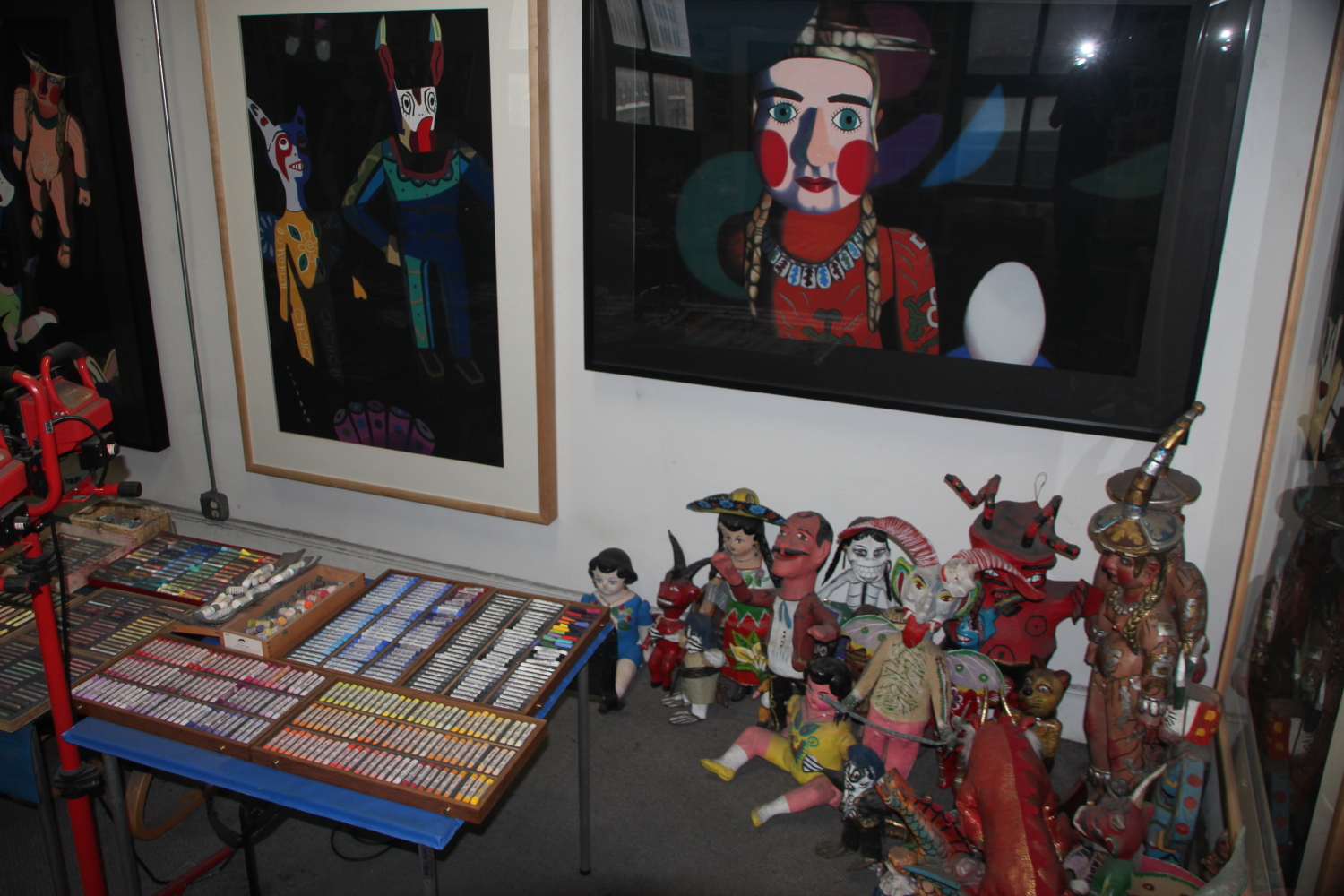
Barbara’s studio
A: Mine is a slow and labor-intensive process. First, there is foreign travel to find the cultural objects – masks, carved wooden animals, paper mâché figures, and toys – that are my subject matter. If they are heavy I ship them home.
Next comes planning exactly how to photograph them, lighting and setting everything up, and shooting a roll of 220 film with my Mamiya 6 camera. I still like to use an analog camera for my fine art work, although I am rethinking this. I have the film developed, decide which image to use, and order a 20” x 24” reference photograph from Manhattan Photo on West 20th Street.
Then I am ready to start. I work on each pastel-on-sandpaper painting for approximately three months. I am in my studio 7 to 8 hours a day, five days a week. During that time I make thousands of creative decisions as I apply and layer soft pastels (I have 8 tables-worth to choose from!), blend them with my fingers, and mix new colors directly on the sandpaper. A finished piece consists of up to 30 layers of soft pastel. My self-invented technique accounts for the vivid, intense color that often leads viewers of my originals to look very closely and ask, “What medium is this?” I believe I am pushing soft pastel to its limits, using it in ways that no other artist has done.
Comments are welcome!
Pearls from artists* # 99

Barbara’s studio
* an ongoing series of quotations – mostly from artists, to artists – that offers wisdom, inspiration, and advice for the sometimes lonely road we are on.
I think there are two very interesting stages in creative work. One is confusion and one is boredom. They generally both mean that there’s a big fish swimming under the water. As Rilke said, “Live the questions.” And not judge that there’s something wrong about confusion, because the people who are working, say, on the cure for leprosy – they work for years and years in a state of confusion, and very often they don’t find the cure. They find something completely different. But they keep living the question. Confusion is absolutely essential to the creative process. If there was no confusion, why do it? I always feel that all of us have questions we’re asking all our lives, for our work, and if we ever found the answer, we’d stop working. We wouldn’t need to work anymore.
Boredom – if you’ve ever been in therapy, you’d know that when you start getting bored, that’s really important. The therapist sits up; there’s something going on, because the wall that you come against – that’s where the real gold is. It’s really precious.
Andre Gregory (from My Dinner with Andre) in Anne Bogart, Conversations with Anne: Twenty-four Interviews
Comments are welcome!
Pearls from artists* # 86

“Broken,” 38″ x 58,” soft pastel on sandpaper
* an ongoing series of quotations – mostly from artists, to artists – that offers wisdom, inspiration, and advice for the sometimes lonely road we are on.
When I’m working from a photograph, a transparency, or direct observation, I am always amazed at how much more I see as the painting progresses. After I think I have completely perceived a particular area, something else reveals itself. As the work continues, the level of awareness deepens. The process takes it’s own time. I have come to accept that time and not fight it. I know that when I begin my work, no matter how hard I try, I’ll never observe as much on the first day as I will on the last. Like life, the development will not be rushed, nor will there be full realization before completion.
Dr. Leopold Caligor, a prominent New York psychiatrist, says that he listens to tapes of recorded sessions with patients, he hears new things and gains deeper insights. Each time he listens, more information is uncovered. This process is repeated until understanding is complete.
Audrey Flack in Art & Soul: Notes on Creating
Comments are welcome!
Pearls from artists* # 81
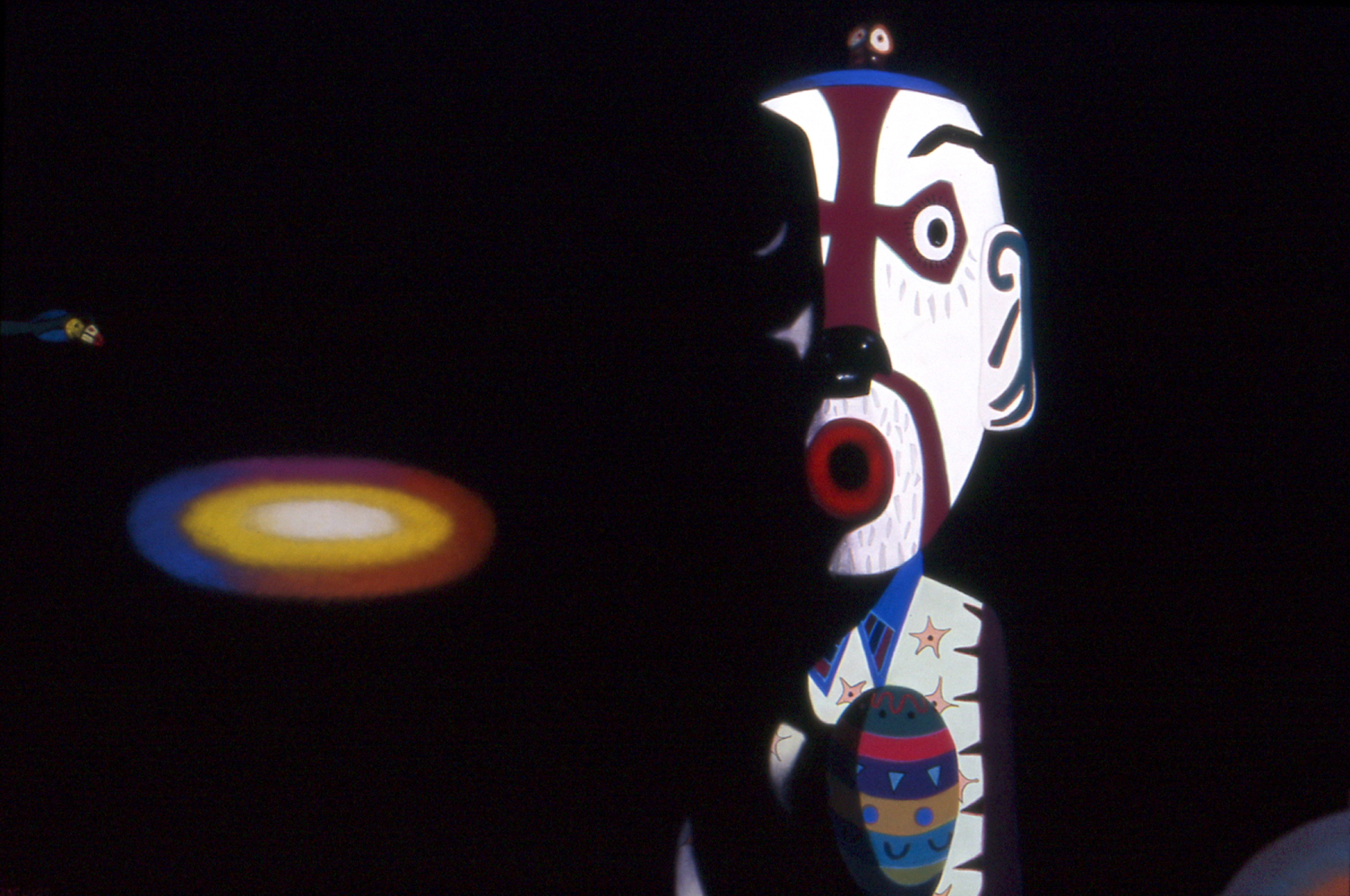
“Poker Face,” soft pastel on sandpaper, 38″ x 58″
* an ongoing series of quotations – mostly from artists, to artists – that offers wisdom, inspiration, and advice for the sometimes lonely road we are on.
The creative process remains as baffling and unpredictable to me today as it did when I began my journey over forty years ago. On the one hand, it seems entirely logical – insight building on insight; figures from my past, the culture, and everyday life sparking scenes and images on canvas; and all of it – subject, narrative, theme – working together with gesture, form, light to capture deeply felt experience. But in real time the process is a blur, a state that precludes consciousness or any kind of rational thinking. When I’m working well, I’m lost in the moment, painting quickly and intuitively, reacting to forms on the canvas, allowing their meaning to reveal itself to me. In every painting I make I’m looking for some kind of revelation, something I didn’t see before. If it surprises me, hopefully it will surprise the viewer, too.
Eric Fischl and Michael Stone in Bad Boy: My Life On and Off the Canvas
Comments are welcome!
Pearls from artists* # 78
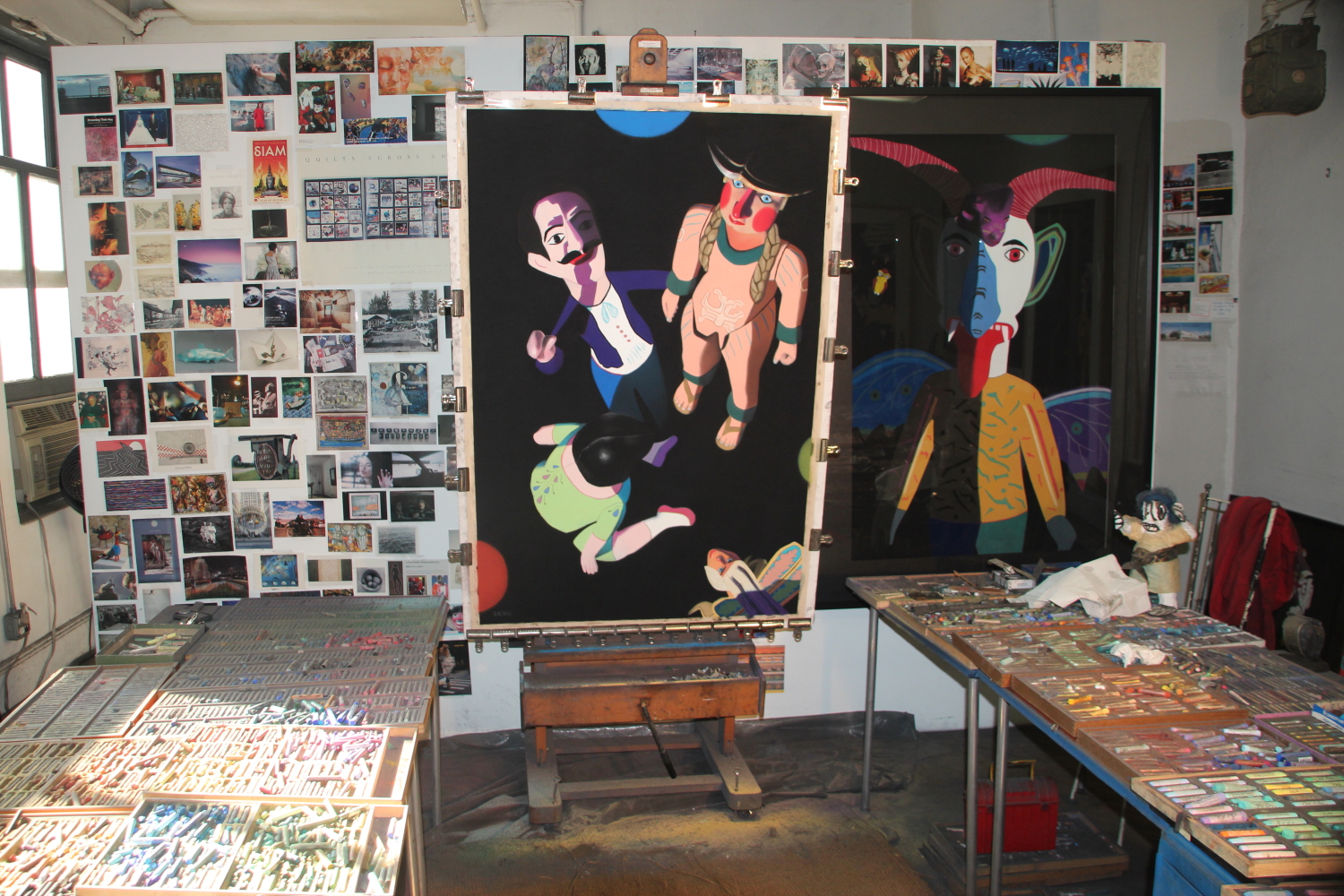
Barbara’s studio
* an ongoing series of quotations – mostly from artists, to artists – that offers wisdom, inspiration, and advice for the sometimes lonely road we are on.
To me, openings are never what you want them to be. The excitement, relief, anxiety, and anticipation are too much to process. There’s no apotheosis, no pinnacle, no turning point. It’s not like theater, where at the end of a performance people get up and applaud.
Nothing gets created at an opening. Nothing of artistic merit takes place. All of that important stuff happens in the studio, long before the exhibition, when you’re alone. For me, anyway, openings are something to get through, an ordeal to be endured. The bigger the event, the less I remember it. I pretty much walk in, and wherever I stop is where I stay. I paint a grin on my face so fixed that by the end of the evening my jaw is sore. I remember none of the conversations. I stand there shaking hands, blindly mouthing, “Thank you. Thank you very much.” Then eventually April [Gornick, Fischl’s wife] collects me and we leave.
If, on the other hand, you were to ask me what I remember about making the paintings in a show, that’s a different story. Imagine touching something, stroking it, jostling it, caressing it, and as you’re doing this, you are creating it. How you touched it is how it came into existence. Unlike other pleasures, where the feelings fade quickly as details become blurred, with paintings you remember everything. Within the details are all the bumps and the friction, the memory of when the creative instinct flowed, when you were distracted or lazy or working too hard. It’s all there on the canvas. When I look at my paintings again, years later, even, I remember it all – the victory laps and the scars.
Eric Fischl and Michael Stone in Bad Boy: My Life On and Off the Canvas
Comments are welcome!
Q: Where do you want your work to go in the future?
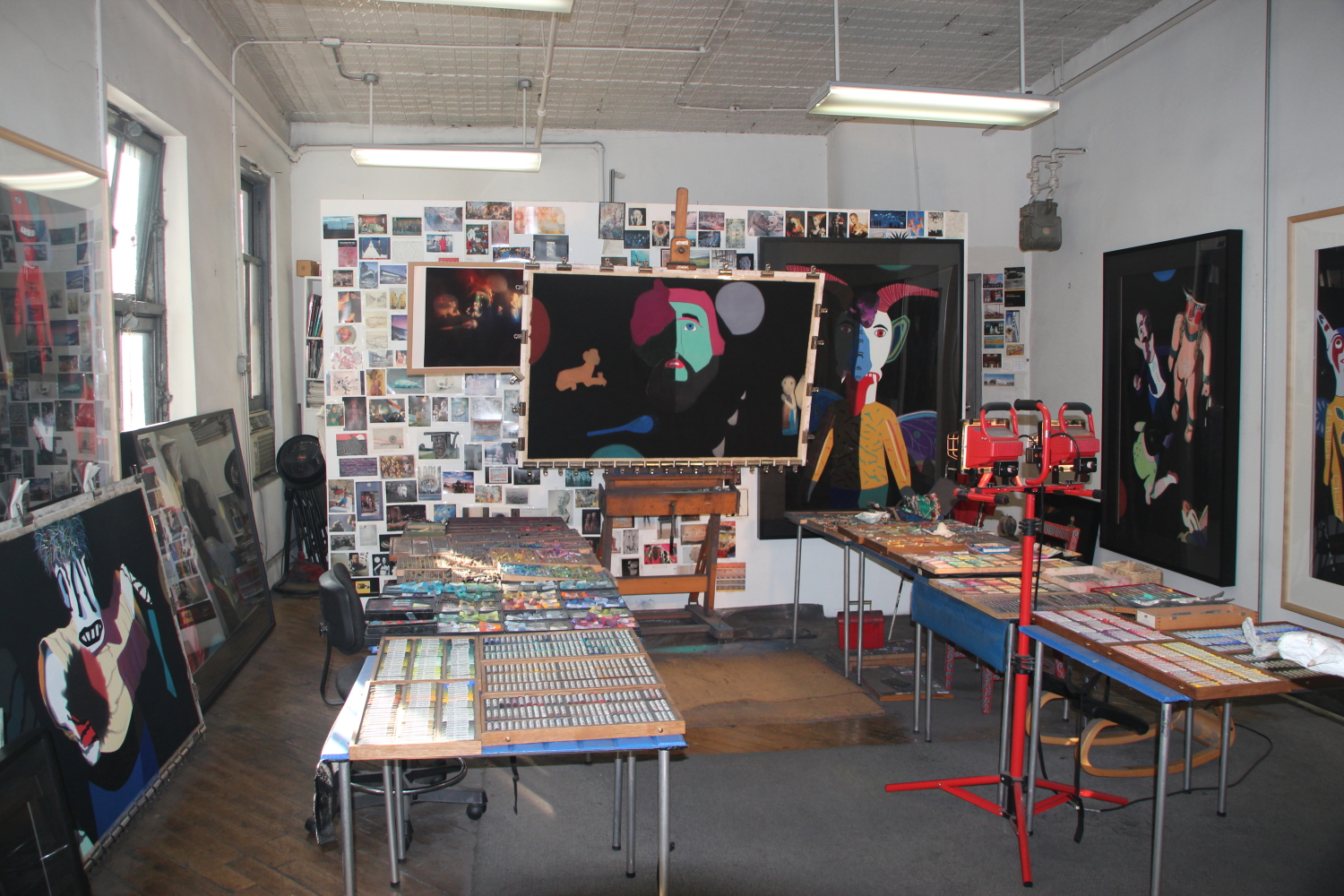
Barbara’s studio
A: Recently I answered a question about why I create, but now that I think about it, the same answer applies to what I want to do as an artist in the future:
~ to create bold and vibrant pastel paintings and photographs that have never existed before
~ to continue to push my primary medium – soft pastel on sandpaper – as far as I can and to use it in more innovative ways
~ to create opportunities for artistic dialogue with people who understand and value the work to which I am devoting my life
The last has always been the toughest. I sometimes think of myself as Sisyphus because expanding the audience for my art is an ongoing uphill battle. Many artist friends tell me they feel the same way about building their audience. It’s one of the most difficult tasks that we have to do as artists. I heard Annie Leibovitz interviewed on the radio once and remember her saying that after 40 years as a photographer, everything just gets richer. Notice that she didn’t say it gets any easier; she said, “it just gets richer.” I have been a painter for nearly 30 years and a photographer for 11. I agree completely. All artists have to go wherever our work goes. Creating art and watching the process evolve is an endlessly fascinating intellectual journey. I wouldn’t want to be spending my time on earth doing anything else!
Comments are welcome!
Pearls from artists* # 77
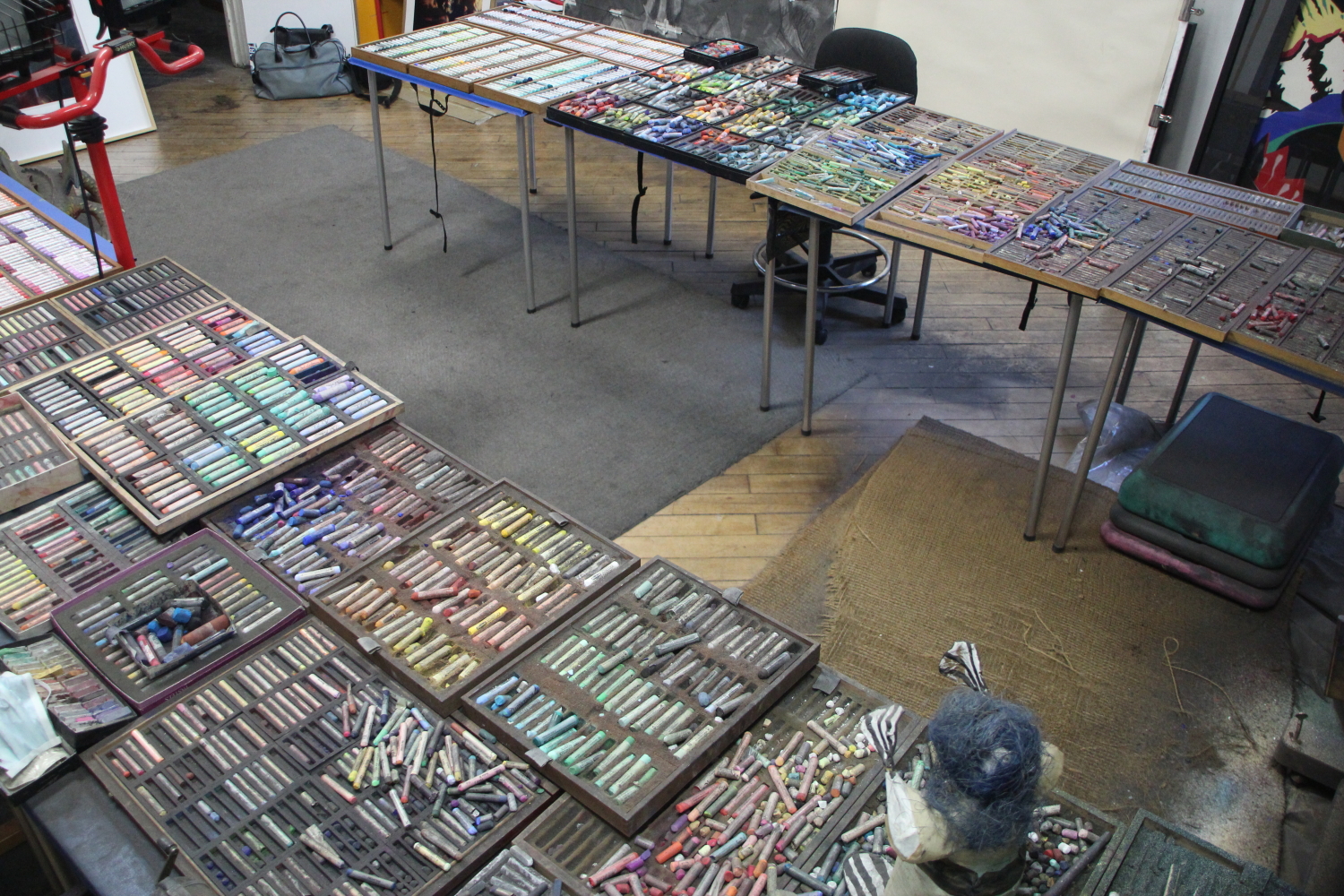
Barbara’s studio
* an ongoing series of quotations – mostly from artists, to artists – that offers wisdom, inspiration, and advice for the sometimes lonely road we are on.
Current possibilities far exceed any single artist’s capacity to engage them. Indeed, every known way of making art ever undertaken in all of history is included in today’s inventory of creative options. Thus, choices must be made. This has had a profound effect upon the quantity and diversity of skills needed to become an artist today. In addition to such conventional forms of artistic talent as visual acuity, manual dexterity, sensitivity, intelligence, ingenuity, and perseverance, contemporary artists must also be able to make judicious choices from a limitless inventory of alternatives. A decisive aspect of the creative act involves choosing a place amid possibilities that are as bountiful as they are eclectic and chaotic. Even this process entail choices. In staking the territory they wish to occupy, artists may be gluttons or ascetics, connoisseurs or commoners. Relationships between artists and their career choices may be lifelong and monogamous, or sequentially monogamous, polygamous, or promiscuous. But artists’ options even exceed selecting precedents. Free access to the past is amplified by freedom to augment the catalogue of creative options by contributing something new.
In the Making: Creative Options for Contemporary Art by Linda Weintraub
Comments are welcome!
Pearls from artists* # 72
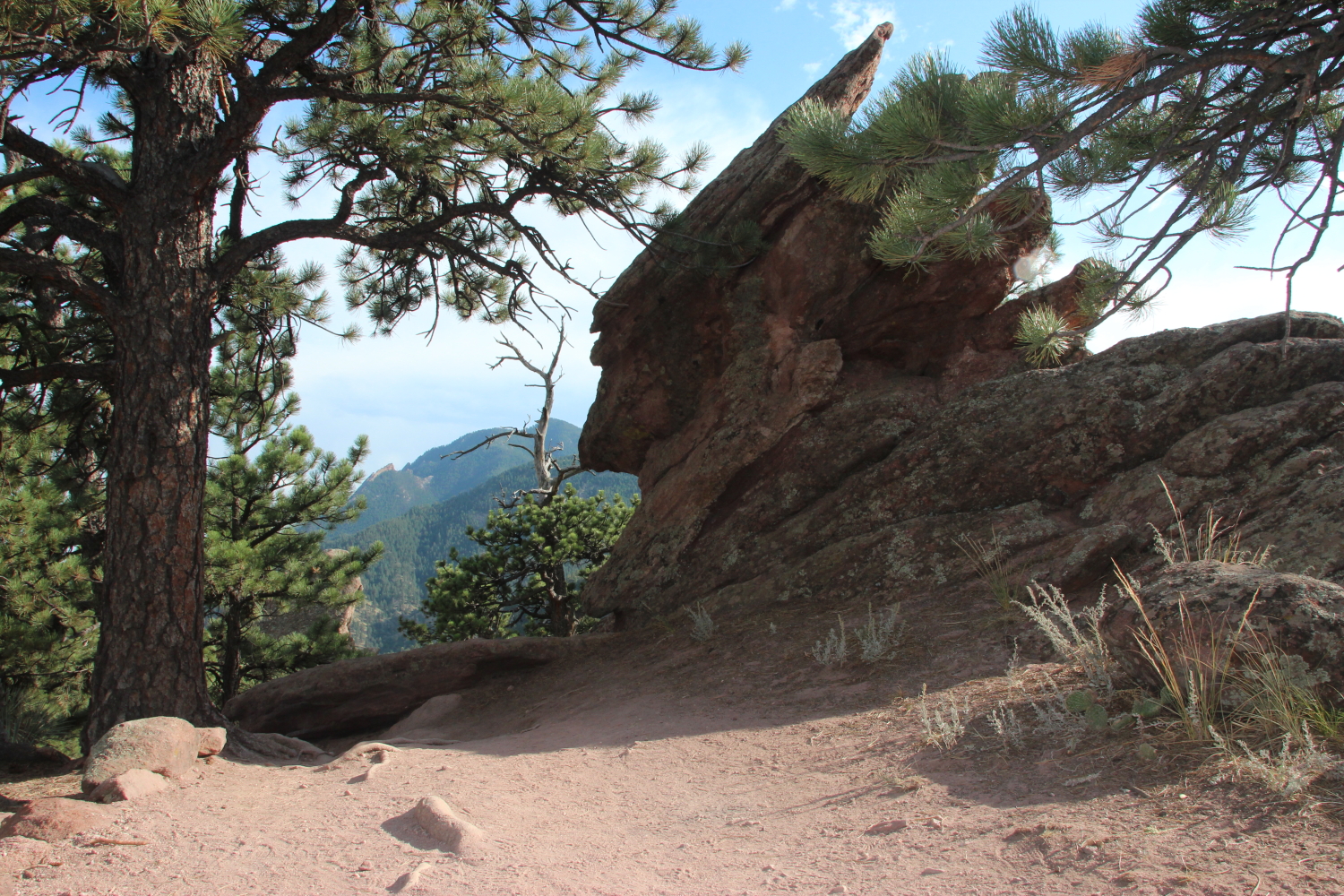
Boulder, CO
* an ongoing series of quotations – mostly from artists, to artists – that offers wisdom, inspiration, and advice for the sometimes lonely road we are on.
Art is a process and a journey. All artists have to find a way to lie to themselves, find ways to fool themselves into believing that what they’re doing is good enough, the best they can do at that moment, and that’s ok. Every work of art falls short of what the artist envisioned. It is precisely that gap between their intention and their execution that opens up the door for the next work.
Eric Fischl and Michael Stone in Bad Boy: My Life on and off the Canvas
Comments are welcome!
Q: What’s on the easel today?
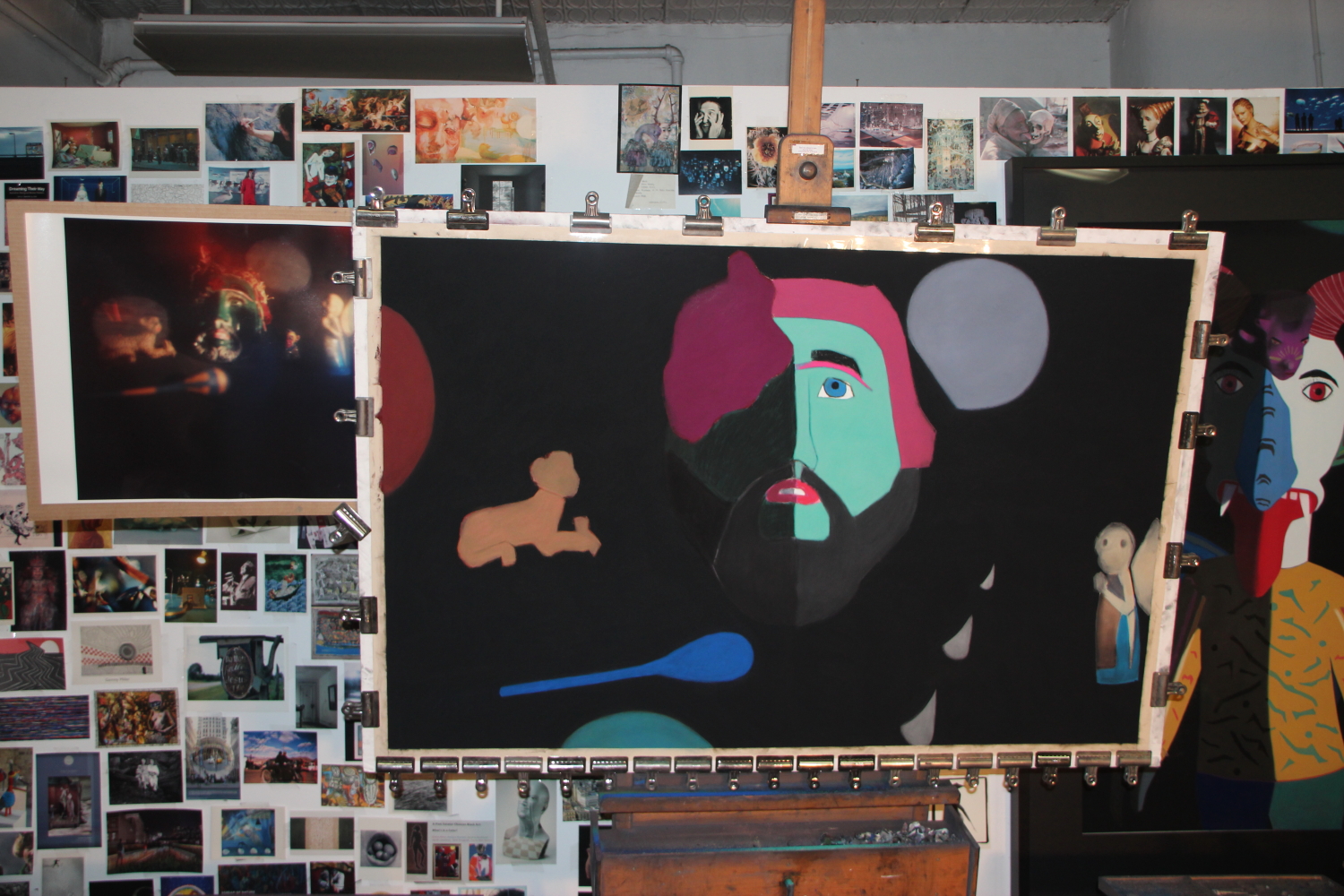
Pastel-on-sandpaper painting in progress
A: I am working on a pastel painting that features a mask I found in Todos Santos, Mexico on a recent trip there with friends. This is the first time I have so prominently featured a head without a body so I’m unsure whether the painting is coming together just yet. Fortunately it’s very early in the process so there is plenty of time to make adjustments.
Comments are welcome!



