Blog Archives
Q: Do you have any big projects coming up?

A: I certainly do! I have been a painter for forty years, and for most of that time, my work has been shaped by foreign travel. At seventy-two, I find myself thinking about legacy — what I want to leave behind. Documenting my creative process on film has become an essential part of this objective.
In the “Bolivianos” series, I have been creating pastel-on-sandpaper paintings that transform the vivid masks of the Bolivian Carnival into universal archetypes. I first encountered these masks at a museum in La Paz in 2017.
Circumstances have aligned perfectly for an exciting next step: another trip to Bolivia and a new documentary. Our upcoming film will be a follow-up to the award-winning “Barbara Rachko: True Grit” (released in 2023), marking a deeper exploration of my thirty-five-year engagement with folk art from Mexico, Central America, and South America.
(See https://youtu.be/JJWLy84kXI0?si=v7JHIq9ViYGgs76U)
In February 2026, I will return to Bolivia with a two-person film crew to experience Carnival firsthand — to immerse myself in its rhythm, history, and meaning. Recognized by UNESCO as a Masterpiece of the Oral and Intangible Heritage of Humanity, this festival offers an extraordinary window into Bolivia’s cultural soul.
Our film will chronicle my journey as essential research — a vital continuation of my creative inquiry over these past decades. With this trip and film, I hope to create my next body of pastel-on-sandpaper paintings, rich with color, spirit, and the enduring vitality of Oruro’s Carnival.
Comments are welcome!
Pearls from artists* # 674
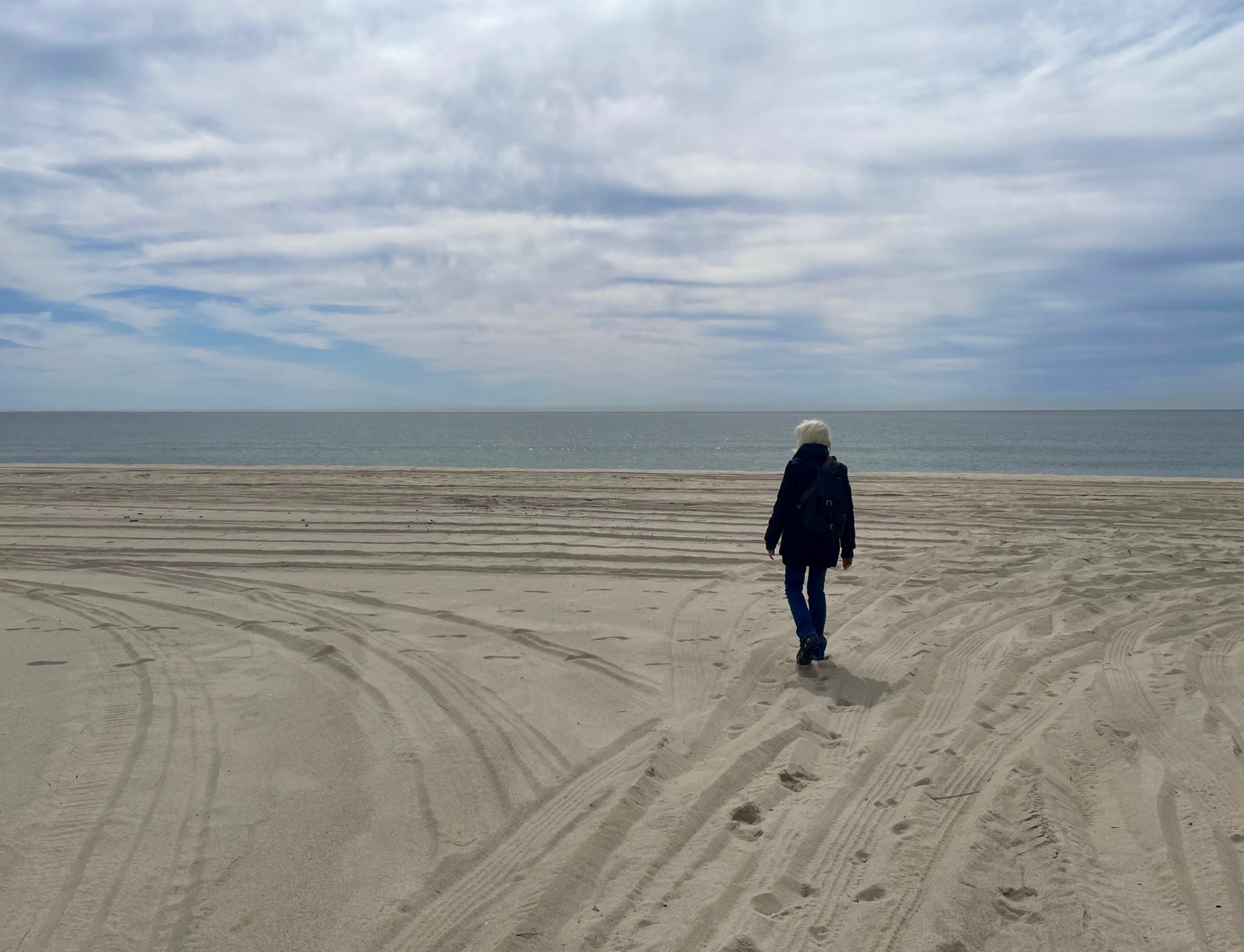
Southampton, New York Photo: Susan Erlichman
*an ongoing series of quotations – mostly from artists, to artists – that offers wisdom, inspiration, and advice for the sometimes lonely road we are on.
Everything about art requires dedication and presence. It is an intimate act, demanding the kind of sustained devotion we rarely lavish on other human beings. The artist’s generosity is highly impractical because there is no guarantee that it will ever be appreciated. Consider the level of optimism needed to repeatedly spend, even deplete, whatever reserves might be required to create the most superlative gift you could offer, one that is essentially given away to the world for free. The work we make is a love letter in a bottle, thrown into the ocean. It may or may not be read. We do not negotiate. like businesspeople, ‘You give me this, and I will give you that…’ We bequeath our pursuit of excellence and creative spirit to our audience, without reservation or qualification. We know what we have invested in it and sleep better because of it.
– Kate Kretz in Art From Your Core: A Holistic Guide to Visual Voice
Comments are welcome!
Pearls from artists* # 646

Signing “Apparition,” soft pastel on sandpaper, 58” x 38”
*an ongoing series of quotations – mostly from artists, to artists – that offers wisdom, inspiration, and advice for the sometimes lonely road we are on.
We are the sum of our unique, individual life experiences. The trials we have faced, the causes we fight for, the fears that haunt us, the oddities of our minds; all of these and more become the food for our spirit. The universe does not need repetition from the past; another pretty, but pointless nude, sunlit but stale impressionist landscape, or old and cold minimalist cube. It needs you. It needs you to strip away all that clouds your genuine sense of self. It needs you to unearth and unabashedly own your messy, honest, and magnificent truth. And it needs you to deepen and shape that truth into an authentic core, one that will nourish you and your work for a lifetime.
Kate Kretz in Art From Your Core: A Holistic Guide to Visual Voice
Comments are welcome!
Pearls from artists* # 614

*an ongoing series of quotations – mostly from artists, to artists – that offers wisdom, inspiration, and advice for the sometimes lonely road we are on.
The artist has accepted his fate with open eyes, and I do not believe that he wishes any charity in relation to his self-assumed sacrifice. He wants nothing but the understanding and love of what he does. There can be no other rewards. The foregoing therefore is not in the spirit of asking for a charitable contribution, but rather the clearing of the way for what is really the motivating factor for this strange phenomenon: the creation of art.
Mark Rothko in The Artist’s Reality: Philosophies of Art
Comments are welcome!
Pearls from artists* # 580
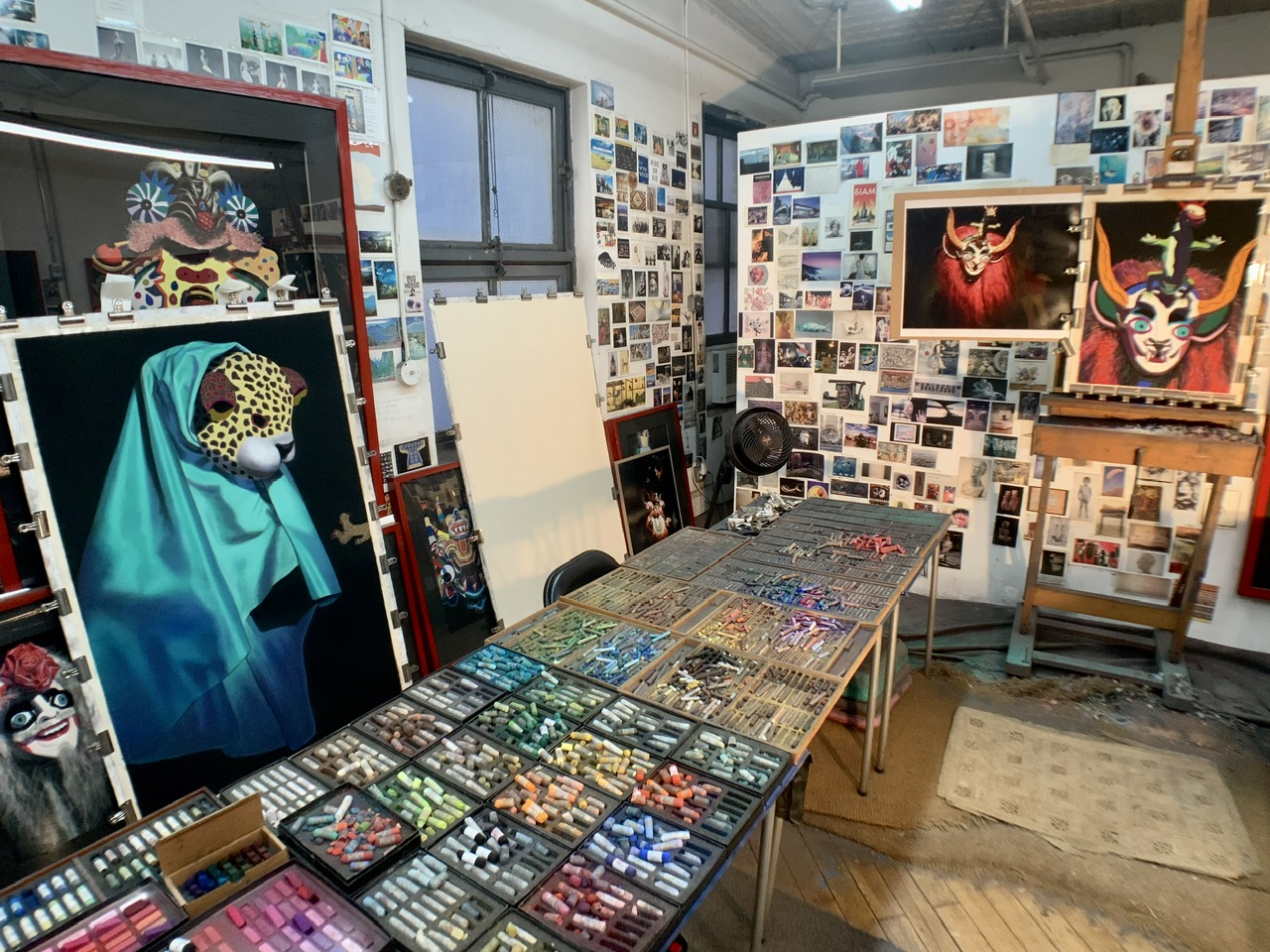
Barbara’s Studio
*an ongoing series of quotations – mostly from artists, to artists – that offers wisdom, inspiration, and advice for the sometimes lonely road we are on.
Love is the spirit that motivates the artist’s journey. The love may be sublime, raw, obsessive, passionate, awful, or thrilling, but whatever its quality, it’s a powerful motive in the artist’s life. The actor Derek Jacobi distinguished this special deeply rooted drive from mere desire in the following way:
You have to have an absolute obsession and compulsion to act, not just desire; it’s just not enough to have talent and want to express it, it’s not enough. It’s got to be more deeply rooted, more abrasive. The fire in the belly has got to be there. If there’s no fire, you can’t do it.
What is it that the artist loves? It is first and foremost the sheer power of whatever medium has attracted him. This is why he’s an artist and not a botanist or an archeologist: an art form has gotten under his skin. It may be the power of the book that gripped him, the power of dance, the power of music, the power of the image, or the power of the play.
Eric Maisel in A Life in the Arts: Practical Guidance and Inspiration for Creative and Performing Artists
Comments are welcome!
Pearls from artists* #571
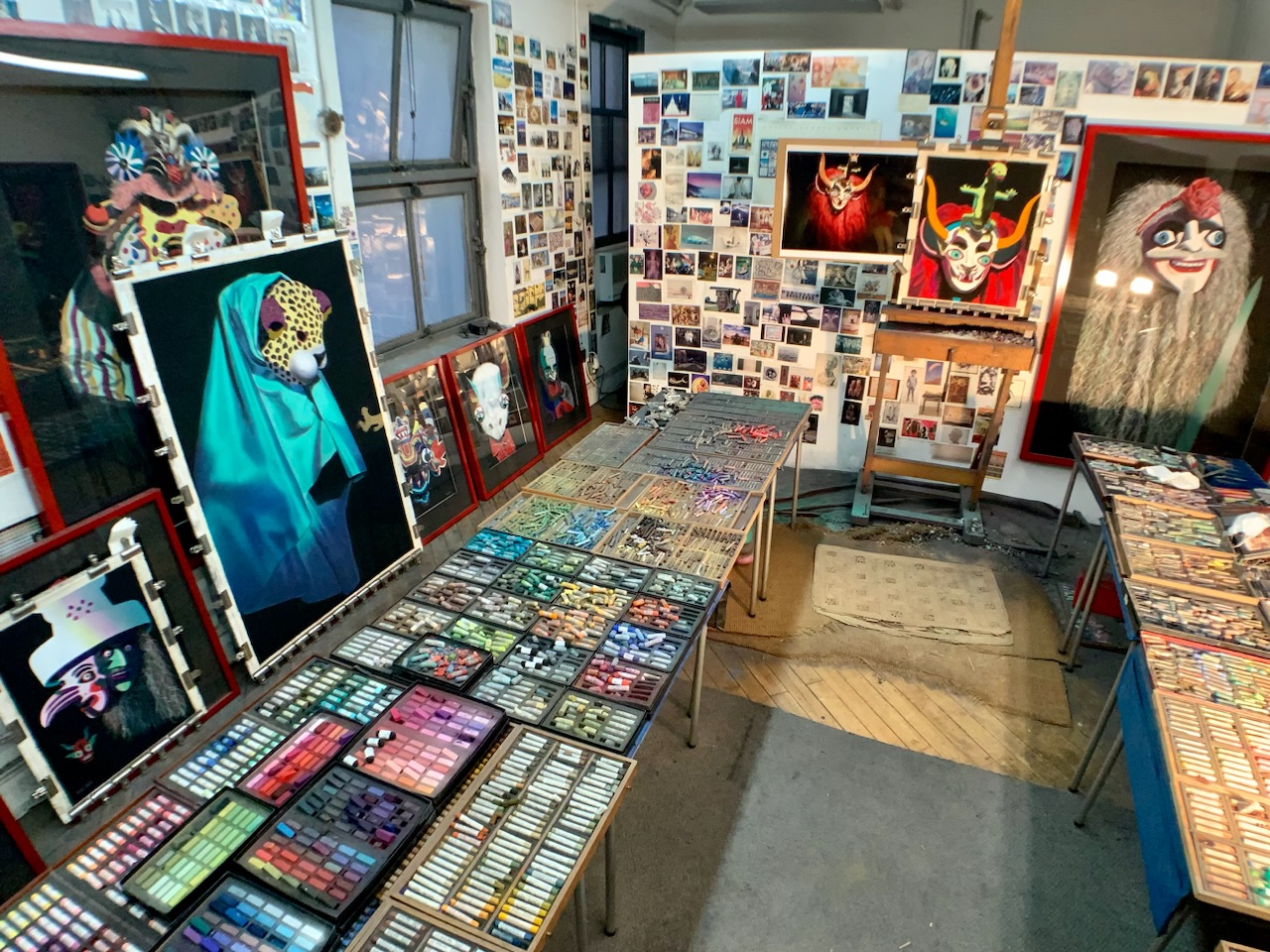
The Studio
*an ongoing series of quotations – mostly from artists, to artists – that offers wisdom, inspiration, and advice for the sometimes lonely road we are on.
To put it simply, but accurately, artists are often lost to the world because of their obsessions with their art. They may be just as lost as they prepare to work or incubate a new idea as in those feverish days when they make their final cuts on a film or race toward a publishing deadline. They may obsess about artistic questions and feel bursts of creative energy day or night, alone or in the company of others, in the middle of the work week or on vacation in the Bahamas.
Lost in time and space, the artist may feel more connected to Picasso, Emily Dickinson, Ingmar Bergman, Gertrude Stein, Handel, or Tennessee Williams than to the people in his immediate world. The living past holds extraordinary meaning for him. He travels elsewhere, removing his spirit and attention from the present. He may reside, as he works on his novel, in the childhood of a character, walking the garden paths and living the household dramas there. He may come upon a Rembrandt drawing and find himself wrenched, not to any particular place or time, but just elsewhere, as he experiences the greatness of his traditions, measures himself anew, and dreams again of his future.
Eric Maisel in A Life in the Arts: Practical Guidance and Inspiration for Creative and Performing Artists
Comments are welcome!
Q: Why do you work in series?
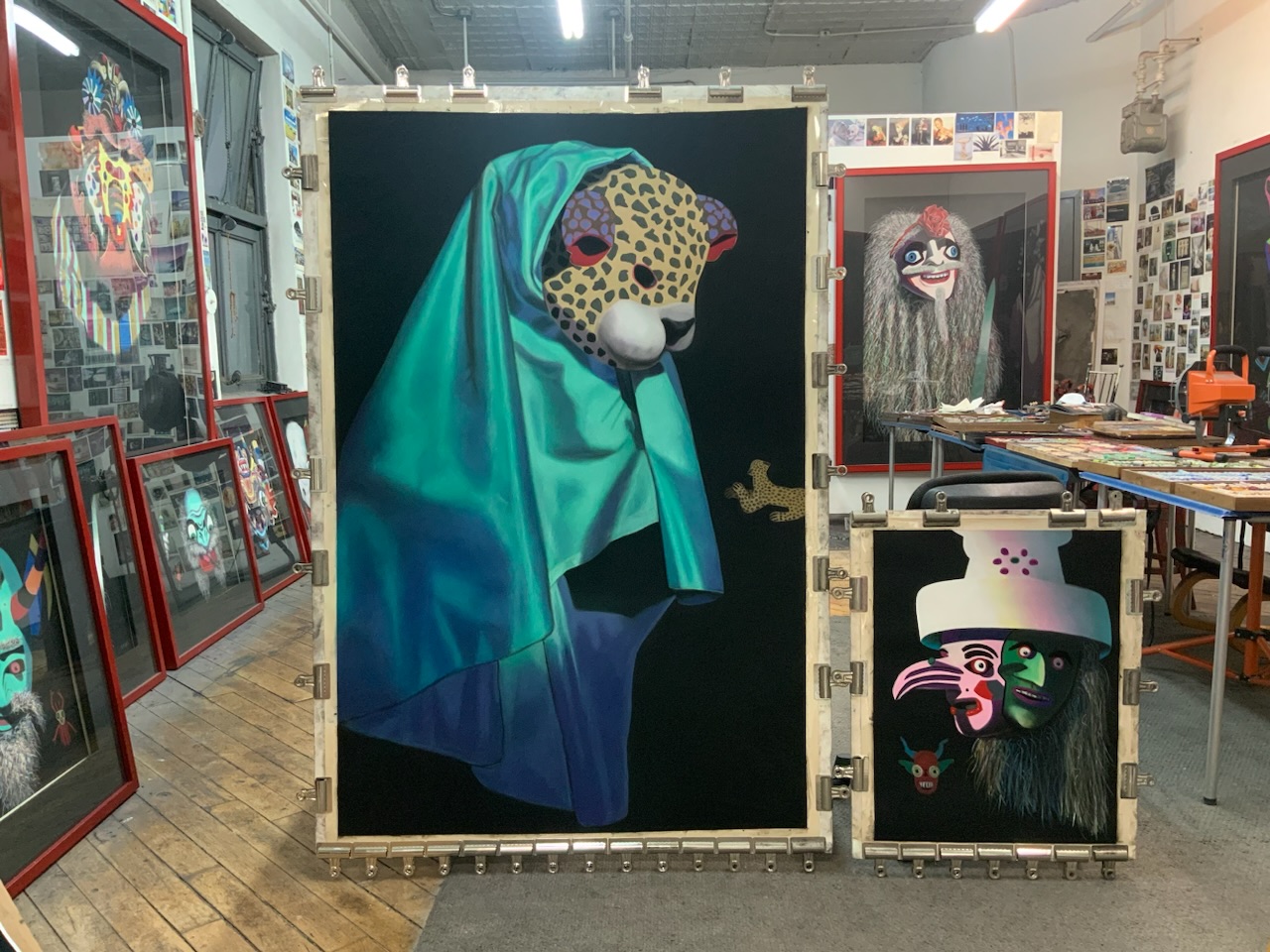
“Bolivianos” paintings in progress and on the walls and floor
A: I don’t really have any choice in the matter. It’s more or less the way I have always worked so it feels natural. Art-making comes from a deep place. In keeping with the aphorism ars longa, vita brevis, it’s a way of making one’s time on earth matter. Working in series mimics the more or less gradual way that our lives unfold, the way we slowly evolve and change over the years. Life-altering events happen, surely, but seldom do we wake up drastically different – in thinking, in behavior, etc. – from what we were the day before. Working in series feels authentic. It helps me eke out every lesson my paintings have to teach. With each completed piece, my ideas progress a step or two further.
I remember going to the Metropolitan Museum to see an exhibition called, “Matisse: In Search of True Painting.” It demonstrated how Matisse worked in series, examining a subject over time and producing multiple paintings of it. Matisse is my favorite artist of any period in history. I never tire of seeing his work and this particular exhibition was very enlightening. As I studied the masterpieces on the wall, I recognized a kindred spirit and thought, “Obviously, working in series was good enough for Matisse!”
Comments are welcome!
Pearls from artists* # 562

“Shadow,” soft pastel on sandpaper, 26” x 20,” in progress
*an ongoing series of quotations – mostly from artists, to artists – that offers wisdom, inspiration, and advice for the sometimes lonely road we are on.
Jung observed that complexes could affect groups of people en masse. He saw that certain moments seemed to be expressions of a collective shadow, a bursting forth of a mass psychosis; the repressed side of a whole group coming alive; a tribal Mr. Hyde. He saw this madness first-hand in Germany in the 1930s and wrote about it. But every era carries some measure of collective shadow.
One could argue that no moment in time has seen more of the reality of human darkness than ours. Having witnessed the Holocaust and faced the threat of nuclear war in the twentieth century, and now facing the environmental impact of fossil fuels and plastics in the twenty-first century, we are undoubtedly aware of more of humanity’s potential for destruction than any of our ancestors ever were. Such a view does not come from a moralizing stance. Our era has made forced witnesses of us all.
The shadow is about where we put the Devil – where do we allow darkness to be housed? Racism and bigotry offer the relief of foisting our group’s shadow onto another whom we view as lesser. Doing so enables us not to look at or feel our shadow, and not see our own worst selves. But this collective shadow of our modern culture is also bigger and wider than group-to-group projections. There are culture-wide or civilization expressions of the collective shadow.
Jung saw the widespread loss of connection to the inner life and to a lived spirituality as one of the primary illnesses of our time. He observed that people were no longer animated by the traditional religions… For Jung, this meant that we’ve lost the old way but not yet found the new, and are sitting in a spiritual vacuum.
Into that vacuum, without our awareness, has slipped our fascination with human technology. Observe people closely today and you’ll notice that we have an almost magical faith in our devices. People see their computers and phones as all-knowing and expect them to function perfectly all the time, and view pharmaceuticals as magic cure-alls. Where we used to put God, we now have put technology. Where spirit was, we have unconsciously placed human genius.
Gary Bobroff in Carl Jung: Knowledge in a Nutshell
Comments are welcome!
Pearls from artists* # 542

*an ongoing series of quotations – mostly from artists, to artists – that offers wisdom, inspiration, and advice for the sometimes lonely road we are on.
Observing these objects and imagining their history broadened my perspective. In China, we were still living in a culturally impoverished era, but art had not abandoned us – its roots were deeply planted in the weathered soil. The stubborn survival of this indigenous artistic tradition demonstrated that our narrow-minded authoritarian state would never be able to remake our culture in its own image. From then on, when I wasn’t spending time with my parents, I was immersing myself in the world of antiques. The dealers found me perplexing, for I followed no prevailing tastes or conventional wisdom. Instead I was taken with obscure objects, and made a point of buying things that seemed to have little or no value; my hungry spirit was nourished as I imagined the stories lurking behind each piece. The observations and insights that came to me from the distant past spurred me on to make art of my own.
– Ai Weiwei in 1000 Years of Joys and Sorrows
This is exactly my experience with the folk art I collect!
Comments are welcome!


 barbararachkoscoloreddust.com
Pearls from artists* # 529
Oct 19
Posted by barbararachkoscoloreddust
* an ongoing series of quotations – mostly from artists to artists – that offers wisdom, inspiration, and advice for the sometimes lonely road we are on.
All sorts of novelists, composers, choreographers, poets, and painters find themselves engaged in the challenges of authority and freedom that are the lifeblood of the arts. Art is a way of life – and not only or even essentially for geniuses. An artistic community – to whatever degree it may be joined by social, economic, or other concerns – is fundamentally united by the imperatives of a vocation as they are shaped in a particular time. Genius doesn’t emerge ex nihilo. And it doesn’t have a unique relationship with authority and freedom. Whatever truth there is to Walter Benjamin’s comment, apropos of Proust’s novel, that certain masterpieces begin or end a genre, it’s usually true that every masterpiece reaffirms the fundamental character of a form. For every epochal achievement that we may see as an assertion of unexpected degrees of freedom (Beethoven’s final quartets or Shakespeare’s last plays), there are others that reaffirm the pressure of tradition (an example is Raphael’s neoclassical designs for tapestries representing scenes from the lives of Saint Peter and Saint Paul). For every creative spirit, the great as well as the merely good, there is a sense in which the wager is the same.
Jed Perl in Authority and Freedom: A Defense of the Arts
Comments are welcome!
Share this:
Posted in 2022, An Artist's Life, Art in general, Art Works in Progress, Inspiration, Pearls from Artists, Quotes
Comments Off on Pearls from artists* # 529
Tags: achievement, apropos, artistic, assertion, authority, Beethoven, certain, challenges, character, choreographers, comment, community, composers, concerns, creative, degree, degrees, designs, economic, emerge, engaged, epochal, essentially, every, ex nihilo, example, freedom, fundamental, fundamentally, genius, geniuses, Jed Perl, joined, lifeblood, masterpiece, masterpieces, merely, neoclassical, novelists, painters, particular, presence, pressure, Proust, quartets, Raphael, reaffirm, relationship, Saint Paul, Saint Peter, scenes, Shakespeare, shaped, social, spirit, tapestries, the arts, themselves, tradition, unexpected, unique, united, usually, vocation, Walter Benjamin, whatever, work in progress