Blog Archives
Pearls from artists* # 639

Barbara’s Studio
*an ongoing series of quotations – mostly from artists, to artists – that offers wisdom, inspiration, and advice for the sometimes lonely road we are on.
… my deep and lifelong conviction [is] that the results of my work don’t have much to do with me. I can only be in charge of producing the work itself. That’s a hard enough job. I refuse to take on additional jobs, such as trying to police what anybody thinks about my work once it leaves my desk.
Also, I realized it would be unreasonable and immature of me to expect that I should be allowed to have a voice of expression, but other people should not. If I am allowed to speak my inner truth, then my critics are allowed to speak their inner truths, as well. Fair’s fair. If you dare to create something and put it out there, after all, then it may accidentally stir up a response. That’s the natural order of life: the eternal inhale and exhale of action and reaction. But you are definitely not in charge of the reaction – even when the reaction is bizarre.
Elizabeth Gilbert in Big Magic: Creative Living Beyond Fear
Comments are welcome!
Pearls from artists* # 624

View from New York City
*an ongoing series of quotations – mostly from artists, to artists – that offers wisdom, inspiration, and advice for the sometimes lonely road we are on.
Van Gogh’s drawings show a truly remarkable improvement over the course of the two years he set aside to intensely practice drawing. At the start of that period his sketches look clumsy and amateurish. With great ardor, thoughtfulness, and effort – by manifesting his creativity, in short – at the end of those two years Van Gogh was producing drawings that showed not only that he had mastered elements of technique but also that he had educated himself in ways that moved him far ahead of his classically trained peers.
Van Gogh’s progress excites the artist. It seems to hold the clear implication that by acting creatively the artist may significantly increase his talents or make manifest significant talent he didn’t know he possessed. Maybe a brilliant novel is within his grasp. Maybe he can achieve a breakthrough in the visual arts. Maybe he can play his instrument like a god.
Eric Maisel in A Life in the Arts: Practical Guidance and Inspiration for Creative and Performing Artists
Comments are welcome!
Q: Why do you work in series?
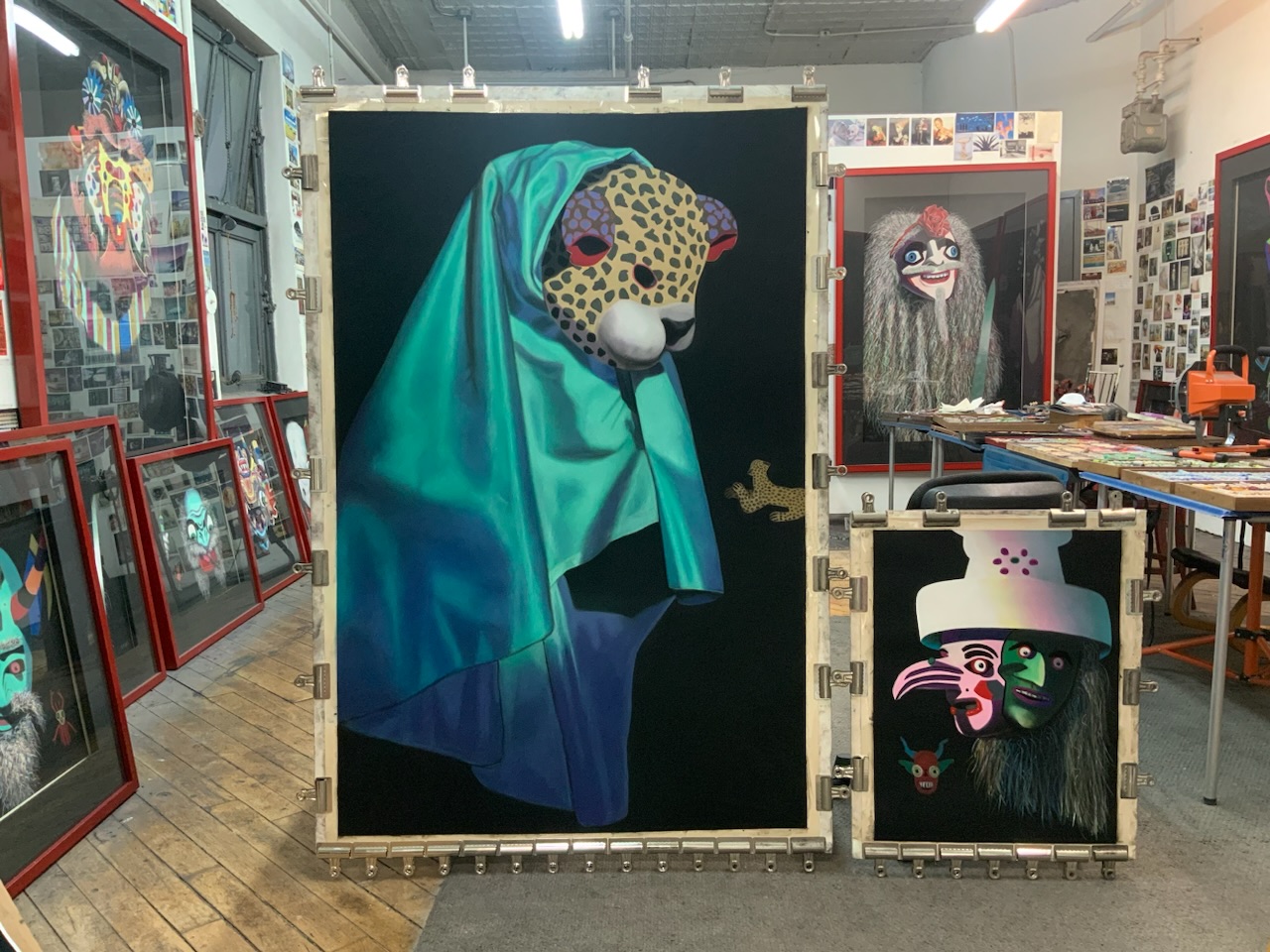
“Bolivianos” paintings in progress and on the walls and floor
A: I don’t really have any choice in the matter. It’s more or less the way I have always worked so it feels natural. Art-making comes from a deep place. In keeping with the aphorism ars longa, vita brevis, it’s a way of making one’s time on earth matter. Working in series mimics the more or less gradual way that our lives unfold, the way we slowly evolve and change over the years. Life-altering events happen, surely, but seldom do we wake up drastically different – in thinking, in behavior, etc. – from what we were the day before. Working in series feels authentic. It helps me eke out every lesson my paintings have to teach. With each completed piece, my ideas progress a step or two further.
I remember going to the Metropolitan Museum to see an exhibition called, “Matisse: In Search of True Painting.” It demonstrated how Matisse worked in series, examining a subject over time and producing multiple paintings of it. Matisse is my favorite artist of any period in history. I never tire of seeing his work and this particular exhibition was very enlightening. As I studied the masterpieces on the wall, I recognized a kindred spirit and thought, “Obviously, working in series was good enough for Matisse!”
Comments are welcome!
Pearls from artists* #561

*an ongoing series of quotations – mostly from artists, to artists – that offers wisdom, inspiration, and advice for the sometimes lonely road we are on.
The most powerful symbols draw profound reactions from us. The symbolic images in great art attract and fascinate us; they stir our souls and move us beyond what can be easily expressed; ‘their pregnant language cries out to us that they mean more than they say.’
The unconscious produces symbols as part of a natural process within us. These images emerge out of the context of our lived experience… Jung saw the meaning-making process as one that not only requires attendance to the real context of our lives and history, but also involves profound inner listening. It asks us to use our rational capacities, but also our feeling and imaginal ones.
Symbolic images redirect our psychic energy, bringing together conscious and unconscious material and producing the lessening of conflict. In this way, they activate a transcendent function within the psyche. We experience this as the discovery of personal meaning and healing. This transformation is not the result of formulaic operations, but rather is a dynamic process that requires our authentic and vulnerable participation. The process challenges the whole of who we are and requires deep moral effort. That the unconscious would produce moving, powerful compensatory symbols inside us at all points to a fact that our culture may not have fully grasped – that there is a force working within us which is always driving us towards healing growth and greater consciousness… Despite our suffering, the psyche is always ultimately seeking both a healthy homeostatic balance and our ever-unfolding growth and unique development.
Gary Bobroff in Carl Jung: Knowledge in a Nutshell
Comments are welcome!
Pearls from artists* # 473

*an ongoing series of quotations – mostly from artists, to artists – that offers wisdom, inspiration, and advice for the sometimes lonely road we are on.
… slow art arose in the later eighteenth century when two massive cultural changes converged, changes that have grown more acute ever since. First: acceleration, as capitalism and advances in technology quickened the pace of everyday life in unprecedented ways. It’s no coincidence that Harmut Rosa links the origin of modernity to the quickening movement of money, vehicles, and communication. The pressures of acceleration created the need for psychological breathers or timeouts. But second, and simultaneously: Western society grew more and more secularized. As a result, occasions to slow one’s tempo became harder to access – like devotional practices requiring viewers to focus intensely on single works over long periods of time. Hence an increased need met decreased opportunities to address that need. Slow art came to supplement older sacred practices by creating social spaces for getting off the train. In sum, as culture sped up and sacred aesthetic practices waned, slow art came to satisfy our need for downtime by producing works that require sustained attention in order to experience them.
Arden Reed in Slow Art: The Experience of Looking, Sacred Images to James Turrell
Comments are welcome!
Pearls from artists* # 408

“No Cure for Insomnia,” pastel on sandpaper, 58″ x 38″ image, 70” x 50” framed
* an ongoing series of quotations – mostly from artists, to artists – that offers wisdom, inspiration, and advice for the sometimes lonely road we are on.
Classics have nothing to do with aesthetic sophistication. They use the aesthetic as a springboard to something else. The creation of a classic will often require the artist to deviate from prevailing standards in order to push the ordinary vision through. If there is one prerequisite for producing a classic, it is the willingness to follow the vision wherever it leads, even if it demands a breach of convention, technique, or popular taste. (It may not even be a question of if or when, for how can one produce a truly singular work without reinventing the medium to some extent?) We often hear that the master artist is “in love” with her material: that the sculptor loves the marble, the dancer loves the body, the musician loves his instrument. For the maker of classics, however, the medium always seems to be an obstacle; love is never without a tinge of spite. William S. Burroughs was so contemptuous of language that he took to describing it as a disease. He conceived his work as an attempt to confront language in hopes to cure the mind of the “word virus.” Indeed, if the goal of art is to take us beyond the ordinary preoccupations to reach the heart of the Real, it would seem essential that there be a fight, a struggle to wrest from the medium something to which Consensus dictates it is not naturally inclined.
J.F. Martel in Reclaiming Art in the Age of Artifice: A Treatise, Critique, and Call to Action
Comments are welcome!
Pearls from artists* # 127
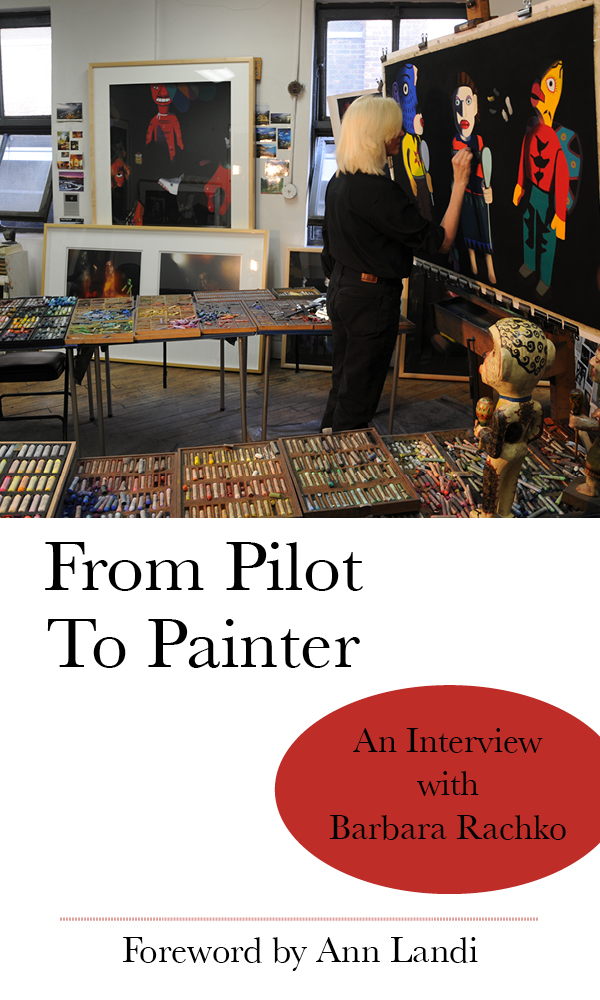
eBook cover
* an ongoing series of quotations – mostly from artists, to artists – that offers wisdom, inspiration, and advice for the sometimes lonely road we are on.
Two facts differentiate Daybook from my work in visual art.
The first is the simple safety of numbers. There are 6500 Daybooks in the world. My contribution to them was entirely mental, emotional. I never put my hand on a single copy of these objects until I picked up a printed book. I made no physical effort; no blood, no bone marrow moved from me to them. I do not mean that I made no effort. On the contrary, the effort was excruciating because it was so without physical involvement, so entirely hard-wrought out of nothing physical at all; no matter how little of the material world goes into visual art, something of it always does, and that something keeps you company as you work. There seems to me no essential difference in psychic cost between visual and literary effort, The difference is in what emerges as result. A work of visual art is painfully liable to accident; months of concentration and can be destroyed by a careless shove. Not so 6500 objects. This fact gives me a feeling of security like that of living in a large, flourishing, and prosperous family.
Ancillary to this aspect is the commonplaceness of a book. People do not have to go much out of their way to get hold of it, and they can carry it around with them and mark it up, and even drop it in a tub while reading in a bath. It is a relief to have my work an ordinary part of life, released from the sacrosanct precincts of galleries and museums. A book is also cheap. Its cost is roughly equivalent to its material value as an object, per se. This seems to me more healthy than the price of art, which bears no relation to its quality and fluctuates in the marketplace in ways that leave it open to exploitation. An artist who sells widely has only to mark a piece of paper for it to become worth an amount way out of proportion to its original cost. This aspect of art has always bothered me, and is one reason why I like teaching; an artist can exchange knowledge and experience for money in an economy as honest as that of a bricklayer.
Anne Truitt in Turn: The Journal of an Artist
Comments are welcome!
Pearls from artists* # 44

Studio view
* an ongoing series of quotations – mostly from artists, to artists – that offers wisdom, inspiration, and advice for the sometimes lonely road we are on.
I cannot even imagine the individual arts sufficiently distinct from one another. This admittedly exaggerated attitude might have its most acute origin in the fact that in my youth, I, quite inclined toward painting, had to decide in favor of another art so as not to be distracted. And thus I made this decision with a certain passionate exclusivity. Based on my experience, incidentally, every artist needs to consider for the sake of intensity his means of expression to be basically the only one possible while he is producing. For otherwise he could not easily suspect that this or that piece of world would not be expressible by his means at all and he would finally fall into that most interior gap between the individual arts, which is surely wide enough and could be genuinely bridged only by the vital tension of the great Renaissance masters. We are faced with the task of deciding purely, each one alone, on his one mode of expression, and for each creation that is meant to be achieved in this one area all support from the other arts is a weakening and a threat.
Ulrich Baer, editor, The Wisdom of Rilke
Comments are welcome!


 barbararachkoscoloreddust.com