Blog Archives
Pearls from artists* # 680

“Sacrificial” (on the wall) and “Trickster” (on the floor)
*an ongoing series of quotations – mostly from artists, to artists – that offers wisdom, inspiration, and advice for the sometimes lonely road we are on.
What makes a work transcendent and powerful is a personal intensity, an ‘extra’ quality. Yet that intensity is exclusive to each artist: extra strangeness, subtlety, causticity, bravado, sensuality, rawness, grandiosity, succinctness, mystery, vulnerability, truth, etc. For an individual artist to infuse an object or an experience with their own ‘extra’ quality requires not only skill or ideas, but the profound benevolence of consistently delivering in spades.
It is this passion and genuine feeling, specific to each creator, that lives on in the art as a gift. It is wrapped up in the work, forever suspended in time. The artist says,
Here… everything I possessed in this moment is embodied in this object… All skills I have painstakingly learned, all of the knowledge I possess, the joy and pain I have felt and all the experiences I have lived. I spun these into the perfect, most sublime form, and packed it up, but for you to unwrap anytime you need sustenance. It will nourish, comfort, and surround you, because you have chosen it.
Each viewer selects which works of art speak to them… which embodied feelings, concepts, and knowledge they value. An empathic connection is forged through the art object or experience. What is love, but to say to someone, ‘you are truly seen and understood?’ Art offers this as well, by reaching out to puncture through the membrane of our emotional isolation, to articulate how we feel in the moments when we cannot find words. It tells the artist and viewer alike, ‘You are not alone. You are not alone in how your brain works. You are not alone in the pain you feel. You are not alone in what you notice or appreciate, or in how much love you have to give.’
Pour that love into an art object. It can handle all the devotion you pack into it, and more.
Kate Kretz in Art From Your Core: A Holistic Guide to Visual Voice
Comments are welcome!
Pearls from artists* # 584

Barbara’s Studio
*an ongoing series of quotations – mostly from artists, to artists – that offers wisdom, inspiration, and advice for the sometimes lonely road we are on.
The creation of something new is not accomplished by the intellect but by the play instinct acting from inner necessity. The creative mind plays with the object it loves.
Carl Jung quoted by Stephen Nachmanovitch in Free Play: Improvisation in Life and Art
Comments are welcome!
Pearls from artists* # 583

In the Studio Photo: Susan Erlichman
*an ongoing series of quotations – mostly from artists, to artists – that offers wisdom, inspiration, and advice for the sometimes lonely road we are on.
Let’s return to Michelangelo’s idea of removing apparent surfaces to reveal or liberate the statue that has been buried in the stone since the beginning of time. Michelangelo claimed that he was guided by a faculty he called intelleto. Intelleto is intelligence, not of the merely rational kind, but visionary intelligence, a deep seeing of the underlying pattern beneath appearances. Here the artist is, as it were, an archaeologist, uncovering deeper and deeper strata as he works, recovering not an ancient civilization but something as yet unborn, unseen, unheard except by the inner eye, the inner ear. He is not just removing apparent surfaces from some external object, he is removing apparent surfaces from the Self, revealing his original nature.
Stephen Nachmanovitch in Free Play: Improvisation in Life and Art
Comments are welcome!

Pearls from artists* # 465
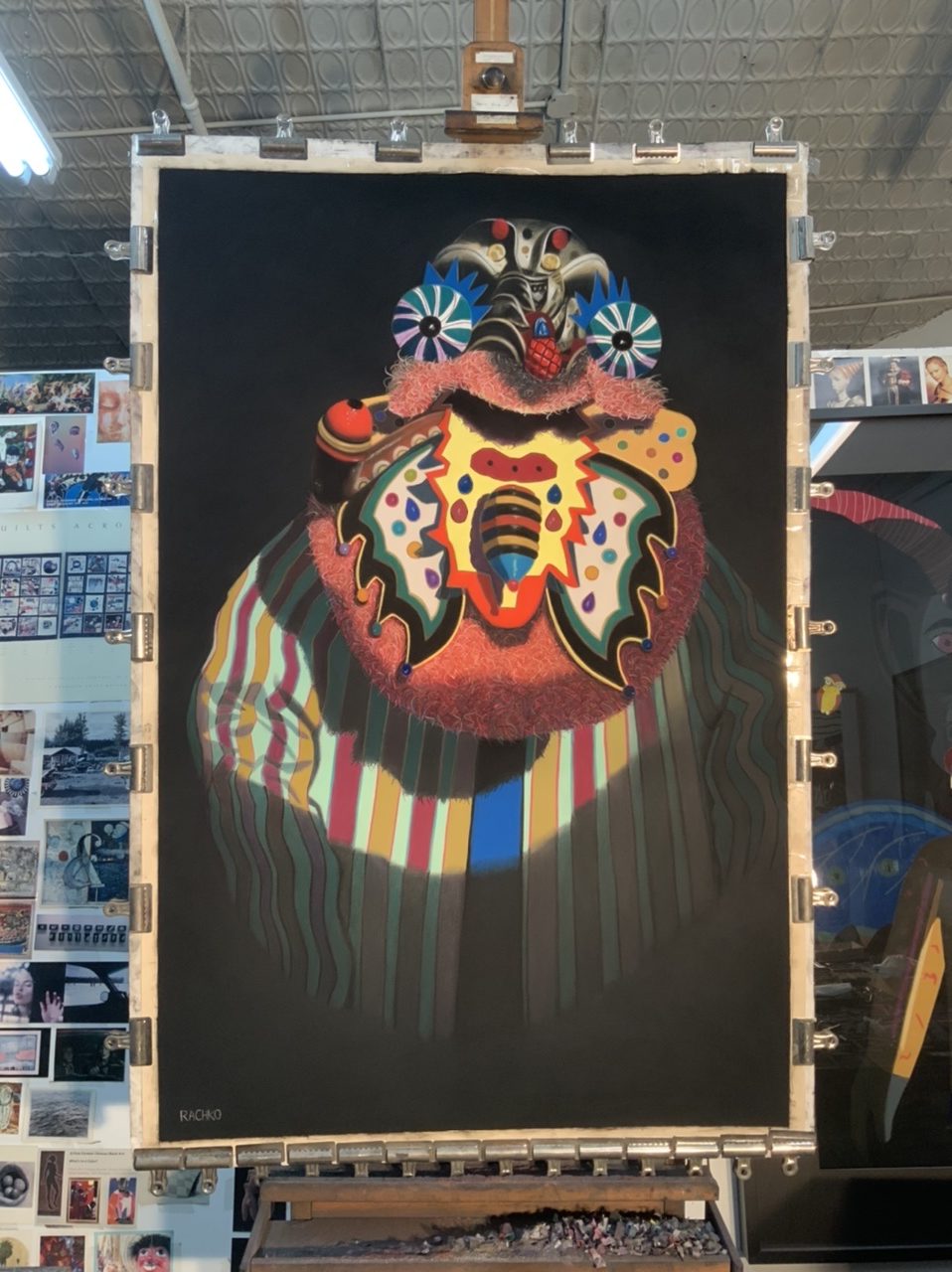
*an ongoing series of quotations – mostly from artists, to artists – that offers wisdom, inspiration, and advice for the sometimes lonely road we are on.
In his 1970 Nobel Prize lecture, Aleksander Solzhenitsyn proposed that if art has never been revealed its intrinsic “function” to us, it is because such a thing is beyond our ken. For the Russian writer, we are mistaken when we call art a human innovation; we ought instead to see it as a gift, something that came to us from beyond the bounds of our world. Solzhenitsyn illustrates his point by comparing the work of art to the technological marvel that a man from the proverbial Stone Age comes across in the wilderness. Unable to penetrate its secrets, the man can only turn the object this way and that, looking for “some arbitrary use to which he can put it, without suspecting an extraordinary one.” Solzhenitsyn goes on:
“So also we, holding art in our hands, confidently consider ourselves to be its masters, boldly we direct it, reform and manifest it; we sell it for money, use it to please those in power; turn to it at one moment for amusement… and at another… for the passing needs of politics and for narrow-minded social ends. But art is not defiled by our efforts, neither does it thereby depart from its true nature, but on each occasion and in each application it gives us a part of its secret inner light.”
JF Martel in Reclaiming Art in the Age of Artifice: A Treatise, Critique, and Call to Action
Comments are welcome!
Pearls from artists* # 446

*an ongoing series of quotations – mostly from artists, to artists – that offers wisdom, inspiration, and advice for the sometimes lonely road we are on.
What stops us in our tracks? I am rarely stopped by something or someone I can instantly know. In fact, I have always been attracted to the challenge of getting to know what I cannot instantly categorize or dismiss, whether an actor’s presence, a painting, a piece of music, or a personal relationship. It is the journey towards the object of attraction that interests me. We stand in relation to one another. We long for the relationship that will change our vistas. Attraction is an invitation to an evanescent journey, to a new way of experiencing life or perceiving reality.
An authentic work of art embodies intense energy. It demands response. You can either avoid it, shut it out, or meet it and tussle. It contains attractive and complicated energy fields and a logic all its own. It does not create desire or movement in the receiver, rather it engenders what James Joyce labelled ‘aesthetic interest.’ You are stopped in your tracks. You cannot easily walk by it and go on with your life. You find yourself in relation to something that you cannot readily dismiss.
Anne Bogart in A Director Prepares: Seven Essays on Art and Theater
Comments are welcome!
Pearls from artists* # 393
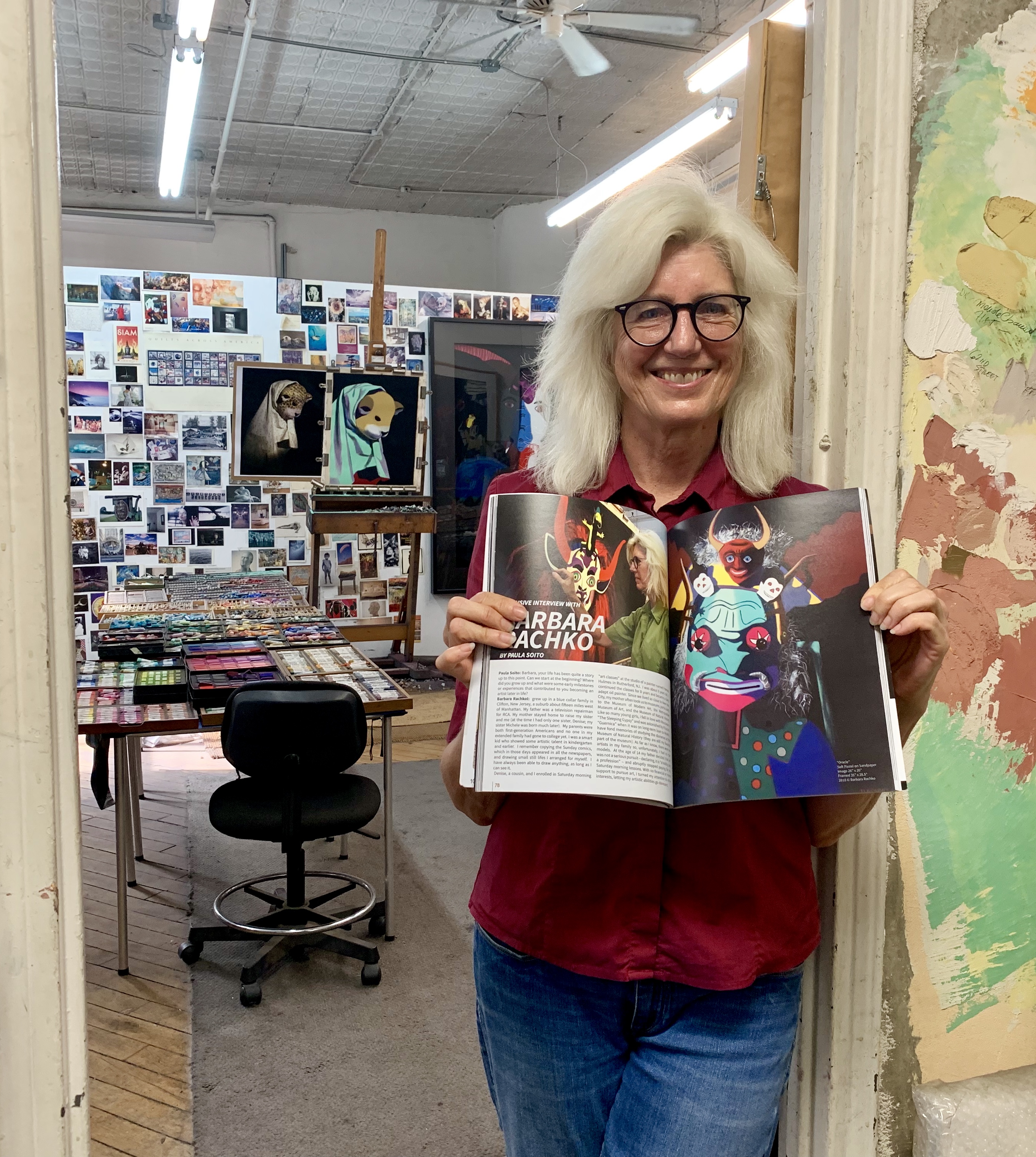
With my favorite interview
* an ongoing series of quotations – mostly from artists, to artists – that offers wisdom, inspiration, and advice for the sometimes lonely road we are on.
… Fernhoffer’s a man in love with our art, a man who sees higher and farther than other painters. He’s meditated on the nature of color, on the absolute truth of line, but by dint of so much research, he has come to doubt the very object of his investigations. In moments of despair, he claims that drawing doesn’t exist and that lines are only good for rendering geometrical figures, which is far from the truth, since with line and with black, which is not a color, we can create a human figure. There’s your proof that our art is like nature itself, composed of an infinity of elements: drawing accounts for the skeleton, color supplies life, but life without a skeleton is even more deficient than a skeleton without life. Lastly, there’s something even truer than all this, which is that practice and observation are everything to a painter; so that if reasoning and poetry argue with our brushes, we wind up in doubt, like our old man here, who’s as much a lunatic as he is a painter — a sublime painter who had the misfortune to be born into wealth, which has allowed him to wander far and wide. Don’t do that to yourself! A painter should philosophize only with a brush in his hand!
Honore Balzac in The Unknown Masterpiece
Comments are welcome!
Pearls from artists* # 363
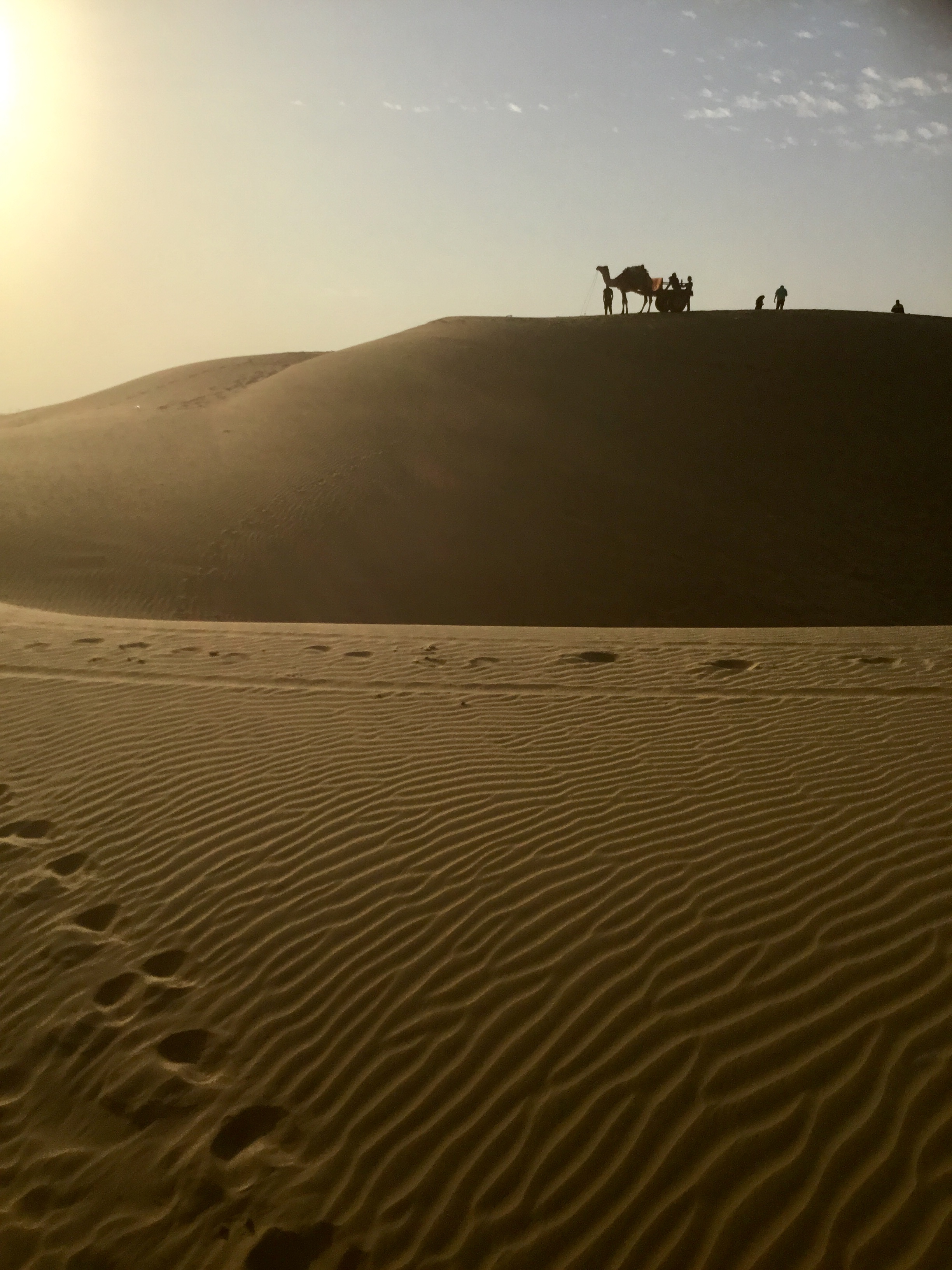
Thar Desert, Rajasthan, India
* an ongoing series of quotations – mostly from artists, to artists – that offers wisdom, inspiration, and advice for the sometimes lonely road we are on.
Beauty seems to need quiet and take patience, both to create it and to experience it.
If our minds are filled with a long and urgent “to do” list, we are not likely to slow down enough to appreciate anything but the next line we can draw through our never-ending list. Yet every now and again something stops us. It arrests our constant external activity and search. We can be stopped by the way the light filters through the trees in our backyard or hits a bowl of fruit on our kitchen table. And we are silenced, even if momentarily. We can be stopped by cave paintings as easily as by a thirteenth-century tapestry or a fifteenth-century Italian painting. We may be impressed by the craft of the artist, but almost always what moves us most deeply is the beauty that is expressed by the craft.
In the face of beauty, we are silenced because beauty expresses silence. In lavishing attention on the object of the artwork, the consciousness of the artist can touch something divine, some transcendental quality, and that transcendent element now resides in the artwork. How do we know it? We feel it. We experience it. Our heart responds to that sublime quality the artist infused into the work.
Ian Roberts in Creative Authenticity: 16 Principles to Clarify and Deepen Your Artistic Vision
Comments are welcome!
Pearls from artists* # 358
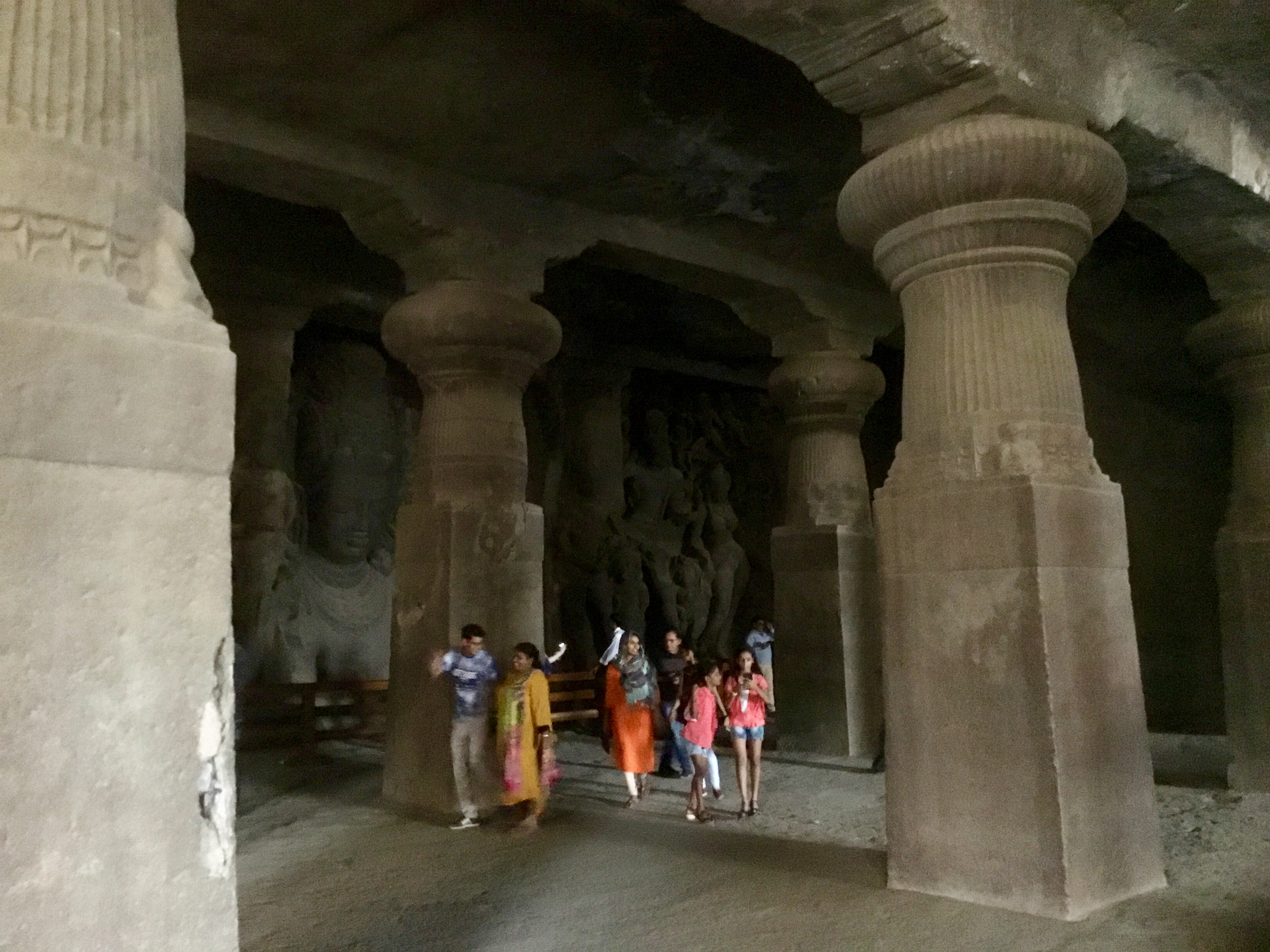
Elephanta Caves, India
*an ongoing series of quotations – mostly from artists, to artists – that offers wisdom, inspiration, and advice for the sometimes lonely road we are on.
According to [Rudolph] Arnheim, the way in which we reach out for and grasp the “object we see, either in our immediate range of perception or through the medium of photography, is dependent upon who we are and what we recognize from past experience.” The visual imprint of an image, an object, or a scene upon the eye is not at all “objective.” In the image-making process of thinking, we see, sort, and recognize according to the visual phenomenology of our own experience. What people notice in the “same” image – be it an image of a dancing Siva or a film of a Hindu festival procession – depends to some extent on what they can recognize from the visual experience of the past. In the case of film, of course, it also depends on what the photographer has seen and chosen to show us. Arnheim writes that the eye and the mind, working together in the process of cognition, cannot simply note down images that are “already there.” “We find instead that direct observation, far from being a mere ragpicker, is an exploration of the form-seeking, form-imposing mind, which needs to understand but cannot until it casts what it sees into manageable models.”
Diana L. Eck in Darsan: Seeing the Divine Image in India
Comments are welcome!
Pearls from artists* # 350
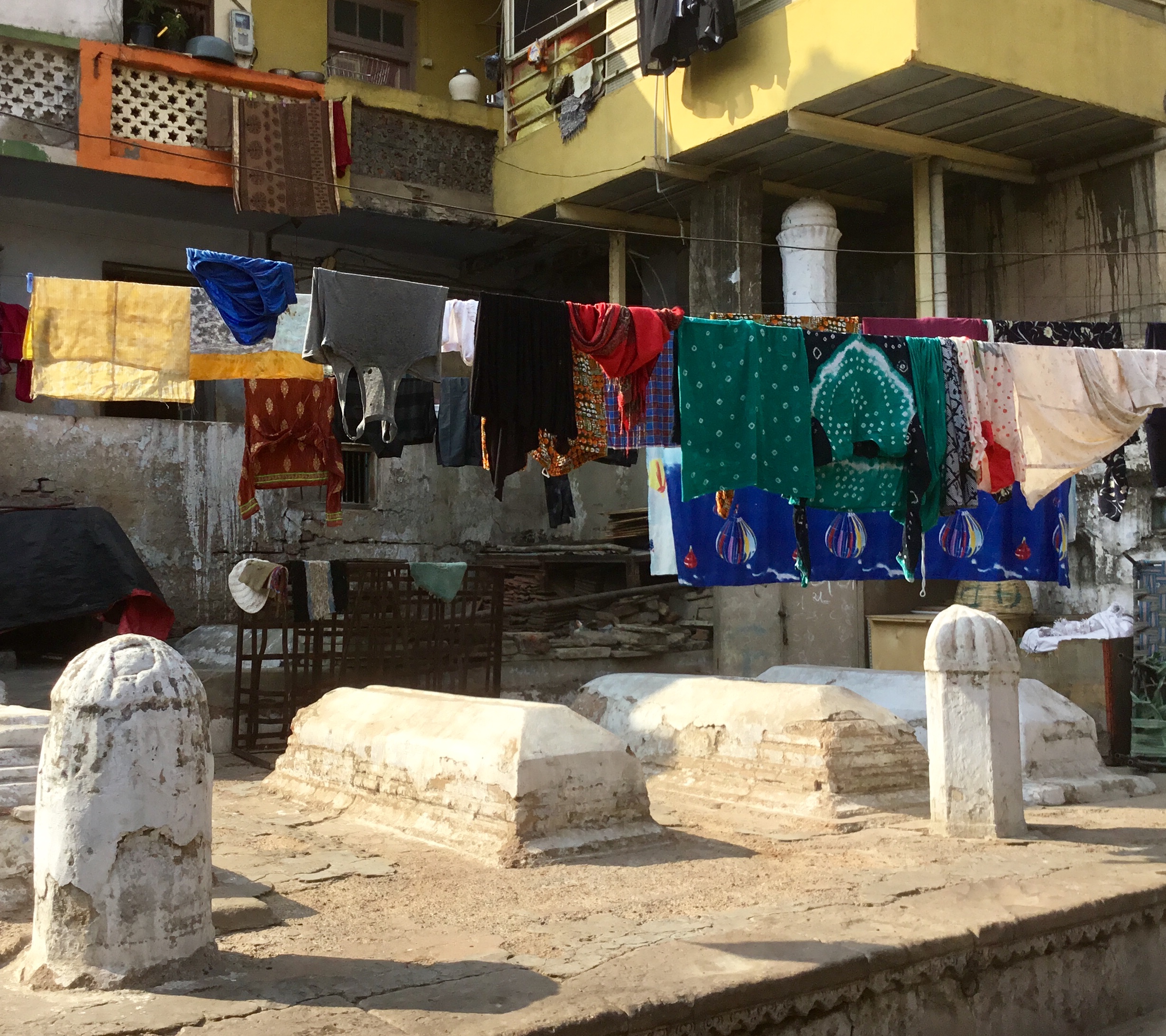
Ahmedabad, India
*an ongoing series of quotations – mostly from artists, to artists – that offers wisdom, inspiration, and advice for the sometimes lonely road we are on.
Seeing is not a passive awareness of visual data, but an active focusing upon it, “touching” it. Arnheim writes, in language that echoes the Hindu notion of seeing and touching: “In looking at an object we reach out for it. With an invisible finger we move through the space around us, go out to the distant places where things are found, touch them, catch them, scan their surfaces, trace their borders, explore their texture. It is an eminently active occupation.”
Diana L. Eck in Darsan: Seeing the Divine Image in India
Comments are welcome!
Pearls from artists* # 330
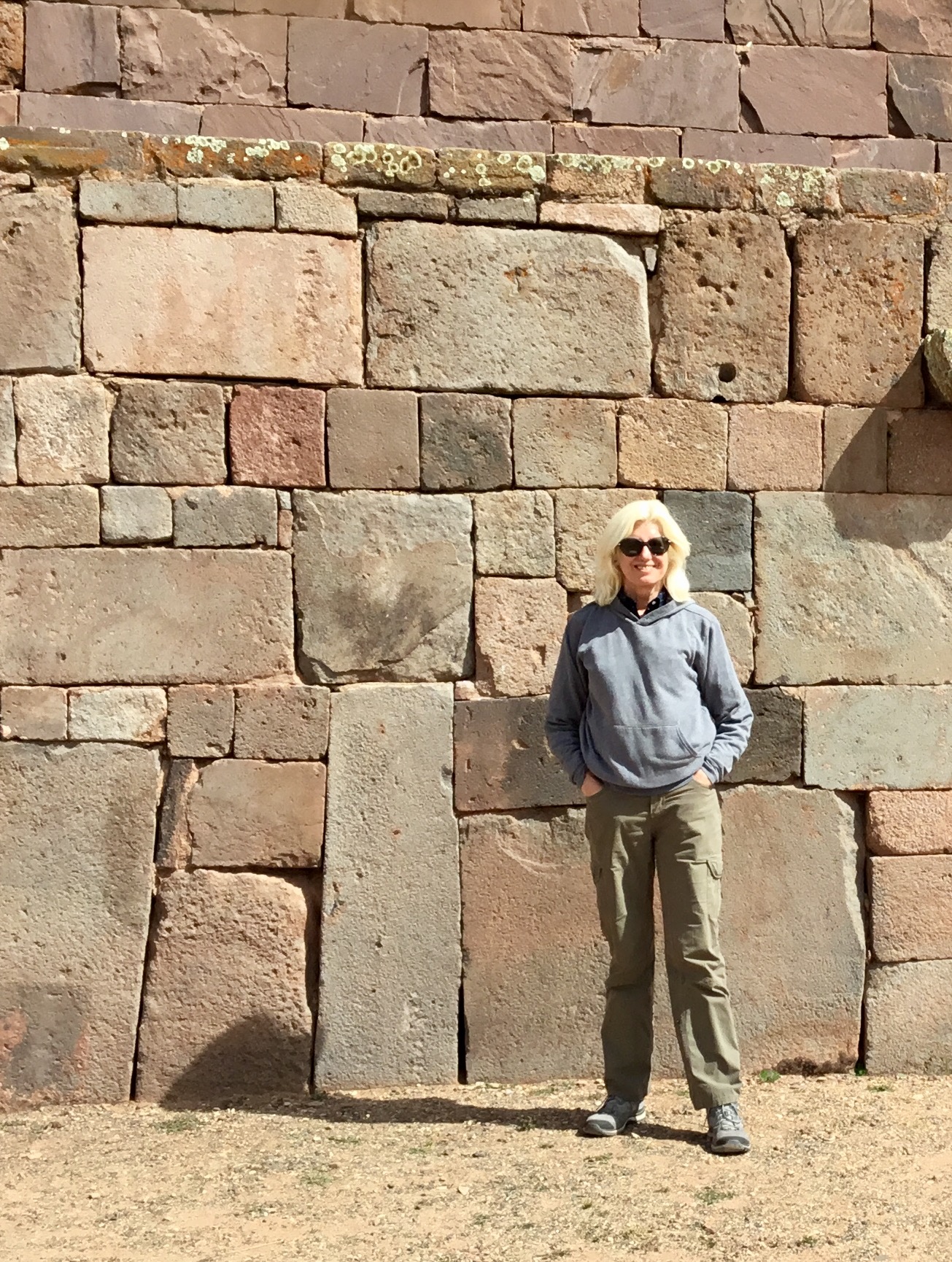
At Tiwanaku, Bolivia
*an ongoing series of quotations – mostly from artists, to artists – that offers wisdom, inspiration, and advice for the sometimes lonely road we are on.
To take the time to look and analyze the city or a building or an object is of the same nature as owning it, except that ownership is not a satisfactory feeling – but understanding is a form of complete assimilation. To really work and produce, there must be integration of your work in your life, or the integration of your life in your work.
Louise Bourgeois: Destruction of the Father, Reconstruction of the Father: Writings and interview 1923-1997, edited and with texts by Marie-Laure Bernadac and Hans-Ulrich Obrist
Comments are welcome!


 barbararachkoscoloreddust.com