Blog Archives
Pearls from artists* # 710
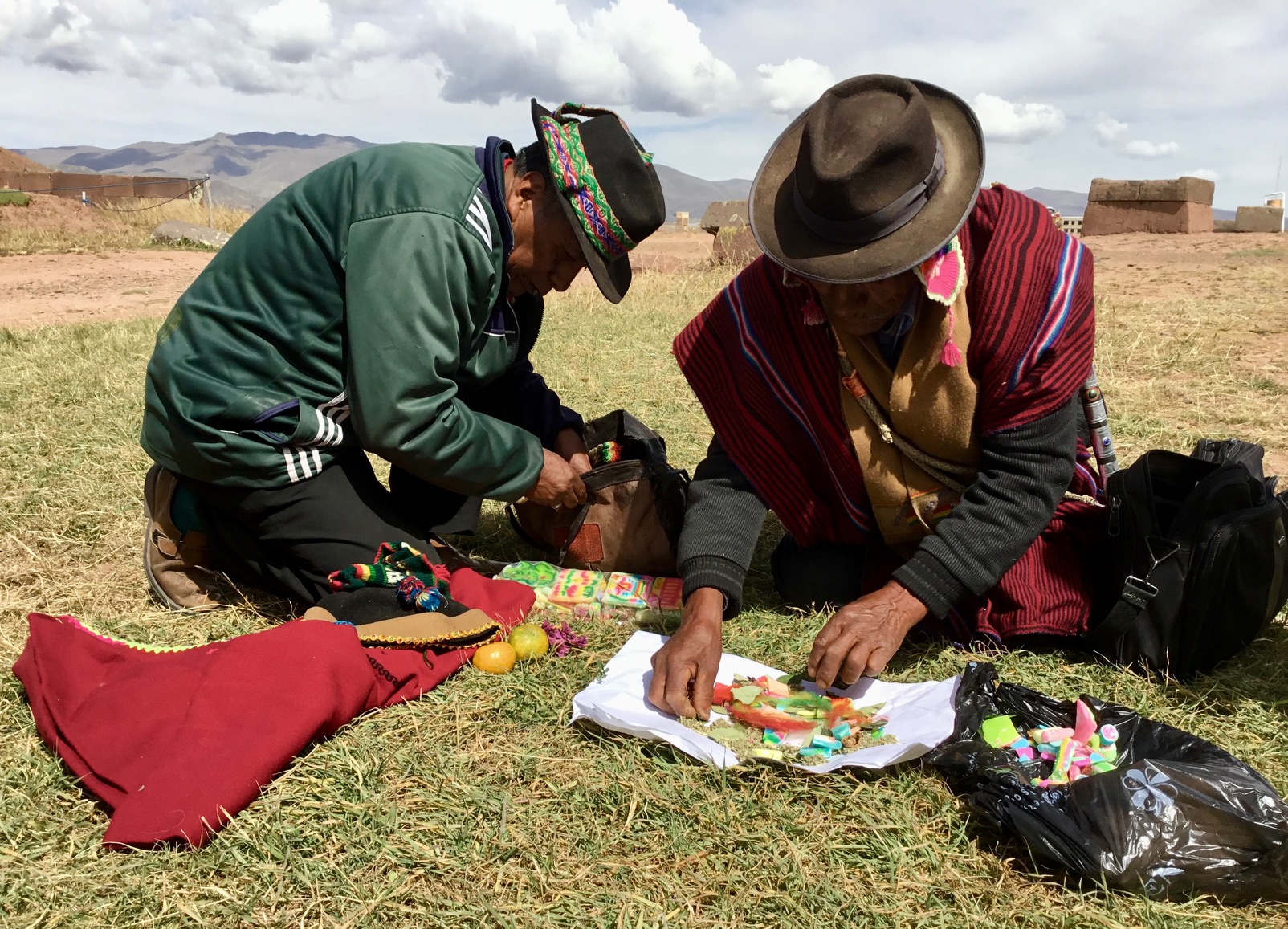
Shamans performing a ‘safe travels’ ritual for our group at Tiwanaku, Bolivia
*an ongoing series of quotations – mostly from artists, to artists – that offers wisdom, inspiration, and advice for the sometimes lonely road we are on
Mental health not only exists on a spectrum but it is also often culture-specific. Revered healers and sages in one country are the ‘crazies’ in another. Context determines whether we will be treated for illness, or simply considered ‘eccentric’ and left alone. Many who struggle to hide their differences, go against their own nature, and contort themselves into an acceptable demeanor to fit in, until they break down or die, undiagnosed.
Kate Kretz in Art From your Core: A Holistic Guide to Visual Voice”
Pearls from artists* # 494
*an ongoing series of quotations – mostly from artists, to artists – that offers wisdom, inspiration, and advice for the sometimes lonely road we are on.
Emile Cartailhac was a man who could admit when he was wrong. This was fortunate, because in 1902 the French prehistorian found himself writing an article for L’Anthropolgie in which he did just that. In “Mea culpa d’un sceptique” he recanted the views he had spent the previous 20 years forcefully and scornfully maintaining: that prehistoric man was incapable of fine artistic expression and that the cave paintings found in Altmira, northern Spain, were forgeries.
The Paleothithic paintings at Altamira, which were produced around 14,000 B.C., were the first examples of prehistoric cave art to be officially discovered. It happened by chance in 1879, when a local landowner and amateur archaeologist was busily brushing away at the floor of the caves, searching for prehistoric tools. His nine-year-old daughter, Maria Sanz de Sautuola – a grave little thing with cropped hair and lace-up booties – was exploring farther on when she suddenly looked up, exclaiming, “Look, Papa, bison!” She was quite right: a veritable herd, subtly colored with black charcoal and ocher, ranged over the ceiling. When her father published the finding in 1880, he was met with ridicule. The experts scoffed at the very idea that prehistoric man – savages really – could have produced sophisticated polychrome paintings. The esteemed Monsieur Cartailhac and the majority of his fellow experts, without troubling to go and see the cave for themselves, dismissed the whole thing as a fraud. Maria’s father died, a broken and dishonored man, in 1888, four years before Cartailhac admitted his error.
After the discovery of many more caves and hundreds of lions, handprints, horses, women, hyenas, and bison, the artistic abilities of prehistoric man are no longer in doubt. It is thought that these caves were painted by shamans trying to charm a steady supply of food for their tribes. Many were painted using the pigment most readily available in the caves at the time: the charred stick remnants of their fires. At its simplest, charcoal is the carbon-rich by-product of organic matter – usually wood – and fire. It is purest and least ashy when oxygen has been restricted during it’s heating.
In The Secret Lives of Color by Kassia St. Clair
Comments are welcome!
Q: How do you see art as a way to document the history and the customs and cultures of people? (Question from “Arte Realizzata”)
A: Certainly, art from the past gives us clues about life in the past, but I believe it does more. It reveals our shared humanity.
In one of my favorite books, Reclaiming Art in the Age of Artifice: A treatise, Critique, and Call to Action, JF Martel states that “… what the Modern west calls art is the direct result of a basic human drive, an inborn expressivity that is inextricably bound with creative imagination. It is less the product of culture than a process manifesting through the cultural sphere. One could go so far as to argue that art must exist in order for culture to emerge in the first place.”
The art that is left to us through history gives a glimpse of our shared humanity across time and across cultures. We get to see a forgotten part of ourselves, something reaching deeper into what it means to be human.
Comments are welcome!
Pearls from artists* # 335
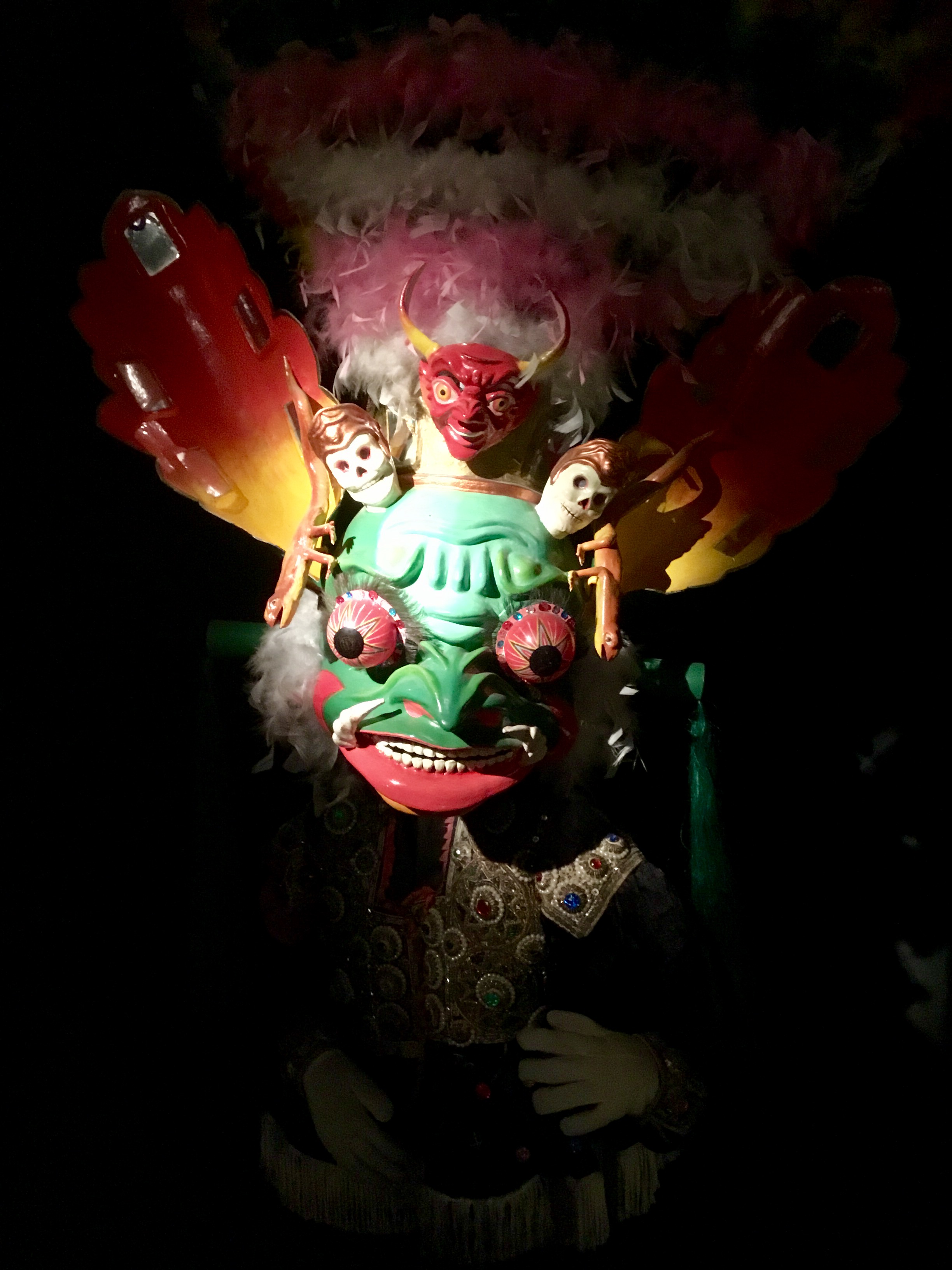
Museum of Ethnography and Folklore, La Paz, Bolivia
*an ongoing series of quotations – mostly from artists, to artists – that offers wisdom, inspiration, and advice for the sometimes lonely road we are on.
Federico Diez de Medina, a mask collector and archaeologist, offers a view based on an analysis of many masks and other artifacts from the Tiwanaku area. He suggests that the first masks were to exorcise evil spirits. To be effective, they had to be frightening.
“On the other hand,” he imagines, “it was obligatory for the high dignitaries in the great Aymara empire – the apus, malkus and curacas – to wear masks… for pronouncing judgments and for rites associated with religious observance, death and war, as well as for the varied dances of the seasonal rituals and other festivities. They also had to preside at sports events and decide the winners of numerous open air activities.” Among these pursuits the author mentions the jaltiris (races), ch’akusiris (fist fights), khorawasiris (slingshot) and mich’isiris (shooting darts or arrows).
Masks of the Altiplano by Manuel Vargas in Masks of the Bolivian Andes, Photographs: Peter McFarren, Sixto Choque, Editorial Quipos and BancoMercantil
Comments are welcome!
Pearls from artists* # 330
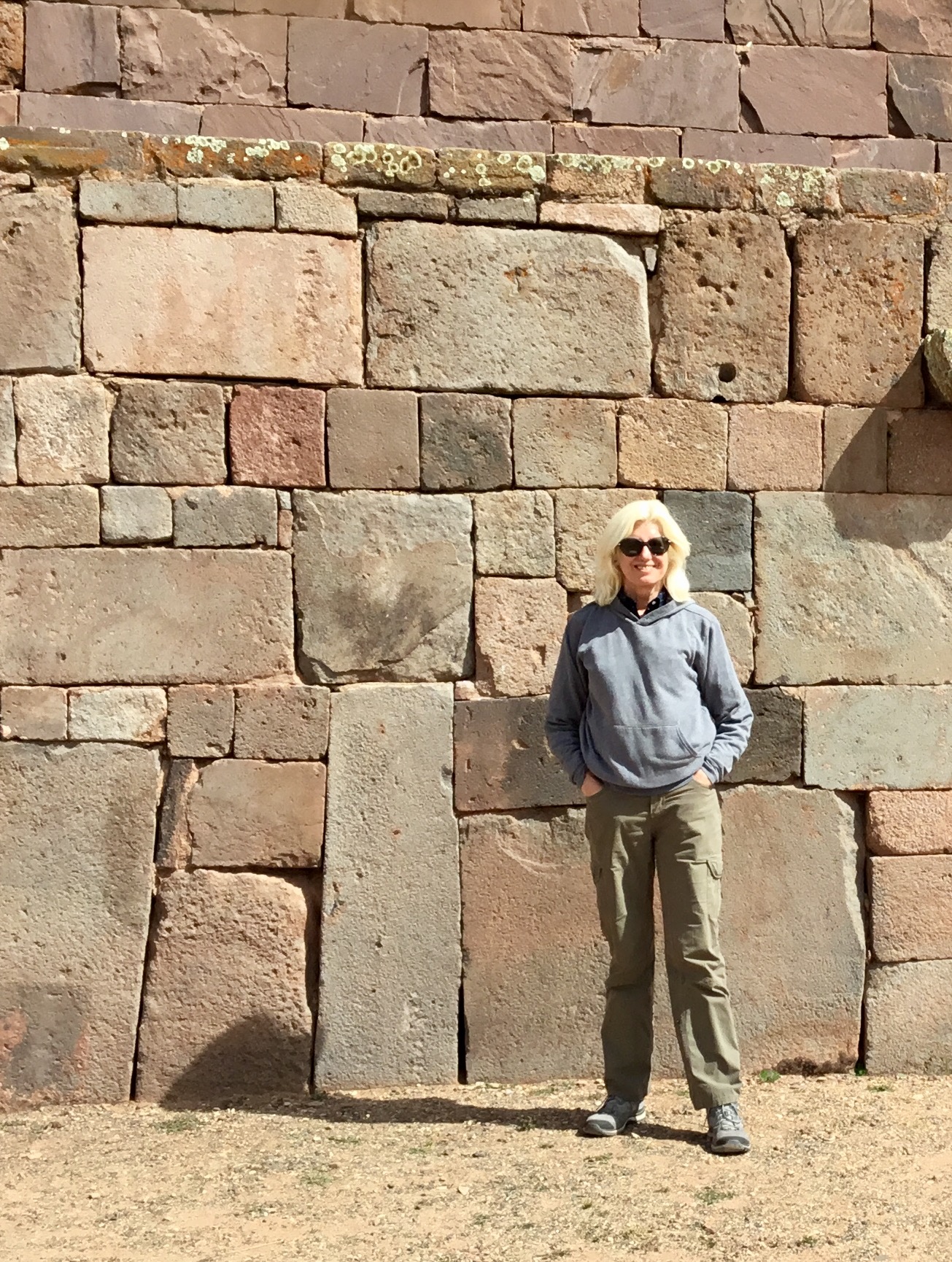
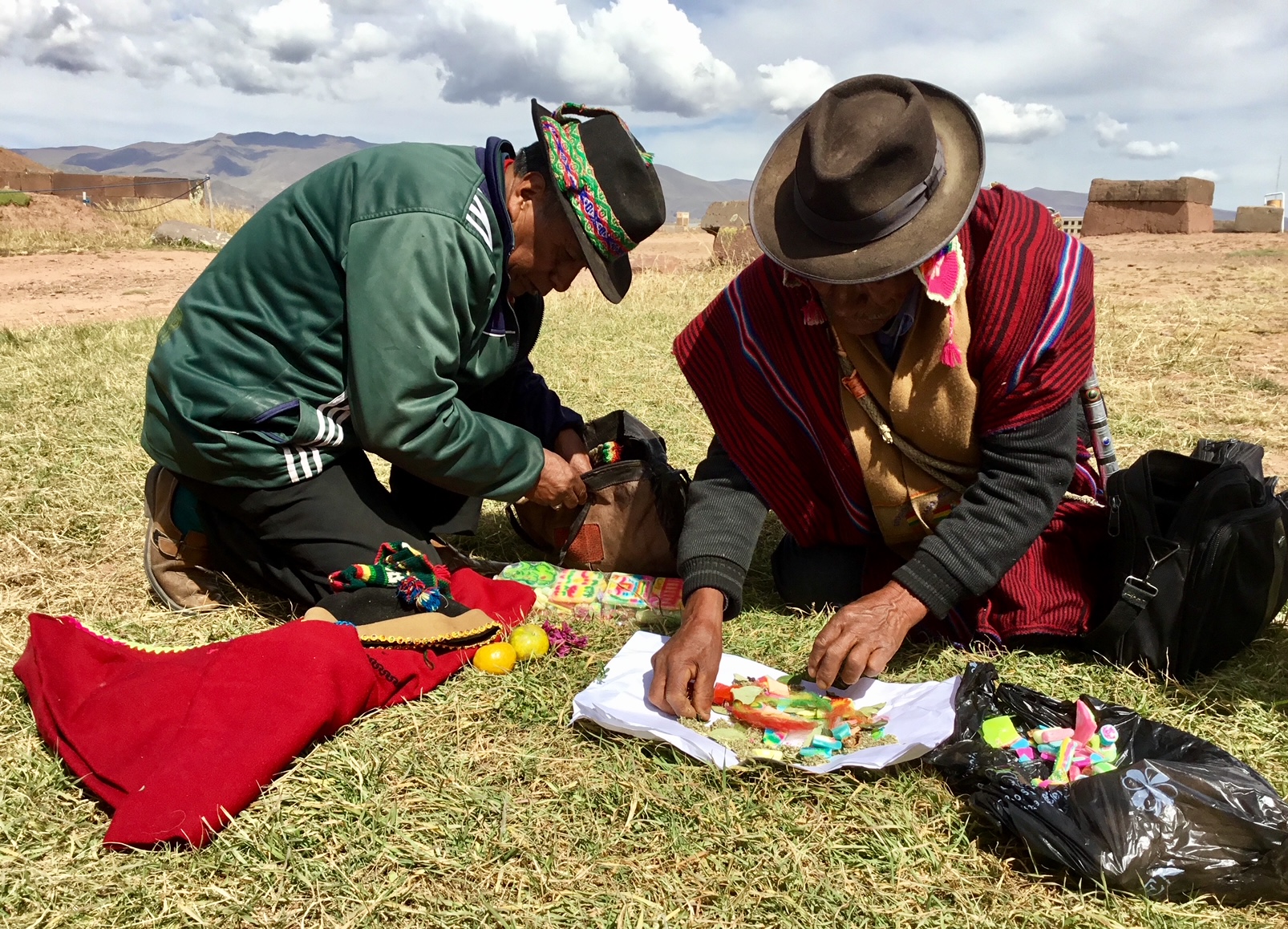
At Tiwanaku, Bolivia
*an ongoing series of quotations – mostly from artists, to artists – that offers wisdom, inspiration, and advice for the sometimes lonely road we are on.
To take the time to look and analyze the city or a building or an object is of the same nature as owning it, except that ownership is not a satisfactory feeling – but understanding is a form of complete assimilation. To really work and produce, there must be integration of your work in your life, or the integration of your life in your work.
Louise Bourgeois: Destruction of the Father, Reconstruction of the Father: Writings and interview 1923-1997, edited and with texts by Marie-Laure Bernadac and Hans-Ulrich Obrist
Comments are welcome!
Q: What non-art book are you reading now?
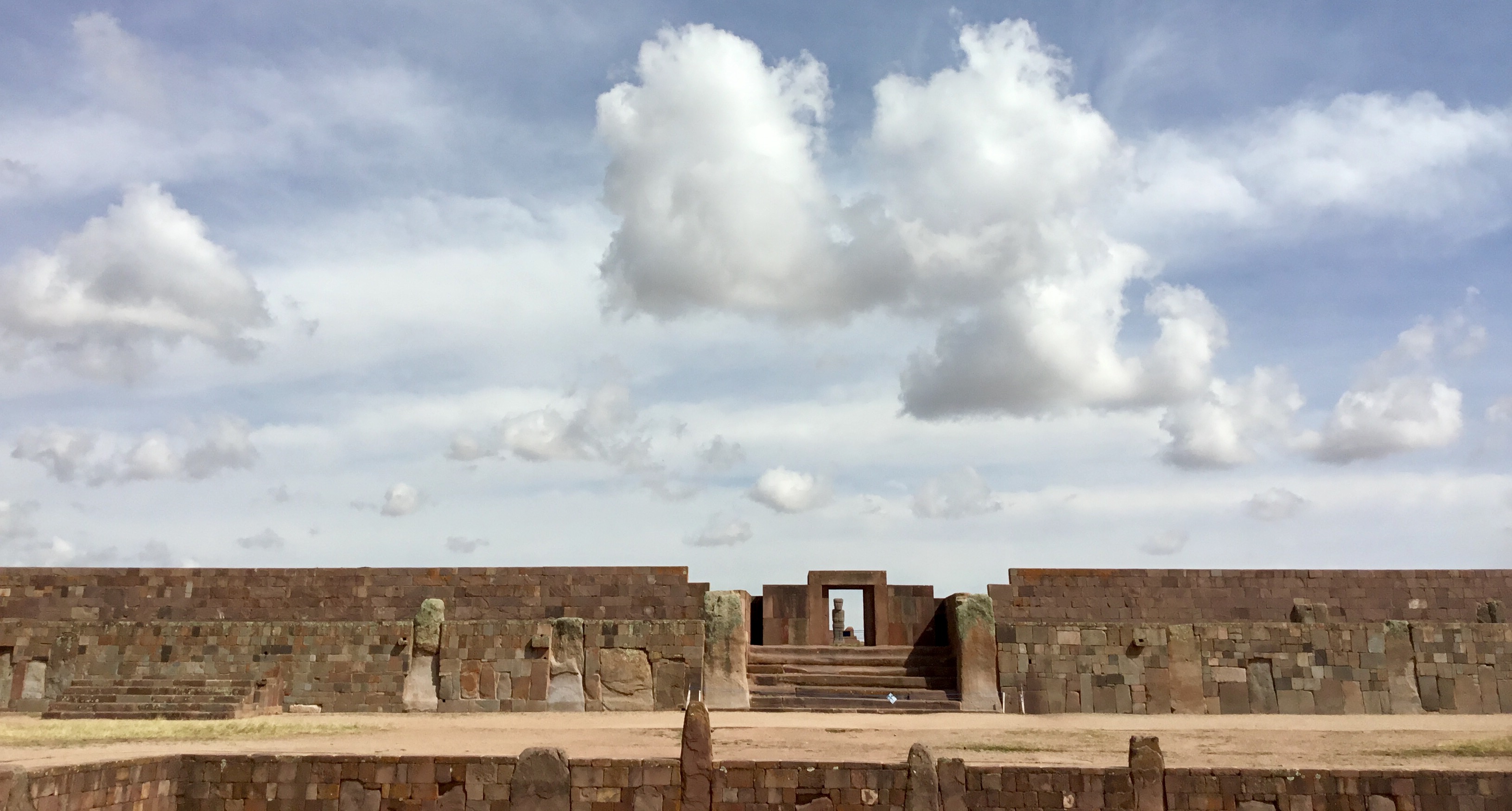
Tiwanaku
A: I am reading Kim Mac Quarrie’s, “The Last Days of the Incas.” It’s fascinating to discover the intricacies of the epic conquest of the short-lived Inca empire. The book is actually thrilling to read. Mac Quarrie makes this story come alive.
Last summer I traveled to Peru to investigate the history of the Incas and the civilizations that preceded them. In May of this year I continued my studies with a trip to Bolivia. Both trips are proving to be highly inspirational for my art practice.
Comments are welcome!



