Blog Archives
Pearls from artists* # 317
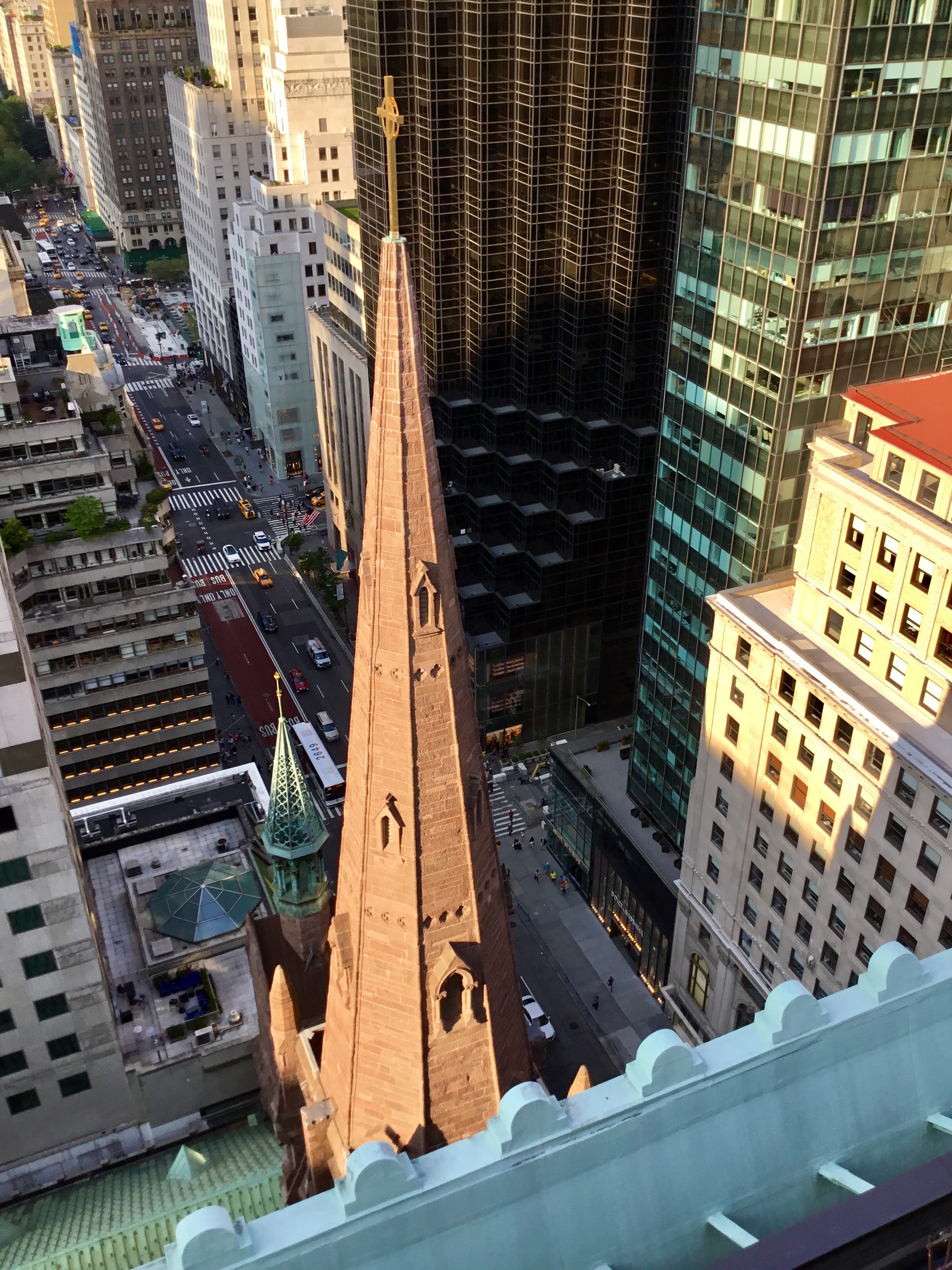
Fifth Avenue
*an ongoing series of quotations – mostly from artists, to artists – that offers wisdom, inspiration, and advice for the sometimes lonely road we are on.
But everything that may some day be possible to many the solitary man can now prepare and build with his hands, that err less. Therefore, dear sir, love your solitude and bear with sweet-sounding lamentation the suffering it causes you. For those who are near you are far, you say, and that shows it is beginning to grow wide about you. And when what is near you is far, then your distance is already among the stars and very large; rejoice in your growth, in which you naturally can take no one with you, and be kind to those who remain behind, and be sure and calm before them and do not torment them with your doubts and do not frighten them with your confidence or joy, which they could not understand. Seek yourself some sort of simple and loyal community with them, which need not necessarily change as you yourself become different and again different; love in them life in an unfamiliar form and be considerate of aging people, who fear that being-alone in which you trust. Avoid contributing material to the drama that is always stretched taut between parents and children; it uses up much of the children’ energy and consumes the love of their elders, which is effective and warming even if it does not comprehend. Ask no advice from them and count upon no understanding; but believe in a love that is being stored up for you like an inheritance and trust that in this love there is a strength and a blessing, out beyond which you do not have to step in order to go very far!
Rainer Maria Rilke, Letters to a Young Poet, Translation by M.D. Herter Norton
Comments are welcome!
Pearls from artists* # 193
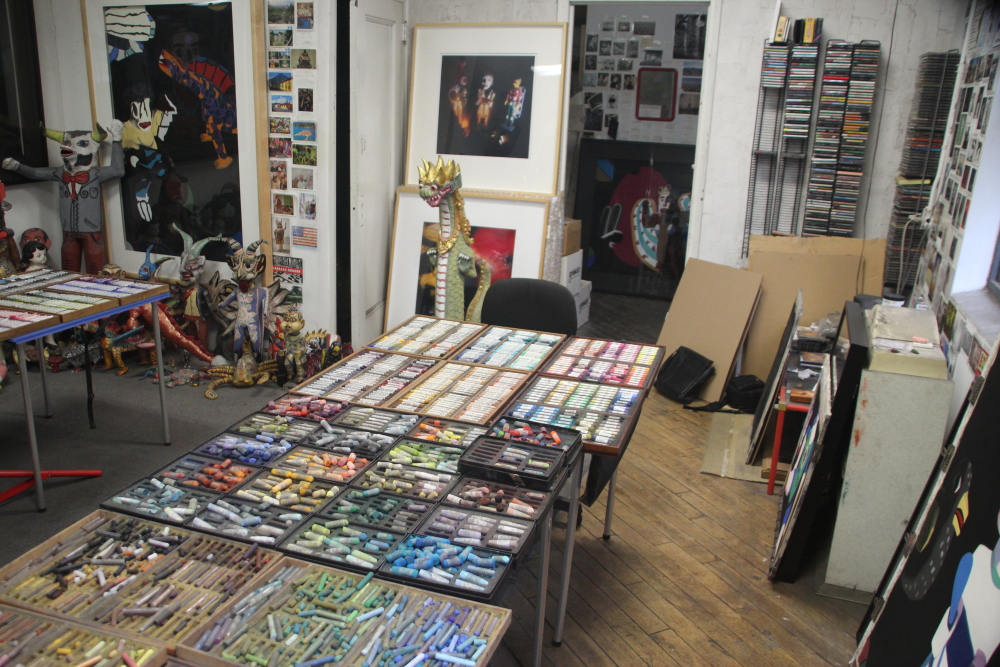
Barbara’s studio
* an ongoing series of quotations – mostly from artists, to artists – that offers wisdom, inspiration, and advice for the sometimes lonely road we are on.
Interviewer: Your work includes a great range of experience, as well as of form. What do you think is the greatest quality a poet can have? Is it formal, or is it a quality of thinking?
Ezra Pound: I don’t know that you can put the needed qualities in hierarchic order, but he must have a continuous curiosity, which of course does not make him a writer. but if he hasn’t got that he will wither. And the question of doing anything about it depends on a persistent energy. A man like Agassiz is never bored, never tired. The transit from the reception of stimuli to the recording, to the correlation, that is what takes the whole energy of a lifetime.
Writers at Work: The Paris Review Interviews Second Series, edited by George Plimpton and introduced by Van Wyck Brooks
Comments are welcome!
Pearls from artists* # 173
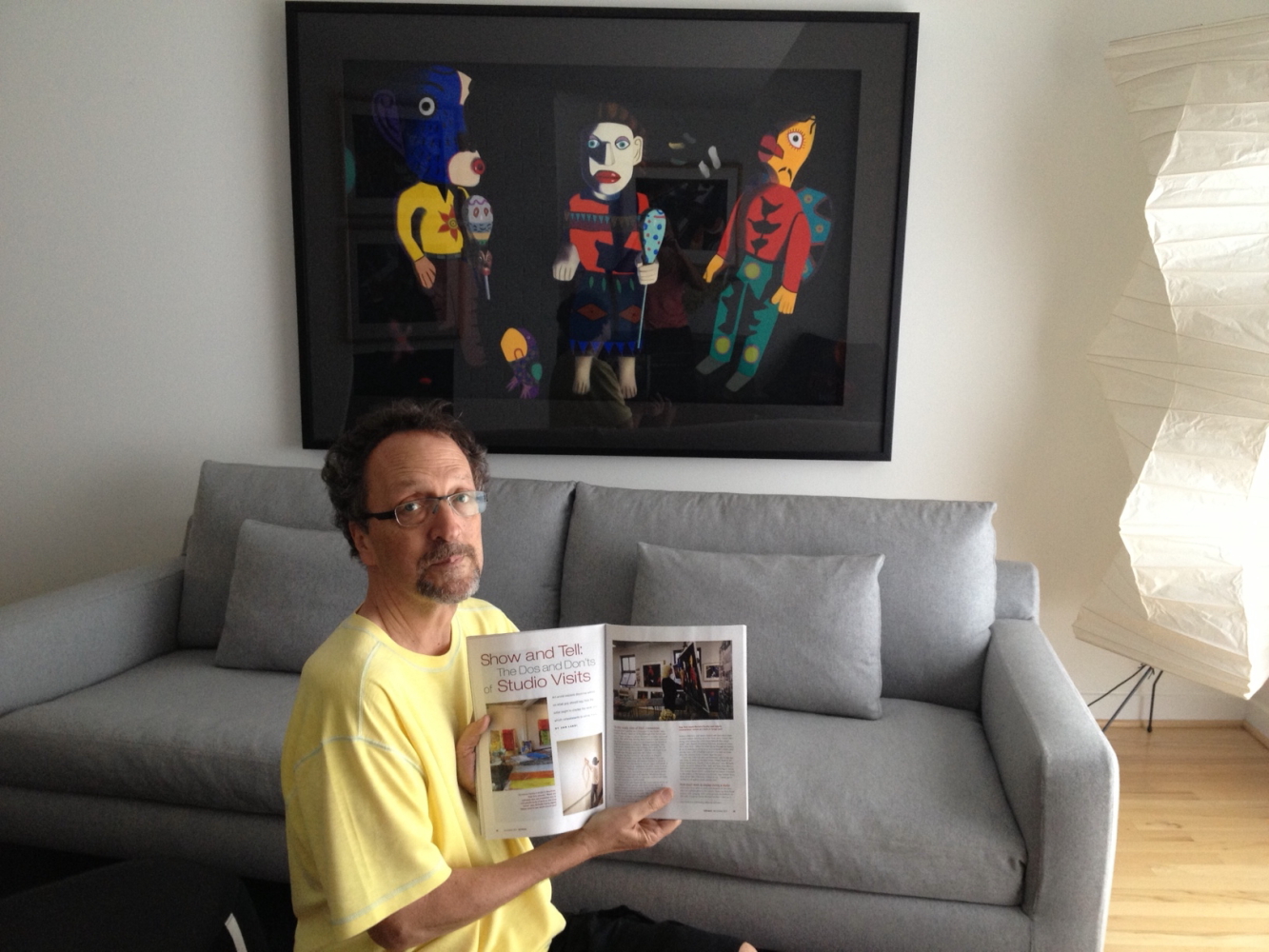
Collector, “False Friends,” and ARTNews article that shows the painting in progress
* an ongoing series of quotations – mostly from artists, to artists – that offers wisdom, inspiration, and advice for the sometimes lonely road we are on.
Artists, by nature, are gamblers. Gambling is a dangerous habit. But whenever you make art, you’re always gambling. You’re rolling the dice on the slim odds that your investment of time, energy, and resources now might pay off later in a big way – that somebody might buy your work, and that you might become successful.
Elizabeth Gilbert in Big Magic: Creative Living Beyond Fear
Comments are welcome!
Pearls from artists* # 164
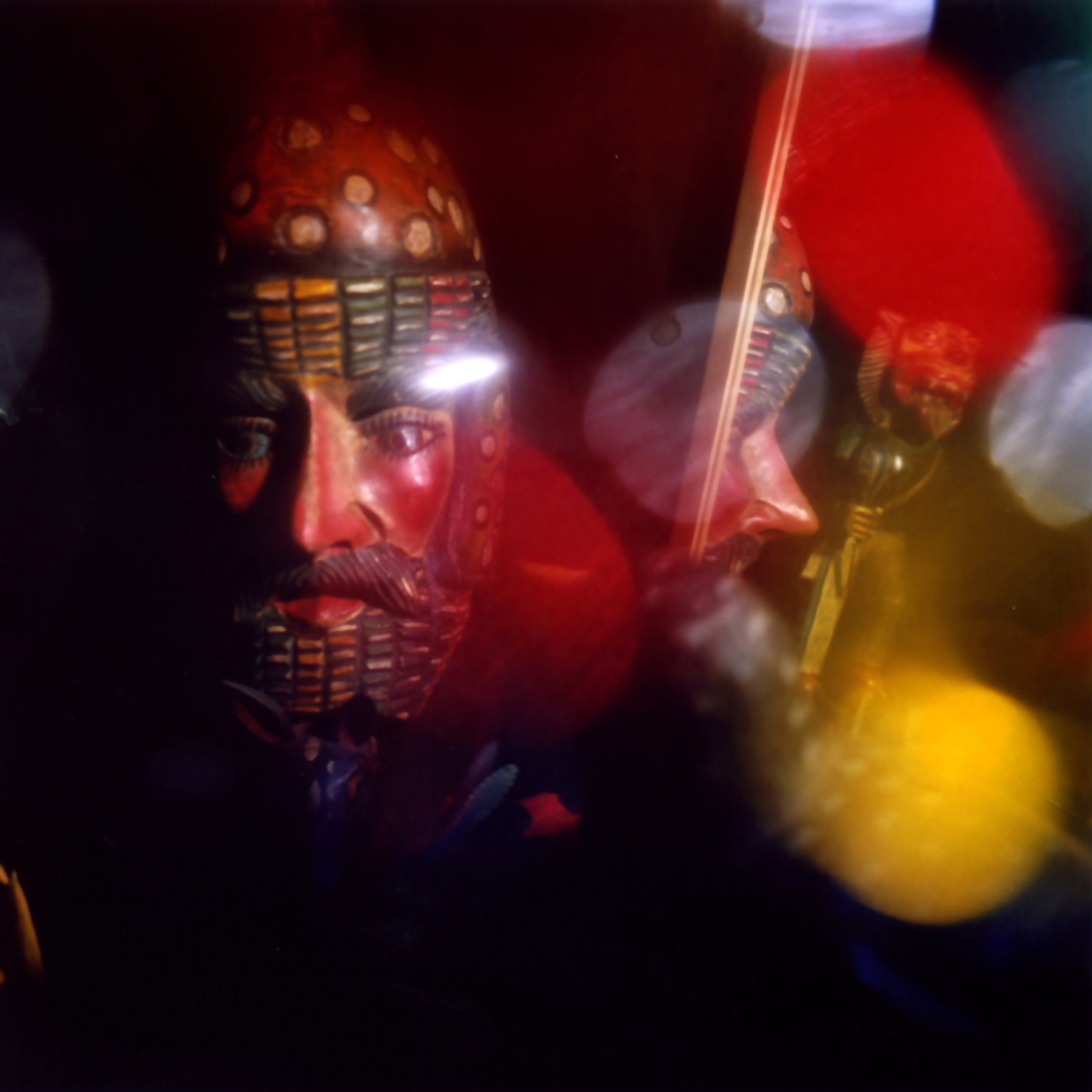
Untitled chromogenic print, 24″ x 24,” edition of 5
* an ongoing series of quotations – mostly from artists, to artists – that offers wisdom, inspiration, and advice for the sometimes lonely road we are on.
The Eastern and Western classics are full of gods, saints, and heroes, all striving against life’s odds and overcoming them with perseverance, courage, energy and hope as well as help from some sort of divine energy. Unlike the gods, the saints, gurus, and heroes are humanized in creative works. Otherwise, we would find it difficult to accept them, relate to them or look up to them for inspiration and courage. It is the humanization of the subject that makes the supernatural sometimes feel real. And sometimes makes the impossible seem reachable and achievable. The classic writings all contain humanized heroes, saints and gods. The characters in these books are so humanized that the courage and inspiration we get from their endurance in overcoming life’s challenges will keep on inspiring readers forever. Because of this we can aspire to their accomplishments. If we too are able to create meaningful works providing timeless inspiration to help others, our work will live on.
Samuel Odoquei in Origin of Inspiration: Seven Short Essays for Creative People
Comments are welcome!
Pearls from artists* # 157
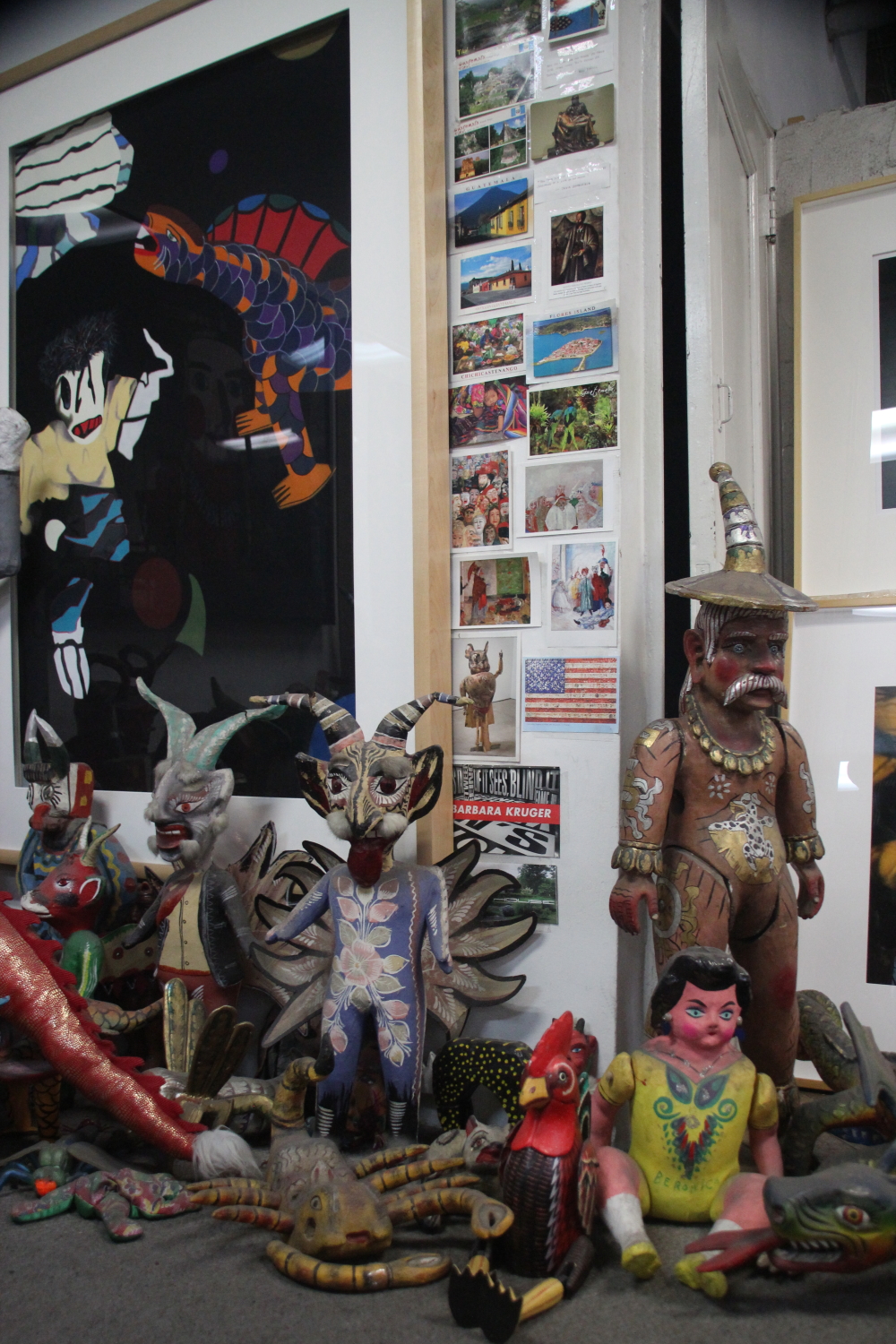
Barbara’s studio
* an ongoing series of quotations – mostly from artists, to artists – that offers wisdom, inspiration, and advice for the sometimes lonely road we are on.
Only passion gives us a powerful emotion, a supreme strength and the enduring energy to fulfill our duty. It provides a stimulus, giving us hope and courage as well as stamina. The strength, love and joy passion gives us have no limitations. They are what drive us to sacrifice everything in order to achieve that which our passion requires. Passion is like a bribe from the gods, its great enthusiasm enticing us to do a particular work and to enjoy that more than anything else, without thought of the sacrifices and consequences.
Samuel Adoquei in Origin of Inspiration: Seven Short Essays for Creative People
Comments are welcome!
Q: Why don’t you teach or conduct pastel workshops?
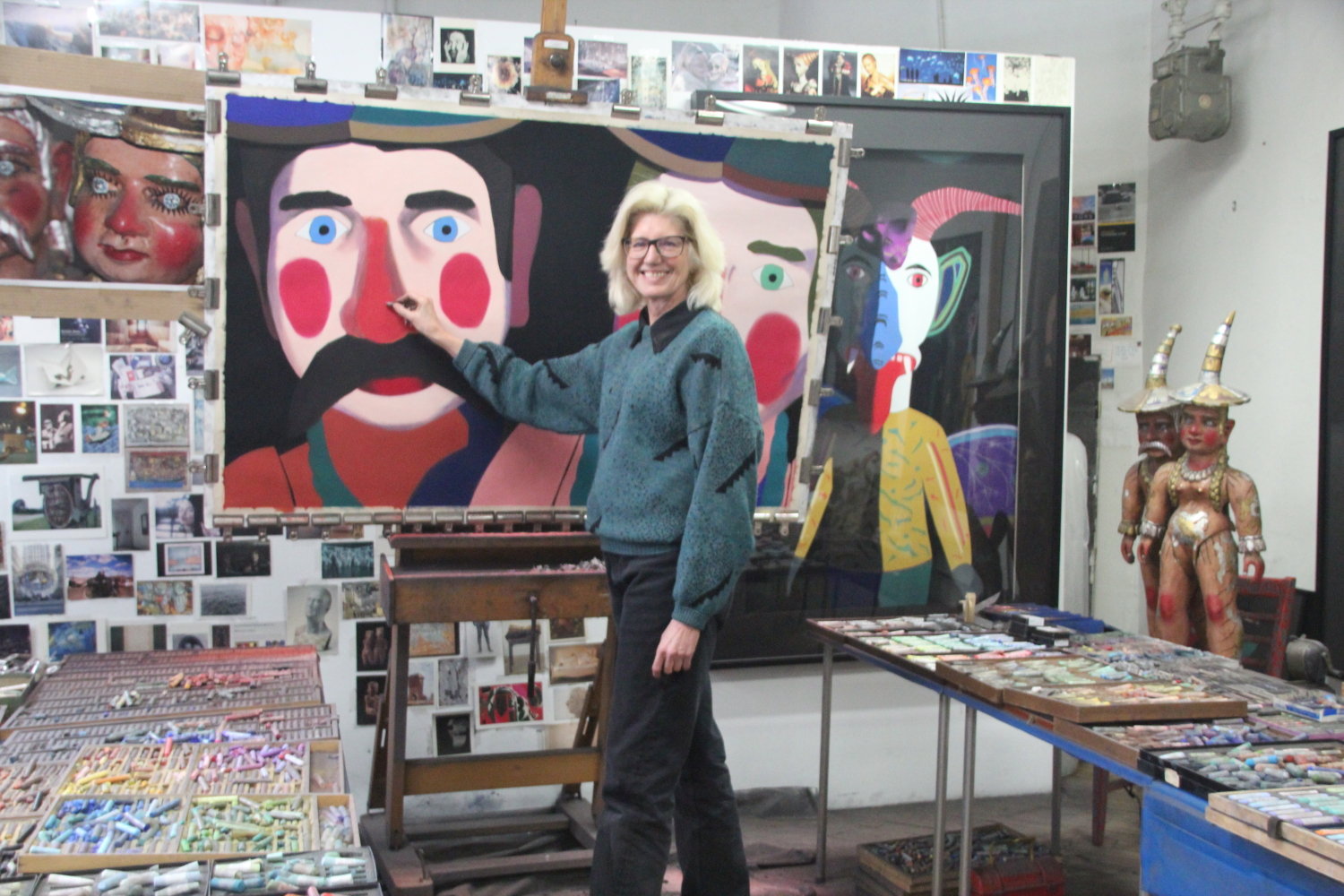
Barbara in her studio
A: I am often asked to teach, but I never have had the desire to do so. Because my work is extremely labor intensive, I am reluctant to give up precious studio time, either for teaching or for any activities that could be deemed a distraction. Consistent in my creative practice, I typically work in my studio five days a week, seven or more hours a day and am able to complete four or five pastel-on-sandpaper paintings in a year.
Teaching would divert time, attention, and energy away from my practice. Certainly it can be rewarding in many ways but since my process is slow and meticulous, I prefer to focus on making new work.
Comments are welcome!
Pearls from artists* # 122
Sanur, Bali
* an ongoing series of quotations – mostly from artists, to artists – that offers wisdom, inspiration, and advice for the sometimes lonely road we are on.
Most significant growth in my life has been the direct result of errors, mistakes, accidents, faulty assumptions and wrong moves. I have generally learned more from my mistakes and my so-called failures than any successes or instances of “being right.” I would venture to propose that this equation is also true in the world at large. Error is a powerful animating ingredient in political, scientific and historical evolution as well as in art and mythology. Error is a necessity. The question I had to ask myself was: how can I cultivate a tolerance and an appetite for being wrong, for error?
In the face of an exceedingly complicated world, there are too many people who are invested in “being right.” These people are dangerous. Their authority is based on their sense of certainty. But innovation and invention do not only happen with smart people who have all of the answers. Innovation results from trial and error. The task is to make good mistakes, good errors, in the right direction.
There are many reasons that we get things as wrong as often as we do. Failures of perception, the cause of most error, are far more common in our daily lives than we like to think. We make errors because of inattention, because of poor preparation and because of haste. We err as a result of hardened prejudices about how things are. We err because we neglect to think things through. Our senses betray us constantly. But the chaos caused by being wrong also awakens energy and consciousness in us. In the moments that we realize our faults of perception, we are jerked into an awareness of our humanity. The Slovenian philosopher Slavoj Zizek wrote, “Consciousness originates with something going terribly wrong.”
Anne Bogart in “What’s the Story: Essays about art, theater, and storytelling
Comments are welcome!
Pearls from artists* # 113

Studio corner
* an ongoing series of quotations – mostly from artists, to artists – that offers wisdom, inspiration, and advice for the sometimes lonely road we are on.
In Amsterdam I saw a striking still life painted by Rembrandt van Rijn suspended above a glass case that contained the same objects that he used as a model for the picture. The contrast between what felt like a drab collection of random objects in the case and the stunning luminescent painting that seemed imbued with nothing less than intense energy and life gave me pause and clarified something I had been thinking about. I had been thinking about the power of art to transform the frustrations and irritations of daily life into a realm of grace and to embody, through arrangement, composition, light, color and shade, nothing less than the secret elixir of life itself.
We encounter daily frustrations, irritations, and obstacles. Perhaps we feel hampered and limited by our hit-and-miss upbringing, our apparent limitations and our imperfect ongoing circumstances. And yet Rembrandt’s still life painting demonstrates that it is within our power to transform the random, the everyday, the frustrating and the prosaic into an arrangement instilled with grace and poetry. Is it the arrangement of these objects that lends such a spiritual quality to the painting? Is it the sensation of light captured upon canvas? How did Rembrandt transform the quotidian into an uplifting vision of life?
Anne Bogart in What’s the Story: Essays about art, theater, and storytelling
Comments are welcome!
Pearls from artists* # 85
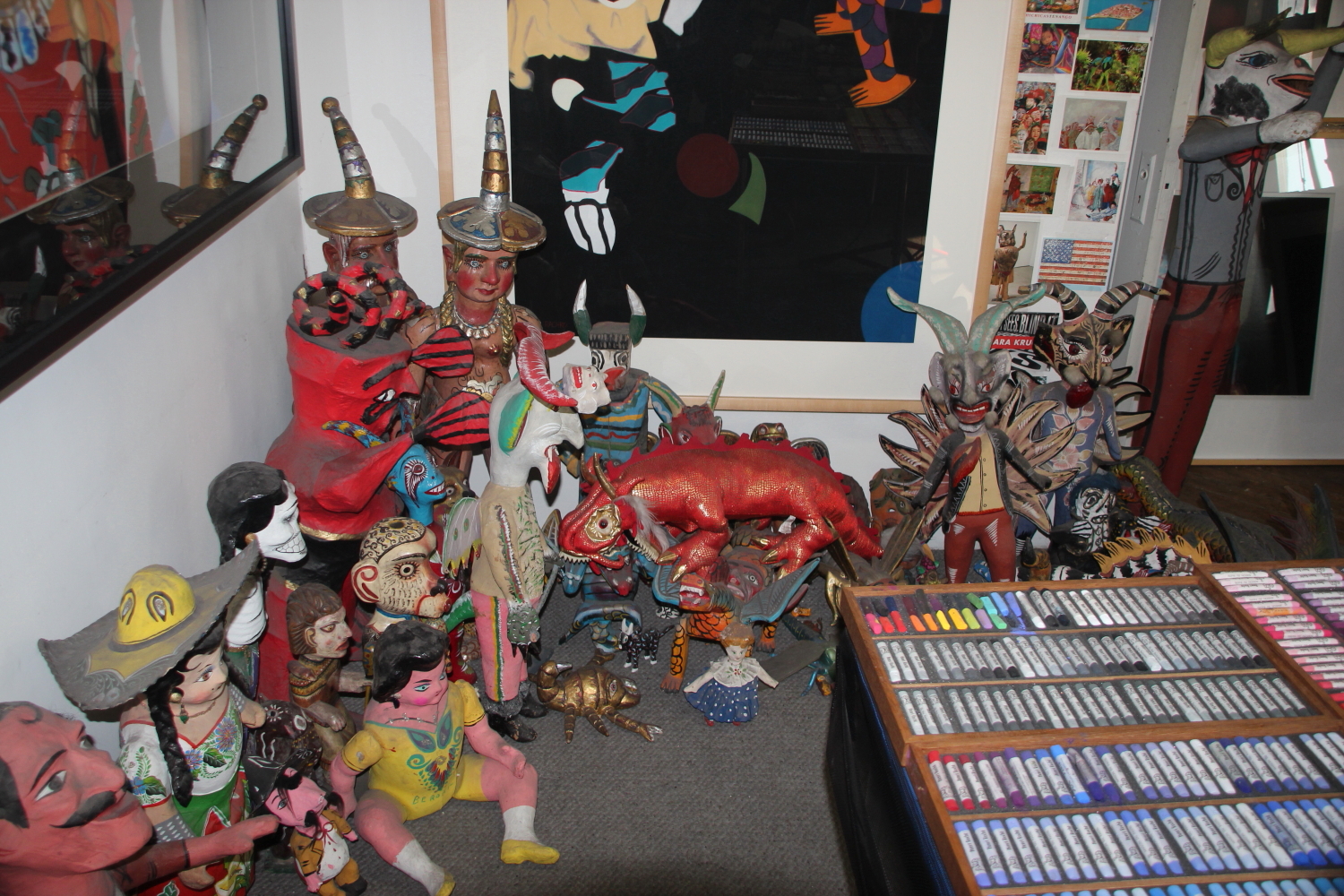
Studio
* an ongoing series of quotations – mostly from artists, to artists – that offers wisdom, inspiration, and advice for the sometimes lonely road we are on.
Credo
I believe in art.
I do not believe in the “art world” as
it is today.
I do not believe in art as a commodity.
Great art is in exquisite balance. It is
restorative.
I believe in the energy of art, and through
the use of that energy, the artist’s ability
to transform his or her life and, by ex-
ample, the lives of others.
I believe that through our art, and through
the projection of transcendent imagery, we
can mend and heal the planet.
Audrey Flack in Art & Soul: Notes on Creating
Comments are welcome!
Pearls from artists* # 76
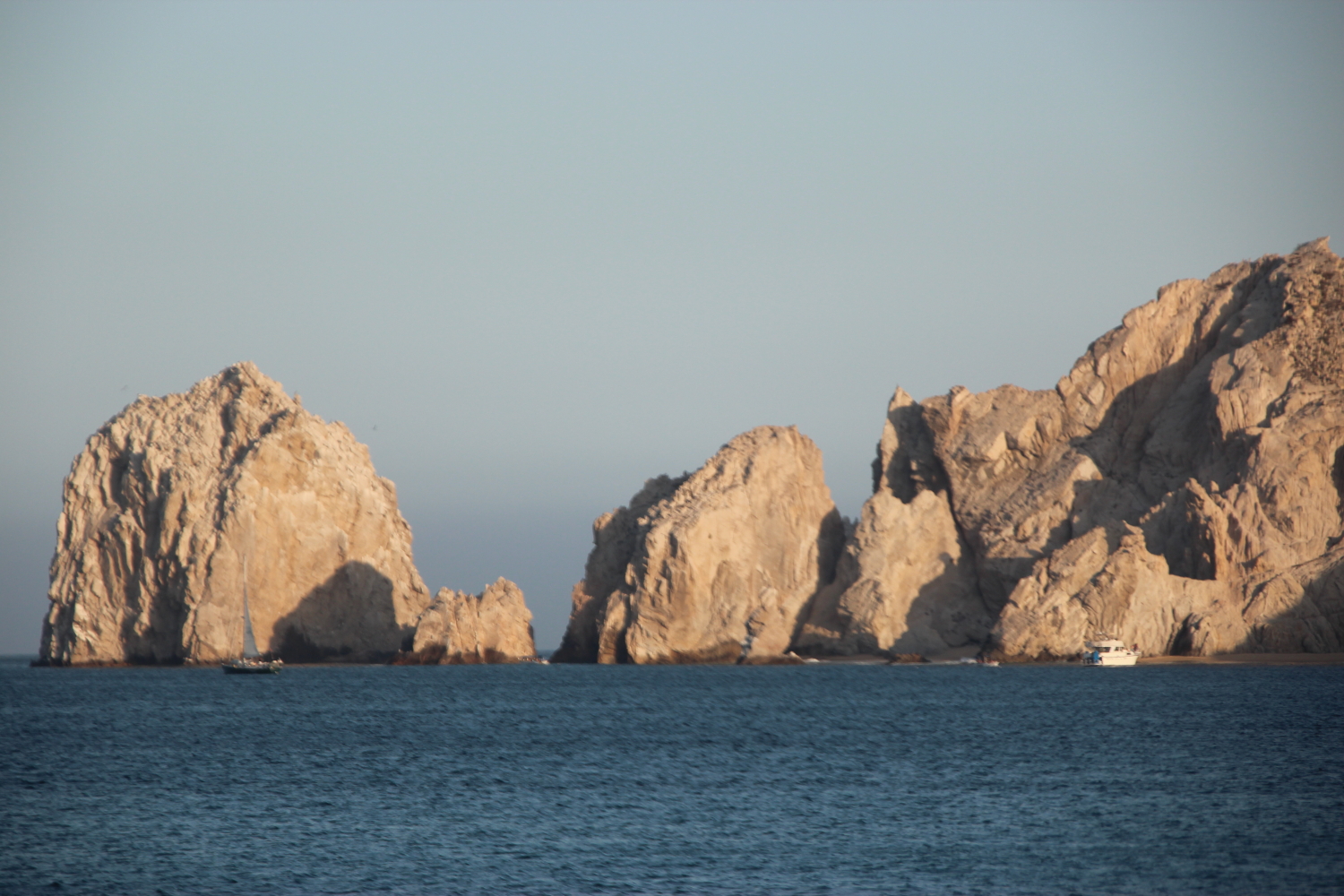
Cabo San Lucas, Mexico
* an ongoing series of quotations – mostly from artists, to artists – that offers wisdom, inspiration, and advice for the sometimes lonely road we are on.
What stops us in our tracks? I am rarely stopped by something or someone I can instantly know. In fact, I have always been attracted to the challenge of getting to know what I cannot instantly categorize or dismiss, whether an actor’s presence, a painting, a piece of music, or a personal relationship. It is the journey towards the object of attraction that interests me. We stand in relation to one another. We long for the relationships that will change our vistas. Attraction is an invitation to an evanescent journey, to a new way of experiencing life or perceiving reality.
An authentic work of art embodies intense energy. It demands response. You can either avoid it, shut it out, or meet it and tussle. It contains attractive and complicated energy fields and a logic all its own. It does not create desire or movement in the receiver, rather it engenders what James Joyce labeled ‘aesthetic arrest.’ You are stopped in your tracks. You cannot easily walk by it and go on with your life. You find yourself in relation to something that you cannot readily dismiss.
Anne Bogart in A Director Prepares: Seven Essays on Art and Theater
Comments are welcome!


 barbararachkoscoloreddust.com