Blog Archives
Q: Would you please share your current bio?

A: Here it is.
Barbara Rachko, born in 1953 in Paterson, New Jersey, is a contemporary painter based in New York City, renowned for her large pastel-on-sandpaper paintings inspired by Bolivian Carnival masks. With nearly 40 years dedicated to revolutionizing pastel as a fine art medium, Rachko’s influential blog, Barbara Rachko’s Colored Dust, has garnered over 229,000 subscribers. She is the subject of the acclaimed documentary “Barbara Rachko: True Grit,” available on YouTube, and her ebook “From Pilot to Painter” captures her inspiring journey from a former pilot to an accomplished artist.
Rachko’s work explores the vibrant cultural heritage of Bolivian Carnival masks, and Mexican and Guatemalan folk art. Her meticulous attention to detail is showcased in notable series such as Bolivianos, Black Paintings, and Domestic Threats. In 2023, she was featured in a documentary that premiered at the Newport Beach Film Festival, earning the Audience Award and Best in Category Award, further cementing her impact on contemporary art.
Her solo exhibitions include the Joy Pratt Markham Gallery at Walton Arts Center (AR), Louise Jones Brown Gallery at Duke University (NC), Olin Gallery (VA), and La MaMa La Galleria (NY). She trained in photography at the International Center of Photography in New York and studied drawing and pastel techniques at the Art League School in Alexandria, VA. Her works are held in private collections worldwide and have been showcased at prestigious art fairs, including Art Basel Miami, Moon Art Fair in Hamburg, and Art Busan in Korea, affirming her global influence in pastel painting.
Comments are welcome!
Q: Do you have any big projects coming up?

A: I certainly do! I have been a painter for forty years, and for most of that time, my work has been shaped by foreign travel. At seventy-two, I find myself thinking about legacy — what I want to leave behind. Documenting my creative process on film has become an essential part of this objective.
In the “Bolivianos” series, I have been creating pastel-on-sandpaper paintings that transform the vivid masks of the Bolivian Carnival into universal archetypes. I first encountered these masks at a museum in La Paz in 2017.
Circumstances have aligned perfectly for an exciting next step: another trip to Bolivia and a new documentary. Our upcoming film will be a follow-up to the award-winning “Barbara Rachko: True Grit” (released in 2023), marking a deeper exploration of my thirty-five-year engagement with folk art from Mexico, Central America, and South America.
(See https://youtu.be/JJWLy84kXI0?si=v7JHIq9ViYGgs76U)
In February 2026, I will return to Bolivia with a two-person film crew to experience Carnival firsthand — to immerse myself in its rhythm, history, and meaning. Recognized by UNESCO as a Masterpiece of the Oral and Intangible Heritage of Humanity, this festival offers an extraordinary window into Bolivia’s cultural soul.
Our film will chronicle my journey as essential research — a vital continuation of my creative inquiry over these past decades. With this trip and film, I hope to create my next body of pastel-on-sandpaper paintings, rich with color, spirit, and the enduring vitality of Oruro’s Carnival.
Comments are welcome!
Pearls from artists* 601

Along the Seine, Paris
*an ongoing series of quotations – mostly from artists, to artists – that offers wisdom, inspiration, and advice for the sometimes lonely road we are on.
The central construct of café life in Paris introduced [Jack] Youngerman to contemporary political and cultural debates. He would take with him to New York this particular way of being alone but with people. It would infuse Coenties Slip with its unique template of influence by osmosis; the collective solitude model unique to the geographic makeup of that corner of New York. In Paris, “at any time, you can go out and be part of the city, you can see passersby, you can get out of your personal loneliness, without having to make conversation with another person. That’s something I want to do almost every day.” For Youngerman , it felt vital for art making.
Prudence Peiffer in The Slip: The New York Street that Changed American Art Forever
Comments are welcome!
Pearls from artists* # 576
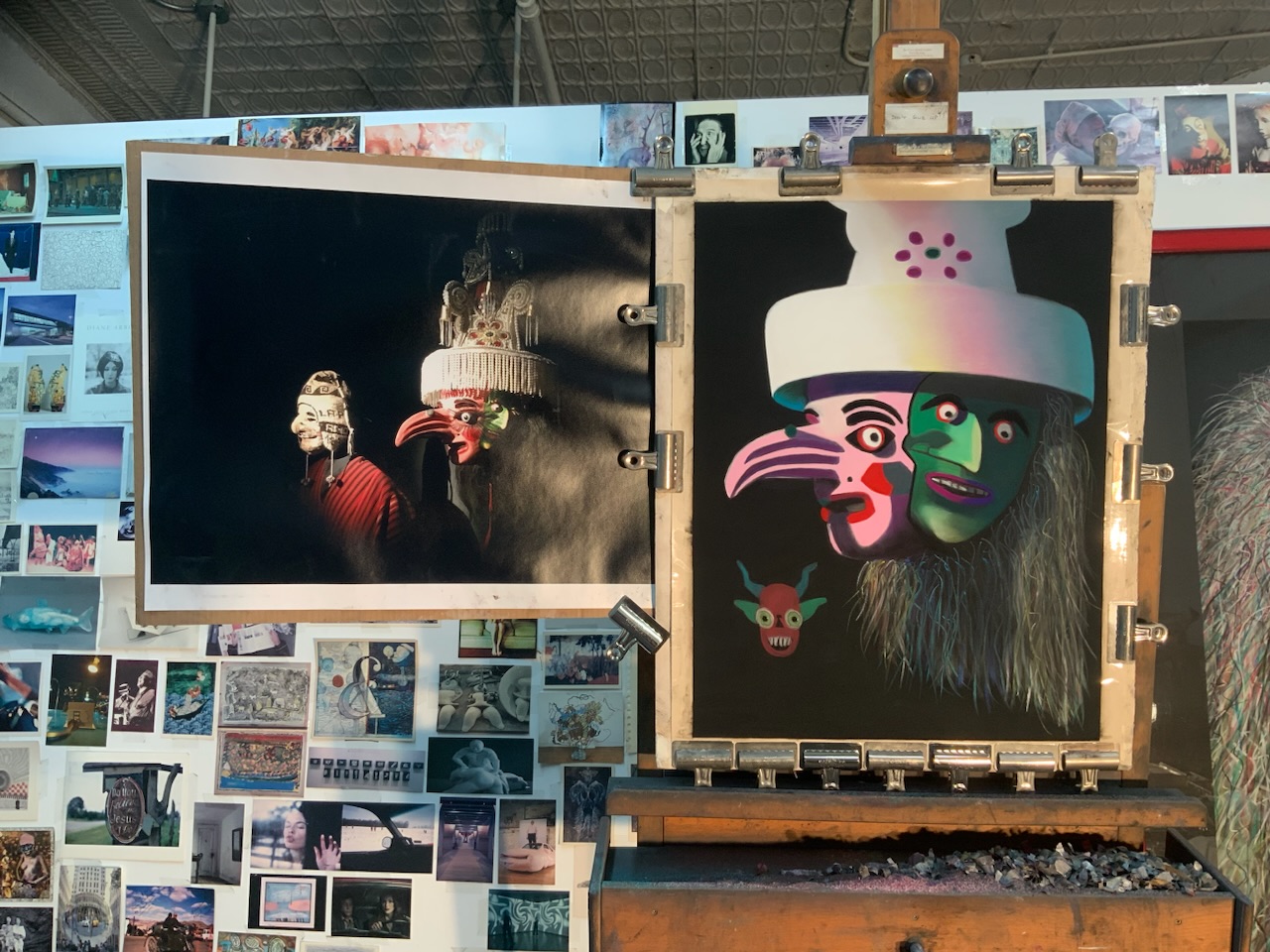
In progress: “Shadow,” soft pastel on sandpaper, 26” x 20”
*an ongoing series of quotations – mostly from artists, to artists – that offers wisdom, inspiration, and advice for the sometimes lonely road we are on.
A word derived from Latin, persona, originally referred to the masks worn by actors in ancient classical theatre. In Jungian psychology, this term refers to the inner character that we use to face the world. Drawn from societal expectations, cultural norms, and natural attributes, it is the person we want others to think we really are. Our persona is our brave face, our false front. It is the ongoing project of building our ideal self.
… the persona is our somewhat embellished view of ourselves, the shiny face that we want the world to see. It’s opposite, everything we reject about ourselves, is called the shadow.
… our shadow is the pain we’ve forgotten about. It is a complex within us, a split-off part our consciousness loaded with emotional weight. Our persona is what we want to be seen to be; shadow is what we least want to be.
Gary Bobroff in Carl Jung: Knowledge in a Nutshell
Comments are welcome!
Q: What is your process? (Question from artamour)
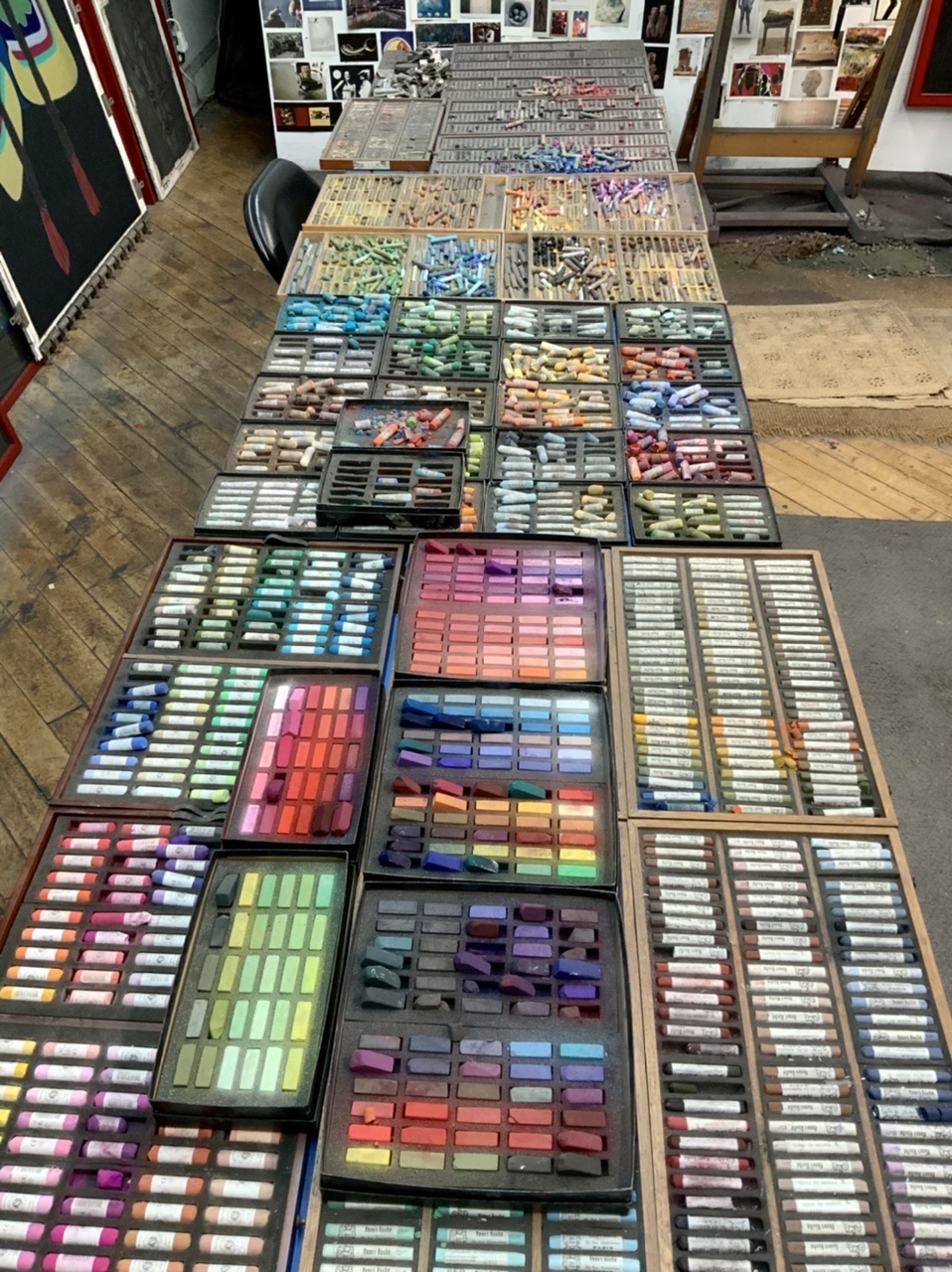
A: For thirty-six years I have worked exclusively in soft pastel on sandpaper. Pastel, which is pigment and a binder to hold it together, is as close to unadulterated color as an artist can get. It allows for very saturated color, especially employing the self-invented techniques I have developed and mastered. I believe my “science of color” is unique, completely unlike how any other artist works. I spend three to four months on each painting, applying pastel and blending the layers together to mix new colors on the paper.
The acid-free sandpaper support allows the buildup of 25 to 30 layers of pastel as I slowly and meticulously work for hundreds of hours to complete a painting. The paper is extremely forgiving. I can change my mind, correct, refine, etc. as much as I want until a painting is the best I can create at that moment in time.
My techniques for using soft pastel achieve rich velvety textures and exceptionally vibrant color. Blending with my fingers, I painstakingly apply dozens of layers of pastel onto the sandpaper. In addition to the thousands of pastels that I have to choose from, I make new colors directly on the paper. Regardless of size, each pastel painting takes three to four months and hundreds of hours to complete.
I have been devoted to soft pastel from the beginning. In my blog and in numerous interviews online and elsewhere, I continue to expound on its merits. For me no other fine art medium comes close.
My subject matter is unique. I am drawn to Mexican, Guatemalan, and Bolivian cultural objects—masks, carved wooden animals, papier mâché figures, and toys. On trips to these countries and elsewhere I frequent local mask shops, markets, and bazaars searching for the figures that will populate my pastel paintings. How, why, when, and where these objects come into my life is an important part of the creative process. Each pastel painting is a highly personal blend of reality, fantasy, and autobiography.
Comments are welcome!
Pearls from artists* # 482

*an ongoing series of quotations – mostly from artists, to artists – that offers wisdom, inspiration, and advice for the sometimes lonely road we are on.
Devils’ heads with daring and disturbing eyes, twisted horns, abundant grey hair and hooked noses hang on the blue walls of Antonio Viscarra’s house. Long benches covered with old, multi-colored cushions in Bolivian motifs surround the concrete floor of the small room. Several dozen of these hanging faces, which seem to watch in silence from the darkness, are ready to be used in festivals and traditional dances.
The maskmaker or “maestro” as he is called, lives [deceased now] in the area of Avenida Buenos Aires, far from the political and administrative center of the city of La Paz, but rather at the very center of the other La Paz (Chuquiago in the Aymara language) where many peasant immigrants have settled, and which for that reason, is the center of the city’s popular culture.
Viscarra is the oldest creator of masks in La Paz, and his work has helped to conserve, and at the same time to rejuvenate, the tradition of using masks in Bolivian dances. If economic progress and alienation have contributed to the excessive adornment of new masks with glass and other foreign materials, Viscarra, in an attempt to recover the distinctive, original forms, has gone back to the 100-year-old molds used by his grandfather. His work has been exhibited in Europe, in the United States and in South America, Most important, however, is that Viscarra is transmitting his knowledge to his children, ensuring that this form of authentic Bolivian culture will never die.
…Viscarra inherited the old mask molds from his grandfather and was told to take good care of them because some day he might need them. After keeping them carefully put away for 50 years, the maestro used them again for an exhibition of masks prepared in 1984, slowly recreating the original masks, beautiful in their simplicity, in their delicate craftsmanship and in their cultural value. In this way, the masks which emerged from the old molds are regaining their past prestige and importance.
Antonio Viscarra, The mask Maker by Wendy McFarren in Masks of the Bolivian Andes, Editorial Quipus and Banco Mercantil
Comments are welcome!
Pearls from artists* # 473

*an ongoing series of quotations – mostly from artists, to artists – that offers wisdom, inspiration, and advice for the sometimes lonely road we are on.
… slow art arose in the later eighteenth century when two massive cultural changes converged, changes that have grown more acute ever since. First: acceleration, as capitalism and advances in technology quickened the pace of everyday life in unprecedented ways. It’s no coincidence that Harmut Rosa links the origin of modernity to the quickening movement of money, vehicles, and communication. The pressures of acceleration created the need for psychological breathers or timeouts. But second, and simultaneously: Western society grew more and more secularized. As a result, occasions to slow one’s tempo became harder to access – like devotional practices requiring viewers to focus intensely on single works over long periods of time. Hence an increased need met decreased opportunities to address that need. Slow art came to supplement older sacred practices by creating social spaces for getting off the train. In sum, as culture sped up and sacred aesthetic practices waned, slow art came to satisfy our need for downtime by producing works that require sustained attention in order to experience them.
Arden Reed in Slow Art: The Experience of Looking, Sacred Images to James Turrell
Comments are welcome!
Pearls from artists* # 410
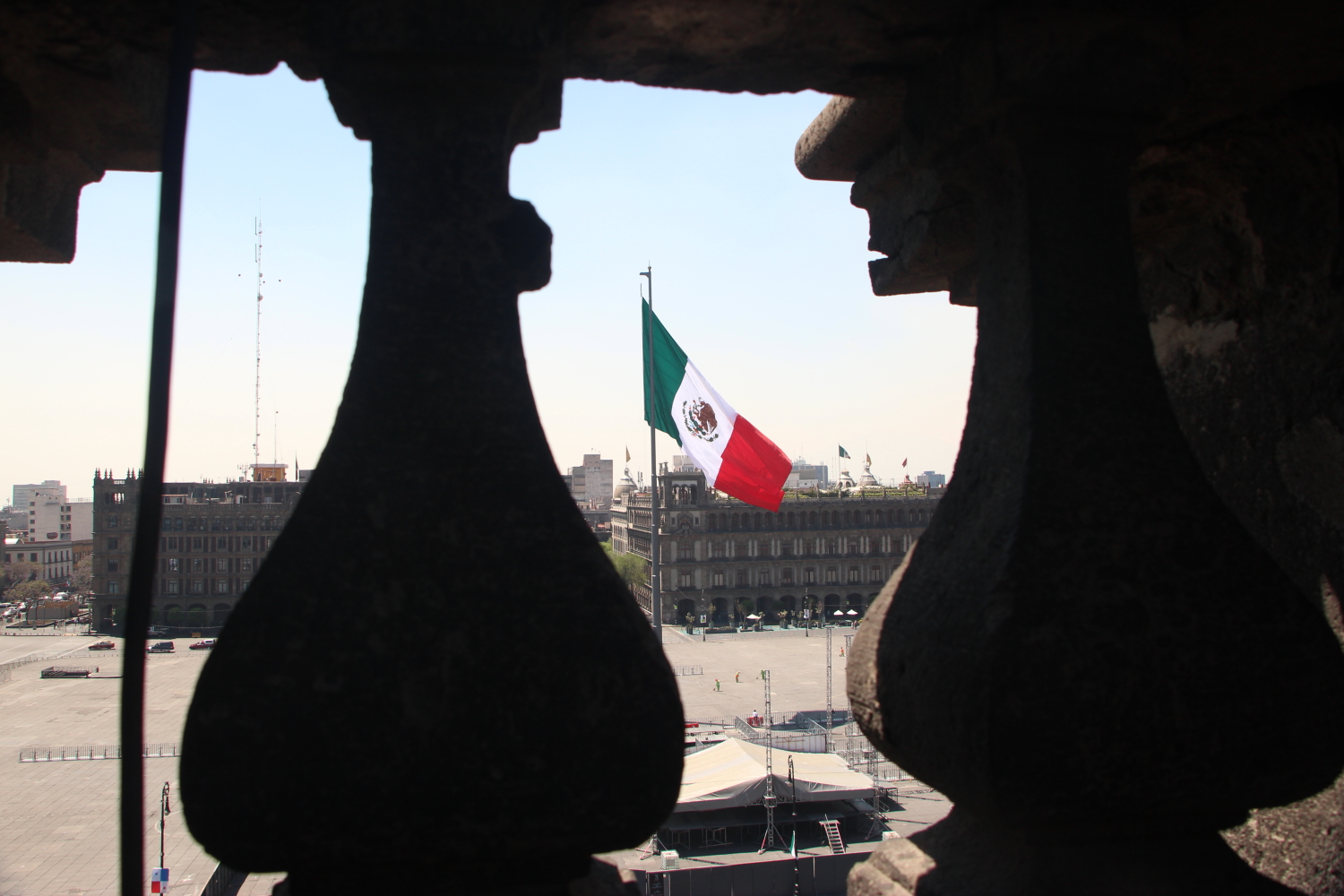
Mexico City
*an ongoing series of quotations – mostly from artists, to artists – that offers wisdom, inspiration, and advice for the sometimes lonely road we are on.
Faced with the disparities between lived reality and America’s professed ideals of inclusion and equity, countless artists have begun embracing the social role of art and using aesthetic means to speak out against all manner of injustice. In such a climate, the Mexican muralists [Jose Clemente Orozco, Diego Rivera, and David Alfaro Siqueiros] have once again emerged as models of how to marry aesthetic rigor and vitality to socially conscious subject matter that addresses the most fundamental questions concerning our collective pursuit of a more just and equitable society. Not withstanding the rich cultural ties and decades of migration that have long existed between the United States and Mexico, the relationship between the two countries has always been fraught, marked as much by mutual wariness and bouts of hostility as by a spirit of camaraderie and cooperation Yet the ugliness and xenophobia of the recent debates on the American side echoes the worst of the past. It thus seems more imperative than ever to acknowledge the profound and enduring influence Mexican muralism has had on artmaking in the United States and to highlight the beauty and power that can emerge from the free and vibrant cultural exchange between the two countries. As much as did American artists decades ago, artists in the United States today stand to benefit from an awareness of how dynamically and inventively the Mexican muralists used their art to project the ideals of compassion, justice, and solidarity. They remain a source of powerful inspiration for their seamless synthesis of ethics, art, and action.
Vida Americana: Mexican Muralists Remake American Art, 1925 – 1945, edited by Barbara Haskell
Comments are welcome!
Pearls from artists* # 405

Barbara’s studio
* an ongoing series of quotations – mostly from artists, to artists – that offers wisdom, inspiration, and advice for the sometimes lonely road we are on.
… art is an objective pursuit with the same claim to truth as science, albeit truth of a different order. At the very least the consistency and universality of aesthetic expression throughout history and around the globe suggest that the undertaking that finds its modern formulation in the concept of art is a distinct sphere of activity with its own ontology. My belief is that what the modern West calls art is the direct outcome of a basic human drive, an inborn expressivity that is inextricably bound with the creative imagination. It is less a product of culture than a natural process manifesting through the cultural sphere. One could go so far as to argue that art must exist in order for culture to emerge in the first place.
J.F. Martel in Reclaiming Art in the Age of Artifice: A Treatise, Critique, and Call to Action
Comments are welcome!
Pearls from artists* # 400

In the studio with friends
* an ongoing series of quotations – mostly from artists, to artists – that offers wisdom, inspiration, and advice for the sometimes lonely road we are on.
A student in the audience raised her hand and asked me:
“Why should I live?”
… In the very act of asking that question, you are seeking reasons for your convictions, and so you are committed to reason as the means to discover and justify what is important to you. And there are so many reasons to live!
As a sentient being, you have the potential to flourish. You can refine your faculty of reason itself by learning and debating. You can seek explanations of the natural world through science, and insight into the human condition through the arts and humanities. You can make the most of your capacity for pleasure and satisfaction, which allowed your ancestors to thrive and thereby allowed you to exist. You can appreciate the beauty and the richness of the natural and cultural world. As the heir to billions of years of life perpetuating itself, you can perpetuate life in turn. You have been endowed with a sense of sympathy – the ability to like , love, respect, help, and show kindness – and you can enjoy the gift of mutual benevolence with friends, family, and colleagues.
And because reason tells you that none of this is particular to you, you have the responsibility to provide to others what you expect for yourself. You can foster the welfare of other sentient beings by enhancing life, health, knowledge, freedom, abundance, safety, beauty, and peace. History shows that when we sympathize with others and apply our ingenuity to improving the human condition, we can make progress in doing so, and you can help to continue that progress.
Stephen Pinker in Enlightenment Now: The Case for Reason, Science, Humanism, and Progress
Comments are welcome!


 barbararachkoscoloreddust.com