Blog Archives
Pearls from artists* # 108
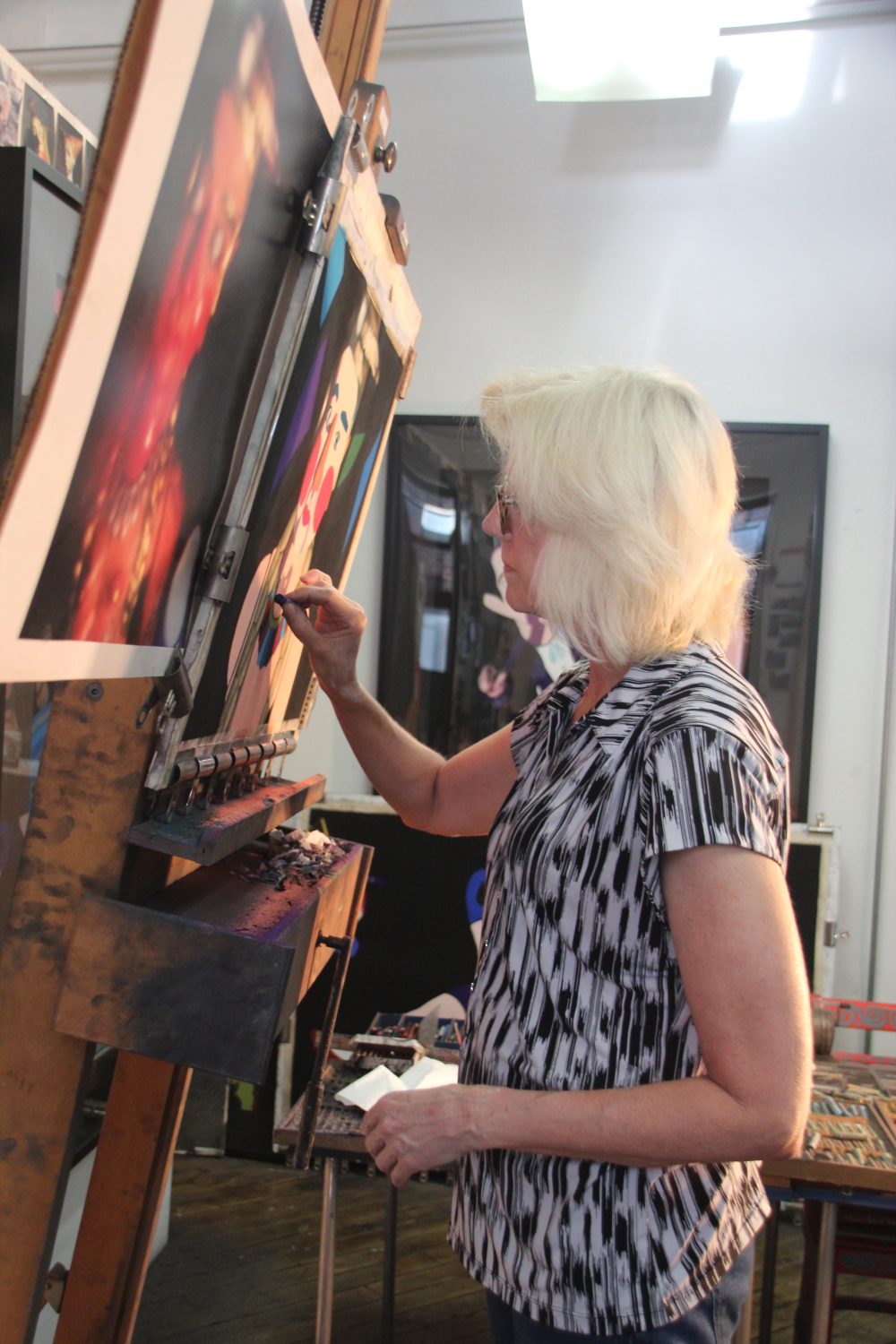
At work on a pastel painting
* an ongoing series of quotations – mostly from artists, to artists – that offers wisdom, inspiration, and advice for the sometimes lonely road we are on.
Artists generally need privacy in order to create, and as I’ve noted, what constitutes adequate privacy varies by person and time. Solitude quickly becomes isolation when it oversteps one’s desires. But most artists need to feel that they and their work won’t be examined prematurely and, certainly, won’t be ambushed unfinished by ridiculing eyes. You might go out and invite various people to critique a piece in progress, even knowing they’re unlikely to view it with sympathy, exactly because you feel there’s necessary information in their opinion. But, if you’ve invited them, however unpleasant the response, your experience is likely preferable to what you would feel if they impulsively offered up the same critiques unsolicited.
Someone making art needs privacy in part because the process of creation makes many people feel vulnerable, sometimes exquisitely so, particularly since the work frequently emerges in a jumble of mixed-up small parts that you can only assemble gradually, or in a wet lumpy mound that requires patient sculpting. When people feel prematurely revealed or exposed, they often experience great discomfort and find themselves babbling apologetically, seeking to reassure by laying out the distance they have yet to travel. It is in part this babble-as-smoke-screen to cover exposure resulting, distracting, unhappy self-consciousness that privacy seeks to shelter.
But even more significantly, privacy grants us permission to turn our attention inward without interruption. As I described earlier, in order to concentrate, think, and fantasize, we need to feel we’re in a safe enough space that we can lower our vigilance, stop monitoring our environment, and allow ourselves to refocus on the happenings within our own minds. There are times interruptions feel merciful, but many more when they disrupt our effort to flesh out an inchoate notion.
Janna Malamud Smith in an absorbing errand: How Artists and Craftsmen Make Their Way to Mastery
Comments are welcome!
Pearls from artists* # 104
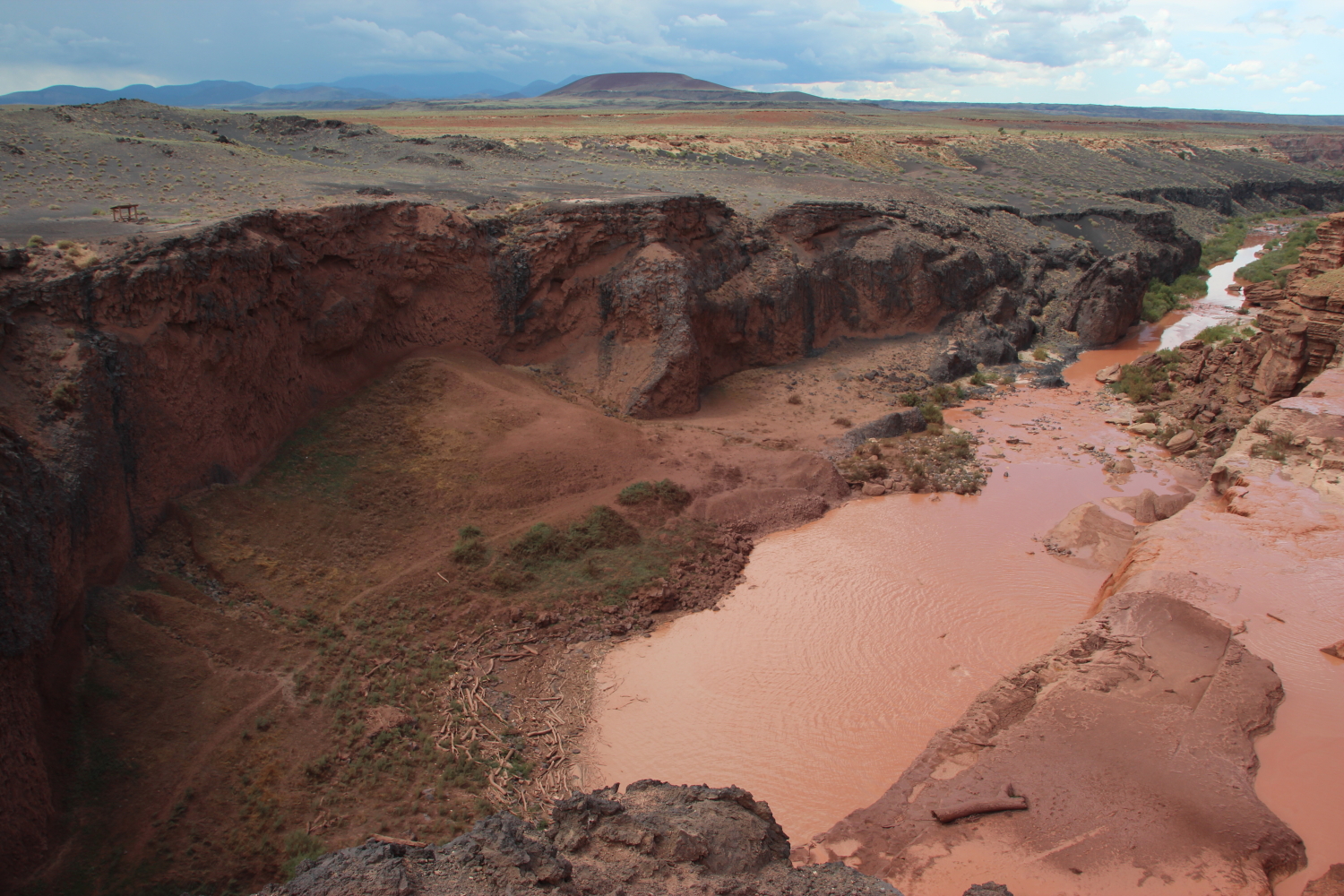
View of Roden Crater
* an ongoing series of quotations – mostly from artists, to artists – that offers wisdom, inspiration, and advice for the sometimes lonely road we are on.
As the art historian Jack Flam has noted: ‘Art constantly reinvents itself. As time passes, new audiences find new ideas and inspiration in it and keep reframing its meanings and significance in fresh ways. Art also encourages new mental attitudes and ways of looking as it travels across space; some of these attitudes and beliefs might have been inconceivable to the people who created it, but the art nonetheless manages to speak persuasively and to create fresh images in other collective imaginations.’
Quoted in Man Ray, African Art, and the Modernist Lens by Wendy A. Grossman
Comments are welcome!
Pearls from artists* # 100
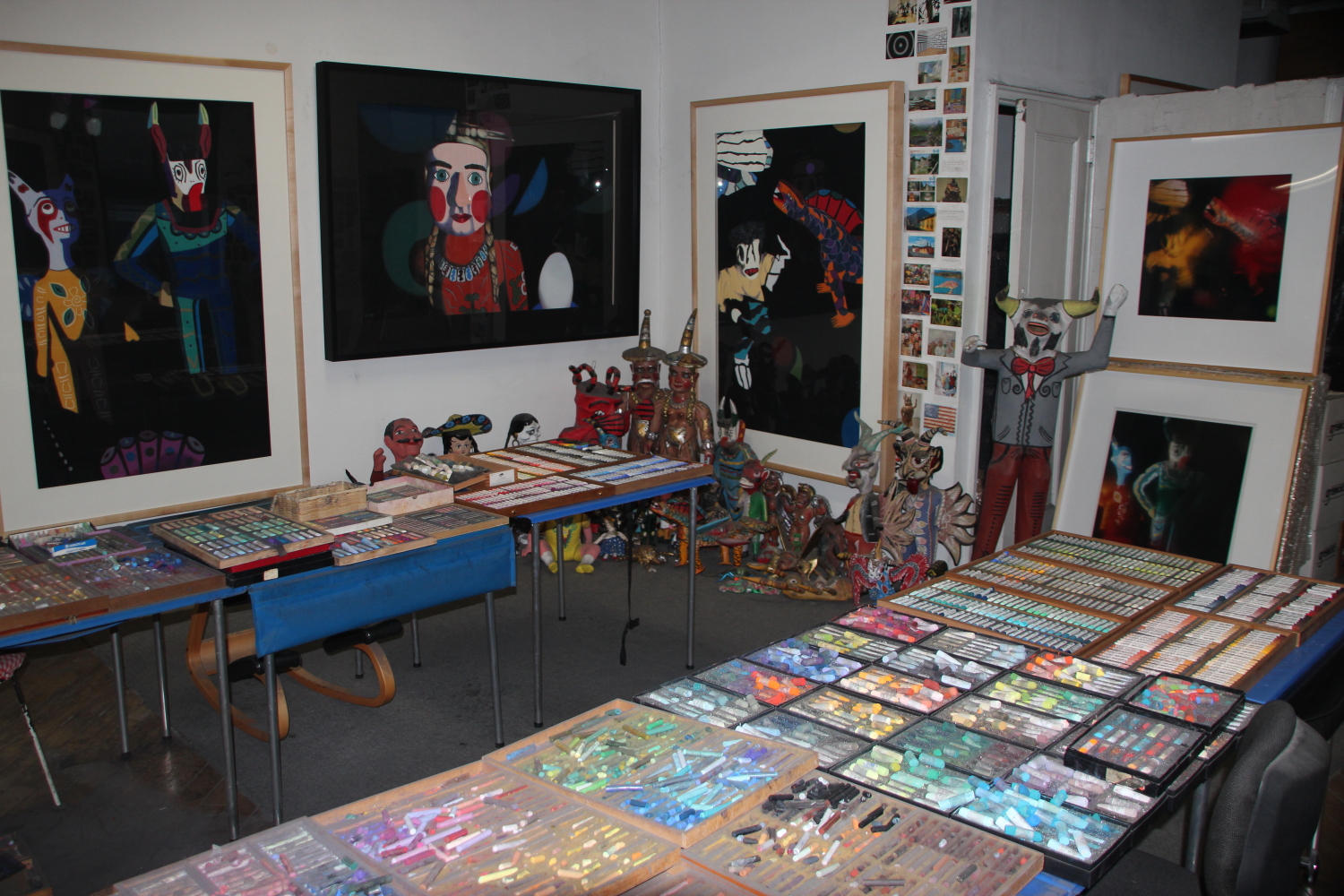
Barbara’s studio
* an ongoing series of quotations – mostly from artists, to artists – that offers wisdom, inspiration, and advice for the sometimes lonely road we are on.
I think it’s terribly important that people have always made structures that are better and more rigorous and more demanding than we as an audience can live up to for every single moment. Serious art should be better than you are. I think my plays are more lucid, more rigorous, than I, Richard, am in my life. I’m a stumble bum like all the rest of us. Create art that is better than you are able to manifest in normal life.
Richard Foreman in Anne Bogart’s Conversations with Anne: Twenty-four Interviews
Comments are welcome!
Q: What does your creative process look like when you are ready to begin a new painting?

Preliminary sketch
A: My working methods have changed dramatically over the years with my current process being a much-simplified version of how I used to work. In other words as I pared down my imagery in the “Black Paintings,” my process quite naturally pared down, too.
One constant is that I have always worked in series with each pastel painting leading quite logically to the next. Another is that I always have set up a scene, lit and photographed it, and worked with a 20″ x 24″ photograph as the primary reference material. In the “Domestic Threats” series I shot with a 4″ x 5″ view camera. Nowadays the first step is to decide which photo I want to make into a painting (currently I have a backlog of images to choose from) and to order a 19 1/2″ x 19 1/2″ image (my Mamiya 6 shoots square images and uses film) printed on 20″ x 24″ paper. I get the print made at Manhattan Photo on West 20th Street in New York. Typically I have in mind the next two or three paintings that I want to create.
Once I have the reference photograph in hand, I make a preliminary tonal charcoal sketch on a piece of white drawing paper. The sketch helps me think about how to proceed and points out potential problem areas ahead. For example, in the photograph above I had originally thought about creating a vertical painting, but changed to horizontal format after discovering spatial problems in my sketch.
Also, I decided to make a small painting now because it has been two years since I last worked in a smaller (than my usual 38″ x 58″) size. I am re-using the photograph on which “Epiphany” is based. Using a photograph a second time lets me see how my working methods have evolved over time.
Comments are welcome!
Pearls from artists* # 88

Teotihuacan
* an ongoing series of quotations – mostly from artists, to artists – that offers wisdom, inspiration, and advice for the sometimes lonely road we are on.
To men like Ayers, it occurs to me, this temple is civilization. The masses, slaves, peasants, and foot soldiers exist in the cracks of its flagstones, ignorant even of their ignorance. Not so the great statesmen, scientists, artists, and most of all, the composers of the age, any age, who are civilization’s architects, masons, and priests. Ayers sees our role is to make civilization ever more resplendent. My employer’s profoundest, or only, wish is to create a minaret that inheritors of Progress a thousand years from now will point to and say, “Look, there is Vyvyan Ayers!”
How vulgar, this hankering after immortality, how vain, how false. Composers are merely scribblers of cave paintings. One writes music because winter is eternal and because, if one didn’t, the wolves and blizzards would be at one’s throat all the sooner.
David Mitchell in Cloud Atlas
Comments are welcome!
Q: Do you have any advice for a young painter or someone just starting out as an artist?
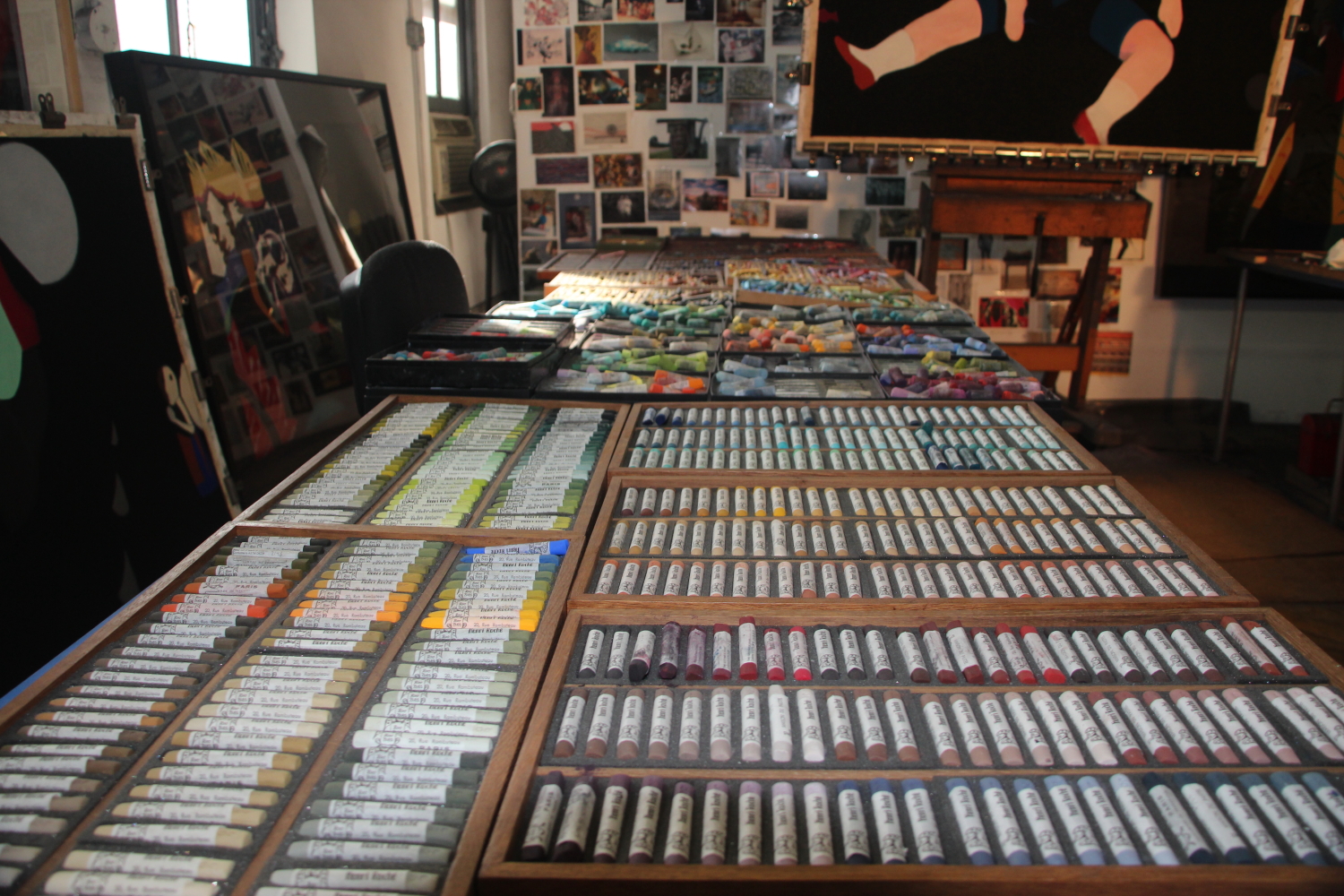
Studio
A: As artists each of us has at least two important responsibilities: to express things we are feeling for which there are no adequate words and to communicate to a select few people, who become our audience. By virtue of his or her own uniqueness, every human being has something to say. But self-expression by itself is not enough. As I often say, at it’s core art is communication. Without this element there is no art. When artists fail to communicate, perhaps they haven’t mastered their medium sufficiently so are unsuccessful in the attempt, or they may be being self-indulgent and not trying. Admittedly there is that rare and most welcome occurrence when an artistic statement – such as a personal epiphany – happens for oneself alone.
Most importantly, always listen to what your heart tells you. It knows and speaks the truth and becomes easier to trust as you mature. If you get caught up in the art world, step back and take some time to regain your bearings, to get reacquainted with the voice within you that knows the truth. Paint from there. Do not ever let a dealer or anyone else dictate what or how you should paint.
With perhaps the singular exception of artist-run cooperative galleries, be very suspicious of anyone who asks for money to put your work in an exhibition. These people are making money from desperate and confused artists, not from appreciative art collectors. With payment already in hand there is no financial incentive whatsoever for these people to sell your paintings and they won’t.
Always work in a beautiful and special place of your own making. It doesn’t need to be very large, unless you require a large space in which to create, but it needs to be yours. I’m thinking of Virginia Woolf’s “a room of one’s own” here. A studio is your haven, a place to experiment, learn, study, and grow. A studio should be a place you can’t wait to enter and once you are there and engaged, are reluctant to leave.
Be prepared to work harder than you ever have, unrelentingly developing your special innate gifts, whether you are in the mood to do so or not. Most of all remember to do it for love, because you love your medium and it’s endless possibilities, because you love working in your studio, and because you feel most joyously alive when you are creating.
Comments are welcome!
Q: How do you feel about accepting commissions?

“Reunion,” soft pastel on sandpaper, 38″ x 58″, 1990
A: By the time I left the Navy in 1989 to devote myself to making art, I had begun a career as a portrait painter. I needed to make money, this was the only way I could think of to do so, and I had perfected the craft of creating photo-realistic portraits in pastel. It worked for a little while.
A year later I found myself feeling bored and frustrated for many reasons. I didn’t like having to please a client because their concerns generally had little to do with art. Once I ensured that the portrait was a good (and usually flattering) likeness, there was no more room for experimentation, growth, or creativity. I believed (and still do) that I could never learn all there was to know about soft pastel. I wanted to explore color and composition and take this under-appreciated medium as far as possible. It seemed likely that painting portraits would not allow me to accomplish this. Also, I tended to underestimate the amount of time needed to make a portrait and charged too small a fee.
So I decided commissioned portraits were not for me and made the last one in 1990 (above). I feel fortunate to have the freedom to create work that does not answer to external concerns.
Comments are welcome!
Q: Where do you want your work to go in the future?
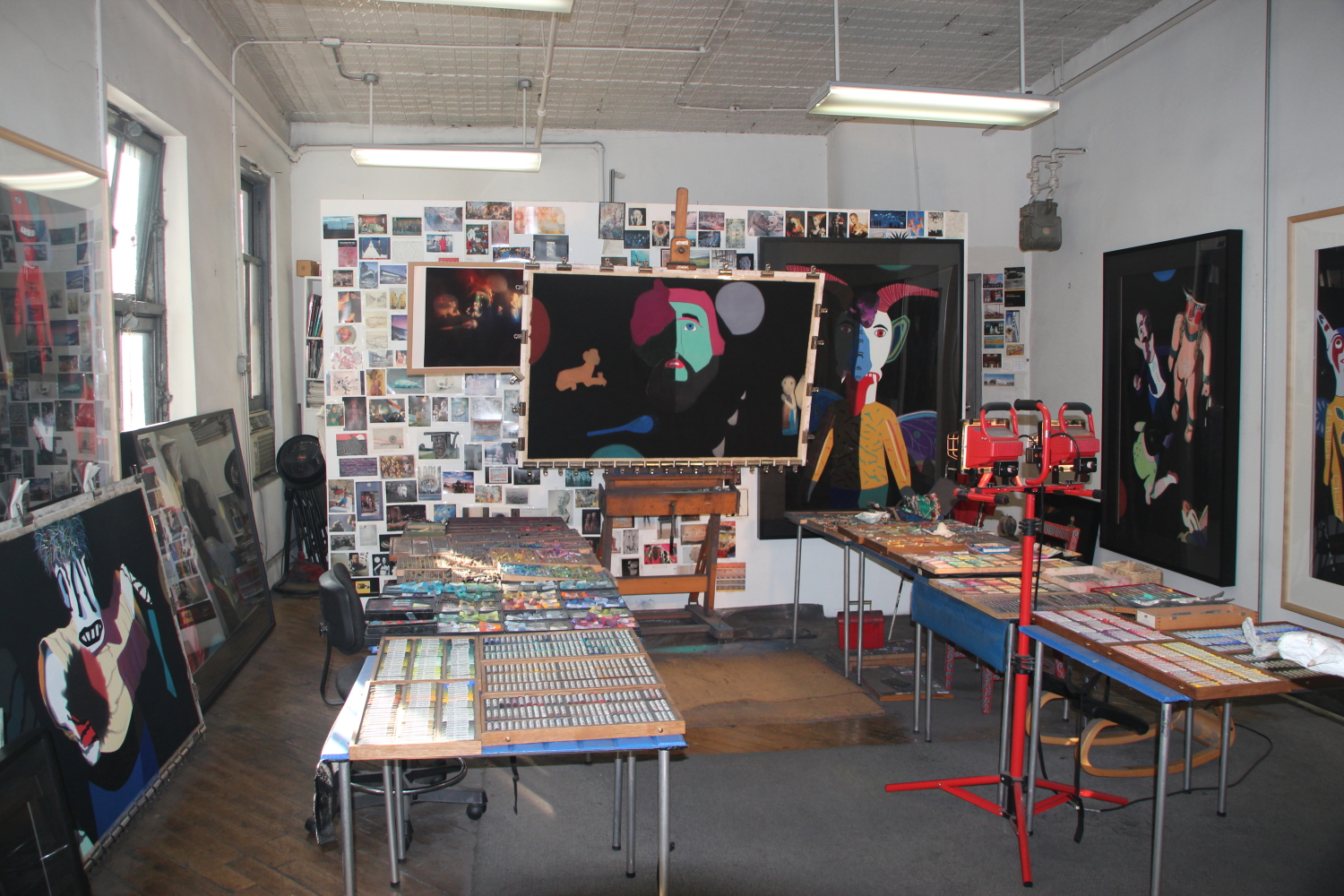
Barbara’s studio
A: Recently I answered a question about why I create, but now that I think about it, the same answer applies to what I want to do as an artist in the future:
~ to create bold and vibrant pastel paintings and photographs that have never existed before
~ to continue to push my primary medium – soft pastel on sandpaper – as far as I can and to use it in more innovative ways
~ to create opportunities for artistic dialogue with people who understand and value the work to which I am devoting my life
The last has always been the toughest. I sometimes think of myself as Sisyphus because expanding the audience for my art is an ongoing uphill battle. Many artist friends tell me they feel the same way about building their audience. It’s one of the most difficult tasks that we have to do as artists. I heard Annie Leibovitz interviewed on the radio once and remember her saying that after 40 years as a photographer, everything just gets richer. Notice that she didn’t say it gets any easier; she said, “it just gets richer.” I have been a painter for nearly 30 years and a photographer for 11. I agree completely. All artists have to go wherever our work goes. Creating art and watching the process evolve is an endlessly fascinating intellectual journey. I wouldn’t want to be spending my time on earth doing anything else!
Comments are welcome!
Pearls from artists* # 76
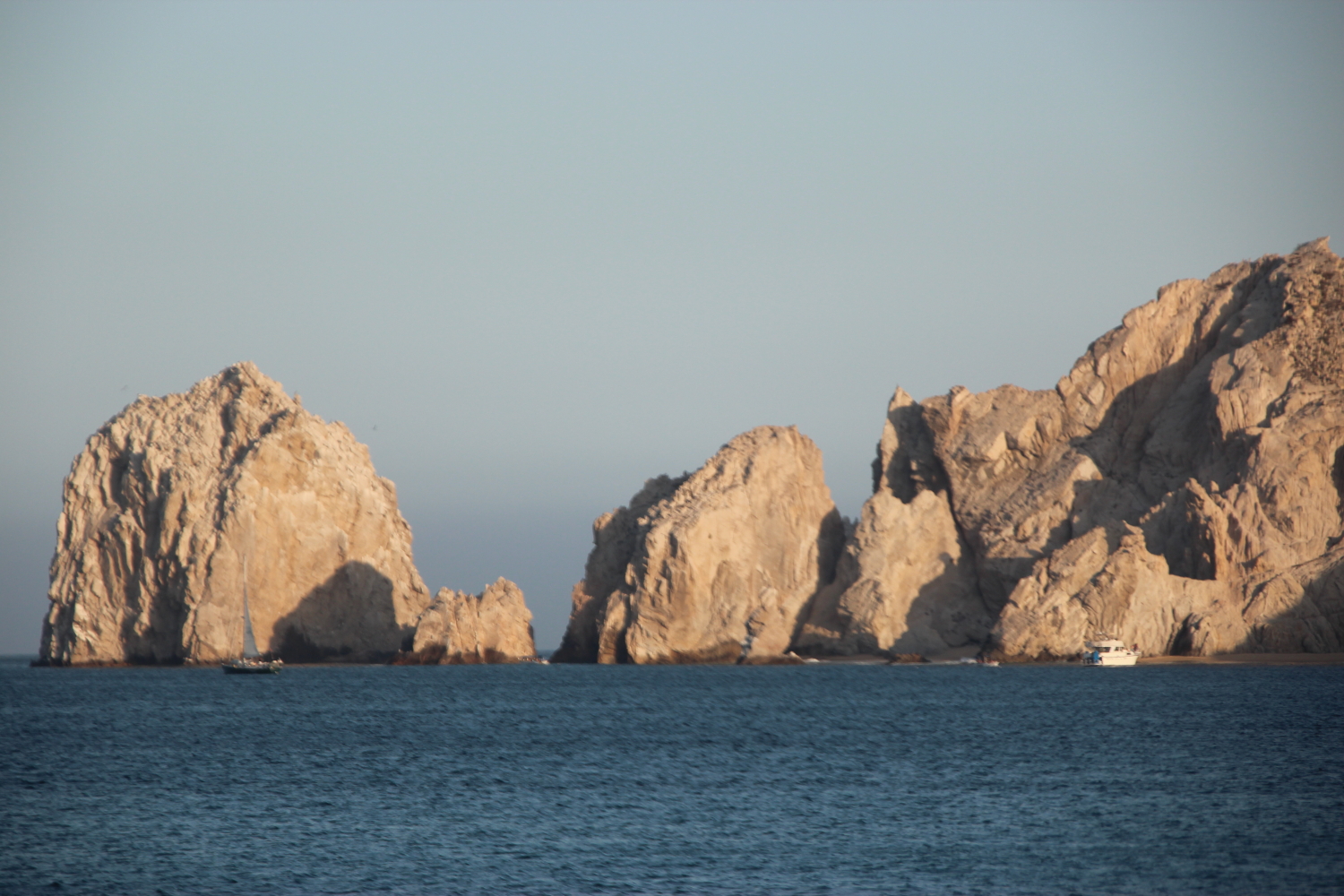
Cabo San Lucas, Mexico
* an ongoing series of quotations – mostly from artists, to artists – that offers wisdom, inspiration, and advice for the sometimes lonely road we are on.
What stops us in our tracks? I am rarely stopped by something or someone I can instantly know. In fact, I have always been attracted to the challenge of getting to know what I cannot instantly categorize or dismiss, whether an actor’s presence, a painting, a piece of music, or a personal relationship. It is the journey towards the object of attraction that interests me. We stand in relation to one another. We long for the relationships that will change our vistas. Attraction is an invitation to an evanescent journey, to a new way of experiencing life or perceiving reality.
An authentic work of art embodies intense energy. It demands response. You can either avoid it, shut it out, or meet it and tussle. It contains attractive and complicated energy fields and a logic all its own. It does not create desire or movement in the receiver, rather it engenders what James Joyce labeled ‘aesthetic arrest.’ You are stopped in your tracks. You cannot easily walk by it and go on with your life. You find yourself in relation to something that you cannot readily dismiss.
Anne Bogart in A Director Prepares: Seven Essays on Art and Theater
Comments are welcome!
Pearls from artists* # 67

Negombo, Sri Lanka
* an ongoing series of quotations – mostly from artists, to artists – that offers wisdom, inspiration, and advice for the sometimes lonely road we are on.
John Robin Baitz: I was just thinking that you still manage to write with some kind of miraculous hope.
Athol Fugard: You’ve got to. Implicit in the act of creation on the part of the artist is: I make it because I want to share it with you. At the end of my process you are waiting for me… Pascal says “Imagine a cell in darkness and the inmates are shackled together. Every morning at dawn, the door opens and the person at the end of the line is taken out and executed and the door is closed. Those left behind read their fate in the opening and closing of the door every day. it is a metaphor of the human condition.” That is Pascal.
Camus comes to that paragraph and says, “There is no question about it – that is an image of the human condition. What do we do during those 24 hours between the opening and closing of the door? Do we cry? Or do we tap the next person in the chain and say ‘What’s your name? I’m Athol Fugard. Who are you?'” And that’s how we create meaning. At the end of the process you are waiting. And that is the act of faith. That is the hope that every artist has.
Quoted by Anne Bogart in “and then you act: making art in an unpredictable world”
Comments are welcome!


 barbararachkoscoloreddust.com