Blog Archives
Q: How do you think your recent trip to Bolivia will affect your work?
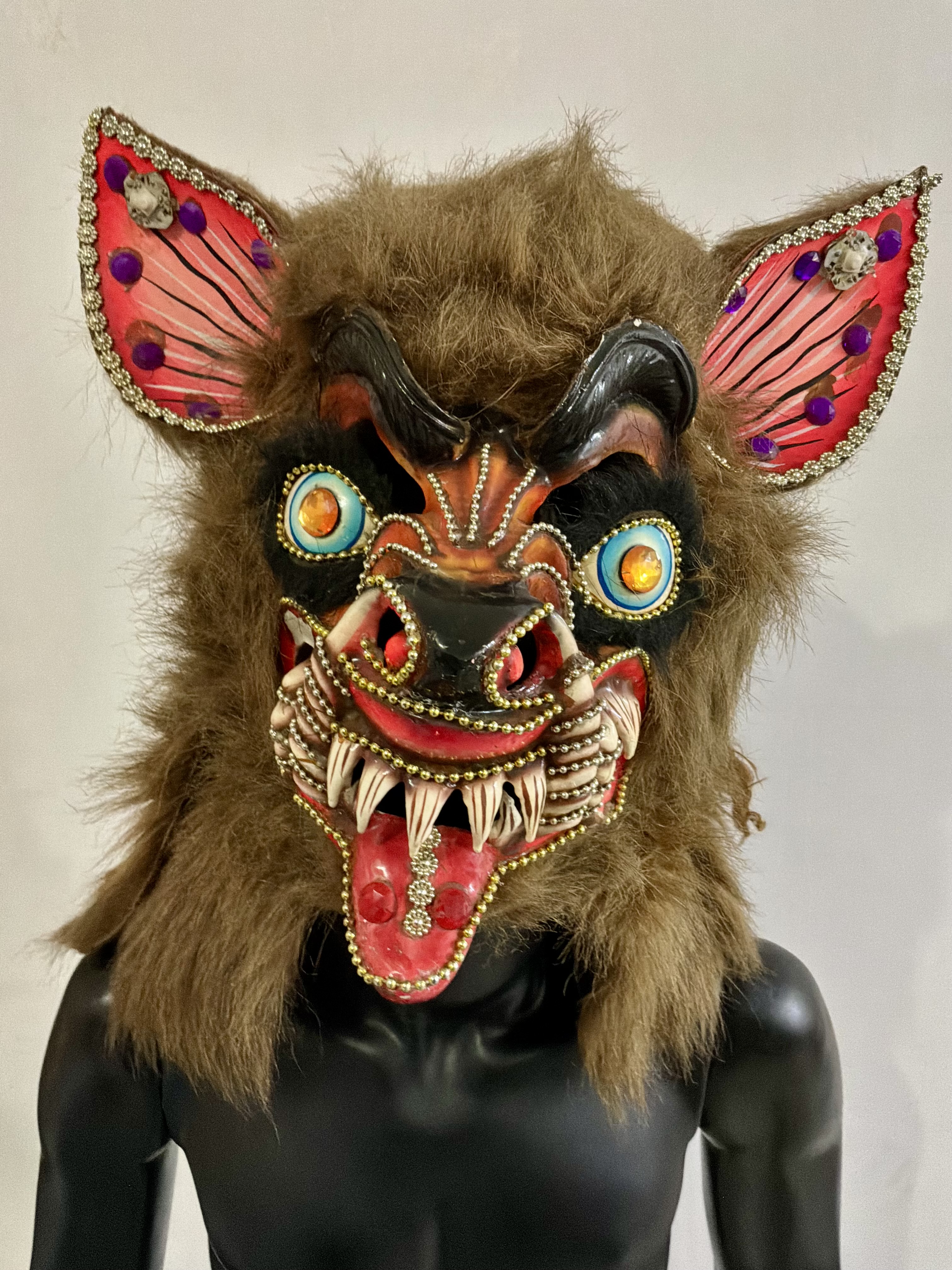
Reference photo from my trip to Bolivia
A: I have been back in the United States for one month and I know from past trips that there is always a long gestation period as I reflect on colorful new experiences, new sights, sounds, etc. My three and a half-weeks in Bolivia were non-stop, intense, and just full of so many high points. Bolivia is a fascinating country with profound cultural riches, and exceptionally warm and welcoming people. I experienced new friendships and events that were way beyond anything I could have imagined. In short, there’s a lot to process!
In the immediate aftermath, back in the studio I am deliberately selecting more vibrant colors and bumping up the contrast and drama in the painting on my easel (“Gatecrasher”) as I attempt to reflect some of what I saw and experienced in Oruro during Carnaval. I have begun to plan a pastel painting based on the mask pictured above, which I photographed in La Paz. We shall see what new work is created over the coming months and years. For now, it’s exciting to be reenergized and to have new subject matter with which to work. And, at this early date, I can barely conceive what our new Bolivia documentary will be like!
Comments are welcome!
Pearls from artists* #694
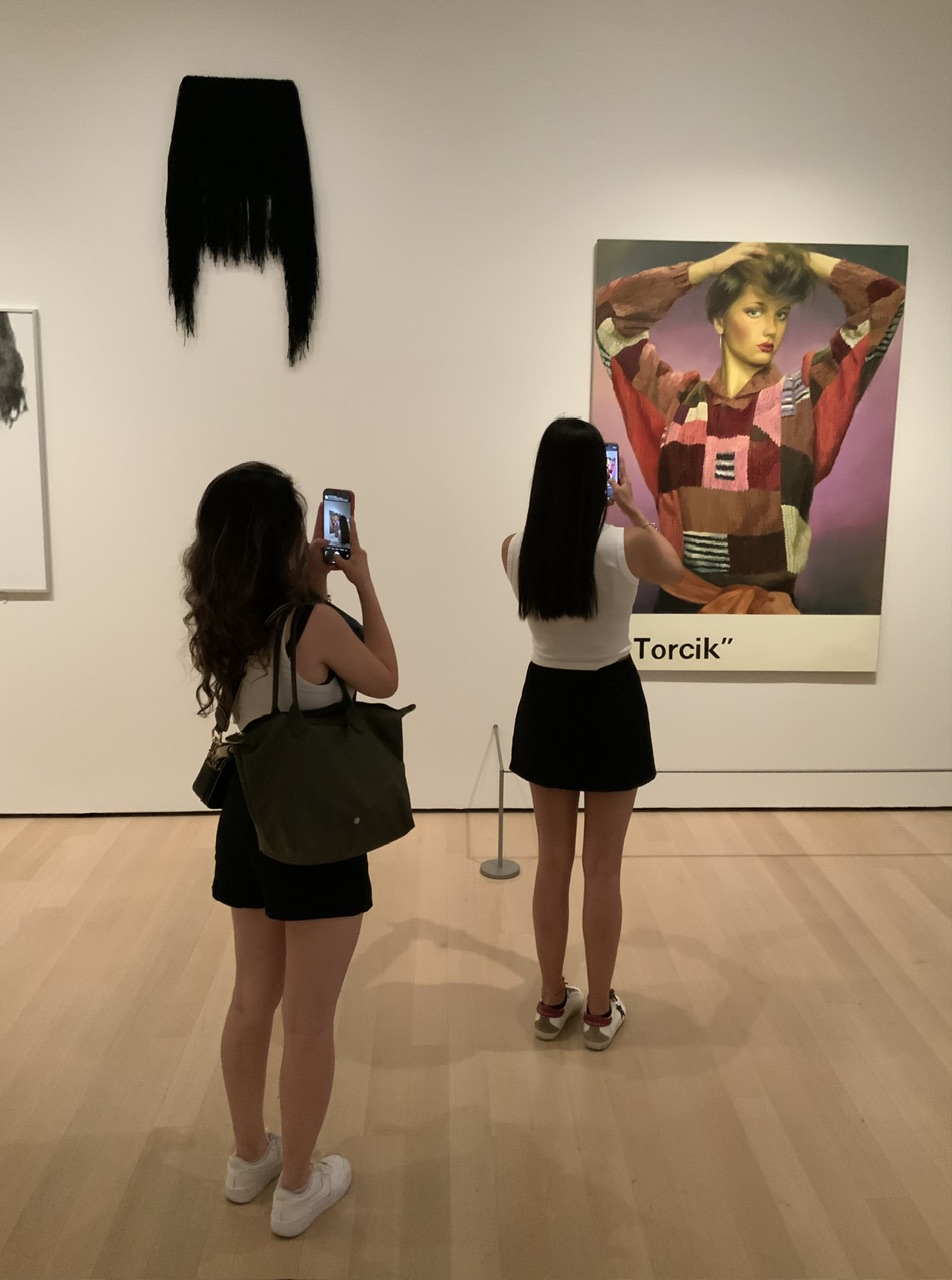
*an ongoing series of quotations – mostly from artists, to artists – that offers wisdom, inspiration, and advice for the sometimes lonely road we are on.
Long ago, when I was in my insecure twenties, I met a clever, independent, creative, and powerful woman in her mid-seventies, who offered me a superb piece of life wisdom.
She said: “We all spend our twenties and thirties trying so hard to be perfect, because we’re so worried about what other people will think of us. Then we get into our forties and fifties, and we finally start to be free, because we’re so worried decide that we don’t give a damn about what anyone thinks of us. But you won’t be completely free until you reach your sixties and seventies, when you realize this liberating truth—nobody was ever thinking about you, anyhow.”
They aren’t. They weren’t. They never were.
People are mostly thinking about themselves. People don’t have time to worry about what you’re doing, or how well you’re doing it, because they’re all caught up in their own dramas. People’s attention may be drawn to you for a moment (if you succeed or fail spectacularly and publicly, for instance), but that attention will soon enough revert back to where it’s always been—on themselves. While it may seem lonely and horrible at first to imagine that you aren’t anyone’s first order of business, there is also a great release to be found in this idea. You are free, because everyone is too busy fussing over themselves to worry that much about you.
Go be whomever you want to be, then.
Do whatever you want to do.
Pursue whatever fascinates you and brings you to life.
Create whatever you want to create—and let it be stupendously imperfect, because it’s exceedingly likely that no one will even notice.
And that’s awesome.
Elizabeth Gilbert in Big Magic: Creative Living Beyond Fear
Comments are welcome!
Q: You started the Bolivianos series in 2017. It has been 8 years since you created The Champ. This endeavor of focussing on a series for almost a decade’s timeline shows that you embody stability as against many artists who tend to hop on to the next inspiration they find. How has discipline, stability, focus and punctuality defined your works apart from being inspired by Bolivian culture for the series Bolivianos? (Question from Vedica Art Studios and Gallery)
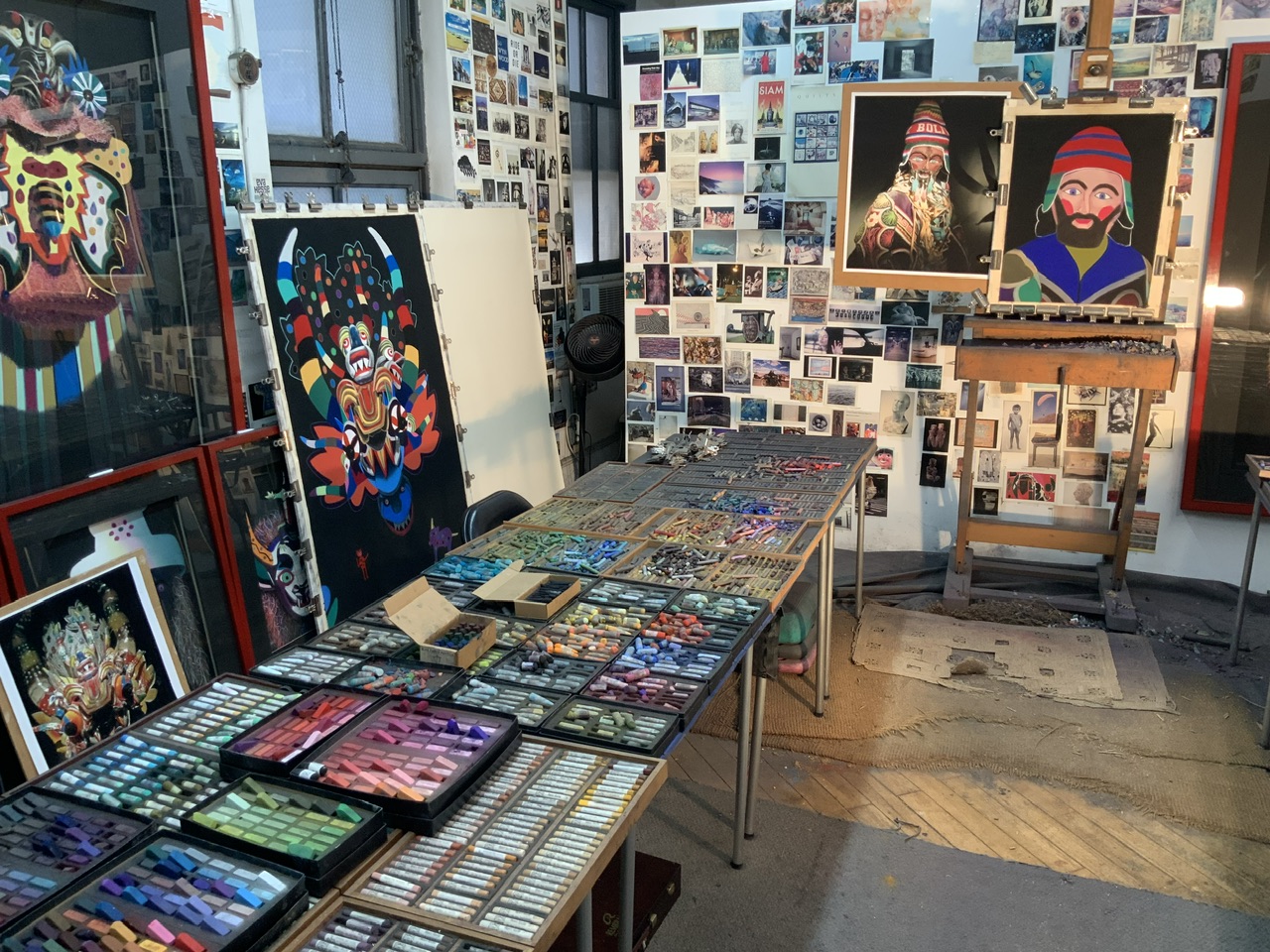
A: My first series, Domestic Threats, lasted fifteen years, and my second, Black Paintings, lasted ten. Stability and related qualities are likely natural parts of my personality, reinforced by my previous professional life. My prior careers as a Navy Commander, commercial pilot, and Boeing-727 Flight Engineer undoubtedly helped develop discipline, stability, focus, and punctuality. Details matter deeply to me; as a Naval Officer for twenty-one years, “attention to detail” was paramount. From my earliest days as an artist, I have been meticulous and dedicated to inventing new techniques and refining the craft of soft pastel.
I dislike wasting precious time. As a goal-oriented person, I continually strive to accomplish as much as possible. These qualities were influenced by my Navy career and further deepened by the tragic loss of my husband onboard the plane that crashed into the Pentagon on 9/11. I understand firsthand that life can change in an instant. Whenever I finish one task, I immediately look around and ask, “OK, what’s next?” I devote my studio time to pushing myself and pastel to new technical heights. There’s always more to accomplish as an artist!
Comments are welcome!
Q: Another exhibition was described as “a journey from identity to authenticity.” Does that resonate? (Question from “Pastel, Passion, and Perseverance: An Interview with Barbara Rachko” in .ART Odyssey: Healing)
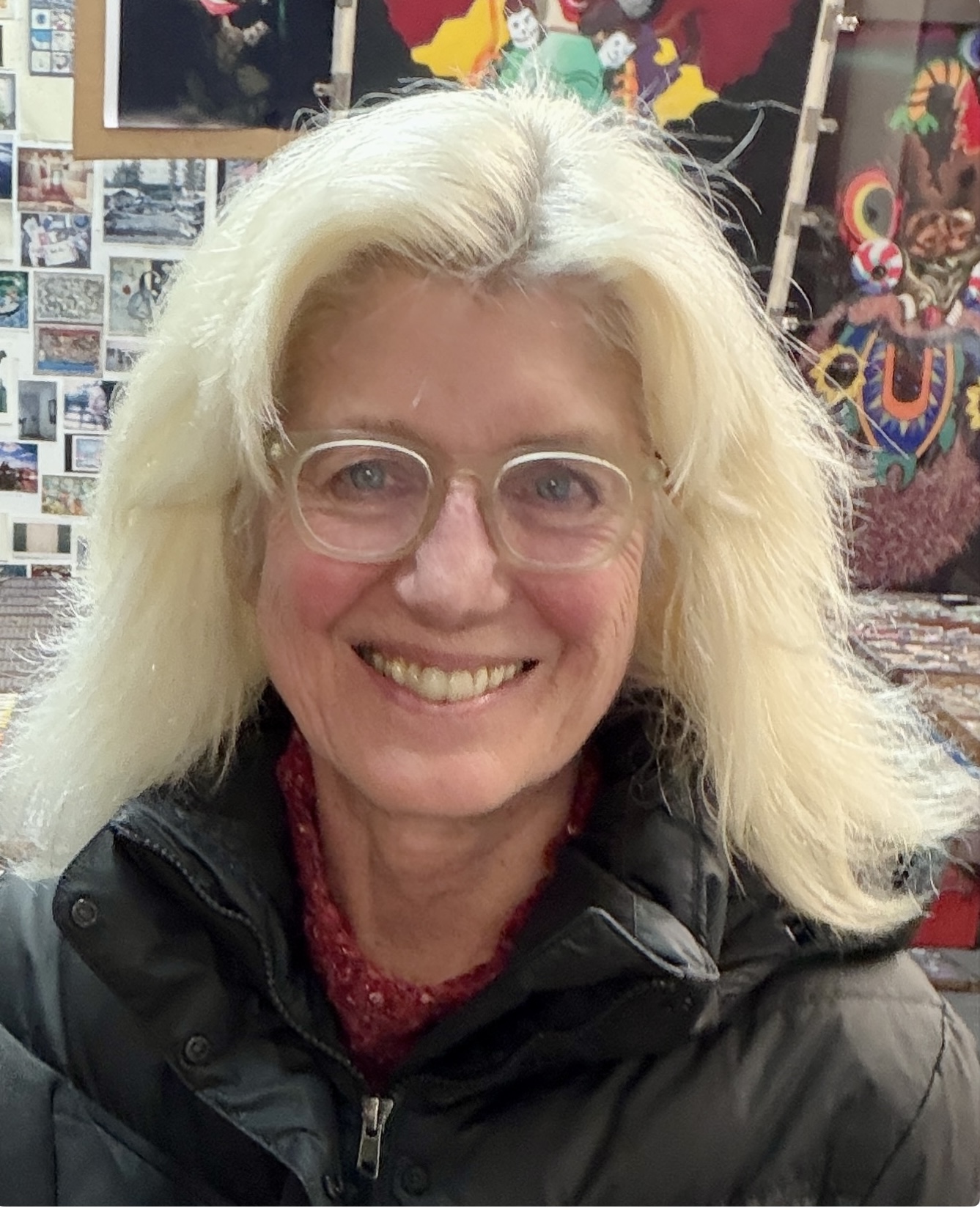
A: Yes, especially the authenticity part.
My work has always come from a deep place. Each painting is the inevitable result of three or four months of daily engagement—the constant adjustments, decisions, and struggles. By the time it’s finished, it couldn’t be any other way.
That, to me, is authenticity. Identity may be what we inherit — culture, upbringing, circumstance. Authenticity is what we strip back to, the choices we make that reflect our core. As I get older, l’ve been shedding what doesn’t serve me. I want to use my time and energy on what makes me a better artist and a better person.
Comments are welcome!
Q: How do you decide when a pastel painting is finished?

“Magisterial,” soft pastel on sandpaper, 58” x 38” in progress
A: During the months that it takes to create a pastel painting, I search for arresting colors that work well together. The goal is to make a painting that I have never seen before and that leads the viewer’s eyes around in interesting ways. To do this I build up and blend together as many as 25 to 30 layers of pigment. I am able to complete some areas, like the background, fairly easily – maybe with just six or seven layers of black Rembrandt pastel. The more realistic parts of a pastel painting take many more applications. In general, details always take plenty of time to refine and perfect.
No matter how many pastel layers I apply, however, I never use fixatives. It is difficult to see this in reproductions of my work, but some of the finished surfaces achieve a texture akin to velvet. My technique involves blending each layer with my fingers, pushing the pastel deep into the tooth of the sandpaper, and mixing new colors directly on the paper. Fortunately, the sandpaper holds plenty of pigment so I am able to include lots of details.
Before I pronounce a pastel painting finished, I let it sit against a wall in my studio for a few days so I can look at it later with fresh eyes. I consider a piece done when it is as good as I can make it, when adding or subtracting something would diminish what is there. Always, I try to push myself and my materials to their limits, using them in new and unexpected ways.
Comments are welcome.
Remembering Bryan, today and every day!

Comments are welcome!
Q: Does your work look different to you on days when you are sad, happy, etc.?

Barbara’s Studio
A: I am much more critical on days when I am sad so that the faults, imperfections, and things I wish I had done better stand out. Fortunately, all of my work is framed behind plexiglas so I can’t easily go back in to touch up perceived faults. I am reminded of the expression, “Always strive to improve, whenever possible. It is ALWAYS possible!” However, I’ve learned that re-working a painting is a bad idea. You are no longer deeply involved in making it and the zeitgeist has changed. The things you were concerned with are gone: some are forgotten, others are less urgent.
For most artists our work is autobiography. Art is personal. When I look at a completed pastel painting, I usually remember exactly what was happening in my life as I created it. Each piece is a snapshot – maybe a time capsule, if anyone could decode it – that reflects and records a particular moment. When I finally pronounce a piece finished and sign it, that’s it, THE END. It’s as good as I can make it at that point in time. I’ve incorporated everything I was thinking about, what I was reading, how I was feeling, what I valued, art exhibitions I visited, programs that I heard on the radio or watched on television, music that I listened to, what was going on in New York, in the country, and in the world.
It is still a mystery how this heady mix finds its way into the work. During the time that I spend on it, each particular painting teaches me everything it has to teach. A painting requires months of looking, reacting, correcting, searching, thinking, re-thinking, revising. Each choice is made for a reason and together these decisions dictate what the final piece looks like. On days when I’m sad I tend to forget that. On happier days I remember that the framed pastel paintings that you see have an inevitability to them. If all art is the result of one’s having gone through an experience to the end, as I believe it is, then the paintings could not, and should not, look any differently.
Comments are welcome.
Pearls from artists* # 640

*an ongoing series of quotations – mostly from artists, to artists – that offers wisdom, inspiration, and advice for the sometimes lonely road we are on.
When an artist changes and develops over the years, as is natural to any creative person, such change is met by howls of protest from the marketers. Sometimes an artist (or teacher, scientist, or spiritual guru) starts with something extraordinary, becomes a star, and then their gift is either frozen or perverted.
The growing and risky edge of creative work is devalued, treated as a frill or extracurricular activity decorating the routine of ordinary life. There are few mechanisms available for the artist to construct a self-sustaining way of living and working. “One gathers,” says Virginia Woolf,
“from the enormous modern literature of confession and self-analysis that to write a book of genius is almost always a feat of prodigious difficulty. Everything is against the likelihood that it will come from the writer’s mind whole and entire. Generally, material circumstances are against it. Dogs will bark; people will interrupt; money must be made; health will break down. Further, accentuating all these difficulties and making them harder to bear is the world’s notorious indifference. It does not ask people to write poems and novels and histories; it does not need them. It does not care whether Flaubert finds the right word or whether Carlyle scrupulously verifies this or that fact. Naturally, it will not pay for what it does not want. And so the writer, Keats, Flaubert, Carlyle, suffers, especially in the creative years of youth, every form of distraction and discouragement. A curse, a cry of agony, rises from those books of analysis and confession. “Mighty poems in their misery dead” – that is the burden of their song. If anything comes through in spite of all this, it is a miracle, and probably no book is born entire and uncrippled as it was conceived.”
Stephen Nachmanovitch in Free Play: Improvisation in Art and Life
Comments are welcome!
Pearls from artists* # 635

Bourges, France
*an ongoing series of quotations – mostly from artists, to artists – that offers wisdom, inspiration, and advice for the sometimes lonely road we are on.
When we focus on the future, we do one of three things. We fantasize, which involves big dreams that are mostly for fun and entertainment; we dwell, which involves focusing on all the bad stuff that might happen – this was the official pastime of my hometown – or we hope, which involves envisioning the future while recognizing the inevitability of challenges. Interestingly, more hopeful people anticipate setbacks along the way and work to remove them. And yet I always imagined that hopeful and optimistic people are just born that way…
The Book of Hope: A survival Guide for Trying Times, Jane Goodall and Douglas Abrams with Gail Hudson
Comments are welcome!


 barbararachkoscoloreddust.com
Q: What kind of internal conversations do you tend to have when you are in the process of making art? (Question from Vedica Art Studios and Gallery)
Jan 10
Posted by barbararachkoscoloreddust
A: When standing at my easel creating a pastel painting, I focus on formal properties: composition, shape, color, and line. I always strive to produce a painting I’ve never seen before. Even as (perhaps especially as) the creator, I want to be surprised by the final result. My studio days are spent thinking, looking, reacting, and adjusting colors and composition as I refine increasingly tiny details, ensuring all elements work harmoniously. I determine which areas need to recede or advance, which require intricate details to appear three-dimensional, and which are better left as flat areas of color.
These countless adjustments ensure viewers’ eyes are guided around the finished painting in intriguing ways. I often recall something collectors of my pastel paintings shared: they mentioned a New York Times review of a Nan Goldin exhibition, in which the writer stated, “All of the pleasure circuits are fired in looking.” The collectors agreed this is exactly how they feel when viewing my work. Artists live for appreciative comments like these!
Comments are welcome!
Share this:
Posted in 2026, An Artist's Life, Creative Process, Studio, Working methods
Comments Off on Q: What kind of internal conversations do you tend to have when you are in the process of making art? (Question from Vedica Art Studios and Gallery)
Tags: adjusting, adjustments, advance, agreed, always, appear, appreciative, areas, around, artists, “Magisterial”, “New York Times”, better, circuits, collectors, colors, comments, composition, countless, creating, creator, details, determine, elements, ensure, ensuring, especially, exactly, exhibition, finished, fired, formal, guided, harmoniously, increasingly, intricate, intriguing, looking, mentioned, Nan Goldin, painting, pastel painting, perhaps, pleasure, produce, properties, question, reacting, recall, recede, refine, require, result, review, shared, something, stated, strive, Studio, surprised, thinking, three-dimensional, Vedica Art Studios and Gallery, viewers, viewing, working, writer