Blog Archives
Pearls from artists* # 370

Barbara at work on “The Orator.” Photo: Maria Cox
* an ongoing series of quotations – mostly from artists, to artists – that offers wisdom, inspiration, and advice for the sometimes lonely road we are on.
Nothing determines your creative life more than doing it. This is so obvious and fundamental, yet how much energy is wasted on speculation, worry, and doubt without the relief of action. “Success is 90 percent just showing up.” I can’t tell you the number of problems that are solved with this one simple principle, because when you start, it leads to something, anything. And when you have something tangible in front of you, then you can react to it and amend it. And that will lead to something else. In the book, In Search of Excellence by Tom Peters and Robert Waterman Jr., which looked at companies in America that excelled at what they did, one of the guiding principles was, “Do it, mend it, fix it.”
Ian Roberts in Creative Authenticity: 16 Principles to Clarify and Deepen Your Artistic Vision
Comments are welcome!
Pearls from artists* # 344
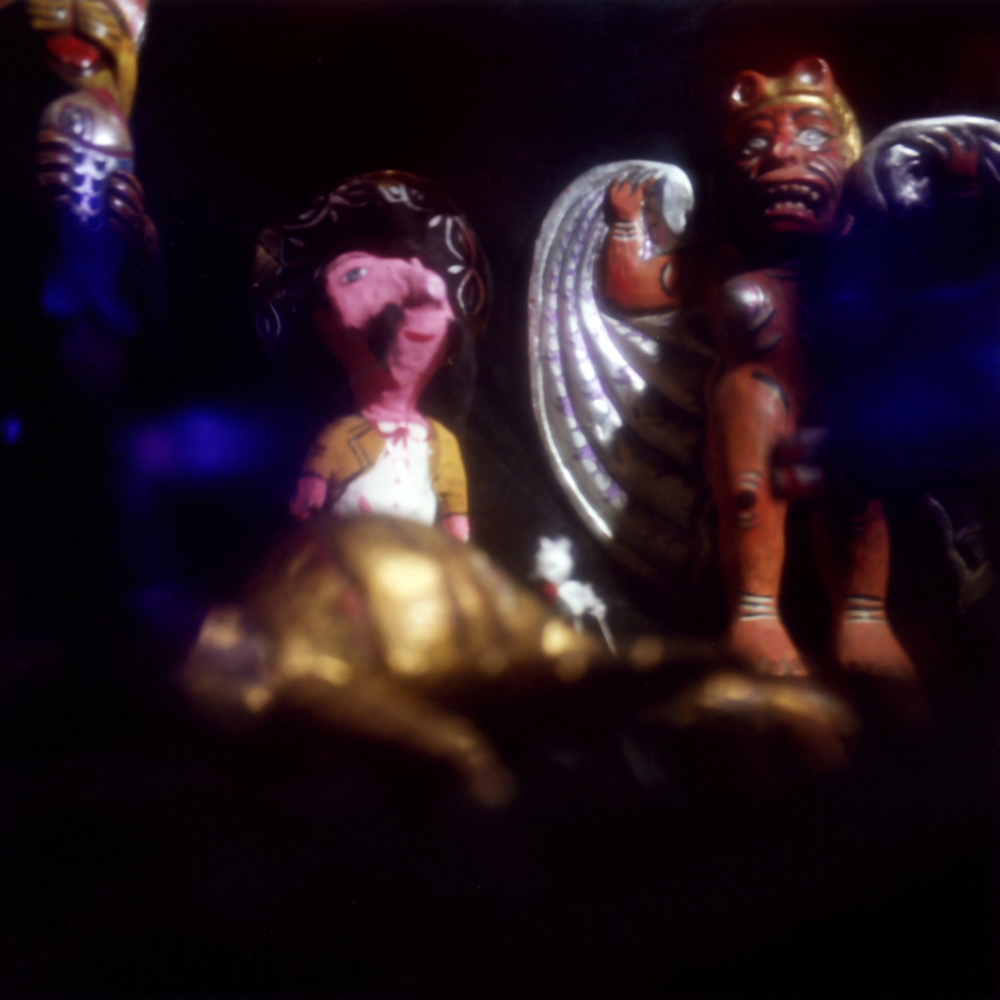
Untitled, c-print, 24 x 24,” edition of 5
*an ongoing series of quotations – mostly from artists, to artists – that offers wisdom, inspiration, and advice for the sometimes lonely road we are on.
I live in a most remarkable world, thick with mysteries. It all called to mind the British physicist Sir Arthur Eddington’s memorable explanation of how the universe works: “Something unknown is doing we don’t know what.”
But the best part is: I don’t need to know what.
… All I know for certain is that this is how I want to spend my life – collaborating to the best of my ability with forces of inspiration that I can neither see, nor prove, nor command, nor understand.
It’s a strange line of work, admittedly.
I cannot think of a better way to pass my days.
Elizabeth Gilbert in Big Magic: Creative Living Beyond Fear
Comments are welcome!
Pearls from artists* # 338
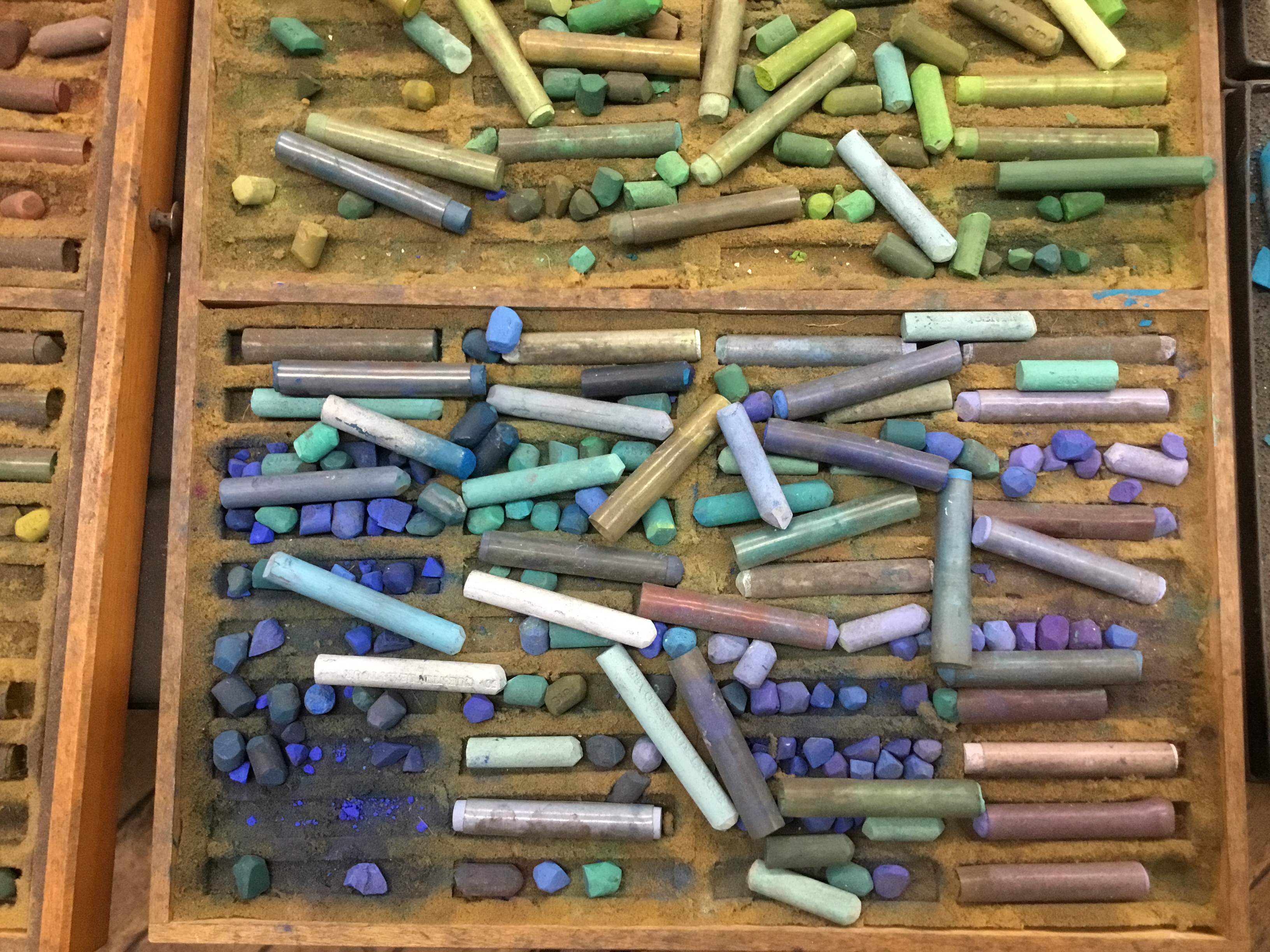
Pastels
*an ongoing series of quotations – mostly from artists, to artists – that offers wisdom, inspiration, and advice for the sometimes lonely road we are on.
Beauty without symbolic depth results in ornament. Symbol without beauty results in psychoanalysis. Only when the two meet can we speak of art. The artistic works that combine the two elements most compellingly are what are called the classics. In his magisterial book The Analogical Imagination, the theologian David Tracy defines the classic as a work exhibiting a permanent “excess of meaning.” We speak of classics as “timeless,” he says, not because they belong to time, but because they are perpetually timely; their relevance never wanes, and each generation, each percipient, must interpret them anew. According to Tracy, we know we are dealing with a classic when a work makes us realize that our general outlook on life is not as complete as we thought it was, that “something else might be the case.” In the light that the classic emanates, things suddenly seem less clear-cut than they used to seem – we find ourselves in the presence of something greater than we are, something potentially infinite. Classics take us to the apex of the numinous, the point of what Werner Herzog calls “ecstatic truth.”
J.F. Martel in Reclaiming Art in the Age of Artifice: A Treatise, Critique, and Call to Action
Comments are welcome!
Pearls from artists* # 337
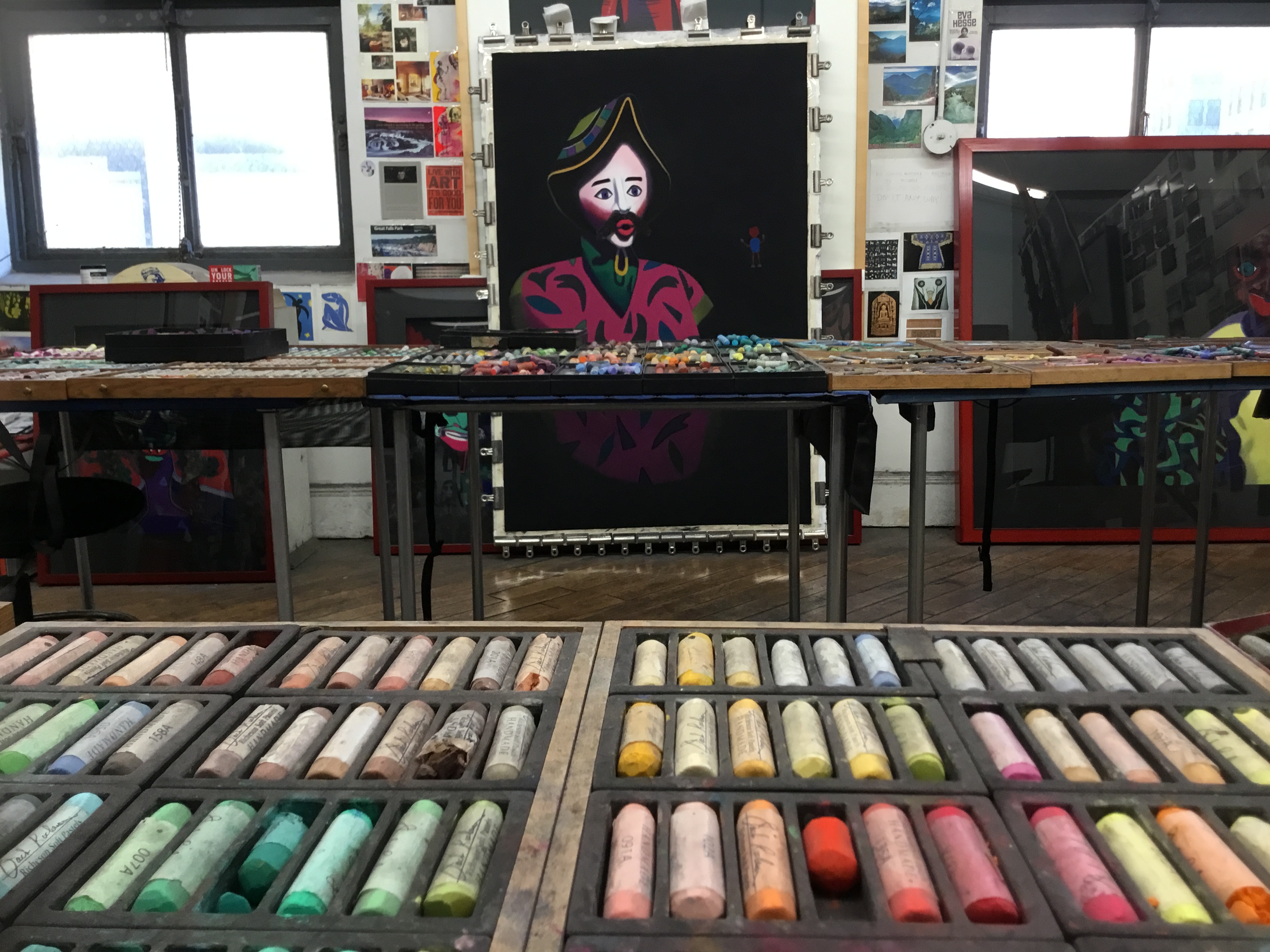
Barbara’s studio
*an ongoing series of quotations – mostly from artists, to artists – that offers wisdom, inspiration, and advice for the sometimes lonely road we are on.
I think society did a great disservice to artists when we started saying they were geniuses, instead of saying they had geniuses. That happened around the Renaissance, with the rise of a more rational and human-centered view of life. The gods and the mysteries fell away, and suddenly we put all credit and blame for creativity on the artists themselves – making the all-too-fragile humans completely responsible for the vagaries of inspiration.
In the process, we also venerated art and artists beyond their appropriate stations. The distinction of “being a genius” (and the rewards and status often associated with it) elevated creators into something like a priestly cast – and perhaps even into minor deities – which I think is a bit too much pressure for mere mortals, no matter how talented. That’s when artists start to really crack, driven mad and broken in half by the weight and weirdness of their gifts.
Elizabeth Gilbert in Big Magic: Creative Living Beyond Fear
Comments are welcome!
Pearls from artists* # 213
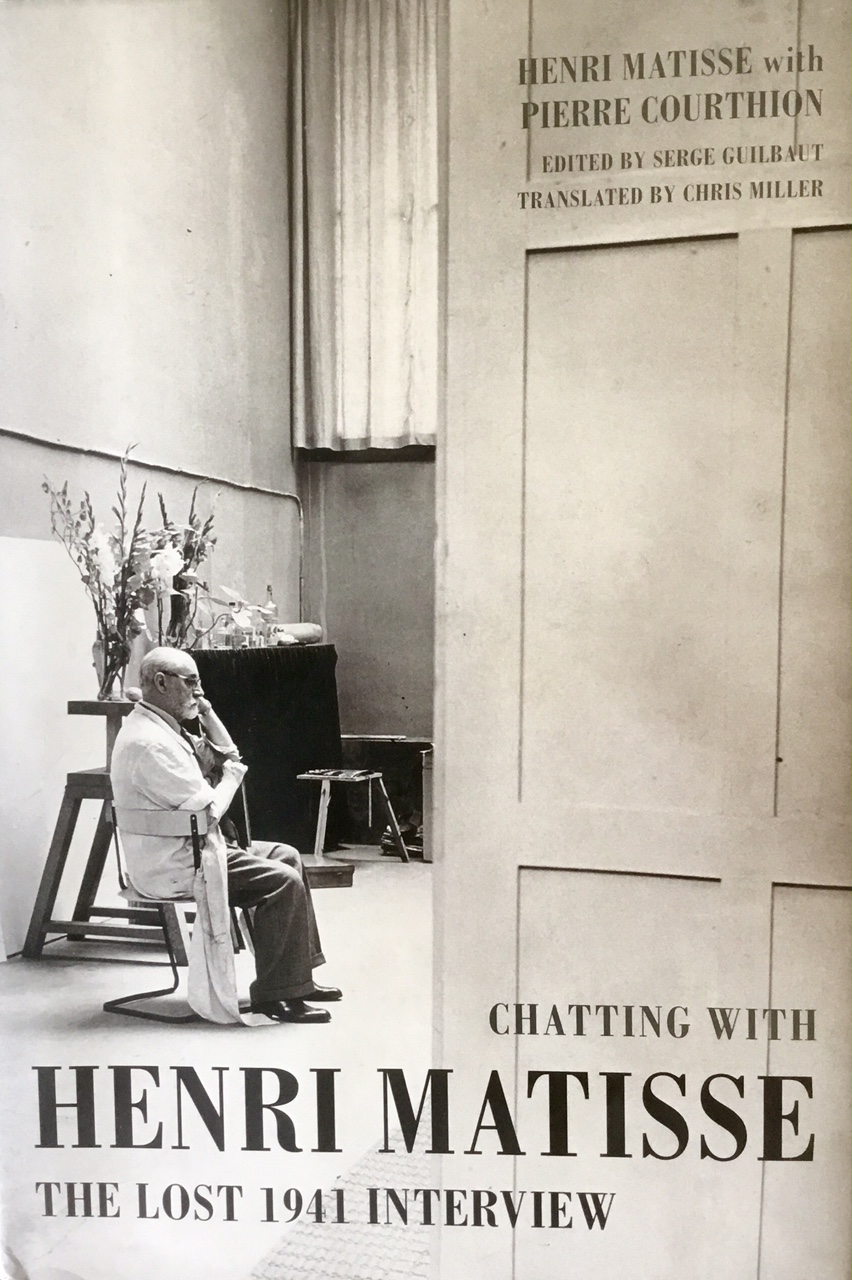
Matisse Book Cover
* an ongoing series of quotations – mostly from artists, to artists – that offers wisdom, inspiration, and advice for the sometimes lonely road we are on.
I am astonished by the accuracy with which Matisse remembers the most trifling facts; he describes a room that he went into forty years ago and gives you the measurements, where every piece of furniture stood, how the light fell. He is a man of astounding precision and has little time for anything that he has not confirmed for himself. In art matters, he is not the sort to go looking for a profile fortuitously created by cracks in the wall. Elie Faure writes that Matisse is perhaps the only one of his contemporaries (in particular Marquet and Bonnard) to know exactly where he comes from and the only one who never allows it to show “because his inveterate, invincible, vigilant willpower is always focused on being himself and nothing but.”
Matisse neglects nothing. He seems to know as much about the art market as about painting.
So many stratagems to sell a painting, from intimidating the purchaser to seeming to avoid him: Vollard used them all and used them successfully. Not least the lies that he told to reassure the client. “It works like this,” says Matisse: “To make a sale, you invent lies that have somehow disappeared into thin air by the time the deal is done.”
We talk of the difficulties faced by dealers hoping to gain access to Renoir in his Cagnes residence. Renoir didn’t like having people talk to him about selling his work,” says Matisse: “It bored him. About the only one who got a foot in the door was Paul Guillaume; he dressed up as a young worker with a floppy necktie: “You see, I’m a local. I’ve always loved your painting. I’ve just inherited a little money; I’d like to buy something.”
Chatting with Henri Matisse: The Lost 1941 Interview, Henri Matisse with Pierre Courthion, edited by Serge Guilbaut, translated by Chris Miller
Comments are welcome!
Pearls from artists* # 208

View from One World Trade Center
* an ongoing series of quotations – mostly from artists, to artists – that offers wisdom, inspiration, and advice for the sometimes lonely road we are on.
PC: In your painting, you’ve always kept this speed of movement. One senses that you work something out slowly, deep down, that it’s hard work, but there’s always something fresh about its expression.
HM: That’s because I revise my notion several times over. People often add or superpose – completing things without changing their plan, whereas I rework my plan every time. I never get tired. I always start again, working from the previous state. I try to work in a contemplative state, which is very difficult: contemplation is inaction, and I act in contemplation.
In all the studies I’ve made from my own ideas, there’s never been a faux pas because I’ve always unconsciously had a feeling for the goal; I’ve made my way toward it the way one heads north, following the compass. What I’ve done, I’ve done by instinct, always with my sights on a goal I still hope to reach today. I’ve completed my apprenticeship now. All I ask is four or five years to realize that goal.
PC: Delacroix said that too. Great artists never look back.
HM: Delacroix also said – ten years after he’d left the place – “I’m just beginning to see Morocco.” Rodin said to an artist, “You need to stand back a long way for sculpture.” To which the student replied, “Master, my studio is only ten meters wide.”
Chatting with Henri Matisse: The Lost 1941 Interview, Henri Matisse with Pierre Courthion, edited by Serge Guilbaut, translated by Chris Miller
Comments are welcome!
Pearls from artists* # 203

“Palaver,” soft pastel on sandpaper, 26″ x 20″
* an ongoing series of quotations – mostly from artists, to artists – that offers wisdom, inspiration, and advice for the sometimes lonely road we are on.
One day, looking for something that might interest those few buyers there were, Marquet and I decided to reconnoiter. So we went to the Pavillon de Rohan, to the Galeries de Rivoli, where there were dealers in engraving and in all kinds of curiosities that might attract foreign customers. We each came back with an idea: mine was to do a park landscape with swans. I went to the Bois de Boulogne to do a study of the lake. Then I went to buy a photo showing swans and tried to combine the two. Only it was very bad; I didn’t like it – in fact nobody liked it; it was impossible; it was stodgy. I couldn’t change; I couldn’t counterfeit the frame of mind of the customers on the rue de Rivoli or anywhere else. So I put my foot through it.
I understood then that I had no business painting to please other people; it wasn’t possible. Either way, when I started a canvas, I painted it the way I wanted with things that interested me. I knew very well that it wouldn’t sell, and I kept putting off the confection of a picture that would sell. And then the same thing would happen the next time.
There are plenty of artists who think it’s smart to make paintings to sell. Then – when they have acquired a certain reputation, a degree of independence – they want to paint things for themselves. But that simply isn’t possible. Painting’s an uphill task and if you want to find out what you’re capable of, you can’t dillydally on the way.
Chatting with Henri Matisse: The Lost 1941 Interview, Henri Matisse with Pierre Courthion, edited by Serge Guilbaut, translated by Chris Miller
Comments are welcome!
Pearls from artists* # 202

Soft pastels
* an ongoing series of quotations – mostly from artists, to artists – that offers wisdom, inspiration, and advice for the sometimes lonely road we are on.
When you’re working on something, you always wonder, “Can I get away with this? Is it working?” It’s the space between that I’ve been interested in for a long time. I think that when I started to make, say, a triptych that came from an observation of a little Picasso drawing, the spaces in between became as important as the three actual pieces. It’s especially true of the Wallpaper piece. But most of the changes in my own work really evolve from one piece to the next: from looking at my own work, the works of others, and things in my studio. It happens when you see something that you didn’t see previously, like those scraps of clay that became the wall pieces. It’s similar to the space that I’ve explored for years and years between artist and craftsperson, which is both interesting and challenging, and I don’t think that one thing is inferior to the other. Each has a different goal, a different function. Its my responsibility how nd where my work is viewed in different contexts.
In Conversation: Betty Woodman with Phong Bui, The Brooklyn Rail, April 2016
Comments are welcome!
Q: Can you describe a single habit that you believe contributes to your professional success?
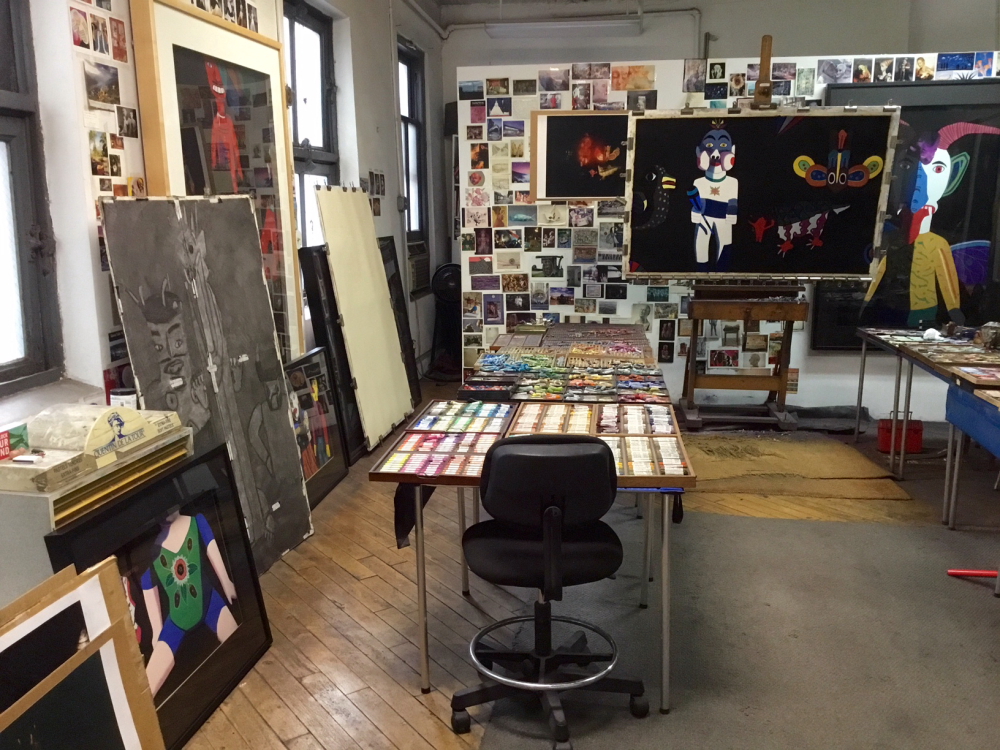
Barbara’s studio with work in progress
A: It’s probably the fact that I keep regular studio hours. Contrary to the cliche of artists working in spurts, I continually work in the studio at least seven hours a day, five days a week, with Wednesdays and Sundays as my days off. I devote another two hours or so in the mornings and evenings for art business tasks: email, sending out jpegs, social media, etc. I always remember something Katharine Hepburn said: “Without discipline there is no life.”
Comments are welcome!
Pearls from artists* # 201

Barbara’s studio
* an ongoing series of quotations – mostly from artists, to artists – that offers wisdom, inspiration, and advice for the sometimes lonely road we are on.
Matisse needs to find life difficult. There has to be opposition and struggle: “You come out by your own means,” he says: “The essential thing is to come out, to express that sense of falling head over heals for a thing; the artist’s job is not to transpose something he’s seen but to express the impact the object made on him, on his constitution, the shock of it and the original reaction.”
I sense that Matisse has little faith in the way his painting is feted nowadays. A man of scrupulous integrity, he must wonder how much truth there is in all of that. There is a vein of gutsy courage in him that is as unyielding now as it ever was. Hard times have accustomed him to rely entirely on his own judgment and accept the solitude that this implies.
HM: I’m already a little too official. You need a bit of persecution. When you’ve been controversial and they finally welcome you in, something goes wrong. Very few people can see the picture itself; they just see the banknotes you could turn it into. You love your paintings less when they’re worth something. When they’re not worth a cent, they’re like desolate children.
Chatting with Henri Matisse: The Lost 1941 Interview, Henri Matisse with Pierre Courthion, edited by Serge Guilbaut, translated by Chris Miller
Comments are welcome!


 barbararachkoscoloreddust.com