Blog Archives
Q: How do you decide when a pastel painting is finished?

“Magisterial,” soft pastel on sandpaper, 58” x 38” in progress
A: During the months that it takes to create a pastel painting, I search for arresting colors that work well together. The goal is to make a painting that I have never seen before and that leads the viewer’s eyes around in interesting ways. To do this I build up and blend together as many as 25 to 30 layers of pigment. I am able to complete some areas, like the background, fairly easily – maybe with just six or seven layers of black Rembrandt pastel. The more realistic parts of a pastel painting take many more applications. In general, details always take plenty of time to refine and perfect.
No matter how many pastel layers I apply, however, I never use fixatives. It is difficult to see this in reproductions of my work, but some of the finished surfaces achieve a texture akin to velvet. My technique involves blending each layer with my fingers, pushing the pastel deep into the tooth of the sandpaper, and mixing new colors directly on the paper. Fortunately, the sandpaper holds plenty of pigment so I am able to include lots of details.
Before I pronounce a pastel painting finished, I let it sit against a wall in my studio for a few days so I can look at it later with fresh eyes. I consider a piece done when it is as good as I can make it, when adding or subtracting something would diminish what is there. Always, I try to push myself and my materials to their limits, using them in new and unexpected ways.
Comments are welcome.
Q: What’s on the easel today?

Work in progress
A: I’m making slow progress on “Apparition,” 58” x 38,” soft pastel on sandpaper. There is still plenty of work to be done on the details.
Comments are welcome!
Pearls from artists* # 538
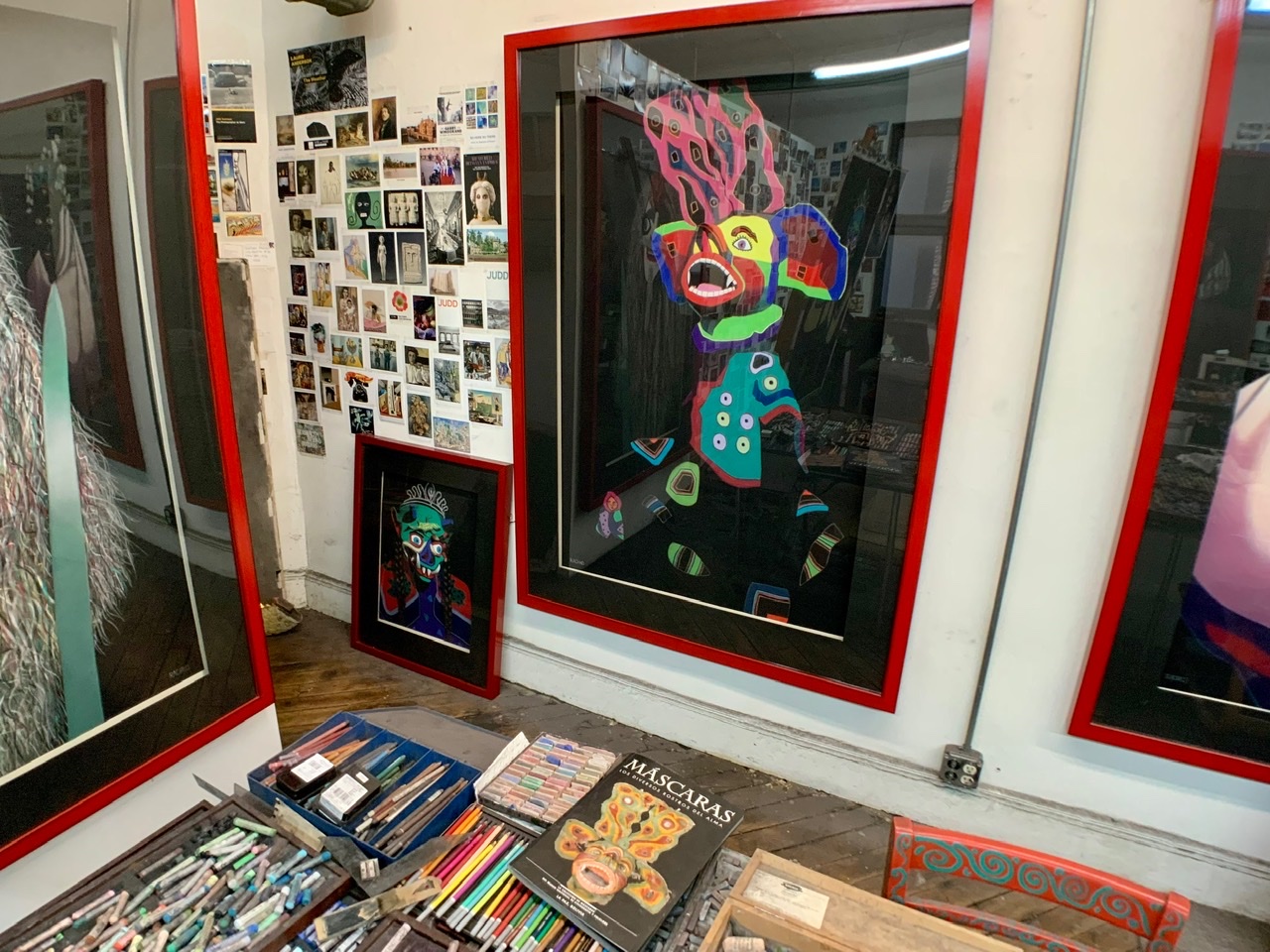
*an ongoing series of quotations – mostly from artists, to artists – that offers wisdom, inspiration, and advice for the sometimes lonely road we are on.
It’s ok if your work is fun for you, is what I’m saying. It’s also ok if your work is healing for you, or fascinating for you, or redemptive for you, or if it’s maybe just a hobby that keeps you from going crazy. It’s even ok if your work is totally frivolous. That’s allowed. It’s all allowed.
Your own reasons to create are reason enough. Merely by pursuing what you love, you may inadvertently end up helping us plenty. (“There is no love which does not become help,” taught the theologian Paul Tillich). Do whatever brings you to life, then. Follow your own fascinations, obsessions, and compulsions. Trust them. Create whatever causes a revolution in your heart.
The rest of it will take care of itself.
Elizabeth Gilbert in Big Magic: Creative Living Beyond Fear
Comments are welcome!
Pearls from artists* # 504

* an ongoing series of quotations – mostly from artists, to artists – that offers wisdom, inspiration, and advice for the sometimes lonely road we are on.
… if a project doesn’t work out, you can always think of it as having been a worthwhile and constructive experiment. You can resist the seductions of grandiosity, blame, and shame. You can support other people in their creative efforts, acknowledge the truth that there’s plenty of room for everyone. You can measure your worth by your dedication to your path, not by your successes or failure. You can battle your demons (through therapy, recovery, prayer, or humility) instead of battling your gifts – in part by realizing that your demons were never the ones doing the work, anyhow. You can believe that you are neither a slave to inspiration nor its master, but something far more interesting – its partner – and that the two of you are working together toward something intriguing and worthwhile. You can live a long life, moving and doing really cool things the entire time. You might earn a living with your pursuits or you might not, but you can recognize that this is not really the point. And at the end of your days, you can thank creativity for having blessed you with a charmed, interesting, passionate existence.
Elizabeth Gilbert in Big Magic: Creative Living Beyond Fear
Comments are welcome!
Pearls from artists* # 203

“Palaver,” soft pastel on sandpaper, 26″ x 20″
* an ongoing series of quotations – mostly from artists, to artists – that offers wisdom, inspiration, and advice for the sometimes lonely road we are on.
One day, looking for something that might interest those few buyers there were, Marquet and I decided to reconnoiter. So we went to the Pavillon de Rohan, to the Galeries de Rivoli, where there were dealers in engraving and in all kinds of curiosities that might attract foreign customers. We each came back with an idea: mine was to do a park landscape with swans. I went to the Bois de Boulogne to do a study of the lake. Then I went to buy a photo showing swans and tried to combine the two. Only it was very bad; I didn’t like it – in fact nobody liked it; it was impossible; it was stodgy. I couldn’t change; I couldn’t counterfeit the frame of mind of the customers on the rue de Rivoli or anywhere else. So I put my foot through it.
I understood then that I had no business painting to please other people; it wasn’t possible. Either way, when I started a canvas, I painted it the way I wanted with things that interested me. I knew very well that it wouldn’t sell, and I kept putting off the confection of a picture that would sell. And then the same thing would happen the next time.
There are plenty of artists who think it’s smart to make paintings to sell. Then – when they have acquired a certain reputation, a degree of independence – they want to paint things for themselves. But that simply isn’t possible. Painting’s an uphill task and if you want to find out what you’re capable of, you can’t dillydally on the way.
Chatting with Henri Matisse: The Lost 1941 Interview, Henri Matisse with Pierre Courthion, edited by Serge Guilbaut, translated by Chris Miller
Comments are welcome!
Q: Do you have a mentor?
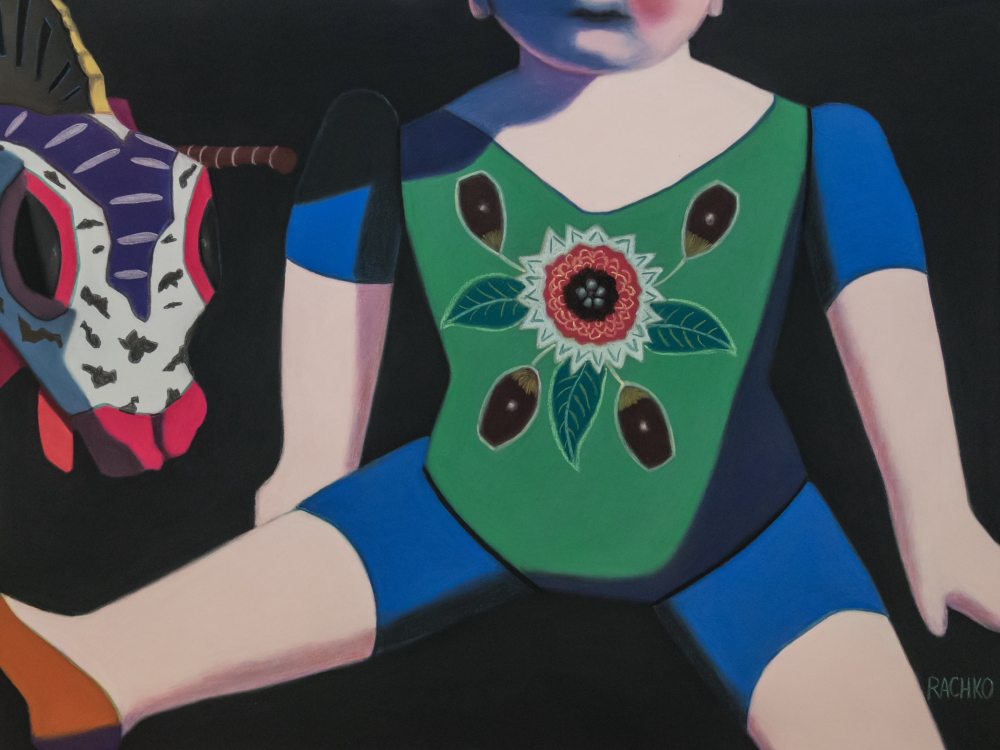
“Alone Together,” soft pastel on sandpaper, 20″ x 26″
A: No, but I often wish I did. How wonderful it would be to consult someone who’s been there, a productive and successful artist who could provide advice on all the concerns, especially the problems and dangers, inherent in a professional artist’s life.
But I have been at this for thirty years and found no such person! I think it’s because each artist’s career is highly unique as we chart are own individual paths. Unlike most professions, there are no firm rules or straight forward career milestones for making your way as an artist.
Besides the countless hours spent in the studio, I have always worked diligently to understand the art business. Certainly getting work seen, exhibited, reviewed, sold, etc. is as important as making it in the first place. It’s all part of being a professional artist.
Early on I developed the habit of relying on my own best judgment, both in creating the work and in getting it seen and collected. Certainly I have made plenty of mistakes. As a result though, I know a tremendous amount about the art business. And I enjoy sharing what I know in the hopes of steering other artists away from making similar missteps.
Comments are welcome!
Pearls from artists* # 131
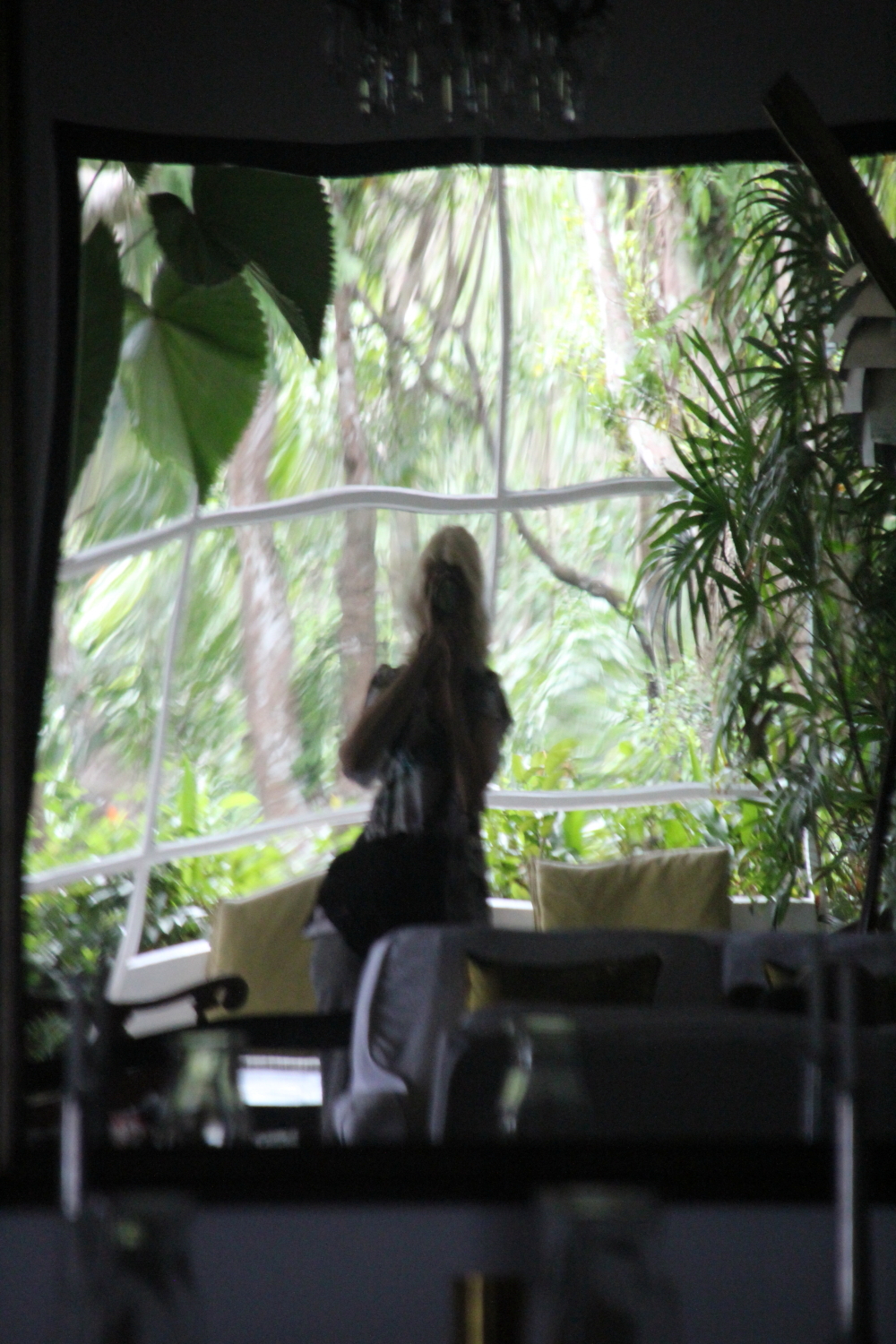
Self-portrait at an architect’s estate in Sri Lanka
* an ongoing series of quotations – mostly from artists, to artists – that offers wisdom, inspiration, and advice for the sometimes lonely road we are on.
Sister Corita
Immaculate Heart College Art Department Rules
Rule 1: Find a place you trust, and then try trusting it for a while.
Rule 2: General duties of a student: pull everything out of your teacher. Pull everything out of your fellow students.
Rule 3: General duties of a teacher: Pull everything out of your students.
Rule 4: Consider everything an experiment.
Rule 5: Be self-disciplined. This means finding someone wise or smart and choosing to follow them. To be disciplined is to follow in a good way. To be self-disciplined is to follow in a better way.
Rule 6: Nothing is a mistake. There’s no win and no fail. There’s only make.
Rule 7: The only rule is work. If you work it will lead to something. It’s the people who do all of the work all of the time who eventually catch on to things.
Rule 8: Don’t try to create and analyze at the same time. They’re different processes.
Rule 9: Be happy whenever you can manage it. Enjoy yourself. It’s lighter than you think.
Rule 10: “We’re breaking all the rules. Even our own rules. And how do we do that? By leaving plenty of room for X quantities.” John Cage
Helpful Hints: Always be around. Come or go to everything. Always go to classes. Read anything you can get your hands on. Look at movies carefully, often. Save everything – it might come in handy later.
There should be new rules next week.
Quoted in The Art Life: On Creativity and Career by Stuart Horodner
Comments are welcome!
Pearls from artists* # 124
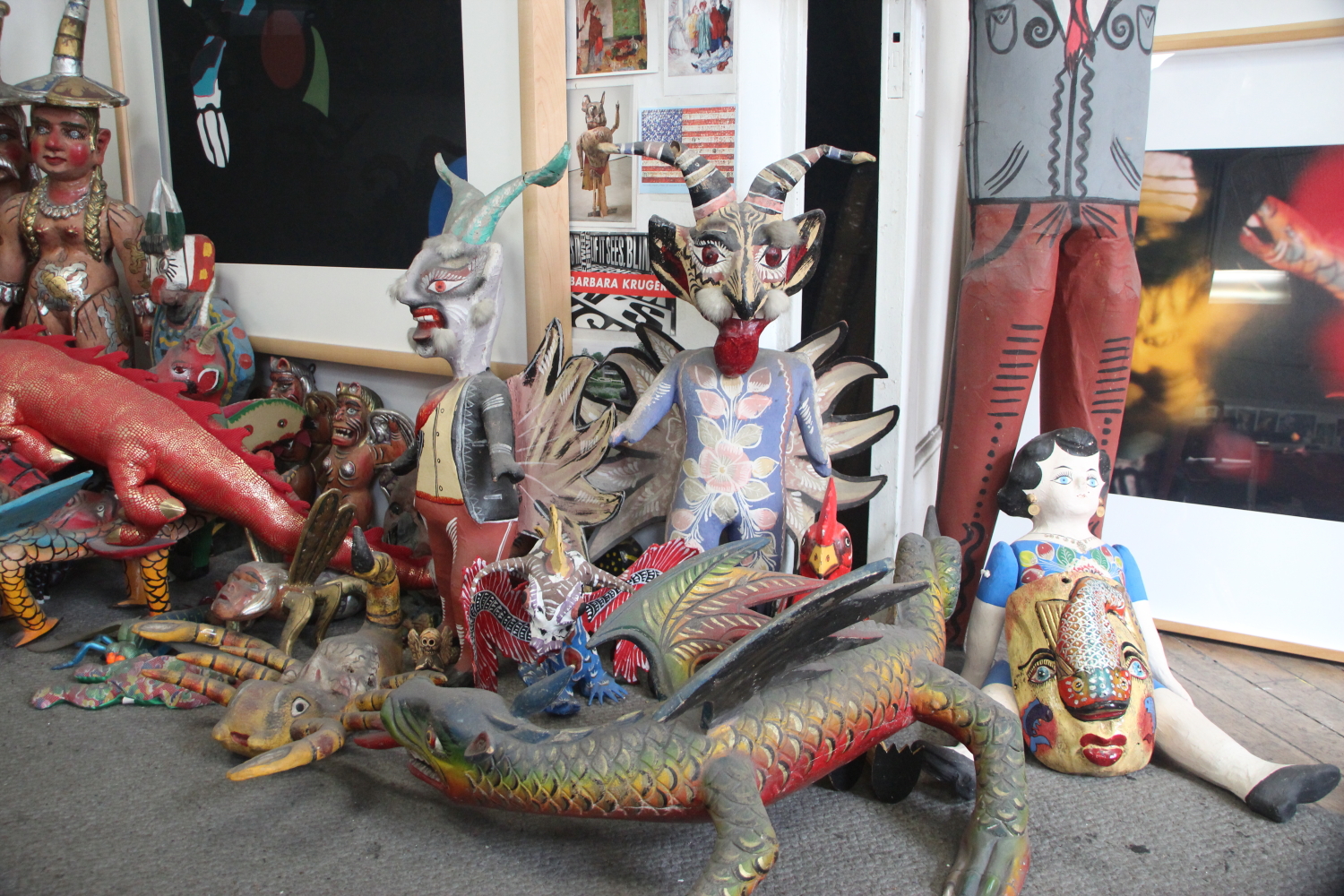
Barbara’s studio
* an ongoing series of quotations – mostly from artists, to artists – that offers wisdom, inspiration, and advice for the sometimes lonely road we are on.
You give yourself a creative life – pursuing those questions and aesthetic conditions that mean the most to you. What are you interested in? Landscape and gender and nuclear power are each worthy subjects and there are plenty more. Do you aspire to exhibit in museums or public spaces or virtual realms? Your job is to figure out how to best engage these distinct contexts. Your studio may be a large industrial space or a second bedroom or the kitchen table, where you can work days or nights while wearing your favorite sweatpants and drinking tea as music blasts or silence is maintained. You might produce five or fifty objects a year, using bronze or oil paint or folded paper, and these can be large or tiny, made to last for centuries or a few weeks. Maybe you’ve been a printmaker for several years and all of a sudden you decide to make videos. OK. You might be influenced by Pop Art or Minimalism or Feminism or Fluxus. How are you using these various histories to your advantage? Does Edward Hopper or Gordon Matta-Clark or Agnes Martin or David Hammons inspire you? If not, who does? Try to understand the reasons for your choices, and if you feel the need to shift gears, indulge that impulse. Grant yourself the permission to acquire new skills, travel to biennials, buy a new computer, start a reading group. Risk not knowing what will happen when you do.
Stephen Horodner in THE ART LIFE: On Creativity and Career
Comments are welcome!


 barbararachkoscoloreddust.com