Blog Archives
Pearls from artists* # 628

Beginning
*an ongoing series of quotations – mostly from artists, to artists – that offers wisdom, inspiration, and advice for the sometimes lonely road we are on.
We have nothing to go by, but still, we must begin. It requires chutzpah – the Yiddish word for that ineffable combination of courage and hubris – to put down one word, then another, perhaps even accumulate a couple of flimsy pages, so few that they don’t even firm the smallest of piles, and call it the beginning of a novel. Or memoir. Or story. Or anything, really rather than a couple of flimsy pages.
When I’m between books, I feel as if I will never have another story to tell. The last book has wiped me out, has taken everything from me, everything I understand and feel and know and remember, and … that’s it. There’s nothing left. A low-level depression sets in. The world hides its gifts from me. It has taken me years to realize that this feeling, the one of the well being empty, is as it should be. It means I’ve spent everything. And so I must begin again.
I wait.
I try to be patient. I remember Colette, who wrote that her most essential art was “not that of writing, but the domestic task of knowing how to wait, to conceal, to save up crumbs, to reglue, regild, change the worst into the not-so-bad, how to lose and recover in the same moment that frivolous thing, a taste for life.” Colette’s words, along with those of a few others, have migrated from one of my notebooks to another for over twenty years now. It’s wisdom I need to remember – wisdom that is easy to forget.
Dani Shapiro in Still Writing: The Perils and Pleasures of a Creative Life
Comments are welcome!
Pearls from artists* # 610
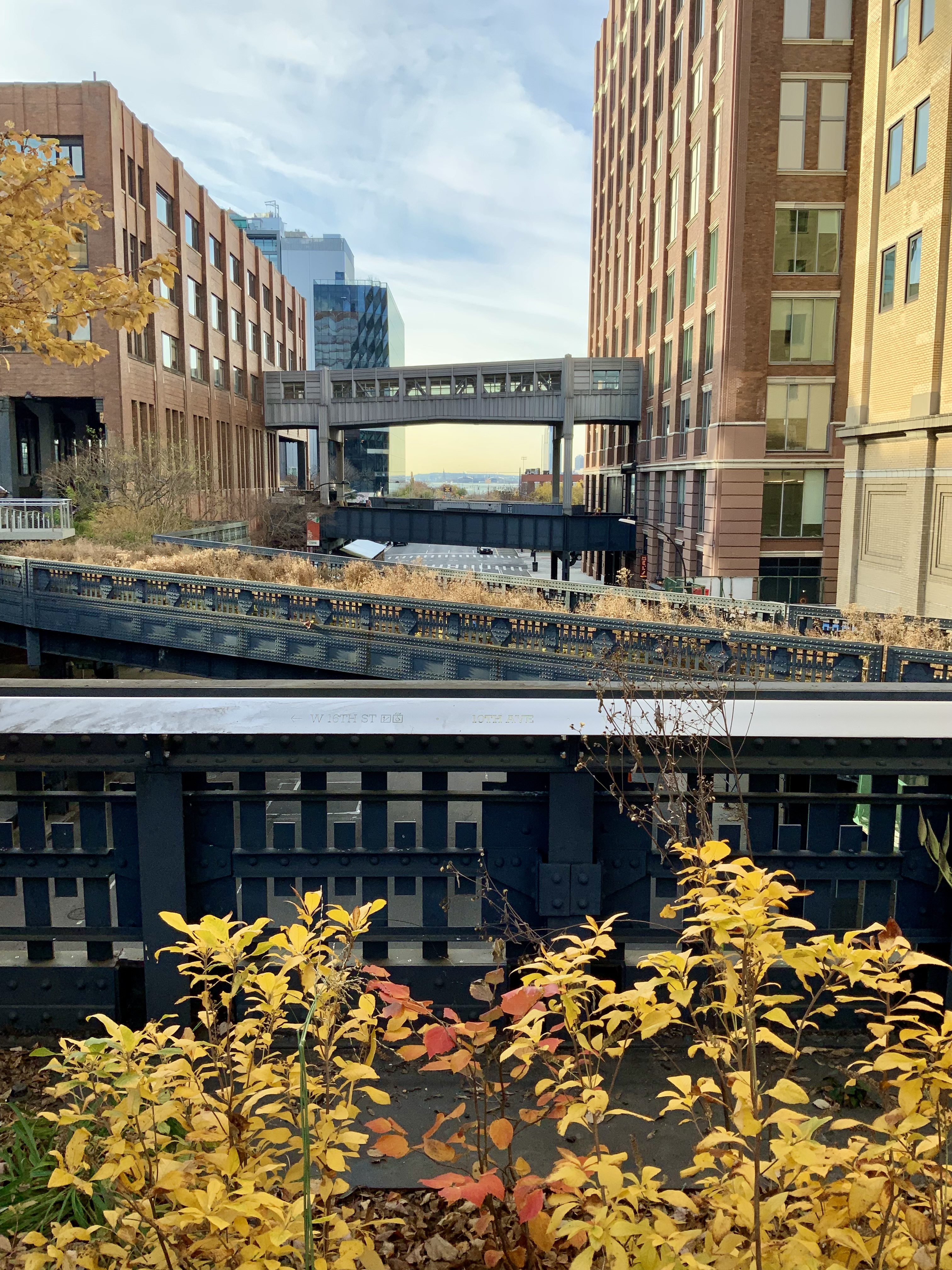
View from the High Line, New York NY
*an ongoing series of quotations – mostly from artists, to artists – that offers wisdom, inspiration, and advice for the sometimes lonely road we are on.
Just as the restless, committed, curious, and perhaps obsessed explorer follows the river from bend to bend, shooting rapids and pulling himself out of the water, so the self-dedicated artist launches himself on an exploratory art journey. He judges which fork in the river he will take, when he will rest and when he will push on, who he will take with him or whether he will travel alone. While he doesn’t possess unlimited freedom as he journeys, bound as he is by the demands of his personality, by his time and place, and by circumstances beyond his control, he does possess unrestricted permission from himself to explore every available avenue.
The contemporary artist must especially direct and trust himself because he lives in a constantly changing art environment. … as Pablo Picasso put it, “Beginning with Van Gogh we are all in a measure, autodidacts.” Painters no longer live within a tradition and so each of us must create an entire language.
Eric Maisel in A Life in the Arts: Practical Guidance and Inspiration for Creative and Performing Artists
Comments are welcome!
Q: How has the use of photography in your work changed over the decades?
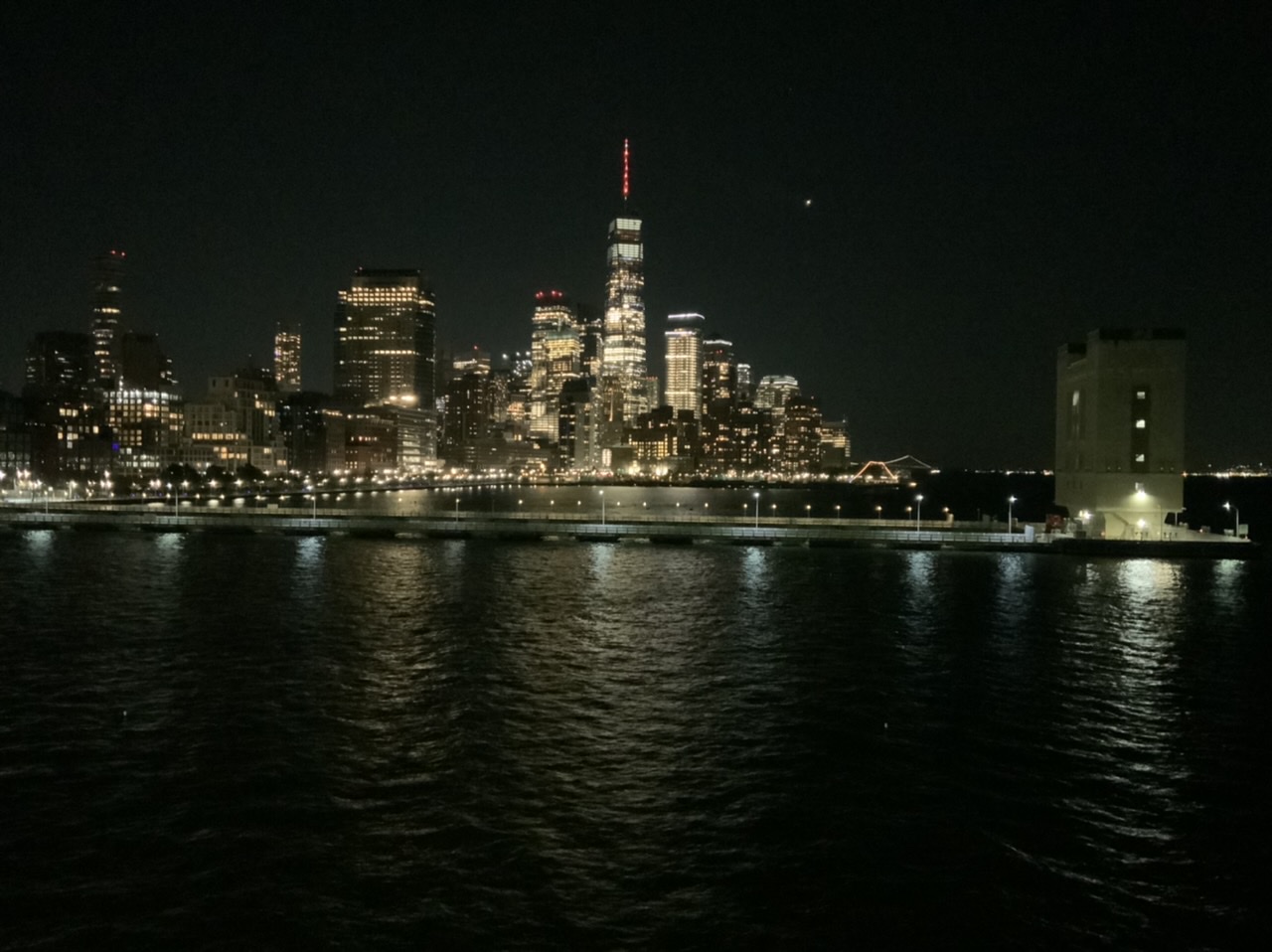
New York, NY
A: From the beginning in the mid-1980s I used photographs as reference material. My late husband, Bryan, would shoot 4” x 5” negatives of my elaborate setups using his Toyo-Omega view camera. In this respect Bryan was an integral part of my creative process as I developed the “Domestic Threats” pastel paintings. At that time I rarely picked up a camera, except to capture memories of our travels.
After Bryan was killed on 9/11, I inherited his extensive camera collection – old Nikons, Leicas, Graphlex cameras, and more. I wanted and needed to learn how to use them. Starting in 2002 I enrolled in a series of photography courses (about 10 over 4 years) at the International Center of Photography in New York. I learned how to use all of Bryan’s cameras and how to make my own big chromogenic prints in the darkroom.
Along the way I discovered that the sense of composition and color I had developed over many years as a painter translated well into photography. The camera was just another medium with which to express my ideas. Surprisingly, in 2009 I had my first solo photography exhibition at a gallery in New York. Bryan would have been so proud!
For several years now my camera of choice has been a 12.9” iPad Pro. It’s main advantage is that the large screen let’s me see every detail as I compose my photographs. I think of it as a portable, lightweight, and easy-to-use 8 x 10 view camera. My iPad is always with me when I travel and as I walk around exploring New York City.
It is a wonderful thing to be both a painter and a photographer! While pastel painting will always be my first love, photography has distinct advantages over my studio practice. Pastel paintings are labor-intensive, requiring months of painstaking work. Photography’s main advantage is speed. Photographs – from the initial impulse to hanging a print on a wall – can be made in minutes. Photography is instant gratification, allowing me to explore ideas much easier and faster than I ever could as a painter. Perhaps most importantly, composing photographs keeps my eye sharp whenever I am away from the studio. I credit photography as an important factor in the overall evolution of my work.
Comments are welcome!

Q: What makes you drawn to face masks?

A: For me a mask is so much more than a mask. It is almost a living thing with its own soul and with a unique history. I always wonder, who created this mask? For what purpose? Where has it been? What stories would it tell if it could? In my current “Bolivianos” series I feel as though I am creating portraits of living, or perhaps once living, beings.
In a way the masks are a pretext for a return to my early days as an artist. When I resigned my Naval commission to pursue art full time, I started out as a photo-realist portrait painter. The twist is that this time I do not have to satisfy a client’s request to make my subjects look younger or more handsome. I am joyfully free to respond only to the needs of the pastel painting before me on the easel.
Comments are welcome!
Q: Why do you make a preliminary drawing before you begin a pastel painting?

A: I make a preliminary charcoal drawing because that’s how I like to begin thinking about and planning a new pastel painting. I always make preliminary drawings the same size as the upcoming pastel painting. While I draw, I make decisions about the overall composition, decide where the major light and dark shapes will be, and envision the likely problem areas that lie ahead. These drawings are done quickly. I spend perhaps an hour on them.
Once the drawing is in my head I no longer need it. So I put it away and when it’s time to begin a subsequent pastel painting, I erase it. I wipe it out with a paper towel and make the next preliminary charcoal drawing directly on top. These are ephemeral tools, existing only for as long as I need them.
Comments are welcome!
Q: Who are you and what do you do? (Question from “Arts Illustrated”)

A: Here is my professional bio.
I am an American contemporary artist and author who divides my time between residences in New York City and Alexandria, VA. I am best known for my pastel-on-sandpaper paintings, my eBook, “From Pilot to Painter,” and this blog, which now has over 70,000 subscribers!
Friends say that I have led an extraordinary, inspiring life. I learned to fly at the age of 25 and became a commercial pilot and Boeing-727 flight engineer before joining the Navy. As a Naval officer I spent many years working at the Pentagon and retired as a Commander.
On 9/11 my husband, Dr. Bryan C. Jack, was tragically killed on the plane that hit the Pentagon.
I use my large collection of Mexican and Guatemalan folk art – masks, carved wooden animals, papier mâché figures, and toys – to create one-of-a-kind pastel-on-sandpaper paintings that combine reality and fantasy and depict personal narratives. In 2017 I traveled to Bolivia where I became inspired to paint Bolivian Carnival masks.
My pastel paintings are bold, vibrant, and extremely unusual. Perhaps my business card says it all: “Revolutionizing Pastel as Fine Art!”
I exhibit nationally and internationally and have won many accolades during my 30+ years as a professional artist. For additional info, please see the links in the sidebar.
Comments are welcome!
Pearls from artists* # 430

Barbara at work on “Schemer,” Soft Pastel on Sandpaper, 26” x 20”
*an ongoing series of quotations – mostly from artists, to artists – that offers wisdom, inspiration, and advice for the sometimes lonely road we are on.
In art there must be a governing thought expressed eloquently. We must have it in ourselves, and stamp upon others, just as a medal is stamped… Art is not a pleasure trip; it is a battle, a mill that grinds. I’m not a philosopher. I don’t want to stop pain, or find a formula that makes me indifferent or stoic. Pain is, perhaps, that which makes the artist express himself most distinctly.
Jean Francois Millet quoted by Mariella Guzzoni in Vincent’s Books: Van Gogh and the Writers Who Inspired Him
Comments are welcome!
Pearls from artists* # 213
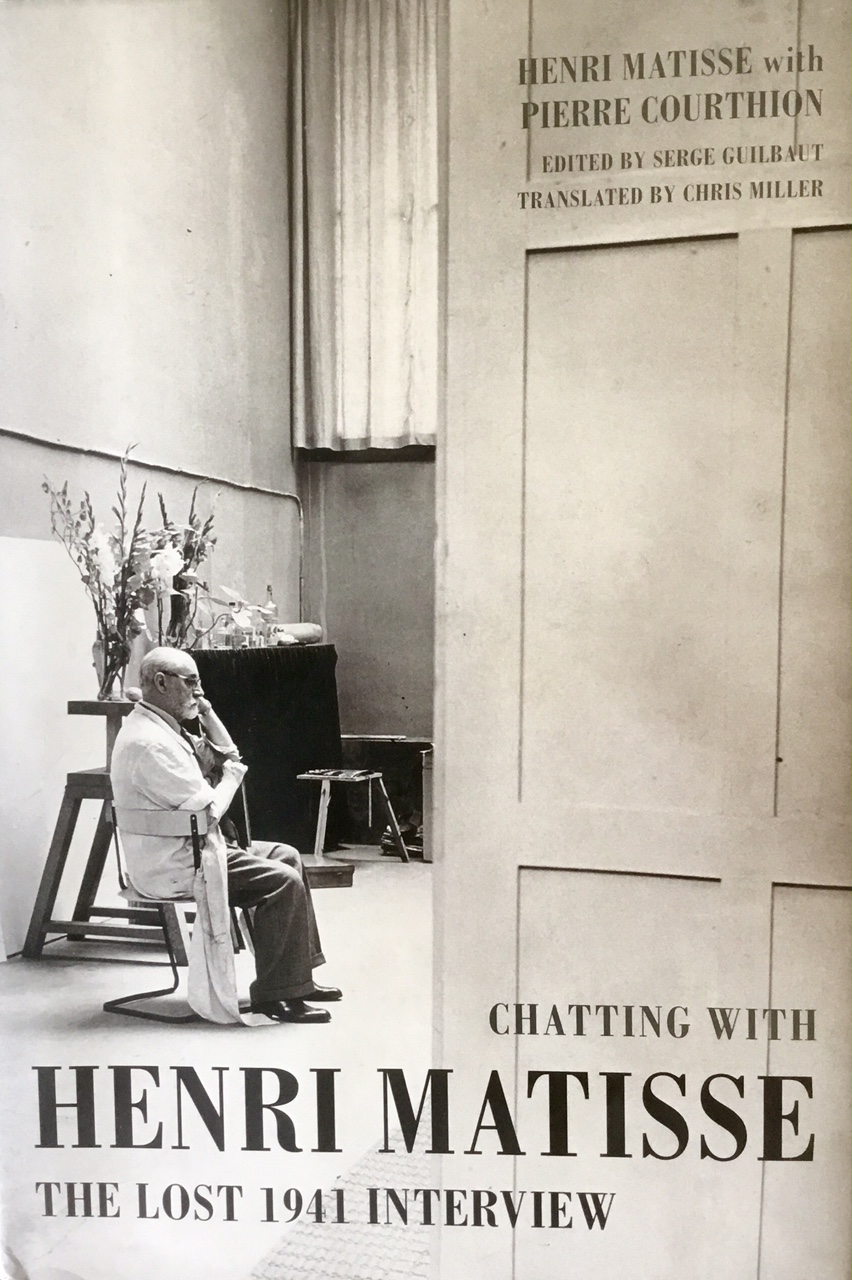
Matisse Book Cover
* an ongoing series of quotations – mostly from artists, to artists – that offers wisdom, inspiration, and advice for the sometimes lonely road we are on.
I am astonished by the accuracy with which Matisse remembers the most trifling facts; he describes a room that he went into forty years ago and gives you the measurements, where every piece of furniture stood, how the light fell. He is a man of astounding precision and has little time for anything that he has not confirmed for himself. In art matters, he is not the sort to go looking for a profile fortuitously created by cracks in the wall. Elie Faure writes that Matisse is perhaps the only one of his contemporaries (in particular Marquet and Bonnard) to know exactly where he comes from and the only one who never allows it to show “because his inveterate, invincible, vigilant willpower is always focused on being himself and nothing but.”
Matisse neglects nothing. He seems to know as much about the art market as about painting.
So many stratagems to sell a painting, from intimidating the purchaser to seeming to avoid him: Vollard used them all and used them successfully. Not least the lies that he told to reassure the client. “It works like this,” says Matisse: “To make a sale, you invent lies that have somehow disappeared into thin air by the time the deal is done.”
We talk of the difficulties faced by dealers hoping to gain access to Renoir in his Cagnes residence. Renoir didn’t like having people talk to him about selling his work,” says Matisse: “It bored him. About the only one who got a foot in the door was Paul Guillaume; he dressed up as a young worker with a floppy necktie: “You see, I’m a local. I’ve always loved your painting. I’ve just inherited a little money; I’d like to buy something.”
Chatting with Henri Matisse: The Lost 1941 Interview, Henri Matisse with Pierre Courthion, edited by Serge Guilbaut, translated by Chris Miller
Comments are welcome!


 barbararachkoscoloreddust.com
Q: What kind of internal conversations do you tend to have when you are in the process of making art? (Question from Vedica Art Studios and Gallery)
Jan 10
Posted by barbararachkoscoloreddust
A: When standing at my easel creating a pastel painting, I focus on formal properties: composition, shape, color, and line. I always strive to produce a painting I’ve never seen before. Even as (perhaps especially as) the creator, I want to be surprised by the final result. My studio days are spent thinking, looking, reacting, and adjusting colors and composition as I refine increasingly tiny details, ensuring all elements work harmoniously. I determine which areas need to recede or advance, which require intricate details to appear three-dimensional, and which are better left as flat areas of color.
These countless adjustments ensure viewers’ eyes are guided around the finished painting in intriguing ways. I often recall something collectors of my pastel paintings shared: they mentioned a New York Times review of a Nan Goldin exhibition, in which the writer stated, “All of the pleasure circuits are fired in looking.” The collectors agreed this is exactly how they feel when viewing my work. Artists live for appreciative comments like these!
Comments are welcome!
Share this:
Posted in 2026, An Artist's Life, Creative Process, Studio, Working methods
Comments Off on Q: What kind of internal conversations do you tend to have when you are in the process of making art? (Question from Vedica Art Studios and Gallery)
Tags: adjusting, adjustments, advance, agreed, always, appear, appreciative, areas, around, artists, “Magisterial”, “New York Times”, better, circuits, collectors, colors, comments, composition, countless, creating, creator, details, determine, elements, ensure, ensuring, especially, exactly, exhibition, finished, fired, formal, guided, harmoniously, increasingly, intricate, intriguing, looking, mentioned, Nan Goldin, painting, pastel painting, perhaps, pleasure, produce, properties, question, reacting, recall, recede, refine, require, result, review, shared, something, stated, strive, Studio, surprised, thinking, three-dimensional, Vedica Art Studios and Gallery, viewers, viewing, working, writer