Blog Archives
Pearls from artists* # 110
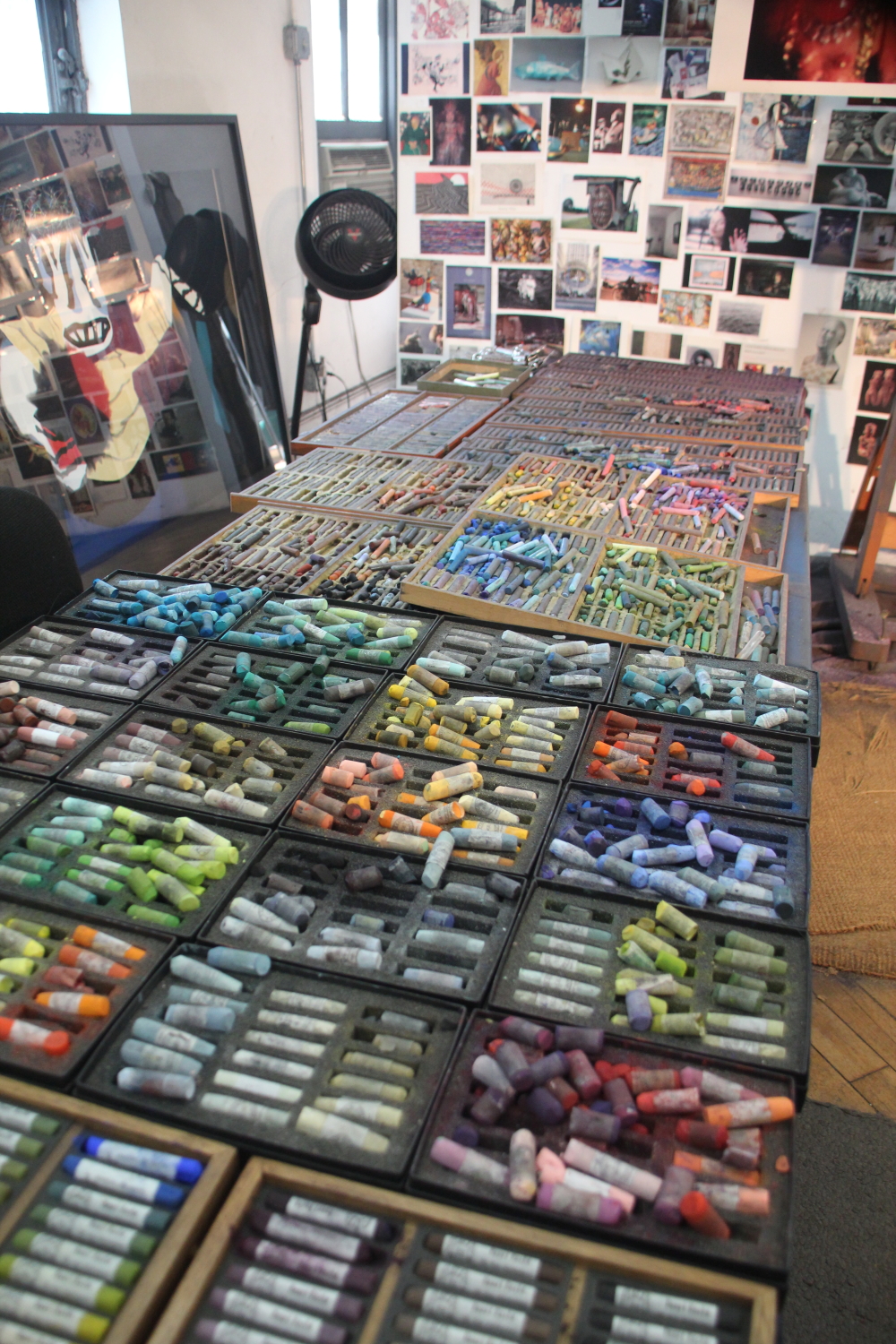
Barbara’s studio
* an ongoing series of quotations – mostly from artists, to artists – that offers wisdom, inspiration, and advice for the sometimes lonely road we are on.
A well-lived life should be worth attention. At the very least, you should find your own story engaging. In presenting yourself to yourself and others, then, you should keep in mind the rules that good playwrights follow. Like a good character – you should be making choices that are explicable – choices that appear to be coming from a mind in working order. Your choices should be reasonably coherent with each other, also, so as to support the thought that there is a real person – you – behind those choices.
Paul Woodruff, philosopher, quoted in What’s the Story: Essays about art, theater, and storytelling by Anne Bogart
Comments are welcome!
Pearls from artists* # 102
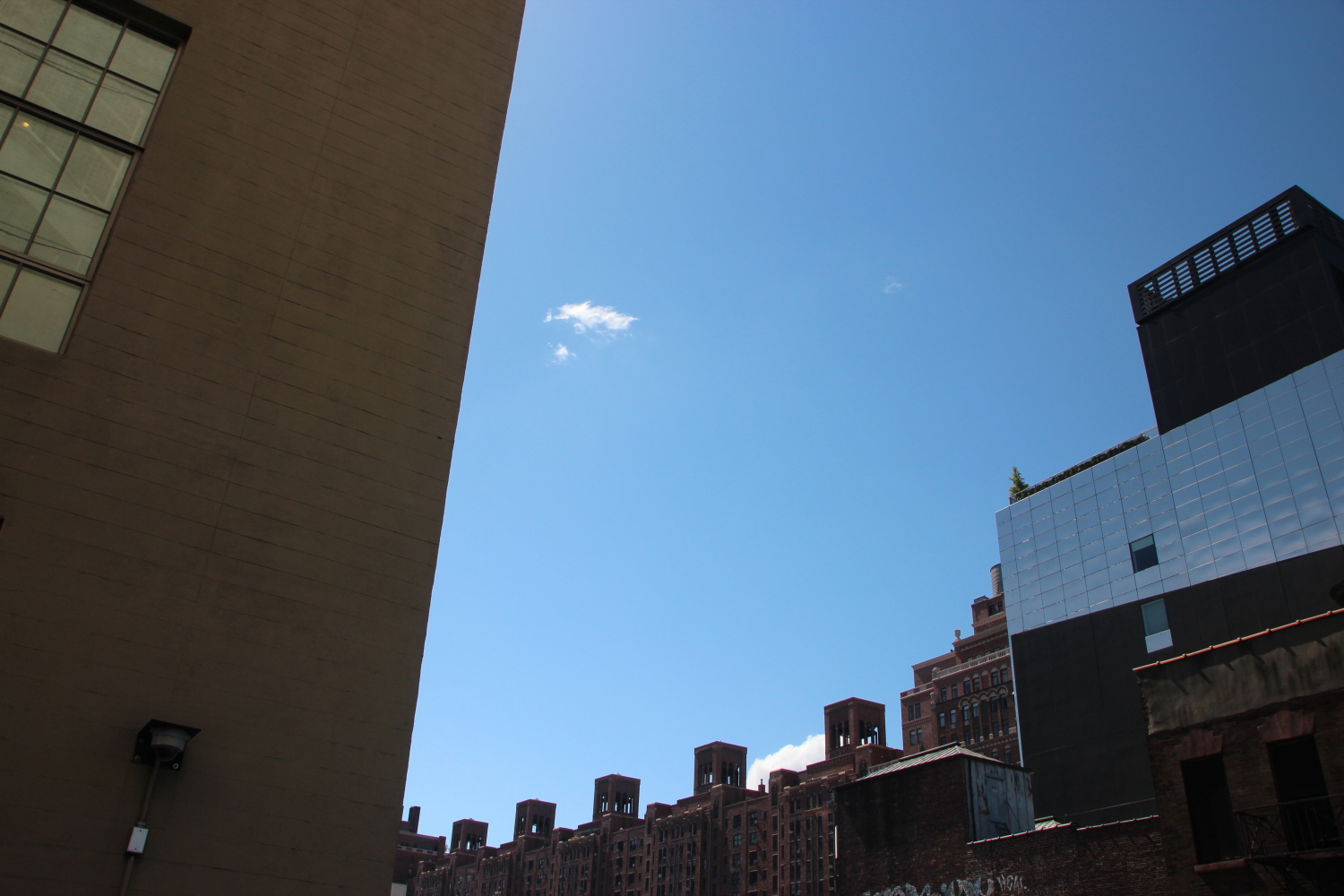
New York, NY
* an ongoing series of quotations – mostly from artists, to artists – that offers wisdom, inspiration, and advice for the sometimes lonely road we are on.
That a photograph is unlikely to be a laboratory record is evident when we think about how it is made. Most photographers are people of immense enthusiasms whose work involves many choices – to brake the car, grab the yellow instead of the green filter, wait out the cloud, and at the second everything looks inexplicably right, to release the shutter. Behind these decisions stands the photographer’s individual framework of recollections and meditations about the way he perceived that place or places like it before. Without such a background there would be no knowing whether the scene on the ground glass was characteristic of the geography and of his experience of it and intuition of it – in short, whether it was true.
Making photographs has to be, then, a personal matter; when it is not, the results are not persuasive. Only the artist’s presence in the work can convince us that its affirmation resulted from and has been tested by human experience. Without the photographer in the photograph the view is no more compelling than the product of some annoying record camera, a machine perhaps capable of happy accident but not response to form.
Beauty in Photography by Robert Adams
Comments are welcome!
Pearls from artists* # 98
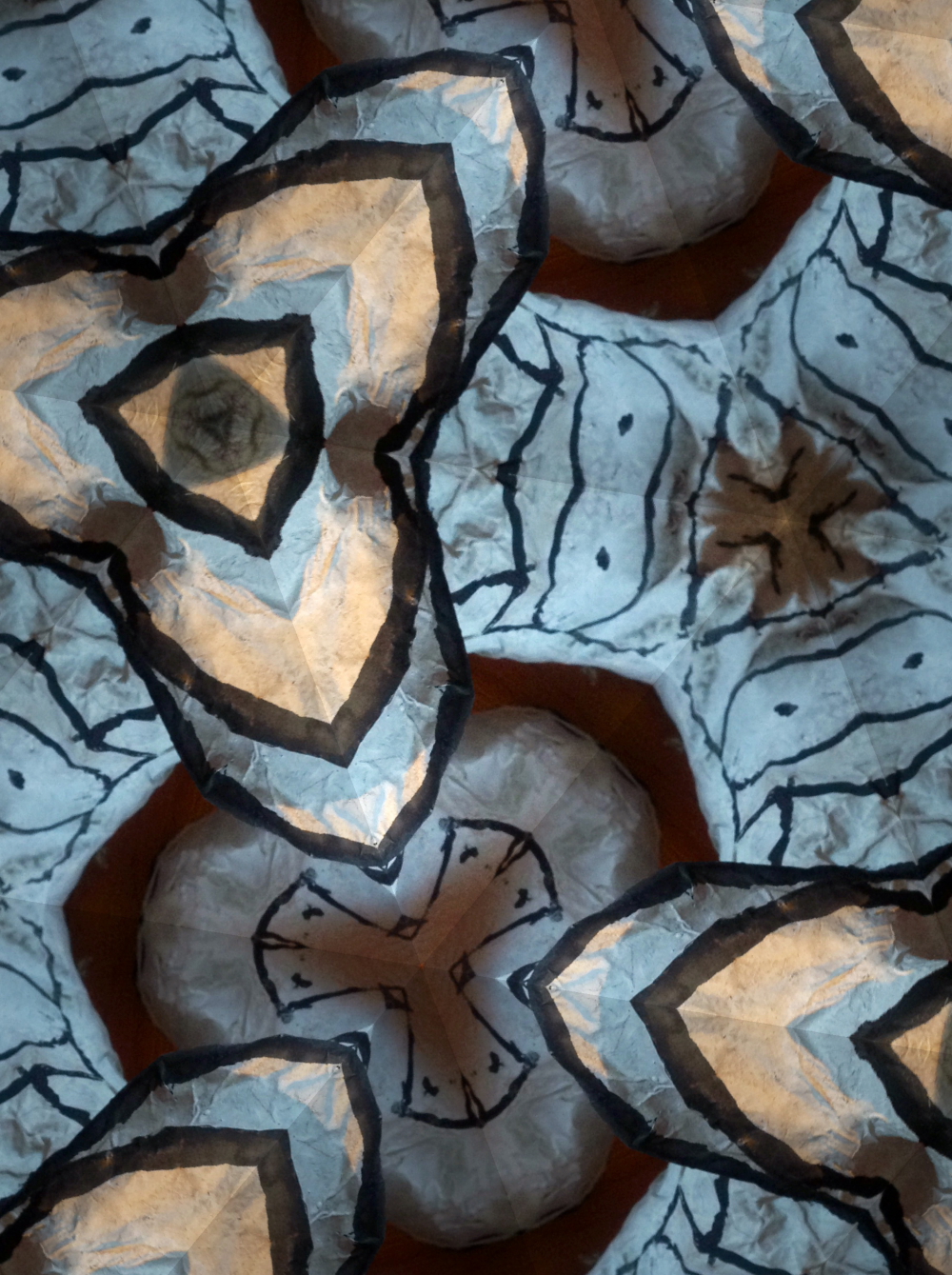
Teleidoscope
* an ongoing series of quotations – mostly from artists, to artists – that offers wisdom, inspiration, and advice for the sometimes lonely road we are on.
A work of art can start you thinking about some aesthetic or philosophical problem; it can suggest some new method, some fresh approach to fiction. But the relationship between reading and writing is rarely so clear-cut…
To be truthful, some writers stop you dead in your tracks by making you see your own work in the most unflattering light. Each of us will meet a different harbinger of personal failure, some innocent genius chosen by us for reasons having to do with what we see as our own inadequacies. The only remedy to this I have found is to read a writer whose work is entirely different from another, though not necessarily more like your own – a difference that will remind you of how many rooms there are in the house of art.
Francine Prose in Reading Like a Writer: A Guide for People Who Love Books and for Those Who Want to Write Them
Comments are welcome!
Pearls from artists* # 93

Chalcatzingo (Mexico)
* an ongoing series of quotations – mostly from artists, to artists – that offers wisdom, inspiration, and advice for the sometimes lonely road we are on.
The times in between things are always very hard for me, and there have been times when I felt that I’d never have an idea again, or that I’ve explored everything that I possibly can because as the years go on you have the backpack of your history. How do I find something new to work with? I read a beautiful book by Mable Dodge Luhan, who lived in New Mexico and started Ghost Ranch in the 1920s. She married a Native American, Tony Luhan, who lived in the Taos pueblo. She said that she noticed in the pueblo that in the winter everybody had very soft moccasins and they tiptoed around. They hardly talked at all and it was very, very quiet. She asked why they did that, and they said, “Mother Earth needs to rest. We are making it so that Mother Earth can rest so that in spring she can come forth.” I felt that that was so comforting; to actually nurture those times where it seems so empty, to have faith that something will happen if you savor those times, not try to push against them or fight them.
Meredith Monk quoted in Conversations with Anne: Twenty-four Interviews, by Anne Bogart
Comments are welcome!
Pearls from artists* # 87
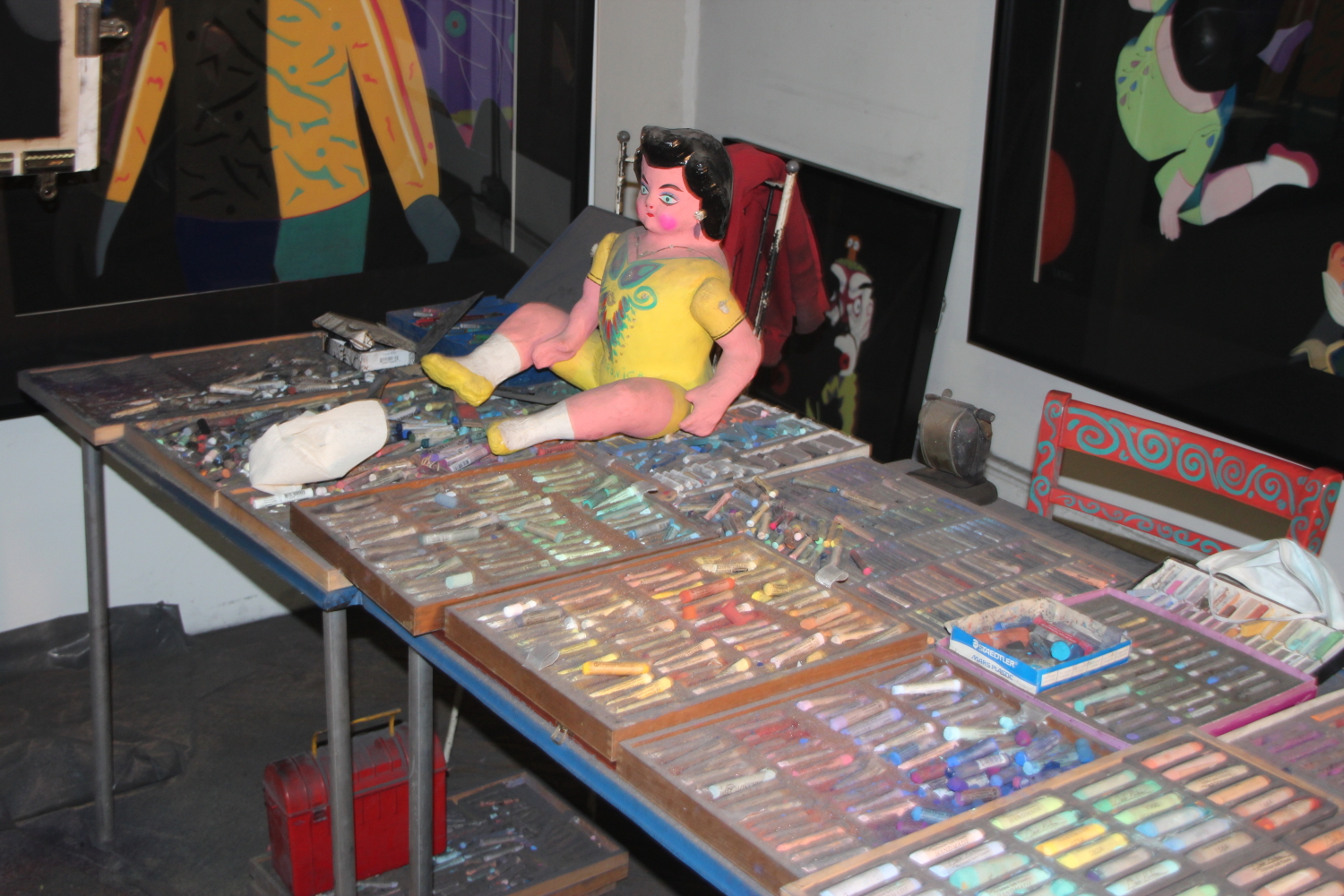
Studio
* an ongoing series of quotations – mostly from artists, to artists – that offers wisdom, inspiration, and advice for the sometimes lonely road we are on.
One evening, after one false start too many, I just gave up. Sitting at a bar, feeling a bit burned out by work and by life in general, I just started drawing on the backs of business cards for no reason. I didn’t really need a reason. I just did it because it was there, because it amused me in a kind of random, arbitrary way.
Of course it was stupid. Of course it was not commercial. Of course it wasn’t going to go anywhere. Of course it was a complete and utter waste of time. But in retrospect, it was this built-in futility that gave it its edge. Because it was the exact opposite of all the “Big Plans” my peers and I were used to making. It was so liberating not to have to think about all of that, for a change.
It was so liberating to be doing something that didn’t have to have some sort of commercial angle, for a change.
It was so liberating to be doing something that didn’t have to impress anybody, for a change.
It was so liberating to be free of ambition, for a change.
It was so liberating to have something that belonged just to me and no one else, for a change.
It was so liberating to feel complete sovereignty, for a change. To feel complete freedom, for a change. To have something that didn’t require somebody else’s money, or somebody else’s approval, for a change.
And of course, it was then, and only then, that the outside world started paying attention.
The sovereignty you have over your work will inspire far more people than the actual content ever will. How your own sovereignty inspires other people to find their own sovereignty, their own sense of freedom and possibility, will give the work far more power than the work’s objective merits ever will.
Your idea doesn’t have to be big. It just has to be yours alone. The more the idea is yours alone, the more freedom you have to do something really amazing.
The more amazing, the more people will click with your idea. The more people click with your idea, the more this little thing of yours will snowball into a big thing.
That’s what doodling on the backs of business cards taught me.
Hugh MacLeod in Ignore Everybody: and 39 Other Keys to Creativity
Comments are welcome!
Q: Do you have any advice for a young painter or someone just starting out as an artist?
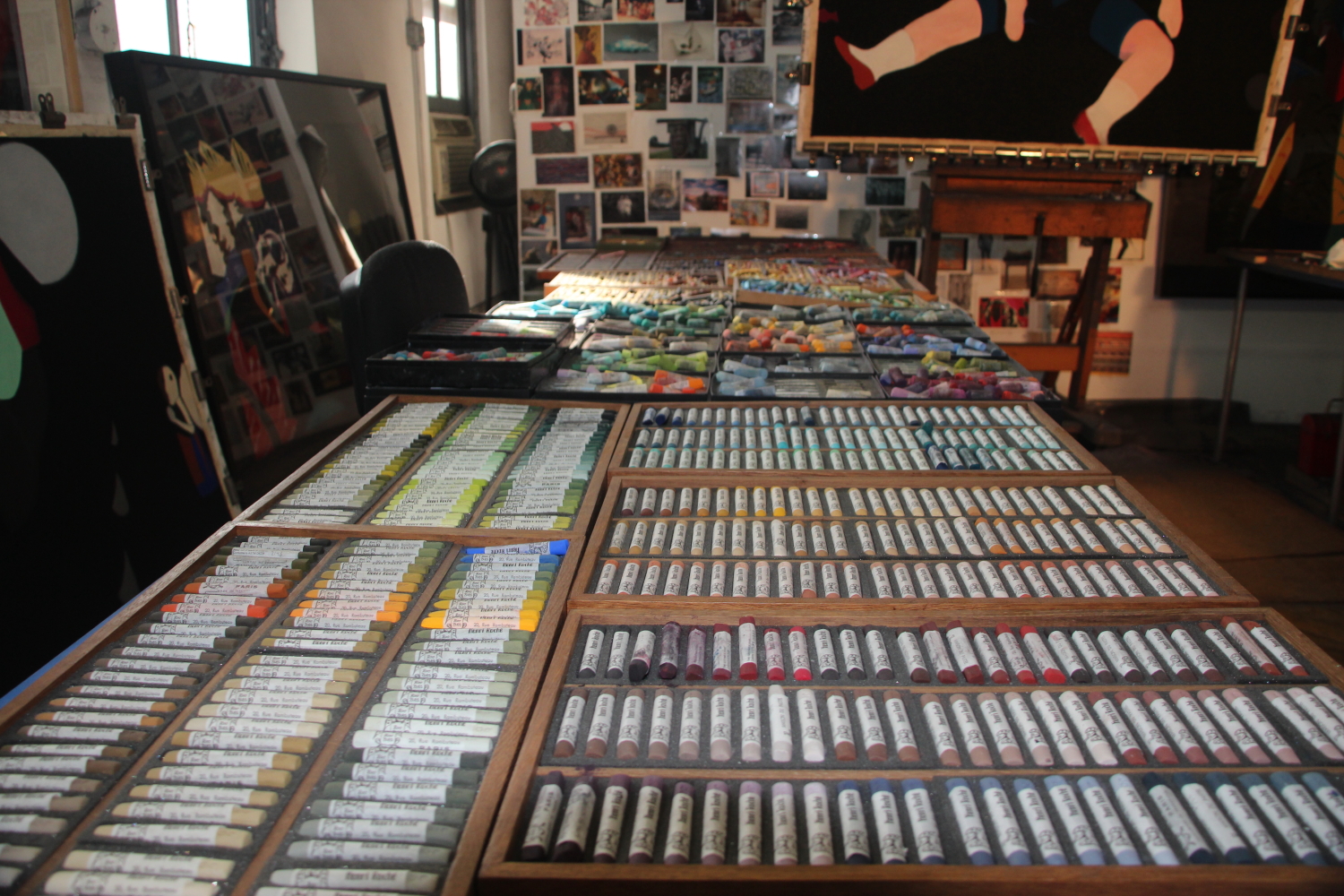
Studio
A: As artists each of us has at least two important responsibilities: to express things we are feeling for which there are no adequate words and to communicate to a select few people, who become our audience. By virtue of his or her own uniqueness, every human being has something to say. But self-expression by itself is not enough. As I often say, at it’s core art is communication. Without this element there is no art. When artists fail to communicate, perhaps they haven’t mastered their medium sufficiently so are unsuccessful in the attempt, or they may be being self-indulgent and not trying. Admittedly there is that rare and most welcome occurrence when an artistic statement – such as a personal epiphany – happens for oneself alone.
Most importantly, always listen to what your heart tells you. It knows and speaks the truth and becomes easier to trust as you mature. If you get caught up in the art world, step back and take some time to regain your bearings, to get reacquainted with the voice within you that knows the truth. Paint from there. Do not ever let a dealer or anyone else dictate what or how you should paint.
With perhaps the singular exception of artist-run cooperative galleries, be very suspicious of anyone who asks for money to put your work in an exhibition. These people are making money from desperate and confused artists, not from appreciative art collectors. With payment already in hand there is no financial incentive whatsoever for these people to sell your paintings and they won’t.
Always work in a beautiful and special place of your own making. It doesn’t need to be very large, unless you require a large space in which to create, but it needs to be yours. I’m thinking of Virginia Woolf’s “a room of one’s own” here. A studio is your haven, a place to experiment, learn, study, and grow. A studio should be a place you can’t wait to enter and once you are there and engaged, are reluctant to leave.
Be prepared to work harder than you ever have, unrelentingly developing your special innate gifts, whether you are in the mood to do so or not. Most of all remember to do it for love, because you love your medium and it’s endless possibilities, because you love working in your studio, and because you feel most joyously alive when you are creating.
Comments are welcome!
Pearls from artists* # 78
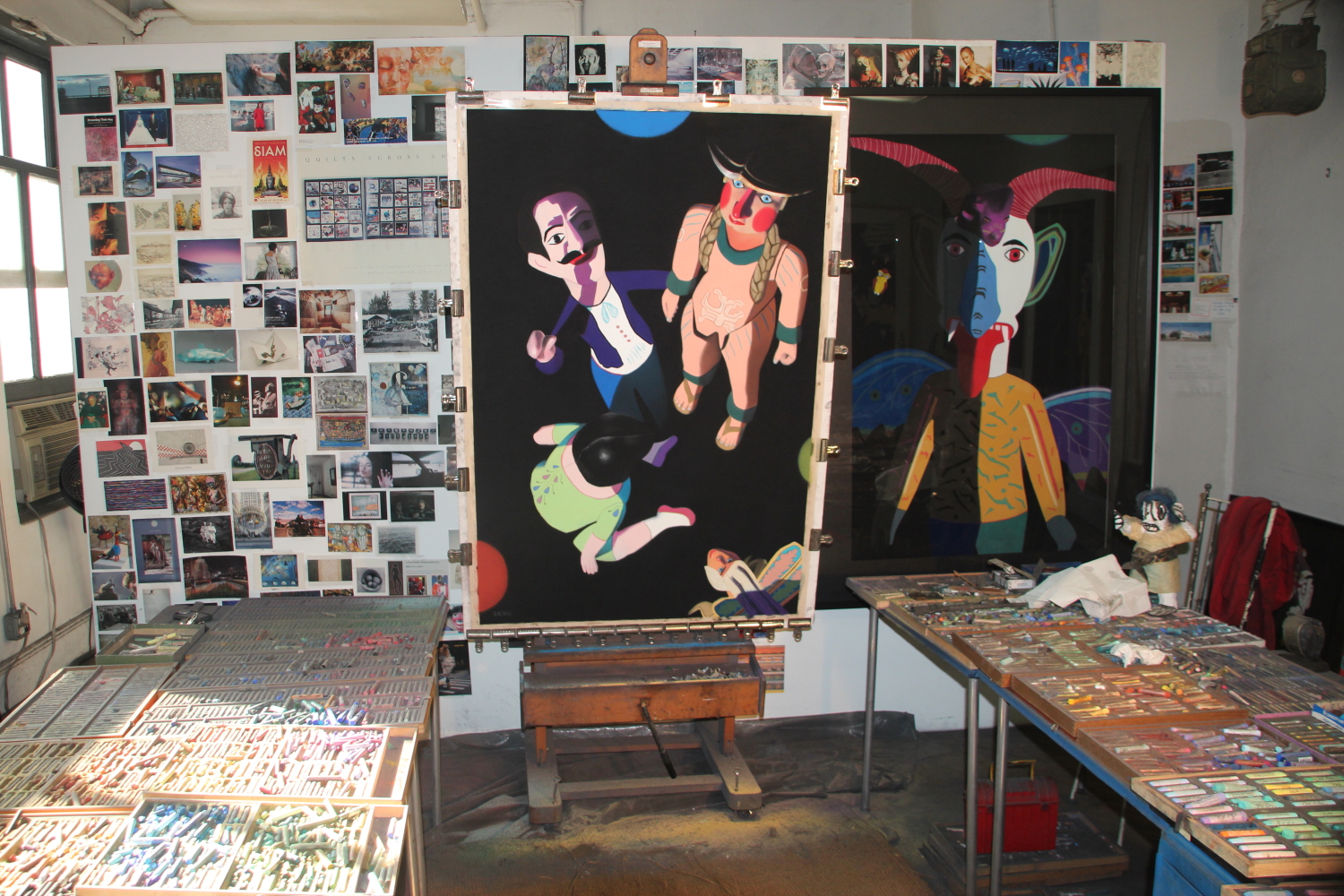
Barbara’s studio
* an ongoing series of quotations – mostly from artists, to artists – that offers wisdom, inspiration, and advice for the sometimes lonely road we are on.
To me, openings are never what you want them to be. The excitement, relief, anxiety, and anticipation are too much to process. There’s no apotheosis, no pinnacle, no turning point. It’s not like theater, where at the end of a performance people get up and applaud.
Nothing gets created at an opening. Nothing of artistic merit takes place. All of that important stuff happens in the studio, long before the exhibition, when you’re alone. For me, anyway, openings are something to get through, an ordeal to be endured. The bigger the event, the less I remember it. I pretty much walk in, and wherever I stop is where I stay. I paint a grin on my face so fixed that by the end of the evening my jaw is sore. I remember none of the conversations. I stand there shaking hands, blindly mouthing, “Thank you. Thank you very much.” Then eventually April [Gornick, Fischl’s wife] collects me and we leave.
If, on the other hand, you were to ask me what I remember about making the paintings in a show, that’s a different story. Imagine touching something, stroking it, jostling it, caressing it, and as you’re doing this, you are creating it. How you touched it is how it came into existence. Unlike other pleasures, where the feelings fade quickly as details become blurred, with paintings you remember everything. Within the details are all the bumps and the friction, the memory of when the creative instinct flowed, when you were distracted or lazy or working too hard. It’s all there on the canvas. When I look at my paintings again, years later, even, I remember it all – the victory laps and the scars.
Eric Fischl and Michael Stone in Bad Boy: My Life On and Off the Canvas
Comments are welcome!
Pearls from artists* # 77
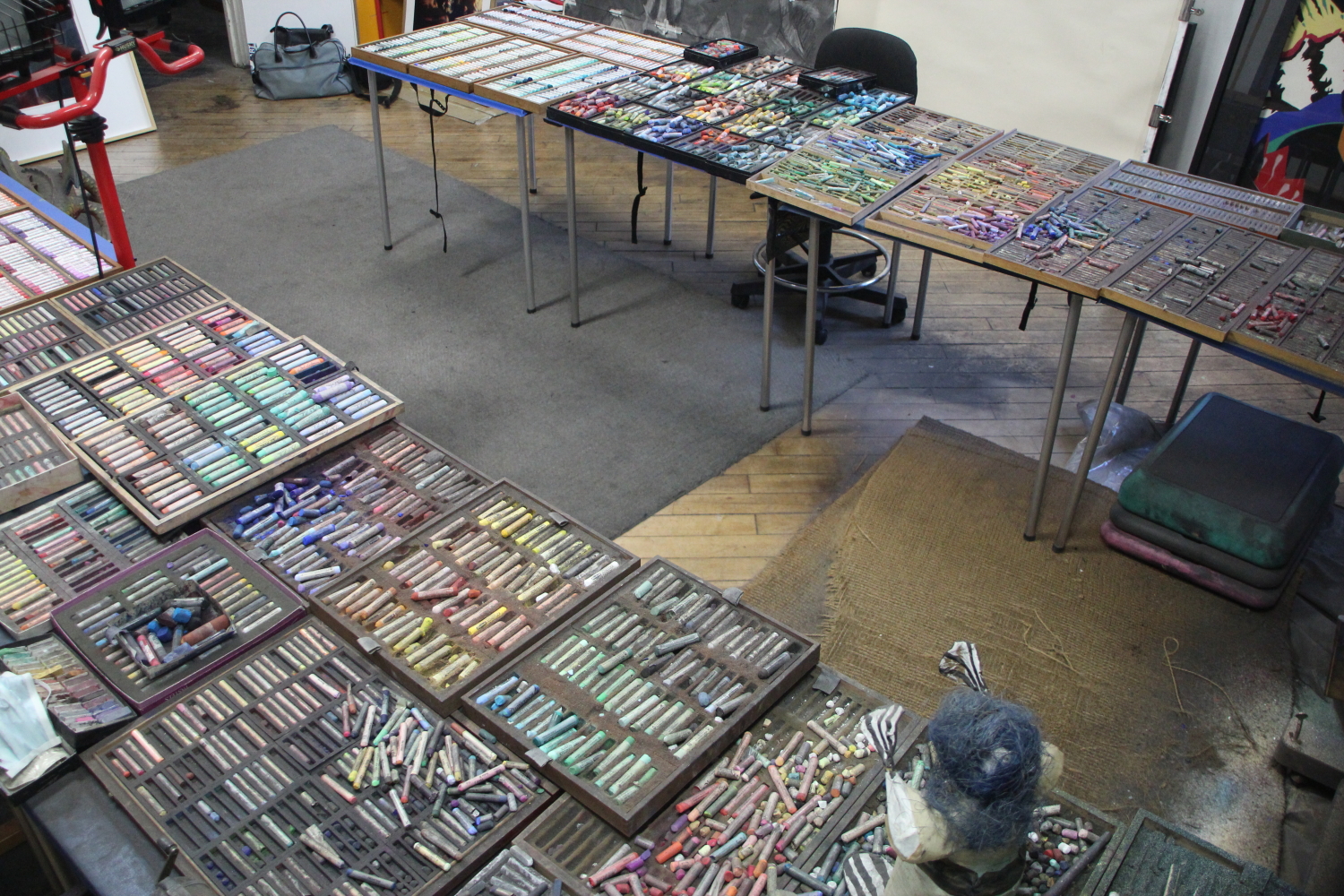
Barbara’s studio
* an ongoing series of quotations – mostly from artists, to artists – that offers wisdom, inspiration, and advice for the sometimes lonely road we are on.
Current possibilities far exceed any single artist’s capacity to engage them. Indeed, every known way of making art ever undertaken in all of history is included in today’s inventory of creative options. Thus, choices must be made. This has had a profound effect upon the quantity and diversity of skills needed to become an artist today. In addition to such conventional forms of artistic talent as visual acuity, manual dexterity, sensitivity, intelligence, ingenuity, and perseverance, contemporary artists must also be able to make judicious choices from a limitless inventory of alternatives. A decisive aspect of the creative act involves choosing a place amid possibilities that are as bountiful as they are eclectic and chaotic. Even this process entail choices. In staking the territory they wish to occupy, artists may be gluttons or ascetics, connoisseurs or commoners. Relationships between artists and their career choices may be lifelong and monogamous, or sequentially monogamous, polygamous, or promiscuous. But artists’ options even exceed selecting precedents. Free access to the past is amplified by freedom to augment the catalogue of creative options by contributing something new.
In the Making: Creative Options for Contemporary Art by Linda Weintraub
Comments are welcome!
Q: How would you describe your personal artistic style?
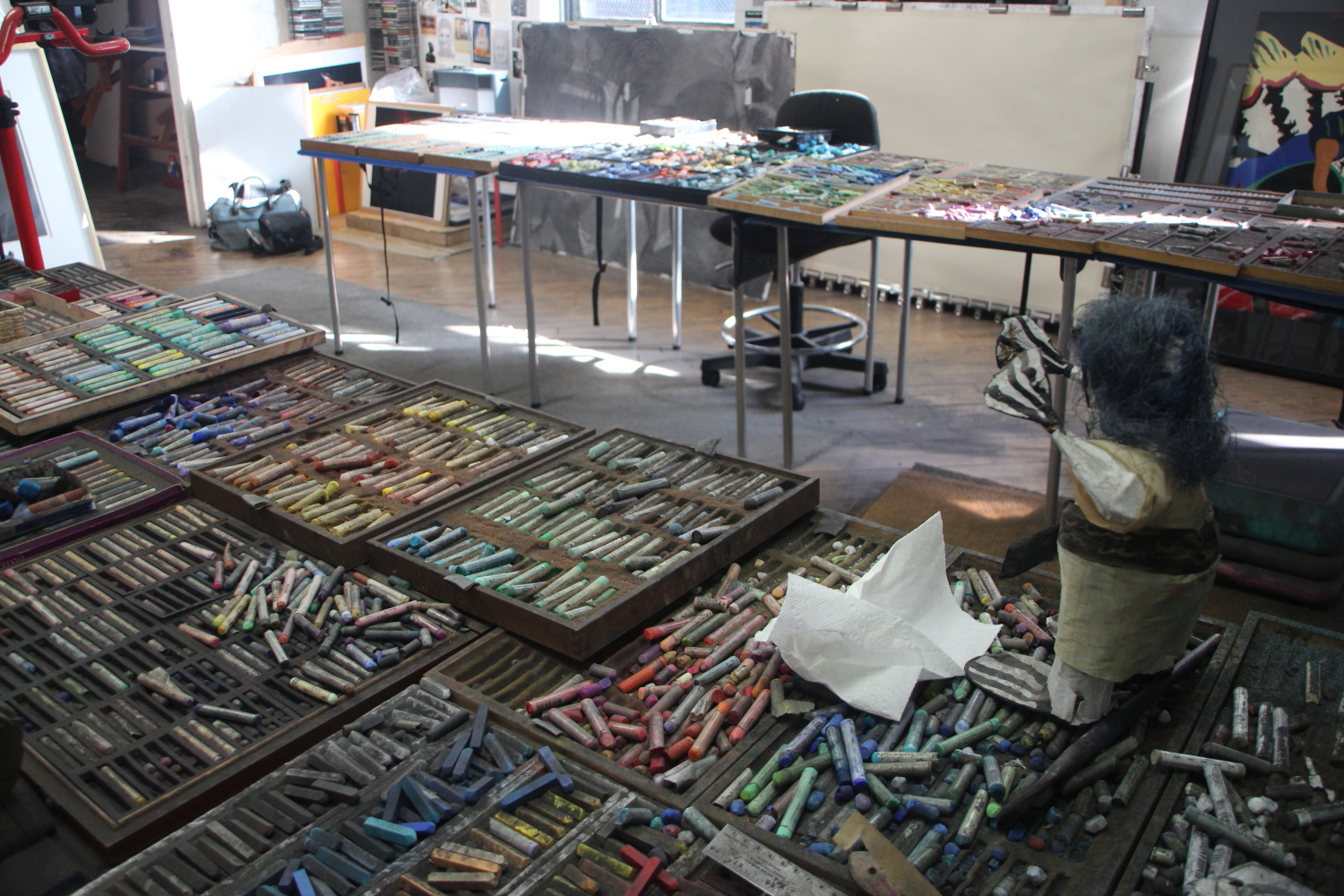
Barbara’a pastels
A: Regardless of what medium I am using, I am first and foremost a colorist. Everything I create is vibrant with color.
The Navy taught me to be organized, goal-oriented and focused, to love challenges, and in everything I do, to pay attention to the details. Trying to make it as an artist in New York is nothing BUT challenges, so these qualities serve me well, whether I am creating paintings, shooting and making photographs, or trying to understand the art business, keep up with social media, and manage all the tasks required of a busy artist with a New York studio, a business, and two residences to maintain. It’s a lot, but it forces me to continually learn and grow. As Helen Keller famously said, “Life is an adventure or it is nothing.”
These days I am rarely bored. I thoroughly enjoy spending long, solitary hours working to become a better artist. I am meticulous about craft and will not let work out of my studio until it is as good as I can make it. My creative process is more exciting than ever. It’s thrilling and energizing to continually push soft pastel to its limits and use it in ways that no other artist has done before!
Comments are welcome!
Pearls from artists* # 65
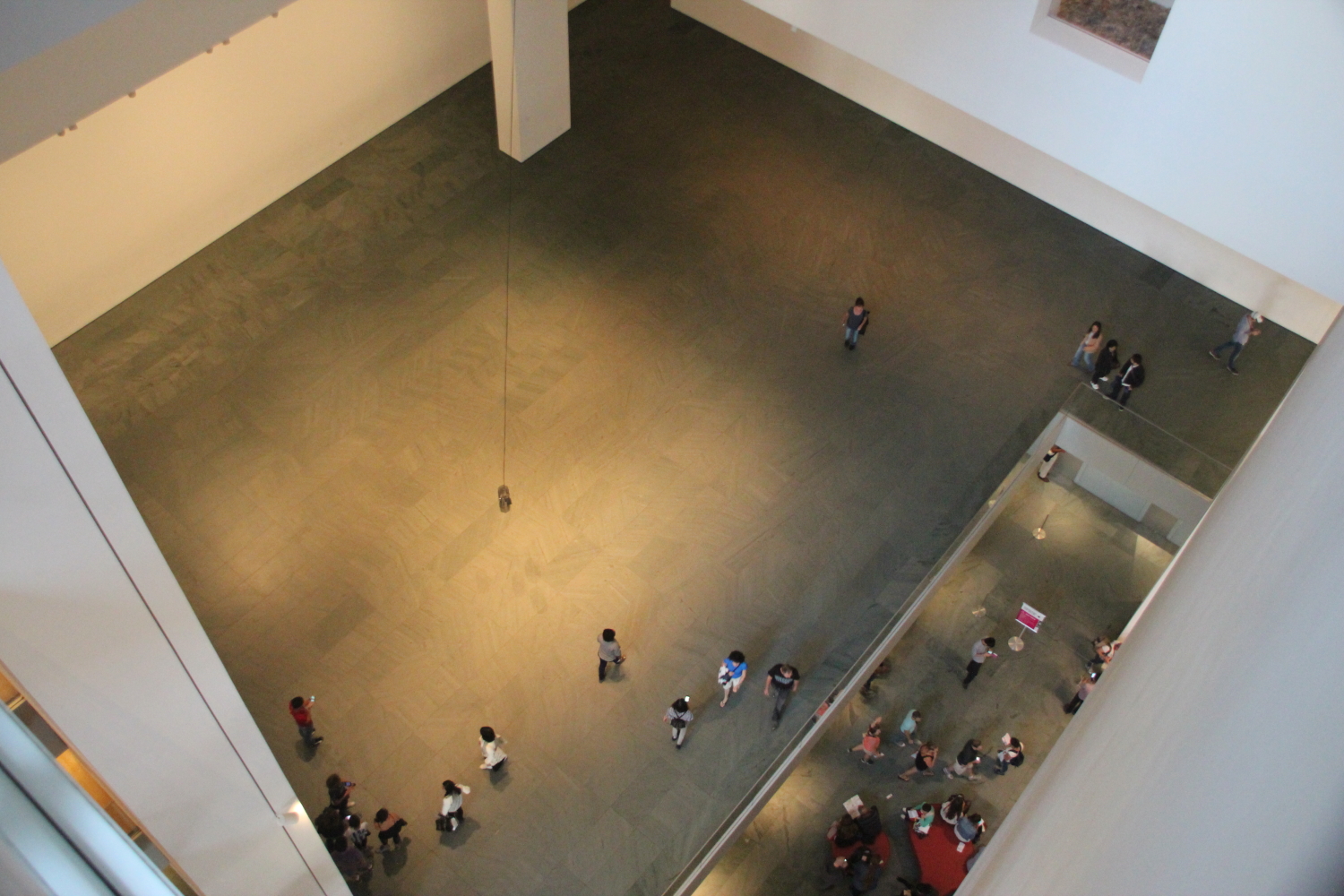
Museum of Modern Art, NYC
* an ongoing series of quotations – mostly from artists, to artists – that offers wisdom, inspiration, and advice for the sometimes lonely road we are on.
To create demands a certain undergoing: surrender to a subconscious process that can yield surprising results. And yet, despite the intuitive nature of the artistic process, it is of utmost importance to be aware of the reason you create. Be conscious about what you are attempting or tempting. Know why you are doing it. Understand what you expect in return.
The intentions that motivate an act are contained within the action itself. You will never escape this. Even though the “why” of any work can be disguised or hidden, it is always present in its essential DNA. The creation ultimately always betrays the intentions of the artist. James Joyce called this invisible motivation behind a work of art “the secret cause.” This cause secretly informs the process and then becomes integral to the outcome. This secret cause determines the distance that you will journey in the process and finally, the quality of what is wrought in the heat of the making.
Anne Bogart in and then, you act: making art in an unpredictable world



