Blog Archives
Q: When did you start using the sandpaper technique and why (Question from “Arte Realizzata”)

A: In the late 1980s when I was studying at the Art League School in Alexandria, VA, I enrolled in a three-day pastel workshop with Albert Handel, an artist known for his southwest landscapes in pastel and oil paint. I had just begun working with soft pastel and was experimenting with paper. Handel suggested I try Ersta fine sandpaper. I did and nearly three decades later, I’ve never used anything else.
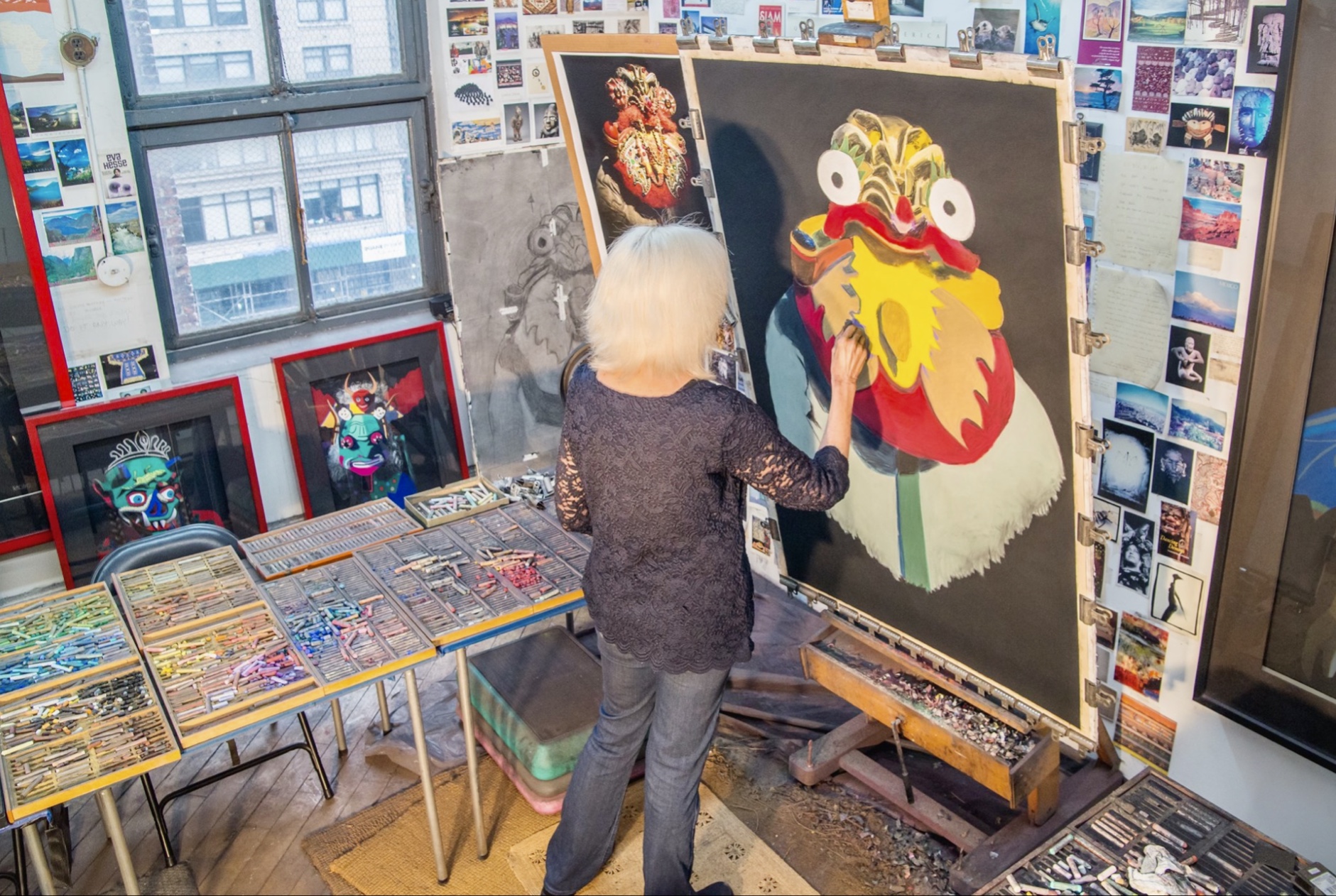
This paper is acid-free and accepts dry media, mainly pastel and charcoal. It allows me to build up layer upon layer of pigment and blend, without having to use a fixative. The tooth of the paper almost never gets filled up so it continues to hold pastel. (On the rare occasion when the tooth DOES fill up, which sometimes happens with problem areas that are difficult to resolve, I take a bristle paintbrush, dust off the unwanted pigment, and start again). My entire technique – slowly applying soft pastel, blending and creating new colors directly on the paper, making countless corrections and adjustments, rendering minute details, looking for the best and/or most vivid colors – evolved in conjunction with this paper.
I used to say that if Ersta ever went out of business and stopped making sandpaper, my artist days would be over. Thankfully, when that DID happen, UArt began making a very similar paper. I buy it in two sizes – 22″ x 28″ sheets and 56″ wide by 10-yard-long rolls. The newer version of the rolled paper is actually better than the old, because when I unroll it, it lays flat immediately. With Ersta I would lay the paper out on the floor for weeks before the curl would give way and it was flat enough to work on.
Comments are welcome!
Pearls from artists* # 450

*an ongoing series of quotations – mostly from artists, to artists – that offers wisdom, inspiration, and advice for the sometimes lonely road we are on.
All the journeys that have transpired in my life have been animated by interest. Something or someone has stopped me in my tracks. Interest, that thing that cannot really be faked, is an invitation to adventure. It has always been disorienting to do but I have to act on these interests. Somehow I know that in order to keep on working as an artist, I have to keep on changing. And this means that when interest is piqued, I must follow or die. And I know that I will have to hang on tight for the ride. These rides have changed me irrevocably.
The primary tool in a creative process is interest. To be true to one’s interest, to pursue it successfully, one’s body is the best barometer. The heart races. The pulse soars. Interest can be your guide. It always points you in the right direction. It defines the quality, energy and content of your work. You cannot feign or fake interest or choose to be interested in something because it is prescribed. It is never prescribed. It is discovered. When you sense this quickening you must act immediately. You must follow that interest and hold tight.
… If the interest is genuine and large enough and if it is pursued with tenacity and generosity, the boomerang effect is resounding. Interest returns volley to affect your life and inevitably alter it. You must be available and attentive to the doors that open unexpectedly. You cannot wait. The doors close fast. It will change your life. It will give you adventures you never expected. You must be true to it and it will be true to you.
Anne Bogart in A Director Prepares: Seven Essays on Art and Theatre
Comments are welcome!
Pearls from artists* # 449
*an ongoing series of quotations – mostly from artists, to artists – that offers wisdom, inspiration, and advice for the sometimes lonely road we are on.
I learned about the Japanese word irimi while studying Aikido, a Japanese martial art. Simply translated, irimi means ,’to enter’ but it can also be translated ‘choose death.’ When attacked you always have two options: to enter, irimi, or to go around, ura. Both when accomplished in the right manner, are creative. To enter or to ‘choose death’ means to enter fully with the acceptance, if necessary, of death. The only way to win is to risk everything and be fully willing to die. If this is an extreme notion to Occidental sensibilities, it does make sense in creative practice. To achieve the violence of decisiveness, one has to ‘choose death’ in the moment by acting fully and intuitively without pausing for reflection about whether it is the right decision or if it is going to provide the winning solution.
It is also valuable to know when to use ura, or going around. There is a time for ura, going around, and there is a time for irimi, entering. And these times can never be known in advance. You must sense the situation and act immediately. In the heat of creation, there is no time for reflection; there is only connection to what is happening. The analysis, the reflection and the criticism belong before and after, never during, the creative act.
Anne Bogart in “A Director Prepares: Seven Essays on Art and Theater”
Comments are welcome!
Q: Do you have a favorite among your thousands of travel photographs from around the world?

Tile worker, South India
A: I do! It is this photograph of a family matriarch filling a water jar. I don’t remember the name of the village, but it was somewhere in South India at a clay-tile-making workshop.
Walking in, I immediately stopped in my tracks. Had I just traveled back in time to some 18th century workshop? I found her appearance and demeanor extraordinary! (Regretfully, I did not ask her name). She was tiny, yet she was the boss whose authority and judgement were beyond question. After observing her move around the studio for a few minutes, I asked if I might have a photograph. She immediately struck this arresting and classic pose. I smiled to myself, “Obviously, she has done this a few times!”
Comments are welcome!
Pearls from artists* # 401

“Prophecy,” Soft Pastel on Sandpaper, 58″ x 38″ Image, 70″ x 50″ Framed
*an ongoing series of quotations – mostly from artists, to artists – that offers wisdom, inspiration, and advice for the sometimes lonely road we are on.
Said [Larry] Rivers,
You could be poor and think your life worthwhile – the dance of the mind, the leap of the intellect. If you made art that did not sell immediately, or ever, you could still be involved in a meaningful, inspiring activity that was a reward in itself, and you could show it to the people you dreamed of thrilling with your efforts; your friends were your audience. They were sitting on your shoulder watching you work. That was the opera of the time… Pursuit of a career and commercial success was selling out, losing one’s soul. In painting, writing, music, and dance, nothing could be more shameful.
Mary Gabriel in Ninth Street Women
Comments are welcome!
Q: Why do you make art?

“Why Do I Make Art” by Ursula von Rydingsvard
A: Last spring I viewed Ursula von Rydingsvard’s exhibition at the National Museum of Women in the Arts. One thing that stayed with me is her wall text, “Why Do I Make Art by Ursula von Rydingsvard” in which she listed a few dozen benefits that art-making has brought to her life.
I want to share some of my own personal reasons here, in no particular order. My list keeps changing, but these are true at least for today.
1. Because I love the entire years-long creative process – from foreign travel whereby I discover new source material, to deciding what I will make, to the months spent in the studio realizing my ideas, to packing up my newest pastel painting and bringing it to my Virginia framer’s shop, to seeing the framed piece hanging on a collector’s wall, to staying in touch with collectors over the years and learning how their relationship to the work changes.
2. Because I love walking into my studio in the morning and seeing all of that color! No matter what mood I am in, my spirit is immediately uplifted.
3. Because my studio is my favorite place to be… in the entire world. I’d say that it is my most precious creation. It’s taken more than twenty-two years to get it this way. I hope I never have to move!
4. Because I get to listen to my favorite music all day or to Public Radio stations.
5. Because when I am working in the studio, if I want, I can tune out the world and all of it’s urgent problems. The same goes for whatever personal problems I am experiencing.
6. Because I am devoted to my medium. How I use pastel continually evolves. It’s exciting to keep learning about its properties and to see what new techniques will develop.
7. Because I have been given certain gifts and abilities and that entails a sacred obligation to USE them. I could not live with myself were I to do otherwise.
8. Because art-making gives meaning and purpose to my life. I never wake up in the morning wondering, how should I spend the day? I have important work to do and a place to do it. I know this is how I am supposed to be spending my time on earth.
9. Because I have an enviable commute. To get to my studio it’s a thirty-minute walk, often on the High Line early in the morning before throngs of tourists have arrived.
10. Because life as an artist is never easy. It’s a continual challenge to keep forging ahead, but the effort is also never boring.
11. Because each day in the studio is different from all the rest.
12. Because I love the physicality of it. I stand all day. I’m always moving and staying fit.
13. Because I have always been a thinker more than a talker. I enjoy and crave solitude. I am often reminded of the expression, “She who travels the farthest, travels alone.” In my work I travel anywhere.
14. Because spending so much solitary time helps me understand what I think and feel and to reflect on the twists and turns of my unexpected and fascinating life.
15. Because I learn about the world. I read and do research that gets incorporated into the work.
16. Because I get to make all the rules. I set the challenges and the goals, then decide what is succeeding and what isn’t. It is working life at its most free.
17. Because I enjoy figuring things out for myself instead of being told what to do or how to think.
18. Because despite enormous obstacles, I am still able to do it. Art-making has been the focus of my life for thirty-three years – I was a late bloomer – and I intend to continue as long as possible.
19. Because I have been through tremendous tragedy and deserve to spend the rest of my life doing exactly what I love. The art world has not caught up yet, but so be it. This is my passion and my life’s work and nothing will change that.
20. Because thanks to the internet and via social media, my work can be seen in places I have never been to and probably will never go.
21. Because I would like to be remembered. The idea of leaving art behind for future generations to appreciate and enjoy is appealing.
Comments are welcome!
Pearls from artists* # 211
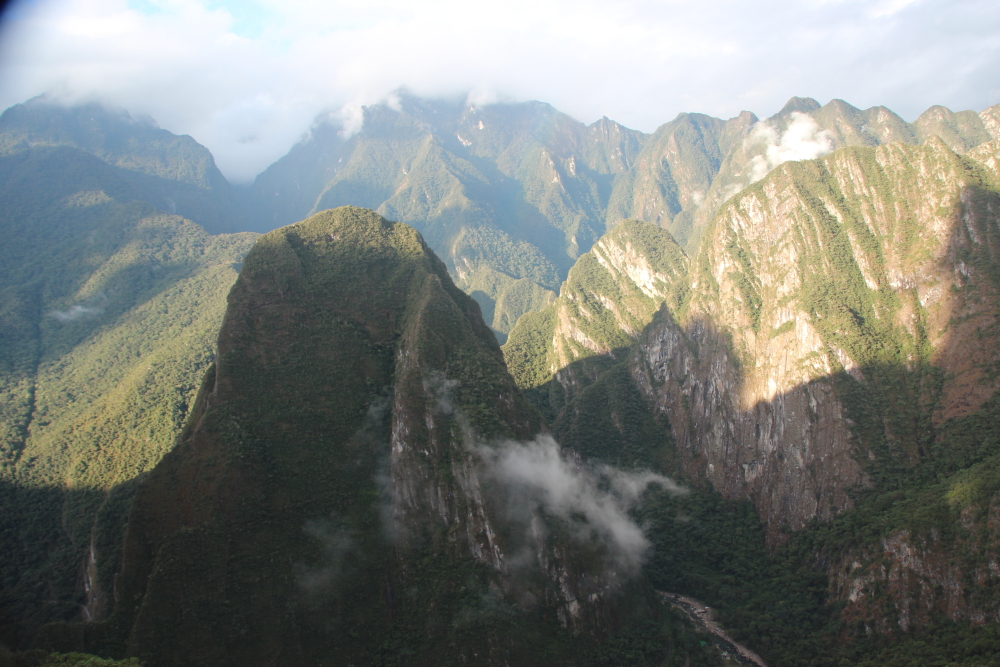
Machu Picchu
* an ongoing series of quotations – mostly from artists, to artists – that offers wisdom, inspiration, and advice for the sometimes lonely road we are on.
There is an ancient view that beauty is the object of a sensory rather than an intellectual delight, and that the senses must always be involved in appreciating it. Hence, when the philosophy of art became conscious of itself at the beginning of the eighteenth century, it called itself ‘aesthetics,’ after the Greek aesthesis, sensation. When Kant wrote that the beautiful is that which pleases immediately, and without concepts, he was providing a rich philosophical embellishment to this tradition of thinking. Aquinas too seems to have endorsed the idea, defining the beautiful in the first part of the Summa as that which is pleasing to sight (pulchra sunt quae visa placent). However, he modifies this statement in the second part, writing that ‘the beautiful relates only to sight and hearing of all the senses, since these are the most cognitive (maxime cognoscitive) among them.’ And this suggests, not only that he did not confine the study of beauty to the sense of sight, but that he was less concerned with the sensory impact of the beautiful than with its intellectual significance – even if it is a significance that can be appreciated only through seeing or hearing.
Beauty: A Very Short Introduction, by Roger Scruton
Comments are welcome!
Q: How many pastel paintings do you have in progress now?
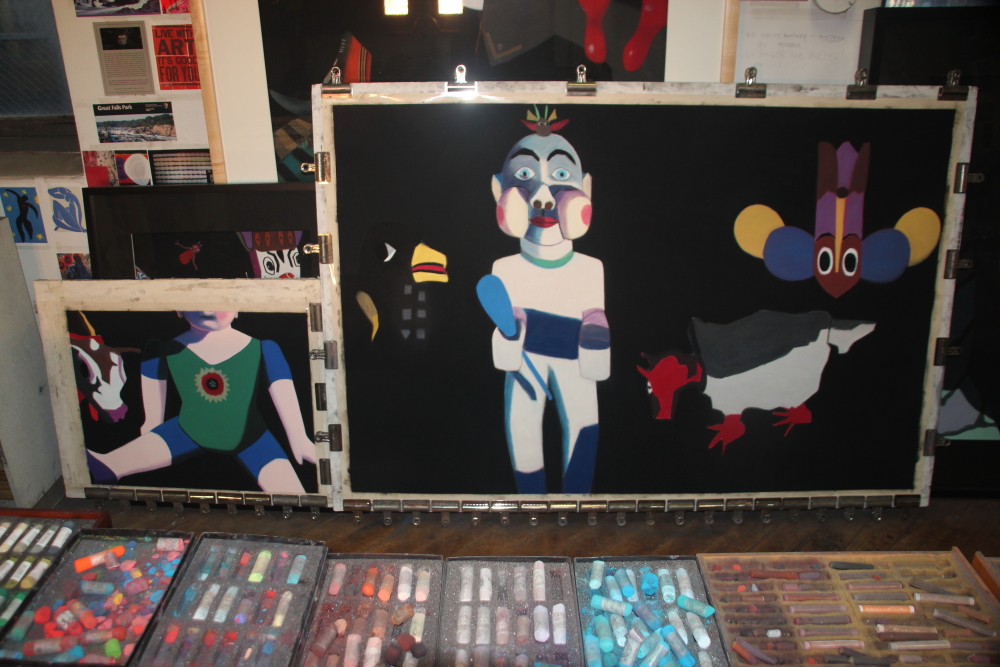
Work in progress
A: Making pastel-on-sandpaper paintings is a slow and meticulous process. I work full-time in my studio so that in a good year I can produce five finished pieces. Typically two are in progress at a time so that I can switch off when problems develop.
A downside to looking at a painting for months is that there comes a point when I can’t see the flaws any more. Then it’s definitely time to take a break.
When I put a painting that has been resting back onto my easel, I see it with fresh eyes again. Areas that need work immediately stand out. Problem areas become easily resolvable because I have continued to think about them while the painting was out of my sight.
Comments are welcome!
Pearls from artists* # 175
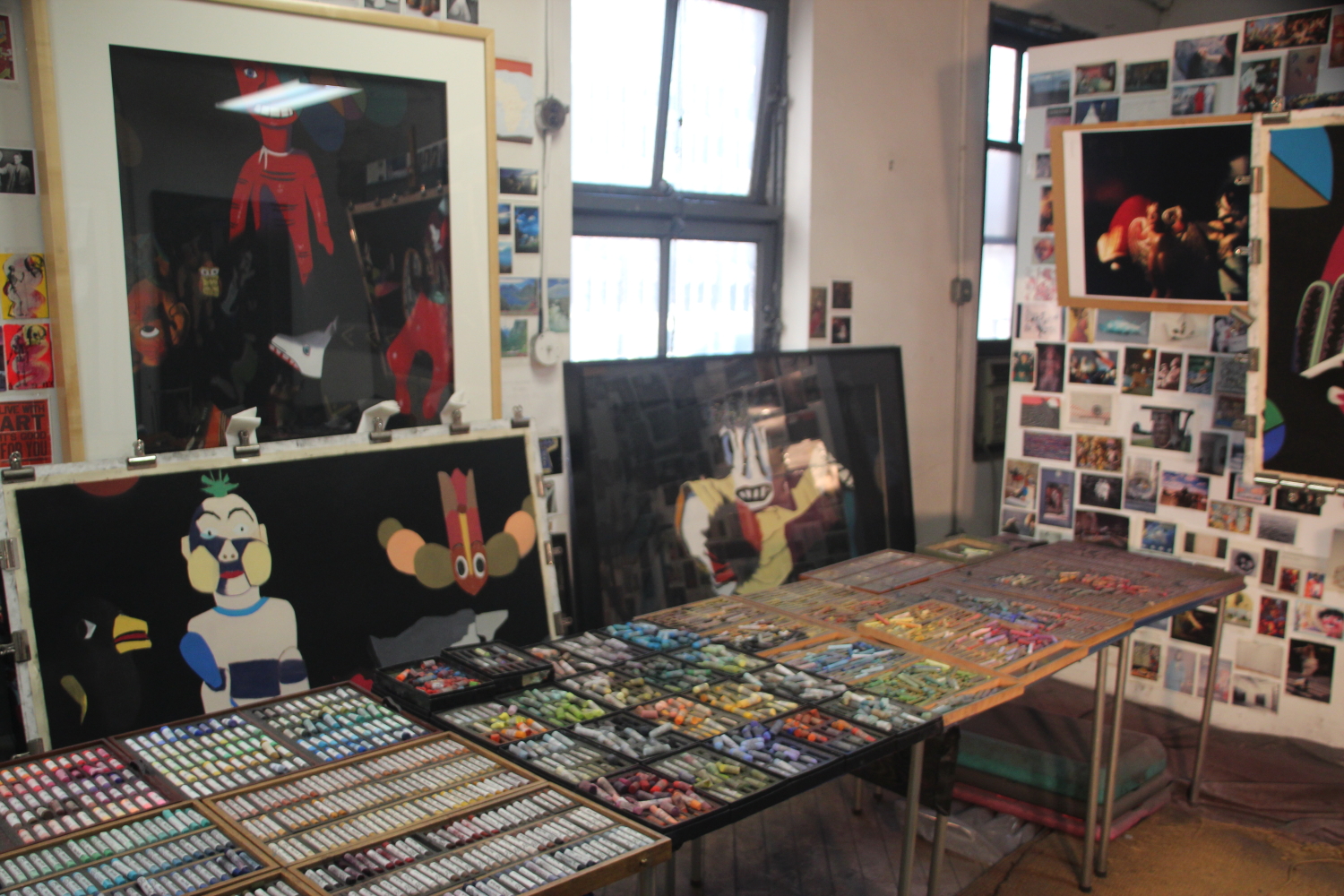
Barbara’s studio
* an ongoing series of quotations – mostly from artists, to artists – that offers wisdom, inspiration, and advice for the sometimes lonely road we are on.
I know this is a sentimental cliché, but I do feel toward my books very much as a parent must toward his children. As soon as someone says, “I did like your short stories, but I don’t like your novels,” or, “Of course, you only really came into your own with Anglo-Saxon Attitudes” – then immediately I want to defend all my other books. I feel this especially about Hemlock and Anglo-Saxon Attitudes – one child a bit odd but exciting, the other competent but not really so interesting. If people say they like one book and not the other, then I feel they can’t have understood the one they don’t like.
Angus Wilson in The Paris Review Interviews: Writers at Work 1st Series, edited and with an introduction by Malcolm Cowley
Comments are welcome!
Q: Your pastel paintings are immediately recognizable as yours alone. Did you consciously try to develop a signature style in your work?
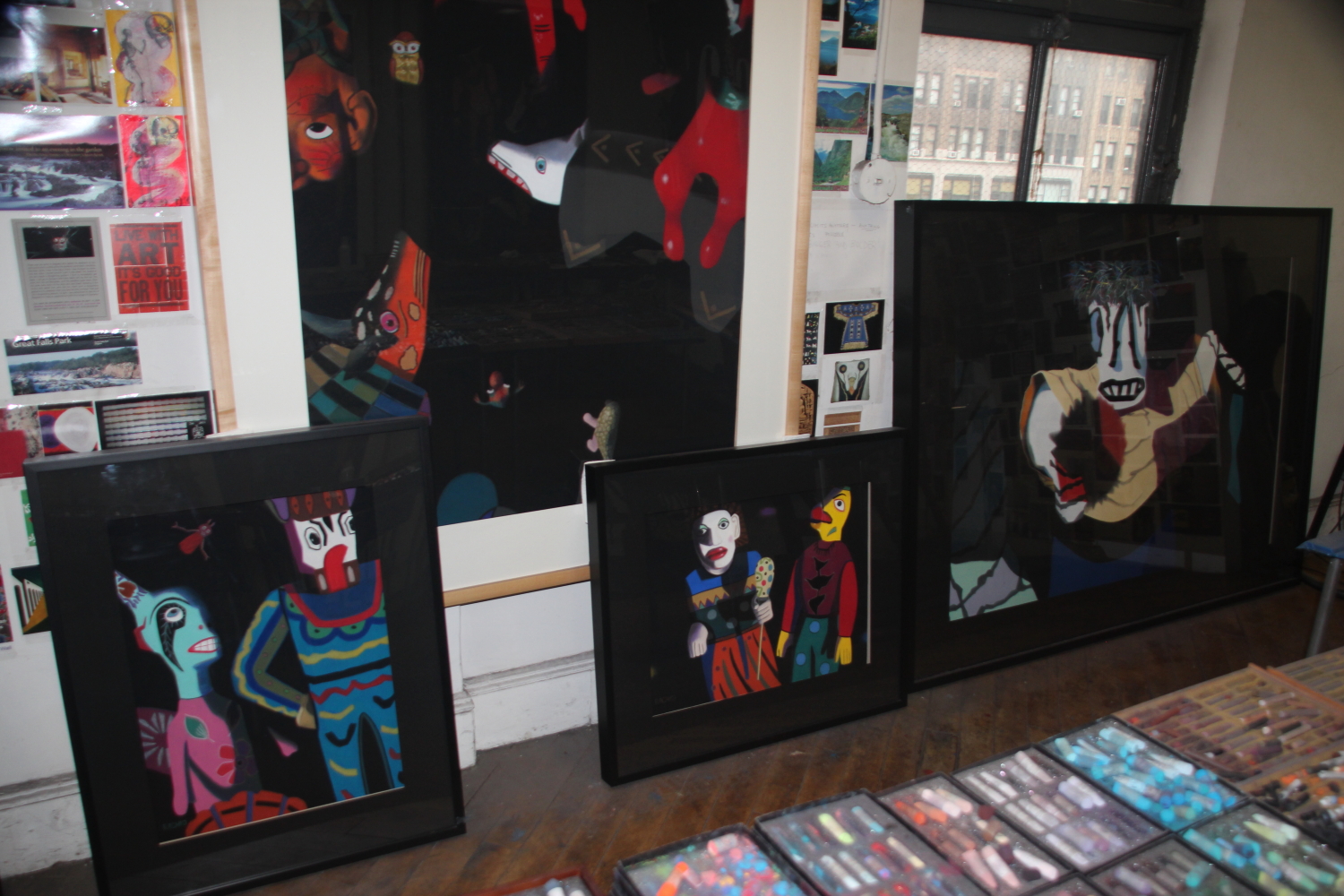
Barbara’s studio
A: I don’t believe that is even possible. An artist’s style is something that evolves with plain hard work and experience, over many years of trial and error, as one finds what techniques work best and discards those that don’t. It is a process of continually experimenting, refining, and clarifying. In other words, style is something that emerges naturally as you gradually strive to improve your art-making.
Style develops in close connection to what an artist is saying as she undergoes a very personal and idiosyncratic journey. Again, it would seem improbable for an artist to strive for any particular style, since style is not something over which an artist can exert much conscious control.
I would even say that each artist’s unique style is inevitable. It would be nearly impossible now to make a pastel painting or photograph that does NOT look like a Rachko.
Comments are welcome!



