Category Archives: Photography
Pearls from artists* # 117
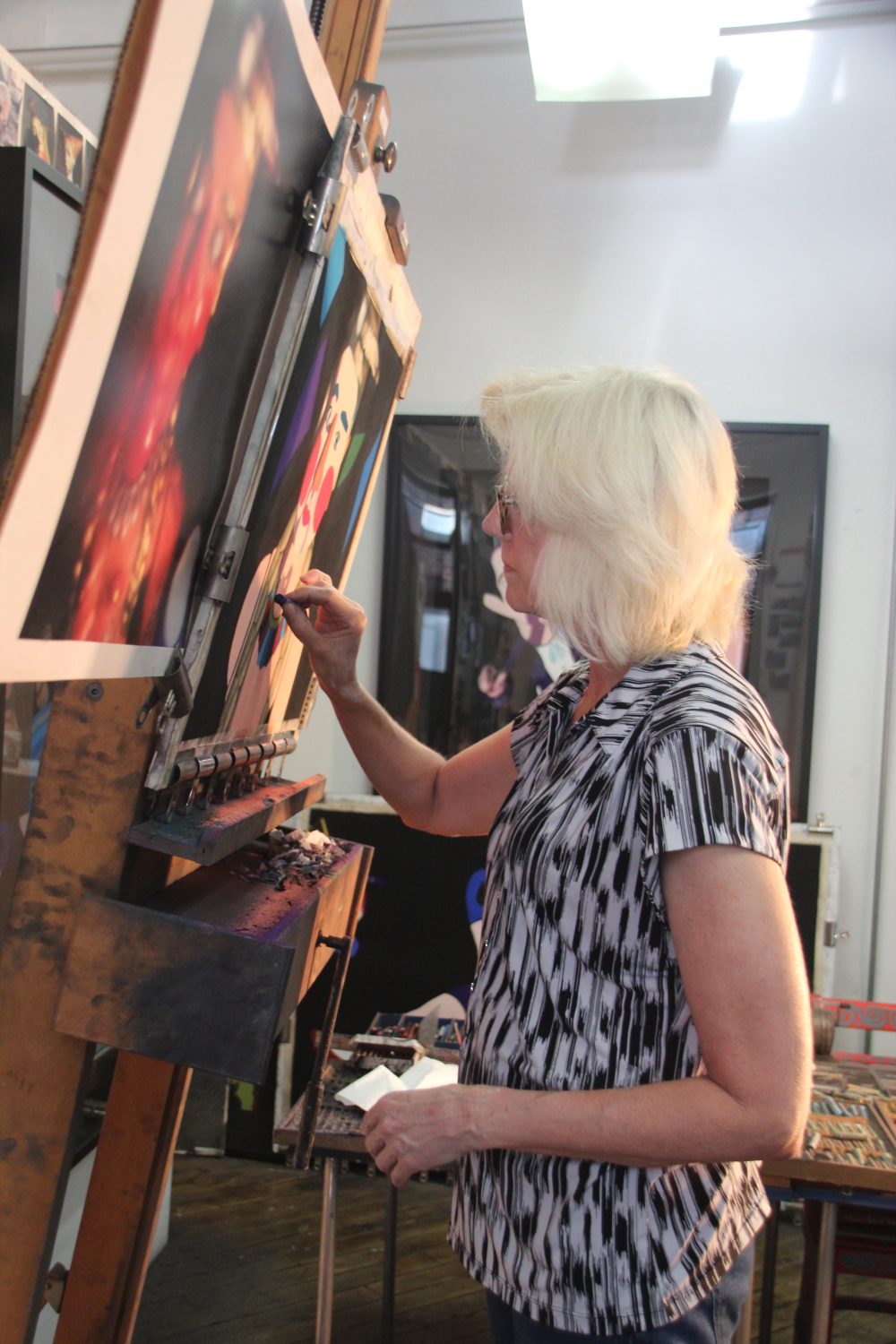
At work on a pastel painting
* an ongoing series of quotations – mostly from artists, to artists – that offers wisdom, inspiration, and advice for the sometimes lonely road we are on.
Rote practice is not deep practice. Deep practice is slow, demanding, and uncomfortable. To practice deeply is to live deliberately in a space that is uncomfortable but with the encouraging sense that progress can happen. Deep practice is not rushed. Constant critical feedback is essential. Over time the effort alters neural pathways and increases skill.
Anne Bogart in What’s the Story: Essays about art, theater, and storytelling
Comments are welcome!
Q: Last week you spoke about what happens before you begin a pastel painting. Would you talk about how you actually make the work?
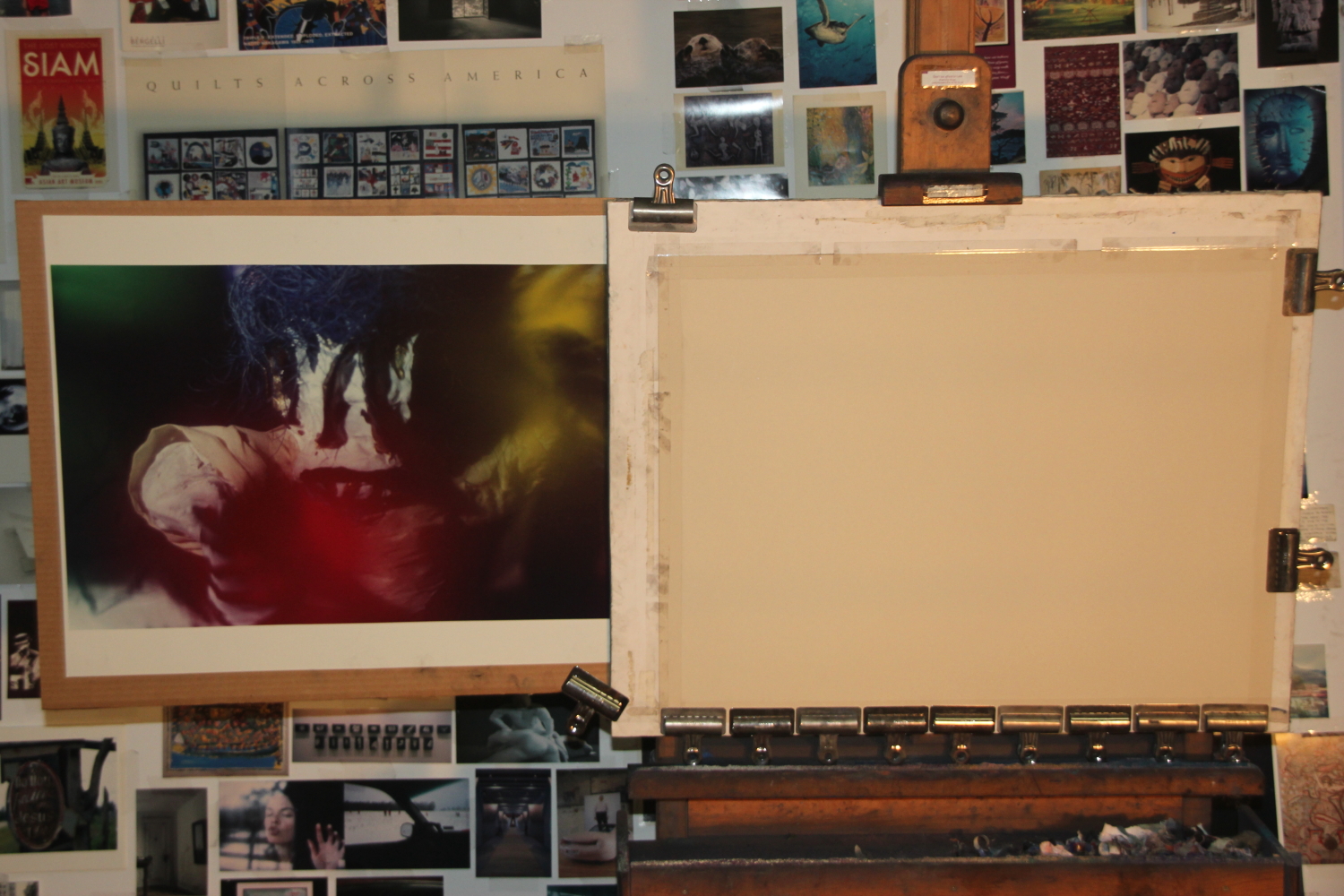
Beginning a new pastel painting
A: I work on each pastel-on-sandpaper painting for approximately three months. I try to be in my studio 7 to 8 hours a day, five days a week.
I make thousands of creative decisions as I apply and layer soft pastels (I have thousands to choose from), blend them with my fingers, and mix new colors directly on the sandpaper. A finished piece consists of up to 30 layers of soft pastel.
My self-invented technique accounts for the vivid, intense color that often leads viewers of my originals to look very closely and ask, “What medium is this?” I believe I am pushing soft pastel to its limits, using it in ways that no other artist has done before.
Comments are welcome!
Pearls from artists* # 116
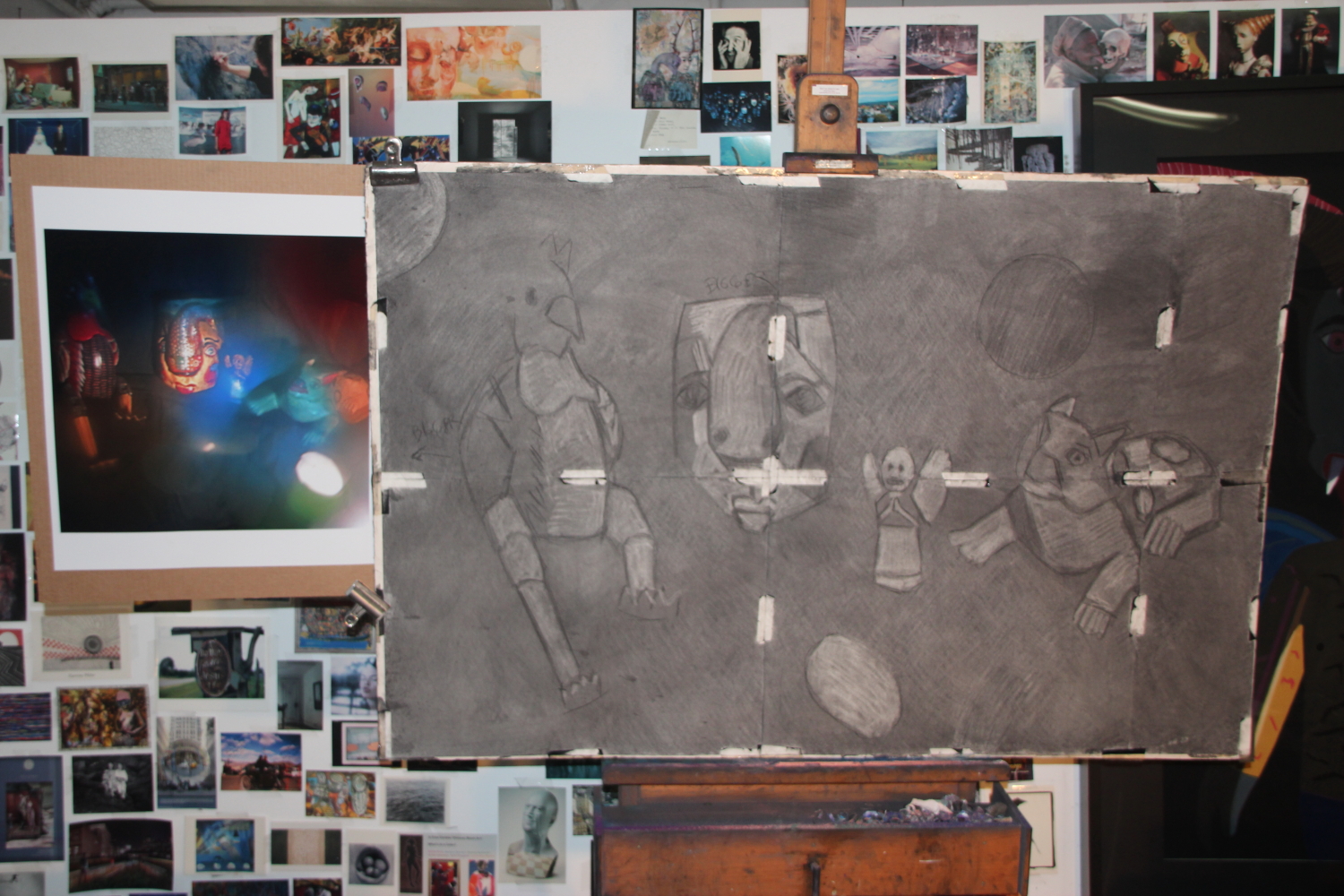
Preliminary sketch
* an ongoing series of quotations – mostly from artists, to artists – that offers wisdom, inspiration, and advice for the sometimes lonely road we are on.
What is the point of all the discipline, hard work, and training? What does the training and preparation have to do with rehearsing a play and with performance? The training and the discipline and the sweating and the study and the memorizing are not the end point, but rather the entry. The preparation is what gives one the permission to take up space and make wild, surprising, and untamed choices. In the quest for artistic freedom and agency it is impossible to walk into a rehearsal room uninhibited, unburdened. We are generally chained down by habits and assumptions and by fear of the new. Permission is what we earn by the sweat, training, preparatory work and dedication.
Anne Bogart in What’s the Story: Essays in art, theater, and storytelling
Comments are welcome!
Q: Can you talk a little bit about your process? What happens before you even begin a pastel painting?

Barbara in Bali (far right)
A: My process is extremely slow and labor-intensive.
First, there is foreign travel – often to Mexico, Guatemala or someplace in Asia – to find the cultural objects – masks, carved wooden animals, paper mâché figures, and toys – that are my subject matter. I search the local markets, bazaars, and mask shops for these folk art objects. I look for things that are old, that look like they have a history, and were probably used in religious festivals of some kind. Typically, they are colorful, one-of-a- kind objects that have lots of inherent personality. How they enter my life and how I get them back to my New York studio is an important part of my art-making practice.
My working methods have changed dramatically over the nearly thirty years that I have been an artist. My current process is a much simplified version of how I used to work. As I pared down my imagery in the current series, “Black Paintings,” my creative process quite naturally pared down, too.
One constant is that I have always worked in series with each pastel painting leading quite naturally to the next. Another is that I always set up a scene, plan exactly how to light and photograph it, and work with a 20″ x 24″ photograph as the primary reference material.
In the setups I look for eye-catching compositions and interesting colors, patterns, and shadows. Sometimes I make up a story about the interaction that is occurring between the “actors,” as I call them.
In the “Domestic Threats” series I photographed the scene with a 4″ x 5″ Toyo Omega view camera. In my “Gods and Monsters” series I shot rolls of 220 film using a Mamiya 6. I still like to use an old analog camera for fine art work, although I have been rethinking this practice.
Nowadays the first step is to decide which photo I want to make into a painting (currently I have a backlog of photographs to choose from) and to order a 19 1/2″ x 19 1/2″ image (my Mamiya 6 shoots square images) printed on 20″ x 24″ paper. They recently closed, but I used to have the prints made at Manhattan Photo on West 20th Street in New York. Now I go to Duggal. Typically I have in mind the next two or three paintings that I want to create.
Once I have the reference photograph in hand, I make a preliminary tonal charcoal sketch on a piece of white drawing paper. The sketch helps me think about how to proceed and points out potential problem areas ahead.
Only then am I ready to start actually making the painting.
Comments are welcome!
Pearls from artists* # 115
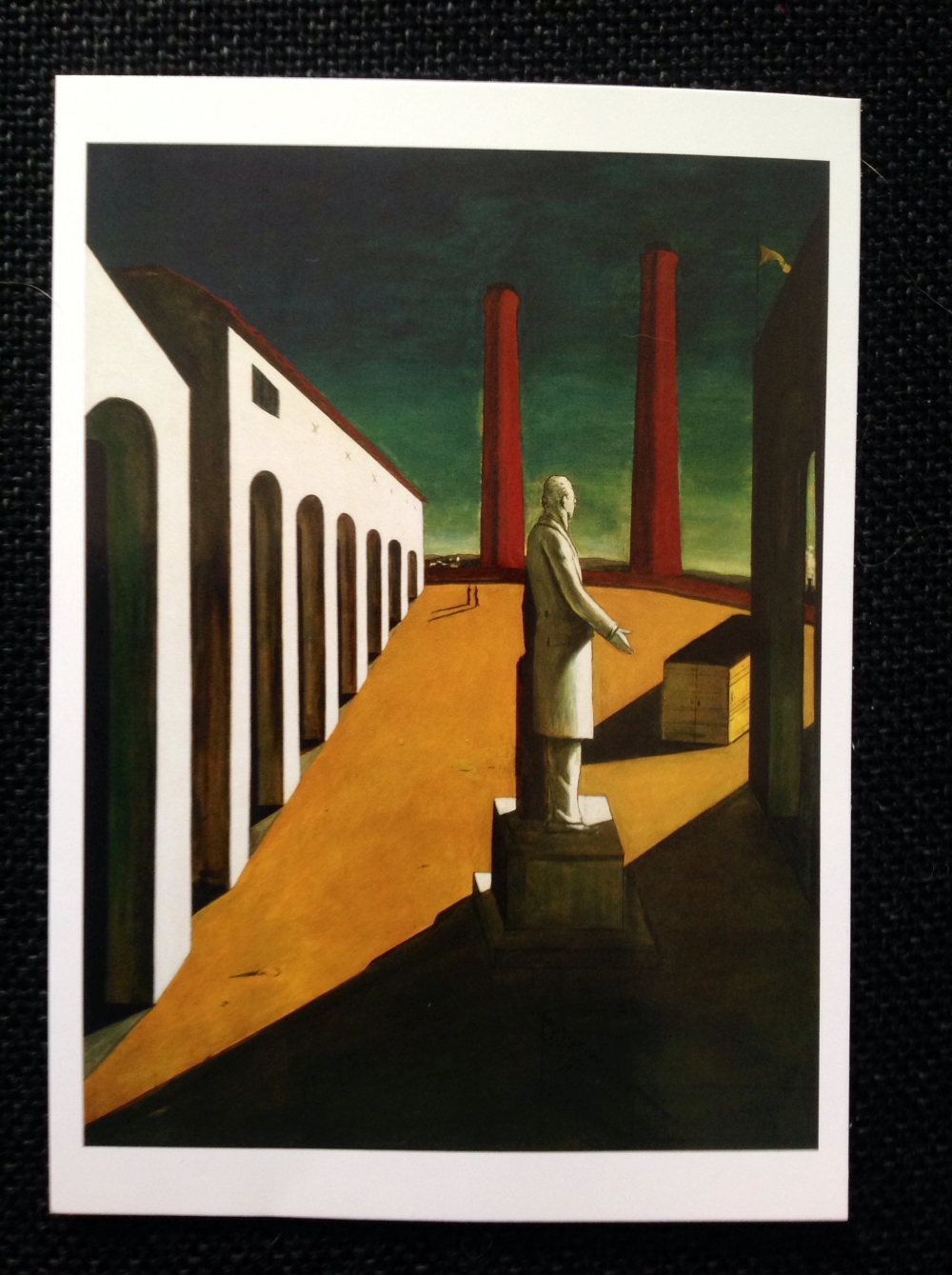
Giorgio de Chirico, “The Enigma of a Day,” oil on canvas, 6′ 1 1/4 x 55,” MoMA
* an ongoing series of quotations – mostly from artists, to artists – that offers wisdom, inspiration, and advice for the sometimes lonely road we are on.
THE DISQUIETING MUSES
From Two de Chiricos
[On Giorgio de Chirico]
Boredom sets in first, and then despair.
One tries to brush it off. It only grows.
Something about the silence of the square.
Something is wrong; something about the air,
It’s color; about the light, the way it goes.
Something about the silence of the square.
The muses in their fluted evening wear,
Their faces blank, might lead one to suppose
Something about the silence of the square.
Something about the buildings standing there.
But no, they have no purpose but to pose.
Boredom sets in first, and then despair.
What happens after that, one doesn’t care.
What brought one here – the desire to compose
Something about the silence of the square.
Or something else, of which one’s not aware,
Life itself, perhaps – who really knows?
Boredom sets in first and then despair…
Something about the silence of the square.
Mark Strand in Art and Artists: Poems, edited by Emily Fragos
Comments are welcome!
Q: You took classes at The Art League School in Alexandria, VA in the late eighties studying intensely with Lisa Semerad and Diane Tesler. How have these experiences impacted on the way you currently produce your artworks? By the way, I sometimes wonder if a certain kind of formal training in artistic disciplines could even stifle a young artist’s creativity. What do you think?
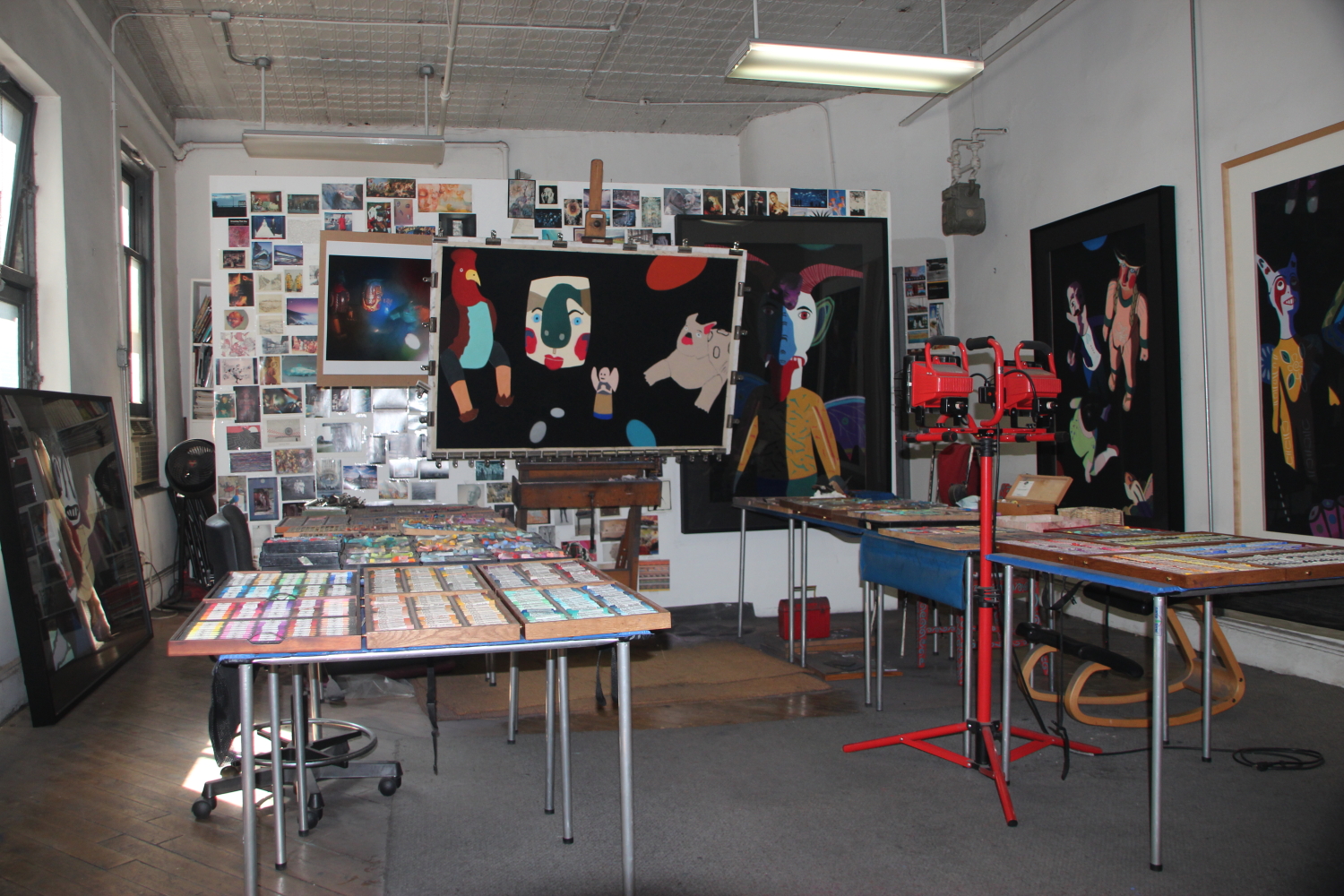
Barbara’s studio
A: From studying with Lisa and Diane I gained an excellent technical foundation and developed my ability to draw and depict just about anything in soft pastel. They were both extremely effective teachers and I worked hard in their classes. I probably got my work ethic from them. Without Diane and Lisa I doubt I would have gained the necessary skills nor the confidence to move to New York to pursue my art career.
Needless to say, I believe developing excellent technical skills is paramount. Artists can, and should, go ahead and break the rules later, but they won’t be able to make strong work, expressing what they want, without a firm foundation. Once you have the skills, you can focus on the things that really make your work come alive and speak to an appreciative audience.
Comments are welcome!
Pearls from artists* # 114

Catalogue of Matisse’s late work
* an ongoing series of quotations – mostly from artists, to artists – that offers wisdom, inspiration, and advice for the sometimes lonely road we are on.
These paper cut-outs have their very pure existence, although they escape from your hands, from your scissors. Their paper matter with the fine play of light on their flexibility, the physical aspect of this flexibility, all combine to make something miraculous which loses its essence when it is placed flat. But it retains its essence when it is fastened to the wall with pins by Lydia. The paper then keeps the life I am talking about and undergoes incessant changes.
Matisse: A Second Life, 2005 Editions Hazan, James Mayor translator of the English version
Comments are welcome!
Q: How did you happen to have a photograph published in The Wall Street Journal?

Sun Tunnels by Nancy Holt
A. That is a long story. To get far away from New York for the ten-year anniversary of 9/11, my friend, Donna Tang, and I planned a two-week road trip to see land art sites in Arizona, New Mexico, Utah, and Colorado. (Donna did excellent research).
We hoped for a private tour of Roden Crater with James Turrell, which is not easy to arrange. I had also invited my friend Ann Landi, an art critic and arts writer, to join us, hoping she might get an interview with Turrell and write an article for Artnews. Turrell has been working on Roden Crater for 30+ years so Ann was interested in seeing it too! Ann contacted Turrell’s gallery – Gagosian – but they later relayed Turrell’s refusal.
We were planning to see other land art sites. As an alternative to Roden Crater and Turrell, Ann pitched a story to The Wall Street Journal about Sun Tunnels and Nancy Holt (Robert Smithson’s wife, who as the only woman in the land art movement, has never been given her due). The Journal said yes, so Ann made plans to join Donna and me in Salt Lake City.
The three of us visited Sun Tunnels, Spiral Getty, and other sites together. Ann had a brand new point-and-shoot camera that she hadn’t yet learned how to use. I always take lots of photos whenever I travel. After we returned home, I sent Ann a few images and she asked permission to submit them with her article. I was thrilled when The Wall Street Journal requested JPEGs. It was the first time I’ve had a photograph published in a major newspaper.
Comments are welcome!
Pearls from artists* # 113

Studio corner
* an ongoing series of quotations – mostly from artists, to artists – that offers wisdom, inspiration, and advice for the sometimes lonely road we are on.
In Amsterdam I saw a striking still life painted by Rembrandt van Rijn suspended above a glass case that contained the same objects that he used as a model for the picture. The contrast between what felt like a drab collection of random objects in the case and the stunning luminescent painting that seemed imbued with nothing less than intense energy and life gave me pause and clarified something I had been thinking about. I had been thinking about the power of art to transform the frustrations and irritations of daily life into a realm of grace and to embody, through arrangement, composition, light, color and shade, nothing less than the secret elixir of life itself.
We encounter daily frustrations, irritations, and obstacles. Perhaps we feel hampered and limited by our hit-and-miss upbringing, our apparent limitations and our imperfect ongoing circumstances. And yet Rembrandt’s still life painting demonstrates that it is within our power to transform the random, the everyday, the frustrating and the prosaic into an arrangement instilled with grace and poetry. Is it the arrangement of these objects that lends such a spiritual quality to the painting? Is it the sensation of light captured upon canvas? How did Rembrandt transform the quotidian into an uplifting vision of life?
Anne Bogart in What’s the Story: Essays about art, theater, and storytelling
Comments are welcome!
Q: What’s on the easel today?
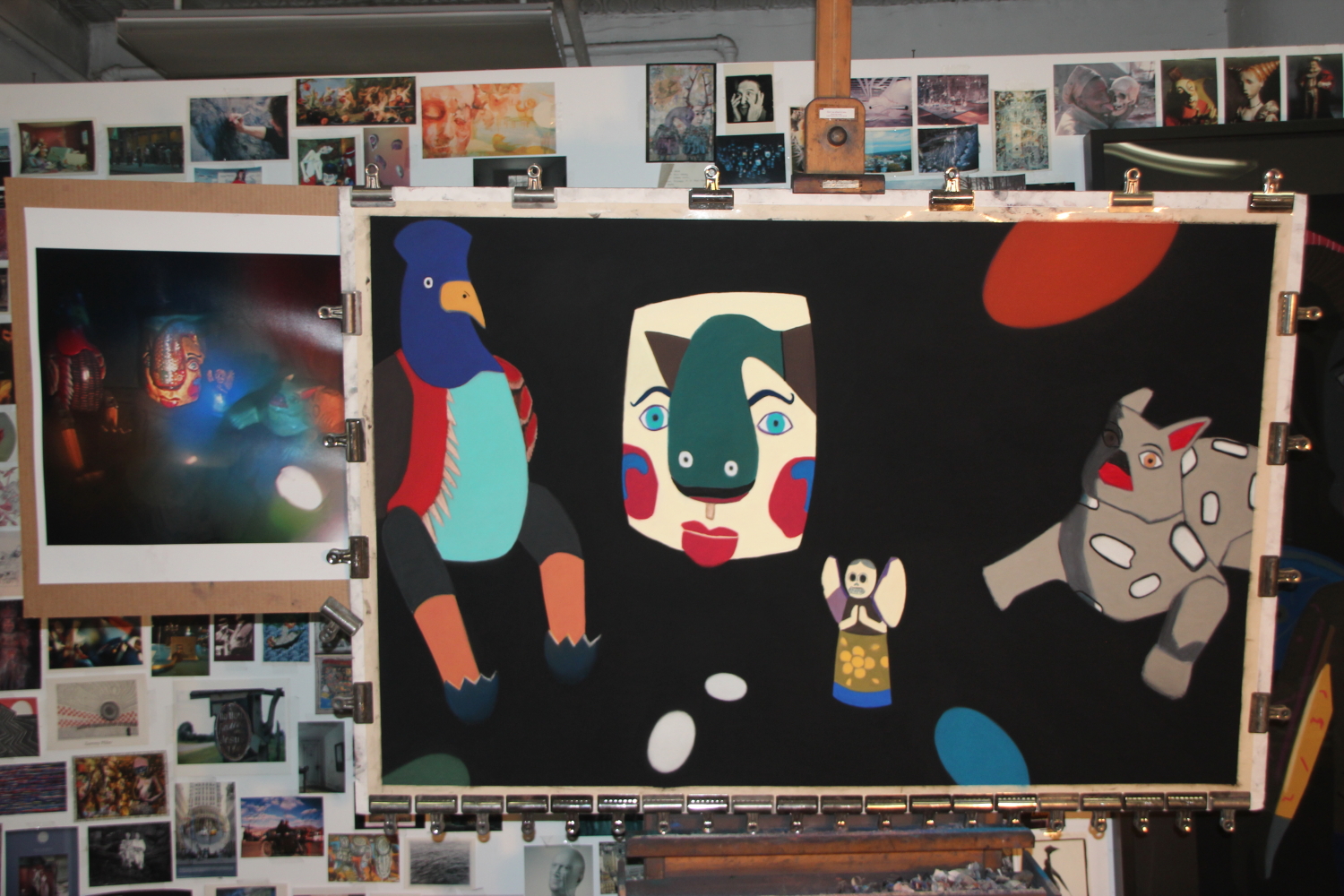
Work in progress
A: I continue to work on “Motley,” a large pastel-on-sandpaper painting that features two folk art pieces I found in Mexico City in March.
Comments are welcome!


 barbararachkoscoloreddust.com