Blog Archives
Pearls from artists* # 458

*an ongoing series of quotations – mostly from artists, to artists – that offers wisdom, inspiration, and advice for the sometimes lonely road we are on.
When I have painted a fine picture I have not given expression to a thought! That is what they say. What fools people are! They would strip painting of all its advantages. A writer has to say almost everything in order to make himself understood, but in painting it is as if some mysterious bridge were set up between the spirit of the persons in the picture and the beholder. The beholder sees figures, the external appearance of nature, but inwardly he meditates; the true thinking that is common to all men. Some give substance to it in writing, but in so doing they lose the subtle essence. Hence, grosser minds are more easily moved by writers than by painters or musicians. The art of the painter is all the nearer to man’s heart because it seems to be more material. In painting, as in external nature, proper justice is done to what is finite and to what is infinite, in other words, to what the soul finds inwardly moving in objects that are known through the senses alone.
The Journal of Eugene Delacroix edited by Hubert Wellington
Comments are welcome!
Travel photo of the month*

*Favorite travel photos that have not yet appeared in this blog
It was New Year’s Eve and I had just arrived in Bangalore from New York (jet lagged, although it doesn’t show here). Too tired to explore the neighborhood, I opted to dine at the hotel restaurant. I seemed to be the only Westerner there and I stood out. Soon the staff began treating me like a celebrity, requesting to take photographs, individually and in groups. Finally, I thought to ask for a photo of my own!
Comments are welcome!
Pearls from artists* # 456
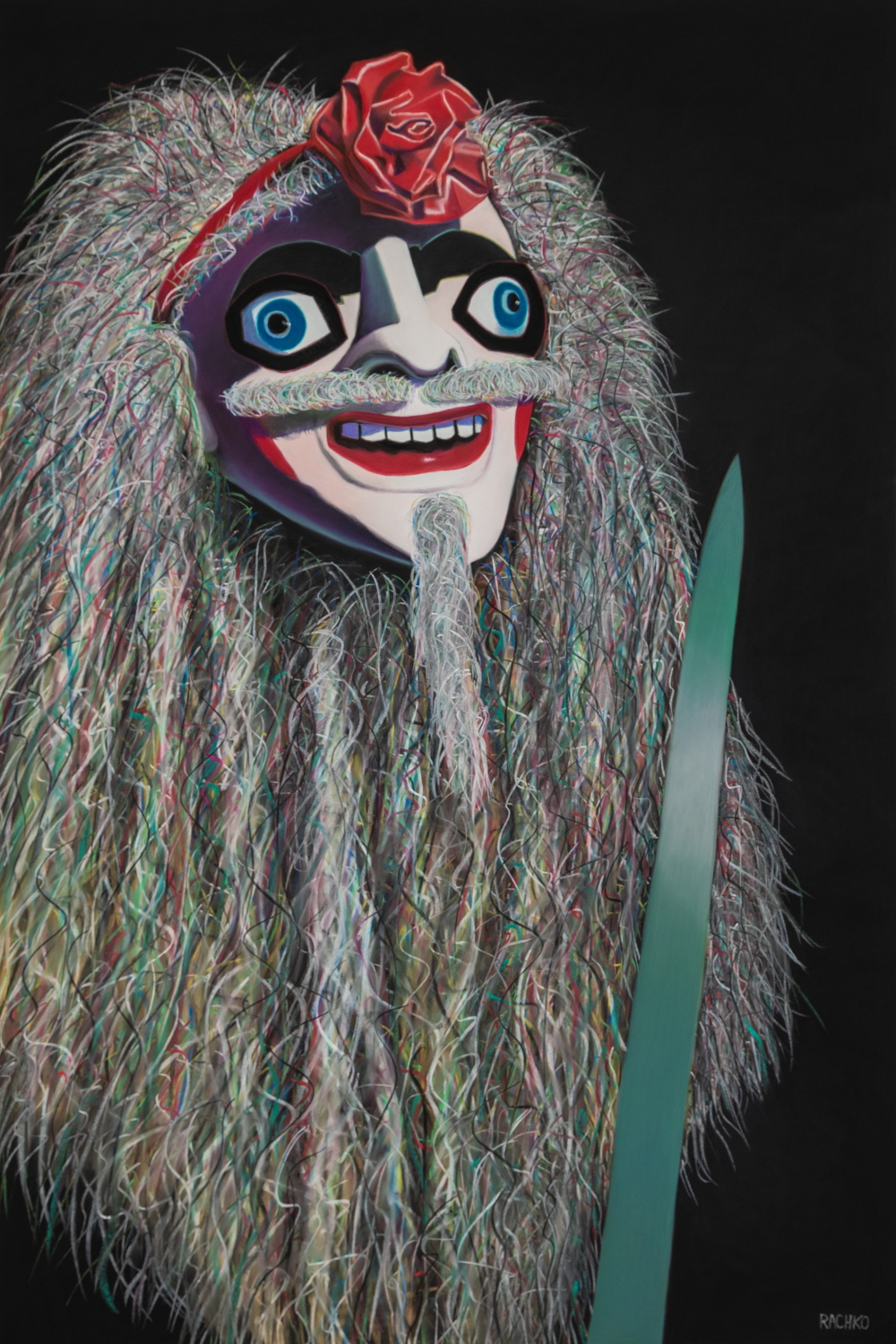
*an ongoing series of quotations – mostly from artists, to artists – that offers wisdom, inspiration, and advice for the sometimes lonely road we are on.
[Philip] Guston’s biography provides ample proof of his political convictions – his loathing of the Klan, of Richard Nixon, of violence against the powerless. It also leaves no doubt as to his Ozymandian artistic ambitions, which had a drive and a logic of their own. Yoking the ambitions to the convictions was, he found, insipid: “What bores me,” he said in 1974. “is to see an illustration of my thought… I want to make something I never saw before and be changed by it. So that I go into the studio and I see these things up and I think, Jesus, did I do that? What a strange thing.”
Susan Tallman in Phillip Guston’s Discomfort Zone in The New York Review of Books, Jan. 14, 2021
Comments are welcome!

Pearls from artists* # 442

*an ongoing series of quotations – mostly from artists, to artists – that offers wisdom, inspiration, and advice for the sometimes lonely road we are on.
Alexander Pope identified a central function of poetry as taking thoughts we experience as half-formed and giving them clear expression: ‘what was often thought, but ne’er so well expressed.’ In other words, a fugitive part of our own experience, is taken up, edited, and returned to us better than it was before, so that we feel, at last, that we know ourselves more clearly.
Alain de Botton and John Armstrong in Art as Therapy
Comments are welcome!
Pearls from artists* # 437
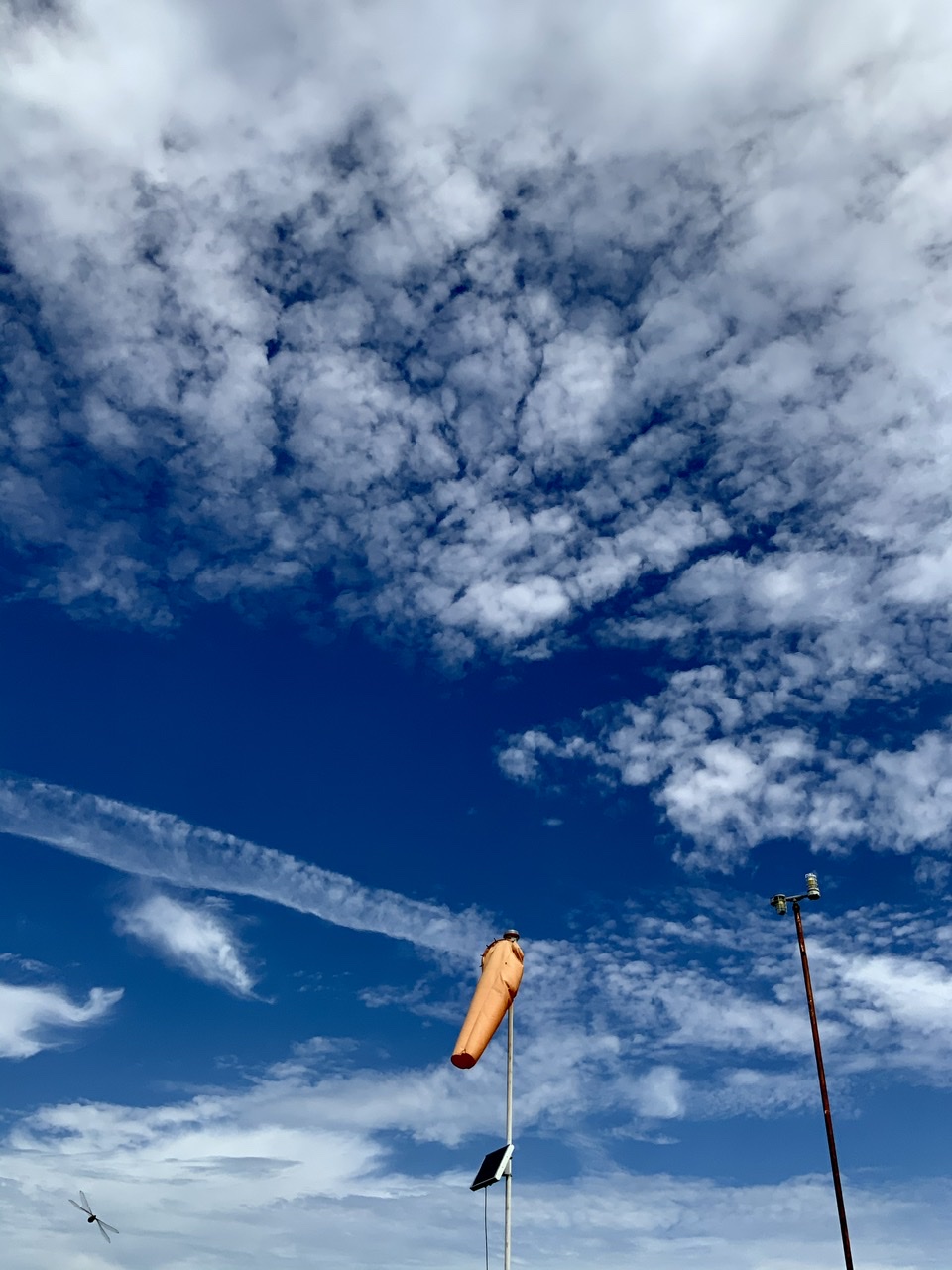
Dragonfly on final approach
* an ongoing series of quotations – mostly from artists, to artists – that offers wisdom, inspiration, and advice for the sometimes lonely road we are on.
There really is nothing to fear in fantasy unless you are afraid of the uncertainty. This is why it’s hard for me to imagine that anyone who likes science can dislike fantasy. Both are based so profoundly on the admission of uncertainty, the welcoming acceptance of unanswered questions. Of course, the scientist seeks to ask how things are the way they are, not to imagine how they might be otherwise. But are the two operations opposed, or related? We can’t question reality directly, only by questioning our conventions, our belief, our orthodoxy, our construction of reality. All Galileo said, all Darwin said, was, “It doesn’t have to be the way we thought it was.”
Ursula K. Le Guin in No Time to Spare: Thinking About What Matters
Comments are welcome!
Pearls from artists* # 436
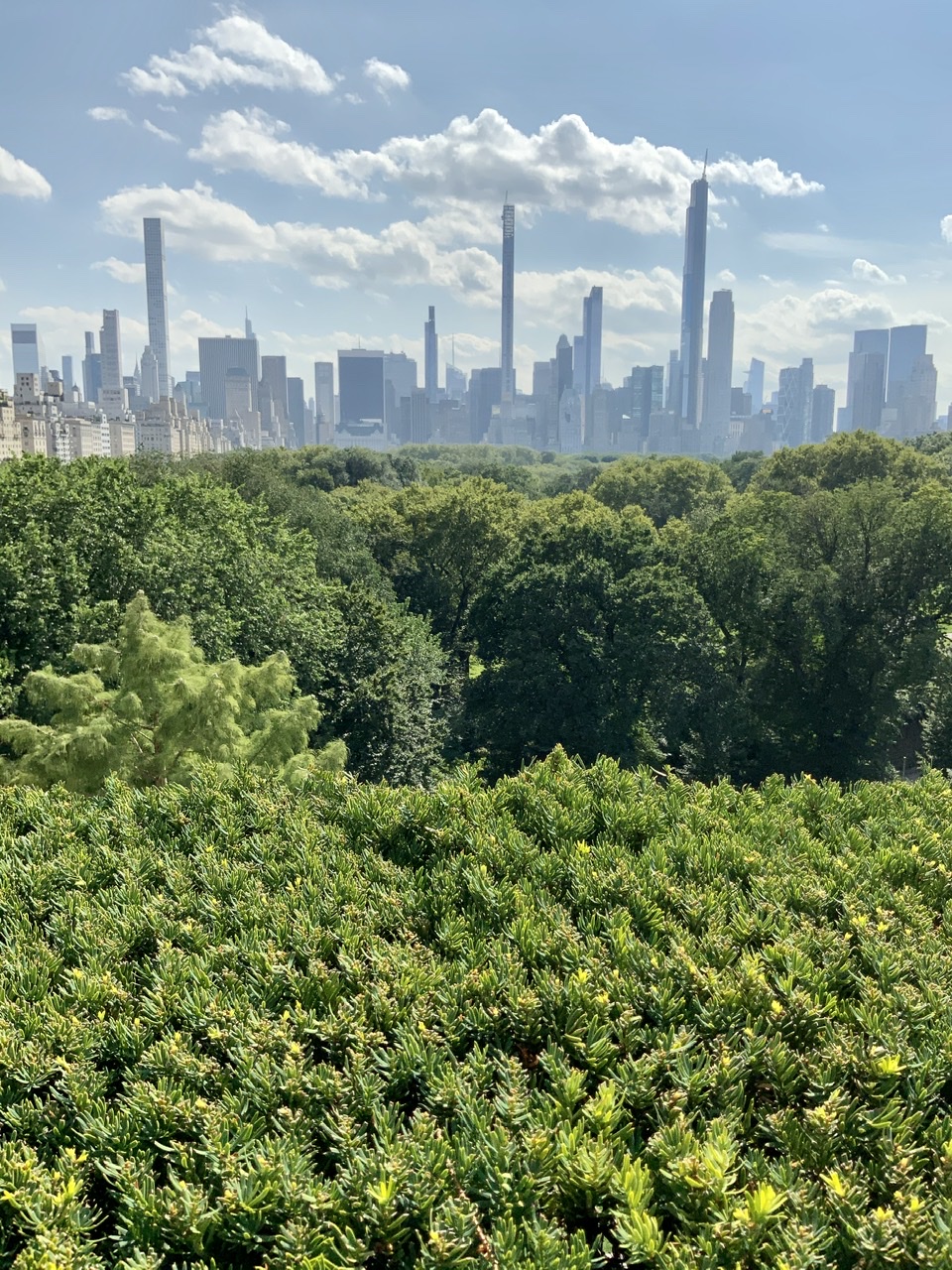
View from the roof of the Metropolitan Museum of Art, New York
*an ongoing series of quotations – mostly from artists, to artists – that offers wisdom, inspiration, and advice for the sometimes lonely road we are on.
Cassirer’s partial definition of art as symbolic language has dominated art studios in our [20th] century. A new history of culture anchored upon the work of art as a symbolic expression thus came into being. By these means art has been made to connect with the rest of history.
But the price has been high, for while studies of meaning received all our attention, another definition of art, as a system of formal relationships, thereby suffered neglect. This other definition matters more than meaning. In the same sense speech matters more than writing, because speech preceded writing, and because writing is but a special case of speech.
The other definition of art as form remains unfashionable, although every thinking person will accept it as a truism that no meaning can be conveyed without form. Every meaning requires a support, or a vehicle, or a holder. These are the bearers of meaning, and without them no meaning would cross from me to you, or from you to me, or indeed from any part of nature to any other part.
… The structural forms can be sensed independent of meaning. We know from linguistics in particular that the structural elements undergo more or less regular evolutions in time without relation to meaning, as when certain phonetic shifts in the history of cognate languages can be explained only by a hypothesis of regular change. Thus phoneme a occurring in an early stage of language, becomes phoneme b at a later stage, independently of meaning, and only under the rules governing the phonetic structure of the language. The regularity of these changes is such that the phonetic changes can be used to measure durations between recorded but undated examples of speech.
Similar regularities probably govern the formal infrastructure of every art. Whenever symbolic clusters appear, however, we see interferences that may disrupt the regular evolution of the formal system. An interference from visual images is present in almost all art. Even architecture, which is commonly thought to lack figural intention, is guided from one utterance to the next by the images of the admired buildings of the past, both far and near in time.
George Kubler in The Shape of Time: Remarks on the History of Things
Comments are welcome!
Pearls from artists* # 430

Barbara at work on “Schemer,” Soft Pastel on Sandpaper, 26” x 20”
*an ongoing series of quotations – mostly from artists, to artists – that offers wisdom, inspiration, and advice for the sometimes lonely road we are on.
In art there must be a governing thought expressed eloquently. We must have it in ourselves, and stamp upon others, just as a medal is stamped… Art is not a pleasure trip; it is a battle, a mill that grinds. I’m not a philosopher. I don’t want to stop pain, or find a formula that makes me indifferent or stoic. Pain is, perhaps, that which makes the artist express himself most distinctly.
Jean Francois Millet quoted by Mariella Guzzoni in Vincent’s Books: Van Gogh and the Writers Who Inspired Him
Comments are welcome!
Pearls from artists* # 418
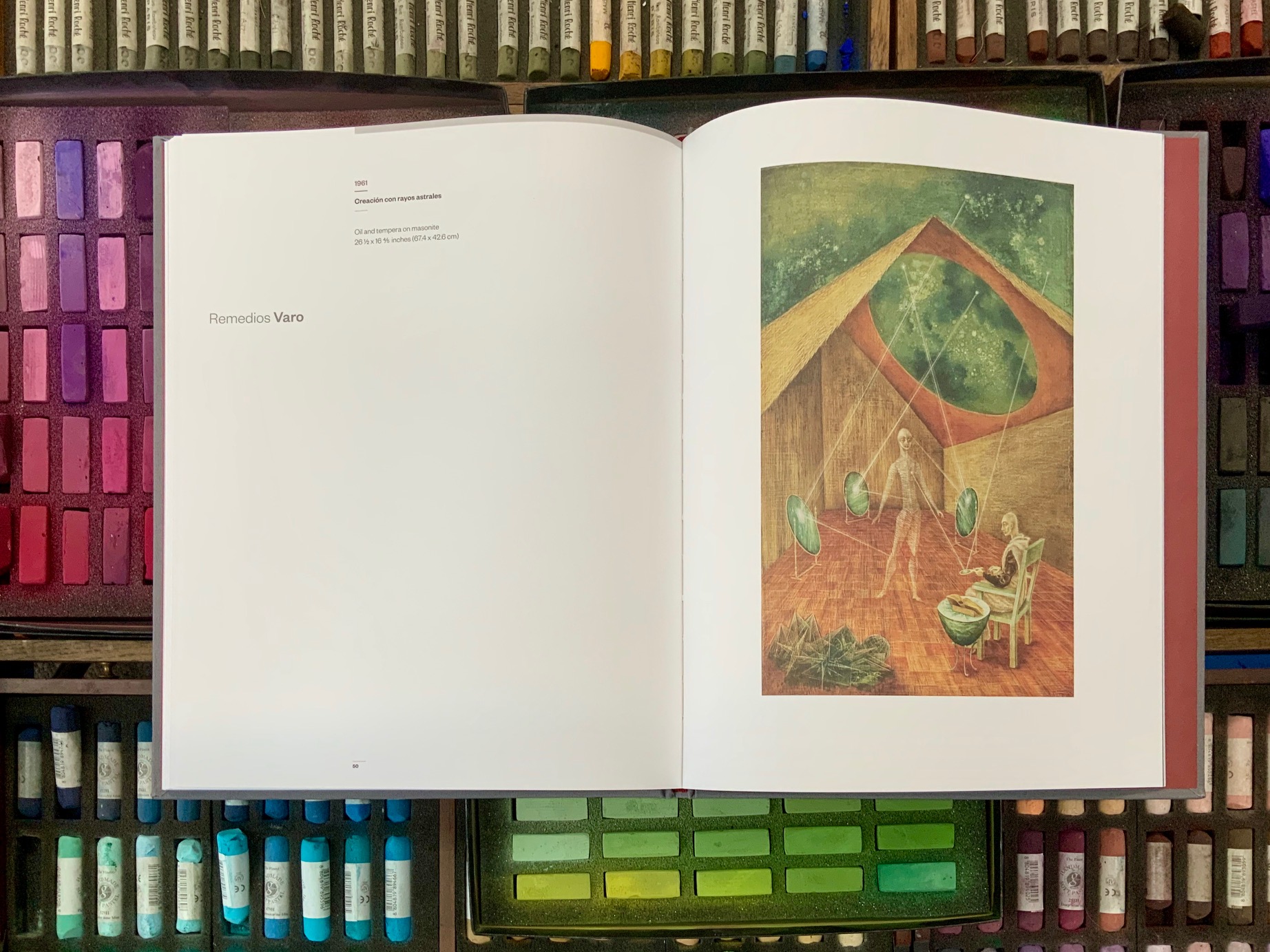
A Remedios Varo Plate from “Science and Surrealism”
*an ongoing series of quotations – mostly from artists, to artists – that offers wisdom, inspiration, and advice for the sometimes lonely road we are on.
… both Surrealism’s birth and infancy coincided with probably the most momentous period in the history of physics. The first Surrealist text, written by Andre Breton and Philippe Soupault and titled Magnetic Fields, deployed the spontaneous technique of ‘automatic writing,’ which supposedly allowed direct access to unconscious material. It appeared in 1920 but was written in the previous year, coinciding with the expedition led by the English astrophysicist, Arthur Eddington, to observe the solar eclipse from the island of Principe off the west coast of Africa. It was this journey that proved predictions set out in Einstein’s General Theory of Relativity (1916) about the gravitational deflection of light by the sun. Eddington’s experiment led not only to Einstein’s instant, mythic status as the ‘new Copernicus’ and the swift popularization of Relativity, but more specifically its appearance in the early theoretical writings of Surrealism’s principle spokesman, Breton, which helped lay the foundations of the movement. Breton’s subsequent manifesto texts of 1924 and 1929, extending his discussion of what he deemed the narrow, restrictive logic of Western though, can be situated within the same historical context that bore the revolutionary discoveries of quantum mechanics, culminating in 1927.
“Sibylline Strangeness: Surrealism and Modern Physics,” by Gavin Parkinson in Science in Surrealism, published by Gallery Wendy Norris
Comments are welcome!
Pearls from artists* # 357
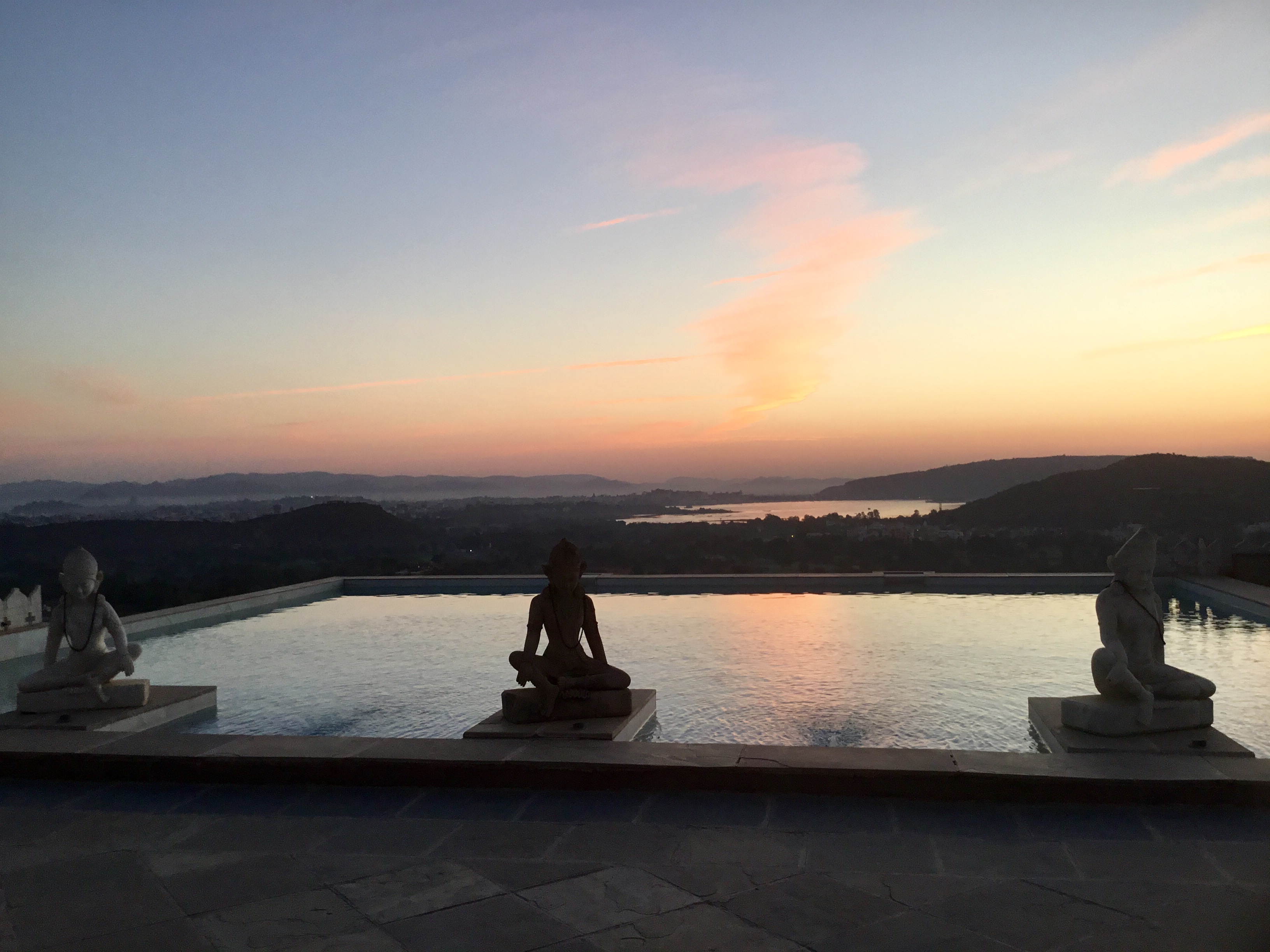
Udaipur, India
*an ongoing series of quotations – mostly from artists, to artists – that offers wisdom, inspiration, and advice for the sometimes lonely road we are on.
The term hermeneutics has been used to describe the task of understanding and interpreting ideas and texts. In a similar way, we need to set for ourselves the task of developing a hermeneutic of the visible, addressing the problem of how we understand and interpret what we see, not only in the classical images and art forms created by the various religious traditions, but in the ordinary images of people’s traditions, rites, and daily activities which are presented to us through the film-image.
Rudolph Arnheim, in his extensive work on visual perception, has shown that the dichotomy between seeing and thinking which runs through much of the Western tradition, is a very problematic one. In Visual Thinking, he contends that visual perception is integrally related to thought. It is not the case, according to Arnheim, that the eyes present a kind of raw data to the mind which, in turn, processes it and refines it by thought. Rather, those visual images are the shapers and bearers of thought. Jan Gonda, in writing on the Vedic notion dhi, sometimes translated as “thought,” finds similarly that the semantic fields of the word in Vedic literature does not correspond as much to our words for “thinking” as it does to our notions of “insight,” “vision,” and “seeing.” Suzanne Langer has also written of the integral relation of thought to the images we see in the “mind’s eye.” The making of all of those images is the fundamental “imaginative” human activity. One might add that it is the fundamental activity of the religious imagination as well. She writes, “Images are, therefore, our readiest instruments for abstracting concepts from the tumbling streams of actual impressions.”
Diana L. Eck in Darsan: Seeing the Divine Image in India
Comments are welcome!
Pearls from artists* # 354

“Epiphany,” soft pastel on sandpaper, 38″ x 58″
*an ongoing series of quotations – mostly from artists, to artists – that offers wisdom, inspiration, and advice for the sometimes lonely road we are on.
My earlier work had taught me that artistic activity is a form of reasoning, in which perceiving and thinking are indivisibly intertwined. A person who paints, writes, composes, dances, I felt compelled to say, thinks with his senses. This union of perception and thought turned out to be not merely a specialty of the arts. A review of what is known about perception, and especially about sight, made me realize that the remarkable mechanisms by which the senses understand the environment are all but identical with the operations described by the psychology of thinking. Inversely, there was much evidence that truly productive thinking in whatever area of cognition takes place in the realm of imagery. This similarity of what the mind does in the arts and what it does elsewhere suggested taking a new look at the long-standing complaint about the isolation and neglect of the arts in society and education. Perhaps the real problem was more fundamental: a split between sense and thought, which caused various deficiency diseases in modern man.
Rudolph Arnheim in Visual Thinking
Comments are welcome!


 barbararachkoscoloreddust.com