Blog Archives
Q: What was the first painting you ever sold?
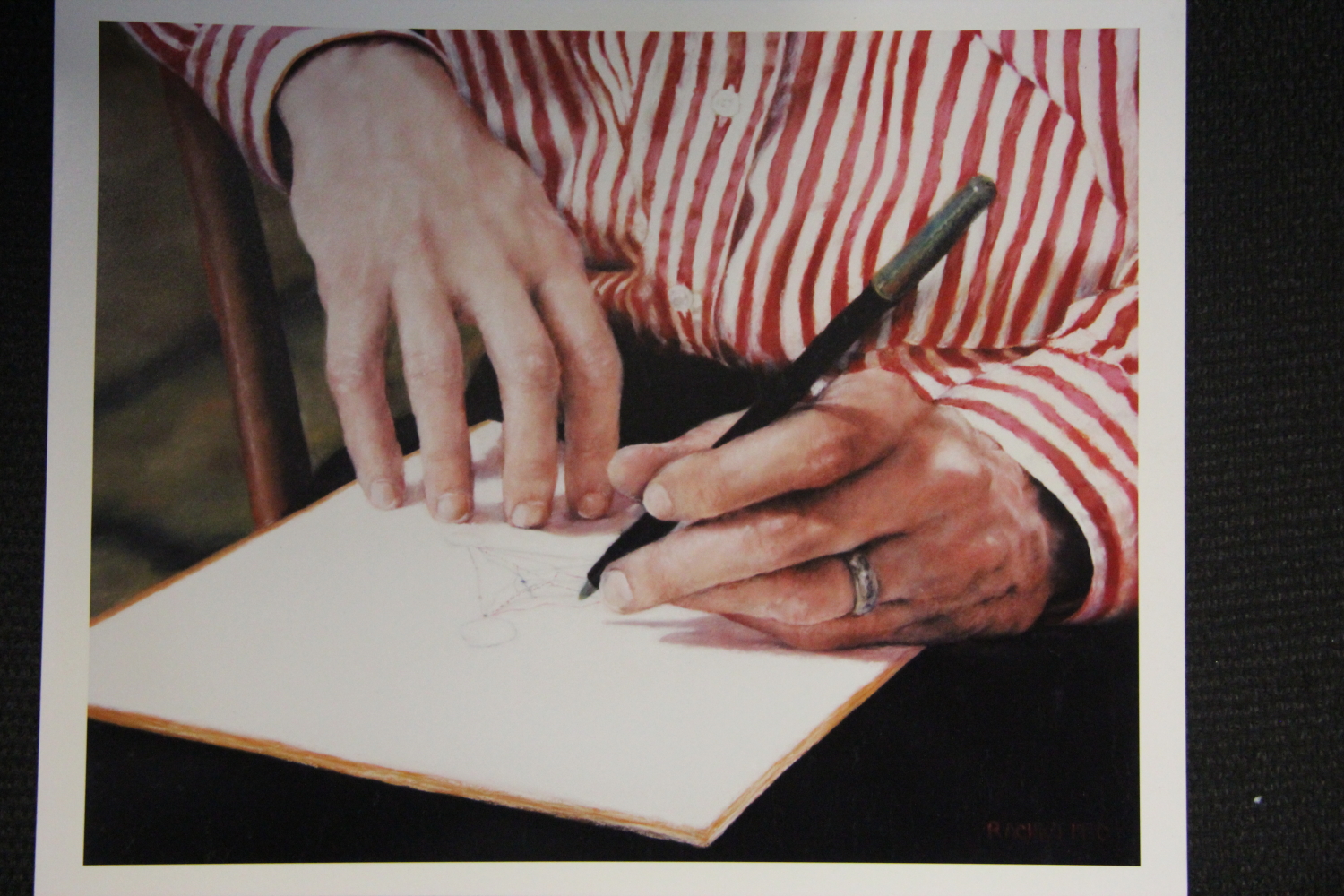
“Bryan’s Ph.D.”, 11″ x 13 1/2″, soft pastel on sandpaper
A: I believe my first sale was “Bryan’s Ph.D.” I made it in 1990 as one of several small paintings created to improve my skills at rendering human hands in pastel. I had recently left the Navy and was building a career as a portrait artist. Bryan, my late husband, was often my model for these studies, not only because it was convenient, but because he had such beautiful hands.
In 1990 Bryan was working on his Ph.D. in economics at the University of Maryland. In this painting he is drawing a diagram that illustrates a theoretical point about “international public goods,” the subject of his research. He was sitting in an old wooden rocking chair in our backyard in Alexandria, VA. I still own the chair and the house. I photographed his hands close-up and then created the painting. I don’t remember which of Bryan’s cameras I used, but it was one that took 35 mm film; perhaps his Nikon F-2. Somewhere I must still have the negative and the original reference photo.
“Bryan’s Ph.D.” is 11″ x 13 1/2″ and it sold for $500 at a monthly juried exhibition at The Art League in Alexandria. I have not seen it since 1990. (Above is a photograph of “Bryan’s Ph.D.” from my portfolio book).
Not long ago the owner contacted me, explaining that she had received the painting as a gift from her now ex-husband. She was selling it because it evoked bitter memories of her divorce. Her phone call was prompted by uncertainty about the painting’s value now. She had a likely buyer and needed to know what price to charge.
I was saddened because I have so many beautiful memories of this particular painting and of an idyllic time in my life with Bryan. He was on a leave of absence from the Pentagon to work on his dissertation, while I was finished with active duty. At last I was a full time artist, busily working in the spare bedroom that we had turned into my first studio.
My conversation with the owner was a reminder that once paintings are let out into the world, they take on associations that have nothing to do with the personal circumstances surrounding their creation. In short, what an artist creates solely out of love, stands a good chance of not being loved or appreciated by others. This is one reason to only sell my work to people I select personally. I ended the telephone conversation hoping that “Bryan’s Ph.D.” fares better in its new home.
Comments are welcome!
Q: Would you say there is a unifying quality to all of the work you have produced in the last thirty years?
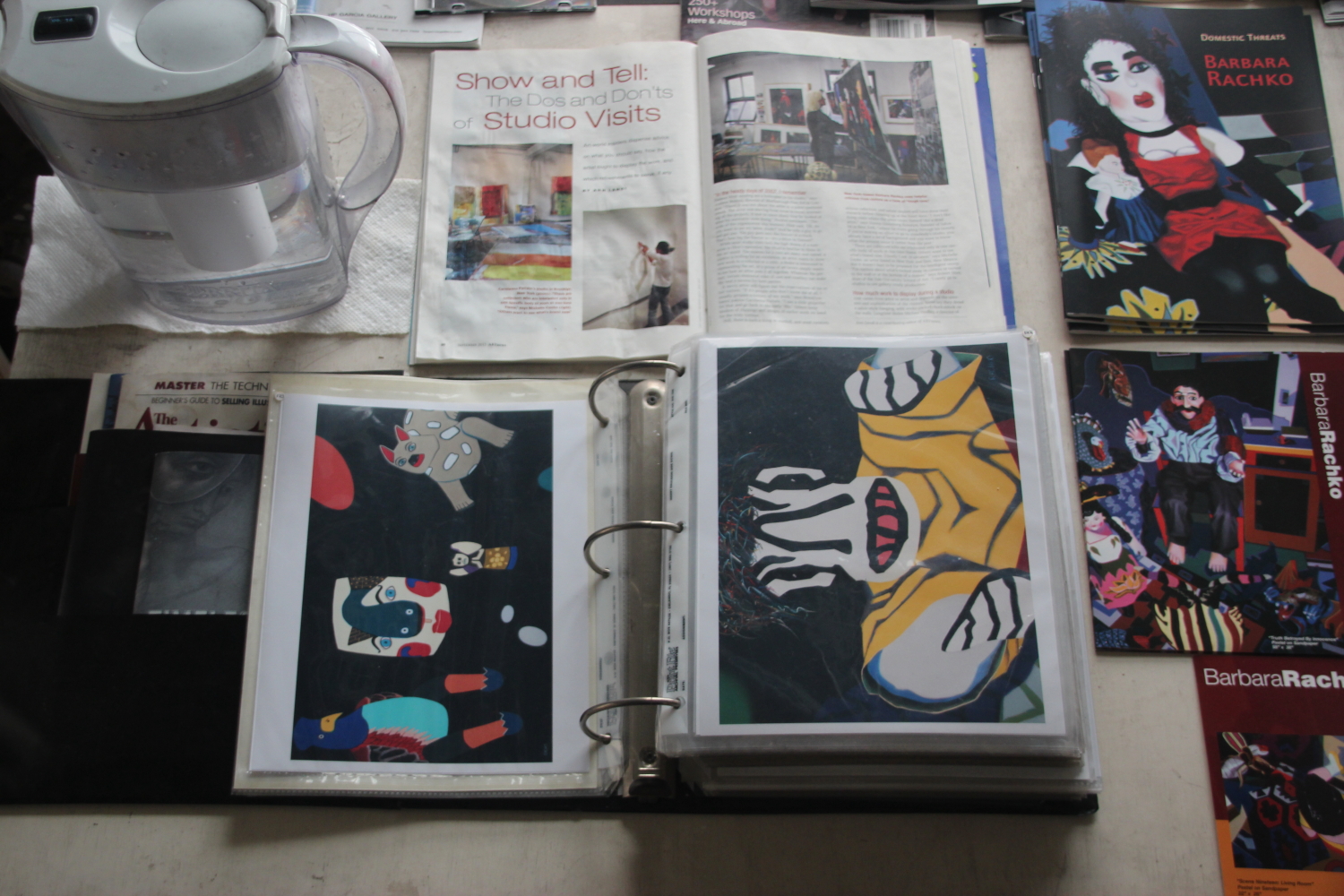
Barbara’s portfolio book
A: Yes, I can think of several. Whether making pastel paintings or printing photographs in the darkroom, I have always been concerned with quality and craftsmanship and never pronounce a work finished until it is the best thing I can make.
Although I started out as a maker of photorealist portraits in pastel, for twenty-odd years I have worked with Mexican folk art as my primary subject matter, treating these objects very differently in three separate series: “Black Paintings,” “Domestic Threats,” and “Gods and Monsters.” The first two are pastel-on-sandpaper paintings while the last is comprised of chromogenic photographs (c-prints). A few years ago I also started making “Teleidoscopes” using an iPad app to photograph my Mexican and Guatemalan folk art collection. This last one is just for fun; I do not offer them for sale.
Soft pastel is my first love and the two series of pastel paintings are my best-known work. My technique for using pastel continues to evolve in intriguing ways. I doubt I can ever learn all there is to know not only about color, but also about this medium. Pastel is endlessly fascinating, which is why I have never wanted to switch to anything else.
Comments are welcome!
Q: Why do you prefer not to explain your titles and imagery?
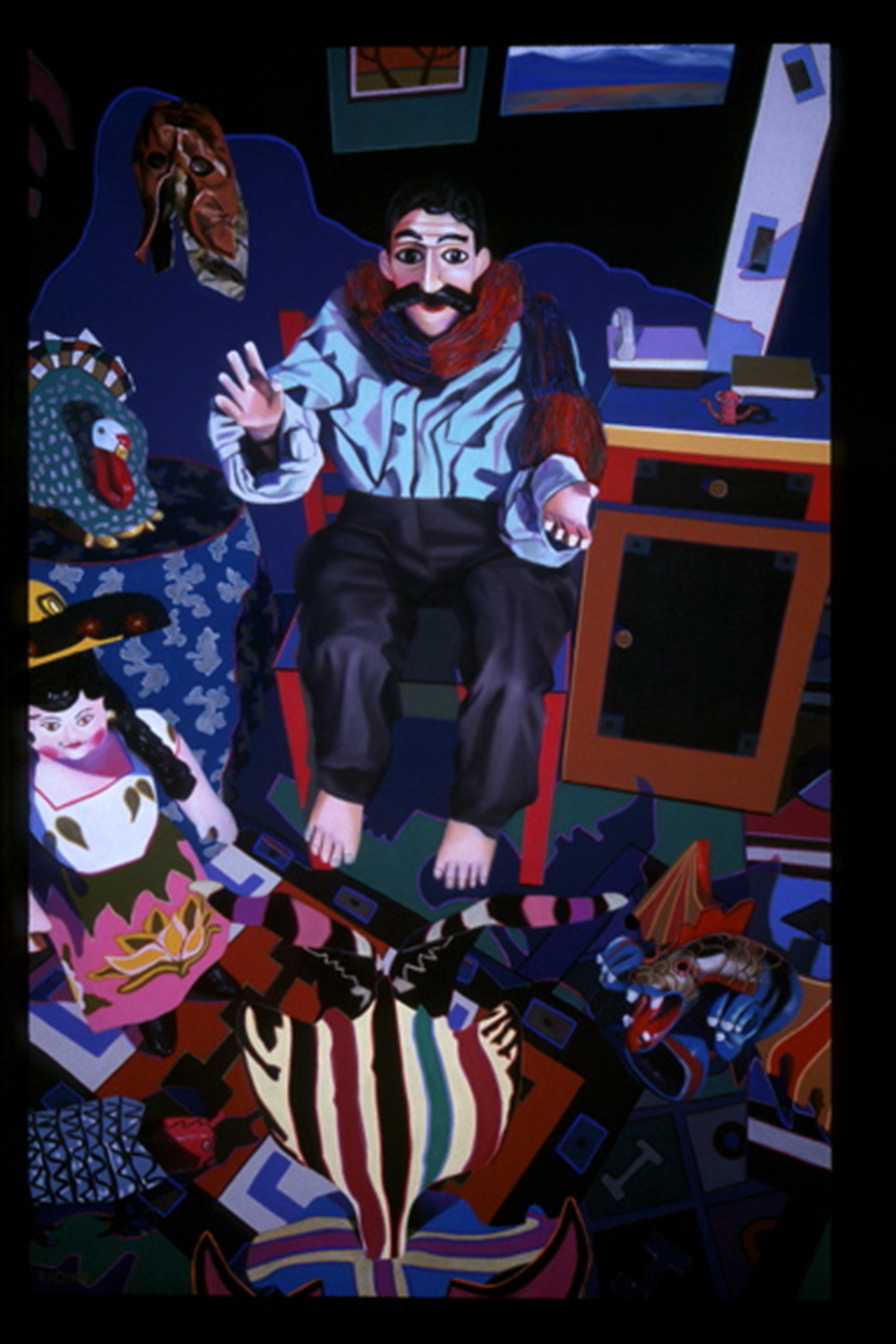
“Truth Betrayed by Innocence,” soft pastel on sandpaper, 58″ x 38″
A: It’s mainly because answers close down imagination and creativity. I enjoy hearing alternative interpretations of my pastel paintings. People are wildly imaginative and each person brings unique insights to their art viewing. By leaving meanings open, conversation is generated. Most artists want viewers to talk about their work.
Once at a public artist’s talk that I attended, I was told by an artist that my interpretation of her title was completely wrong. First of all, how can an interpretation honestly expressed by your audience be “wrong?” Art is as open to interpretation as a Rorschach test (art IS a kind of Rorshach test). Then she explained the thinking behind her title and succeeded in cutting off all further conversation. I felt belittled. Later several people told me that my interpretation was much more compelling. Still, the experience was mortifying and I hope to never do that to anyone.
Comments are welcome!
Q: How do you achieve such richness of color in your pastel-on-sandpaper paintings?
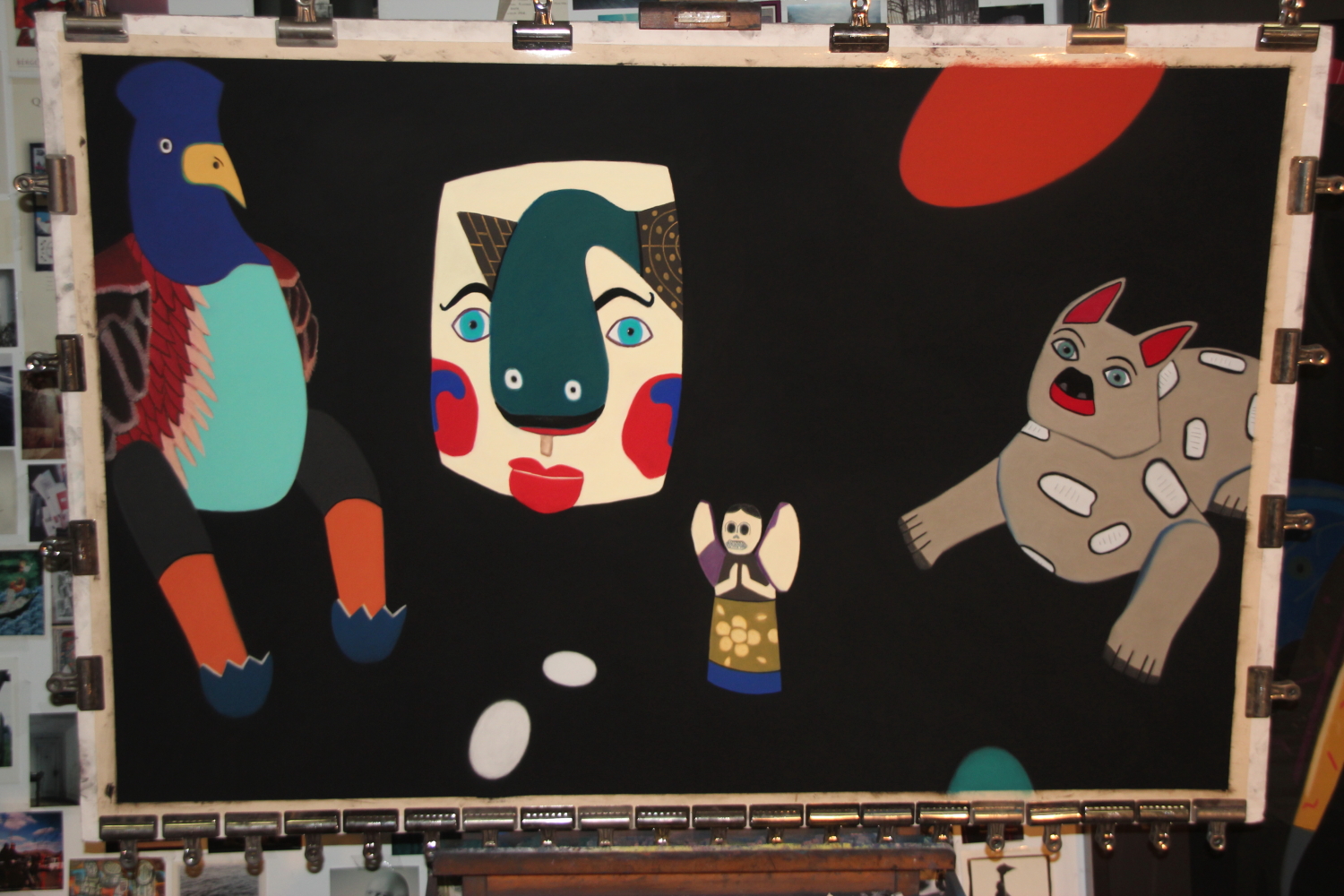
“Motley,” soft pastel on sandpaper, 38″ x 58″
A: This results from the several months of studio time and many layers of soft pastel that go into creating each painting. In a sense my technique is analogous to glazing done by the Old Masters. They slowly built up layers of thin paint to achieve a high degree of finish. Colors were not mixed physically, but optically. I gradually build up layers of soft pastel, as many as 30, to create a pastel painting. After a color is applied, I blend it with my fingers and push it into the sandpaper’s tooth. It mixes with the color beneath to create a new color, continually adding richness, saturation, and intensity to the overall painting.
Comments are welcome!
Pearls from artists* # 129
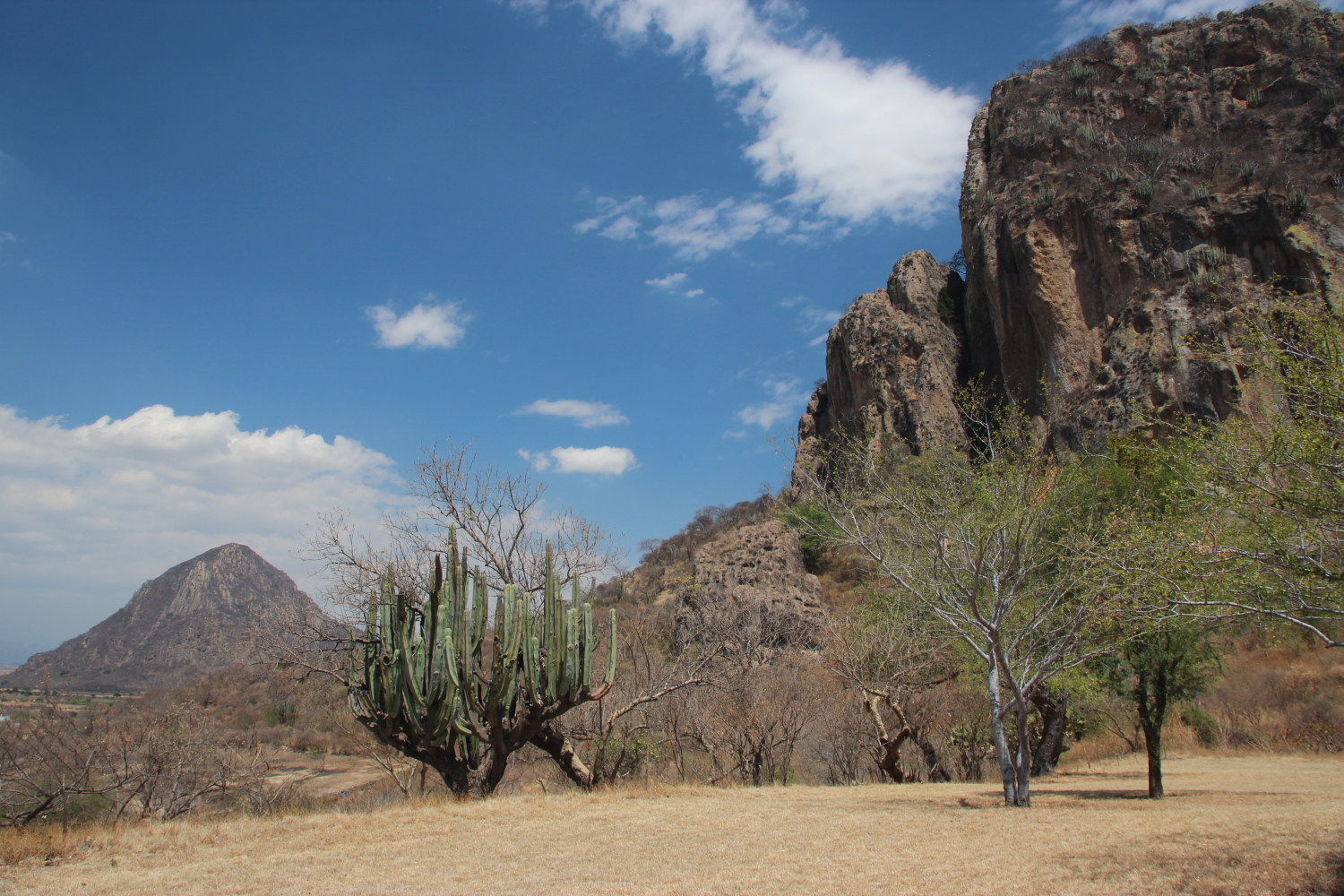
Chalcatzingo, Mexico
* an ongoing series of quotations – mostly from artists, to artists – that offers wisdom, inspiration, and advice for the sometimes lonely road we are on.
A painter friend of mine once told me that he thought of sound as an usher for the here and now. When he was a small child, Adam suffered an illness that left him profoundly deaf for several months. His memories of that time are vivid and not, he insists, at all negative. Indeed, they opened a world in which the images he saw could be woven together with much greater freedom and originality than he’d ever known. The experience was powerful enough that it helped steer him toward his lifelong immersion in the visual arts. “Sound imposes a narrative on you,” he said, “and it’s always someone else’s narrative. My experience of silence was like being awake inside a dream I could direct.”
George Prochnik in In Pursuit of Silence: Listening for Meaning in a World of Noise
Comments are welcome!
Pearls from artists* # 124
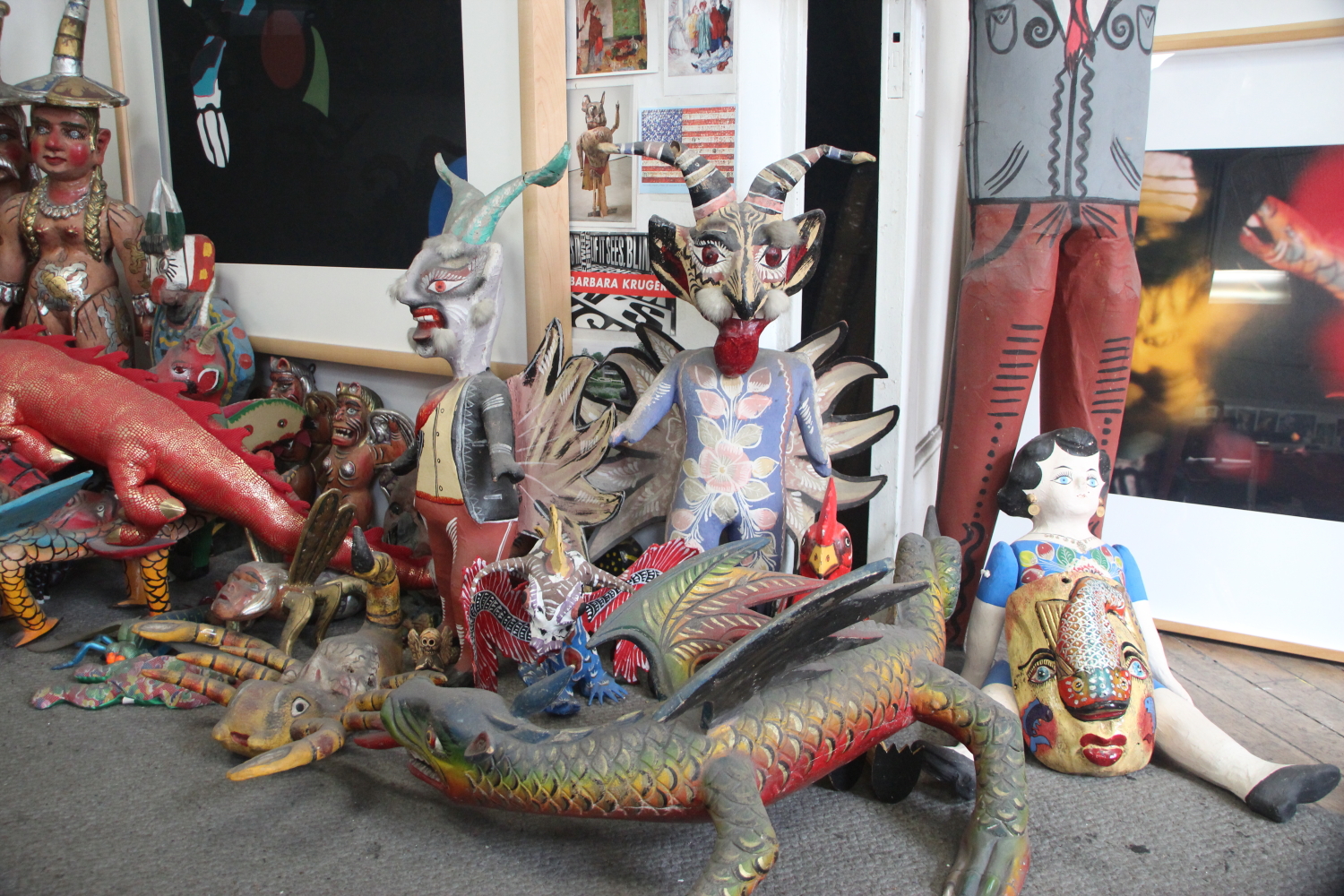
Barbara’s studio
* an ongoing series of quotations – mostly from artists, to artists – that offers wisdom, inspiration, and advice for the sometimes lonely road we are on.
You give yourself a creative life – pursuing those questions and aesthetic conditions that mean the most to you. What are you interested in? Landscape and gender and nuclear power are each worthy subjects and there are plenty more. Do you aspire to exhibit in museums or public spaces or virtual realms? Your job is to figure out how to best engage these distinct contexts. Your studio may be a large industrial space or a second bedroom or the kitchen table, where you can work days or nights while wearing your favorite sweatpants and drinking tea as music blasts or silence is maintained. You might produce five or fifty objects a year, using bronze or oil paint or folded paper, and these can be large or tiny, made to last for centuries or a few weeks. Maybe you’ve been a printmaker for several years and all of a sudden you decide to make videos. OK. You might be influenced by Pop Art or Minimalism or Feminism or Fluxus. How are you using these various histories to your advantage? Does Edward Hopper or Gordon Matta-Clark or Agnes Martin or David Hammons inspire you? If not, who does? Try to understand the reasons for your choices, and if you feel the need to shift gears, indulge that impulse. Grant yourself the permission to acquire new skills, travel to biennials, buy a new computer, start a reading group. Risk not knowing what will happen when you do.
Stephen Horodner in THE ART LIFE: On Creativity and Career
Comments are welcome!
Pearls from artists* # 119
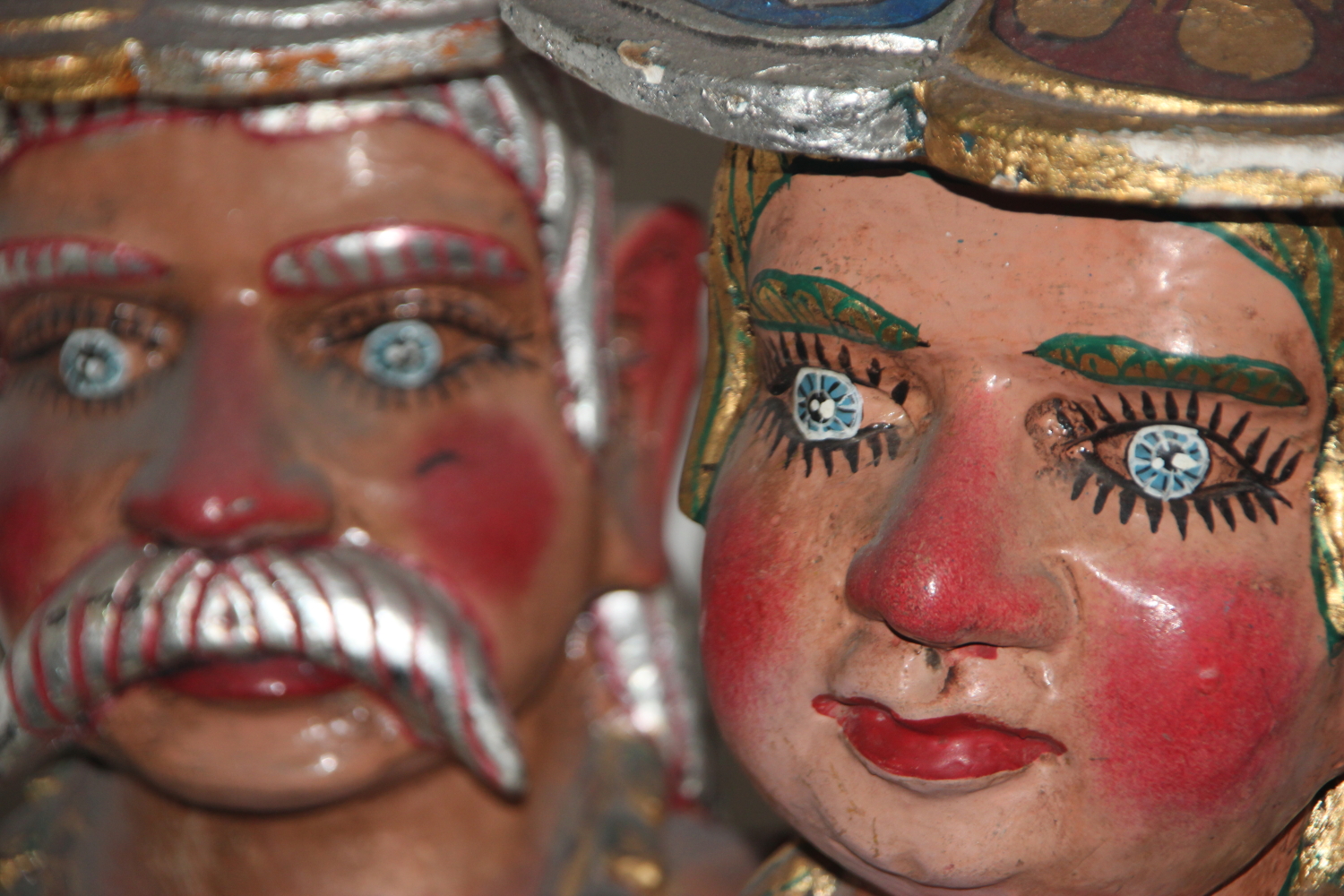
“He and She”
* an ongoing series of quotations – mostly from artists, to artists – that offers wisdom, inspiration, and advice for the sometimes lonely road we are on.
During the course of the past several years we have experienced a seismic shift in the way the world functions. Any notion of a certain or stable or inevitable future has vanished. We are living in what the Polish philosopher Zygmunt Bauman calls “liquid modernity.” No one’s life is predictable or secure. We are confronted with challenges never previously encountered, and these challenges weigh heavily on the role and responsibilities of the individual in society. It is the onus of each one of us to adjust, shift and adjust again to the constant liquid environment of fluid and unending change. In the midst of all this reeling and realignment, the moment is ripe to activate new models and proposals for how arts organizations [and artists] can flourish in the present climate and into an uncertain future.
What’s the Story: Essays about art, theater, and storytelling by Anne Bogart
Comments are welcome!
Q: Would you speak about your first trip to Mexico?
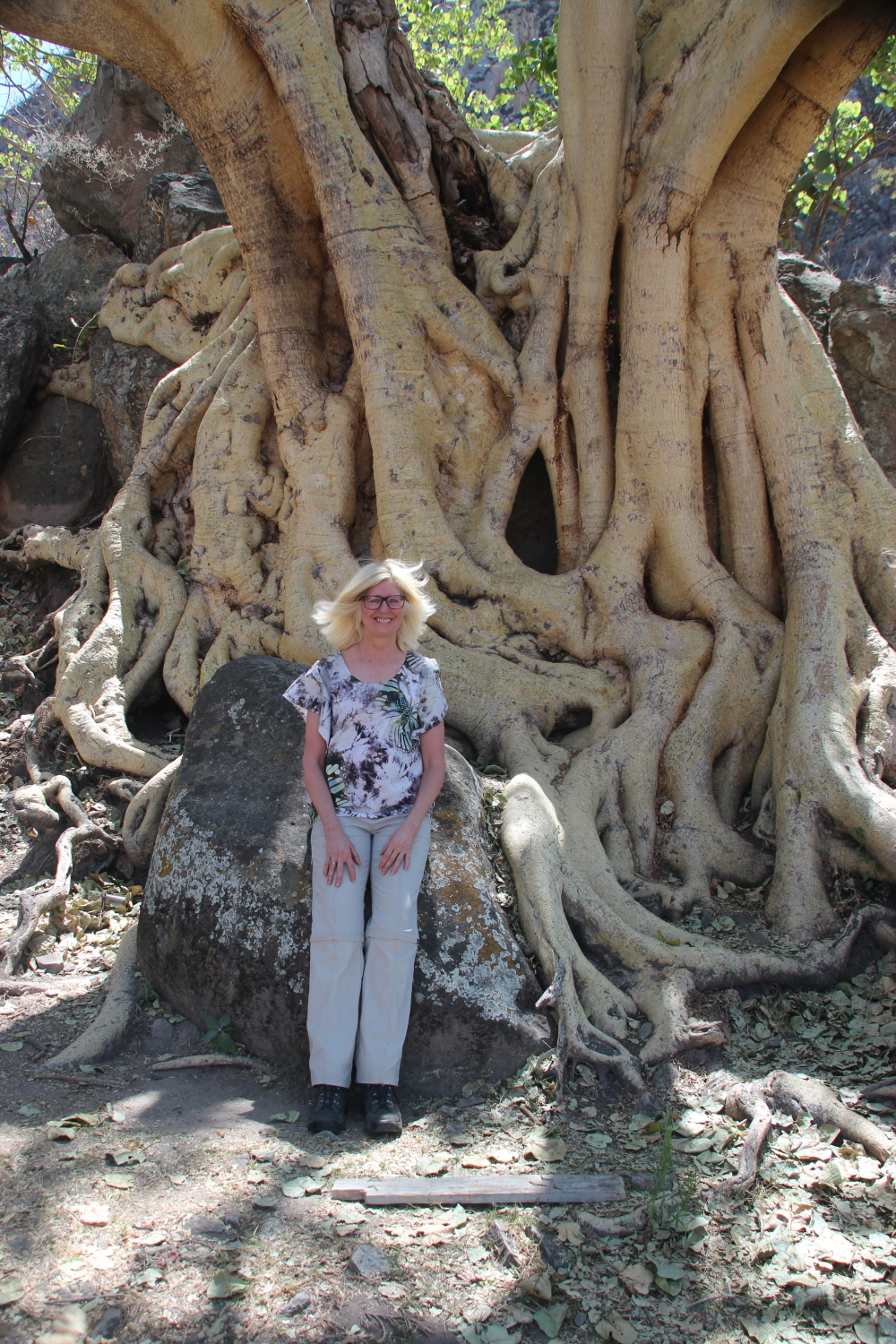
With an amate tree at Chalcatzingo
A: In the early 90’s my late husband, Bryan, and I made our first trip to Oaxaca and to Mexico City. At the time I had become fascinated with the Mexican “Day of the Dead” celebrations so our trip was timed to see them firsthand. Along with busloads of other tourists, we visited several cemeteries in small Oaxacan towns. The indigenous people tending their ancestor’s graves were so dignified and so gracious, even with so many mostly-American tourists tromping around on a sacred night, that I couldn’t help being taken with these beautiful people and their beliefs. From Oaxaca we traveled to Mexico City, where again I was entranced, but this time by the rich and ancient history. On that first trip to Mexico we visited the National Museum of Anthropology, where I was introduced to the fascinating story of ancient Mesoamerican civilizations (it is still one of my favorite museums in the world); the ancient city of Teotihuacan, which the Aztecs discovered as an abandoned city and then occupied as their own; and the Templo Mayor, the historic center of the Aztec empire, infamous as a place of human sacrifice. I was astounded! Why had I never learned in school about Mexico, this highly developed cradle of Western civilization in our own hemisphere, when so much time had been devoted to the cultures of Egypt, Greece, and elsewhere? When I returned home to Virginia I began reading everything I could find about ancient Mexican civilizations, including the Olmec, Zapotec, Mixtec, Aztec, and Maya. This first trip to Mexico opened up a whole new world and was to profoundly influence my future work. I would return there many more times, most recently this past March to study Olmec art and culture.
Comments are welcome!
Q: How do you begin a photograph?

Untitled chromogenic print, 24″ x 24″, edition of 5
A: It always begins in my mind long before I actually start making it. By the time I take the photograph, I’ve already thought deeply about the possibilities, the formal arrangements, meanings, etc. so that setting up the objects, lighting them, and clicking the shutter feels like a reward after a long thought process. My fine art photographs are finished works in themselves. However, when I select one to use as reference for a pastel painting, a different but related process of working out my ideas and translating them into pastel occurs over the next several months spent in the studio. Of course, in that case the photo becomes only the starting point for an entirely new artwork.
Comments are welcome!
Q: How do you decide on the titles for your pastel paintings?

“Stigmata,” soft pastel on sandpaper, 28″ x 48″
A: Usually a title suggests itself over the course of the months I spend on a painting. Sometimes it comes from a book I’m reading, from a piece of music, a film, bits of overheard conversation. A title can come from anywhere, but finding the best one is key. I like what Jean Cocteau says about this:
One title alone exists. It will be, so it is. Time conceals it from me. How discover it, concealed by a hundred others? I have to avoid the this, the that. Avoid the image. Avoid the descriptive and the undescriptive. Avoid the exact meaning and the inexact. The soft, the hard. Neither long nor short. Right to catch the eye, the ear, the mind. Simple to read and to remember. I had announced several. I had to repeat them twice and the journalists still got them wrong. My real title defies me. It enjoys its hiding place, like a child one keeps calling, and whom one believes drowned in the pond.
Once I have the best title, I make sure it fits the painting exactly. How I do that is difficult to explain. It’s an intuitive process that involves adjusting colors, shapes, and images so that they fit the painting’s meaning, i.e., the meaning hinted at by the title.
Comments are welcome!


 barbararachkoscoloreddust.com