Blog Archives
Q: How do you decide when a pastel painting is finished?

“Magisterial,” soft pastel on sandpaper, 58” x 38” in progress
A: During the months that it takes to create a pastel painting, I search for arresting colors that work well together. The goal is to make a painting that I have never seen before and that leads the viewer’s eyes around in interesting ways. To do this I build up and blend together as many as 25 to 30 layers of pigment. I am able to complete some areas, like the background, fairly easily – maybe with just six or seven layers of black Rembrandt pastel. The more realistic parts of a pastel painting take many more applications. In general, details always take plenty of time to refine and perfect.
No matter how many pastel layers I apply, however, I never use fixatives. It is difficult to see this in reproductions of my work, but some of the finished surfaces achieve a texture akin to velvet. My technique involves blending each layer with my fingers, pushing the pastel deep into the tooth of the sandpaper, and mixing new colors directly on the paper. Fortunately, the sandpaper holds plenty of pigment so I am able to include lots of details.
Before I pronounce a pastel painting finished, I let it sit against a wall in my studio for a few days so I can look at it later with fresh eyes. I consider a piece done when it is as good as I can make it, when adding or subtracting something would diminish what is there. Always, I try to push myself and my materials to their limits, using them in new and unexpected ways.
Comments are welcome.
Q: You use so many pastels in your work. Do you have a favorite?

Barbara’s Studio
A: When people ask if I have a favorite pastel among the thousands in my studio, I am quick to answer, “Rembrandt black pastel!” This is the single color that I use the most. I buy them by the dozens because it takes many layers of pigment – applied and hand-blended together, one on top of the other, on sandpaper – to achieve the intense black backgrounds that distinguish my “Bolivianos” series of pastel paintings. Typically, I use up a minimum of two or three Rembrandt pastels to create these backgrounds. A few years ago one New York art critic cleverly dubbed them, “Barbara’s black-grounds.” How cool is that!
Comments are welcome!
Q: What’s on the easel today?

Work in progress
A: This is my second day working on a new “Bolivianos” pastel painting. Next I will layer black Rembrandt soft pastels for the background. It usually takes 4 or 5 layers just to cover the 400 grit sandpaper.
Comments are welcome!
Q: How do you get such fine detail with soft pastel? Do they make pencil-size pastels? (Question from Lucia Sommer via Facebook)

A: After 37 years as a pastel artist, I have learned all sorts of techniques and can do whatever I want with it. I used regular Rembrandt white pastels for the sweater in “Sam and Bobo,” above.
There are several brands of pastel pencils that are made especially for drawing fine details. Sam’s face, hair, and hands are mostly pastel pencil. (Now I probably would not use pastel pencils as much. These days I only use them to draw lines and sign my name).
Another technique for making fine lines is to break a pastel stick and work with an edge.
Years ago I used to sharpen my pastels into a point with a small handheld sharpener (I still have one that allows me to change the blades). Sometimes I rub a pastel stick against a sandpaper pad until I get a somewhat sharp point. The problem with both of these methods is they waste so much pastel and pastels are not cheap! For example, my favorite French brand is nearly $20 per stick. I would never think of sharpening those!
Comments are welcome!
Pearls from artists* #571
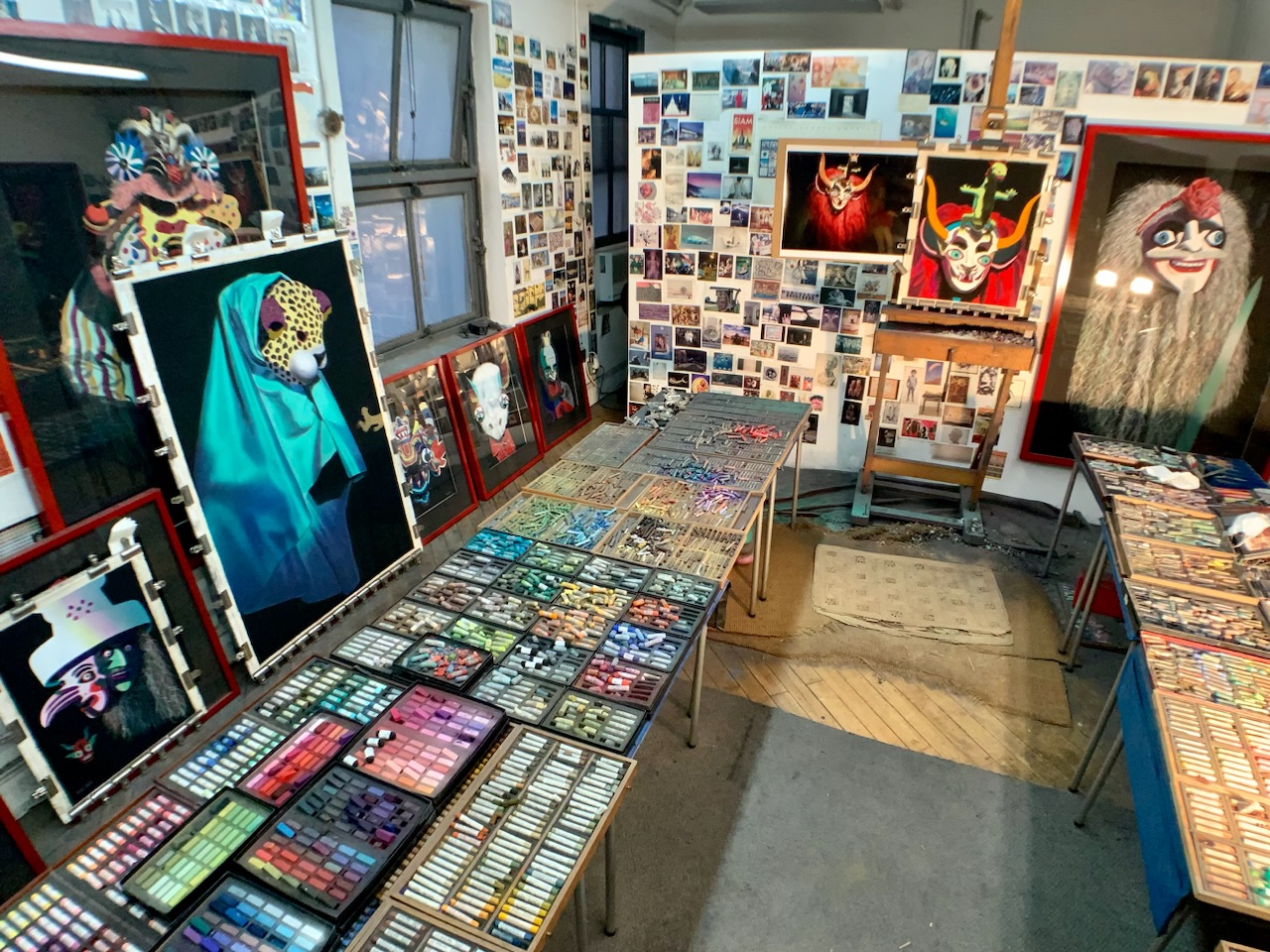
The Studio
*an ongoing series of quotations – mostly from artists, to artists – that offers wisdom, inspiration, and advice for the sometimes lonely road we are on.
To put it simply, but accurately, artists are often lost to the world because of their obsessions with their art. They may be just as lost as they prepare to work or incubate a new idea as in those feverish days when they make their final cuts on a film or race toward a publishing deadline. They may obsess about artistic questions and feel bursts of creative energy day or night, alone or in the company of others, in the middle of the work week or on vacation in the Bahamas.
Lost in time and space, the artist may feel more connected to Picasso, Emily Dickinson, Ingmar Bergman, Gertrude Stein, Handel, or Tennessee Williams than to the people in his immediate world. The living past holds extraordinary meaning for him. He travels elsewhere, removing his spirit and attention from the present. He may reside, as he works on his novel, in the childhood of a character, walking the garden paths and living the household dramas there. He may come upon a Rembrandt drawing and find himself wrenched, not to any particular place or time, but just elsewhere, as he experiences the greatness of his traditions, measures himself anew, and dreams again of his future.
Eric Maisel in A Life in the Arts: Practical Guidance and Inspiration for Creative and Performing Artists
Comments are welcome!
Q: Love your selection of pastels! Do you have favorites that you need to force yourself not to continually return to? (Question from Donina Asera via Facebook)

A: No, I don’t think so. Certainly, I do have general preferences. I prefer dark, vivid, intense colors so many of my pale pastels go mostly unused. The single pastel that I use most is Rembrandt black – I buy them buy the dozens – because it takes many layers of pigment to achieve my dark black backgrounds. Otherwise, I strive to be open to whatever the painting needs. My goal – always! – is to make a pastel painting that is exciting to look at and different from anything I have created before.
Thank you very much for the great question!
Comments are welcome!
Pearls from artists* # 555

Studio view showing some tools of the trade
*an ongoing series of quotations – mostly from artists, to artists – that offers wisdom, inspiration, and advice for the sometimes lonely road we are on.
Rembrandt and Shakespeare, Tolstoy and Gauguin, possessed, I believe, powerful hearts, not powerful wills. They loved the range of material they used, the work’s possibilities excited them; the field’s complexities fired their imaginations. The caring suggested the tasks; the tasks suggested the schedules. They learned their fields and then loved them. They worked, respectfully, out of their love and knowledge, and they produced complex bodies of work that endure. Then, and only then, the world maybe flapped at them
some sort of hat, which, if they were still living, they ignored as well as they could, to keep at their tasks.
Annie Dillard in The Abundance, quoted in The Marginalian by Maria Popova, November 23, 2022
Comments are welcome!
Pearls from artists* # 378
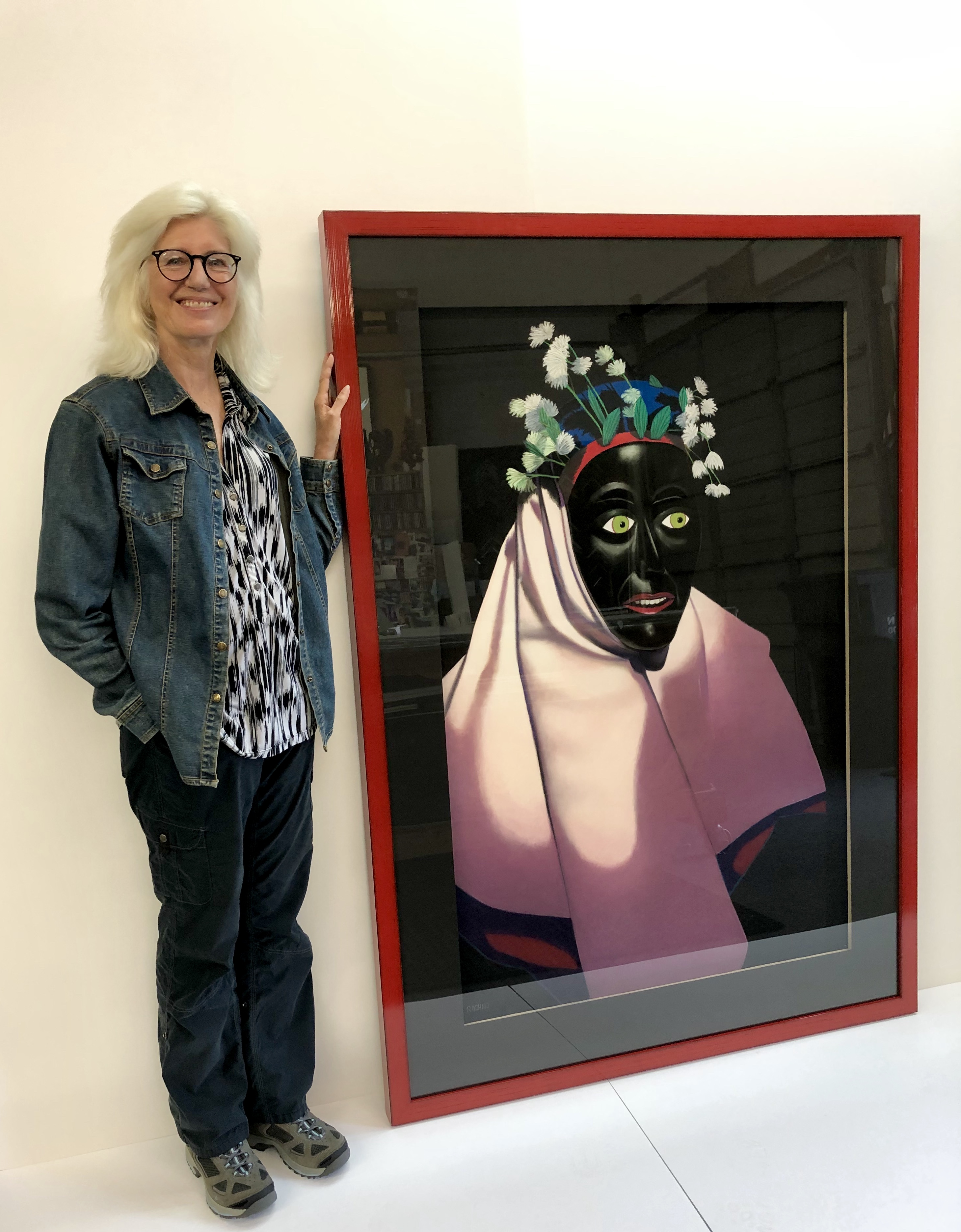
With “Poseur,” Soft Pastel on Sandpaper, 70” x 50,” 2019
* an ongoing series of quotations – mostly from artists, to artists – that offers wisdom, inspiration, and advice for the sometimes lonely road we are on.
[John] Graham told Lee [Krasner] and Jackson [Pollock] they were at the most wonderful part of their artistic journey because they were unknown and therefore free, and that there was only one thing they had to dread: fame.
How many men of great talent on their way to remarkable achievement in the present day are ruthlessly destroyed by critics, dealers, and public while mediocre, insensitive hacks, who by intrigue and industrious commercial effort have gained recognition and success, will go down in history with their inane creations. Success, fame, and greatness coincide very seldom. The great are not recognized during their life-time… Poe, Van Gogh,Rembrandt, Cezanne, Gauguin, Modigliani, Pushkin, Rimbaud, Baudelaire, and others could not make even a miserable living out of their art.
As Graham described it, true art could never be of the world because it was always steps, decades, light-years ahead of it. Artists, therefore, had no need to be part of the world, either. Their only duty was to persevere. Humanity, he said, depended on it.
Mary Gabriel in Ninth Street Women
Comments are welcome!
Q: You have spoken about your pastel technique, which involves layering pigments on top of each other, up to 25 to 30 layers. When you do this are you putting the same colors on top of each other?

An early version of “Oracle,” soft pastel on sandpaper, 26″ x 20″

Finished
A: I do layer Rembrandt black soft pastels on top of each other to achieve the dark backgrounds in my “Black Paintings” and “Bolivianos” series. Black Rembrandts are the pastels I use most so I order them several dozen at a time. The 400 or 500 grit sandpaper requires at least four layers of pastel just to achieve even coverage. Over the next few months I add many more layers of black pastel to achieve the final rich look.
The figures and shapes in each pastel painting are a different story. Were you to x-ray them, you’d see many different colors underneath the final one. Sometimes subsequent colors are closely related to earlier ones. With each additional layer, I correct, refine, and strengthen my drawing so the objects depicted become more solid and/or three-dimensional.
In addition to the thousands of pastels I have to choose from, I mix and blend new colors directly on the sandpaper. As I proceed, I am searching for the ‘best’ colors, those that make the overall painting more resonant, more alive, and more exciting to look at. Of course, this is wholly subjective.
Comments are welcome!
Pearls from artists* # 6
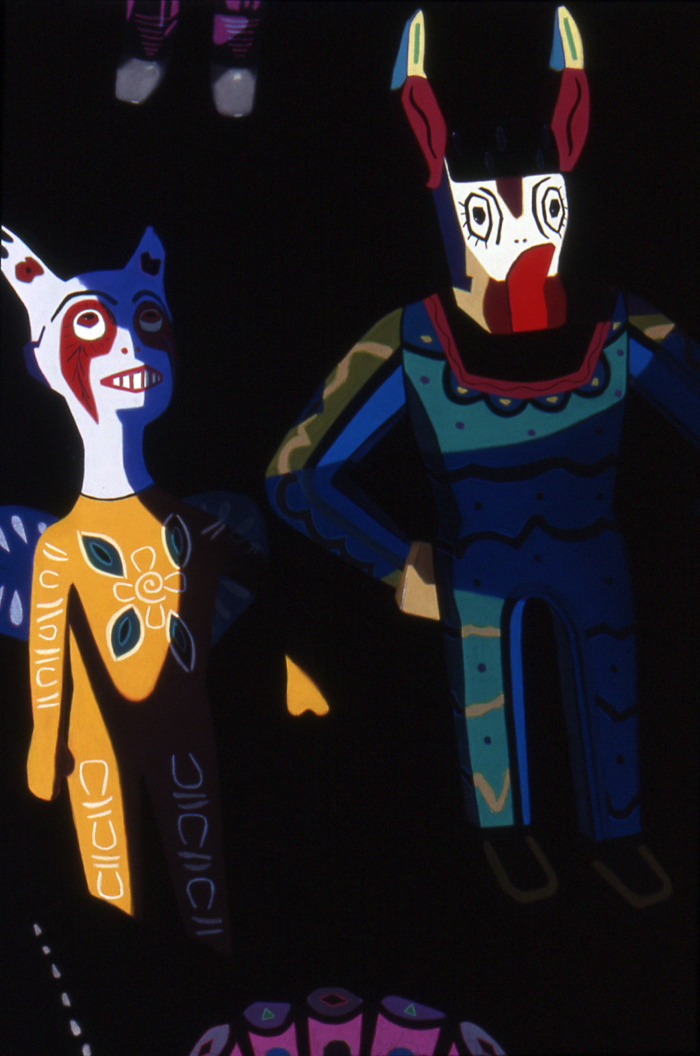
“Quartet,” soft pastel on sandpaper, 58″ x 38″ image, 70″ x 50″ framed
* an ongoing series of quotations – mostly from artists, to artists – that offers wisdom, inspiration, and advice for the sometimes lonely road we are on.
After we have responded to a work of art, we leave it, carrying in our consciousness something which we didn’t have before. This something amounts to more than our memory of the incident represented, and also more than our memory of the shapes and colours and spaces which the artist used and arranged. What we take away with us – on the most profound level – is the memory of the artist’s way of looking at the world. The representation of a recognizable incident (an incident here can simply mean a tree or a head) offers us the chance of relating the artist’s way of looking to our own. The forms he uses are the means by which he expresses his way of looking. The truth of this is confirmed by the fact that we can often recall the experience of a work, having forgotten both its precise subject and its precise formal arrangement.
Yet why should an artist’s way of looking at the world have any meaning for us? Because, I believe, it increases our awareness of our own potentiality. Not of course our awareness of our potentiality as artists ourselves. But a way of looking at the world implies a certain relationship with the world, and every relationship implies action. The kind of actions implied vary a great deal. A classical Greek sculpture increases our awareness of our own potential physical dignity; a Rembrandt of our potential moral courage; a Matisse of our potential sensual awareness. Yet each of these examples is too personal and too narrow to contain the whole truth of the matter. A work can, to some extent, increase an awareness of different potentialities in different people. The important point is that a valid work of art promises in some way or another the possibility of an increase, an improvement. Nor need the work be optimistic to achieve this; indeed, its subject may be tragic. For it is not the subject matter that makes the promise, it is the artist’s way of viewing his subject. Goya’s way of looking at a massacre amounts to the contention that we ought to be able to do without massacres.
John Berger, Selected Essays
Comments are welcome.


 barbararachkoscoloreddust.com