Blog Archives
Pearls from artists* # 134

“Bryan,” soft pastel on sandpaper, 22″ x 28″, 1988
* an ongoing series of quotations – mostly from artists, to artists – that offers wisdom, inspiration, and advice for the sometimes lonely road we are on.
You never want to forget your roots. Going back to your roots is very important so you don’t get carried away from something essential. Otherwise, you move farther and farther away from the hands-on approach to making art. It is very important to go back to the beginnings at all times. You spiral back.
Conversations with Meredith Monk by Bonnie Marranca
Comments are welcome!
Q: How important is the feedback of your audience? Do you ever think about who will enjoy your Art when you conceive it?

Painting, subject, reference photo
A: I can’t say that I think at all about audience reaction while I’m creating a painting in my studio. Although, of course I want people to respond favorably to the work.
Generally, I’m thinking about technical problems – making something that is exciting to look at, well-composed, vibrant, up to my exacting standards, etc. When I finish a painting, it is the best thing I am capable of making at that moment in time.
I think about a painting and look at it for so long and with such intensity, that it could hardly have turned out any differently. There is an inevitability to the whole lengthy process that goes all the way back to when I first laid eyes on the folk art figures in a dusty shop in a third world country. Looking at a newly-finished painting on my easel I often think, “Of course! I was drawn to this figure so that it could serve this unique function in this painting.”
Comments are welcome!
Pearls from artists* # 121
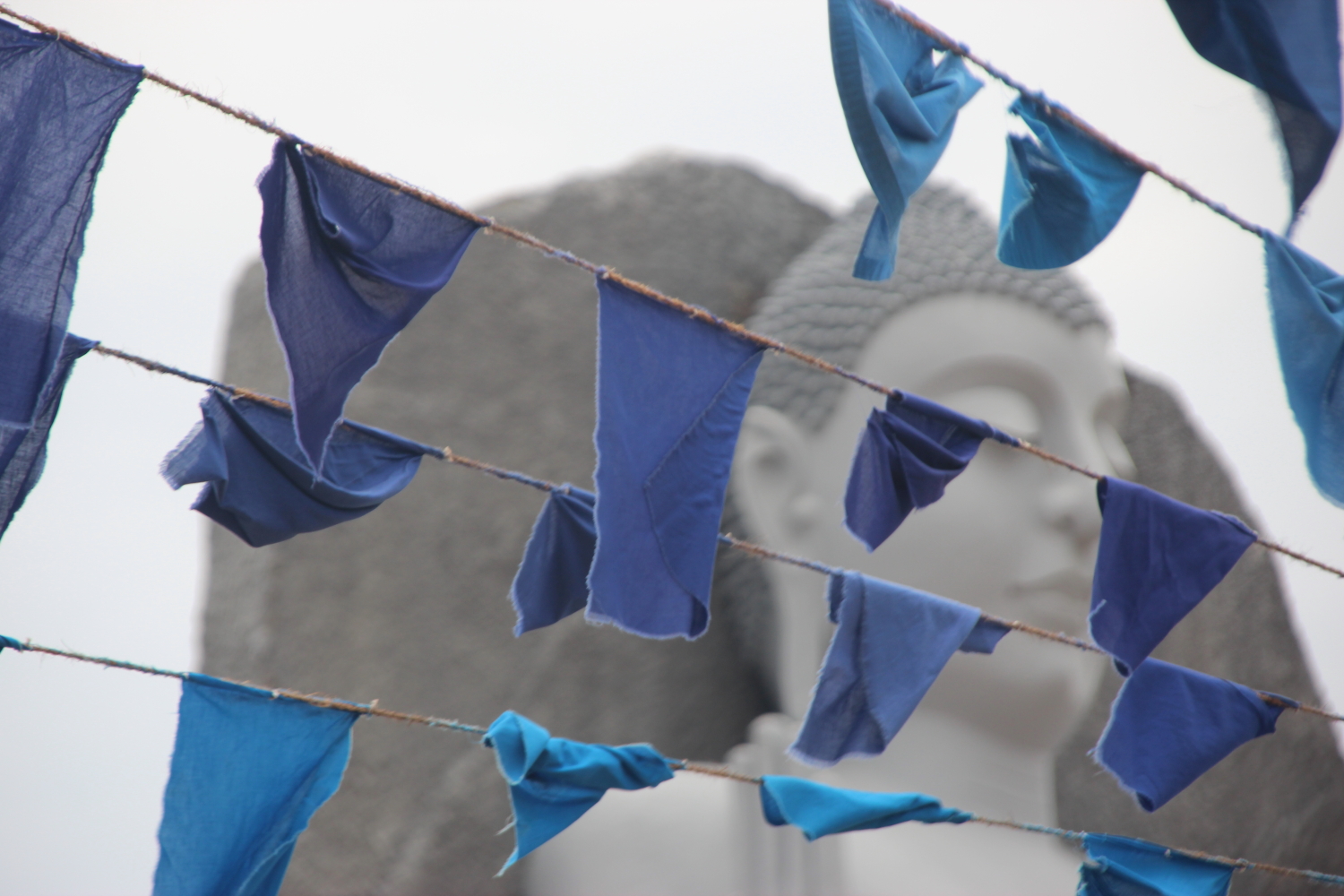
Sri Lanka
* an ongoing series of quotations – mostly from artists, to artists – that offers wisdom, inspiration, and advice for the sometimes lonely road we are on.
Artists, when they are absorbed in their work, are also deeply connected to other human beings. The theologian Matthew Fox said, “The journey the artist makes in turning inward to listen and to trust his or her images is a communal journey.” The psychologist Otto Rank argued that, “The collective unconscious, not rugged individuality, gives birth to creativity.”
To be sure, artists are not making real contact with real human beings as they work in the studio, but they are making contact in the realm of the spirit. The absence of the pressures real people bring to bear on them allows them, in solitude, to love humankind. Whereas in their day job they may hate their boss and at Thanksgiving they must deal with their alcoholic parents, in the studio their best impulses and most noble sentiments are free to emerge.
Eric Maisel in A Life in the Arts
Comments are welcome!
Q: Can you talk a little bit about your process? What happens before you even begin a pastel painting?

Barbara in Bali (far right)
A: My process is extremely slow and labor-intensive.
First, there is foreign travel – often to Mexico, Guatemala or someplace in Asia – to find the cultural objects – masks, carved wooden animals, paper mâché figures, and toys – that are my subject matter. I search the local markets, bazaars, and mask shops for these folk art objects. I look for things that are old, that look like they have a history, and were probably used in religious festivals of some kind. Typically, they are colorful, one-of-a- kind objects that have lots of inherent personality. How they enter my life and how I get them back to my New York studio is an important part of my art-making practice.
My working methods have changed dramatically over the nearly thirty years that I have been an artist. My current process is a much simplified version of how I used to work. As I pared down my imagery in the current series, “Black Paintings,” my creative process quite naturally pared down, too.
One constant is that I have always worked in series with each pastel painting leading quite naturally to the next. Another is that I always set up a scene, plan exactly how to light and photograph it, and work with a 20″ x 24″ photograph as the primary reference material.
In the setups I look for eye-catching compositions and interesting colors, patterns, and shadows. Sometimes I make up a story about the interaction that is occurring between the “actors,” as I call them.
In the “Domestic Threats” series I photographed the scene with a 4″ x 5″ Toyo Omega view camera. In my “Gods and Monsters” series I shot rolls of 220 film using a Mamiya 6. I still like to use an old analog camera for fine art work, although I have been rethinking this practice.
Nowadays the first step is to decide which photo I want to make into a painting (currently I have a backlog of photographs to choose from) and to order a 19 1/2″ x 19 1/2″ image (my Mamiya 6 shoots square images) printed on 20″ x 24″ paper. They recently closed, but I used to have the prints made at Manhattan Photo on West 20th Street in New York. Now I go to Duggal. Typically I have in mind the next two or three paintings that I want to create.
Once I have the reference photograph in hand, I make a preliminary tonal charcoal sketch on a piece of white drawing paper. The sketch helps me think about how to proceed and points out potential problem areas ahead.
Only then am I ready to start actually making the painting.
Comments are welcome!
Q: When you left the Navy you worked on commission as a portrait artist. Why don’t you accept commissions now?

Barbara’s studio
A: As I have often said, I left the active duty Navy in 1989, but stayed in the Reserves. The Reserves provided a small part-time income and the only requirement was that I work one weekend a month and two weeks each year. Plus, I could retire after 13 more years and receive a pension. (In 2003 I retired from the Navy Reserve as a Commander). The rest of the time I was free to pursue my studio practice.
For a short time I made a living making commissioned photo-realist portraits in soft pastel on sandpaper. However, after a year I became very restless. I remember thinking, “I did not leave a boring job just to make boring art!” I lost interest in doing commissions because what I wanted to accomplish personally as an artist did not coincide with what portrait clients wanted. I finished my final portrait commission in 1990 and never looked back.
To this day I remain reluctant to accept a commission of any kind. So I am completely free to paint whatever I want, which is the only way to evolve as a serious, deeply committed artist.
Comments are welcome!
Pearls from artists* # 110
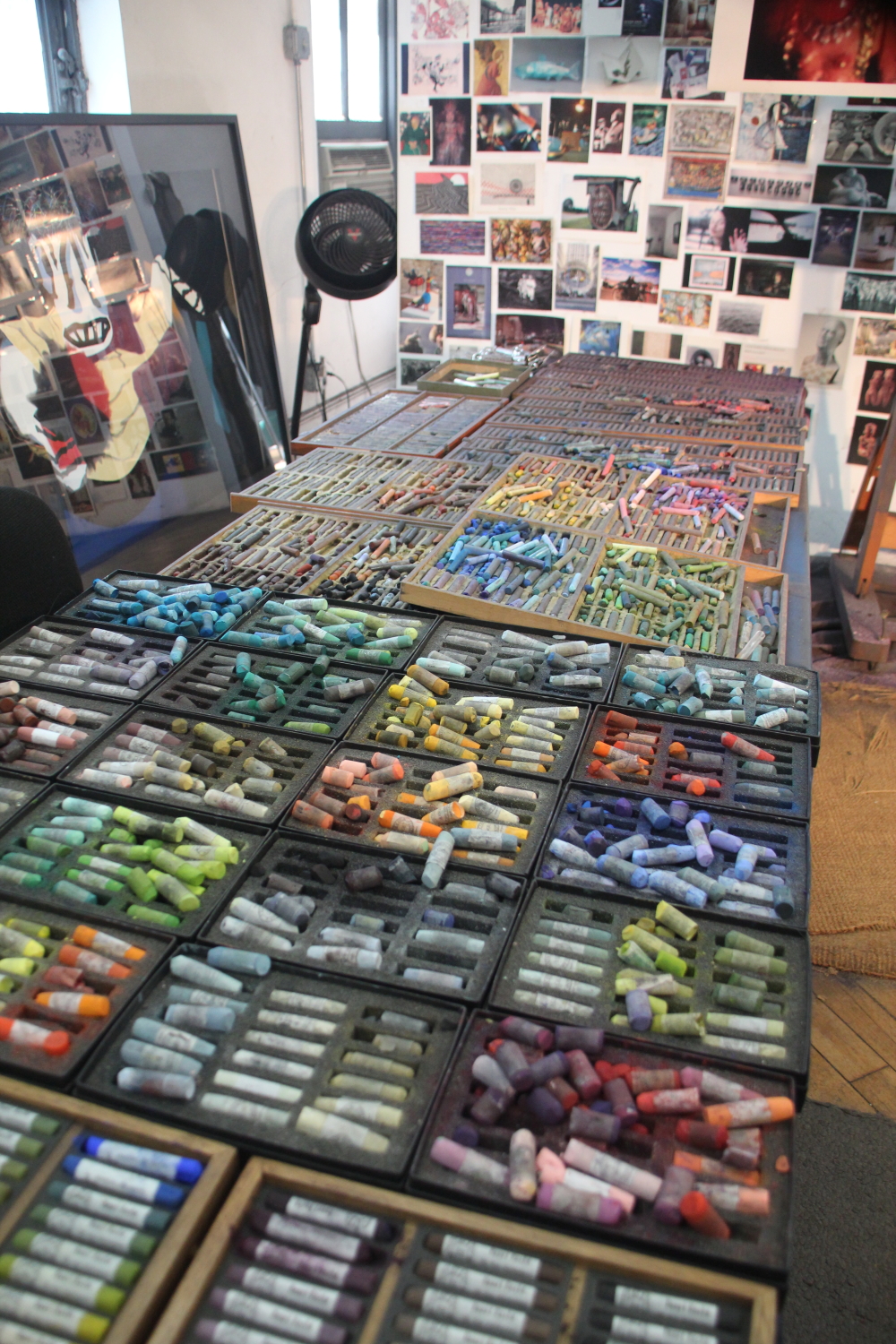
Barbara’s studio
* an ongoing series of quotations – mostly from artists, to artists – that offers wisdom, inspiration, and advice for the sometimes lonely road we are on.
A well-lived life should be worth attention. At the very least, you should find your own story engaging. In presenting yourself to yourself and others, then, you should keep in mind the rules that good playwrights follow. Like a good character – you should be making choices that are explicable – choices that appear to be coming from a mind in working order. Your choices should be reasonably coherent with each other, also, so as to support the thought that there is a real person – you – behind those choices.
Paul Woodruff, philosopher, quoted in What’s the Story: Essays about art, theater, and storytelling by Anne Bogart
Comments are welcome!
Pearls from artists* # 102
New York, NY
* an ongoing series of quotations – mostly from artists, to artists – that offers wisdom, inspiration, and advice for the sometimes lonely road we are on.
That a photograph is unlikely to be a laboratory record is evident when we think about how it is made. Most photographers are people of immense enthusiasms whose work involves many choices – to brake the car, grab the yellow instead of the green filter, wait out the cloud, and at the second everything looks inexplicably right, to release the shutter. Behind these decisions stands the photographer’s individual framework of recollections and meditations about the way he perceived that place or places like it before. Without such a background there would be no knowing whether the scene on the ground glass was characteristic of the geography and of his experience of it and intuition of it – in short, whether it was true.
Making photographs has to be, then, a personal matter; when it is not, the results are not persuasive. Only the artist’s presence in the work can convince us that its affirmation resulted from and has been tested by human experience. Without the photographer in the photograph the view is no more compelling than the product of some annoying record camera, a machine perhaps capable of happy accident but not response to form.
Beauty in Photography by Robert Adams
Comments are welcome!
Pearls from artists* # 98
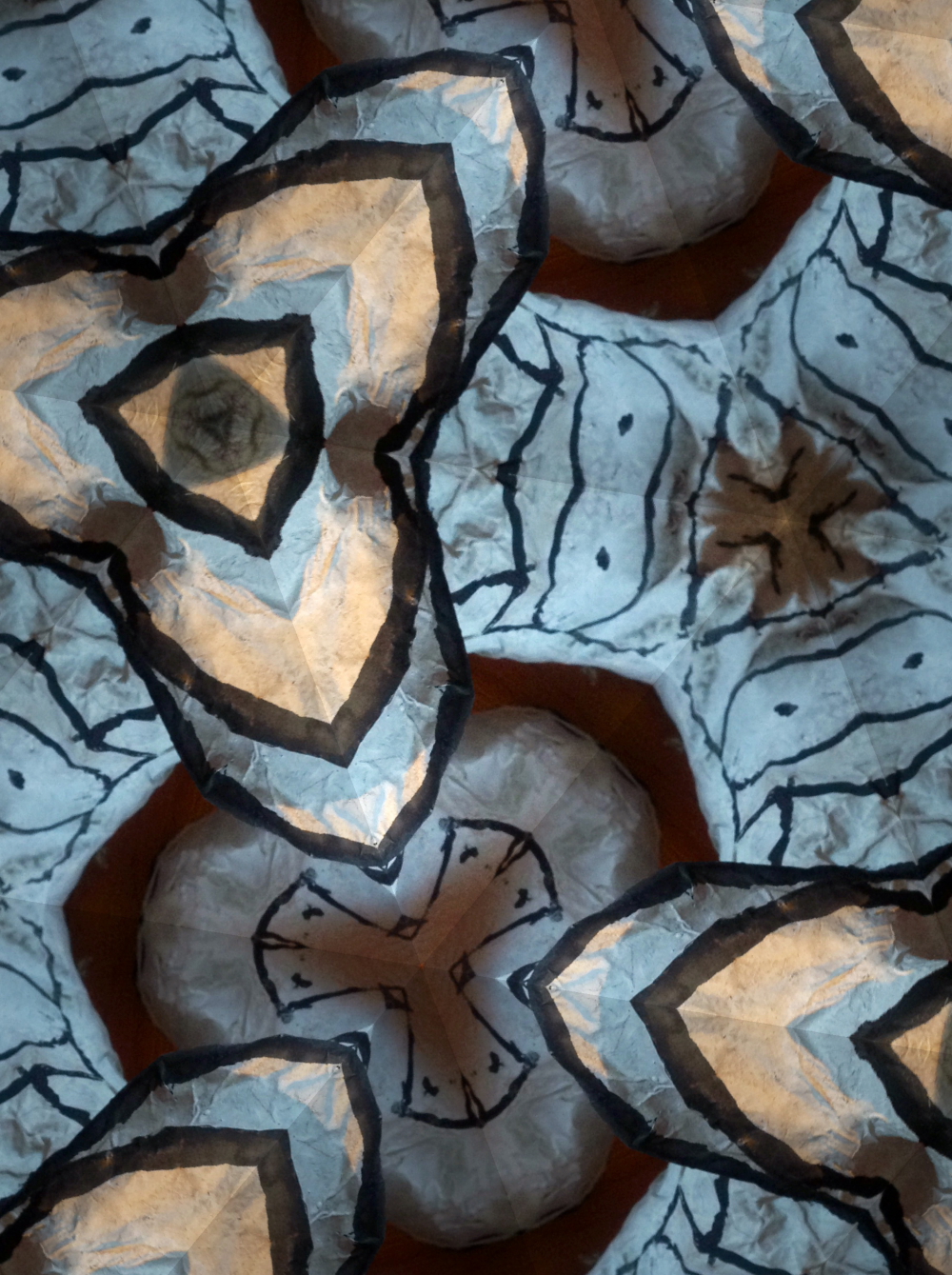
Teleidoscope
* an ongoing series of quotations – mostly from artists, to artists – that offers wisdom, inspiration, and advice for the sometimes lonely road we are on.
A work of art can start you thinking about some aesthetic or philosophical problem; it can suggest some new method, some fresh approach to fiction. But the relationship between reading and writing is rarely so clear-cut…
To be truthful, some writers stop you dead in your tracks by making you see your own work in the most unflattering light. Each of us will meet a different harbinger of personal failure, some innocent genius chosen by us for reasons having to do with what we see as our own inadequacies. The only remedy to this I have found is to read a writer whose work is entirely different from another, though not necessarily more like your own – a difference that will remind you of how many rooms there are in the house of art.
Francine Prose in Reading Like a Writer: A Guide for People Who Love Books and for Those Who Want to Write Them
Comments are welcome!
Pearls from artists* # 93

Chalcatzingo (Mexico)
* an ongoing series of quotations – mostly from artists, to artists – that offers wisdom, inspiration, and advice for the sometimes lonely road we are on.
The times in between things are always very hard for me, and there have been times when I felt that I’d never have an idea again, or that I’ve explored everything that I possibly can because as the years go on you have the backpack of your history. How do I find something new to work with? I read a beautiful book by Mable Dodge Luhan, who lived in New Mexico and started Ghost Ranch in the 1920s. She married a Native American, Tony Luhan, who lived in the Taos pueblo. She said that she noticed in the pueblo that in the winter everybody had very soft moccasins and they tiptoed around. They hardly talked at all and it was very, very quiet. She asked why they did that, and they said, “Mother Earth needs to rest. We are making it so that Mother Earth can rest so that in spring she can come forth.” I felt that that was so comforting; to actually nurture those times where it seems so empty, to have faith that something will happen if you savor those times, not try to push against them or fight them.
Meredith Monk quoted in Conversations with Anne: Twenty-four Interviews, by Anne Bogart
Comments are welcome!


 barbararachkoscoloreddust.com
Q: Another interesting series of yours that has impressed me is your recent “Black Paintings.” The pieces in this series are darker than the ones in “Domestic Threats.” You create an effective mix between the dark background and the few bright tones, which establish such a synergy rather than a contrast, and all the dark creates a prelude to light. It seems to reveal such a struggle, a deep tension, and intense emotions. Any comments on your choice of palette and how it has changed over time?
Dec 6
Posted by barbararachkoscoloreddust
West 29th Street studio
A: That is a great question!
You are correct that my palette has darkened. It’s partly from having lived in New York for so long. This is a generally dark city. We famously dress in black and the city in winter is mainly greys and browns.
Also, the “Black Paintings” are definitely post-9/11 work. My husband, Bryan, was tragically killed onboard the plane that crashed into the Pentagon. Losing Bryan was the biggest shock I ever have had to endure, made even harder because it came just 87 days after we had married. We had been together for 14 ½ years and in September 2001 were happier than we had ever been. He was killed so horribly and so senselessly. Post 9/11 was an extremely difficult, dark, and lonely time.
In the summer of 2002 I resumed making art, continuing to make “Domestic Threats” paintings. That series ran its course and ended in 2007. Around then I was feeling happier and had come to better terms with losing Bryan (it’s something I will never get over but dealing with loss does get easier with time). When I created the first “Black Paintings” I consciously viewed the background as literally, the very dark place that I was emerging from, exactly like the figures emerging in these paintings. The figures themselves are wildly colorful and full of life, so to speak, but that black background is always there.
Comments are welcome!
Share this:
Posted in 2014, An Artist's Life, Art in general, Art Works in Progress, Black Paintings, Creative Process, Domestic Threats, Inspiration, Painting in General, Pastel Painting, Photography, Studio, Working methods
Comments Off on Q: Another interesting series of yours that has impressed me is your recent “Black Paintings.” The pieces in this series are darker than the ones in “Domestic Threats.” You create an effective mix between the dark background and the few bright tones, which establish such a synergy rather than a contrast, and all the dark creates a prelude to light. It seems to reveal such a struggle, a deep tension, and intense emotions. Any comments on your choice of palette and how it has changed over time?
Tags: after, always, another, around, art, background, better, between, biggest, black, Black Paintings, bright, browns, Bryan, changed, choice, city, colorful, comments, consciously, continuing, contrast, correct, course, crashed, create, dark, dealing, deep, difficult, Domestic Threats, dress, easier, effective, emerging, emotions, ended, endure, establish, exactly, extremely, famously, feeling, figures, first, full, generally, great, greys, happier, harder, horribly, however, husband, impressed, intense, interesting, killed, life, light, literally, lived, lonely, losing, loss, mainly, making, married, mix, New York, onboard, paintings, palette, partly, Pentagon, pieces, plane, post-9/11, prelude, question, rather, recent, resumed, reveal, senselessly, September, series, shock, something, speak, struggle, summer, synergy, tension, terms, themselves, time, together, tones, tragically, viewed, wildly, winter, work