Blog Archives
Pearls from artists* # 649

*an ongoing series of quotations – mostly from artists, to artists – that offers wisdom, inspiration, and advice for the sometimes lonely road we are on.
Some of us spend our entire creative lives digging at the buried parts of ourselves to solve unknown mysteries that we are not even aware of. Unearthing those aspects is not an easy process, because our true psychic reality does not lie in our daily waking thoughts. It exists in the unconscious, in the form of an unfathomable, nonverbal sensory language, one that is so complex and runs so deep that we can only grasp at it, to attain small, amorphous bits. These bits can take any form, even uncharacteristic, surprising ones. We access, process, and finally transform them into what Saint Augustine called ‘visible signs of invisible realities.’
Kate Kretz in Art From Your Core: A Holistic Guide to Visual Voice”
Comments are welcome!
Pearls from artists* # 604
*an ongoing series of quotations – mostly from artists, to artists – that offers wisdom, inspiration, and advice for the sometimes lonely road we are on.
In dealing with unconscious mind, we’re dealing with an ocean full of rich, invisible life forms swimming underneath the surface. In creative work we’re trying to catch one of these fish; but we can’t kill the fish, we have to catch it in a way that brings it to life. In a sense we bring it amphibiously to the surface so it can walk around visibly; and people will recognize something familiar because they’ve got their own fish, who are cousins to your fish. Those fish, the unconscious thoughts, are not passively floating “down there;” they are moving, growing, and changing on their own, and our conscious mind is but an observer or interloper. That is why Jung calls the depths of the unconscious the “objective psyche.”
Stephen Nachmanovitch in Free Play: Improvisation in Life and Art
Comments are welcome!
Pearls from artists* # 595

Film still from “Barbara Rachko: True Grit,” directed by Jennifer Cox, Moto Films LLC
*an ongoing series of quotations – mostly from artists, to artists – that offers wisdom, inspiration, and advice for the sometimes lonely road we are on.
One of the great paradoxes of the writing life is that our words – chosen carefully, so thoughtfully, with deep focus and concentration – those words once on the page go dead on us. Language is ours only when we are forming sentences, moving elements around, grappling with punctuation, speaking words aloud, feeling them on our lips. While we are shaping a scene into something we can hear and touch and see, that scene lives and breathes. We are inside language like painters, we are working in our medium: the tempera, the thin line, the wet oil on canvas, still in process, still alive.
But once we commit – once those words dry like paint, are affixed to the page – it becomes nearly impossible to see them. This? We think to ourselves. Our most loathsome critic emerges with a swirl of her cape. Really? What the hell is this? The sentences appear to have been written in another language – a dark dream language, tucked into some musty, inaccessible corner of our psyche. Attempting to discern its meaning is a bit like looking at our own face in the mirror. It is at once so familiar as to be invisible, and so intimate that we turn away, baffled, ashamed.
Can we ever see ourselves, really? Can we read ourselves?
It is a powerful conundrum because without the ability to see our writing afresh we cannot do the necessary work. How do we know whether a problem lies with the work, or with our inability to enter it? We need clarity, but not coldness. Openness, but not attachment. We want optimism, but that optimism must not go hand in hand with discernment. We’re not looking for a cheerleader, nor a fault-finding judge. We want to read ourselves with equanimity.
Dani Shapiro in Still Writing: The Pleasures and Perils of a Creative Life
Comments are welcome!
Pearls from artists* # 572

*an ongoing series of quotations – mostly from artists, to artists – that offers wisdom, inspiration, and advice for the sometimes lonely road we are on.
The use of color to paint the Chinchorro mummies is interesting. According to anthropologist Victor Turner (1970), colors are experiences of social relationships. The use of particular colors in prehistory, then, has meaning even if today we cannot comprehend these meanings. Turner said that white, red, and black are the earliest colors produced by humans and they “provide a kind of primordial classification of reality” (Turner, 1970:90). This color trilogy is associated with reproduction, life, and death. Obviously, in the case of Chinchorros, black and red colors predominated. Black is equated with darkness, like the night, invisible yet present. Black is what is hidden, it is a mystical transition (Turner, 1970:109, 89-73). Black represents death, but not the end of a cycle, not an annihilating, rather a change of status and existence (Turner, 1970:71-72). Red on the other hand is equal to membership, change, blood, and social place (Turner, 1970:90). Red can be associated with life, here and in the afterworld.
The use of colors as symbols is rather universal, but the meaning of each color varies from culture to culture. In western societies black may be worn to symbolize mourning, but on other occasions it signifies relevance. The Yahgan Indians in South America used body painting with intricate patterns of black, white, and red to show their sadness and grief when someone died (Gusinde, 1937). Black was the color to symbolize mourning among the Incas (Montez, 1929:222; Zuidema, 1992:23).
Bernardo T. Arrizabalaga in Beyond Death: The Chinchorro Mummies of Ancient Chile
Comments are welcome!
Pearls from artists* # 397
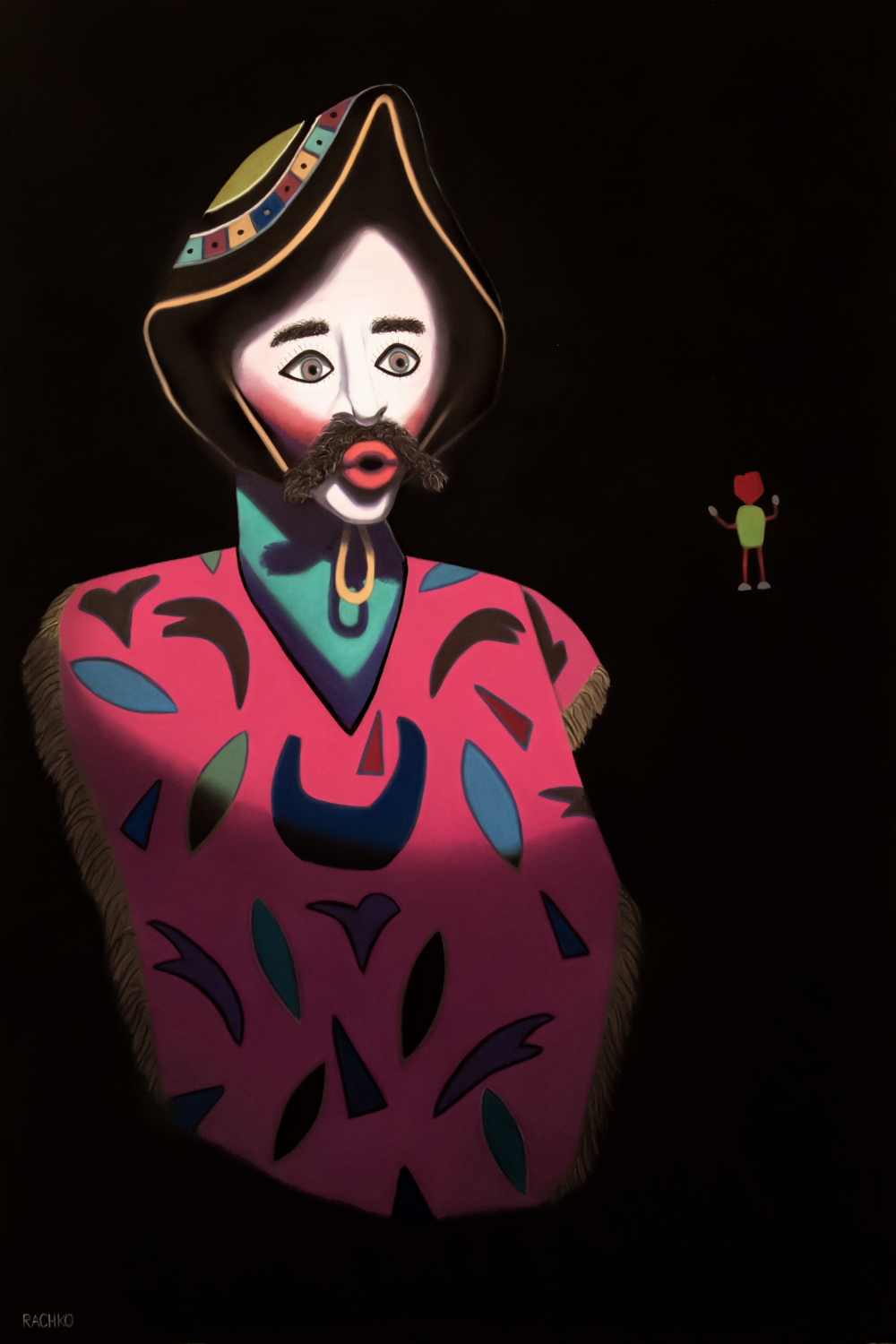
“Prophecy,” soft pastel on sandpaper, 58″ x 38″
* an ongoing series of quotations – mostly from artists, to artists – that offers wisdom, inspiration, and advice for the sometimes lonely road we are on.
Our species requires a greater capacity to see into the Real, not just the outer universe of the senses but also the inner cosmos of the psyche, the normally invisible dimensions. Near the end of his life, Jung said to an English journalist, “The only real danger that exists is man himself… His psyche should be studied because we are the origin of all coming evil.” It is a beautiful statement until the word studied comes up, at which point we are reminded that Jung at bottom was a rationalist: he refused to see that while psychology could talk brilliantly about the soul, it could never descend into its depths. For this we need imagination, madness, prophecy – art. We must understand that creative expression is not a pastime or distraction, but a psychonautic science in its own right. Allowed to operate in freedom, it can illuminate the darkness beyond our field of vision.
J.F. Martel in Reclaiming Art in the Age of Artifice: A Treatise, Critique, and Call to Action
Comments are welcome!
Pearls from artists* # 365
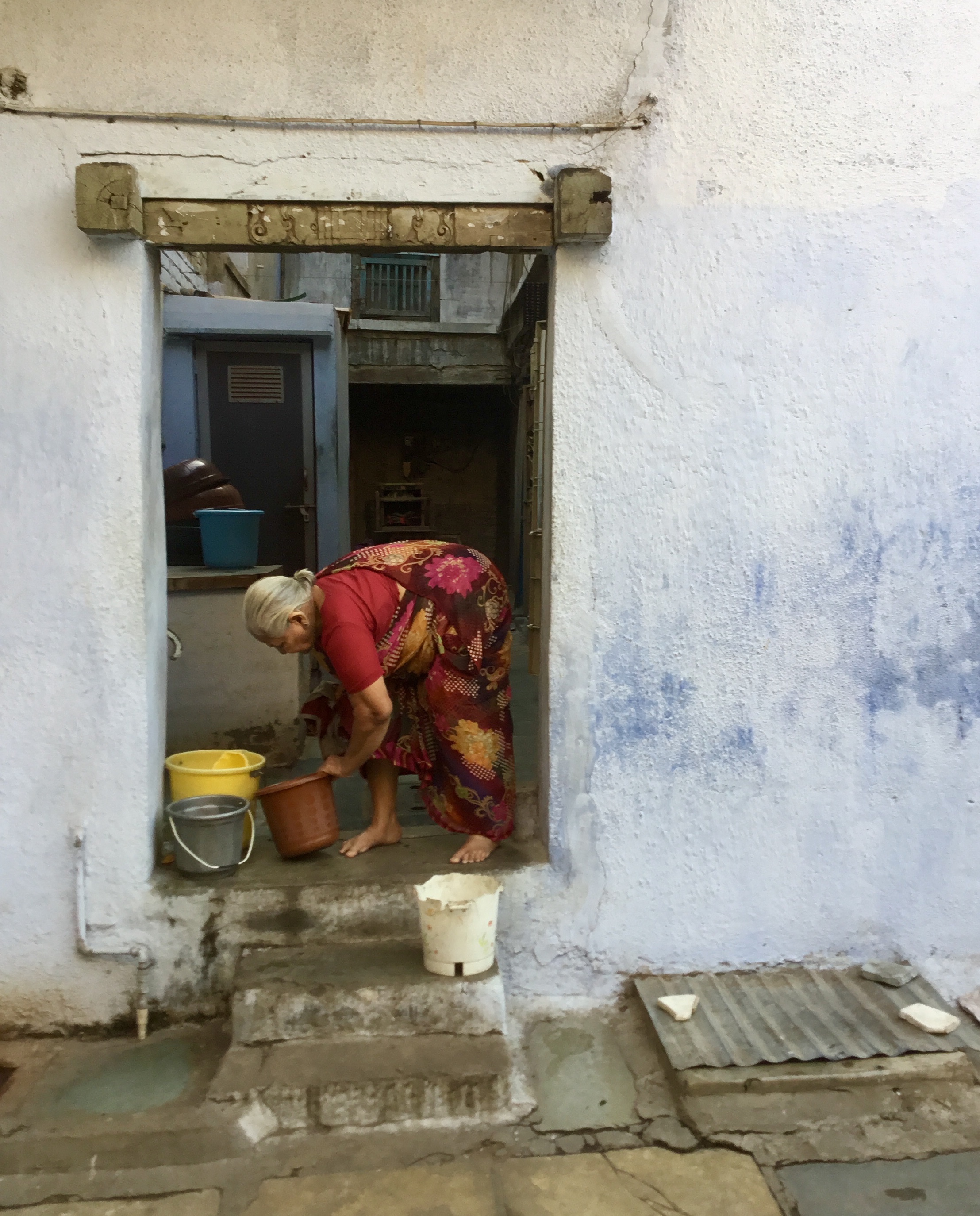
Ahmedabad, India
* an ongoing series of quotations – mostly from artists, to artists – that offers wisdom, inspiration, and advice for the sometimes lonely road we are on.
The important thing is the intersection between intuition and discipline, because you have to be alert and at the same time invisible. The eye has to be alert and capture very quickly everything you have inside you – I don’t know how to explain it. What the eye sees is the synthesis of what you are or what you’ve learned to do, this is the language of photography…
Graciela Iturbide in Eyes to Fly With: Portraits, Self-Portraits, and Other Photographs
Comments are welcome!
Pearls from artists* # 350
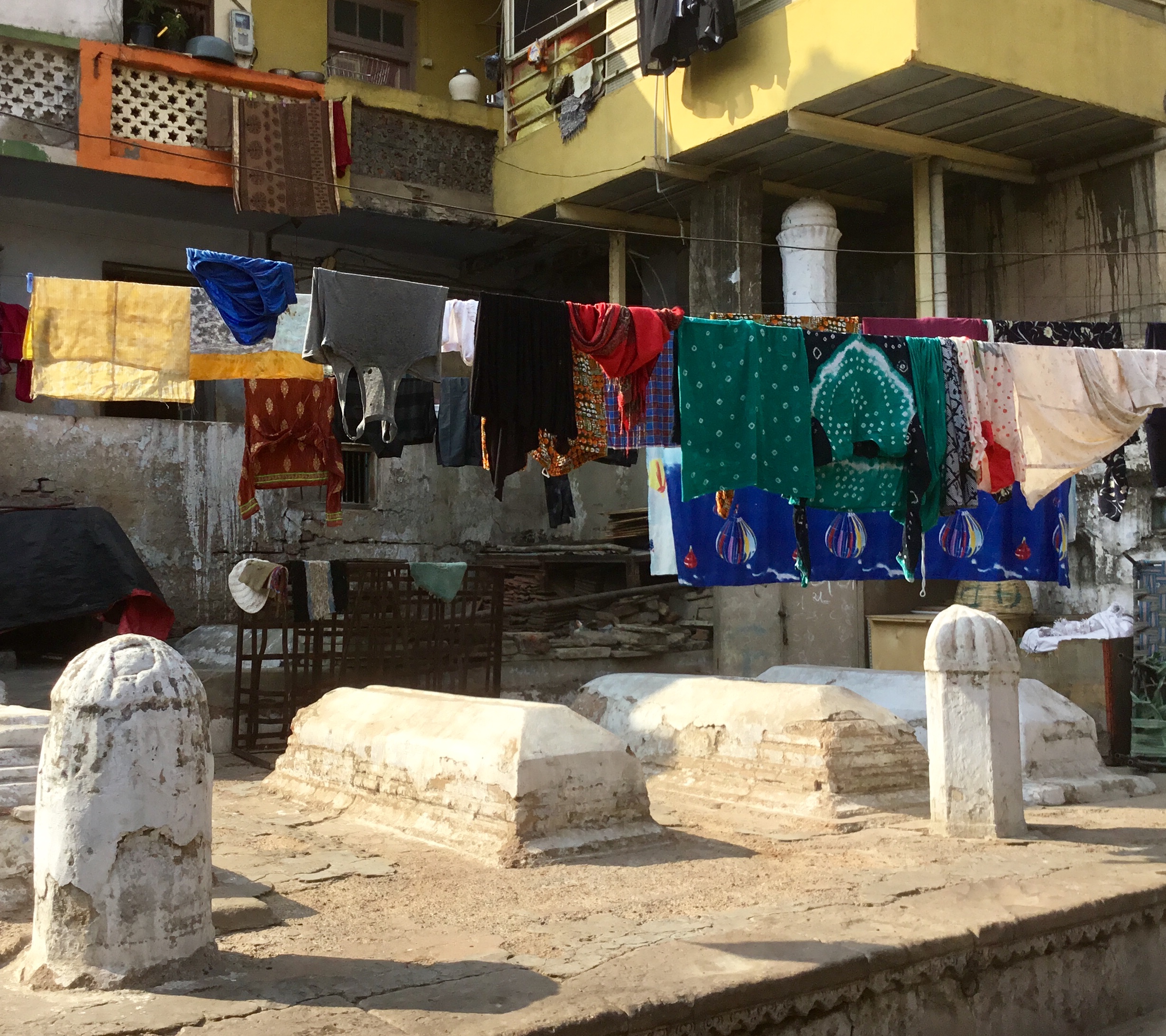
Ahmedabad, India
*an ongoing series of quotations – mostly from artists, to artists – that offers wisdom, inspiration, and advice for the sometimes lonely road we are on.
Seeing is not a passive awareness of visual data, but an active focusing upon it, “touching” it. Arnheim writes, in language that echoes the Hindu notion of seeing and touching: “In looking at an object we reach out for it. With an invisible finger we move through the space around us, go out to the distant places where things are found, touch them, catch them, scan their surfaces, trace their borders, explore their texture. It is an eminently active occupation.”
Diana L. Eck in Darsan: Seeing the Divine Image in India
Comments are welcome!
Pearls from artists* # 125
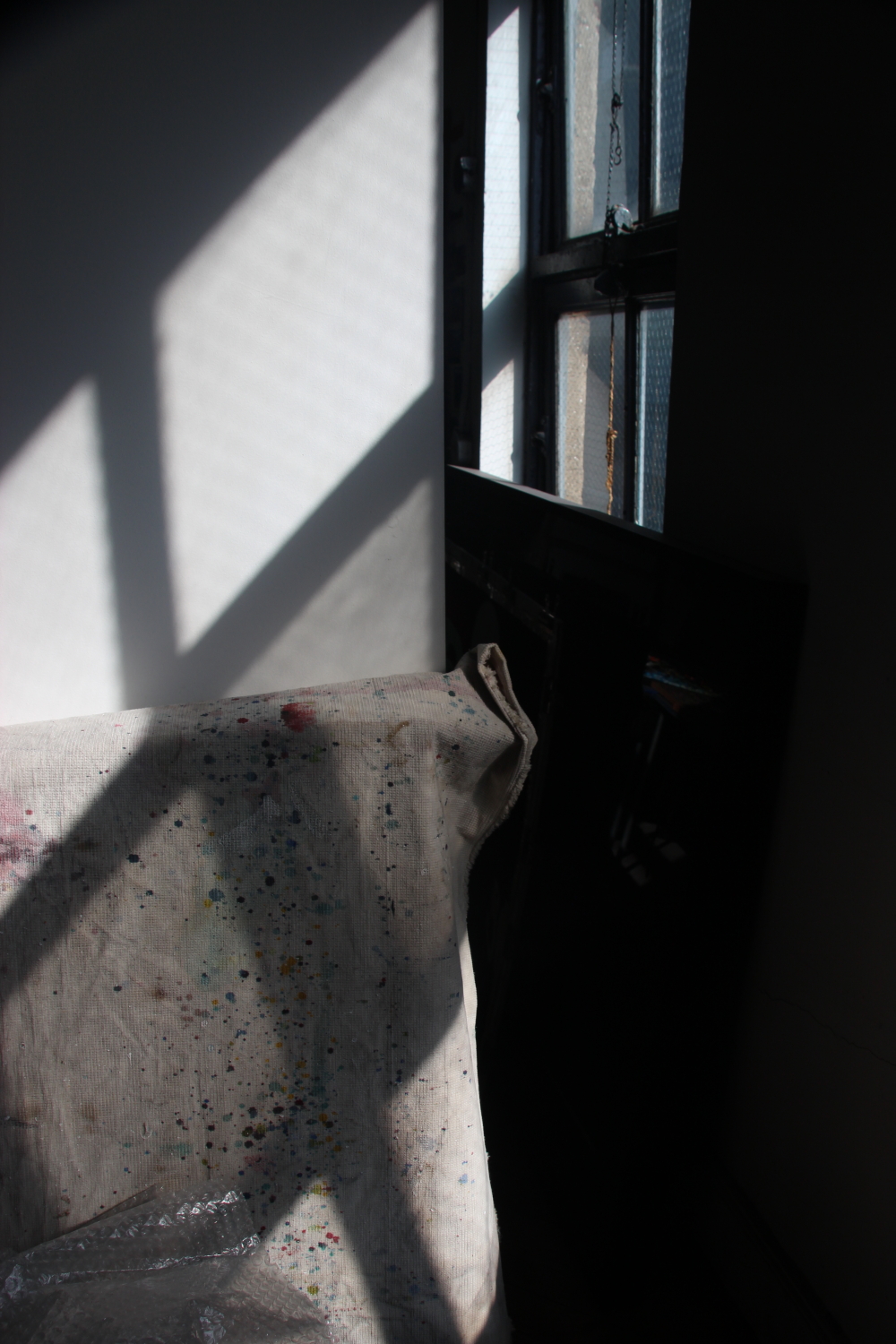
Barbara’s studio
* an ongoing series of quotations – mostly from artists, to artists – that offers wisdom, inspiration, and advice for the sometimes lonely road we are on.
My own natural proclivity is to categorize the world around me, to remove unfamiliar objects from their dangerous perches by defining, compartmentalizing and labeling them. I want to know what things are and I want to know where they are and I want to control them. I want to remove the danger and replace it with the known. I want to feel safe. I want to feel out of danger.
And yet, as an artist, I know that I must welcome the strange and the unintelligible into my awareness and into my working process. Despite my propensity to own and control everything around me, my job is to “make the familiar strange and the strange familiar,” as Bertolt Brecht recommended: to un-define and un-tame what has been delineated by belief systems and conventions, and to welcome the discomfort of doubt and the unknown, aiming to make visible what has become invisible by habit.
Because life is filled with habit, because our natural desire is to make countless assumptions and treat our surroundings as familiar and unthreatening, we need art to wake us up. Art un-tames, reifies and wakes up the part of our lives that have been put to sleep and calcified by habit. The artist, or indeed anyone who wants to turn daily life into an adventure, must allow people, objects and places to be dangerous and freed from the definitions that they have accumulated over time.
Anne Bogart in What’s the Story: Essays about art, theater, and storytelling
Comments are welcome!
Pearls from artists* # 65
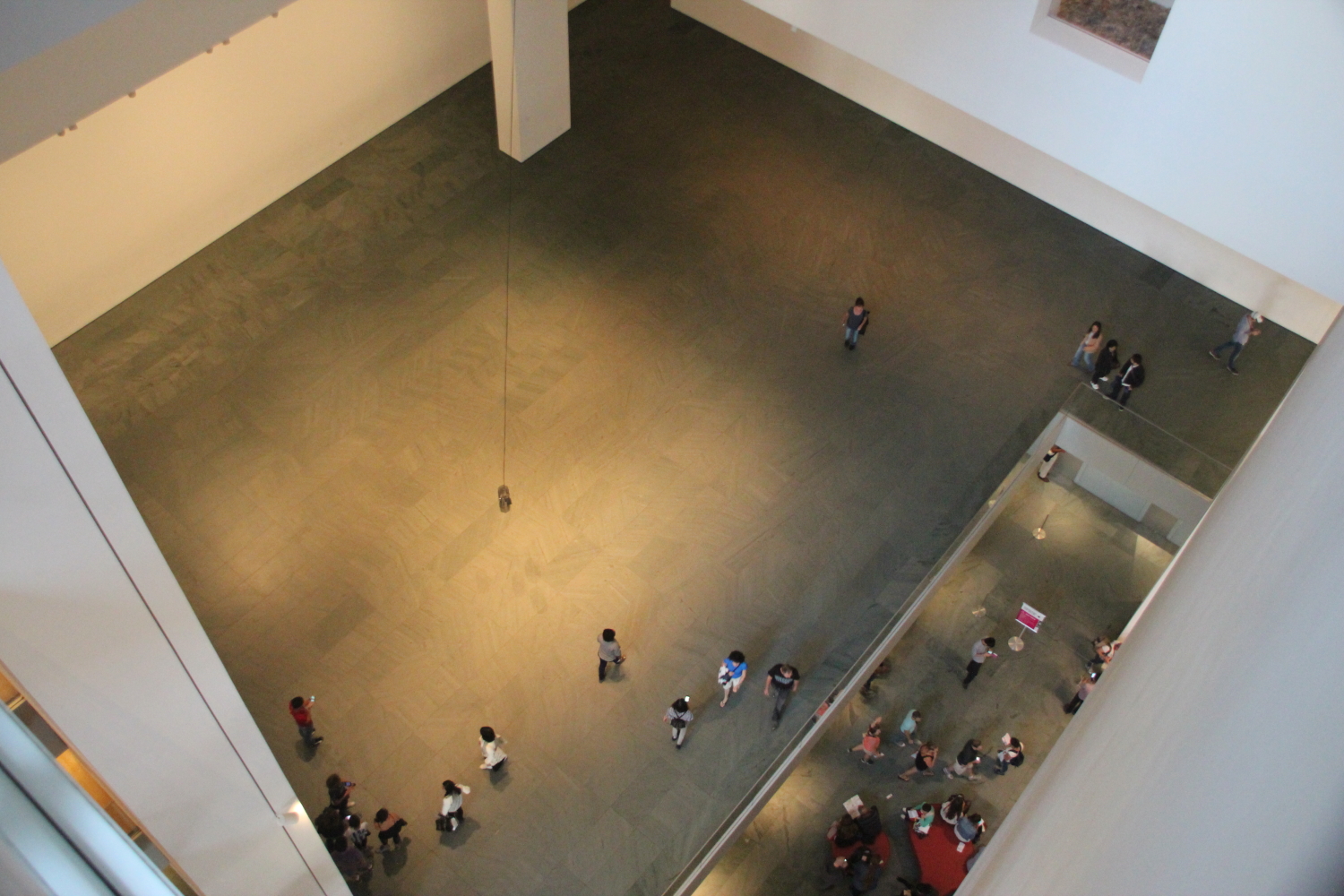
Museum of Modern Art, NYC
* an ongoing series of quotations – mostly from artists, to artists – that offers wisdom, inspiration, and advice for the sometimes lonely road we are on.
To create demands a certain undergoing: surrender to a subconscious process that can yield surprising results. And yet, despite the intuitive nature of the artistic process, it is of utmost importance to be aware of the reason you create. Be conscious about what you are attempting or tempting. Know why you are doing it. Understand what you expect in return.
The intentions that motivate an act are contained within the action itself. You will never escape this. Even though the “why” of any work can be disguised or hidden, it is always present in its essential DNA. The creation ultimately always betrays the intentions of the artist. James Joyce called this invisible motivation behind a work of art “the secret cause.” This cause secretly informs the process and then becomes integral to the outcome. This secret cause determines the distance that you will journey in the process and finally, the quality of what is wrought in the heat of the making.
Anne Bogart in and then, you act: making art in an unpredictable world
Pearls from artists* # 50

The Getty Museum, Los Angeles
The important thing is the intersection between intuition and discipline, because you have to be alert and at the same time invisible. The eye has to be alert and capture very quickly everything you have inside you – I don’t know how to explain it. What the eye sees is the synthesis of what you are or what you’ve learned to do, this is the language of photography…
Graciela Iturbide in Eyes to Fly With
Comments are welcome!


 barbararachkoscoloreddust.com